Throttle Position Sensor Failure: Signs and Solutions
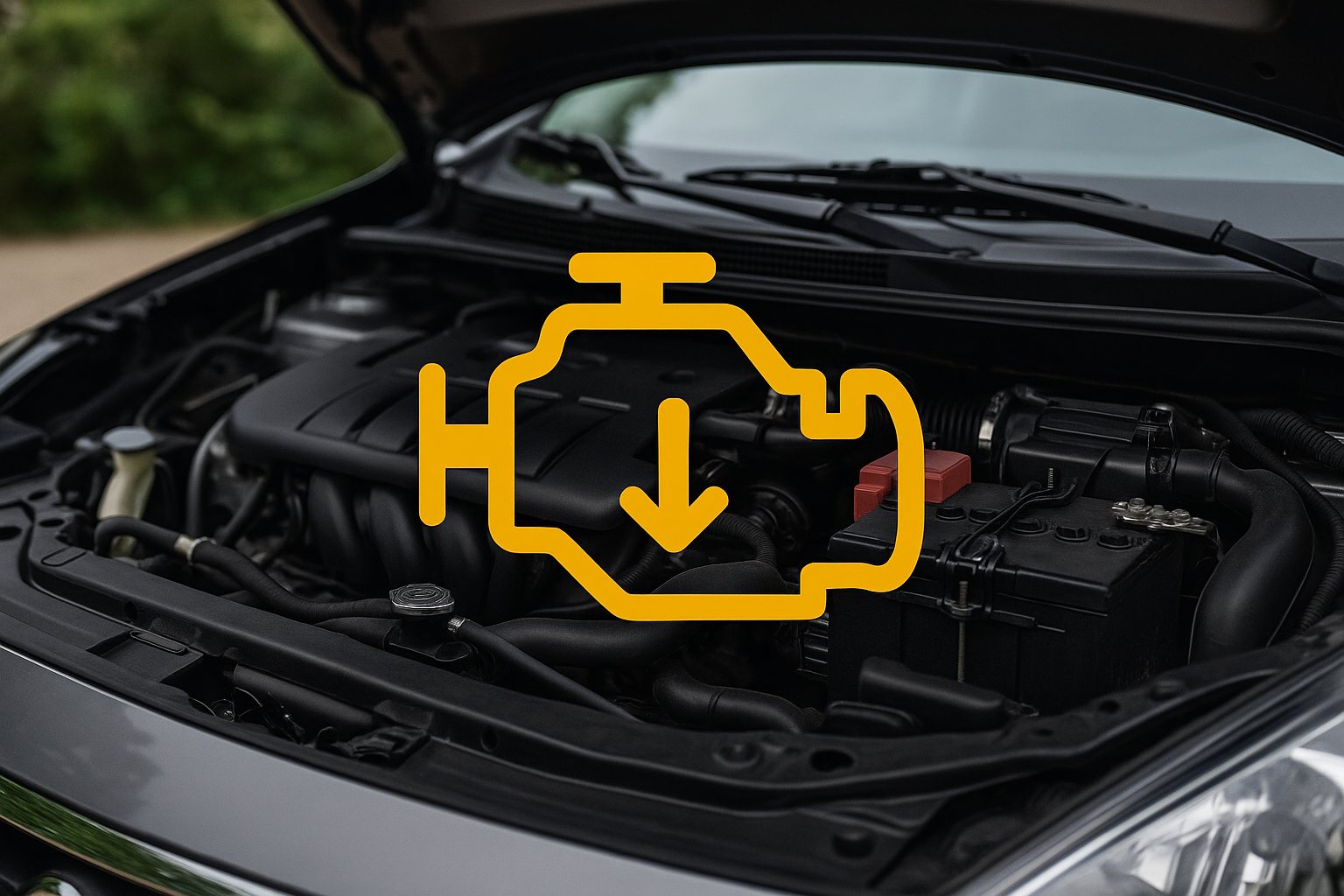
Last Tuesday afternoon, a silver 2015 Honda Accord rolled into my bay with the check engine light glowing amber on the dash. The customer—a schoolteacher named Maria—told me her car had been “acting weird” for two weeks. “It hesitates when I step on the gas, and sometimes it just surges forward like it has a mind of its own,” she explained, clearly frustrated. I connected my scanner, pulled code P0122 (TPS circuit low voltage), and knew immediately what we were dealing with. After fifteen years turning wrenches, I can spot throttle position sensor failure from a mile away. It’s one of those problems that sneaks up on you gradually, then suddenly makes your daily commute feel like riding a mechanical bull.
A failing throttle position sensor doesn’t announce itself with a dramatic breakdown. Instead, it chips away at your driving experience with erratic idle, unpredictable acceleration, and that nagging check engine light. I’ve diagnosed hundreds of these sensors over the years, and the pattern is always the same—drivers ignore the early warning signs until the car becomes genuinely dangerous to operate.
What the Throttle Position Sensor Actually Does (And Why It Matters)
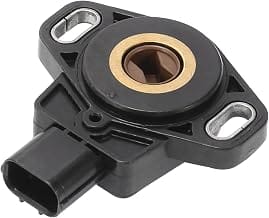
Let me break down the TPS in plain terms. Your throttle position sensor is a potentiometer—essentially a variable resistor—mounted directly on the throttle body shaft. When you press the accelerator pedal, you’re opening a butterfly valve (the throttle plate) that controls airflow into the engine. The TPS rotates with that shaft and sends a corresponding voltage signal to the engine control unit.
At closed throttle (idle), the sensor typically outputs around 0.5 to 0.9 volts. At wide-open throttle, it jumps to 4.5 to 4.9 volts. Your ECU reads this voltage hundreds of times per second, using it to calculate fuel delivery, ignition timing, transmission shift points, and even idle air control. It’s one of the most critical inputs for modern engine management.
I’ve seen mechanics misdiagnose TPS problems as transmission issues, fuel pump failures, or even ignition problems because the symptoms overlap so dramatically. Understanding what you’re looking for when diagnosing [poor acceleration causes, engine hesitation acceleration,idle air control valve](poor-acceleration-causes) problems helps you zero in on the actual culprit quickly.
The Difference Between TPS and Accelerator Position Sensor
Here’s where it gets confusing for a lot of people. Modern drive-by-wire systems (post-2005 for most manufacturers) use an accelerator position sensor on the gas pedal *and* a throttle position sensor on the throttle body. They’re two different components doing related jobs.
The accelerator position sensor tells the computer what your foot is doing. The throttle position sensor tells the computer what the throttle plate is actually doing. The ECU compares these signals constantly. If they don’t match expectations, you get codes and limp mode. I diagnosed a 2018 Ford F-150 last month where the customer replaced the TPS three times before realizing the accelerator position sensor was the actual problem. Cost him $400 in unnecessary parts.
Classic Symptoms of Throttle Position Sensor Failure
After replacing TPS sensors on everything from 1990s Hondas to brand-new German luxury cars, I can tell you the symptoms follow a predictable pattern. The sensor doesn’t usually fail completely in one dramatic moment—it degrades over time, giving you plenty of warning if you know what to watch for.
Erratic or Surging Idle
This is usually the first symptom people notice. You’re sitting at a red light, and the tachometer needle starts dancing between 500 and 1200 RPM. The car feels like it’s constantly adjusting, hunting for the right idle speed but never finding it. I’ve measured this with a scan tool—the TPS voltage fluctuates wildly even though the throttle plate isn’t moving.
On Maria’s Accord, the idle surged every 3-4 seconds like clockwork. The sensor was outputting 0.6V, then jumping to 1.8V, then dropping back down—all while the throttle was completely closed. That inconsistent signal confused the ECU, which kept adjusting fuel and idle air trying to compensate.
Hesitation and Stumbling During Acceleration
Step on the gas, and nothing happens for a half-second. Then the car lurches forward. Or maybe it accelerates smoothly to 2500 RPM, then falls flat on its face before recovering. These are textbook TPS failure symptoms.
The ECU expects a smooth, linear voltage increase as you open the throttle. When the sensor develops dead spots or erratic signals, the computer gets confused about your actual throttle position. It might think you’re at 15% throttle when you’re actually at 40%, so it delivers fuel for 15% throttle. Result? Frustrating hesitation that makes merging onto highways genuinely scary.
Check Engine Light with Specific Codes
Modern vehicles throw specific diagnostic trouble codes (DTCs) when the TPS fails. Here’s what you’ll typically see:
- P0120:TPS/Pedal Position Sensor Circuit Malfunction
- P0121:TPS/Pedal Position Sensor Circuit Range/Performance
- P0122:TPS/Pedal Position Sensor Circuit Low Input (most common)
- P0123:TPS/Pedal Position Sensor Circuit High Input
- P0124:TPS/Pedal Position Sensor Circuit Intermittent
P0122 and P0123 point to hard electrical failures—either the signal voltage is stuck low or stuck high. P0121 and P0124 indicate the sensor is working but sending implausible data. I see P0122 probably 60% of the time when I diagnose TPS issues.
Poor Fuel Economy
When your ECU can’t accurately determine throttle position, it defaults to conservative fuel mapping. I’ve seen customers lose 15-20% fuel economy from a failing TPS alone. One customer with a 2012 Chevy Silverado went from 18 MPG to 13 MPG over six months as his sensor voltage gradually degraded.
Transmission Shifting Problems
Your transmission control module uses TPS data to determine shift points. When the sensor fails, you might experience harsh shifts, delayed shifts, or the transmission refusing to downshift when you need power. On older vehicles with cable-driven kickdown switches, this is less common, but on anything post-2000, the TPS directly influences transmission behavior.
I diagnosed a 2010 Toyota Camry where the customer insisted they needed a transmission rebuild. Turned out the TPS was reading 0.3V at idle instead of the spec’d 0.7V. The transmission couldn’t properly interpret driver demand. $89 sensor versus $2,800 transmission—always diagnose before assuming the worst.
How Throttle Position Sensors Fail (Technical Deep Dive)
Understanding *why* TPS sensors fail helps you prevent future problems and diagnose related issues. These aren’t complex components, but they operate in harsh conditions.
Worn Resistive Track (Most Common)
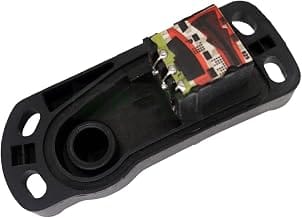
Inside the TPS housing, there’s a resistive track—think of it like a tiny straightaway of resistor material. A wiper contact rides along this track as the shaft rotates. Over time, this wiper wears a groove in the track. The most wear happens at the idle position because that’s where the sensor spends 90% of its life.
I’ve cut open failed sensors to show customers—there’s a visible groove worn into the resistive element at the idle position. Once that groove gets deep enough, the electrical contact becomes intermittent or reads incorrectly. This explains why idle problems usually appear first.
Carbon Buildup and Contamination
The TPS mounts directly to the throttle body, which means it’s exposed to engine crankcase vapors, oil mist from the PCV system, and general grime. Carbon deposits can coat the resistive track or wedge between the wiper and track, disrupting the electrical signal.
I’ve cleaned TPS sensors with electrical contact cleaner and temporarily restored function, but it’s a band-aid fix. Once contamination works its way inside the sealed sensor housing, the damage usually accelerates. That said, I’ll spray throttle body cleaner around the TPS mounting area during routine maintenance—it can prevent early failure.
Electrical Connector Corrosion
The three-wire connector (5V reference, ground, and signal) can corrode, especially in northern climates where salt spray attacks everything. I’ve found green crusty corrosion inside TPS connectors dozens of times. This creates high resistance in the circuit, which the ECU interprets as a sensor problem.
Before replacing any TPS, I always inspect the connector. Pull it off, check for corrosion, measure continuity to the ECU. A $3 can of electrical contact cleaner and 10 minutes of connector work has saved several customers from unnecessary sensor replacement.
Heat Cycling Damage
The throttle body sits on the intake manifold, which heats up to 200°F+ during operation, then cools down when you shut off the engine. This constant expansion and contraction stresses the internal components. The solder joints inside the sensor can crack, or the resistive track can delaminate from its substrate.
This is why TPS failures cluster around 80,000-120,000 miles on most vehicles—enough heat cycles to cause cumulative damage. Cold-climate vehicles see more failures because the temperature swings are more extreme.
Step-by-Step TPS Diagnosis (Professional Method)
Let me walk you through exactly how I diagnose a suspected TPS problem. This is the same procedure we follow in professional shops, adapted for home mechanics with basic tools.
Required Tools and Equipment
- Digital multimeterwith 0.01V resolution – $30-80 (Klein MM400 is my go-to)
- OBD-II scannerwith live data capability – $100-300 (BlueDriver or Autel AL519)
- Back-probe pinsor T-pins for testing – $15
- Service manualor online access (ALLDATA, Mitchell) – $30/day
- Electrical contact cleaner– $8
- Wire brushfor connector terminals – $5
1 Scan for Codes and Document Freeze Frame Data
Connect your scanner and pull any stored codes. More importantly, check the freeze frame data—this shows exactly what the TPS voltage was when the code set. On Maria’s Accord, the freeze frame showed 0.2V TPS signal at the moment P0122 triggered, way below the 0.5V minimum spec.
Time estimate: 5 minutes
2 Check Live TPS Data with Engine Running
Start the engine and watch the TPS voltage reading on your scanner. At idle, you should see a steady voltage in the 0.5-0.9V range (check your specific vehicle specs—some European cars run 0.7-1.1V). Slowly press the accelerator and watch the voltage climb smoothly to 4.5-4.9V at wide-open throttle.
What you’re looking for: voltage jumps, dropouts, or values outside the normal range. If the voltage skips from 1.2V to 2.8V with no smooth transition, that’s a bad sensor. If it fluctuates at idle (±0.2V or more), that’s internal wear.
Time estimate: 3 minutes
3 Measure TPS Reference Voltage
Turn the ignition on (engine off). Back-probe the TPS connector to access the 5V reference wire (usually red or orange, but verify with a wiring diagram). Measure voltage between the reference pin and ground. You should read 4.95 to 5.05 volts with the key on.
If reference voltage is low (below 4.8V) or absent, you have a wiring problem or ECU issue, not a bad sensor. Don’t replace the TPS yet—trace back to find the actual fault.
Time estimate: 5 minutes
4 Check Signal Wire Voltage at Different Throttle Positions
With the key on (engine still off), manually open the throttle by hand while measuring the signal voltage. You should see a smooth, linear increase from idle voltage to maximum voltage. Any sudden jumps, dead spots, or erratic readings indicate sensor failure.
I mark the throttle position at 25%, 50%, 75%, and 100% opening, then record the voltage at each point. On a healthy sensor, the voltage increase should be proportional. Dead spots typically show up around the 20-30% throttle range where the resistive track wears most.
Time estimate: 8 minutes
5 Inspect the Electrical Connector
Remove the TPS connector and visually inspect all three terminals. Look for green corrosion, bent pins, or carbon tracking. Clean the connector with electrical contact cleaner and a wire brush. Check that the terminals have spring tension—they should grip a test pin firmly.
Measure resistance between each pin and the ECU connector (requires removing the ECU connector, so this is an advanced step). You should read less than 0.5 ohms on any circuit. Higher resistance indicates damaged wiring.
Time estimate: 10 minutes
Interpreting Your Test Results
If your reference voltage is good (5V), ground is solid (less than 0.1 ohms to chassis ground), but the signal voltage is erratic or out of spec, the TPS itself has failed. Replace it.
If reference voltage is low or absent, you have a wiring or ECU problem. Check for chafed wires, especially where harnesses pass through firewalls or around sharp metal edges.
If everything tests normally with the key on but symptoms persist, perform the test with the engine running and under load. Some sensors fail only when heated or vibrated.
Replacing the Throttle Position Sensor (DIY Guide)
TPS replacement is straightforward on most vehicles—usually a 15-30 minute job even for shade-tree mechanics. The sensor bolts directly to the throttle body with two Phillips screws or Torx bolts. No special tools required beyond basic hand tools.
Tools and Parts Needed
- Phillips screwdriverorTorx T20/T25 driver(depends on vehicle)
- New TPS sensor– OEM or quality aftermarket
- Throttle body gasket(some sensors use O-rings)
- Electrical contact cleaner
- Dielectric grease
- Shop towels
OEM vs Aftermarket TPS: What I Actually Install
OEM vs Aftermarket TPS: Details
I’ve tested dozens of aftermarket TPS sensors, and there’s massive quality variation. Here’s my honest assessment based on warranty returns and long-term reliability:
OEM Sensors(Honda, Toyota, GM, Ford dealer parts): 95%+ reliability, but expensive. A Honda OEM TPS runs $125-180 depending on model. I’ve installed OEM sensors that lasted 200,000+ miles.
Standard Motor Products: Solid aftermarket option, usually $45-75. About 85% as reliable as OEM. I’ve had maybe 5% failure rate within warranty period.
Delphi/Delphi Technologies: Another good choice, often OEM supplier. $50-90 range. Similar reliability to Standard Motor Products.
Duralast (AutoZone house brand): Hit or miss. I’ve installed these on customer cars when budget is tight—maybe 70% satisfaction rate. Seen some fail within 20,000 miles.
Rock Auto cheapies(no-name Chinese sensors under $25): Don’t. Just don’t. I stopped installing these after a 40% failure rate in the first year. False economy.
Step-by-Step Replacement Procedure
1 Disconnect Battery Negative Terminal
Remove the negative battery cable and wait 5 minutes for the ECU to power down completely. This prevents inadvertent code setting during removal. Use a 10mm wrench for most vehicles.
Time estimate: 2 minutes
2 Locate and Access the TPS
The TPS mounts on the side of the throttle body, opposite the throttle cables (or electronic actuator on drive-by-wire systems). You might need to remove the air intake tube for better access. On some vehicles (GM LS engines, I’m looking at you), it’s right there. On others (certain VW/Audi models), you’re removing half the intake system.
Time estimate: 2-15 minutes depending on vehicle
3 Disconnect the Electrical Connector
Press the locking tab and pull the connector straight off. Don’t twist or rock it—you’ll damage the pins. If it’s corroded and stuck, spray penetrating oil around the seal and wait 5 minutes before trying again.
Time estimate: 1 minute
4 Remove Mounting Screws and Old Sensor
Most TPS sensors use two Phillips or Torx screws torqued to 16-25 inch-pounds (not foot-pounds—these are small fasteners). They’re usually T20 or T25 Torx on newer vehicles. Remove both screws and pull the sensor straight off the throttle shaft.
The sensor might be stuck—gentle wiggling breaks it free. If there’s an O-ring or gasket, remove and discard it. Clean the mounting surface with throttle body cleaner and a shop towel.
Time estimate: 3 minutes
5 Install New TPS Sensor
Slide the new sensor onto the throttle shaft. There’s only one correct orientation—the mounting holes will only align one way. If you’re forcing it, you’ve got it rotated wrong. Install both mounting screws finger-tight first, then torque to 18-22 inch-pounds in a crisscross pattern.
Don’t overtighten—I’ve seen stripped threads in aluminum throttle bodies from gorilla mechanics. If you don’t have an inch-pound torque wrench, tighten until snug, then give it maybe 1/8 turn more. That’s about right.
Time estimate: 3 minutes
6 Reconnect Electrical Connector
Apply a small amount of dielectric grease to the terminals, then push the connector onto the new sensor until you hear/feel the locking tab click. Tug gently to verify it’s latched.
Time estimate: 1 minute
7 Reinstall Air Intake Components
Reverse whatever you removed to access the TPS. Double-check all clamps and connections.
Time estimate: 2-10 minutes
8 Reconnect Battery and Clear Codes
Reconnect the negative battery terminal. Start the engine and let it idle for 2-3 minutes while the ECU relearns idle parameters. Many vehicles will idle rough for 30-60 seconds after TPS replacement—this is normal.
Use your scanner to clear any stored codes. Take the car for a 10-15 minute test drive through varied throttle positions to allow the ECU to complete its relearn procedure.
Time estimate: 15 minutes
Cost Analysis: DIY vs Professional Repair
Let’s talk real numbers. TPS replacement is one of those repairs where you can save significant money by doing it yourself, but professional diagnosis has value if you’re not confident in your troubleshooting skills.
DIY Cost Breakdown
| Item | Cost | Notes |
|---|---|---|
| OEM TPS Sensor | $85-180 | Varies by vehicle make/model |
| Aftermarket TPS (quality brand) | $45-90 | Standard Motor Products or Delphi |
| Basic tools (if needed) | $15-30 | Screwdrivers, if you don’t own them |
| Dielectric grease | $8 | Tube lasts for many repairs |
| Electrical contact cleaner | $8 | Optional but recommended |
| Total DIY Cost | $60-220 | Lower end with aftermarket, high end with OEM |
Professional Shop Cost
| Item | Cost | Notes |
|---|---|---|
| Diagnostic fee | $80-150 | Often waived if you authorize repair |
| Labor (0.5-1.0 hours) | $60-150 | At $120/hr shop rate |
| TPS sensor with markup | $95-250 | Shops typically mark up parts 40-60% |
| Shop supplies | $5-15 | Standard fee |
| Total Shop Cost | $240-565 | Varies greatly by region and shop type |
The math is compelling for DIY. Even if you buy OEM parts and every tool you need, you’re still saving $100-300 compared to shop pricing. And once you own the tools, subsequent repairs cost even less.
That said, professional diagnosis has value. If you’re getting multiple codes, experiencing complex symptoms, or aren’t confident in electrical troubleshooting, the $100-150 diagnostic fee might save you from replacing the wrong part. I can’t count how many times customers have thrown parts at problems—new TPS, new idle air control valve, new mass airflow sensor—when the actual issue was a $12 vacuum leak.
Common Mistakes That Waste Your Money
Let me save you from the mistakes I see customers make repeatedly. These are real examples from my service bay.
Replacing the TPS Without Diagnosing
A P0122 code doesn’t automatically mean bad sensor. It means low voltage on the TPS circuit. That could be a corroded connector, damaged wiring, failing ECU, or yes, a bad sensor. Last month, a customer replaced his TPS three times before bringing it to me. Turned out the connector pins were pushed back in the housing, creating intermittent connection. I fixed it with a pick tool in 5 minutes.
Always verify the sensor has actually failed before spending money. Measure voltage, check live data, inspect connections.
Buying the Absolute Cheapest Sensor
That $18 TPS on Amazon with 500 five-star reviews? Half of those reviews are fake, and the other half were written after 2 weeks of ownership. I’ve installed cheap sensors that failed within 6 months, stranding customers who saved $40 initially but ended up paying for the repair twice.
Buy mid-grade or better. The price difference between junk and quality is usually only $25-40.
Forgetting the Relearn Procedure
Some vehicles—particularly GM trucks, Chrysler products, and certain Nissans—require a specific idle relearn or TPS relearn procedure after sensor replacement. Skip this step, and the car might idle at 1500 RPM or stumble for weeks until the ECU finally adapts.
Check your service manual or Google “[your vehicle] TPS relearn procedure” before you start the job. It might save you weeks of frustration.
Not Addressing the Root Cause
If your TPS failed at 40,000 miles—way earlier than expected—ask why. Did water get into the connector? Is the PCV system dumping excessive oil vapor into the intake? Is there a vacuum leak causing the throttle to work harder than normal?
I replaced a TPS on a Ford Escape that failed three times in 18 months. Finally traced it to a split intake boot that was letting water spray directly onto the sensor during rain. Fixed the boot, and the sensor lasted another 100,000 miles.
When the TPS Isn’t Actually the Problem
This section is important because TPS symptoms overlap with numerous other issues. I’ve diagnosed hundreds of “bad TPS” complaints where the sensor tested perfectly fine.
Vacuum Leaks Masquerading as TPS Failure
A vacuum leak can cause erratic idle, poor acceleration, and even illuminated check engine lights—all classic TPS symptoms. The difference? A vacuum leak will show elevated Long Term Fuel Trim (LTFT) on your scanner, usually +15% or higher. The TPS voltage will be rock-steady.
I found this on a 2014 Mazda3 last week. Customer insisted the TPS was bad based on symptoms. Pulled live data, saw TPS voltage was perfect but LTFT was +22%. Found a cracked PCV hose. $15 hose versus $95 sensor.
Dirty Throttle Body Causing Issues
Carbon buildup on the throttle plate can stick the throttle, causing symptoms identical to TPS failure. The difference is visible—remove the air intake and look at the throttle blade. If it’s coated in black carbon, cleaning might solve your problem.
I clean throttle bodies with CRC Throttle Body Cleaner (the spray can, not the immersion can). Spray, scrub with a soft brush, wipe clean. Takes 15 minutes and costs $8. Cured probably 30% of the “TPS problems” I’ve diagnosed this year.
Failing Idle Air Control Valve
On vehicles with separate idle air control valves (mostly pre-2010 models), a sticky IAC valve causes symptoms nearly identical to TPS failure. Erratic idle? Check. Poor acceleration? Check. The diagnostic difference is the TPS voltage reads correctly on your scanner while the IAC position fluctuates.
Understanding the interaction between these components helps you diagnose faster and more accurately. If you’re dealing with broader acceleration problems, check out our guide on [engine hesitation acceleration, idle air control valve,poor acceleration causes](engine-hesitation-acceleration) for comprehensive troubleshooting.
Wiring Problems vs Sensor Failure
I mentioned this earlier, but it’s worth repeating. If you have good reference voltage (5V) and solid ground but intermittent symptoms, check the signal wire for damage. Wires can chafe through insulation where they pass through grommets or rub against engine brackets.
I trace TPS wiring harnesses with a multimeter set to continuity mode, wiggling the harness while watching for dropouts. Found a wire rubbed through on a Subaru last month—16 inches from the sensor, completely hidden by the intake manifold. No way you’d find it without methodical testing.
Preventing Premature TPS Failure
Most TPS sensors last 100,000-150,000 miles under normal conditions. Here’s how to maximize lifespan and catch problems early.
Regular Throttle Body Cleaning
Every 30,000 miles, remove your air intake and clean the throttle body thoroughly. This removes carbon deposits that can work their way into the TPS and reduces mechanical stress on the sensor.
I use CRC Throttle Body Cleaner—spray, scrub with a soft toothbrush, wipe clean with shop towels. Takes 20 minutes and significantly extends sensor life. Customers who do this religiously rarely have early TPS failure.
Protect Connectors from Moisture
After cleaning or anytime you disconnect the TPS, apply dielectric grease to the connector terminals. This seals out moisture and prevents corrosion. I mentioned this earlier, but it’s genuinely important—moisture is enemy number one for automotive electronics.
In coastal areas or northern salt belt states, I recommend checking TPS connectors annually. Spray them out with electrical contact cleaner, dry thoroughly, then apply fresh dielectric grease.
Fix PCV System Problems Promptly
A faulty PCV valve or clogged PCV system dumps excessive oil vapor into your intake, which coats everything including the TPS internals. If you notice oil residue in your intake tract, fix the PCV system before it kills your TPS.
PCV valve replacement is cheap and easy on most vehicles—$12 part, 10 minutes work. Way cheaper than replacing sensors every 50,000 miles.
Address Check Engine Lights Promptly
When you get a check engine light, scan it immediately. Early-stage TPS problems often start with intermittent P0121 or P0124 codes that don’t cause noticeable symptoms yet. Catch it early, and you can clean connections or adjust the sensor. Ignore it for six months, and you’re buying a new sensor.
I bought a $30 Bluetooth OBD2 scanner years ago (one that works with the Torque app). Lives in my glovebox. Every time the check engine light comes on, I scan it immediately. This simple habit has saved me thousands in preventable repairs.
Frequently Asked Questions
How much does it cost to replace a throttle position sensor?
DIY replacement costs $60-220 depending on whether you use aftermarket ($45-90) or OEM ($85-180) parts, plus basic tools if you don’t own them. Professional shop replacement ranges from $240-565 including diagnostic fees, labor at $120/hour shop rates, parts markup, and shop supplies.
The wide price range reflects vehicle complexity—a TPS on a Honda Civic takes 20 minutes and is right on top of the engine. A TPS on a transverse V6 might require removing the intake plenum, pushing the repair to 1.5 hours. Always get quotes specific to your year, make, and model.
I typically recommend DIY if you’re comfortable with basic tools. The job is straightforward on 90% of vehicles and doesn’t require special equipment beyond a screwdriver and socket set.
Can I drive with a bad throttle position sensor?
Technically yes, but I strongly advise against it. A failing TPS causes unpredictable throttle response, potentially dangerous in traffic. I’ve seen cars surge unexpectedly, causing rear-end collisions in parking lots. The check engine light also puts the vehicle in reduced power mode on many modern cars, limiting speed to 35-45 MPH.
Beyond safety concerns, driving with a bad TPS damages other components. The ECU runs in failsafe mode with conservative fuel mapping, which can foul spark plugs. The transmission can shift harshly without proper TPS input, accelerating clutch wear. One customer drove 3,000 miles with a failed TPS and ended up needing $800 in additional repairs.
If you must drive the vehicle, keep speeds low, avoid highways, and schedule repair as soon as possible. Don’t make this a weeks-long situation.
How long does a throttle position sensor last?
Under normal conditions, expect 100,000-150,000 miles from a quality TPS. I’ve seen OEM sensors on Honda and Toyota vehicles last 200,000+ miles without failure. Conversely, I’ve seen cheap aftermarket sensors fail at 30,000 miles.
Lifespan depends heavily on operating conditions. Vehicles in dusty environments or with poorly maintained air filters experience more carbon buildup, which accelerates TPS wear. Cold-climate vehicles with extreme temperature cycling see earlier failure. Vehicles driven primarily in stop-and-go traffic put more wear on the sensor at the critical idle position.
Preventive maintenance extends sensor life significantly. Regular throttle body cleaning, proper PCV system maintenance, and keeping moisture out of connectors can double TPS lifespan. The customers in my shop who follow these practices rarely replace TPS sensors before 150,000 miles.
What’s the difference between TPS and accelerator position sensor?
Understanding’s the difference between TPS and accelerator position sensor?
The accelerator position sensor (APS) mounts on your gas pedal and tells the ECU what your foot is doing. The throttle position sensor (TPS) mounts on the throttle body and tells the ECU what the throttle plate is actually doing. Modern drive-by-wire vehicles use both sensors working together.
Here’s why this matters: You press the accelerator to 50% position (APS reports this). The ECU then commands the electronic throttle motor to open the throttle plate to the appropriate angle based on driving conditions—might be 40% at cruise, or 60% during acceleration. The TPS confirms the throttle plate has moved to the commanded position.
If the APS fails, you lose pedal input—the car doesn’t respond to the gas pedal at all. If the TPS fails, the ECU doesn’t know if the throttle motor is following commands, causing erratic operation. Symptoms overlap, but diagnosis is different. I use live data to watch both sensors simultaneously and compare their relationship.
Can a bad TPS cause transmission problems?
Absolutely. Your transmission control module uses TPS data to determine shift timing, shift firmness, and lockup converter engagement. When the TPS fails, the transmission loses critical information about driver intent and engine load.
Common symptoms include delayed upshifts, harsh downshifts, refusal to downshift when you floor it, and erratic lockup behavior. I diagnosed a 2013 Ford Explorer where the customer was quoted $3,200 for a transmission overhaul. The TPS was reading 0.4V at idle instead of the specified 0.7V—just enough error to confuse the shift logic. Replaced the $92 sensor, problem solved.
Before authorizing expensive transmission work, always verify proper TPS operation. It’s one of the most misdiagnosed problems I see. Scan tool live data showing TPS voltage versus transmission shift points usually reveals the issue immediately.
Will disconnecting the battery reset a TPS?
Disconnecting the battery won’t fix a physically failed TPS, but it can clear adaptation values that accumulated while the sensor was failing. Here’s what actually happens: The ECU stores learned idle parameters, fuel trims, and transmission shift points based on TPS input. If the sensor was sending bad data, these learned values become incorrect.
After TPS replacement, disconnecting the battery for 15 minutes forces the ECU to relearn everything from scratch using the new sensor data. This is why the car might idle rough for the first 10-20 minutes after replacement—the computer is relearning.
Some vehicles require a more formal relearn procedure beyond simple battery disconnection. GM trucks need a specific idle relearn (key on/off cycles with throttle movements). Chrysler products have a specific drive cycle. Always check your service manual for the proper procedure.
Can you clean a throttle position sensor instead of replacing it?
Sometimes, yes. If the sensor is failing due to external carbon buildup or connector corrosion, cleaning can restore function temporarily. I’ve sprayed electrical contact cleaner into TPS connectors and around the sensor mounting area with good short-term results.
However, if the internal resistive track is worn or damaged, no amount of cleaning will fix it. The sensor needs replacement. Cleaning might buy you a few weeks or months, but it’s not a permanent solution for mechanical wear.
My advice: If you’re experiencing symptoms but don’t have money for a new sensor right away, try cleaning the connector and throttle body. This costs $8 in cleaning supplies and might solve the problem or at least buy you time. But don’t consider it a long-term fix—budget for proper replacement within a few months.
What causes a throttle position sensor to fail?
Understanding causes a throttle position sensor to fail?
The primary cause is mechanical wear of the internal resistive track. The wiper contact rides on this track, and over 100,000+ miles of operation, it wears a groove at the idle position where the sensor spends most of its time. Eventually, this groove becomes deep enough that electrical contact is compromised.
Secondary causes include carbon contamination from PCV vapors, moisture intrusion through damaged connectors, heat cycling damage from engine compartment temperature swings, and physical vibration loosening internal solder joints. Cold-climate vehicles experience more failures due to extreme temperature variation—the sensor expands and contracts constantly, stressing internal components.
Environmental factors accelerate failure. Vehicles operated in dusty conditions or with poor air filter maintenance allow contaminants into the throttle body. Coastal vehicles face connector corrosion from salt air. Understanding your environment helps you predict and prevent premature failure.
Final Thoughts from the Shop
After fifteen years diagnosing and replacing TPS sensors, I can tell you this: the throttle position sensor is one of those components that seems intimidating until you understand it. The symptoms are dramatic—surging, hesitation, unpredictable throttle response—but the diagnosis is straightforward if you follow logical troubleshooting procedures.
The job itself is genuinely simple on most vehicles. Two screws, one connector, 20 minutes of work. If you can change your own oil, you can replace your own TPS. The key is proper diagnosis before you spend money—verify the sensor has actually failed rather than assuming based on symptoms.
From a cost perspective, DIY makes tremendous sense. You’ll save $150-350 compared to shop pricing, and you’ll gain confidence for future repairs. Buy quality parts (OEM or Standard Motor Products/Delphi), take your time with diagnosis, and don’t forget the relearn procedure if your vehicle requires it.
If you’re experiencing related symptoms like rough idle or acceleration problems beyond just the TPS, explore our comprehensive guide on [idle air control valve, poor acceleration causes, engine hesitation acceleration](idle-air-control-valve) to understand the complete picture of engine management sensor interactions.
Maria’s Accord? New TPS installed, idle relearn completed, and she drove out 30 minutes later with a car that responded exactly how it should. She called three weeks later to say it was still running perfectly. That’s the result we’re after—reliable transportation at a fair price, whether you do it yourself or trust a professional.
The throttle position sensor is essential to modern engine management, but it doesn’t have to be mysterious or expensive to fix. Armed with proper diagnosis techniques and realistic expectations, you can tackle this repair with confidence.
Top Throttle Position Sensor Failure – Our Picks