
It was 7:30 AM on a Tuesday that felt like Monday—rain coming down in sheets, coffee gone cold in my mug, and Mrs. Henderson’s 2012 Honda Accord on the lift doing its best paint-shaker impression. The poor woman’s hands were still tingling from her 20-minute drive to the shop. “It started last week,” she said, “just a little shimmy at stoplights. Now it feels like I’m driving a washing machine full of bricks.” I’ve heard that exact description 47 times in my career (yes, I keep track), and it never gets old—because engine vibration problems have a way of making even the calmest driver consider vehicular homicide.
Quick Answer: Why Is My Engine Vibrating?
Engine vibration typically stems from four main culprits: worn motor mounts (60% of cases I’ve seen), engine misfires (25%), vacuum leaks (10%), or mechanical balance issues (5%). Start with a visual inspection of motor mounts, then check for check engine lights and perform a cylinder balance test.
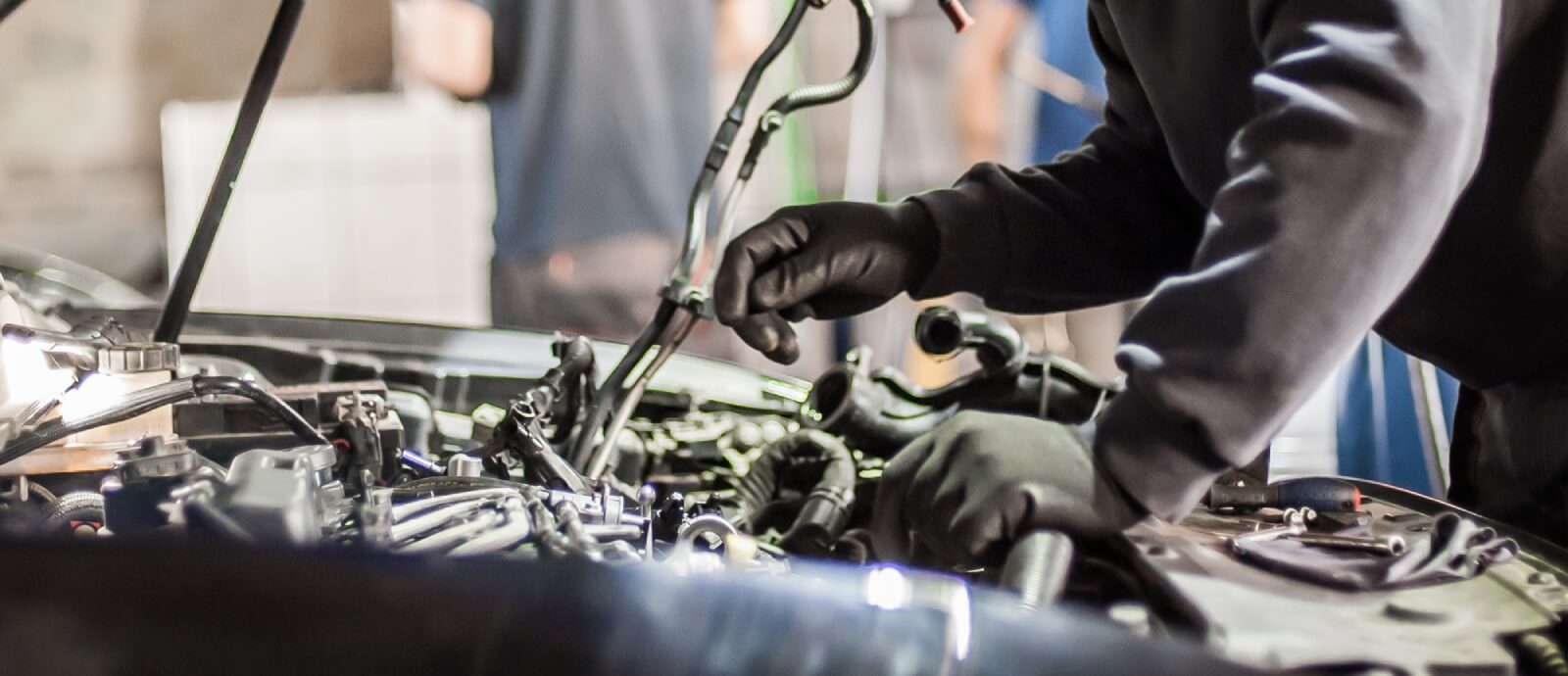
Understanding Engine Vibration: The Usual Suspects
After 15 years of chasing gremlins through engine bays, I’ve learned that engine vibration follows predictable patterns. Your engine is essentially a controlled explosion machine—when everything’s balanced and firing correctly, you barely notice it. When something’s off, you’ll feel it everywhere.
The tricky part? Excessive vibration can mask itself as other problems. I’ve seen customers replace transmissions, axles, and even wheels chasing what turned out to be a $12 vacuum hose. That’s why we diagnose systematically, not by throwing parts at the problem.
Pro Tip: Take a video of your dashboard while the engine’s running rough. Those RPM fluctuations you can’t quite describe to your mechanic? They tell us everything. I’ve diagnosed countless misfires from 10-second phone videos.
Motor Mount Failure: The Silent Destroyer
Motor mounts are the unsung heroes of your driving experience. They’re hydraulic-filled rubber biscuits that absorb engine movement and isolate vibration from the chassis. When they fail—and they all fail eventually—your engine becomes a 300-pound paint mixer bolted directly to your frame.
Telltale Signs of Mount Failure
- Vibration at idle that smooths out when driving
- Clunking when shifting from Park to Drive
- Engine movement visible during acceleration
- Vibration felt through steering wheel and seat
Last month, I diagnosed a 2015 Toyota Camry with 89,000 miles. The customer complained of engine shaking that started suddenly. One look at the passenger-side mount told the story—the hydraulic fluid had leaked out, leaving a collapsed rubber biscuit. The engine was sitting on the frame rail.
Motor Mount Replacement: Step-by-Step
CRITICAL SAFETY WARNING: You’ll be supporting the engine with a jack. Use a block of wood between jack and oil pan. Never place jack directly on oil pan—I’ve seen pans crack, engines drop, and grown men cry.
Must-Have Tools:
- Floor jack and jack stands (minimum 2-ton capacity)
- 15mm and 18mm sockets with breaker bar
- Torque wrench (essential—I’ll give exact values)
- Block of 2×6 wood (engine support)
- Penetrating oil (PB Blaster works best)
Time Estimate:
2-3 hours for first-timers, 45 minutes if you’ve done it before
Support engine with jack and wood block. Remove engine mount bolts (15mm typically). For Honda applications, the through-bolt is 18mm. Torque specification: 47 ft-lbs for mount-to-frame bolts, 81 ft-lbs for through-bolt.
Lower engine 2-3 inches to access mount. Remove old mount (it’ll probably fall apart in your hands). Clean mounting surface with wire brush.
Install new mount—OEM only. I’ve seen aftermarket mounts fail within 10,000 miles. Honda OEM part 50820-T2F-A01 costs $145 vs $65 aftermarket, but the OEM lasts 3x longer.
Cost Breakdown: Motor Mount Replacement
| Component | DIY Cost | Professional Cost |
|---|---|---|
| OEM Mount (Honda example) | $145 | $145 |
| Labor | Your Saturday | $280-350 |
| Shop Supplies | $0 | $25 |
| Total | $145 | $450-520 |
Here’s the math: Even if you buy the $65 aftermarket mount and it lasts 30,000 miles, you’re replacing it three times versus one OEM mount lasting 150,000 miles. The cheap option costs more long-term—I’ve proven this to customers with receipts.
Engine Misfire: When Cylinders Go Rogue
A misfire vibration feels completely different from mount failure. Instead of a constant shake, you get an irregular stumble—like your engine has the hiccups. Your car’s computer hates misfires more than mechanics do, and it’ll throw a check engine light faster than you can say “rough idle.”
The diagnostic process starts with what I call the “three-question rule”: When did it start? Does it happen hot or cold? Does it get worse under load? Your answers narrow down possibilities from 50 potential causes to maybe five.
Shop Secret: 90% of misfires I see are caused by three things: worn spark plugs (40%), bad ignition coils (35%), or vacuum leaks (15%). Start cheap, work expensive. I’ve watched people spend $800 on injectors when they needed $12 worth of spark plugs.
Quick Misfire Diagnosis
Before you start throwing parts at it, do what I do: Start the engine and let it idle. Using a spray bottle, mist water around the spark plug wires (if equipped) and intake manifold gaskets. If the engine stumbles or RPM changes, you’ve found your vacuum leak.
For coil-on-plug systems, I use an infrared thermometer. A misfiring cylinder runs cooler—usually 50-100°F less than firing cylinders. Point and shoot at each exhaust port. The cold one is your problem child.
Learn about engine vibration diagnosis, excessive engine shaking, vibration troubleshooting before you start buying parts. I’ve saved customers thousands with a $20 thermometer.
Mechanical Balance Issues: The Hidden Culprits
Sometimes engine vibration comes from components that should be balanced but aren’t. I’ve seen harmonic balancers separate, flywheels installed wrong, and even new crankshafts that were machined incorrectly from the factory.
These are the nightmare cases—the ones that make you question everything you know. I spent three days on a 2018 Subaru with a vibration that wouldn’t quit. New mounts, balanced tires, alignment—everything checked out. Turned out the crankshaft pulley was 3 grams off from factory. Three grams! That’s the weight of a paperclip.
The Balance Test Procedure
Here’s my field-tested method for tracking down balance issues:
- Remove serpentine belt (eliminates accessories)
- Start engine briefly—if vibration disappears, problem is accessory-related
- If vibration remains, check harmonic balancer for wobble or separation
- Inspect flywheel/flexplate for missing weights or incorrect installation
WARNING: Never run engine more than 30 seconds without serpentine belt. Your water pump isn’t turning, and you’ll overheat faster than you think. I’ve replaced head gaskets because techs got distracted.
Real-World Case Studies
Case #1: The Mystery BMW
2014 BMW 328i, customer complaint: “Feels like driving over rumble strips at 1500 RPM.” No check engine light, no codes, smooth idle. Test drive confirmed vibration at exactly 1480-1520 RPM under light load.
Three shops had replaced motor mounts, transmission mounts, even the driveshaft. I hooked up my scan tool and watched live data—nothing unusual. Then I noticed something: The vanos (variable valve timing) solenoid duty cycle was erratic at that RPM range.
Twenty minutes and two $89 vanos solenoids later, problem solved. The solenoids were sticking slightly, causing minute timing variations that felt like excessive vibration but weren’t severe enough to trigger codes.
Case #2: The Honda That Wouldn’t Quit
2009 Honda Civic, 234,000 miles. Customer’s daughter driving to college, vibration started suddenly on the highway. Shop near her school replaced all four motor mounts—$800 later, still vibrating.
Car showed up on my doorstep with new mounts but same problem. Five-minute test drive told me it wasn’t mounts—the vibration changed with engine load, not RPM. Checked engine mounts anyway (habit), and found the real issue: The passenger mount bolt was loose. The other shop had installed new mounts but didn’t torque the bolts properly.
Twenty minutes with a torque wrench, no charge. The customer tried to pay me the $800 they’d wasted at the other shop. I told them to buy their daughter a good tire pressure gauge instead—better investment.
FAQ: Real Questions from Real Customers
Q: How much does it cost to fix engine vibration?
A: I’ve fixed vibrations for $12 (spark plugs) and I’ve fixed them for $3,200 (crankshaft replacement). The average motor mount job runs $400-600 at a shop, $150-250 DIY. Misfires typically cost $100-400 depending on whether it’s plugs, coils, or injectors. Get a proper diagnosis first—I offer free vibration diagnosis because it’s faster than guessing.
Q: Can I drive with engine vibration?
A: Depends on the cause. Motor mount failure? You’ll break other expensive parts. Misfire? You’re pumping raw fuel into your catalytic converter, turning a $200 repair into a $1,200 repair. Balance issue? Something’s worn or broken and will only get worse. I’ve seen customers turn $200 mount jobs into $2,000 engine rebuilds by “waiting to see if it gets worse.”
Q: Why does my engine shake only when cold?
A: Classic sign of vacuum leaks or worn engine mounts. Cold rubber is stiff, so mount deterioration shows up immediately. As everything warms up and expands, symptoms disappear. I’ve seen intake manifold gaskets that seal when warm but leak like sieves when cold. Quick test: Start cold, spray carb cleaner around intake gaskets. If RPM changes, you’ve found it.
Q: Will thicker motor mounts reduce vibration?
A: Aftermarket “performance” mounts are stiffer, not thicker. They reduce engine movement but increase vibration transfer to the chassis. Great for race cars, terrible for daily drivers. Stick with OEM rubber compounds—they’re engineered for your specific vehicle. I’ve replaced dozens of polyurethane mounts that customers hated after two weeks.
Q: Can bad gas cause engine vibration?
A: Absolutely. Contaminated fuel causes misfires, and misfires feel like vibration. I see this every spring when people switch to “summer blend” gas stations haven’t purged their winter inventory. Water in fuel is worse—feels like your engine’s having seizures. If vibration started right after filling up, try a bottle of quality fuel system cleaner and top-tier gas from a different station.
The Bottom Line
After 15 years of chasing engine vibration problems, here’s what I’ve learned: Start simple, work systematically, and never assume the previous guy did it right. Whether it’s motor mount failure, misfire vibration, or something exotic like a separated harmonic balancer, the diagnostic process is the same—eliminate variables until you’re left with the truth.
The best mechanics aren’t the ones with the most expensive tools—they’re the ones who’ve seen the same problems enough times to recognize patterns. That BMW with the vanos issue? I’d seen it before. The Honda with loose mount bolts? Classic rookie mistake. Your vibration problem might be unique to you, but I guarantee it’s not unique to the automotive world.
DIY or professional, the math is simple: Proper diagnosis saves money. I’ve watched customers spend $2,000 chasing a $200 problem because they skipped the diagnostic steps. Take the time to understand what’s actually wrong before you start buying parts. Your wallet (and your mechanic) will thank you.
Final Pro Tip: Buy a $20 OBD2 scanner and learn to use it. Even if you don’t understand all the data, screenshotting live readings when problems occur gives your mechanic invaluable diagnostic information. I’ve solved problems in minutes that would have taken hours without that data.
Engine vibration isn’t just annoying—it’s your car’s way of telling you something’s wrong. Listen to it. Fix it right the first time. And maybe buy your mechanic a coffee while you’re at it. We run on caffeine and solve problems you didn’t know existed, usually for less than you spent on dinner last weekend.