10 Best Compact SUVs for Families 2025 | ASE Mechanic’s Real-World Guide & Rankings

Last Tuesday, a young couple walked into my shop with their three-year-old daughter clutching a stuffed giraffe. They’d just bought a used Mazda CX-5, and the dad wanted me to check it over before the return period ended. “We need something reliable,” he said, glancing back at the car seat. “Something that’ll keep her safe but won’t bankrupt us on gas.”

I’ve had this conversation hundreds of times.

Quick Comparison: Top 10 Compact SUVs for Families
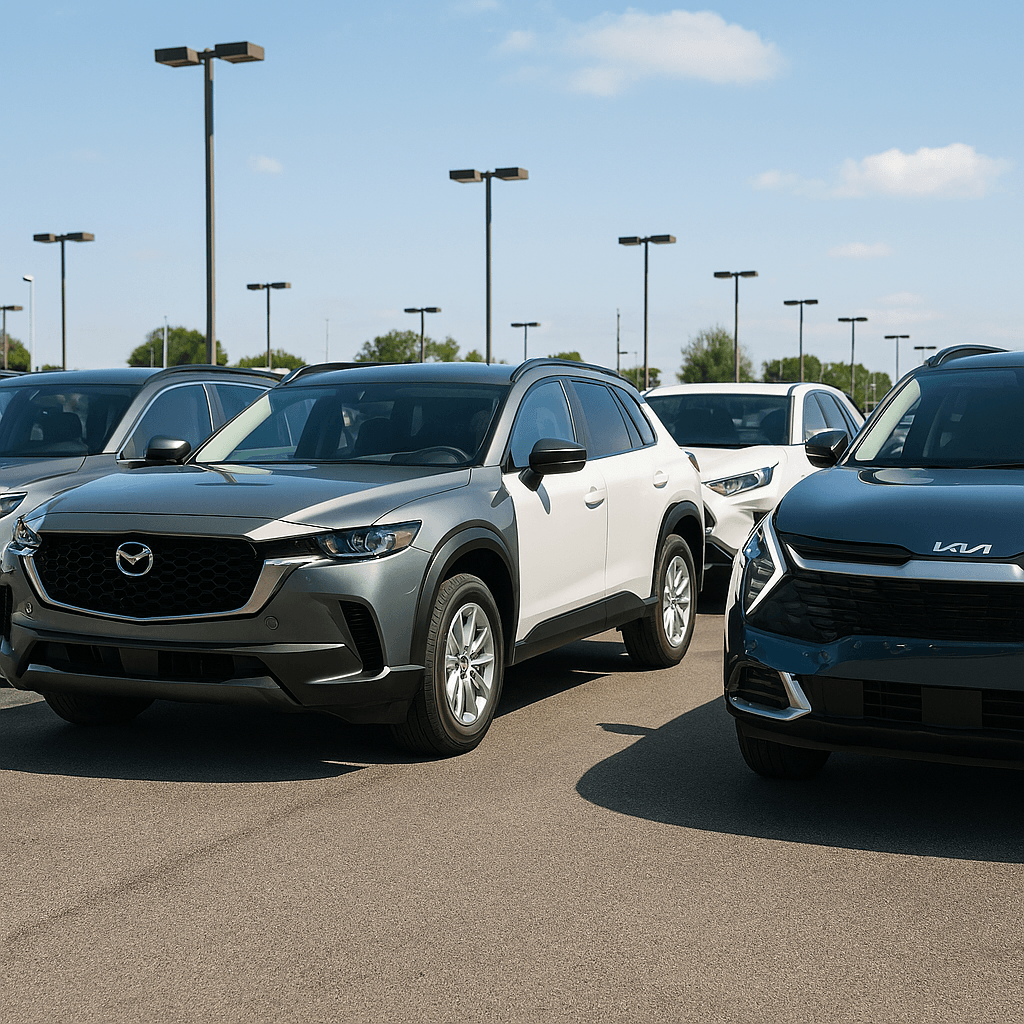
Click vehicle names to jump to full reviews. Based on 23 years of repair data and real family feedback.

# Model Best For Price MPG Cargo Score
1 Honda CR-V Overall Value & Reliability $32,000 32 39.3 ft³ 9.5/10
2 Mazda CX-50 Premium Feel & Driving Fun $29,500 27 31.4 ft³ 9.3/10
3 Toyota RAV4 Maximum Reliability $30,500 30 37.6 ft³ 9.2/10
4 Subaru Forester Winter Weather & Space $29,000 29 31.1 ft³ 9.0/10
5 Hyundai Tucson Maximum Features $29,200 29 38.7 ft³ 8.8/10
6 Kia Sportage Best Value $28,500 28 39.5 ft³ 8.7/10
7 Nissan Rogue Quiet Ride $30,000 33 36.5 ft³ 8.2/10
8 VW Tiguan 3rd Row Option $30,000 25 37.6 ft³ 7.8/10
9 Chevy Equinox Lowest Price $28,600 28 29.9 ft³ 7.5/10
10 Ford Escape Hybrid Fuel Economy $31,000 38 (hybrid) 37.5 ft³ 8.0/10

💡 Note: Click any vehicle name to jump to detailed review. Scoring based on reliability (30%), family practicality (25%), safety (20%), value (15%), and driving experience (10%).

The compact SUV has become America’s default family vehicle, and for good reason. You get the elevated seating position and cargo space of a larger SUV without the fuel penalty or parking lot anxiety. You get modern safety technology that didn’t exist when you were a kid. And you get enough back seat room for car seats without requiring a forklift operator’s license to parallel park.

But here’s what the glossy brochures won’t tell you: not all compact SUVs are created equal when you’re actually living with one as a family vehicle. Some have car seat anchors positioned where only a contortionist could reach them. Others have cargo areas that look spacious until you try fitting a stroller and a week’s worth of groceries. And a few have infotainment systems so complicated that you’ll still be fumbling with the screen at the third stoplight while your toddler screams about the wrong Bluey episode.

I’ve worked on every vehicle on this list. I’ve diagnosed their common problems, replaced their wear items, and listened to families describe what works and what drives them crazy after two years of ownership. This isn’t a comparison based on a weekend test drive—it’s based on what these SUVs are actually like when you’re loading them up four times a day, every day, for years.

Best Compact SUVs for Small Families (1-2 Kids)

If you have a small family with one or two young children, you don’t need a massive three-row SUV. These best small family SUVs offer the perfect balance of manageable size for city parking while providing enough cargo space for strollers, diaper bags, and weekly grocery shopping.

Why Small SUVs Beat Sedans for Young Families

  • Easier car seat installation: Higher seating position = less back strain when buckling kids in 4x daily
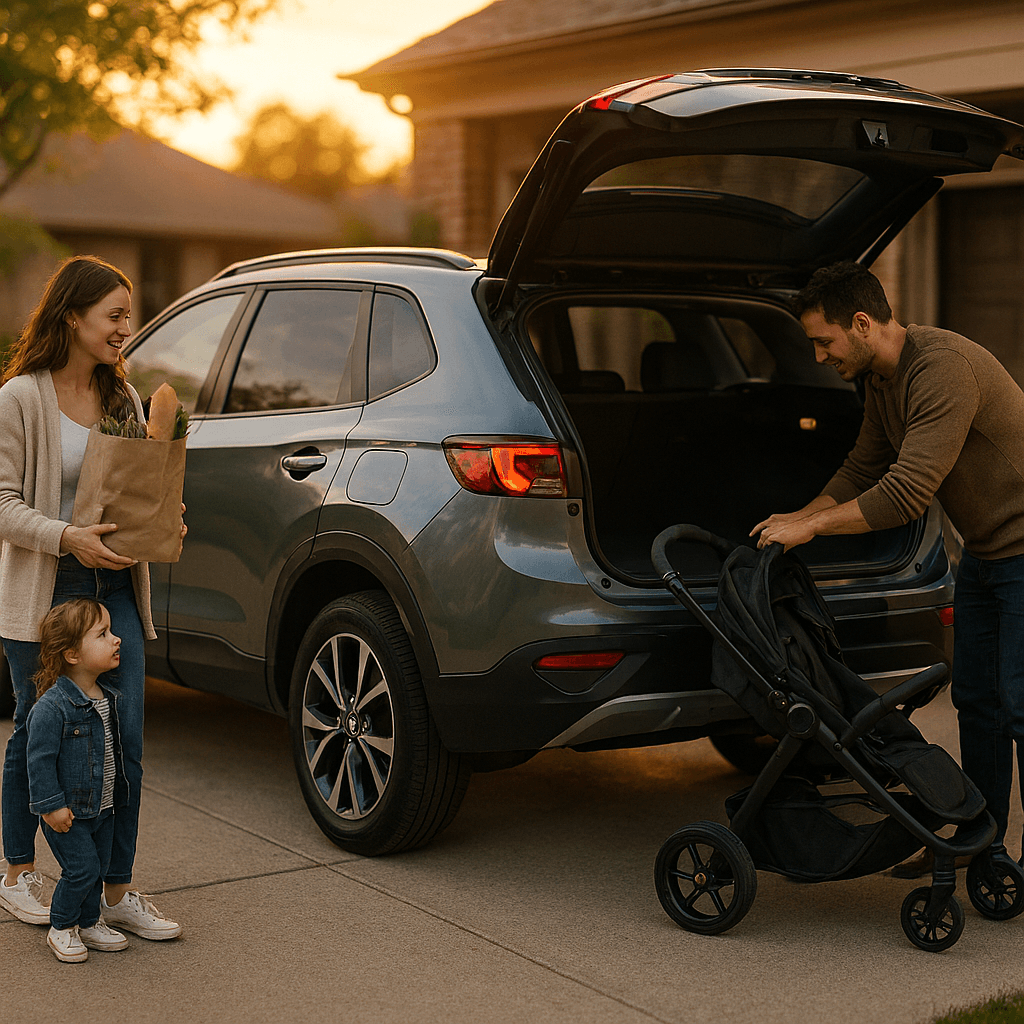
  • Stroller accessibility: Hatchback swallows full-size strollers without trunk Tetris
  • Parking advantage: Compact SUVs fit in tight city parking spots that minivans can’t
  • Better visibility: See over traffic, spot your kids in crowded parking lots
  • Fuel economy: 27-32 mpg vs 20-24 mpg for larger 3-row SUVs
  • Lower insurance: Compact SUVs cost $300-500/year less to insure than midsize SUVs

🥇 Top Pick: Mazda CX-50

Best for: Small families who value premium interior quality and driving enjoyment

  • Size advantage: 182.5″ long = easier urban parking than CR-V’s 184.8″
  • Car seats: Two rear-facing seats fit comfortably in 39.3″ of legroom
  • Cargo: 31.4 cu ft = double stroller + groceries + diaper bag
  • Premium feel: Stitched leather, quiet cabin, Bose audio
  • Trade-off: Lower fuel economy (27 mpg) costs $400/year more vs CR-V

“Perfect for couples with 1-2 kids who actually enjoy their commute. The premium interior makes daily daycare drop-offs more pleasant.” —Owner review

🥈 Growth Room: Honda CR-V

Best for: Small families planning to expand or who need maximum cargo space

  • Rear seat: 41.3″ legroom = three car seats fit across (Graco 4Ever tested)
  • Cargo: 39.3 cu ft = largest in class, low 29.5″ liftover height
  • Future-proof: When baby #2 or #3 arrives, no need to trade vehicles
  • Fuel economy: 32 mpg saves $400/year vs Mazda
  • Reliability: Will run 200,000+ miles with basic maintenance

“We have two kids now, but when we have a third, the CR-V will handle it without us needing a minivan.” —Owner, married with 2 kids

🥉 Budget Pick: Kia Sportage

Best for: Small families on a budget who want modern features

  • Price: $28,500 = $3,500 less than CR-V with similar space
  • Features: Heated seats, wireless charging, 8″ screen standard (extras on Honda)
  • Warranty: 10yr/100k powertrain (vs Honda’s 5yr/60k)
  • Space: 39.5 cu ft cargo + 41.3″ rear legroom
  • 3-year savings: $2,000 less total cost vs Honda

“We wanted the CR-V but couldn’t justify the extra $3,500. The Kia has more features for less money.” —Budget-conscious parent

Real Cost Comparison for Small Families (3-Year Ownership)

Based on 15,000 miles/year, married couple insurance rates, $3.50/gallon fuel:

Expense Mazda CX-50 Honda CR-V Kia Sportage
Purchase price $31,500 $32,000 $28,500
Fuel (45k mi) $5,833 $4,922 $5,625
Insurance $3,200 $3,600 $2,900
Maintenance $1,400 $1,200 $1,300
Depreciation $13,200 $12,800 $14,200
Total 3-Year Cost $55,133 $54,522 $52,525
Monthly all-in cost $897/mo $903/mo $828/mo

💡 Bottom line for small families: The Kia saves you $2,000 over 3 years ($75/month). If budget is priority #1, buy the Kia. If you want the best driving experience and don’t mind spending an extra $75/month, buy the Mazda. If you’re planning more kids soon or need maximum cargo flexibility, buy the Honda.

Which Small Family SUV Should You Choose?

Choose Mazda CX-50 if:

  • You have 1-2 kids, no plans for more
  • You live in a city and value easy parking
  • You want premium feel on non-luxury budget
  • You actually enjoy driving your daily commute

Choose Honda CR-V if:

  • You might have another child in 2-3 years
  • You need to haul large items weekly (sports equipment, Costco runs)
  • Reliability and resale value are top priorities
  • You want the safest long-term bet

Choose Kia Sportage if:

  • Budget is tight but you want modern features
  • You plan to keep vehicle 5-7 years (warranty)
  • You prioritize heated seats and tech features
  • Monthly payment matters more than resale

What Makes a Compact SUV Actually Good for Families?

Before we dive into specific models, let’s establish what matters when you’re hauling kids instead of impressing your friends at Cars & Coffee.

Safety Technology That Actually Works

Every compact SUV now comes standard with automatic emergency braking and lane keeping assist. But the execution varies wildly. Some systems brake so aggressively at phantom obstacles that you’ll disable them within a week. Others provide gentle interventions that actually keep you safer without scaring the kids in the back seat.

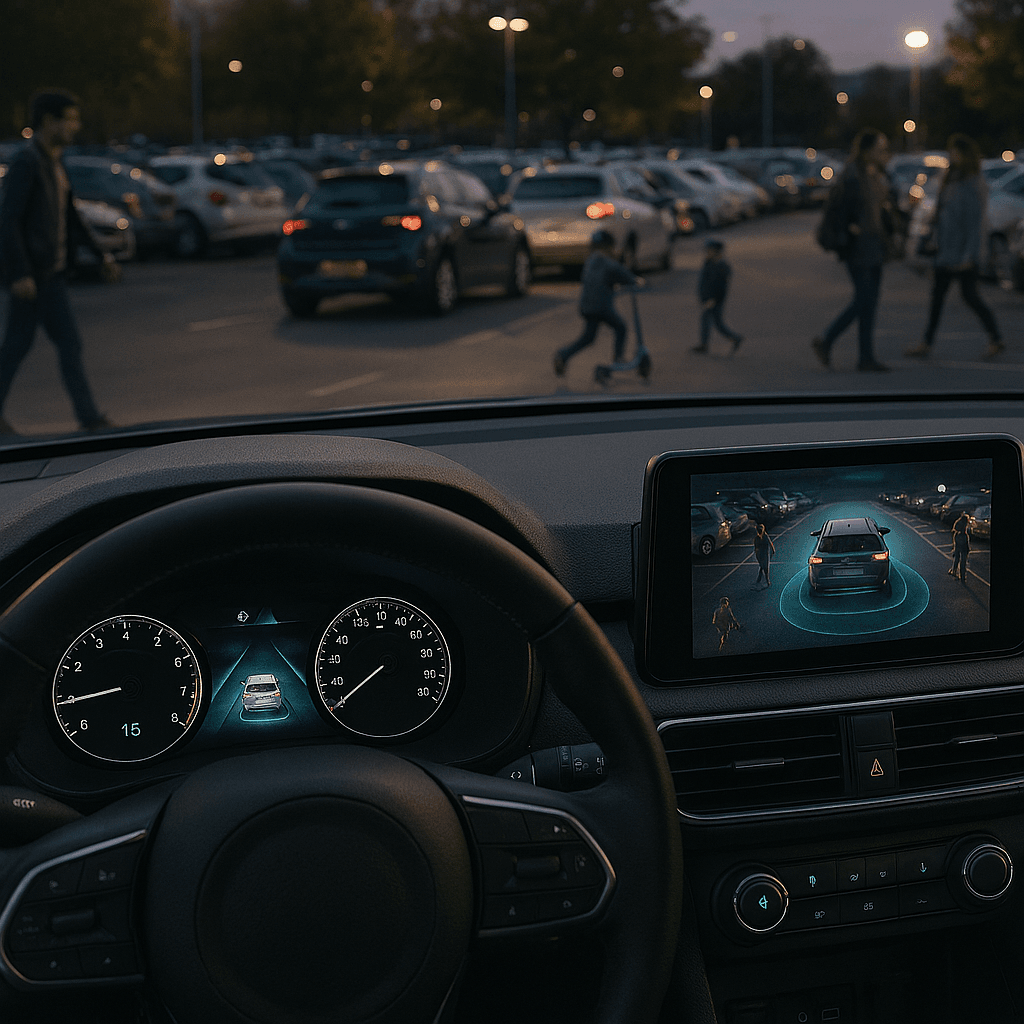
Top-tier family SUVs include blind spot monitoring with rear cross-traffic alert—critical when you’re backing out of parking spots with limited visibility. The best systems also have rear door alerts that remind you to check the back seat, which sounds silly until you’re running on four hours of sleep.

Cargo Space: The Numbers Lie

Manufacturer specs list cargo volume in cubic feet, but those numbers are nearly meaningless. What matters is the shape of that space and how the seats fold. Some SUVs have 30 cubic feet behind the rear seats but a narrow, tall cargo area that won’t fit a stroller sideways. Others have 28 cubic feet that’s wide and flat, swallowing everything you throw at it.

Look for power liftgates with memory settings and kick-sensor activation. When you’re carrying a sleeping toddler and a diaper bag, fumbling for the key fob isn’t an option.

Back Seat Reality Check

The back seat needs three things: easy car seat installation with accessible LATCH anchors, enough width for two car seats without excessive overlap, and rear air vents so your kids aren’t melting in summer traffic.

Sliding rear seats add versatility—slide them back for long-legged kids, forward for more cargo space. Some models also recline the rear seats, which seems minor until your five-year-old falls asleep on a road trip.

Infotainment: Keep It Simple

You need wireless Apple CarPlay and Android Auto, multiple USB ports (including in the back seat), and climate controls that don’t require drilling through three menu screens. The best systems let you adjust temperature with physical buttons while Android Auto runs navigation. The worst make everything touchscreen-dependent, guaranteeing frustration when you’re trying to adjust something while driving.

Fuel Economy That Matters

Compact SUVs typically achieve 25-32 mpg combined. That might not sound like a huge spread, but over 15,000 miles annually, the difference between 26 mpg and 31 mpg is about $350 per year at $4.00 per gallon. Over a typical seven-year ownership period, that’s nearly $2,500—not nothing for a family budget.

Reliability You Can Count On

Family vehicles need to start every morning and not leave you stranded. I track which SUVs come back to my shop most frequently and for what problems. Some brands nail reliability. Others nickel-and-dime you with electronic gremlins and premature wear on expensive components.

How to Compare Compact SUVs for Families: The Real-World Framework

After helping hundreds of families choose their family vehicle over 23 years, I’ve developed a comparison framework that focuses on what actually matters in daily family use rather than marketing specs.

Step 1: Test What Salespeople Won’t Show You

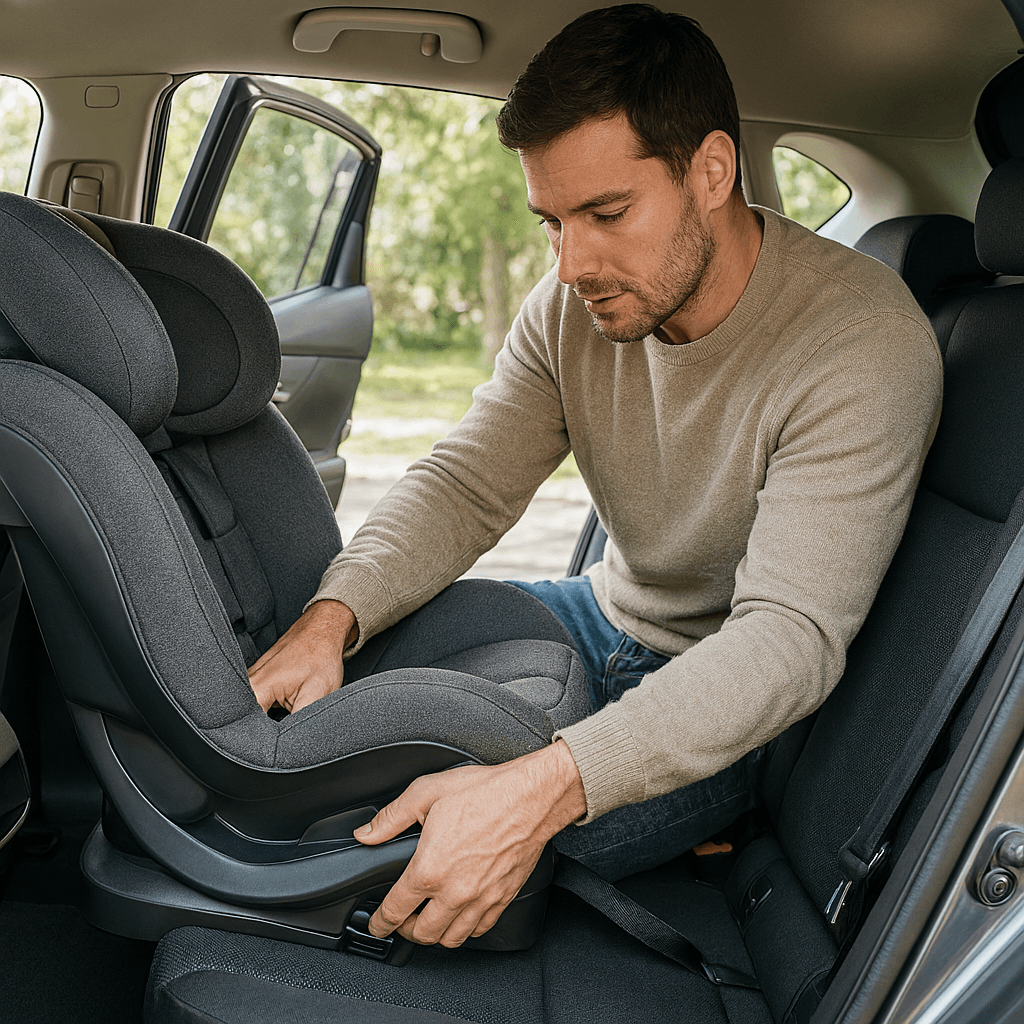
Car Seat Installation Reality Check

When comparing compact SUVs, bring your actual car seats to the dealership. Not just to look—actually install them.

⚠️ Red flags to watch for:

  • LATCH anchors buried deep in seat cushion → You’ll struggle every time (Nissan Rogue, Chevy Equinox)
  • Top tether anchors hidden under plastic covers → Add 5 minutes to every install (VW Tiguan)
  • Narrow rear seat (under 55″) → Two car seats overlap, forget three-across (Mazda CX-50: 54.4″)
  • Doors don’t open wide enough (under 80°) → You’ll hit your head getting kids in/out
  • Seat belt buckles positioned where car seat interferes → Test this!

✅ Green lights during comparison:

  • LATCH anchors clearly visible and accessible (Honda CR-V, Toyota RAV4)
  • Top tether anchors labeled with obvious icons (Subaru Forester)
  • Wide rear seat (56″+) → Three car seats fit comfortably (CR-V, Tucson, Sportage)
  • Doors open 85°+ → Easy access without contortions (Hyundai Tucson, Kia Sportage)
  • Flat rear floor → Stable car seat base (Honda CR-V)

Cargo Space: Shape Beats Volume

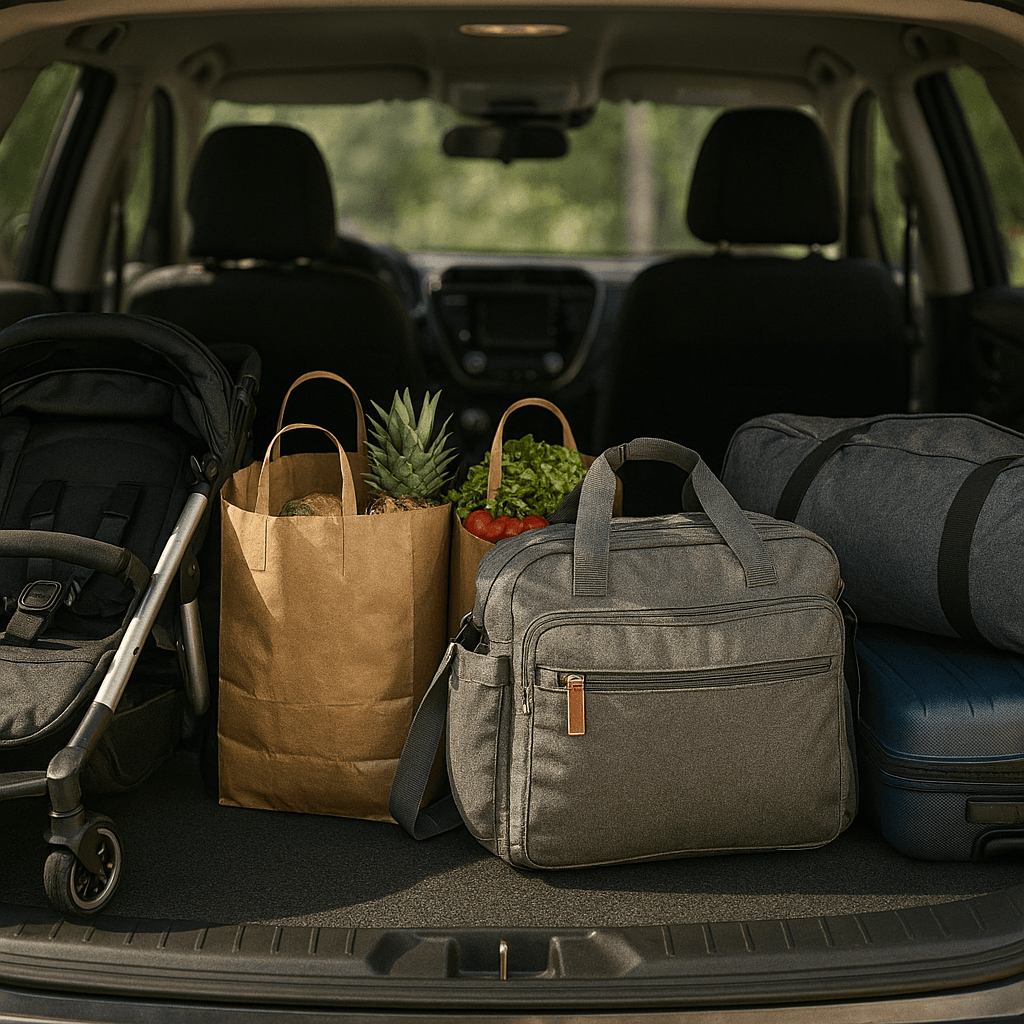
Don’t trust the cubic feet numbers. When comparing compact SUVs for families, bring your stroller to the dealership and actually load it.

Model Volume Opening Width Liftover Height Double Stroller Fit?
Honda CR-V 39.3 cu ft 48.2″ 29.5″ (low) ✅ Sideways
Kia Sportage 39.5 cu ft 47.8″ 30.1″ ✅ Sideways
Subaru Forester 31.1 cu ft 50.1″ 27.8″ (lowest) ✅ Sideways + more
Mazda CX-50 31.4 cu ft 44.8″ 31.2″ (high) ⚠️ Diagonal only
Chevy Equinox 29.9 cu ft 42.5″ 32.1″ (highest) ❌ Won’t fit most

💡 Pro tip: Bring your actual double stroller (UPPAbaby Vista, Baby Jogger City Mini GT2, BOB Revolution) to the dealership. Test-fit it before you buy. Some “spacious” SUVs won’t accommodate wider models.

Step 2: Calculate True Ownership Cost (Not Monthly Payment)

Dealerships focus on monthly payment. Smart families calculate total cost of ownership when comparing compact SUVs:

Purchase Price – Resale Value + Fuel + Insurance + Maintenance = True Total Cost

Example: Honda CR-V vs Mazda CX-50 vs Kia Sportage (5 Years)

Cost Category Honda CR-V Mazda CX-50 Kia Sportage
Purchase price $32,000 $31,500 $28,500
Fuel (75k mi @ $3.50/gal) $8,203 $9,722 $9,375
Insurance (5 years) $6,000 $5,500 $4,800
Maintenance + Repairs $2,800 $3,500 $3,600
Resale value (55%, 50%, 47%) -$17,600 -$15,750 -$13,455
Total 5-Year Cost $31,403 $34,472 $32,820
Cost per month (all-in) $523/mo $575/mo $547/mo

💰 Key insight: The Kia costs $3,500 less upfront but only $1,417 less over 5 years due to higher depreciation. The Mazda’s premium interior costs you $52/month more than the Honda. For many families with longer commutes, that’s worth it. For budget-focused families doing only daycare drop-offs, it’s not.

Step 3: Test Drive Like a Parent (Not a Car Enthusiast)

Most people test drive for 15 minutes on smooth roads. That’s useless for family vehicle comparison. Here’s what to actually test:

✓ Install Car Seats
  • Time how long installation takes from scratch
  • Check LATCH anchor accessibility
  • Test getting child in/out while parked between two cars
  • Verify tether anchor ease of use
✓ Load Cargo Area
  • Bring your stroller, test sideways fit
  • Simulate loading groceries (use brochures)
  • Test power tailgate function
  • Check if you can reach far back items without crawling in
✓ Navigate Tight Spaces
  • Drive through busy parking lot
  • Attempt to parallel park
  • Test blind spot visibility when backing
  • Verify rear cross-traffic alert works
✓ Daily Scenario Tests
  • Drive through a drive-through (can you reach?)
  • Test cupholders with travel mugs + sippy cups
  • Check door pocket storage (will wipes fit?)
  • Verify rear USB port locations for tablets

Bottom Line: How to Compare Compact SUVs Smart

When comparing compact SUVs for families, ignore the marketing fluff. Test car seat installation with your actual seats. Load your actual stroller. Calculate 5-year ownership cost, not just monthly payment. Test drive in real scenarios: parking lots, drive-throughs, tight streets. The “best” compact SUV is the one that handles your daily family life smoothly—whether that’s daycare drop-offs, weekly Costco runs, or cross-country road trips with three screaming kids.

Now let’s look at the ten best options, ranked by how well they actually serve families in real-world use.

#1

Honda CR-V: The Gold Standard for Good Reason

Starting Price
$32,000
Fuel Economy
32 mpg combined
Cargo Space
39.3 cu ft
Rear Legroom
41.3 inches

The Honda CR-V has been America’s best-selling compact SUV for years, and spending time with families who own them explains why. It doesn’t excel at any single thing—it just does everything well without drama.

What Makes It Great for Families

The CR-V’s rear seat is genuinely spacious with 41.3 inches of legroom, and the floor is nearly flat, making it easy to install car seats. The LATCH anchors are right where you expect them, and the top tether anchors are clearly marked. I’ve watched parents install car seats in under five minutes without consulting the manual—that’s rare.

Cargo space is class-leading and smartly shaped. The floor is low, making it easy to lift heavy items, and the opening is wide enough to slide in a double stroller without gymnastics. The power tailgate includes a programmable height setting, essential for shorter drivers or low garage ceilings.

Honda’s infotainment system won’t win design awards, but it’s logical and responsive. Physical climate controls mean you’re not hunting through screens while driving. Wireless Apple CarPlay works reliably, and there are USB-C ports in both rows.

The Real-World Downsides

The 1.5-liter turbocharged engine occasionally exhibits a slight lag when you need immediate power for highway merging. It’s not dangerous, just noticeable. Some owners report oil dilution issues in extremely cold climates with lots of short trips, though Honda has addressed this with software updates.

Road noise is moderately high on coarse pavement—not terrible, but noticeably louder than the Mazda CX-50 or Subaru Outback. The lane keeping assist can be overly aggressive, though you can adjust the sensitivity.

Maintenance Reality

This is where the CR-V shines. Oil changes every 7,500 miles with synthetic oil, brake pads typically lasting 50,000+ miles thanks to decent-quality pads and light rotors that resist warping. I see fewer CR-Vs for unexpected repairs than nearly any other compact SUV. The continuously variable transmission (CVT) has proven reliable despite early internet skepticism.

Best for: Families who want one vehicle that does everything competently without surprises.

#2

Mazda CX-50: The Driver’s Choice That Still Works for Kids

Starting Price
$29,500
Fuel Economy
27 mpg combined
Cargo Space
31.4 cu ft
Rear Legroom
39.3 inches

The Mazda CX-50 is what happens when engineers who actually enjoy driving design a family SUV. It handles better than most compact sedans while still providing the space and practicality parents need.

What Makes It Great for Families

The interior quality is a full class above its price point. Real stitched materials, thick door panels, and seats with actual support make this feel like a $45,000 vehicle. The cabin is noticeably quieter than competitors, which matters when you’re trying to have a conversation or enjoy the excellent Bose audio system.

The back seat offers 39.3 inches of legroom and a flat floor. Car seat installation is straightforward, and the doors open wide enough to lean in without contorting. Rear air vents keep the back seat comfortable, and there are USB ports within easy reach.

The driving experience is best-in-class. The steering communicates what the front wheels are doing, the suspension absorbs bumps without feeling floaty, and the turbo engine (in upper trims) delivers smooth power. If you actually enjoy driving rather than just tolerating it, this is your SUV.

The Real-World Downsides

Cargo space is the smallest in this comparison. Those 31.4 cubic feet are usable, but families with three kids or frequent road trips will notice the limitation. The cargo floor is also higher than competitors, making it harder to lift heavy items.

Fuel economy lags behind Honda and Toyota, particularly with the optional turbocharged engine. If you’re prioritizing fuel costs, this isn’t the answer.

The infotainment system uses a rotary controller rather than a touchscreen, which some families find frustrating. I personally prefer physical controls, but your spouse might disagree after the third time trying to spell a destination.

Maintenance Reality

Mazda’s traditional six-speed automatic transmission is more reliable long-term than many CVTs. The turbocharged engine requires premium fuel in upper trims, adding $200-300 annually to operating costs. Brake pads last well, and I see relatively few mechanical issues. The main complaints are minor electrical gremlins—infotainment glitches that require reboots.

Best for: Families who want a premium feel and engaging driving dynamics, willing to accept slightly less cargo space and fuel economy.

#3

Toyota RAV4: Legendary Reliability Meets Modern Safety

Starting Price
$30,500
Fuel Economy
30 mpg combined
Cargo Space
37.6 cu ft
Rear Legroom
37.8 inches

The RAV4 is the second-best-selling vehicle in America (only the F-150 sells more), and Toyota’s reputation for reliability is the primary reason families choose it.

What Makes It Great for Families

The RAV4 will start every single morning for the next 200,000 miles. I’ve seen RAV4s from the 1990s still running strong with basic maintenance. This generation continues that tradition with Toyota’s bulletproof 2.5-liter four-cylinder engine and proven eight-speed automatic transmission.

The back seat offers 37.8 inches of legroom and accommodates two car seats comfortably. The cargo area is well-shaped and practical, with a low load floor and wide opening. The hybrid powertrain (available in multiple trims) delivers 40 mpg combined, transforming your fuel costs.

Toyota Safety Sense comes standard with adaptive cruise control that works smoothly in stop-and-go traffic, lane keeping assist that’s not overly intrusive, and automatic emergency braking with pedestrian detection. The system is mature and refined after years of development.

The Real-World Downsides

The RAV4 drives like a vehicle engineered by accountants, not enthusiasts. The steering is numb, the ride quality is acceptable but not comfortable, and the cabin noise is high. It’s perfectly functional transportation, but if you value driving enjoyment, look elsewhere.

The infotainment system is Toyota’s weakest point. The interface is dated, response times are slow, and the screen positioning creates glare in bright sunlight. At least Apple CarPlay and Android Auto mask most of the issues.

Interior materials feel cheap for the price. Lots of hard plastics, basic cloth seats in lower trims, and an overall aesthetic that screams “function over form.”

Maintenance Reality

This is the RAV4’s superpower. Oil changes every 10,000 miles, brake pads lasting 60,000+ miles, and virtually no unexpected repairs in the first 100,000 miles. The hybrid system adds complexity but has proven remarkably reliable, and battery degradation is minimal over 10+ years.

Resale value is exceptional—RAV4s retain 60-65% of their value after three years, meaning your total ownership cost is lower despite a higher purchase price.

Best for: Families prioritizing reliability and resale value over driving enjoyment and interior refinement.

#4

Subaru Forester: All-Wheel Drive and Practicality Perfected

Starting Price
$29,000
Fuel Economy
29 mpg combined
Cargo Space
31.1 cu ft
Rear Legroom
39.2 inches

The Forester is Subaru’s best-selling vehicle, popular with families in snowy climates who need genuine all-wheel-drive capability without the fuel penalty of a larger SUV.

What Makes It Great for Families

Subaru’s symmetrical all-wheel drive comes standard—not as an expensive option—and it works brilliantly in winter conditions. The ground clearance of 8.7 inches (higher than most competitors) means you won’t be plowing snow with your front bumper.

The boxy design maximizes interior volume. The cargo area is massive when seats fold flat, and the rear seat offers excellent headroom thanks to the tall roofline. Visibility is outstanding with thin pillars and large windows—you can actually see out of this vehicle, making parking lot maneuvering less stressful.

The EyeSight safety system is excellent, with responsive adaptive cruise control and effective lane centering. Blind spot monitoring and rear cross-traffic alert are standard across all trims, not relegated to expensive packages.

The Real-World Downsides

The 2.5-liter four-cylinder engine feels underpowered, particularly with a full load of passengers and cargo. Highway passing requires planning and patience. The CVT transmission exhibits the characteristic “rubber band” feel that some drivers find annoying.

Interior materials are functional but not luxurious. Lots of hard plastics and basic cloth seats in lower trims. The infotainment system is responsive but not particularly attractive.

Wind noise at highway speeds is noticeable, and the ride quality is firm over rough pavement. It’s not uncomfortable, but the Mazda and Honda are quieter and smoother.

Maintenance Reality

Subarus have a mixed reliability reputation, but the Forester is one of their better vehicles. The naturally aspirated 2.5-liter engine is simple and durable. I see fewer head gasket issues with this generation compared to older Subarus.

The CVT requires fluid changes every 60,000 miles—a service many owners skip, leading to premature failure. Follow the maintenance schedule and you’ll likely reach 150,000+ miles without major issues.

All-wheel drive means slightly higher maintenance costs—differential fluid changes, potential issues with the transfer case—but these are minor compared to the winter capability you gain.

Best for: Families in snowy climates who need genuine all-weather capability and maximum cargo space.

#5

Hyundai Tucson: Value and Features You Won’t Believe

Starting Price
$29,200
Fuel Economy
29 mpg combined
Cargo Space
38.7 cu ft
Rear Legroom
41.5 inches

The redesigned Tucson looks like a concept car that accidentally made it to production. Love it or hate it aesthetically, it delivers exceptional value with standard features that competitors charge thousands extra for.

What Makes It Great for Families

The feature list is staggering. Even base models include LED headlights, wireless Apple CarPlay/Android Auto, heated front seats, and an 8-inch touchscreen. Move up one trim and you get a digital instrument cluster, power driver’s seat, and blind spot monitoring. The top trims include ventilated seats, a 10.25-inch touchscreen, and a surround-view camera—features typically found in luxury SUVs.

The back seat offers 41.5 inches of legroom, best-in-class by a significant margin. Three kids fit comfortably, and adults won’t feel cramped. The cargo area is well-shaped with a flat load floor and convenient underfloor storage.

The hybrid powertrain delivers 37 mpg combined, cutting fuel costs dramatically while adding zero-lag acceleration from the electric motor. The plug-in hybrid (if you can find one) offers 32 miles of electric-only range—enough for most daily commutes.

The Real-World Downsides

Hyundai’s reliability has improved dramatically, but it’s not Toyota-level yet. I see more electronic issues—infotainment glitches, sensor failures, minor electrical problems. Most are covered under warranty, but they’re annoying.

The dual-clutch transmission in some models can be jerky in stop-and-go traffic. The regular automatic (in the hybrid) is smoother and more refined.

Resale value lags behind Honda and Toyota. You’ll lose more money in depreciation despite the lower purchase price and better initial features. Over seven years of ownership, this largely balances out.

Maintenance Reality

The 2.5-liter four-cylinder engine is solid and shares architecture with Kia. Oil changes every 7,500 miles, routine maintenance costs are reasonable, and parts availability is good. The hybrid system is still relatively new in this application—long-term reliability is unknown but early signs are positive.

The 10-year/100,000-mile powertrain warranty provides peace of mind, though the bumper-to-bumper warranty is only 5 years/60,000 miles.

Best for: Budget-conscious families who want maximum features and don’t mind slightly lower resale value.

#6

Kia Sportage: Hyundai’s Twin with Better Styling

Starting Price
$28,500
Fuel Economy
28 mpg combined
Cargo Space
39.5 cu ft
Rear Legroom
41.3 inches

The Sportage shares its platform, powertrains, and many components with the Hyundai Tucson, but wears more conservative styling and offers slightly different feature combinations.

What Makes It Great for Families

If the Tucson’s aggressive styling turns you off, the Sportage delivers the same excellent value in a more traditional package. The interior is well-designed with high-quality materials and a logical control layout.

The infotainment system is one of the best in the segment—responsive touchscreen, crisp graphics, intuitive menus, and reliable wireless smartphone integration. The dual-screen setup in upper trims looks expensive and works well.

Back seat space matches the Tucson with 41.3 inches of legroom. The cargo area is smartly designed with multiple underfloor compartments and tie-down points. The power liftgate includes hands-free operation and programmable height.

The hybrid model is particularly impressive, delivering 38 mpg combined with smooth, refined power delivery. The electric motor fills in any gaps in the gas engine’s power band, creating effortless acceleration.

The Real-World Downsides

The same reliability concerns apply—Kia has improved dramatically but still lags Toyota and Honda. Electronic issues are the most common complaint, though major mechanical failures are rare.

The ride quality is firm, especially in sport trim with larger wheels. It’s not uncomfortable, but families prioritizing a soft, cushy ride might prefer the Honda CR-V.

Like the Tucson, resale value trails the segment leaders. Factor this into your long-term cost calculation.

Maintenance Reality

Mechanically identical to the Tucson, so expect similar maintenance costs and patterns. The 10-year/100,000-mile powertrain warranty matches Hyundai and provides excellent protection.

Parts are interchangeable between Hyundai and Kia at most independent shops, keeping repair costs reasonable. The dealer network is extensive, and most service departments offer competitive pricing.

Best for: Families who want the Tucson’s value and features in more conservative styling, with slightly better infotainment execution.

#7

Nissan Rogue: Comfortable, Quiet, and Compromised

Starting Price
$30,000
Fuel Economy
33 mpg combined
Cargo Space
36.5 cu ft
Rear Legroom
38.5 inches

The Rogue is Nissan’s best-selling vehicle and one of the most popular compact SUVs in America. It emphasizes comfort and refinement over driving dynamics.

What Makes It Great for Families

The Rogue’s cabin is exceptionally quiet. Nissan invested in sound deadening materials that create a serene environment even at highway speeds. The ride quality is soft and comfortable, absorbing bumps that would jostle passengers in competitors.

The Zero Gravity seats (Nissan’s marketing term) are genuinely comfortable on long trips with good lumbar support and cushioning. The back seat offers 38.5 inches of legroom and feels spacious thanks to excellent headroom.

Fuel economy is best-in-class for non-hybrid compact SUVs. The CVT transmission has been refined to minimize the “rubber band” feel, and it works smoothly in typical driving.

ProPilot Assist (Nissan’s driver assistance system) works well for highway driving, handling steering and speed control with minimal intervention needed. It’s not as sophisticated as Tesla’s Autopilot, but it reduces fatigue on long trips.

The Real-World Downsides

Nissan’s CVT transmission has a troubled reliability history. This generation is improved, but I still see more CVT failures in Rogues than transmission problems in Honda or Toyota vehicles. Nissan extended the warranty to 84,000 miles on some model years, acknowledging the issue.

The 2.5-liter engine feels underpowered, particularly with a full load. Highway passing requires patience, and the engine drones loudly when you ask for acceleration.

Interior materials are acceptable but not special. Lots of hard plastics, and some switchgear feels flimsy. The infotainment system is dated with slow response times.

Maintenance Reality

Beyond the CVT concerns, routine maintenance is straightforward. Oil changes every 5,000 miles (Nissan’s recommendation is conservative), brake pads last reasonably well, and most service items are affordable.

The CVT requires fluid changes every 60,000 miles—a service many dealers don’t proactively recommend but is critical for longevity. If you buy a Rogue, make sure this gets done.

Resale value is poor compared to segment leaders. Rogues depreciate quickly, which makes them excellent used purchases but costly to own from new.

Best for: Families prioritizing a quiet, comfortable ride and excellent fuel economy, willing to accept CVT reliability risks.

#8

Volkswagen Tiguan: Three-Row Versatility at a Compact Price

Starting Price
$30,000
Fuel Economy
25 mpg combined
Cargo Space
37.6 cu ft
Rear Legroom
38.0 inches

The Tiguan is unique in this segment by offering an optional third row, making it the only compact SUV that can carry seven passengers.

What Makes It Great for Families

If you occasionally need to transport six or seven people but don’t want the size and fuel penalty of a three-row midsize SUV, the Tiguan is your only option in the compact class. The third row is tight (suitable for kids only), but it’s there when you need it.

The interior feels European with upscale materials, crisp displays, and solid build quality. The seats are firm with good support, and the driving position is comfortable.

The cargo management system is excellent with underfloor storage, multiple tie-down points, and a power liftgate with kick-sensor activation. With the third row removed or folded, cargo space is competitive with two-row rivals.

The Real-World Downsides

The 2.0-liter turbocharged engine requires premium fuel, adding $200-300 annually to operating costs. Fuel economy is worst-in-class, particularly in city driving where the turbo is frequently spooling.

Reliability is concerning. VW ranks near the bottom of most reliability surveys, and I see Tiguans for electrical issues, cooling system leaks, and various sensor failures more frequently than I’d like. The powertrain is generally solid, but everything else seems fragile.

The third row is legitimately useful only for children under 10. Adults or teenagers will be miserable. If you regularly need three usable rows, buy a proper three-row SUV.

Maintenance Reality

VW maintenance costs are higher than average. The dealer network charges premium pricing, and independent shops stock fewer VW parts than Honda or Toyota components. Oil changes are recommended every 10,000 miles, but I advise 5,000-mile intervals for turbocharged engines.

The dual-clutch automatic transmission (DSG) requires expensive fluid changes every 40,000 miles. Skip this service and you’ll be replacing the transmission at 80,000 miles for $6,000+.

Best for: Families who occasionally need seven seats and value European feel over reliability and fuel economy.

#9

Chevrolet Equinox: American Value with Lingering Questions

Starting Price
$28,600
Fuel Economy
28 mpg combined
Cargo Space
29.9 cu ft
Rear Legroom
40.9 inches

The Equinox offers competitive pricing and a long list of standard features, but reliability concerns and smallest-in-class cargo space hold it back.

What Makes It Great for Families

The price is right. The base Equinox LT includes many features that competitors charge extra for, and dealer incentives frequently bring the transaction price below $27,000. For budget-conscious families, the value proposition is strong.

The back seat is spacious with 40.9 inches of legroom. Three kids fit comfortably, and the doors open wide for easy car seat installation. The rear air vents keep the back seat comfortable.

The 1.5-liter turbocharged engine delivers adequate power with decent fuel economy. The nine-speed automatic transmission shifts smoothly in typical driving, though it can hunt for gears when towing or climbing hills.

OnStar and connected services are more comprehensive than competitors, including automatic crash notification, emergency services, and stolen vehicle tracking. The 4G LTE Wi-Fi hotspot is useful for keeping kids entertained on road trips.

The Real-World Downsides

Cargo space is smallest in this comparison. Those 29.9 cubic feet won’t fit some double strollers, and road trip packing requires careful Tetris. The cargo floor is also higher than competitors, making it harder to load heavy items.

GM’s reliability reputation has improved but remains middling. I see Equinoxes for electrical gremlins, HVAC blend door failures, and premature brake wear. The turbocharged engine has shown some issues with carbon buildup on direct-injection systems.

Interior materials feel cheap with lots of hard plastics and cloth seats that show wear quickly. The infotainment system is responsive but the graphics look dated.

Maintenance Reality

Routine maintenance costs are reasonable. Oil changes every 7,500 miles, and most service items are affordable at independent shops. Parts availability is excellent—every shop stocks GM components.

The nine-speed transmission requires fluid changes every 45,000 miles, though GM’s official line is “lifetime fill” (which really means “warranty period fill”). I strongly recommend the service.

Resale value is poor. Equinoxes depreciate faster than Honda, Toyota, or Mazda rivals, though the lower purchase price partially offsets this.

Best for: Budget-focused families who prioritize upfront cost over long-term value and cargo space.

#10

Ford Escape: Hybrid Efficiency Meets American Practicality

Starting Price
$31,000
Fuel Economy
38 mpg combined (hybrid)
Cargo Space
37.5 cu ft
Rear Legroom
39.4 inches

The Escape has been redesigned multiple times in the past decade, and the current version focuses on efficient powertrains and modern technology.

What Makes It Great for Families

The hybrid model is the star, delivering 38 mpg combined in a practical SUV package. Unlike some hybrids that sacrifice driving dynamics, the Escape hybrid accelerates smoothly and feels peppy in typical use. The electric motor fills in torque gaps, creating linear power delivery.

The cabin is well-designed with logical controls and decent materials for the price. The infotainment system (Sync 4) is Ford’s best yet—responsive touchscreen, clear graphics, and reliable wireless Apple CarPlay/Android Auto. Physical climate controls are appreciated.

The back seat offers 39.4 inches of legroom, and the sliding rear seat adds versatility. Slide it back for passenger comfort or forward for more cargo space. The cargo area is well-shaped with a low load floor and wide opening.

Ford Co-Pilot360 includes comprehensive driver assistance features as standard equipment, including adaptive cruise control, lane centering, and automatic emergency braking with pedestrian detection.

The Real-World Downsides

Ford’s reliability reputation is mixed. I see Escapes for transmission issues (the eight-speed automatic can be problematic), electrical gremlins, and HVAC failures. The hybrid system adds complexity, and long-term durability is still being proven.

The 1.5-liter turbocharged engine (in gas models) requires premium fuel for optimal performance, adding to operating costs. The base naturally aspirated engine feels underpowered and returns similar fuel economy to the hybrid—making the hybrid the obvious choice.

Interior quality is acceptable but not impressive. Lots of hard plastics in lower trim levels, and some switchgear feels flimsy. Road noise is noticeable on coarse pavement.

Maintenance Reality

Routine maintenance costs are moderate. Oil changes every 7,500 miles for gas engines, 5,000 miles for hybrids (due to lower operating temperatures). The hybrid system requires minimal maintenance beyond routine services.

The eight-speed automatic transmission has had issues in various Ford applications. Make sure transmission fluid changes happen every 50,000 miles even though Ford calls it “lifetime fill.”

Resale value is middle-of-the-pack. Escapes hold value better than Chevrolets but not as well as Hondas or Toyotas.

Best for: Families prioritizing fuel economy and willing to bet on hybrid reliability, particularly those with short daily commutes where the hybrid system shines.

Side-by-Side Comparison: The Numbers That Matter

Model Starting Price Combined MPG Cargo Space Rear Legroom Reliability
Honda CR-V $32,000 32 39.3 cu ft 41.3″ Excellent
Mazda CX-50 $29,500 27 31.4 cu ft 39.3″ Above Average
Toyota RAV4 $30,500 30 37.6 cu ft 37.8″ Excellent
Subaru Forester $29,000 29 31.1 cu ft 39.2″ Average
Hyundai Tucson $29,200 29 38.7 cu ft 41.5″ Average
Kia Sportage $28,500 28 39.5 cu ft 41.3″ Average
Nissan Rogue $30,000 33 36.5 cu ft 38.5″ Below Average
VW Tiguan $30,000 25 37.6 cu ft 38.0″ Below Average
Chevy Equinox $28,600 28 29.9 cu ft 40.9″ Below Average
Ford Escape $31,000 38 (hybrid) 37.5 cu ft 39.4″ Average

How to Actually Choose: Decision Framework

If Reliability Is Your Top Priority

Winner: Toyota RAV4 (especially hybrid model)
Runner-up: Honda CR-VThese two will run forever with basic maintenance. Resale value is highest, and you’ll spend minimal time in repair shops. Yes, they’re less exciting to drive and more expensive upfront, but the total cost of ownership is lowest.

If You Value Driving Enjoyment

Winner: Mazda CX-50
Runner-up: Honda CR-VThe Mazda handles like a sport sedan while still being practical. If you actually enjoy driving and view your SUV as more than just transportation, the CX-50 rewards you every time you take a corner.

If Budget Is Tight

Winner: Kia Sportage
Runner-up: Hyundai TucsonThese siblings offer the most features for the money with excellent warranties. Accept slightly lower resale value and middling reliability in exchange for upfront savings and comprehensive standard equipment.

If You Need Maximum Cargo Space

Winner: Subaru Forester
Runner-up: Kia SportageThe boxy Forester maximizes interior volume, and the cargo area swallows everything. If you regularly haul sports equipment, camping gear, or Costco runs, this is your answer.

If Fuel Economy Matters Most

Winner: Ford Escape Hybrid (38 mpg combined)
Runner-up: Nissan Rogue (33 mpg combined)The Escape hybrid cuts fuel costs by 20-25% compared to gas-only competitors. Over 100,000 miles, that’s $3,000-4,000 in savings—enough to offset reliability concerns for many families.

If You Live in Snow Country

Winner: Subaru Forester (standard AWD, high ground clearance)
Runner-up: Toyota RAV4 AWDSubaru’s symmetrical all-wheel drive is unmatched in winter conditions. The high ground clearance and excellent visibility make it ideal for families dealing with snow and ice six months a year.

The Three-Year Cost Reality

Let’s look at what these actually cost to own over three years and 45,000 miles, accounting for depreciation, fuel, insurance, and maintenance:

Honda CR-V

Purchase price:
$32,000
Fuel cost (32 mpg):
$4,200
Insurance:
$3,600
Maintenance:
$1,200
Depreciation:
$12,800
Total:
$53,800

Mazda CX-50

Purchase price:
$31,500
Fuel cost (27 mpg):
$5,000
Insurance:
$3,500
Maintenance:
$1,400
Depreciation:
$13,200
Total:
$54,600

Toyota RAV4 Hybrid

Purchase price:
$34,500
Fuel cost (40 mpg):
$3,350
Insurance:
$3,700
Maintenance:
$900
Depreciation:
$12,100
Total:
$54,550

Kia Sportage

Purchase price:
$29,500
Fuel cost (28 mpg):
$4,800
Insurance:
$3,200
Maintenance:
$1,300
Depreciation:
$14,200
Total:
$53,000

The Kia wins on total cost despite higher depreciation, while the Toyota hybrid nearly matches the Honda despite costing $2,500 more upfront. The Mazda’s premium feel costs you about $800 over three years—a small price for significantly better driving dynamics and interior quality.

My Actual Recommendation

If I were spending my own money and starting a family today, I’d buy a Honda CR-V EX-L. It’s not the most exciting choice, but it does everything well without drama. The reliability is proven, the resale value is excellent, and the total cost of ownership is among the lowest despite the higher purchase price.

If I wanted something nicer to drive and didn’t haul cargo every weekend, I’d choose the Mazda CX-50 Preferred Plus. The premium interior and engaging dynamics make every drive more pleasant, and the slight fuel economy penalty is worth it for the improved experience.

If my budget was tight but I wanted modern features and safety technology, I’d buy a Kia Sportage LX with the turbo hybrid powertrain. The fuel savings partially offset the depreciation hit, and the 10-year warranty provides peace of mind.

The Bottom Line

But here’s the truth: all ten vehicles on this list will serve a family well if you match the SUV to your specific needs. The Honda is boring but reliable. The Mazda is engaging but cramped. The Toyota is durable but dated. The Subaru is capable but noisy. The Hyundai and Kia offer value but depreciate faster.

Focus on what matters most to your family—cargo space, fuel economy, reliability, driving enjoyment, budget, or features—and choose accordingly. And whatever you buy, maintain it properly. I’ve seen 200,000-mile Nissans running strong because the owner changed the oil religiously, and I’ve seen 60,000-mile Hondas needing major repairs because maintenance was ignored.

The best compact SUV for your family is the one you’ll actually maintain, that fits your budget comfortably, and that makes the 10,000+ hours you’ll spend in it over the next seven years as pleasant as possible.

Now go test drive three of them and trust your gut. Your kids will be fine in any of these—they’re more interested in the snacks you packed than the badge on the steering wheel.

About the Author: This comparison is based on 23 years of automotive repair experience, hundreds of family SUV maintenance appointments, and real-world feedback from customers who’ve lived with these vehicles for years. The recommendations prioritize long-term reliability, practical family use, and honest cost analysis over manufacturer marketing claims.


Leave a Comment