Opening: The Day the Engine Started Stuttering
It was a sweltering July afternoon in the shop, the kind of heat that makes even the most seasoned mechanics slow down and grab an extra Gatorade. I was elbow-deep in a Toyota Camry’s timing cover when my service writer, Jake, walked in with that look—the one that says, “You’re not gonna believe this one.”
” we’ve got a 2017 Honda Accord out front. Customer says it’s shaking like a paint mixer, check engine light’s flashing, and it’s throwing a P0300. Says it happened right after he filled up at the cheap gas station down the road.”
I wiped my hands, grabbed my scan tool, and headed out. Sure enough, the Accord was idling rough enough to rattle the coffee cups on the toolbox. Plugged in the scanner, and there it was: .
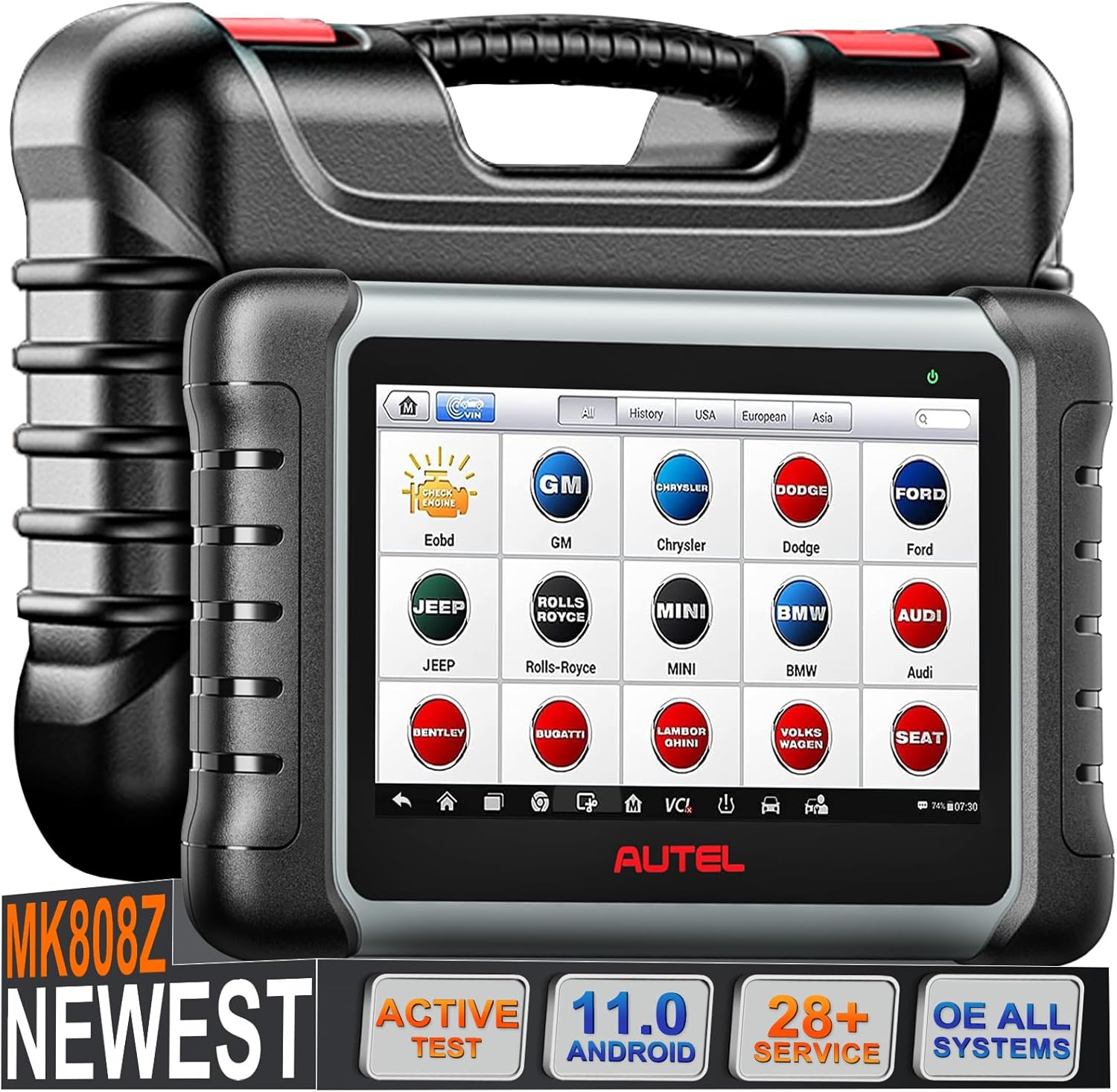
Autel Scanner MaxiCOM MK808Z: 2026 Bidirectional Scan Tool as MK808BT Pro MX808S OBD2 Scanner, 28+ Resets, Active Test, All System Diagnostic, Injector C0ding, Escaner Automotriz,Work as MX900 MK900BT
The Autel MK808Z is a 2026 bidirectional scan tool with Android 11, dual-band Wi-Fi, and 4GB/64GB storage. It offers 28+ resets, active tests, all-system diagnostics, and injector coding, compatible with newer FCA vehicles.
- Bidirectional control for testing actuators like ABS, doors, and wipers
- 28+ service functions including oil reset, EPB, and injector coding
- FCA Auto Auth support for 2018+ models with stable dual-band Wi-Fi
This wasn’t my first rodeo with a P0300. In fact, I’ve seen this code derail everything from a beat-up ’98 Civic to a pristine 2023 F-150. The tricky part? A P0300 isn’t like a P0302 (which points straight to cylinder #2). No, this one’s a wildcard—it means the misfires are jumping around, and the root cause could be hiding in your ignition, fuel, or even mechanical systems.
If you’re reading this, you’re probably staring at the same , wondering if you’re about to drop a grand at the dealer or if this is something you can tackle in your driveway. Good news: With the right approach, you can diagnose and often fix a P0300 yourself. Let’s break it down like I would for a customer leaning over my shoulder in the bay.

What Does P0300 Actually Mean?
| Code | Definition | Severity |
|---|---|---|
| P0300 | Random/Multiple Cylinder Misfire Detected | High |
A P0300 code means your engine control module (ECM) has detected misfires across multiple cylinders—but not consistently in just one. Unlike codes like P0301 (cylinder 1 misfire) or P0304 (cylinder 4 misfire), a P0300 is a “random” misfire, meaning the problem is bouncing around. This could be due to a systemic issue affecting the whole engine, such as:
- Ignition problems (spark plugs, coils, wires)
- Fuel delivery issues (injectors, pump, filter, pressure regulator)
- Air intake leaks (vacuum hoses, MAF sensor, throttle body)
- Mechanical failures (, timing issues, valve problems)
- Exhaust restrictions ()
Pro Tip: If you see a P0300 plus specific cylinder codes (like P0301, P0303), start with the cylinders that are consistently misfiring. Often, the random misfire is a symptom of a larger issue affecting those cylinders first.
Symptoms of a P0300 Code
You don’t need a scan tool to suspect a P0300. Here’s what you’ll likely notice:
- Rough idle: The engine shakes or vibrates at stops.
- Check engine light: Steady or flashing (a flashing light means stop driving now—you’re risking catalytic converter damage).
- Poor acceleration: The car hesitates or stumbles when you press the gas.
- Excessive exhaust smoke: White, blue, or black smoke can hint at fuel or oil issues.
- Fuel smell: Unburned fuel exiting the tailpipe is a red flag.
- Reduced fuel economy: Misfires waste fuel, so expect more trips to the pump.
Critical Warning: If your check engine light is flashing, pull over immediately. Driving with severe misfires can destroy your catalytic converter—a repair that can cost over $1,000. If necessary, tow your vehicle to avoid further damage.
Common Causes of P0300 (From Most to Least Likely)
Based on 15 years of turning wrenches, here’s where I’d start:
1. Ignition System Failures
- Worn or : Plugs wear out every 60,000–100,000 miles (check your manual). Oil fouling or electrode wear can cause weak sparks.
- Faulty ignition coils: Coils fail from heat, vibration, or age. A single bad coil can cause random misfires as the ECM tries to compensate.
- Damaged spark plug wires (older vehicles): Cracked or corroded wires leak voltage, leading to weak sparks.
Real-World Example: I once had a 2012 Ford Escape with a P0300. The coils tested fine, but the spark plug tubes were full of oil from bad valve cover gaskets. Oil + high voltage = misfires. Replaced the gaskets, cleaned the tubes, and swapped the plugs—problem solved.
2. Fuel System Issues
- Clogged or failing fuel injectors: Dirty injectors spray unevenly, causing lean misfires.
- Low fuel pressure: A weak pump or clogged filter starves the engine of fuel.
- Bad fuel: Contaminated or old gas can cause intermittent misfires, especially after fill-ups.
Shop Story: A customer insisted his 2019 Chevy Silverado’s P0300 was a “computer issue.” Turns out, he’d filled up at a sketchy station with water-contaminated fuel. A tank of fresh gas and a fixed it.
3. Air Intake Problems
- Vacuum leaks: Cracked hoses, loose clamps, or a bad PCV valve let unmetered air in, leaning out the mixture.
- Faulty MAF sensor: A dirty or failing to the ECM, causing fuel delivery issues.
- Throttle body issues: Carbon buildup or a stuck butterfly valve disrupts airflow.
Pro Tip: Spray carb cleaner around intake connections while the engine runs. If RPMs jump, you’ve found a vacuum leak.
4. Mechanical Problems
- Low compression: Worn piston rings, bent valves, or a blown head gasket can cause misfires.
- Timing issues: A stretched throws off valve timing.
- Exhaust restrictions: A clogged catalytic converter increases backpressure, choking the engine.
Warning: If you suspect low compression, stop driving and get a . Ignoring it can lead to catastrophic engine damage.
5. Sensor or ECM Issues
- Faulty crankshaft or camshaft position sensors: Bad signals confuse the ECM’s timing.
- ECM software glitches: Rare, but possible—especially after a tune or update.
Step-by-Step P0300 Diagnosis
Step 1: Scan for Codes
Use an OBD-II scanner to confirm the P0300 code and check for any related codes, such as P0301–P0312 (specific cylinder misfires), fuel system codes, or MAF sensor codes. Pay special attention to , which includes details like RPM, engine load, and coolant temperature at the time of the misfire. This data helps you determine if the misfire occurred at idle, during acceleration, or under other specific conditions.
Step 2: Inspect the Basics
Start by checking the following components:
- Spark plugs: Remove one spark plug from each bank of the engine. Look for signs of oil fouling, electrode wear, or cracks. Compare the condition of the removed plugs to a new spark plug to assess their wear.
- Ignition coils: Swap the ignition coils between cylinders. If the misfire moves to a different cylinder after swapping, the coil you moved is likely faulty.
- Air filter: A clogged air filter restricts airflow, which can cause the engine to run too rich or too lean, leading to misfires.
Tool Tip: Use a quality scan tool, such as the Innova 3160g, to monitor . This helps you pinpoint which cylinders are misfiring and how severe the issue is.
Step 3: Check Fuel Pressure
Attach a fuel pressure gauge to the fuel rail. While fuel pressure specifications vary by vehicle, most engines require . If the pressure is too low, you may need to replace the fuel pump or fuel filter.
No gauge? You can still perform a quick check: Turn the key to the “ON” position (without starting the engine) and listen for the fuel pump priming. If you don’t hear a humming sound, the fuel pump may be dead.
Step 4: Test for Vacuum Leaks
Spray carb cleaner around the intake manifold, hoses, and throttle body while the engine is running. If the engine RPMs increase when you spray a specific area, you’ve found a vacuum leak. Common leak locations include:
- PCV hose
- Intake manifold gaskets
- Brake booster vacuum line
Step 5: Inspect Exhaust Backpressure
Remove the upstream oxygen (O2) sensor and check for excessive backpressure. You can use a pressure gauge or simply listen for a “whoosh” sound when revving the engine. If the catalytic converter is clogged, you’ll need to replace it to restore proper exhaust flow.
Step 6: Compression or Leak-Down Test
If you’ve ruled out ignition, fuel, and air issues, it’s time to check the engine’s mechanical health. Perform a compression test or, even better, a . These tests will reveal problems like low compression, bent valves, or head gasket leaks.
Safety Note: Never perform a compression test on a hot engine without removing all spark plugs. Failing to do so can damage the starter or cause other serious issues.
Step 7: Check for ECM Updates
Some vehicles, particularly certain Ford and GM models, may experience false misfire codes due to . Check for or software updates for your vehicle’s Engine Control Module (ECM). Updating the ECM software may resolve the issue if it’s related to a known bug or calibration problem.