Black Smoke from Exhaust: Common Causes
Quick Answer:Black smoke from your exhaust usually means your engine is running “rich”—burning too much fuel or not enough air. Common culprits include a leaking fuel injector, a clogged air filter, a bad sensor (MAFor O2), or a stuck open fuel pressure regulator.
The $3,000 Mistake: A Shop Floor Story
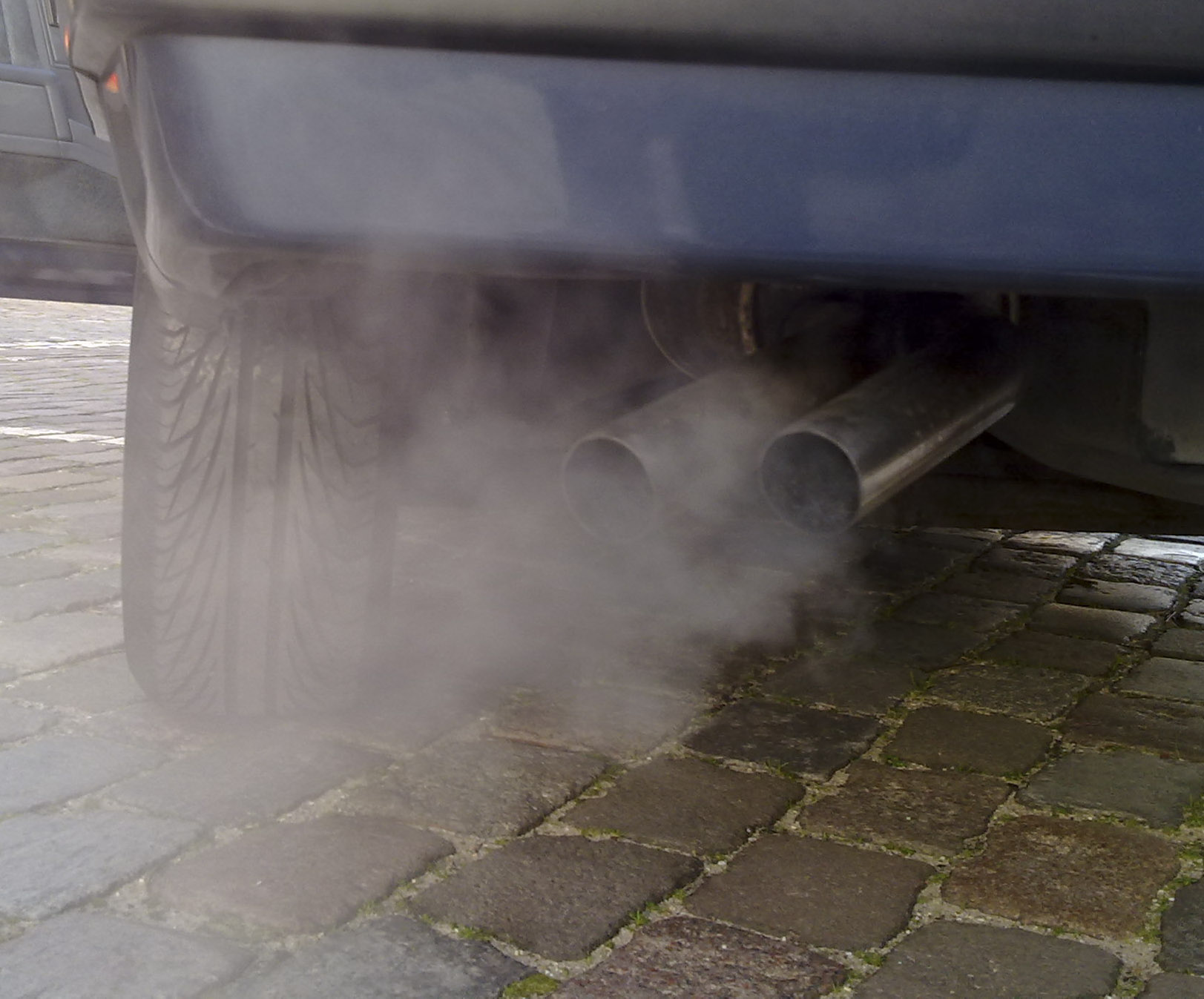
It was a Tuesday morning in November, raining that cold, miserable drizzle that seeps into your bones. A customer rolled in in a pristine 2007 GMC Sierra 1500. It looked showroom fresh, but as soon as he pulled into bay 3, the shop filled with the acrid stench of raw gasoline. The truck was idling rough, and every time he tapped the throttle, a cloud of black smoke exhaust poured out the tailpipe thick enough to block the view of the alignment rack behind it.
The owner, a guy named Mike, was panicked. He’d just taken it to a “quick-lube” place down the road. They told him his engine was shot, probably a blown ring land or a cracked head, and quoted him $3,500 for a remanufactured engine. He came to us for a second opinion before spending the rent money.
I popped the hood while the truck was running. The smell was the dead giveaway—raw, unburnt fuel. I grabbed a pair of insulated pliers and started pulling spark plug wires one by one. Cylinder 4 didn’t change the idle rhythm a bit. I pulled the boot, and gasoline dripped out of the spark plug well.
Mike didn’t need an engine. He had a singlefuel injector leakthat was stuck wide open. We replaced the injector and the spark plug (which was fouled with gas), and he drove out an hour later for $350. This is why I tell people:don’t assume the worst. Black smoke looks scary, but it’s often a simple fix if you know what you’re looking for.
 Common Causes” width=”1623″ height=”1347″ />
Understanding the Rich Fuel Mixture
Before we start tearing things apart, let’s talk about what’s actually happening. Your engine is an air pump. It needs a precise ratio of air to fuel to run correctly. That ratio is 14.7 parts air to 1 part fuel (14.7:1). We call this the stoichiometric ratio.
When you see black smoke exhaust, your engine has crossed into “rich” territory. This means there’s too much fuel for the amount of air entering the cylinders. The fuel can’t burn completely, so it turns into soot and carbon deposits that shoot out the tailpipe.
If you’re seeing this, you might want to learn about [black exhaust smoke, rich mixture smoke, fuel smoke diagnosis](fuel-system-problems, MAF-sensor-problems, oxygen-sensor-failure) to understand the underlying systems better.
Technical Specifications & Data
Working on modern fuel injection systems requires precision. Unlike the old carburetor days where you could turn a screw with a screwdriver, modern systems rely on exact pressure and resistance values.
Common Fuel Pressure Specifications
| Vehicle Make/Model (Example) | Engine Size | Fuel Pressure at Idle (PSI) |
|---|---|---|
| Ford F-150 (PFI) | 5.0L V8 | 35-45 PSI |
| Chevy Silverado (PFI) | 5.3L V8 | 55-62 PSI |
| Honda Civic (Direct Injection) | 2.0L Turbo | 1800-2500 PSI (High Pressure) |
| Toyota Camry (MPFI) | 2.5L 4-cyl | 38-44 PSI |
Resistance Values (Multimeter Check)
If you suspect afuel injector leakor electrical failure, you’ll need to test resistance. Most modern injectors are “High Impedance.”
- OEM Spec:Typically 11 to 18 Ohms.
- If Low:Short circuit internally (injector will stay open).
- If High/Open:Broken wire internal to injector (injector won’t fire).
The Top 4 Causes of Black Smoke
After 15 years of turning wrenches, I can tell you that 90% of black smoke cases come down to these four specific failures.
1. Clogged Air Filter (The Rookie Mistake)
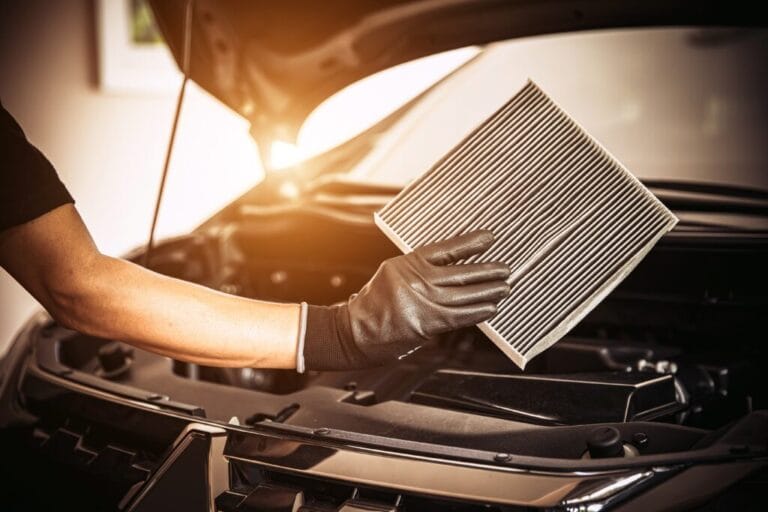
This is the easiest check on the list. I’ve seen cars with air filters so plugged you couldn’t see light through them. If the engine can’t breathe, it sucks. Literally. The vacuum created in the intake can pull extra fuel from the injectors. It’s the classic choke effect.
How to check:Pull the filter out. If it looks like a fuzzy grey log that has seen 50,000 miles of dirt, change it. It costs $15 and takes 2 minutes. Don’t overthink it.
2. Leaking or Stuck Fuel Injectors
This was Mike’s problem with the GMC. An injector is a solenoid valve. Over time, the internal pintle can get gummed up with varnish or debris, or the internal spring can weaken. This prevents it from closing all the way.
When this happens, fuel dumps into the cylinder constantly—even when the piston is on the exhaust stroke. You get a rough idle, the smell of gas, and heavy black smoke.
3. Faulty Sensors (MAF and O2)
Your computer (ECU) is blind. It relies on sensors to decide how much fuel to inject. Two sensors are critical here:
- MAF Sensor (Mass Air Flow):Measures the air entering the engine. If it lies and says “less air is coming in,” the ECU adds less fuel. But if it’s dirty or failinglow, it might actually signal incorrectly, or if there is a leak after the MAF, you get unmetered air issues. However, a clogged MAF can sometimes cause the ECU to default to a safe mode or misread density.
- O2 Sensors (Oxygen Sensors):Located in the exhaust stream. They sniff the exhaust. If they say “we’re lean,” the ECU dumps fuel. A lazy O2 sensor that reads incorrectly can force a rich condition.
4. Fuel Pressure Regulator Failure
This is a common issue on older port-injected engines. The regulator has a vacuum diaphragm. If the rubber diaphragm tears, engine vacuum sucks raw gasoline straight into the intake manifold.
The Tell-Tale Sign:Pull the vacuum line off the fuel pressure regulator (usually on the fuel rail). If gas drips out of the vacuum hose nipple, the regulator is toast. It’s a definitive diagnosis.
Step-by-Step Diagnostic Guide
Ready to diagnose this yourself? Grab your coffee and let’s get to work. We’re going to follow a logical path from free/cheap checks to the harder stuff.
Tools & Materials List
- Basic Socket Set:8mm, 10mm, 13mm, 15mm sockets and ratchet.
- Screwdriver Set:Flathead and Phillips (usually #2).
- Flashlight:Preferably a headlamp to keep hands free.
- Spark Plug Socket:Usually 5/8″ or 14mm with a rubber insert.
- OBD2 Scanner:Essential. You need live data capability (BlueDriver or Autel are good choices).
- Fuel Pressure Gauge:Specific to your vehicle’s Schrader valve or rail fitting. (Est. cost: $50 – $100).
- Digital Multimeter:For testing resistance. (Est. cost: $20 – $40).
Phase 1: Visual and Free Checks (30 Minutes)
The Regulator Test.Locate the fuel pressure regulator on the fuel rail. Pull the small vacuum line off the nipple. Look inside the line and the regulator nipple.
Phase 2: Electronic Diagnosis (45 Minutes)
Check Live Data (Fuel Trim).This is where the magic happens. Go to “Live Data” on your scanner and look for “Long Term Fuel Trim” (LTFT) and “Short Term Fuel Trim” (STFT).
- If your trims are negative (e.g., -15% to -25%), the computer is actively trying to reduce fuel because it sees you’re running rich. It’s overwhelmed by the excess fuel.
- If trims are high positive (+20%+), you have a lean issue, or you have an exhaust leak before the O2 sensor sucking in air.
Phase 3: Mechanical Isolation (1 Hour)
Phase 3: Details
The Balance Test (Pulling Coils).If you have a misfire code (e.g., P0304 – Cylinder 4), start the engine. Pull the ignition coil connector or spark plug wire for Cylinder 4.
- Scenario A:The idle changes/gets worse. The injector is likely working (electrical fire), but maybe leaking?
- Scenario B:The idle does not change. The cylinder is dead. Either the coil is dead, or the injector is stuck open, fouling the plug so much it won’t fire. Remove the spark plug. If it is wet with gas, check the injector resistance or swap the injector with another cylinder to see if the misfire moves.
Leak Down / Fuel Pressure Test.Hook up your fuel pressure gauge to the Schrader valve on the fuel rail. Turn the key to “ON” (don’t start). Note the pressure.
- Static Pressure Check:Does it match the spec in your manual? (e.g., 60 PSI). If it’s 100 PSI, your return line is clogged or regulator is bad.
- Leak Down Check:Turn the key off. Watch the gauge. It should hold pressure for 5-10 minutes. If it drops instantly, you have a leak. Look at the injectors—are any dripping?
Cost Analysis: DIY vs. Professional
I know what you’re thinking: “Is this worth my time?” Let’s break down the numbers based on a scenario of replacing a set of 4 fuel injectors.
| Cost Factor | DIY Repair | Professional Shop |
|---|---|---|
| Parts (OEM Injectors x4) | $240 – $400 | $240 – $400 (Usually marked up 20%) |
| Diagnostic Fee | $0 (Your time) | $100 – $150 (usually waived if you do the repair) |
| Labor | $0 | $350 – $550 (4-5 hours book time) |
| Total Estimate | $240 – $400 | $690 – $1,100 |
As you can see, the labor is the killer here. However, be warned: on transverse-mounted V6 engines (like the Ford Fusion or Honda Camry), the rear bank of injectors can be a nightmare to reach. You might have to remove the intake manifold. If you’re not comfortable with removing the upper plenum, this becomes a job for a pro.
Frequently Asked Questions
Can a bad PCV valve cause black smoke?
Yes, but it’s rare. A stuck-open PCV valve allows too much crankcase gas into the intake, which can confuse the MAF sensor and force a rich mixture. It’s more common to see oil consumption than black smoke, but it’s possible.
Can I drive my car if it’s smoking black?
You can, but I wouldn’t recommend it for long. First, you’re washing oil off the cylinder walls with excess gas, which increases ring wear. Second, your catalytic converter is working overtime to burn that excess fuel. You will likely melt the cat, turning a $200 repair into a $1,500 repair.
Is black smoke from an engine hard to fix?
It ranges from very easy to moderate. A clogged air filter or bad vacuum hose is a 5-minute fix ($0-$20). A leaking injector or a fuel pump driver module issue is harder. On a scale of 1 to 10, I rate black smoke diagnosis a 4, and injector replacement a 6.
Why does my car only smoke when I floor it?
If you only see smoke under heavy load (WOT – Wide Open Throttle), your engine is struggling to breathe at high RPM. This points to a [clogged air filter](black-smoke-exhaust), a collapsing intake hose, or a fuel pressure regulator that can’t handle the demand. It could also be a failing turbocharger (if equipped) dumping oil.
How much does a fuel pressure sensor cost?
The sensor itself is usually cheap, typically $30 to $80. However, on some modern trucks (like Ford Powerstrokes), the sensor is part of a fuel rail control module that costs much more. Always verify the part number with your VIN before buying.
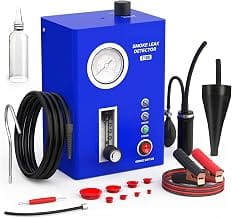
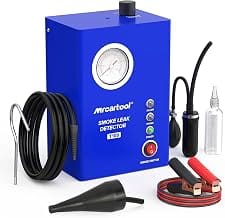
Top Black Smoke From Exhaust – Our Picks

Conclusion
Seeing black smoke pour out of your tailpipe is enough to ruin anyone’s day, but don’t let it empty your wallet. In my 15 years under the hood, I’ve found that 80% of the time, it’s a simple air intake issue or a single bad injector—not a catastrophic engine failure.
This repair falls into the “Moderate” difficulty category. If you can turn a wrench and follow safety protocols, checking your air filter and inspecting the fuel pressure regulator are tasks you can handle in your driveway this weekend. If you find yourself staring at the fuel rail wondering how to get the intake manifold off, it might be time to call a pro.
Just remember: a rich fuel mixture is a symptom, not the root cause. Don’t throw parts at it blindly. Use the multimeter, check the live data, and trust your nose. If you smell raw gas, it’s fuel. If it smells like burnt toast, it’s electrical. Keep your head in the game and you’ll have that engine running clean in no time.