Blue Smoke From Exhaust: Causes and How to Fix It
It was a rainy Tuesday morning in November — cold enough that my coffee steamed the second I opened the shop bay door. A late-model Honda Accord pulled in, its driver, a high school teacher named Maria, looking worried. She rolled down the window and said, “My car’s puffing blue smoke every time I start it or accelerate. Is it the end?”
I popped the hood, fired it up, and sure enough — right on cold start: a plume of light blue smoke out the tailpipe. I gave her a reassuring nod. “Not the end,” I said, “but we need to figure out whether it’s your valve seals or rings before you turn this into a $4,000 repair.”
Over 15 years as an ASE Master Tech, I’ve seen blue smoke exhaust on everything from $800 clunkers to $80,000 German sedans. The cause is almost always oil getting where it shouldn’t — into the combustion chamber. But diagnosing how it’s getting there? That’s where most DIYers and even some shops get tripped up.
What Causes Blue Smoke Exhaust?
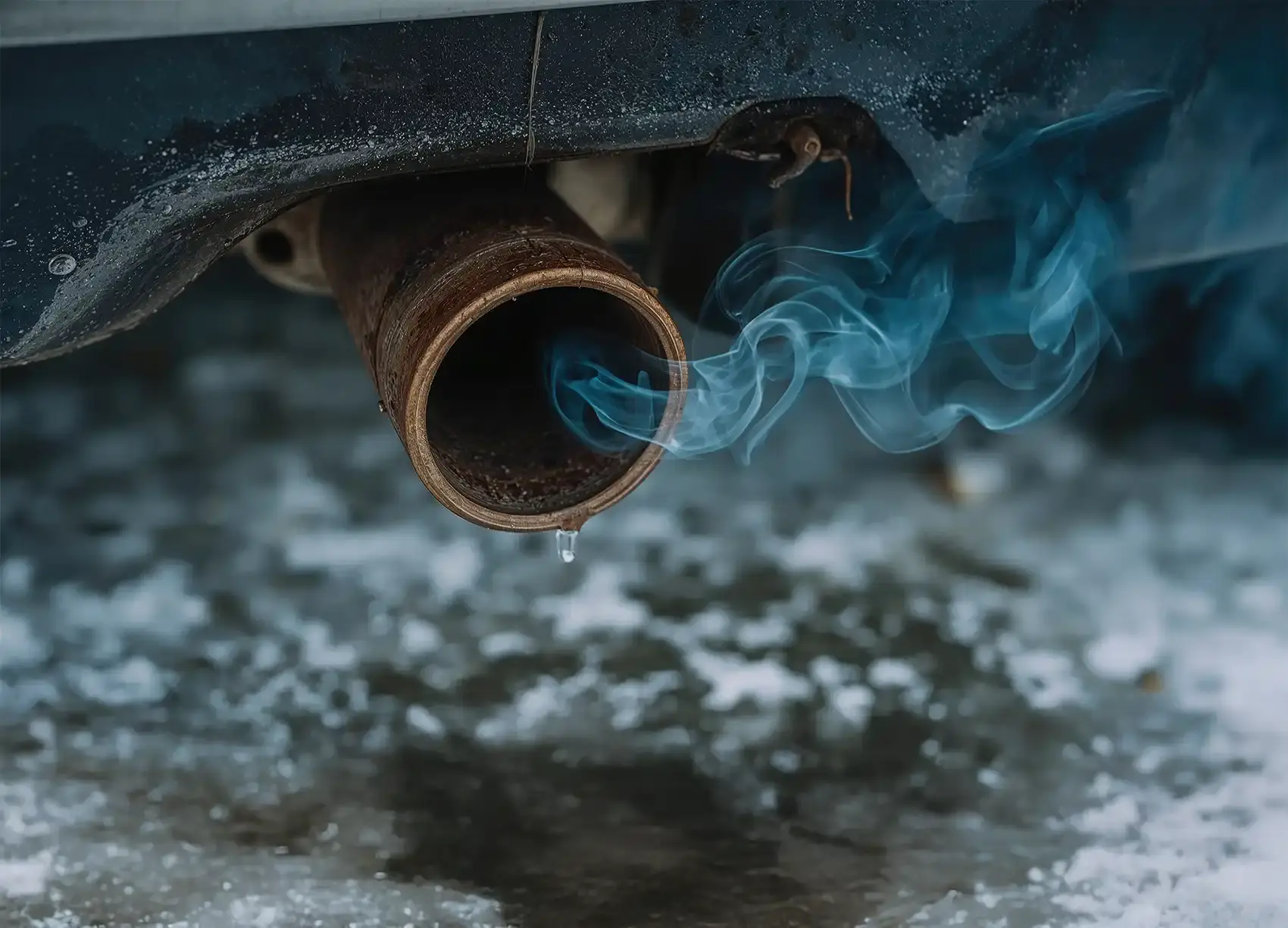
When you see blue smoke exhaust, your engine is burning motor oil along with fuel. Unlike white smoke (coolant-related) or black smoke (fuel-rich mixture), blue smoke has a sharp, acrid smell often described as burning oil. This isn’t normal wear-and-tear. It’s a symptom of internal engine failure that will only get worse.
- Worn valve seals — Oil leaks past the seals down the valve guides during idle or deceleration.
- Worn piston rings — Oil enters the combustion chamber past the rings under load or acceleration.
- Forced induction issues — Turbocharger seals failing (on turbo engines) can also cause oil to enter the intake and burn.
Less common but worth checking: a clogged PCV system, excessive crankcase pressure, or using oil that’s too thin for your engine.
Diagnosing the Source: Valve Seals vs. Piston Rings
Not all oil burning smoke is created equal. The timing and driving conditions when smoke appears tell you where the problem lies.
Smoke on startup only? Likely valve seals.
Smoke under acceleration or sustained load? Likely piston rings.
Constant blue smoke regardless of conditions? Could be both, turbo failure, or severe internal wear.
Cold-Start Smoke = Valve Seal Failure
Here’s what happens: when the engine sits, oil pools around the valve stems. If the seals are worn or hardened (common after 80,000–120,000 miles), that oil drips into the combustion chamber. On startup, it burns off instantly — hence the puff of blue smoke exhaust.
Smoke Under Load = Piston Ring Wear
When you accelerate hard, cylinder pressure spikes. If the piston rings are worn or stuck, oil from the crankcase gets forced past the rings into the combustion chamber.
Step-by-Step Diagnostic Procedures
Test 1: The Acceleration/Deceleration Observation
Time: 10 minutes | Tools: None
- Let the engine sit cold overnight (at least 6 hours).
- Start the engine and watch the exhaust. A brief puff of blue smoke that disappears within 5–10 seconds points to valve seals.
- Drive the car to operating temp. Accelerate firmly, then let off the gas. Smoke on deceleration → valve seals. Smoke on acceleration → piston rings.
Test 2: Compression and Leak-Down Tests
Time: 45–60 minutes
Test 3: PCV System Inspection
Test 3: Details
A clogged PCV valve can cause excessive crankcase pressure… Replace the PCV valve if it doesn’t rattle when shaken.
Common Models Prone to Oil Burning Smoke
| Vehicle | Engine | Typical Mileage of Onset | Root Cause |
|---|---|---|---|
| Audi A4 | 2.0T | 80,000–120,000 | Premature valve seal wear |
| Toyota Camry | 2GR-FE V6 | ~100,000 | Hardened valve seals |
| Ford F-150 | 5.0L Coyote | High mileage | Ring land wear |
Repair Options: DIY vs Professional
Valve Seal Replacement (DIY Possible on SOHC Engines)
Difficulty: Moderate (SOHC) …
Cost Analysis: Fix vs Ignore
| Scenario | Upfront Cost | Long-Term Risk |
|---|---|---|
| Replace valve seals (DIY) | $100 – $150 | Low – restores normal oil consumption |
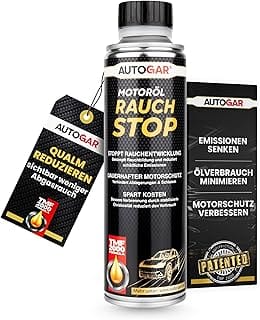
| Use oil additive | $10 – $20 | High – temporary mask |
| Ignore and top off oil | $50/month | Extreme – risk of spun bearings, seized engine |
| Professional ring job | $3,500 avg | Low if done correctly |
Tools & Materials List
- Compression tester OTC 5606 (~$50)
- Leak-down tester Actron CP7830 (~$90)
- Socket set, Torque wrench, etc.
Related Guides
- White Smoke from Exhaust: What It Means
- Hard Starting Engine: Diagnosis and Repair
- Car Stalls at Idle: Troubleshooting Guide
- Engine Stalling: Common Causes and Solutions
- Engine Hesitation When Accelerating: Diagnosis Guide
- Idle Air Control Valve Problems and Solutions
- Worn Valve Guide Seals: Symptoms, Causes, and Replacement Guide
- How to Clean an EGR Valve: Step-by-Step Guide for P0401 & Carbon Build up
Top Blue Smoke From Exhaust – Our Picks