It was a sweltering July afternoon in the shop, the kind of heat that makes the concrete floor radiate up through your boots. A 2014 Honda Accord rolled in, the owner—let’s call him Carlos—frustrated after three different shops couldn’t figure out why his car bucked like a bronco every time he hit the gas. “It’s not the transmission,” he said, slamming the door. “They all say it’s the transmission.”
Quick Answer: Why Does My Car Jerk When Accelerating?
The most common causes are:
- Dirty or failing fuel injectors (especially in high-mileage vehicles)
- Worn spark plugs or ignition coils (misfires feel like jerks)
- Clogged fuel filter (starves the engine of fuel under load)
- Transmission issues (slipping bands or low fluid)
- Throttle position sensor (TPS) failure (sends wrong signals to the ECU)
Start with the cheapest fixes first—90% of the time, it’s not the transmission.
Understanding the Jerk: What’s Actually Happening?
When your car jerks during acceleration, it’s essentially a mismatch between what the engine is trying to do and what the drivetrain can handle. Think of it like a runner stumbling because their shoelaces are tied together. The engine revs, but the power isn’t getting to the wheels smoothly. This can happen for a dozen reasons, but they all fall into three categories:
- Fuel Delivery Problems: The engine isn’t getting enough fuel (or the right mix of fuel and air) when it needs it.
- Ignition Issues: The spark plugs or coils aren’t firing correctly, causing misfires that feel like jerks.
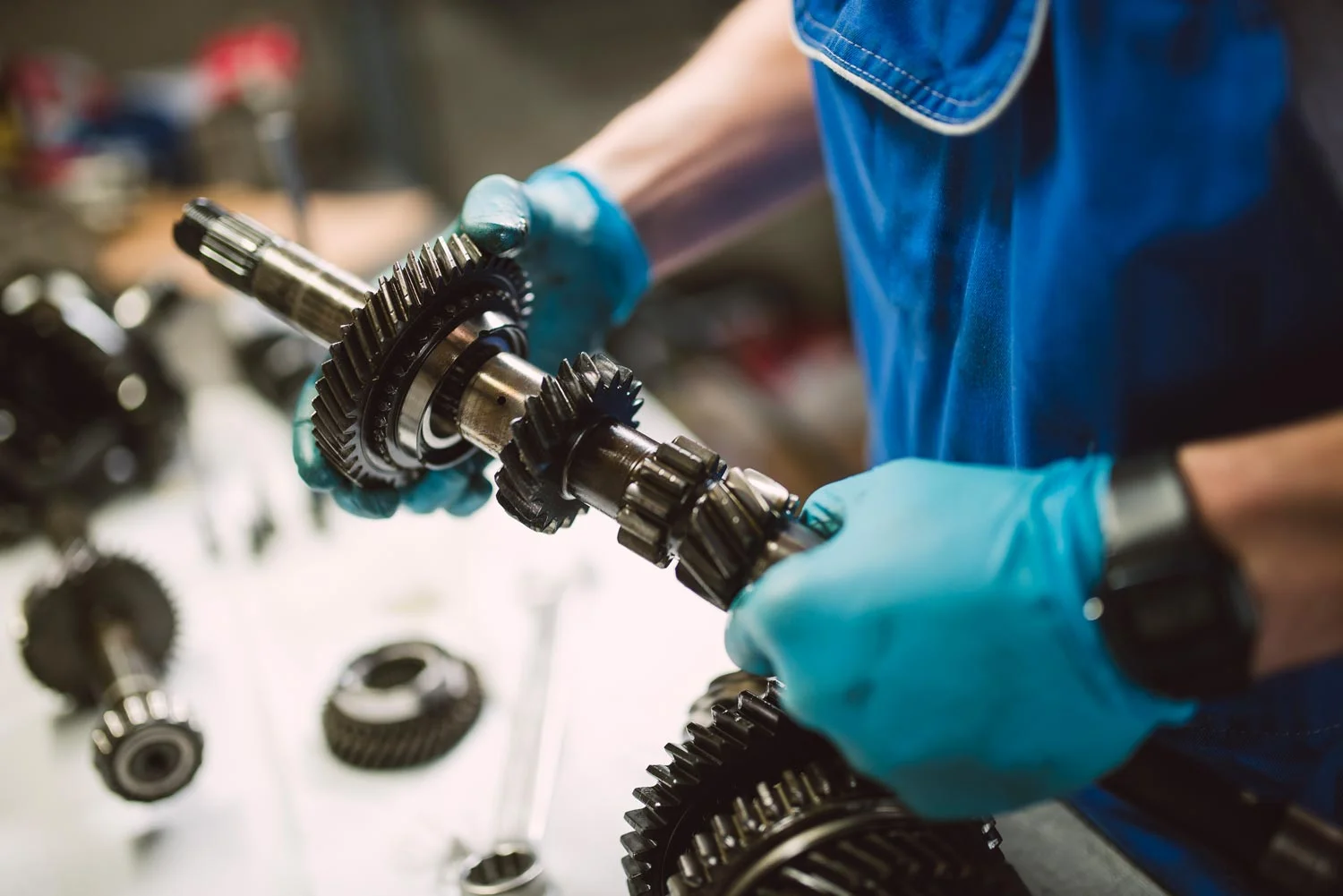
- Transmission or Drivetrain Troubles: The transmission isn’t shifting smoothly, or there’s a mechanical issue in the drivetrain.
Your job is to figure out which category your problem falls into. Let’s break it down.
Diagnosing the Problem: Step-by-Step
Step 1: Check for Engine Codes
Even if your check engine light isn’t on, there might be pending codes. Use an OBD-II scanner (I recommend the BlueDriver for DIYers—it’s what I use in the shop). Plug it in and look for:
- Misfire codes (P0300-P0312)
- Fuel system codes (P0171, P0174 for lean conditions)
- Throttle position sensor codes (P0120-P0124)
- Transmission codes (P0700-P0799)
Pro Tip: If you see a P0300 (random misfire), don’t assume it’s the spark plugs. I’ve seen bad fuel injectors, vacuum leaks, and even a cracked intake manifold cause this code. Start with the basics: check your air filter and fuel pressure.
Step 2: Inspect the Fuel System
Fuel delivery issues are the #1 cause of jerky acceleration. Here’s how to diagnose them:
- Fuel Filter: If your car has a replaceable fuel filter (many newer models don’t), check if it’s clogged. A restricted filter will starve the engine under load. Replace it if it’s been more than 30,000 miles.
- Fuel Pump: Listen for a humming noise from the fuel tank when you turn the key to “ON” (don’t start the engine). No noise? The pump might be dead. Weak noise? It’s failing. Use a fuel pressure gauge to confirm—most cars need 35-65 PSI at the rail.
- Fuel Injectors: If your car has over 100,000 miles, the injectors might be clogged. Use a stethoscope or long screwdriver (press the handle to your ear and the tip to the injector) to listen for a sharp “click” as the engine runs. No click? The injector is dead.
Warning: Never work on a fuel system without relieving fuel pressure first. Spraying gasoline in your face is a quick way to ruin your day. Disconnect the fuel pump relay and run the engine until it stalls to depressurize the system.
Step 3: Check the Ignition System
Misfires feel like jerks, especially under acceleration. Here’s how to diagnose them:
- Spark Plugs: Pull one out. If it’s fouled, oily, or the electrode is worn, replace all of them. Most cars need new plugs every 60,000-100,000 miles. Use NGK or Denso iridium plugs—they’re worth the extra $2 per plug.
- Ignition Coils: Swap a suspected bad coil with a known good one. If the misfire moves, the coil is bad. I’ve seen coils fail as early as 50,000 miles on some Ford and GM engines.
- Wires: If your car still has spark plug wires (most newer cars don’t), check for cracks or resistance. Use a multimeter—any wire with more than 10,000 ohms of resistance needs replacement.
Step 4: Test the Transmission
If the jerking feels like a “clunk” or “slip,” the transmission might be the culprit. Here’s how to check:
- Fluid Level: Check the transmission fluid with the engine running and warm. Low fluid causes slipping. If the fluid is dark or smells burnt, you’ve got bigger problems.
- Fluid Condition: Healthy transmission fluid is red and translucent. If it’s brown or black, it’s time for a flush. But beware: flushing a high-mileage transmission can dislodge sludge and clog the valve body. I’ve seen this turn a $200 flush into a $2,000 rebuild.
- Shift Solenoids: If the car jerks when shifting gears, a solenoid might be sticking. These are often replaceable without dropping the transmission.
Note: If your car has a CVT (Continuously Variable Transmission), jerking is often a sign of a failing belt or pulley. Nissan CVTs are notorious for this—if you own a Nissan with a CVT, start saving for a transmission now.
Step 5: Inspect the Throttle and Sensors
The throttle position sensor (TPS) tells the ECU how far you’ve pressed the gas pedal. If it’s sending bad signals, the engine will stumble. Here’s how to test it:
- Use a multimeter to check the TPS voltage. With the key on (engine off), it should read 0.5V at idle and 4.5V at wide-open throttle.
- Watch the voltage as you slowly press the pedal. It should increase smoothly. Jumping or erratic readings mean the TPS is bad.
Also, check the Mass Air Flow (MAF) sensor. Clean it with MAF cleaner (never use brake cleaner—it’ll destroy the sensor). A dirty MAF can cause lean conditions and jerking.
Common Causes and Fixes
1. Dirty or Failing Fuel Injectors
Injectors clog over time, especially if you use cheap gas. Symptoms include:
- Jerking under load (like merging onto a highway)
- Poor fuel economy
- Rough idle
Fix: Use a fuel injector cleaner like Seafoam or Chevron Techron. For severe clogs, you’ll need to remove and clean the injectors with an ultrasonic cleaner or replace them.
Cost:
- Cleaner: $10-$20
- Professional cleaning: $150-$300
- New injectors: $200-$800 (parts only)
2. Worn Spark Plugs or Ignition Coils
Spark plugs wear out, and coils fail—especially in heat. Symptoms include:
- Jerking or hesitation when accelerating
- Check engine light flashing (indicates a misfire)
- Poor throttle response
Fix: Replace plugs and coils if they’re worn. Always replace coils in sets—if one is bad, the others aren’t far behind.
Cost:
- Spark plugs (DIY): $50-$150
- Ignition coils (DIY): $100-$400
- Shop labor: $200-$600
3. Clogged Fuel Filter
If your car has a replaceable fuel filter, it’s a common culprit. Symptoms include:
- Jerking under heavy acceleration
- Hard starting
- Engine stalling at high speeds
Fix: Replace the filter. It’s a $15 part, but accessing it can be a pain—some cars require dropping the fuel tank.
Cost:
- Filter: $10-$30
- Labor: $100-$300 (if the tank needs to be dropped)
4. Transmission Issues
If the jerking feels like a “slip” or “clunk,” the transmission might be to blame. Symptoms include:
- Delayed engagement when shifting
- Whining or grinding noises
- Burnt-smelling fluid
Fix: Start with a fluid and filter change. If that doesn’t help, you might need a solenoid replacement or a full rebuild.
Cost:
- Fluid/filter change: $100-$200
- Solenoid replacement: $200-$500
- Transmission rebuild: $1,500-$3,500
5. Throttle Position Sensor (TPS) Failure
A bad TPS sends incorrect signals to the ECU, causing jerky acceleration. Symptoms include:
- Erratic idle
- Sudden surges or hesitation
- Check engine light (P0120-P0124 codes)
Fix: Replace the TPS. It’s a $50-$150 part, and most DIYers can handle the job in under an hour.
Tools and Materials You’ll Need
Here’s what you’ll need to diagnose and fix most jerking issues:
- OBD-II Scanner: BlueDriver ($99) or Innova 3100 ($30)
- Fuel Pressure Gauge: Actron CP7838 ($40)
- Spark Plug Socket: 5/8” or 13/16” (depends on your car)
- Multimeter: AstroAI WH5000A ($25)
- MAF Cleaner: CRC 05110 ($8)
- Fuel Injector Cleaner: Seafoam SF-16 ($10)
- Basic Hand Tools: Ratchets, sockets, screwdrivers
Pro Tip: If you’re working on fuel or ignition systems, buy a can of CRC Brake Kleen ($5). It’s the best degreaser for cleaning parts before installation.
Safety Warnings
Fuel System Safety: Always relieve fuel pressure before disconnecting fuel lines. Gasoline is flammable and can cause serious injury if sprayed.
Electrical Safety: Disconnect the battery before working on ignition coils or sensors. A short circuit can fry your ECU.
Transmission Fluid: Never work under a car supported only by a jack. Use jack stands rated for your vehicle’s weight.
When to Call a Pro: If you’re not comfortable with diagnostics or electrical testing, take it to a shop. Misdiagnosing a problem can turn a $200 fix into a $2,000 nightmare.
FAQs About Jerky Acceleration
1. Can bad gas cause my car to jerk when accelerating?
Absolutely. Low-quality or contaminated gas can clog injectors and cause misfires. If you suspect bad gas, add a bottle of fuel injector cleaner and fill up with premium gas from a reputable station (I recommend Shell or Chevron). If the problem persists, you may need to drain the tank.
2. Why does my car jerk only when it’s cold?
Cold-start jerking is often caused by a failing coolant temperature sensor or a rich fuel mixture. The ECU adds extra fuel when the engine is cold, and if the sensor is bad, it can overdo it. Replace the sensor—it’s a $20 part.
3. How much does it cost to fix a car that jerks when accelerating?
It depends on the cause:
- Fuel filter: $10-$50
- Spark plugs: $50-$200
- Ignition coils: $100-$600
- Fuel injectors: $200-$1,000
- Transmission service: $100-$500
DIY can save you 50-70% on labor costs.
4. Can a dirty air filter cause jerking?
Yes, but it’s rare. A clogged air filter restricts airflow, causing a rich fuel mixture. This can lead to hesitation or jerking under load. Replace the filter—it’s a $15 fix.
5. My car jerks in one gear but not others. What’s wrong?
This is almost always a transmission issue. If it jerks in first gear, check the torque converter or first gear clutch. If it jerks in higher gears, look at shift solenoids or the valve body.
Cost Analysis: DIY vs. Professional Repair
| Problem | DIY Cost | Professional Cost | Difficulty Level |
|---|---|---|---|
| Fuel Filter Replacement | $10-$50 | $100-$300 | Easy |
| Spark Plug Replacement | $50-$150 | $200-$400 | Moderate |
| Ignition Coil Replacement | $100-$300 | $300-$600 | Moderate |
| Fuel Injector Cleaning | $20-$50 | $150-$300 | Easy |
| Transmission Fluid Change | $50-$100 | $150-$300 | Moderate |
| TPS Replacement | $50-$100 | $150-$300 | Easy |
Money-Saving Tip: If you’re replacing spark plugs or ignition coils, buy them online (RockAuto or Amazon) and bring them to a shop. Many shops will install customer-supplied parts for a reduced labor rate.
Final Thoughts: A Mechanic’s Perspective
After 15 years in the shop, I’ve learned one thing: most jerking issues are simple fixes disguised as big problems. Start with the basics—check for codes, inspect the fuel system, and replace worn plugs. Nine times out of ten, that’s all it takes.
But here’s the kicker: if you ignore the problem, it will get worse. A $20 fuel filter today could turn into a $2,000 transmission rebuild next year. Don’t be that guy.
If you’re not comfortable diagnosing it yourself, find a reputable indie shop (not a dealer). Ask for a diagnostic fee upfront—any shop that won’t give you one is hiding something. And if they tell you it’s the transmission without checking the basics, walk out.
Got questions? Drop them in the comments. I answer every one. And if you fixed your jerking car, let me know—I love a good success story.