Engine Hesitation When Accelerating: Diagnosis Guide
Quick Answer: Engine hesitation when accelerating is caused by problems with fuel delivery, ignition timing, air measurement sensors, or throttle control. The most common culprits are dirty MAF sensors, failing throttle position sensors, weak fuel pumps, and worn spark plugs. Accurate diagnosis saves hundreds — most people replace the wrong part first.
What Engine Hesitation When Accelerating Actually Feels Like
It was just after 7:30 a.m. on a humid July morning. A regular customer pulled in with a 2014 Toyota Camry, coffee still in the cup holder, looking frustrated. “It doesn’t stall,” he said, “but every time I step on it to merge, it hesitates and then jumps.”
I took it for a drive. Light throttle was fine. Press the pedal halfway and the car stumbled — like it was thinking about quitting. No warning lights. No stored codes. This is the kind of engine hesitation on acceleration that separates parts-changers from technicians.
After 15+ years turning wrenches, hesitation complaints are among the most misunderstood problems I deal with. Customers come in after replacing spark plugs, coils, even fuel injectors — still with the same symptom. The problem lives in the gray area between air, fuel, and timing.
This guide walks you through how I diagnose it. Same process I use in the bay. No guesswork. No fluff.
Engine Hesitation Symptoms — Your First Diagnostic Clue
Not all hesitation feels the same. That difference matters. Before grabbing a single tool, I ask customers four questions: Does it happen on a cold engine or hot? Light throttle or heavy load? On a highway merge or in stop-and-go? With the A/C on or off?
Those answers cut the diagnostic time in half.
Common ways drivers describe it:
- Flat spot when pressing the gas pedal from a stop
- Momentary loss of power followed by a surge
- Jerking or bucking under acceleration — especially between 20–45 mph
- Hesitation only when the A/C compressor kicks on
- Stumble that clears up once the engine reaches operating temperature
Each pattern points to a different system. Cold-only hesitation points at sensors or fuel enrichment. A/C-related hesitation points at idle control. Heavy-throttle stumble points at fuel delivery. These aren’t guesses — they’re data.
What Causes Engine Hesitation When Accelerating
An engine needs three things to accelerate cleanly: the right amount of air, the right amount of fuel, and spark at exactly the right time. Delay or inaccuracy in any one of them and hesitation shows up immediately.
Fuel Delivery Problems
Fuel issues account for 35 to 40% of the hesitation complaints I diagnose. Modern engines are extremely sensitive to fuel pressure drop under load. A pump that passes an idle test can still fail when the engine demands full volume at 3,500 RPM.
| Component | Typical Spec | Failure Symptom |
|---|---|---|
| Fuel pump pressure | 45–60 psi (varies by vehicle — check service data) | Hesitation under load, clears at light throttle |
| Fuel filter (replaceable) | Every 30,000–60,000 miles | Stumble on hard acceleration |
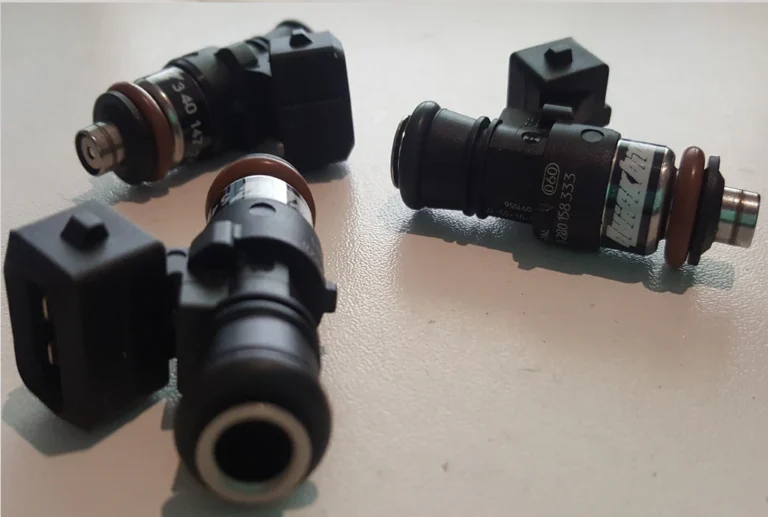
| Fuel injectors | Balanced flow within 2–3% across cylinders | Single-cylinder stumble, misfire codes |
| Fuel pressure regulator | Stable pressure at idle and WOT | Rich or lean surge, inconsistent power |
Pro tip: Always test fuel pressure under load — not just at idle. I’ve watched fuel pressure drop from 52 psi to 28 psi during a hard pull. The pump looked fine sitting still. Under load it was dying.
Related: Clogged Fuel Filter Symptoms — How to Test and Replace It
Ignition Timing and Spark Issues
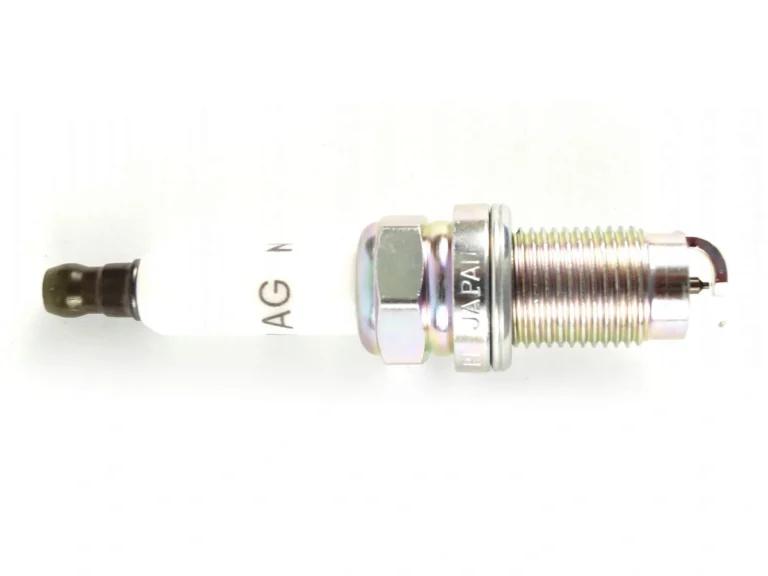
Ignition problems don’t always throw a code. Worn spark plugs, weak coils, or timing advance issues cause hesitation without triggering the check engine light — which is exactly why people miss them.
I’ve diagnosed hesitation traced back to aftermarket spark plugs with the wrong heat range. The engine ran but stumbled badly under load. Swapped to OEM-spec plugs and the problem disappeared. Heat range matters more than most people realize.
What to check on the ignition side:
- Spark plug condition and gap — compare to OEM spec, not the box default
- Ignition coil resistance — test each coil with a multimeter
- Secondary ignition waveform if you have access to a lab scope
- Crankshaft position sensor — intermittent failure causes random stumble with no codes
MAF Sensor and Throttle Position Sensor Problems
The mass airflow sensor and throttle position sensor are the two most commonly misread components in a hesitation diagnosis. Both can fail partially — sending slightly wrong data — without triggering a hard fault code.
A dirty MAF reads low airflow. The ECU delivers less fuel than the engine needs. The result is a lean stumble exactly when you ask for power. A $10 can of CRC MAF cleaner has fixed more hesitation complaints in my shop than any single part I’ve ever replaced.
A failing TPS sends erratic throttle angle data. The ECU doesn’t know how much fuel to add because it doesn’t know how far open the throttle is. The result is a hesitation that feels almost random — sometimes bad, sometimes fine.
Related: Throttle Position Sensor Symptoms — How to Test and Replace
How to Diagnose Engine Hesitation When Accelerating — Step by Step
This is the exact order I follow in the bay. Skip a step and you’ll spend money on the wrong part. I’ve seen it happen hundreds of times.
Scan for Codes — Even if the Light Is OffPlug in an OBD-II scan tool capable of reading pending codes and live data. A pending code won’t light the dash but it tells you where the ECU suspects a problem. Check freeze frame data too — it captures engine conditions at the moment of the fault. Don’t clear codes before diagnosis. You’ll erase that freeze frame data and start blind.
Check Live Data While DrivingThis step is non-negotiable for hesitation diagnosis. Monitor throttle position angle, short-term and long-term fuel trims, MAF g/s readings, and engine RPM simultaneously during the hesitation event. A fuel trim spike to +25% during acceleration tells you the engine went lean. A MAF reading that flatlines tells you the sensor is failing. You can’t get this data from a parking lot test.
Inspect Intake and Vacuum LinesCracked or loose vacuum hoses cause unmetered air to enter the intake. The ECU doesn’t know it’s there. The result is a lean spike that feels exactly like fuel starvation. Check every hose from the MAF to the throttle body — squeeze them with your hand and listen for air hiss. Pay attention to the PCV hose and brake booster line especially. Both are common failure points on high-mileage engines.
Test Fuel Pressure Under LoadConnect a fuel pressure gauge and route it into the cabin so you can watch it while driving. Bring the engine to operating temperature. Make a hard pull from 20 to 60 mph and watch the gauge. Pressure should hold steady within 3 to 5 psi of spec throughout. A drop of 10 psi or more under load means the pump is failing or the filter is restricted. Compare readings to factory service data — not generic charts.
Test MAF Sensor and Clean It FirstBefore condemning a MAF sensor, clean it. Use CRC MAF cleaner only — no carb cleaner, no brake cleaner. Let it dry completely before reinstalling. Then test again with live data. A healthy MAF on a 2.5L 4-cylinder should read approximately 2–4 g/s at idle and 15–25 g/s at 2,500 RPM. Values well outside that range after cleaning point to a failing sensor.
Engine Hesitation Troubleshooting — If This Happens, Check This
| Symptom Pattern | Most Likely Cause | First Test |
|---|---|---|
| Hesitation only on cold start | Coolant temp sensor, cold start injector | Check ECT sensor data vs actual temp |
| Hesitation under heavy throttle only | Weak fuel pump, clogged filter | Fuel pressure test under load |
| Hesitation with no codes at all | Dirty MAF, failing TPS | Clean MAF, check TPS voltage sweep |
| Hesitation with misfire counts | Worn spark plugs, weak ignition coils | Check plugs and coil resistance |
| Hesitation when A/C is on | IAC valve, low idle speed compensation | Check idle RPM with A/C on vs off |
| Hesitation with positive fuel trims | Vacuum leak, lean condition | Smoke test intake system |
Engine Hesitation Repair Cost — DIY vs Shop (2026)
| Repair | DIY Cost | Shop Cost |
|---|---|---|
| MAF sensor cleaning | $8–$12 | $80–$120 (labor) |
| Spark plug replacement | $30–$80 | $150–$350 |
| Ignition coil replacement | $40–$120 | $200–$400 |
| Fuel filter replacement | $20–$60 | $120–$250 |
| MAF sensor replacement | $80–$200 | $180–$450 |
| Fuel pump replacement | $150–$400 | $600–$1,200 |
| Professional diagnosis fee | N/A | $120–$180 |
Tools You Need to Diagnose Engine Hesitation
| Tool | Why You Need It | Cost |
|---|---|---|
| OBD-II scan tool with live data | Read codes, pending faults, fuel trims, MAF data | $80–$300 |
| Fuel pressure gauge | Test pump pressure under load while driving | $40–$70 |
| Digital multimeter | Test TPS voltage sweep and coil resistance | $30–$80 |
| CRC MAF cleaner | Clean MAF before condemning it | $8–$12 |
| Basic hand tools | 8mm–14mm sockets for sensor access | Already own |
Must Have
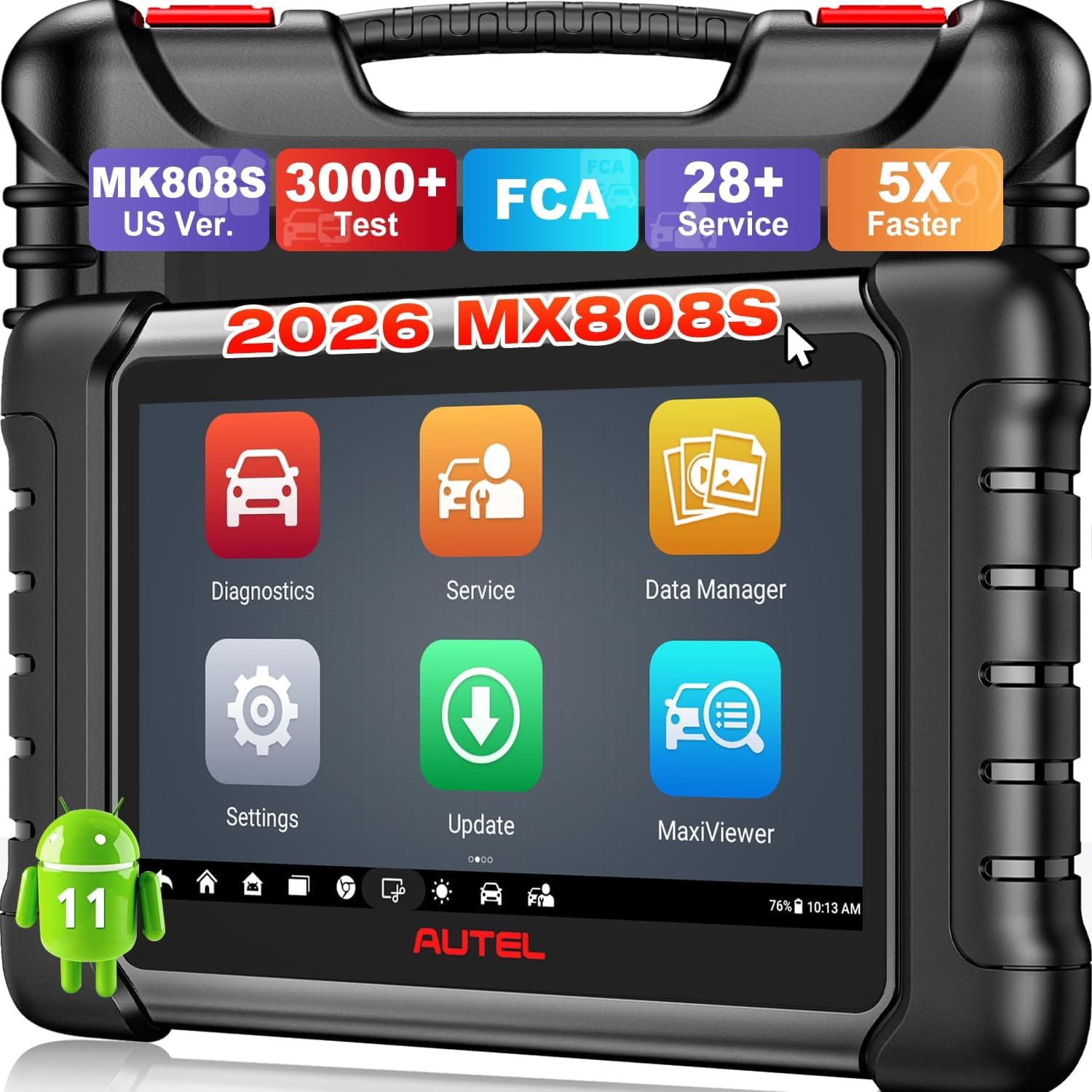
Scan Tool
Autel MaxiCOM MK808 — OBD2 Scanner with Live Data
Reads pending codes, live PIDs, fuel trims, and MAF data simultaneously. This is the exact type of tool you need to catch hesitation on the road — not just in the driveway.
Best Value
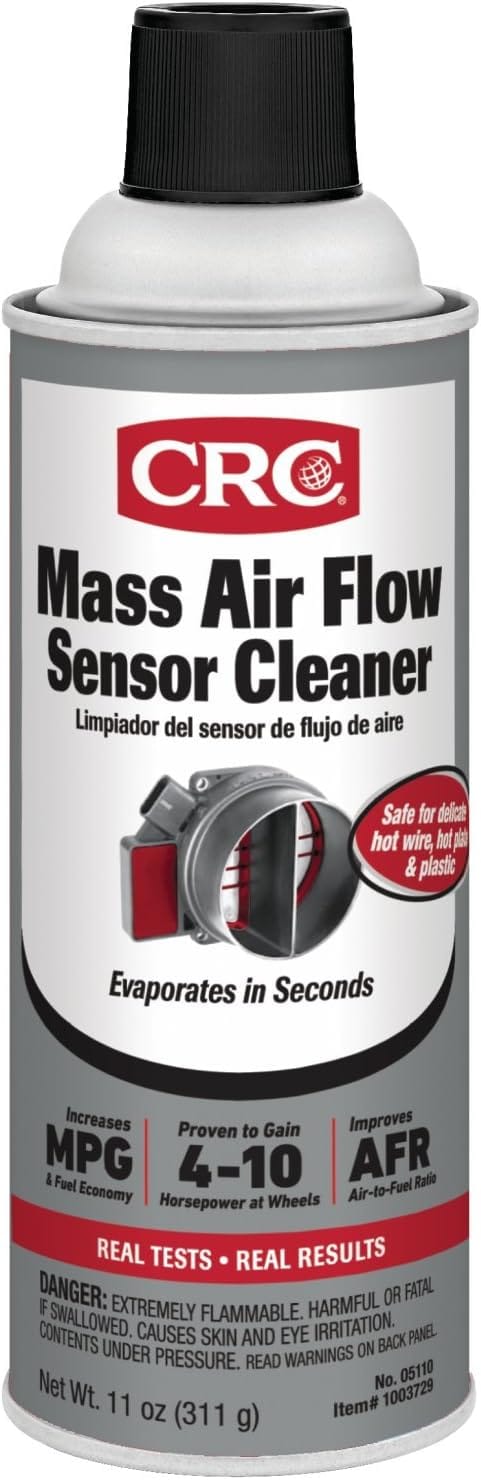
MAF Cleaner
CRC 05110 Mass Air Flow Sensor Cleaner — 11 oz
The first thing I reach for on any hesitation complaint. Safe on MAF sensor wires, dries residue-free. Has fixed more hesitation complaints than any part I’ve replaced. Try this before spending a dollar on sensors.
Pro Pick
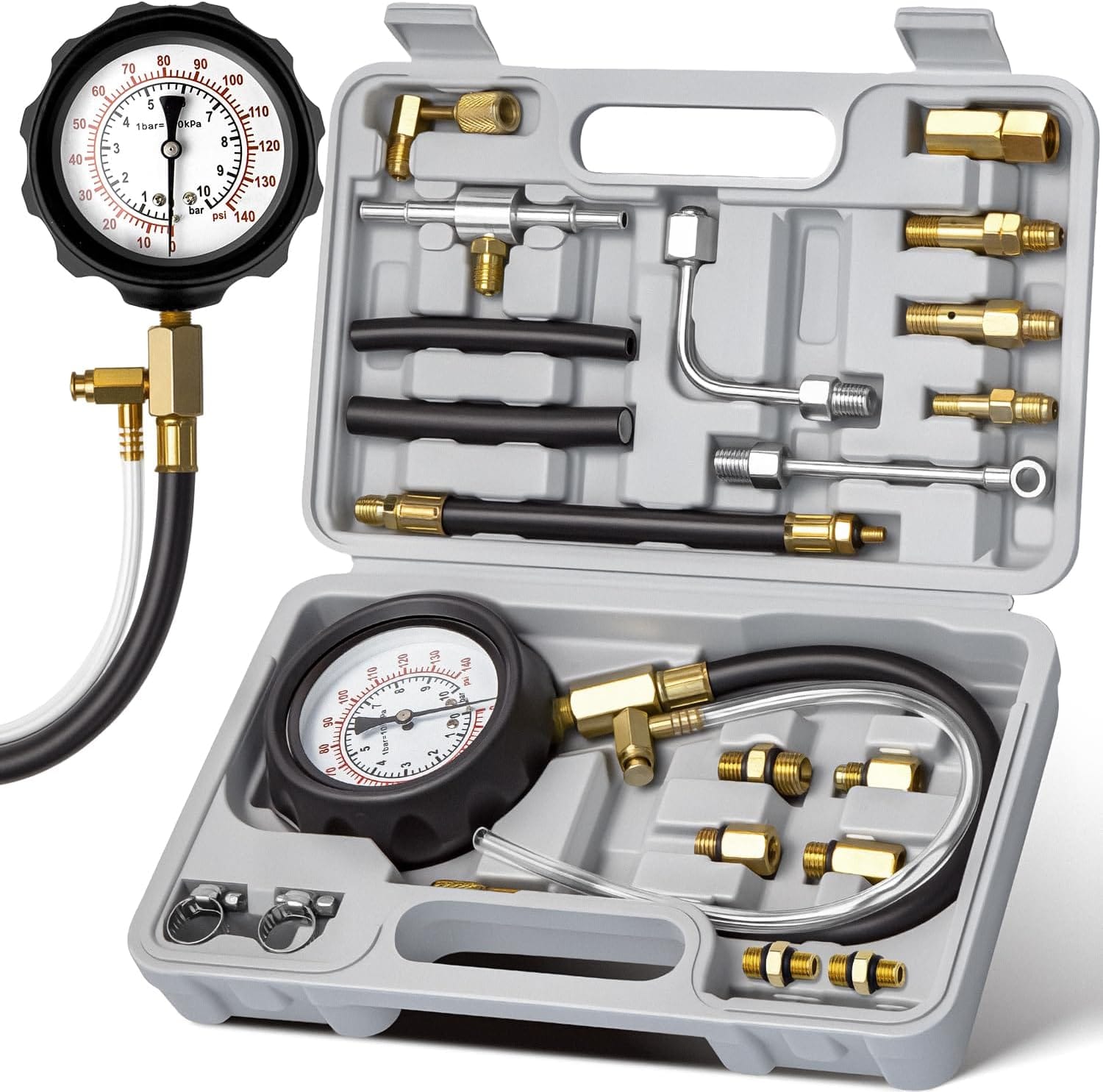
Fuel Pressure Gauge
Actron CP7827 Fuel Pressure Gauge Kit
Reads 0–100 psi with adapters for most domestic and import fuel systems. Long enough hose to route into the cabin while you drive. Essential for catching fuel pump failure under load — the test you can’t do parked.
Engine Hesitation When Accelerating — Frequently Asked Questions
What causes engine hesitation when accelerating?
The most common causes are a dirty or failing MAF sensor, weak fuel pump, worn spark plugs, failing throttle position sensor, or vacuum leak. Each causes hesitation through a different mechanism — dirty MAF causes a lean condition, weak fuel pump drops pressure under load, and a vacuum leak lets unmetered air enter the intake. Accurate diagnosis identifies which system is at fault before any parts get replaced.
Can a dirty MAF sensor cause hesitation on acceleration?
Yes — and it’s one of the most common causes I see. A contaminated MAF underreports airflow, so the ECU delivers less fuel than the engine needs. The result is a lean stumble that shows up exactly when you press the gas hard. Clean it with CRC MAF cleaner before replacing it. In my shop, cleaning fixes the problem about 60% of the time.
Can bad gas cause engine hesitation?
Yes. Contaminated or water-diluted fuel causes severe stumble under acceleration. I’ve drained tanks where the fuel looked fine but tested badly. If the hesitation appeared suddenly after a fill-up, try fresh fuel from a different station before touching anything else. It’s the cheapest first step and eliminates fuel quality as a variable.
How much does it cost to fix engine hesitation?
It ranges from $10 for a MAF cleaning to over $1,200 for fuel pump replacement at a shop. Most hesitation fixes fall between $80 and $400 in parts if you do the work yourself. The key is accurate diagnosis first — replacing parts blindly is how a $10 fix becomes a $500 mistake.
Will a tune-up fix engine hesitation?
Sometimes. If spark plugs are worn past their service interval or ignition coils are weak, a proper tune-up fixes the hesitation completely. But a tune-up won’t fix a fuel delivery problem or a failing sensor. Check live data first to identify which system is at fault — then decide if a tune-up addresses the root cause.
Is it safe to drive with engine hesitation?
Short, slow trips are low risk. Highway merging and passing are not. Hesitation means the engine isn’t producing reliable power on demand. That’s a real safety problem when you need to accelerate quickly to avoid an accident. Get it diagnosed before driving at highway speeds regularly.
Why does my car hesitate when accelerating but no check engine light?
Many hesitation causes don’t trigger a stored code. A partially dirty MAF, a weak fuel pump that still meets minimum pressure at idle, or a crankshaft position sensor that’s failing intermittently can all cause hesitation without lighting the dash. Plug in a scan tool and check for pending codes and live data — especially fuel trims and MAF readings during the actual hesitation event.