Car Stalls at Idle: Troubleshooting Guide
Quick Answer:If your car stalls at idle—especially at red lights or when stopped—the most common culprits are a failing idle air control valve (IACV), vacuum leaks, a dirty throttle body, or a malfunctioning mass airflow sensor (MAF). Diagnosis starts with checking for error codes and inspecting hoses and sensors. Many fixes are DIY-friendly and cost under $100 in parts.
That Cold Morning Panic at 6:15 AM
It was a Tuesday in mid-December—frost on the shop windows, coffee still steaming in my dented Thermos—when a 2014 Honda Civic Si rolled in, dragging its owner behind it like a deflated balloon. “It just dies when I stop,” he said, rubbing his temples. “Not every time… just *sometimes*. At red lights. In traffic. Once, right in the middle of a left turn.”
I’ve heard that story a hundred times. Customers are never thrilled about stalling—but when it happens unpredictably, it triggers real anxiety. You’re not just worried about your car; you’re worried about getting rear-ended, blocking traffic, or being stranded in a sketchy part of town. As an ASE-certified master tech with over 15 years in the trenches—from quick lubes to full engine rebuilds—I’ve diagnosedthousandsof idle stalling cases. And here’s the good news: most are fixable without selling a kidney.
If your car stalls at idle, you’re not alone, and you’re probably not facing a catastrophic failure. But youdoneed a systematic approach. Guessing leads to wasted money and frustration. So let’s walk through exactly what to check, in what order, and how to fix it—whether you’re in your driveway or deciding whether to call a tow truck.
What “Car Stalls at Idle” Really Means
Technically, “stalls at idle” means your engine RPM drops below the minimum threshold needed to keep combustion cycling—usually under 500 RPM—and the engine shuts off completely instead of maintaining a steadyidle stability. This often happens when the vehicle is at a stop, like at a red light or in heavy traffic, which is why many people describe it as “stalls when stopped” or “dies at red lights.”
Modern engines rely on precise air/fuel mixtures and electrical signals to maintain idle. If any component disrupts that balance—even slightly—the engine may compensate poorly or not at all. Unlike older carbureted engines that could “flood” or “lean out,” today’s drive-by-wire systems depend on dozens of sensors feeding data to the Powertrain Control Module (PCM). When one fails, chaos follows.
Before you dig in, learn the basics of [stalls at idle, engine dies at idle, idle stalling diagnosis](engine-stalling,engine-rough-idle, idle-air-control-valve). Understanding how these systems interact is half the battle.
Top 5 Causes of Idle Stalling (and How to Diagnose Them)
1. Faulty Idle Air Control Valve (IACV)
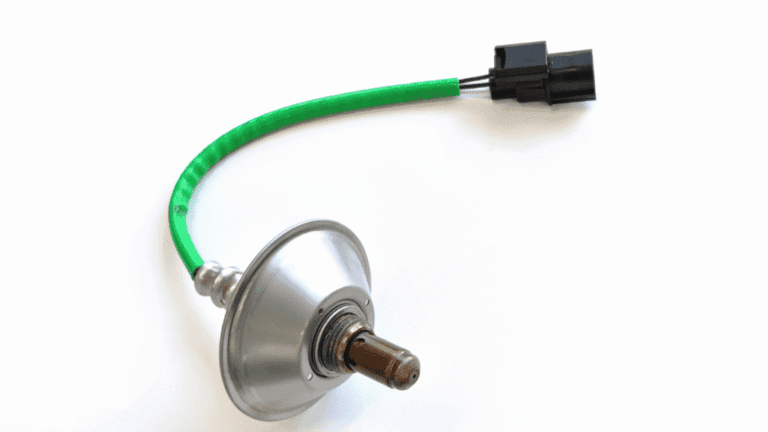
The IACV is the traffic cop of your engine’s idle. It regulates how much air bypasses the throttle plate when your foot’s off the gas. If it sticks, clogs, or fails electrically, your engine gets too little (or too much) air—and stalls.
Common on:Hondas (2001–2015), GM 3.8L V6s (1995–2008), Ford 4.6L engines (1996–2001).
OEM part example:Honda 16300-PLM-A01 ($85–$110) vs. Standard Motor Products LX47 ($38).
Failure symptom:Engine idles fine when cold but stalls when warm—or vice versa.
Pro Tip:I’ve seen the OEM Honda IACV last 200,000 miles, while aftermarket units (especially the $20 ones) often fail within 60,000. Don’t cheap out here.
2. Vacuum Leaks
A vacuum leak lets unmetered air into the intake manifold. The PCM doesn’t know this air is there, so it doesn’t add fuel—causing a lean condition that drops RPMs into stall territory.
Check these first:
- Brake booster hose (cracks near firewall)
- PCV valve and grommet (collapsed or hardened)
- Intake manifold gaskets (especially on aluminum heads)
- EVAP purge solenoid lines (often overlooked)
Test method:With engine running, spray carb cleaner or propane around suspected areas. If RPMs spike, you’ve found the leak. [Photo: Technician spraying intake manifold with carb cleaner while monitoring tachometer.]
3. Dirty Throttle Body
Carbon buildup on the throttle plate prevents it from closing fully or causes erratic airflow. Modern drive-by-wire systems struggle to adapt.
Applies to:Direct-injection engines (post-2010) suffer worst—no fuel wash over valves means more carbon.
Cleaning procedure (2012–2018 Ford F-150 3.5L EcoBoost):
- Disconnect negative battery terminal.
- Remove intake tube from throttle body.
- Use CRC Throttle Body & Air Intake Cleaner (part #05067)—neveruse WD-40 or brake cleaner.
- Gently wipe carbon with a microfiber cloth. Don’t force the plate open manually—risk damaging TPS sensor.
- Reconnect battery. PCM may need 10–15 drive cycles to relearn idle.
4. Mass Airflow Sensor (MAF) Failure
A contaminated or failing MAF gives false air readings. Result? Wrong fuel injection → unstable idle → stall.
DIY test:Unplug MAF while engine is running. If idle smooths out, MAF is likely faulty.
OEM vs. Aftermarket: Bosch 0 280 218 118 ($140) is reliable. Avoid no-name eBay “OEM-style” MAFs—they recalibrate poorly.
5. Weak Fuel Pump or Clogged Filter
Low fuel pressure = lean condition = stall. Especially noticeable after highway driving when the pump is hot.
Fuel pressure specs:
- GM 5.3L: 55–62 psi (key on, engine off)
- Toyota 2.5L 4-cyl: 44–50 psi
- Ford Coyote 5.0L: 35–45 psi (returnless system)
If you don’t have a fuel pressure gauge, this is one job worth paying for—diagnosing fuel issues blind is risky.
Essential Tools & Materials
- OBD2 Scanner– BlueDriver Pro ($99) or Ancel FX2000 ($65). Must read live data (not just codes).
- Vacuum gauge– 0–30 in/Hg range ($25). Critical for leak detection.
- Basic socket set– 8mm–19mm SAE/Metric.Don’t forget 10mm for IACV bolts!
- Throttle body cleaner– CRC 05067 ($8, AutoZone/Amazon).
- Nitrile gloves & safety glasses– Non-negotiable.
Nice-to-have:Smoke machine ($150–$400) for stubborn vacuum leaks. I use the OEMTOOLS 26413 in-shop—it pays for itself in 3 jobs.
Safety First!
Never work under a running engine without proper support.Use jack stands, not just a hydraulic jack. Disconnect the battery before cleaning throttle bodies or unplugging sensors—modern PCMs can store fault logic that mimics real failures. And never spray flammable cleaners near hot exhaust manifolds—I’ve seen two shop fires from this mistake.
Step-by-Step Diagnostic Procedure
Follow this sequence—don’t skip ahead. I’ve watched customers throw $300 in parts at a stalling issue only to discover it was a $2 cracked hose.
Scan for codes—even if the Check Engine Light (CEL) is off.Many “pending codes” won’t illuminate CEL but still affect performance. Look for P0505 (IAC circuit), P0171/P0174 (lean codes), or P0102 (MAF low input).
Inspect for vacuum leaks.Listen for hissing. Check all rubber hoses—especially near the intake manifold and brake booster. Replace any that feel brittle or show cracks.
Clean the throttle body and IACV.On most 2000–2015 vehicles, the IACV is integrated into the throttle body. Remove, clean with throttle cleaner, and reinstall. Torque bolts to spec:71–87 in-lbs (6–7 ft-lbs)—overtightening cracks aluminum housings.
Test the MAF sensor.Unplug it while idling. If idle improves, replace it. Don’t clean MAF sensors with anything but MAF-specific cleaner—finger oil ruins them.
Check fuel pressure.Connect gauge to Schrader valve on fuel rail. Compare to spec. If low, test pump amperage or inspect filter.
Perform an idle relearn.Required after cleaning throttle body or disconnecting battery. Procedure varies—e.g., Honda: idle 10 mins with A/C off; GM: use Tech2 scanner or disconnect battery for 15 mins.
Cost Analysis: DIY vs. Professional Repair
| Repair | DIY Cost | Shop Cost | Time (DIY) |
|---|---|---|---|
| IACV Replacement | $35–$110 (part) | $180–$320 | 30–60 mins |
| Throttle Body Cleaning | $8 (cleaner) | $95–$150 | 20 mins |
| MAFSensor Replacement | $80–$160 | $220–$380 | 15 mins |
| Vacuum Leak Repair (hose) | $5–$20 | $85–$140 | 10–45 mins |
Shop markup reality:Labor is typically $100–$150/hour. Most shops bill 0.5–1.0 hours for IACV or MAF jobs—even if the tech finishes in 20 minutes.
Money-saving tip:Many auto parts stores (AutoZone, O’Reilly) will loan you an OBD2 scanner or fuel pressure gauge for free with a deposit. Use it—don’t guess.
Vehicle-Specific Notes & TSBs
Some models have known stalling issues covered by Technical Service Bulletins:
- 2011–2015 Ford Focus (2.0L Ti-VCT):TSB 12-11-13 addresses rough idle/stalling due to faulty crankshaft position sensor. PCM reflash often required.
- 2005–2010 Chevrolet Cobalt (2.2L):TSB 07183B cites carbon buildup in throttle body. Cleaning + relearn usually fixes it.
- 2008–2012 Honda Accord V6:Known for cracked intake manifold runners—causes vacuum leaks that mimic IACV failure.
Always check for TSBs on your VIN at NHTSA.gov or AllDataDIY.com before buying parts.
Frequently Asked Questions
Why does my car only stall when the AC is on?
The AC compressor adds load to the engine. If the IACV can’t compensate by opening more, RPMs drop and stall occurs. This is a classic sign of a weak or dirty IACV. Cleaning or replacement usually fixes it.
How much does it cost to fix a car that stalls at idle?
DIY: $5–$160 depending on the part. Professional: $90–$400. Most common fixes (throttle cleaning, hose replacement) are under $100. If it’s the fuel pump or PCM, expect $500+.
Can low oil cause stalling at idle?
Not directly—but if oil pressure is critically low, some engines (like VW TSI) will shut down to prevent damage. Check your oil level first, but stalling is rarely an oil issue unless accompanied by knocking or warning lights.
My car stalls at idle but starts right back up—is that dangerous?
Yes. Stalling in traffic creates collision risk. It also strains the starter and battery. Don’t ignore it—even if it “only happens sometimes.”
Will a bad battery cause idle stalling?
Yes. The PCM needs stable voltage (13.5–14.5V when running). A weak alternator or dying battery can cause erratic sensor readings and stalling. Always test charging system first—multimeter is your friend.
How do I know if it’s a vacuum leak vs. bad IACV?
Vacuum leaks usually cause high idle when cold and stalling when warm. Bad IACV often causes surging or inability to maintain idle under load (like AC on). Use the carb cleaner spray test to confirm leaks.
Top Car Stalls At Idle – Our Picks

Final Thoughts From the Shop Floor
Car stalling at idle is frustrating, but rarely a death sentence for your vehicle. In my experience, 80% of cases are solved with a $10 can of cleaner, a new hose, or a $40 sensor. The key is methodical diagnosis—not parts swapping.
This is a moderate-difficulty DIY job. If you’re comfortable removing a throttle body or reading live OBD2 data, you can handle it. Total investment: under $150 in parts, 1–2 hours of your time. Compare that to a $300 shop bill for the same result.
I’ve had customers drive for weeks scared to stop at lights. Don’t live like that. Grab a scanner, check your hoses, clean that throttle body—and get your confidence back. Because a car that won’t idle isn’t just inconvenient—it’s a rolling liability. Fix it right, fix it safe, and get back on the road.