
If your car shudders, bucks, or threatens to stall the moment you turn the key—especially on a chilly morning—you’re dealing with a rough idle at startup. It’s one of the most common yet frustrating issues drivers face. Left unaddressed, it can lead to poor fuel economy, failed emissions tests, or even engine damage over time.
As an ASE-certified Master Technician with over 15 years of hands-on experience—from restoring carbureted muscle cars to diagnosing drive-by-wire systems on modern hybrids—I’ve seen every flavor of rough idle startup. Whether you’re a DIY mechanic armed with a multimeter or a weekend wrencher with basic tools, this comprehensive guide will walk you through diagnosing and fixing the root causes of that unsettling morning shake.
Let’s cut through the noise and get your engine running smooth as silk from the very first crank.
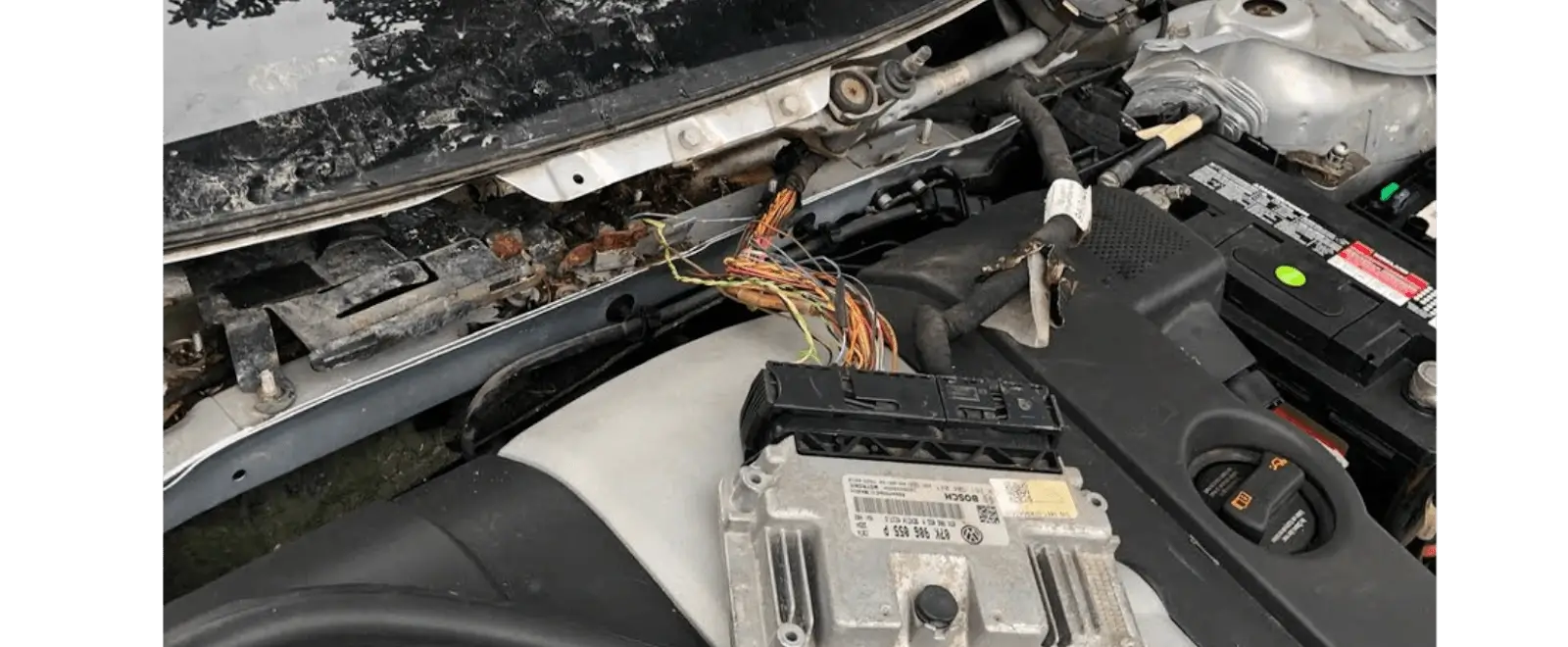
What Is a “Rough Idle at Startup”?
A properly functioning engine should idle steadily between 600–900 RPM (depending on make, model, and engine temperature) with minimal vibration. A rough idle at startup occurs when the engine runs unevenly, surges, misfires, or nearly stalls during the first few seconds or minutes after ignition—particularly when the engine is cold.
This issue is most pronounced during cold start idle, the phase when the engine is below operating temperature and the engine control unit (ECU) enriches the fuel mixture and increases idle speed to ensure stable combustion. Once warmed up, the idle should settle into a smooth, consistent rhythm—this is known as warm-up idle.
If the roughness persists beyond warm-up, or only happens when hot, you may be dealing with a different set of problems. But if it’s specifically tied to startup—especially cold mornings—it’s time to dig deeper.
Pro Tip: Always observe when the roughness occurs:
- Immediately at crank?
- Only for the first 10–30 seconds?
- Until the engine reaches normal operating temperature?
These clues narrow your diagnostic path dramatically.
Why Does Rough Idle Happen at Startup?
Modern engines are precision instruments. They rely on dozens of sensors, actuators, and software algorithms to maintain the ideal air-fuel ratio (typically 14.7:1 for gasoline under normal conditions). During cold starts, the mixture must be richer (more fuel) because cold fuel doesn’t atomize well and cylinder walls absorb fuel vapor.
If the ECU doesn’t receive accurate data—or if a component fails to respond—the air-fuel balance goes haywire, leading to misfires, hesitation, or unstable idle.
Common culprits fall into four categories:
- Air Delivery Problems (vacuum leaks, clogged IAC valves)
- Fuel System Issues (weak pump, leaking injectors, bad pressure regulator)
- Ignition System Failures (worn plugs, failing coils)
- Sensor Malfunctions (MAF, coolant temp sensor, O2 sensors)
Let’s explore each in detail—with actionable diagnostics you can perform at home.
#1: Vacuum Leaks — The Silent Idle Killer
Symptoms: High idle, surging, lean codes (P0171, P0174), worse when cold.
During a cold start, the ECU commands a richer mixture. But if unmetered air sneaks in through a cracked hose, loose fitting, or degraded intake gasket, it throws off that balance—causing a lean condition that makes the engine run rough.
Why it’s worse at startup: Cold rubber and plastic components contract, widening tiny cracks. As the engine warms, materials expand and may temporarily seal the leak—masking the issue once warm.
DIY Diagnosis:
- Listen: With the engine running, listen for a hissing sound near the intake manifold, throttle body, or vacuum lines.
- Spray Test: With the engine idling, carefully spray carb cleaner or propane around suspected areas. If RPM increases suddenly, you’ve found the leak.
- Smoke Test (Best Method): Affordable smoke machines ($100–$200) are now available to DIYers. They pressurize the intake with non-toxic smoke, revealing even pinhole leaks.
Common Leak Points:
- Brake booster hose
- PCV valve and grommet
- Intake manifold gaskets (especially on V6/V8 engines)
- Throttle body gasket
- Cracked vacuum reservoir (common on older Fords and Hondas)
Fix: Replace cracked hoses, tighten clamps, or reseal gaskets. Don’t just patch—replace with OEM-spec parts.
Real-World Example: A 2012 Ford F-150 I serviced had a rough idle startup every winter. After chasing fuel and ignition, we found a 1/8-inch crack in the intake elbow—only visible under smoke. Cold temps widened it enough to cause a lean misfire.
#2: Faulty Idle Air Control (IAC) Valve — The Idle Regulator
The Idle Air Control (IAC) valve is a small motorized valve that bypasses the throttle plate to regulate airflow at idle—especially during cold start idle when the throttle is closed.
Symptoms: Engine stalls at startup, RPM hunts (500 → 1200 → 700 → 1100), or fails to raise idle when cold.
Over time, carbon buildup can clog the IAC’s pintle or seat, preventing it from opening/closing properly. On some vehicles (like older GMs or Toyotas), the IAC is integral to the throttle body; on others, it’s a separate unit.
DIY Diagnosis:
- Locate the IAC (usually near the throttle body).
- Remove it and inspect for black, sooty deposits.
- Clean with throttle body cleaner (not brake cleaner—it can damage seals).
- Reinstall and test.
⚠️ Warning: Never force the IAC pintle. On stepper-motor types, this can damage internal windings.
If cleaning doesn’t help, test electrical operation:
- Use a multimeter to check for reference voltage (usually 12V with key on).
- On 4-wire IACs, resistance between specific pins should be 5–20 ohms (consult service manual).
Replacement Tip: Always reset the ECU after replacing or cleaning the IAC. Disconnect the battery for 10 minutes or use a scan tool to perform an idle relearn.
For more on this critical component, see our detailed guide on the idle air control valve.
#3: Dirty or Faulty MAF Sensor — The Airflow Measurer
The Mass Air Flow (MAF) sensor measures how much air enters the engine. The ECU uses this data—along with coolant temp, throttle position, and O2 sensors—to calculate fuel injection pulse width.
A contaminated or failing MAF sensor is a top cause of rough idle startup, especially if accompanied by poor acceleration or “check engine” lights.
Symptoms:
- Rough idle that improves after disconnecting the MAF (ECU goes into limp mode)
- Hesitation on acceleration
- Fuel trim codes (P0101, P0102, P0103)
- Better performance when cold than hot (or vice versa)
Why it fails: Oil from performance air filters, dust, or road debris coats the delicate hot-wire element, skewing readings.
DIY Fix:
- Locate the MAF (between air filter and throttle body).
- Disconnect the electrical connector.
- Remove the sensor (usually 2 screws).
- Spray MAF-specific cleaner (do NOT use compressed air or touch the wires!).
- Let dry completely (10–15 mins), reinstall, and test.
🚫 Never use brake cleaner, carb cleaner, or WD-40—they leave residues that damage the sensor.
If cleaning doesn’t resolve it, the sensor may need replacement. Aftermarket units vary in quality; OEM or reputable brands (Bosch, Denso) are worth the extra cost.
For deeper insight, explore our article on MAF sensor problems and how they trigger [rough idle when starting, cold start rough idle, startup idle problems](engine-rough-idle, idle-air-control-valve, MAF-sensor-problems).
#4: Fuel System Issues — Too Much or Too Little
Fuel delivery must be precise—especially during cold starts when the ECU demands extra fuel.
A. Weak Fuel Pump or Low Pressure
A failing pump may deliver adequate pressure at cruising speeds but drop off at idle. Cold fuel is denser, requiring more pressure to atomize properly.
Test: Use a fuel pressure gauge (many auto parts stores loan them). Compare cold-start pressure to specs (typically 45–65 psi for port fuel injection). If pressure drops below spec within 10 seconds after shutdown, the fuel pressure regulator or injector leak-down may be at fault.
B. Leaking Fuel Injectors
Worn injectors can drip fuel after shutdown, flooding cylinders overnight. On startup, the engine runs rich, causing misfires and rough idle until excess fuel burns off.
Diagnosis: Perform a fuel pressure leak-down test. If pressure drops rapidly with the key off, suspect injectors or regulator.
C. Clogged Fuel Filter
Though less common on modern vehicles (many have “lifetime” filters), a restricted filter can reduce flow during high-demand moments like cold starts.
Fix: Replace if >50,000 miles old or if pressure test confirms restriction.
#5: Ignition System Failures — The Spark Deficit
Even with perfect fuel and air, without consistent spark, combustion fails.
Common Ignition Culprits:
- Worn Spark Plugs: Gapped too wide or fouled with oil/carbon.
- Failing Ignition Coils: Resistance changes with temperature—often worse when cold.
- Cracked Plug Wires (on older vehicles): Allow voltage to arc to ground.
DIY Checks:
- Inspect plugs for wear, oil fouling, or carbon tracking.
- Swap coils between cylinders—if misfire follows the coil, it’s faulty.
- Use an OBD2 scanner to check for misfire codes (P0300–P0308).
Cold-Start Ignition Tip: Coil windings can develop micro-cracks that only open when cold. If roughness disappears after 2 minutes, suspect coils.
#6: Coolant Temperature Sensor (ECT) — The ECU’s Thermostat
The Engine Coolant Temperature (ECT) sensor tells the ECU how cold the engine is. If it reports a false “warm” reading during a cold start, the ECU won’t enrich the mixture—leading to a lean, rough idle.
Symptoms:
- Hard cold starts
- Excessive idle RPM that doesn’t drop
- Poor fuel economy
- No “choke” enrichment (on older fuel-injected cars)
Diagnosis:
- Use a scan tool to read live ECT data.
- Compare to ambient temperature before startup.
- If it reads 160°F on a 40°F morning, the sensor is faulty.
Fix: Replace the ECT sensor (usually threaded into the cylinder head or thermostat housing). Use OEM or high-quality aftermarket—cheap sensors drift quickly.
Note: This is the modern equivalent of choke problems on carbureted engines. A stuck-open choke caused rich floods; a stuck-closed choke caused lean stalls. Today, the ECT and MAF handle that role.
#7: Carbon Buildup on Intake Valves (Especially on GDI Engines)
Gasoline Direct Injection (GDI) engines spray fuel directly into the combustion chamber—bypassing the intake valves. Over time, oil vapors from the PCV system bake onto the valves, restricting airflow.
Symptoms:
- Rough idle at startup
- Loss of power
- Misfires (P030X codes)
- Worse after short trips (no time to burn off deposits)
Diagnosis: Requires borescope inspection or walnut blasting for confirmation.
Prevention: Use Top Tier gasoline, avoid excessive idling, and consider periodic intake cleaning (every 40,000 miles).
Step-by-Step Diagnostic Flowchart for DIYers
Follow this logical sequence to avoid costly guesswork:
- Scan for Codes
Even if the CEL isn’t on, pending codes may exist. Use an OBD2 scanner (even $20 Bluetooth ones work). - Check Live Data
Monitor:- Short/Long Fuel Trims (should be ±10% at idle; >+15% suggests lean)
- MAF reading (grams/sec—should be 2–6 g/s at hot idle)
- ECT vs. ambient temp
- IAC valve duty cycle or steps
- Inspect for Vacuum Leaks (smoke test if possible)
- Clean MAF and Throttle Body/IAC
- Test Fuel Pressure
- Check Ignition Components
- Verify ECT Sensor Accuracy
- Consider Carbon Cleaning (GDI engines)
⚠️ Never replace parts randomly. One shop once replaced a customer’s MAF, plugs, coils, and IAC—all for a $2 vacuum hose. Save your money and your sanity.
When to Call a Professional
While many rough idle startup issues are DIY-friendly, seek professional help if:
- You lack scan tool or pressure gauge access
- The vehicle is a hybrid or high-voltage system
- You suspect internal engine wear (e.g., low compression)
- The problem is intermittent and hard to reproduce
Modern diagnostics often require bi-directional control (e.g., commanding the IAC open/closed via scan tool)—something only advanced DIYers or shops can do.
Prevention Tips: Keep Startup Smooth
- Use Top Tier gasoline (reduces carbon buildup)
- Replace air filters every 15,000–30,000 miles
- Perform fuel system cleaning every 50,000 miles
- Address check engine lights immediately
- Avoid short trips whenever possible (engines need 10+ minutes to fully warm up and burn deposits)
Final Thoughts
A rough idle at startup isn’t just annoying—it’s your engine’s way of saying something’s out of balance. The good news? Most causes are accessible, affordable, and fixable with basic tools and methodical testing.
Start simple: clean the MAF, check for vacuum leaks, inspect the IAC. Nine times out of ten, you’ll solve it without touching a wrench to the engine block.
Remember, your car’s computer is only as smart as the data it receives. Garbage in = garbage out. Keep sensors clean, hoses intact, and fuel fresh, and your mornings will be quiet, smooth, and stall-free.
Got a specific make/model giving you trouble? Drop it in the comments—we’ll help you troubleshoot!
Further Reading:
- Learn more about general engine rough idle causes and fixes
- Deep dive into the idle air control valve and its role in idle stability
- Understand how MAF sensor problems lead to [rough idle when starting, cold start rough idle, startup idle problems](engine-rough-idle, idle-air-control-valve, MAF-sensor-problems)
Written by a veteran ASE Master Technician with 15+ years in the bay. No fluff—just real-world fixes that work.