
Mitsubishi Outlander Oil Change: The Complete DIY Guide

There’s a unique satisfaction that comes from taking care of your own vehicle. It’s a feeling of independence, of knowing that the machine you rely on daily is getting the best care possible, straight from your own two hands. For many Mitsubishi Outlander owners, this rugged and reliable SUV is more than just a car; it’s a partner in family adventures, a trusty commuter, and a symbol of practical, smart engineering. At the heart of keeping that partner running strong for years to come is one of the most fundamental, yet crucial, maintenance tasks: the oil change.

While the dealership or a quick-lube shop is always an option, they come with a price tag and, sometimes, a question mark over the quality of parts or attention to detail. Performing your own Mitsubishi Outlander oil change empowers you to take control, save a significant amount of money over the vehicle’s lifetime, and build a deeper connection with your SUV. This guide is more than just a list of instructions; it’s your comprehensive, expert-led walkthrough designed to demystify the process, equip you with the right knowledge, and give you the confidence to pop the hood and get the job done right.

Mitsubishi Outlander Oil Change Instructions

More Than Just a Lubricant: Understanding Your Outlander’s Oil

Before we dive into the “how-to,” let’s talk about the “why.” Why is this dark, golden liquid so vital to your Outlander’s health? Think of engine oil as the lifeblood of your SUV’s powerplant. Its primary role is lubrication, creating a protective film between moving metal parts like pistons, camshafts, and bearings. Without this film, these components would grind against each other, creating immense friction, heat, and catastrophic failure in seconds.

But modern engine oil is a sophisticated cocktail of chemicals that does far more than just reduce friction. It’s a heat-transfer fluid, carrying heat away from hot spots in the engine to the oil pan where it can dissipate. It’s a cleaning agent, containing detergents that suspend harmful byproducts of combustion like sludge and varnish, keeping them from clogging narrow oil passages. It also fights corrosion and helps seal the tiny gaps between piston rings and cylinder walls, ensuring optimal compression and engine efficiency. Neglecting your oil change means this lifeblood becomes thick, dirty, and abrasive, turning from your engine’s best friend into its worst enemy. Regularly refreshing it with fresh, high-quality oil is the single best thing you can do to ensure your Outlander’s engine remains smooth, powerful, and reliable for the long haul.

Your DIY Oil Change Toolkit: What You’ll Need Before You Begin

A successful DIY project starts with having the right tools and materials. Showing up to the job unprepared is a recipe for frustration and mistakes. For a Mitsubishi Outlander oil change, gathering your arsenal beforehand ensures a smooth, efficient, and clean process. Let’s break down exactly what you’ll need.

The Right Oil and Filter: The Heart of the Matter

This is the most critical decision you’ll make. Using the wrong oil can lead to poor performance, reduced fuel economy, and even long-term engine damage.

  • Engine Oil: Your first stop should always be your owner’s manual. It is the ultimate authority on your specific model year and engine type. Most modern Mitsubishi Outlanders (especially from 2014 onwards) with the 2.4L engine typically require 0W-20 full synthetic oil. Synthetic oil offers superior protection in extreme temperatures, better resistance to breakdown, and improved cleaning properties compared to conventional oil. While it costs more upfront, its longer lifespan and superior engine protection make it a wise investment. Older models might have different requirements, so that manual is your bible.
  • Oil Capacity: Again, consult your manual. A typical 2.4L Outlander engine holds around 4.8 quarts (or 4.5 liters), but this can vary slightly. It’s always best to buy a 5-quart jug and have a little extra on hand. The key is not to rely solely on the capacity spec, but to use your dipstick to confirm the correct level after filling.
  • Oil Filter: Don’t skimp here. A quality oil filter is essential for trapping contaminants. Look for reputable brands like Mobil 1, Bosch, Purolator, or OEM (Mitsubishi) filters. You can find the correct part number by searching online for your specific year and model, or by asking at an auto parts store. A filter with a grippy texture on the end can be a nice bonus for hand-tightening and removal.

Essential Tools and Safety Gear

Having the right tools makes the difference between a struggle and a satisfying job.

  • Jack and Jack Stands: This is non-negotiable for safety. Never, ever work under a vehicle supported only by a jack. A sturdy hydraulic floor jack and a pair of rated jack stands are essential to safely lift and support your Outlander.
  • Oil Filter Wrench: Oil filters can be incredibly tight from the factory. There are several types: a cup-style that fits over the end of the filter, a claw-style that grips the outside, or a simple metal band. The location of your Outlander’s filter will determine which is best. The top-mounted filter on many models can often be removed with a cap-style wrench that fits a 3/8-inch drive ratchet.
  • Socket Wrench Set: You’ll need a socket to remove the oil drain plug. A 14mm or 17mm socket is common for many Outlanders, but check to be sure. A short extension can also be helpful.
  • Oil Drain Pan: Get a pan large enough to hold the full capacity of your oil (at least 6 quarts). A pan with a spout, a lid, and a screen to catch the drain plug will make the job much cleaner and easier.
  • Funnel: A clean funnel prevents spills when pouring new oil into the engine.
  • New Crush Washer: This small, aluminum or copper washer sits on the drain plug. It’s designed to deform slightly to create a perfect seal. Reusing the old one can lead to leaks. They are incredibly cheap and often come with the new oil filter.
  • Gloves and Rags: Nitrile or latex gloves will keep your hands clean. Have plenty of old rags or shop towels on hand for wiping up spills.

Under the Hood and Under the Car: A Guided Walkthrough

With your tools laid out and your new oil and filter ready, it’s time for the main event. Take your time, follow each step deliberately, and you’ll be rewarded with a job well done.

Step 1: Preparation is Key First, run your engine for 5-10 minutes. Warm oil flows more freely and carries more contaminants with it out of the engine. Just be careful—it will be hot, not scalding. Park your Outlander on a level surface, engage the parking brake firmly, and turn off the engine.

Step 2: Safety First – Lift the Vehicle Position your floor jack under the reinforced jacking point on your vehicle’s frame (consult your owner’s manual for the exact locations). Carefully lift the front of the SUV until the tires are a few inches off the ground. Now, place your jack stands under the designated support points and slowly lower the vehicle onto them. Give the car a gentle nudge to ensure it’s stable before you even think about getting underneath.

Step 3: Let the Old Oil Flow Put on your gloves and slide your drain pan underneath the engine, directly below the oil drain plug. The drain plug is a large bolt on the bottom of the oil pan. Using your socket wrench, turn the plug counter-clockwise (“lefty-loosey”) to loosen it. Be prepared for the oil to start flowing as soon as the plug is loose. Unscrew the plug by hand for the last few turns and move your hand away quickly. Let the oil drain completely into the pan. This can take 10-15 minutes. While it’s draining, you can take the opportunity to clean the drain plug and remove the old crush washer.

Step 4: Swap the Oil Filter With the oil draining, locate the oil filter. On many newer Outlanders, it’s conveniently located on top of the engine, under a black plastic cap. On older models, it may be on the side or bottom of the engine block. Position your drain pan underneath it, as some oil will spill when you remove it. Use your oil filter wrench to turn it counter-clockwise. Once it’s loose, unscrew it the rest of the way by hand. Be careful, as it will be full of old oil.

Before installing the new filter, take a moment to prepare it. Dip your finger in the new oil and rub a thin layer of it around the rubber gasket on the new filter. This ensures a good seal and prevents the gasket from twisting or tearing. Now, screw the new filter on by hand until the gasket makes contact with the engine. Then, tighten it according to the filter’s instructions—usually an additional three-quarter to one full turn. Do not overtighten it with the wrench!

Step 5: Seal the Deal Once all the old oil has finished draining, take your clean drain plug, slide the new crush washer onto it, and screw it back into the oil pan. Tighten it with your socket wrench until it’s snug. Don’t use excessive force, or you risk stripping the oil pan threads. A good rule of thumb is to tighten it to about 20-25 foot-pounds of torque if you have a torque wrench, or simply until it’s firm and secure.

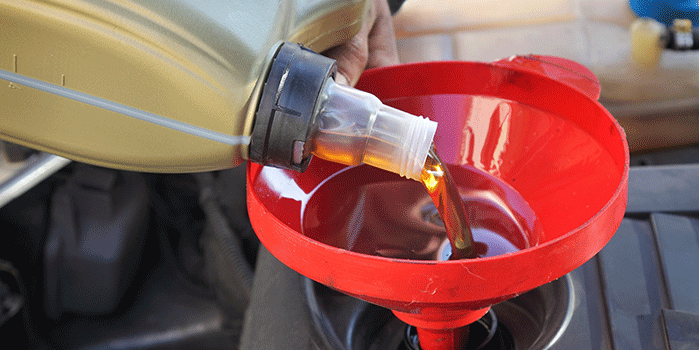
Step 6: Add the New Oil Carefully lower your vehicle back to the ground. Open the hood and remove the oil fill cap, which is usually marked with an oil can symbol. Place your funnel in the opening and begin pouring in the new oil. Start by adding about 4 quarts. Then, wait a few minutes for the oil to settle in the oil pan before pulling out the dipstick, wiping it clean, re-inserting it fully, and pulling it out again to check the level. The oil should be between the “MIN” and “MAX” marks on the dipstick. Add small amounts of oil at a time, rechecking the dipstick until you reach the correct level. It’s better to be slightly under than over.

Step 7: Final Checks and Cleanup Replace the oil fill cap. Now, start the engine and let it run for a minute or two. Watch carefully under the car for any signs of leaks from the drain plug or oil filter. The oil pressure light on your dashboard should illuminate for a second and then turn off. Turn off the engine, wait another few minutes, and check the dipstick one last time, topping off if necessary. Pour the used oil from your drain pan into the empty oil bottles for proper disposal. Clean up any spills, put your tools away, and give yourself a pat on the back. You’ve just successfully completed your own Mitsubishi Outlander oil change.

Expert Insights for a Flawless Oil Change

Beyond the basic steps, a few pro tips can elevate your DIY game from amateur to expert. These are the little details that ensure a perfect, stress-free job every time.

  • The “Warm, Not Hot” Sweet Spot: We mentioned warming the engine, but it’s worth elaborating. A 10-minute drive is perfect. A fully hot engine means the oil and engine components can be hot enough to cause serious burns. Let the car sit for 5-10 minutes after you park it before you get started.
  • The Stuck Filter Trick: If your oil filter won’t budge, don’t panic. If you’re using a band or claw wrench and it’s just slipping, try using a screwdriver and hammer. Carefully punch the screwdriver through the thickest part of the metal canister, away from the engine, and use it as a lever to turn the filter. This is a last resort, as it can be messy, but it’s almost guaranteed to work. (Just be sure the new filter you’re installing has a grip surface for easy removal next time!).
  • The Crush Washer is Crucial: We can’t stress this enough. Reusing the old crush washer is a common mistake that leads to slow, annoying oil drips. They cost pennies. Always use a new one. Your driveway and the environment will thank you.
  • Mastering the Dipstick: For an accurate reading, always follow the same procedure: pull the dipstick, wipe it completely clean with a lint-free rag, insert it all the way back in, wait a few seconds, then pull it out again to check the level. Don’t just glance at it after the first pull.
  • Avoiding Overfilling: Overfilling your engine with oil can be just as bad as running it low. Excess oil can get whipped into a froth by the crankshaft, preventing it from properly lubricating the engine. This can lead to a condition called “aeration,” which can damage engine bearings. Add oil slowly and check the dipstick frequently.

The Final Step: Being a Responsible DIY Mechanic

You’ve saved money, learned a new skill, and kept your Outlander happy. The last responsibility is to dispose of the used oil and filter properly. Engine oil is a toxic environmental pollutant. Never pour it down the drain, in the sewer, or on the ground.

The good news is that recycling is easy. Most auto parts stores like AutoZone, O’Reilly Auto Parts, and Advance Auto Parts will accept your used oil and old filters for free, regardless of where you bought them. Simply pour the used oil back into the empty bottles from your new oil, cap them tightly, and transport them carefully to the recycling center. Many municipal landfills and recycling centers also have designated areas for used oil. By taking this simple step, you’re not just being a good car owner—you’re being a good steward of the environment.


Frequently Asked Questions (FAQs)

Q1: How often should I change my Mitsubishi Outlander’s oil? The old “every 3,000 miles” rule is largely obsolete for modern vehicles. For a recent model Outlander using full synthetic oil, the manufacturer often recommends intervals of 7,500 to 10,000 miles or once a year, whichever comes first. However, if you frequently drive in severe conditions—like extreme heat, heavy stop-and-go traffic, or dusty roads—you should stick to a more frequent interval, like every 5,000 miles. When in doubt, check your owner’s manual.

Q2: What type of oil does my Mitsubishi Outlander take? While you should always confirm with your owner’s manual, the vast majority of modern Mitsubishi Outlanders (2014+) with the 2.4L 4-cylinder engine require SAE 0W-20 full synthetic oil. This low-viscosity oil provides excellent lubrication on startup and helps improve fuel economy. If you have a different engine or an older model, the specification may differ, so that manual is your definitive source.

Q3: How much oil does my Outlander need for an oil change? The typical oil capacity for a 2.4L Mitsubishi Outlander engine is approximately 4.8 quarts (4.5 liters) when you’re also changing the oil filter. It’s best practice to add about 4 quarts initially, then check the dipstick and top it off gradually until the level is within the safe zone between the MIN and MAX marks.

Q4: Is it okay to switch from conventional to synthetic oil? Absolutely. It is perfectly safe to switch from conventional to synthetic oil in your Outlander. In fact, it’s generally a beneficial upgrade. Synthetic oil provides superior protection and performance. You can even switch back to conventional if you wanted to, though it’s not recommended. Just be sure to use the correct viscosity grade (like 0W-20) as specified by Mitsubishi.

Q5: What are the signs that I need an oil change sooner than scheduled? Pay attention to your vehicle. If the “Oil Change” light on your dashboard illuminates, that’s an obvious sign. Other indicators include the engine sounding louder than usual, a knocking or ticking noise, dark and gritty oil on the dipstick, or a noticeable drop in fuel economy. If you notice any of these, it’s wise to check your oil level and condition and consider an early change.


A Warm Conclusion

Taking the plunge into DIY car maintenance, starting with a Mitsubishi Outlander oil change, is an incredibly rewarding journey. You’ve not only saved yourself a trip to the shop and a chunk of change, but you’ve also gained invaluable knowledge and a deeper sense of connection with your reliable SUV. You now know with absolute certainty that the job was done correctly, with quality parts and the attention to detail your vehicle deserves.

Armed with this guide, you’re no longer just a driver; you’re a caretaker. You have the power to ensure your Outlander’s heart stays healthy and strong for all the roads and adventures ahead. So, the next time that maintenance reminder pops up, you can greet it not with a sigh, but with the confidence of someone who knows exactly what to do. Happy wrenching

Leave a Comment