Idle Air Control Valve Problems and Solutions
Tuesday morning, 7:30 AM. A ’98 Civic rolls into my bay with the customer white-knuckled and frustrated. “It keeps dying at every stoplight,” she says, her voice cracking. The poor girl’s been nursing this thing for weeks, restarting it in traffic like she’s playing Russian roulette with rush hour. One quick scan, a $47 part from NAPA, and 45 minutes later she’s driving away with an idle smoother than my ’64 Impala’s V8. That’s the magic—and the misery—of a failed idle air control valve.
Quick Answer: What Does an IAC Valve Do?
Quick Answer: Details
Your idle air control valve is basically a computer-controlled air leak that keeps your engine alive when your foot’s off the gas. When it fails, your car either stalls at stops, idles like a cammed drag car, or revs to the moon at red lights. Most fixes cost $40-180 DIY, $200-500 at a shop.
Understanding Your Idle Air Control Valve
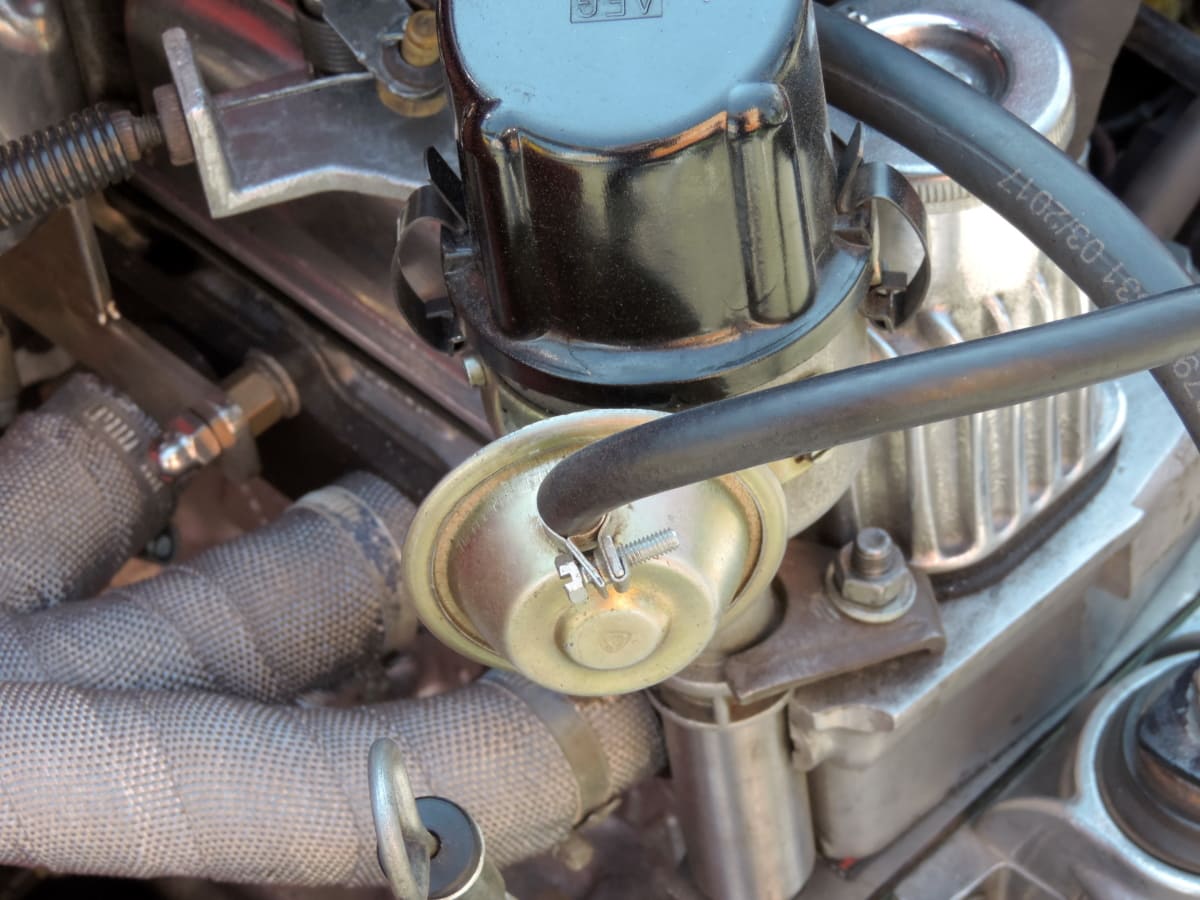
I’ve been turning wrenches for fifteen years, and if I had a dollar for every customer who thought their transmission was dying when it was just a dirty IAC valve, I’d have enough to buy that Snap-on toolbox I’ve been eyeing. The idle air control valve—mechanics call it the IAC, idle control motor, or idle speed control— is essentially a pintle valve on steroids.
Here’s what trips people up: your throttle body almost completely closes when you take your foot off the gas. The IAC valve creates a controlled air bypass, allowing just enough atmosphere into your intake manifold to maintain idle speed. The ECM (your car’s brain) constantly adjusts this valve based on engine temperature, electrical load, and whether you’ve got the A/C crushing your soul in August traffic.
Pro Tip:On Honda and Acura models from 1996-2005, the IAC valve often gets confused with the Fast Idle Thermo Valve (FITV). They’re different parts that do similar jobs. The IAC is electronic; the FITV is wax-based and mechanical. I’ve seen DIYers replace the wrong one and wonder why nothing changed.
Technical Specifications That Actually Matter
Forget the textbook definitions—here’s what you need to know when you’re staring at this thing in your driveway:
- Resistance specs:Most Honda/Toyota IAC valves read 8-15 ohms between terminals (check your manual—I’ve seen Nissan specs as low as 5 ohms)
- Operating range:The valve moves through 0-255 “steps” in the ECM’s language, with each step moving the pintle about 0.0025 inches
- Power consumption:Typically draws 0.5-1.5 amps—more than your radio, less than your fuel pump
- Failure mileage:In my experience, 70,000-120,000 miles is the danger zone, especially if you’ve never cleaned your throttle body
The aftermarket vs. OEM debate gets heated in shop break rooms. Here’s my take after replacing hundreds: Standard Motor Products and Hitachi (for Nissan) make solid aftermarket units. Avoid the $29 eBay specials—I’ve seen them fail within months. For Honda/Acura, genuine Honda parts last 2-3x longer. Toyota?Denso or OEM only. I’ve cleaned up too many messes from cheap replacements.
Symptoms That Scream IAC Valve Failure
Customers describe these symptoms in creative ways. “It feels like someone’s learning to drive stick in my automatic,” said one guy with a failing Ford IAC. Another woman told me her Nissan “sounded like it was practicing yoga—constantly finding its center.” Here’s what to actually watch for:
The Tell-Tale Signs
- Stalling at stops:The classic symptom. Your engine dies when you stop, but restarts fine
- Erratic idle:RPMs jumping between 500-1500 like a mechanical bull
- High idle:Car wants to do 35 mph without touching the gas
- Low idle:Engine stumbling, almost dying, then catching itself
- Surging:Speed fluctuating while cruising with constant throttle
Warning:These symptoms can also indicate vacuum leaks, dirty throttle bodies, or faulty throttle position sensors. I once chased an “IAC problem” for two hours before finding a cracked vacuum hose the size of a hair. Learn about IAC valve problems, idle control valve, idle air control diagnosis before throwing parts at it.
The Diagnostic Dance
Here’s my foolproof process developed over countless misdiagnoses:
Visual Inspection First
Pop your hood and look for obvious vacuum leaks—cracked hoses, loose connections, that time your cousin “helped” by removing emissions equipment. I’ve found everything from chewed wires (thanks, squirrels) to carbon buildup you could write your name in.
Scan Tool Check
Pull codes first. P0505 (Idle Control System Malfunction) is your smoking gun, but P0506 (RPM Lower Than Expected) and P0507 (RPM Higher Than Expected) also point to IAC issues. Don’t have a scanner? Most AutoZone stores will pull codes free—just don’t let them sell you parts based solely on the code.
The Hand Test
With the engine running, carefully place your hand over the IAC valve opening (don’t burn yourself—I have the scars to prove this warning). If the engine smooths out, your IAC’s stuck open. If it gets worse, it might be stuck closed or there’s another issue.
IAC Valve Cleaning: The $8 Miracle Fix
Before you spend money on parts, try cleaning. I’ve resurrected probably 60% of “failed” IAC valves with nothing more than throttle body cleaner and patience. This works especially well on vehicles that see a lot of stop-and-go driving or short trips where the engine never fully warms up.
Must-Have Tools for IAC Cleaning
- Throttle body cleaner:CRC or Valvoline brand, about $8. Avoid carb cleaner—it’s too harsh for some IAC materials
- Basic socket set:Usually 10mm and 12mm for Japanese cars, Torx T25/T30 for many domestics
- Soft-bristle brush:Old toothbrush works perfect
- New gasket:$3-12 depending on vehicle. Always replace it
- Shop rags:The blue ones that don’t leave lint
- Safety glasses:Cleaner in your eye ruins your whole day
Critical Safety:Let your engine cool completely. I’ve seen guys try this on a hot engine and end up with second-degree burns. Also, disconnect your battery negative terminal—shorting out your IAC connector while cleaning it is an expensive mistake that’ll cost you a $400 ECM.
The Cleaning Process That Actually Works
Remove and Document
Take photos of vacuum line routing before touching anything. Label connections with masking tape. Remove the IAC valve—usually 2-4 bolts. On Honda B-series engines, it’s tucked under the throttle body like Honda’s playing hide-and-seek with you.
Spray and Soak
Spray cleaner directly into both valve openings. You’ll see black carbon soup running out. Keep spraying until it runs clear. Let it soak 10 minutes, then repeat. For heavy buildup, I let parts soak overnight in a cleaner bath.
Mechanical Cleaning
Gently work the pintle valve with your finger (wear gloves). It should move smoothly through its full range. If it’s stuck, don’t force it—replace the valve. I’ve seen people break the internal threads trying to muscle a seized valve.
Reinstall and Relearn
Install with a new gasket. Torque to spec—usually 8-10 ft-lbs, but check your manual. Reconnect battery and start the engine. Let it idle for 10 minutes to relearn. Some vehicles need a specific relearn procedure—Google “[year] [make] [model] IAC relearn procedure.”
Pro Tip:While you’re in there, clean your entire throttle body. Carbon buildup here makes your IAC work overtime. I use a cotton swab dipped in cleaner to get the edges where the throttle plate seats—it’s usually blacker than coffee that’s been on the burner since morning.
When Cleaning Doesn’t Cut It: Replacement Guide
Sometimes you’re just polishing a turd. If your IAC tests bad electrically, the pintle’s seized, or cleaning didn’t help, replacement is your only option. I’ve seen people clean the same valve three times before admitting defeat—don’t be that person.
Cost Breakdown: DIY vs. Professional
| Service | DIY Cost | Shop Cost | Time Investment |
|---|---|---|---|
| IAC Valve Cleaning | $8-15 (cleaner + gasket) | $89-149 | 45-90 minutes |
| IAC Valve Replacement(Japanese) | $47-89 (aftermarket), $89-156 (OEM) | $245-389 | 30-60 minutes |
| IAC Valve Replacement(Domestic/Euro) | $67-134 (aftermarket), $134-267 (OEM) | $289-456 | 45-90 minutes |
Those shop prices aren’t gouging—they reflect diagnostic time, markup on quality parts, and the expertise to know when replacement is actually needed. I’ve seen DIYers replace three parts chasing what turned out to be a vacuum leak that would’ve taken me 10 minutes to find.
Model-Specific Landmines
Every platform has its quirks. Here’s what trips up DIYers on popular vehicles:
- Honda Civic 1996-2000:The IAC is integrated into the throttle body on some models. You can’t replace it separately—it’s a $400+ throttle body assembly
- Ford F-150 2004-2008:Requires a specific relearn procedure involving turning the A/C on/off while idling. Skip it and you’ll chase idle issues for weeks
- Nissan Altima 2002-2006:The IAC connector gets brittle. I’ve broken more than I care to admit. Order a new connector pigtail when you order the valve
- GM 3800 engines:Two different IAC valves depending on whether you have Series II or III. They look identical but aren’t interchangeable
Troubleshooting the Tough Cases
Sometimes you do everything right and the car still runs like garbage. These are the cases that separate real mechanics from parts changers. Here’s my diagnostic tree for IAC-related mysteries:
If Your Engine Still Stalls After IAC Replacement:
- Check for vacuum leaks again:Smoke test if you have access. I’ve found leaks in the brake booster, PCV system, and even the intake manifold gasket
- Test the throttle position sensor:A bad TPS can confuse the ECM about idle requirements. Should read 0.45-0.55 volts at closed throttle
- Verify base idle speed:Some vehicles need the base idle set mechanically before the IAC can do its job
- Check charging system:Low voltage makes the IAC act erratic. Should see 13.8-14.4 volts at idle
Don’t Miss This:Aftermarket intakes and modified exhausts can throw off the ECM’s idle calculations. I spent three days chasing an idle problem on a Civic before the owner mentioned he’d installed a “performance chip” from eBay. Removed it—problem solved. Always ask about modifications.
When the Check Engine Light Keeps Coming Back
Persistent IAC codes usually mean one of three things: you got a bad replacement part (more common than you’d think), there’s underlying wiring damage, or the ECM itself is failing. I’ve seen all three in the last month alone.
Here’s my systematic approach:
- Wiggle test:With the engine running, gently wiggle the IAC connector and wiring. If the idle changes, you’ve got a connection problem
- Voltage drop test:Check for voltage drop across the IAC connector. More than 0.1 volts indicates wiring issues
- Scope check:A lab scope can show you if the ECM is sending clean square-wave signals to the IAC
- ECM reset:Sometimes the ECM learns bad habits. Disconnect battery for 30 minutes, then drive through specific conditions to relearn
Prevention: Keeping Your IAC Healthy
The best repair is the one you don’t have to make. Here’s what I tell customers who want to avoid IAC problems:
- Drive it like you stole it occasionally:Italian tune-ups work. 15 minutes of sustained 3000+ RPM driving burns off carbon buildup
- Use quality fuel:Cheap gas leaves more deposits. Top Tier gasoline (Costco, Shell, Chevron) has better detergents
- Don’t ignore maintenance:Clean your throttle body every 30,000 miles. It’s a 20-minute job that prevents hours of frustration
- Fix oil consumption:Burning oil creates the carbon that clogs IAC valves. PCV system maintenance matters
- Let it warm up:Short trips where the engine never reaches operating temperature accelerate carbon buildup
From the Shop:I see the most IAC problems on cars that do lots of short trips or idle for extended periods—delivery vehicles, taxis, and grandma’s “grocery getter” that only sees 3-mile round trips. Highway-driven vehicles rarely have issues before 150,000 miles.
FAQ: Real Questions from Real Customers
Q: How much does idle air control valve replacement cost at a dealer?
A: Dealers typically charge $350-600 depending on your vehicle. Honda dealers wanted $489 for my customer’s Accord—same job cost $180 at my independent shop with an OEM part. The dealer premium isn’t always worth it for this repair.
Q: Can I drive with a bad IAC valve?
A: I’ve seen customers drive for months with failing IAC valves, but it’s risky. You’ll stall in traffic, potentially causing accidents. Plus, the constant stalling and restarting damages your starter and battery. Get it fixed before you’re the person holding up rush hour traffic.
Q: Will a dirty air filter cause IAC problems?
A: Not directly, but a severely clogged air filter makes your engine run rich, creating more carbon that can clog the IAC. It’s like a domino effect. Replace your air filter every 15,000-30,000 miles—it’s a $15 part that prevents $200 problems.
Q: Why does my IAC valve keep failing?
A: Repeated failures usually indicate an underlying issue: excessive oil consumption, contaminated intake air, or electrical problems. I had a customer go through three IAC valves in a year before we discovered his PCV system was completely clogged, pressurizing the crankcase and forcing oil into the intake.
Q: Can I just disconnect the IAC valve?
A: Please don’t. The ECM will set codes, your check engine light will glow like a Christmas ornament, and you’ll fail emissions testing. Worse, you’ll be manually controlling idle speed with your left foot for the rest of your car’s life. I’ve seen people try this—it’s not worth the $50-100 you’re saving.
Q: How long does IAC valve cleaning last?
A: A proper cleaning typically lasts 30,000-50,000 miles depending on driving conditions. Highway drivers might see 70,000+ miles. City drivers with lots of idle time might need cleaning every 20,000 miles. I cleaned my wife’s Camry at 85,000 miles and it’s still perfect at 135,000.
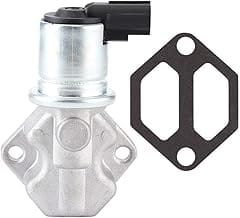
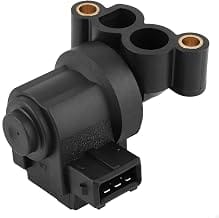
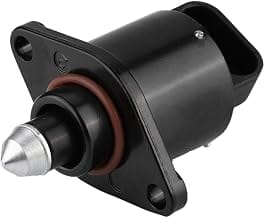
Top Idle Air Control Valve Problems And Solutions – Our Picks
The Bottom Line from a Guy Who’s Fixed Hundreds
Idle air control valve problems are frustrating because they make your car unreliable in the most embarrassing way possible—dying in traffic, surging at stops, acting possessed. But here’s the thing: it’s usually a $50 fix and an hour of your time, not a $500 mystery that requires a priest and holy water.
Start with cleaning. It’s cheap, effective, and teaches you about your engine. If that doesn’t work, replace the valve with a quality part—spend the extra $30 for OEM and save yourself from doing the job twice. And please, for the love of everything mechanical, check for vacuum leaks before you throw parts at it. I’ve made that mistake so you don’t have to.
The satisfaction of fixing your own car is hard to beat. There’s something primal about hearing an engine idle smoothly after you’ve brought it back from the dead. Just remember: take photos, buy quality parts, and don’t overtighten those little bolts. Your future self—and your wallet—will thank you.
Now get out there and fix something. The driveway is calling, and that rough idle isn’t going to cure itself.