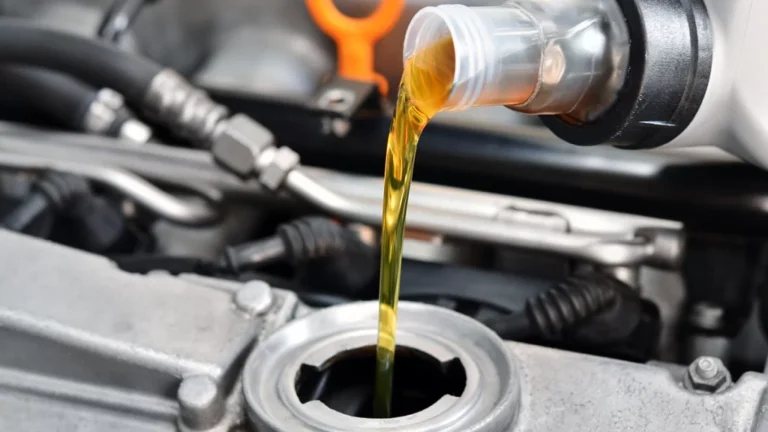
Brake Fluid Temperature Range: Expert Guide
Brake Fluid Temperature Range: Why It Matters and How to Choose the Right Fluid
Brake fluid temperature range is the operating window in which your hydraulic braking system performs consistently. It typically spans from a freezing point around -40°F (-40°C) to a dry boiling point of 401°F (205°C) for DOT 3 fluids. High-performance DOT 4 variants can reach up to 500°F (260°C). This range isn’t just a spec sheet number. It’s the difference between a confident stop on a mountain descent and a pedal that sinks to the floor with zero braking force. Brake fluid is the central fluid in your vehicle’s braking system. It transmits force from your foot to the calipers. Its temperature tolerance determines whether that force remains reliable under extreme conditions.
In this guide, we’ll break down the critical attributes that define brake fluid performance. These include boiling point thresholds, viscosity ratings, wet vs. dry boiling points, and the chemical compositions that separate DOT 3, DOT 4, DOT 5, and DOT 5.1 fluids. Glycol-ether and silicone-based formulas behave very differently under heat. We’ll also cover how moisture contamination lowers your effective temperature range over time. We’ll explain why brake fade occurs when fluid exceeds its limits. You’ll learn how to match fluid type to your driving demands, whether that’s daily commuting, track days, or heavy towing. You’ll walk away with a clear decision framework based on real-world data, not marketing claims.
What sets this article apart is the honest comparison most guides skip. We’ll show you exactly where each fluid type fails, not just where it excels. We’ll include a temperature tolerance chart that compares spec-sheet numbers against real-world performance after 12 months of service. If you’ve ever wondered why your brakes felt spongy after a long descent, this is the resource for you. We’ll also explain why a mechanic recommended a fluid upgrade. This guide connects the chemistry to the driving experience. You’ll understand the science behind every brake pedal feel.
What Is Brake Fluid Temperature Range and Why Does It Matter?
Brake Fluid Temperature Range and Why Does It Matter? – brake fluid temperature range” class=”vb-content-img” loading=”lazy” src=”https://vehiclebar.com/wp-content/uploads/2026/08/brake_fluid_temperature_range_0.jpeg”/>
Brake fluid temperature range is the span of temperatures within which your brake fluid operates safely and predictably. Every fluid carries two published numbers — a dry boiling point and a wet boiling point — and those numbers tell you exactly when the fluid will start failing you. Understanding this range is not academic. It is the difference between a clean stop and the pedal going soft when you need it most.
Defining the Temperature Range: Dry vs. Wet Boiling Points
The dry boiling point is the temperature at which fresh, unopened brake fluid begins to boil. This number matters on day one, straight from the bottle. The wet boiling point, by contrast, is the temperature at which fluid containing 3.7% water by volume will boil — the realistic condition after 12 to 24 months of service. The gap between these two numbers is your safety margin, and it shrinks every day as your fluid absorbs moisture from the atmosphere.
How Temperature Affects Brake Performance and Safety
When brake fluid exceeds its boiling point, it vaporizes. Vapor is compressible, unlike liquid, so your brake pedal will feel spongy or sink toward the floor — a condition known as brake fade. This is not a gradual degradation; it is a sudden, catastrophic loss of braking force. The lower your fluid’s boiling point, the sooner this occurs under hard braking. Heat generated by friction at the pads and rotors transfers directly to the calipers and the fluid inside them. On a mountain descent or a track session, temperatures can spike quickly, and if your fluid’s wet boiling point is too low, you will lose braking power exactly when you need it most.
Brake Fluid Types and Their Temperature Specifications
DOT 3: The Standard for Everyday Driving
DOT 3 is the baseline. Its dry boiling point is a minimum of 401°F (205°C), and its wet boiling point is a minimum of 284°F (140°C). It is glycol-ether based, which means it is hygroscopic — it actively absorbs moisture from the air. This is both its weakness and its design intent: absorbing moisture prevents free water from pooling in your brake lines, where it would boil at 212°F (100°C) and cause immediate vapor lock. For everyday commuting and light duty, DOT 3’s temperature range is adequate, but its wet boiling point drops quickly, and after two years of service, it may be operating near its limit during aggressive braking.
DOT 4: Higher Performance for Demanding Conditions
DOT 4 raises the bar with a dry boiling point of at least 446°F (230°C) and a wet boiling point of at least 311°F (155°C). It uses a borate ester additive that raises the boiling point and improves high-temperature stability. This makes DOT 4 the recommended choice for vehicles that see heavier loads, mountain driving, or spirited performance use. The trade-off is that DOT 4 is even more hygroscopic than DOT 3, meaning it absorbs moisture faster and requires more frequent flushing to maintain its temperature range.
DOT 5.1: High-Performance, Non-Silicone Option
DOT 5.1 is often confused with DOT 5, but they are fundamentally different. DOT 5.1 is glycol-ether based, like DOT 3 and DOT 4, but it is formulated to meet a dry boiling point of at least 500°F (260°C) and a wet boiling point of at least 356°F (180°C). This makes it the highest-performing non-silicone fluid available. It is fully compatible with ABS systems and can be mixed with DOT 3 or DOT 4 in a pinch, though for optimal performance, a full flush is recommended. Its high wet boiling point makes it ideal for track days and heavy towing, where sustained heat is the norm.
DOT 5: Silicone-Based Fluid with Unique Characteristics
DOT 5: Details
DOT 5 is silicone-based (polydimethylsiloxane) and is fundamentally different from the other three. It has a dry boiling point of at least 500°F (260°C), but it does not absorb water. This sounds like an advantage, but it creates a serious problem: any moisture that enters the system pools in low spots, where it can freeze in winter or boil in summer, causing localized vapor lock. DOT 5 is also compressible under high pressure, giving a spongy pedal feel, and it is not compatible with ABS systems because it aerates easily. It is best reserved for classic cars that sit for long periods and are not driven hard.
Temperature Tolerance Chart: Specs vs. Real-World Performance

The chart below compares the published minimum specifications for each fluid type against realistic performance after 12 months of service. The spec-sheet numbers are measured on fresh, sealed fluid. The real-world numbers reflect fluid that has been in an open system, absorbing moisture and experiencing thermal cycling.
| Fluid Type | Dry Boiling Point (Spec) | Wet Boiling Point (Spec) | Real-World Boiling Point (12 months) |
|————|————————–|————————–|————————————–|
| DOT 3 | 401°F (205°C) | 284°F (140°C) | ~320°F (160°C) |
| DOT 4 | 446°F (230°C) | 311°F (155°C) | ~360°F (182°C) |
| DOT 5.1 | 500°F (260°C) | 356°F (180°C) | ~400°F (204°C) |
| DOT 5 | 500°F (260°C) | 356°F (180°C) | ~500°F (260°C) (but with water pooling risk) |
The key takeaway: even a high-performance fluid loses 50–100°F of boiling point within a year of service. This is why regular flushing is not optional — it is the single most effective way to maintain your brake fluid’s temperature range.
Viscosity and Compressibility: The Other Half of the Temperature Story

Boiling point is only half the equation
. Viscosity determines how well the fluid flows through your brake lines, especially in cold weather. DOT 3, DOT 4, and DOT 5.1 fluids are formulated to maintain a relatively consistent viscosity across a wide temperature range, from -40°F (-40°C) to well above 300°F (150°C). This is critical because if the fluid becomes too thick in cold weather, it will not flow quickly enough to engage the brakes promptly; if it becomes too thin in hot weather, it can lead to a soft pedal feel. DOT 5 silicone fluid, however, has a higher viscosity that changes more dramatically with temperature, which is another reason it is not recommended for modern ABS-equipped vehicles.
Compressibility is the other factor. All brake fluids are slightly compressible under extreme pressure, but glycol-ether fluids (DOT 3, 4, 5.1) are far less compressible than silicone-based DOT 5. When fluid compresses, pedal travel increases, and braking response becomes sluggish. At high temperatures, compressibility can increase further, compounding the effects of any vapor bubbles that may form. This is why DOT 5’s spongy pedal feel is not just a perception — it is a measurable physical property that degrades braking performance, particularly in high-temperature scenarios.
Hygroscopic Nature and Thermal Degradation: How Time and Heat Destroy Your Fluid

Every glycol-ether brake fluid (DOT 3, 4, 5.1) is hygroscopic by design. It pulls moisture from the air through microscopic pores in rubber hoses, past seals, and even through the vent in your master cylinder reservoir. Over time, this moisture content rises, and your wet boiling point drops accordingly. The rate of absorption depends on your climate and driving habits — humid environments and frequent short trips accelerate the process. After 12 to 24 months, a typical DOT 3 fluid may have a wet boiling point that has dropped by 80–100°F from its dry spec, bringing it dangerously close to the temperatures generated during hard braking.
Thermal degradation is a separate but equally destructive process. Every time your brakes are subjected to high heat, the fluid’s chemical structure breaks down slightly. Additives that protect against corrosion and stabilize the boiling point are consumed. The fluid darkens, becomes more acidic, and its overall performance envelope narrows. This is not reversible — flushing is the only cure. If you track your car or tow heavy loads, you should flush your brake fluid at least once a year, if not more frequently, to maintain the full temperature range your fluid was designed to provide.
Corrosion Protection: The Silent Failure Mode

Brake fluid does more than transmit force — it also protects the metal components inside your braking system from corrosion. The same additives that raise boiling points also form a protective layer on caliper pistons, master cylinder bores, and ABS modulator valves. When these additives are depleted through thermal degradation or moisture contamination, corrosion begins. Rust and pitting on caliper pistons can cause seals to fail, leading to fluid leaks and a sudden loss of braking pressure. Corrosion inside the ABS modulator can cause valves to stick, triggering warning lights and erratic braking behavior.
The temperature range of your fluid is directly tied to its corrosion protection. As the fluid absorbs water, its ability to protect metal surfaces diminishes. Water accelerates electrolytic corrosion between dissimilar metals in the system, and the acidic byproducts of thermal degradation eat away at seals and bores. This is why a fluid that has exceeded its service life is not just a boiling point risk — it is a structural integrity risk for your entire braking system. Regular flushing is the cheapest insurance you can buy for your brakes.
Brake Fade: What Happens When You Exceed the Temperature Range

Brake fade is the term for the progressive loss of braking force under sustained or repeated hard braking. There are two types: pad fade and fluid fade. Pad fade occurs when the brake pad friction material exceeds its optimal operating temperature and begins to glaze, reducing friction. Fluid fade occurs when the brake fluid itself reaches its boiling point and vaporizes. Both can happen simultaneously, but fluid fade is the more dangerous because it is sudden and complete.
When fluid fade occurs, the vapor bubbles in the line compress under pedal pressure instead of transmitting force to the calipers. The pedal goes soft, travel increases dramatically, and braking force drops to near zero. This is not a gradual warning — it is a cliff edge. The only recovery is to release the brakes, allow the fluid to cool, and hope the vapor condenses back to liquid. On a mountain descent or a track, this can be catastrophic. Understanding your fluid’s wet boiling point and matching it to your driving conditions is the only way to prevent fluid fade.
How to Choose the Right Brake Fluid for Your Driving Needs

Choosing the right brake fluid is a matter of matching the temperature range to your real-world driving demands. For daily commuting and light city driving, DOT 3 is sufficient — its wet boiling point of 284°F (140°C) will handle normal braking without issue, provided you flush it every two years. For drivers who tow, drive in mountainous terrain, or regularly carry heavy loads, DOT 4 is the minimum recommendation. Its higher wet boiling point of 311°F (155°C) provides a meaningful safety margin under sustained braking.
For track days, autocross, or aggressive canyon driving, DOT 5.1 is the best non-silicone choice. Its wet boiling point of 356°F (180°C) gives you the headroom needed for repeated hard stops from high speed. If you are a competitive track driver, consider a racing-specific fluid with an even higher wet boiling point, but be aware that these fluids often require more frequent flushing. DOT 5 silicone fluid should only be used in classic cars that are not driven hard and do not have ABS. In all cases, check your vehicle owner’s manual for the manufacturer’s minimum specification and never use a fluid with a lower boiling point than recommended.
Brake Fluid Flushing and Bleeding: Maintaining Your Temperature Range

Brake fluid flushing is the process of completely replacing the old fluid in your system with fresh fluid. This is the only way to restore your fluid’s temperature range to its original specifications. The recommended interval varies by manufacturer, but a general rule is every two years or 30,000 miles, whichever comes first. If you track your car, tow heavy loads, or drive in mountainous terrain, flush annually.
Bleeding is the process of removing air bubbles from the system, which is necessary after any brake line or caliper work, and also as part of a flush. Air in the lines is compressible, just like vapor, and will cause a spongy pedal. Proper bleeding ensures that only incompressible fluid remains in the system. When flushing, always use fresh fluid from a sealed container — brake fluid absorbs moisture from the air, so an opened bottle that has been sitting on the shelf for months has already degraded. Never reuse fluid that has been drained from a system, and always dispose of old fluid properly, as it is toxic and flammable.
Brake Pad Operating Temperature and Its Relationship to Fluid Temperature

Your brake pads and your brake fluid operate in a thermal partnership. The pads generate heat through friction, and that heat transfers through the caliper into the fluid. If your pads are designed for high-temperature operation, they will generate more heat before they fade, which means your fluid must be able to withstand that higher temperature. Conversely, if you use a high-temperature fluid but your pads fade early, you will not realize the full benefit of the fluid.
For street driving, standard organic or ceramic pads generate moderate heat, and DOT 3 or DOT 4 fluid is sufficient. For track use, semi-metallic or carbon-metallic pads generate significantly more heat, and DOT 5.1 or racing fluid is required. The key is to match the entire system — pads, fluid, and driving style — so that no single component becomes the weak link. If you upgrade your pads for track use without upgrading your fluid, you will experience fluid fade. If you upgrade your fluid without upgrading your pads, you will experience pad fade. Both are dangerous
, and both are preventable with proper system planning.
Brake System Components: How Calipers, Master Cylinder, and ABS Interact with Fluid Temperature

Your brake fluid does not operate in isolation — it works within a network of components that each affect and are affected by temperature. The master cylinder pushes fluid through the lines to the calipers, where hydraulic pressure forces the pads against the rotors. The calipers are the hottest part of the hydraulic system, sitting directly adjacent to the rotors and pads. Heat from braking transfers through the caliper body and piston directly into the fluid. If your calipers are old, corroded, or have worn seals, they may transfer heat more efficiently, accelerating fluid degradation.
The master cylinder, located in the engine bay, is typically cooler, but it is also where moisture enters the system through the reservoir vent. ABS modulators contain small valves and solenoids that are sensitive to fluid viscosity and contamination. Thick, cold fluid can slow ABS response times; contaminated fluid can cause valves to stick. When you upgrade your brake system — larger calipers, bigger rotors, stainless steel lines — you change the thermal dynamics of the system. More heat is generated and retained, which means your fluid temperature range becomes even more critical. Always consider the entire system when selecting a fluid, not just the spec sheet.
Brake System Upgrade Guide: When to Move to a Higher-Temperature Fluid

Upgrading your brake system is a natural progression for enthusiasts, but it requires a coordinated approach to fluid selection. If you install larger calipers or performance rotors, you increase the system’s heat capacity — but you also increase the heat that reaches the fluid. A stock DOT 3 fluid that was adequate for factory brakes may be dangerously insufficient after a performance brake upgrade. The first upgrade you should make is to a higher-temperature fluid, before you change any hardware.
For a street performance upgrade — larger rotors, performance pads, stainless lines — DOT 4 is the minimum. For a track-oriented setup with big brake kits, ducted cooling, and racing pads, DOT 5.1 or a dedicated racing fluid is required. The chart below summarizes the recommended fluid for common upgrade scenarios:
| Upgrade Scenario | Recommended Fluid | Rationale |
|——————|——————-|———–|
| Stock brakes, daily driving | DOT 3 | Adequate for moderate heat |
| Performance pads, street use | DOT 4 | Higher wet boiling point for spirited driving |
| Big brake kit, street/track | DOT 5.1 | Maximum non-silicone performance |
| Full race setup | Racing fluid (DOT 4/5.1 spec) | Highest wet boiling point available |
| Classic car, low usage | DOT 5 | No moisture absorption, but not for hard use |
Remember that any fluid upgrade requires a full system flush — do not mix different fluid types unless absolutely necessary, and never mix DOT 5 with any glycol-ether fluid. The chemical incompatibility can cause seal damage and complete brake failure.
Common Myths About Brake Fluid Temperature Range

There are several persistent myths about brake fluid temperature range that can lead to dangerous decisions. The first is that “higher is always better.” While a higher boiling point is generally beneficial, it is not the only factor. A racing fluid with an extremely high dry boiling point may have a very short service life and require flushing after every track event. For a daily driver, this is impractical and expensive. The right fluid is the one that matches your driving conditions and maintenance schedule.
The second myth is that “DOT 5 is the best because it doesn’t absorb water.” As discussed, DOT 5’s lack of hygroscopicity is actually a liability in modern systems. Water that enters the system pools and causes localized boiling, and the fluid’s compressibility degrades pedal feel. The third myth is that “you can mix any DOT-rated fluids.” While DOT 3, 4, and 5.1 are technically miscible, mixing them dilutes the higher-performance fluid’s boiling point. DOT 5 must never be mixed with any other type. The final myth is that “brake fluid never needs changing if it looks clean.” Clear fluid can still have a dangerously low wet boiling point. The only way to know your fluid’s condition is to test it with a brake fluid tester or follow a regular flush schedule.
Real-World Testing: How to Measure Your Brake Fluid’s Actual Temperature Range

If you want to know the actual condition of your brake fluid, there are two practical methods. The first is a brake fluid test pen, which measures the moisture content electronically. These inexpensive devices give you a reading of the fluid’s water percentage, which correlates directly to its wet boiling point. A reading above 3% indicates the fluid is due for a flush. The second method is a boiling point tester, which heats a small sample of fluid in a sealed chamber and measures the temperature at which it boils. This gives you a direct measurement of the fluid’s current boiling point, both dry and wet.
For the most accurate assessment, test your fluid at the beginning of each driving season and after any track event. If the wet boiling point has dropped more than 50°F from the spec sheet value, it is time to flush. Remember that the fluid in your calipers is the hottest and most degraded — testing a sample from the master cylinder reservoir may not reflect the true condition of the fluid at the point of greatest stress. For a complete picture, test fluid from both the reservoir and a bleeder valve at a caliper.
Conclusion: The Temperature Range Is Your Safety Margin

Brake fluid temperature range is not a marketing specification — it is the difference between stopping and not stopping. Every component in your braking system depends on the fluid maintaining its incompressible liquid state within its operating temperature window. The dry boiling point tells you what the fluid can do when new; the wet boiling point tells you what it will do after months of service. The gap between them is your safety margin, and it shrinks every day.
The choices are clear: match your fluid to your driving demands, flush it on a regular schedule, and never compromise on quality. For daily driving, DOT 3 with regular maintenance is sufficient. For performance driving, towing, or mountain roads, DOT 4 or DOT 5.1 provides the necessary headroom. For classic cars that are not driven hard, DOT 5 may be appropriate. But in every case, the fluid’s temperature range is the foundation of your braking safety. Respect it, maintain it, and your brakes will never let you down when you need them most.