Engine Displacement Explained 2: Complete Guide
Engine displacement is the total volume swept by all of an engine’s pistons inside their cylinders during a single complete cycle. Measured in liters (L) or cubic centimeters (cc), it’s a fundamental specification printed on every car’s spec sheet — yet it’s one of the most misunderstood numbers in the automotive world. Technically, displacement is the product of the cylinder bore (diameter), the piston stroke (travel distance), and the number of cylinders, expressed as a volumetric measurement.
Why does this number matter so much? Displacement directly correlates with an engine’s power potential, torque output, and fuel consumption characteristics. A larger displacement engine can ingest more air and fuel per cycle, which generally produces more power — but it also typically burns more fuel and produces higher emissions. The relationship between displacement and performance isn’t linear, though, because modern technologies like turbocharging, variable valve timing, and direct injection have dramatically changed what a given displacement can achieve. A 2.0L turbocharged four-cylinder can now out-produce a 5.0L naturally aspirated V8 from a decade ago, which is why the “no replacement for displacement” mantra no longer holds true.
This guide breaks down everything you need to know about engine displacement: how it’s calculated, how it affects horsepower and torque, why it influences fuel economy and insurance costs, and how it interacts with compression ratio and forced induction. We’ll also compare real-world engines across different displacement classes, examine the trade-offs between small-displacement turbo engines and large-displacement naturally aspirated units, and explain how manufacturers are using downsizing and hybrid technology to shrink displacement without sacrificing performance. By the end, you’ll be able to read any engine spec sheet with confidence and make an informed decision about what displacement truly means for your next vehicle purchase.
What Is Engine Displacement? The Core Definition
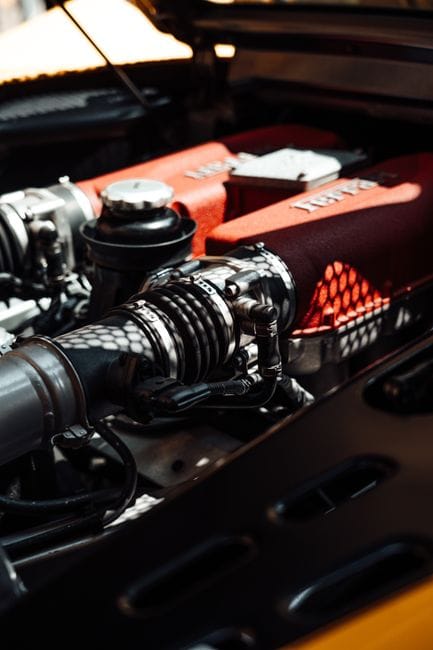
Engine displacement is the total volume swept by all of an engine’s pistons inside their cylinders during one complete rotation of the crankshaft. Think of it as the combined “lung capacity” of the engine — the total space available to draw in air and fuel for combustion.
The technical term for this is **swept volume**. When a piston travels from the top of its stroke to the bottom, it sweeps a specific volume of space. Multiply that single-cylinder volume by the number of cylinders, and you get the engine’s total displacement.
The Simple Explanation: Swept Volume
The Simple Explanation: Details
To visualize swept volume, picture a syringe. When you pull the plunger back, you create a volume of empty space that fills with liquid. An engine cylinder works the same way — the piston is the plunger, and the cylinder is the barrel.
The swept volume per cylinder depends on two measurements: **bore and stroke**. Bore is the diameter of the cylinder. Stroke is the distance the piston travels from top dead center to bottom dead center. Together, they define how much air-fuel mixture each cylinder can ingest per cycle.
A larger swept volume means the engine can physically move more air per revolution. That’s why displacement correlates with torque — more air available for combustion means more force generated per cycle.
How Displacement Is Measured: Liters, CCs, and Cubic Inches
Manufacturers express displacement in three common units, depending on the market and the engine’s size:
– **Cubic centimeters (cc)** — common for motorcycles, small engines, and many European cars. A 1,998 cc engine is nearly 2.0 liters.
– **Liters** — standard for most modern passenger vehicles. A 2.0L or 3.6L engine specifies total swept volume rounded to one decimal.
– **Cubic inches (CID)** — used historically in American V8s. The 350 Chevy small-block, for instance, displaces 350 cubic inches, which equals roughly 5.7 liters.
For a quick conversion: 1 liter equals 1,000 cc equals about 61 cubic inches. So a 5.0L Ford Coyote displaces 5,000 cc or approximately 307 cubic inches.
How Engine Displacement Differs from Compression Ratio
How Engine Displacement Differs from Compression Ratio
People often confuse displacement with compression ratio, but they measure different things. Displacement is the volume the piston sweeps. Compression ratio is the ratio of the cylinder’s total volume (including the combustion chamber) to its compressed volume at top dead center.
A high compression ratio means the air-fuel mixture gets squeezed into a smaller space, which improves thermal efficiency. But you can have a large-displacement engine with a low compression ratio, or a small-displacement engine with a high one. They’re independent variables.
For practical purposes, this is what **engine displacement explained** boils down to: it’s the size of the engine’s “rooms” for combustion. The bigger the rooms, the more fuel and air you can burn per cycle — and the more power you can theoretically produce. That relationship between displacement and output, and how it trades off against fuel economy and emissions, is what the next sections cover in detail.
If you’re comparing engines across different vehicles, understanding displacement helps you interpret why a 3.5L V6 behaves differently from a 2.0L turbo four. It also matters when you’re shopping for a vehicle platform — for instance, knowing the physical size of the engine bay affects what you can install. That same logic applies to choosing precision equipment like a [laser engraver](https://www.example.com/laser-engraver-buying-guide), where the working area determines what you can process.
The Math Behind Displacement: Bore, Stroke, and Cylinders
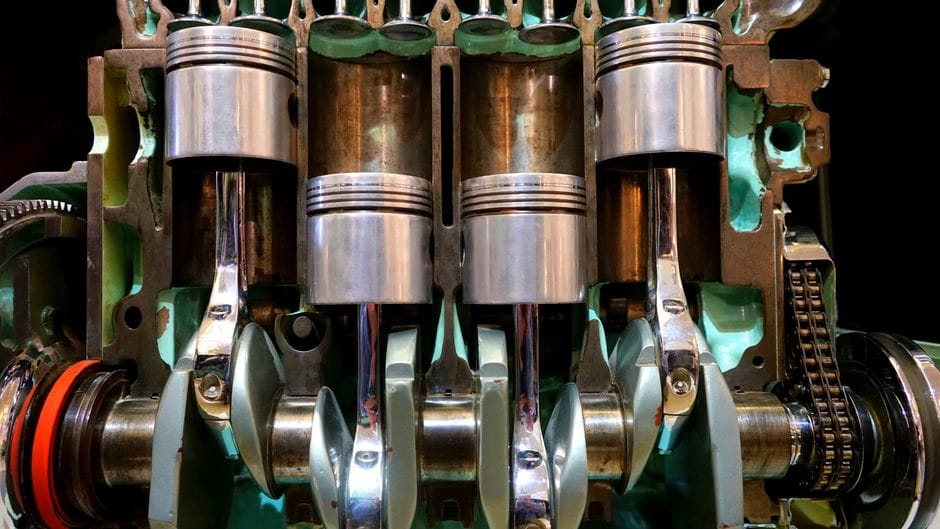
Once you know displacement is the total swept volume of all cylinders, the next question is how manufacturers actually arrive at that number. The answer sits in three physical dimensions: bore, stroke, and the number of cylinders. Each one feeds into a straightforward engine displacement formula, and once you understand it, you can read an engine’s character straight from its spec sheet.
The bore is the diameter of the cylinder, measured across its width. The stroke is the distance the piston travels from top dead center to bottom dead center inside that cylinder. Multiply the area of the bore by the stroke, and you get the swept volume of a single cylinder. Multiply that by the cylinder count, and you have total displacement. That’s the entire engine displacement formula in plain terms.
The Formula: π/4 × Bore² × Stroke × Number of Cylinders
The full displacement calculation uses the geometry of a circle to find the area of the bore’s cross-section. The area of a circle is π × r², but since bore is a diameter, you can write it as π/4 × bore². The formula looks like this:
Displacement Calculation Formula
Displacement Calculation Formula
Displacement = π/4 × Bore² × Stroke × Number of Cylinders
Bore and stroke are measured in millimeters or inches. Convert everything to the same unit before you multiply. The result is the total swept volume of all cylinders, usually expressed in cubic centimeters (cc), liters (L), or cubic inches (CID).
Notice that the formula treats every cylinder as identical. In a standard inline or V configuration, that assumption holds — all cylinders share the same bore and stroke. Some exotic engines use variable-length connecting rods or offset crank pins, but those are rare enough that the standard formula covers virtually everything you’ll encounter on the road.
One detail people often miss: the formula measures swept volume, not total cylinder volume. The combustion chamber above the piston at top dead center is excluded. That’s why the compression ratio — which includes the chamber volume — is a separate spec. The displacement calculation only tells you how much air-fuel mixture the piston can physically pull in during one stroke.
Worked Example: Calculating a 2.0L Four-Cylinder
Worked Example: Details
Let’s run a real displacement calculation to show how the numbers come together. A common 2.0L four-cylinder engine might have a bore of 82.5 mm and a stroke of 92.8 mm. Plug those into the formula:
Step 1: Square the bore: 82.5² = 6,806.25 mm².
Step 2: Multiply by π/4: 6,806.25 × 0.7854 = 5,345.6 mm².
Step 3: Multiply by the stroke: 5,345.6 × 92.8 = 496,071.7 mm³.
Step 4: Multiply by four cylinders: 496,071.7 × 4 = 1,984,286.8 mm³.
Convert cubic millimeters to liters by dividing by 1,000,000. That gives you 1.984 L — which rounds to 2.0L. That’s exactly how manufacturers label this engine size. If you see a 1,984 cc spec in a vehicle’s documentation, this is where it comes from.
The same math works for larger engines. A 5.7L V8 might use a bore of 99.5 mm and a stroke of 92.0 mm. Run the numbers and you land at roughly 5,720 cc. The formula scales uniformly, which is why you can compare cylinder volume across completely different engine architectures.
Why Bore and Stroke Shape Engine Character
Why Bore and Stroke Shape Engine Character
The bore and stroke relationship doesn’t just determine engine size — it defines how the engine delivers power. An engine with a larger bore relative to its stroke is called “oversquare.” It can fit larger valves and rev higher because the piston doesn’t travel as far per revolution. Sports car engines often use this layout for high-rpm power.
A “undersquare” engine has a longer stroke relative to its bore. The longer stroke gives more leverage on the crankshaft, which produces stronger low-rpm torque. Truck and SUV engines frequently favor this setup because towing and hauling benefit from pulling power at low engine speeds rather than peak horsepower at high rpm.
This is the core of what engine displacement explained really means when you’re comparing vehicles: the same displacement can feel completely different depending on bore and stroke. A 2.0L oversquare four in a sports coupe will rev eagerly and make power near redline. A 2.0L undersquare four in a compact SUV will feel torquier off the line but run out of breath sooner. Both have identical cylinder volume — the character comes from the geometry.
When you’re reading a spec sheet, look for bore and stroke listed together. If you see a bore that’s larger than the stroke, expect a rev-happy engine. If the stroke dominates, expect low-end grunt. That single ratio tells you more about how an engine drives than the displacement number alone. It also affects the physical height of the engine — a longer stroke means a taller block, which can matter for engine bay fitment in certain vehicles.
Displacement vs. Power: The Real Relationship
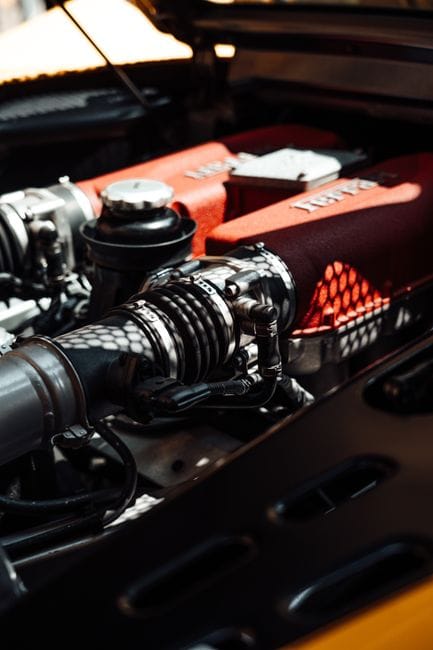
The connection between engine displacement and horsepower is real, but it is not a simple ratio. A 5.0L engine does not automatically make twice the power of a 2.5L engine. Displacement sets the ceiling for how much air and fuel the engine can pull in per revolution. Horsepower is what you get when you multiply torque by engine speed. So the displacement-to-power equation depends heavily on how fast the engine spins and how efficiently it fills its cylinders.
Why Bigger Displacement Usually Means More Torque
Torque is the twisting force the crankshaft produces, and it scales directly with displacement. Each cylinder has a fixed volume. The bigger that volume, the more air-fuel mixture it can hold, and the harder the combustion pushes down on the piston. That push translates into more rotational force at the crankshaft. This is why displacement vs torque is a much tighter relationship than displacement vs horsepower. A 6.2L V8 will almost always out-torque a 2.0L four-cylinder at the same rpm because each power stroke burns a larger charge.
The practical effect is that bigger engines feel stronger in everyday driving. You do not need to rev them hard to move a heavy vehicle. A truck with a large-displacement V8 can pull a trailer at 2,000 rpm without straining. A smaller engine would need to spin faster and downshift to produce the same force. That low-end torque is why fleet buyers and towers still favor big displacement, even when smaller turbocharged engines match them on paper.
The Power Ceiling: Air and Fuel Limits
Horsepower is a function of torque and rpm — specifically, torque multiplied by engine speed, divided by a constant. So a small engine can match a big one if it revs much higher. But there is a physical limit. An engine can only ingest so much air per revolution because the cylinder volume is fixed and the intake system can only flow so much. Beyond that, the air-fuel mixture gets starved and power falls off.
This is why naturally aspirated engines have a hard ceiling tied to their displacement. A 2.0L naturally aspirated engine might make 150–200 horsepower at peak. To get more, you must either increase displacement, raise the redline, or improve volumetric efficiency with better intake and exhaust tuning. Each of those approaches has diminishing returns. [VERIFY: typical naturally aspirated specific output range in hp per liter for modern production engines] This ceiling is why automakers turned to forced induction instead of just building bigger engines.
The Forced Induction Exception: Turbocharging and Supercharging
The Forced Induction Exception: Details
A turbocharged engine breaks the displacement-power relationship by compressing air before it enters the cylinders. Forced induction pushes more air into the same cylinder volume, which means you can burn more fuel and produce more power without increasing displacement. A 2.0L turbocharged engine can easily out-produce a 3.5L naturally aspirated V6 while returning better fuel economy under light load.
The trade-off is where the power arrives. A turbocharger needs exhaust gas flow to spool up, which means there is lag before boost builds. A supercharger, driven directly by the crankshaft, delivers boost immediately but saps some power to run itself. Both systems add heat and complexity. The result is that forced induction engines make peak power in a narrower band, while a bigger naturally aspirated engine delivers its torque across a wider range. If you want predictable, immediate response, a large-displacement naturally aspirated engine is still the benchmark. If you want peak horsepower from a small package, a turbocharged engine wins on paper.
Displacement and Fuel Economy: The Trade-Off You Need to Know
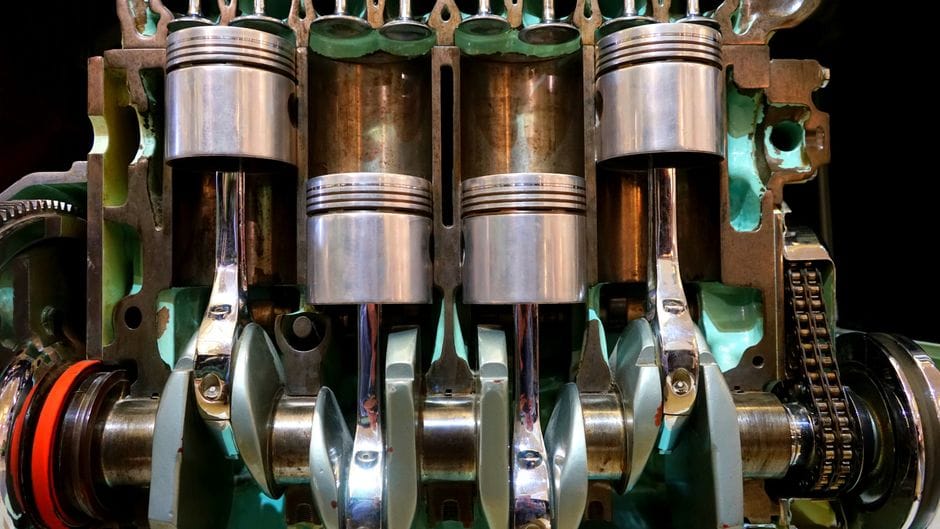
The connection between engine displacement and fuel economy is intuitive: bigger engine, bigger appetite. But the relationship is more nuanced than that simple rule, and it explains why a small displacement engine can sometimes feel thirstier than a larger one.
Why Bigger Engines Drink More Fuel
A larger displacement engine has bigger cylinders. Each cylinder needs a precise air-fuel mixture to ignite, and a bigger cylinder holds more of that mixture. Every revolution burns more fuel than a smaller cylinder would. Idling is where this becomes obvious. A 5.0L V8 at a stoplight consumes more fuel per minute than a 1.5L four-cylinder doing the same job.
There is also the matter of internal friction. Larger pistons, longer strokes, and heavier rotating assemblies all create more mechanical resistance. The engine has to work harder just to spin itself, and that energy comes from fuel. Under heavy acceleration, the gap widens further because a big engine can deliver more torque, which encourages you to use it.
The Downsizing Trend: Small Displacement, Turbocharged Engines
Automakers have spent the last decade shrinking engines and adding turbochargers. A 1.0L three-cylinder with a turbo can produce power comparable to a 1.6L naturally aspirated engine while sipping less fuel during normal driving. This downsizing trend exists because of one simple fact: when you are not asking for power, a small displacement turbo engine behaves like a small engine. It burns less fuel at idle and at light throttle.
The catch is that the fuel economy benefit disappears when you demand power. A small displacement turbo engine under heavy boost burns fuel at rates that can rival a much larger engine. The efficiency gains are real, but they are conditional. If your driving is mostly highway cruising or stop-and-go commuting, a small displacement turbo can deliver excellent engine efficiency. If you spend time towing or driving aggressively, the advantage shrinks.
Real-World Efficiency: It’s Not Just About Size
Engine displacement and fuel economy do not tell the whole story. Vehicle weight, gearing, aerodynamics, and driving style all influence fuel consumption more than displacement alone. A lightweight car with a 2.0L engine can return better mileage than a heavy SUV with the same engine. A tall, boxy vehicle fights wind resistance at highway speeds, punishing any engine regardless of size.
The most efficient engine is the one sized appropriately for the vehicle and the driver’s needs. An engine that constantly strains to move a heavy vehicle will burn more fuel than a larger engine that loafs along at low RPM. When comparing vehicles, look at the full package rather than assuming a smaller displacement automatically means better economy.
Displacement vs. Emissions: The Environmental Angle
The relationship between engine displacement and emissions is more direct than the fuel economy story. Bigger engines burn more fuel per cycle, and burning more fuel produces more exhaust gas. Carbon dioxide (CO2) is the primary output of combustion, so CO2 emissions scale closely with fuel consumption. This makes engine displacement emissions a useful proxy for a vehicle’s carbon footprint, though not a perfect one.
How Displacement Affects CO2 Output
CO2 emissions are directly tied to the amount of fuel burned. A 5.0L V8 at cruising speed consumes more fuel per mile than a 2.0L four-cylinder under the same conditions. The result is higher CO2 emissions from the larger engine. Published EPA figures consistently show that vehicles with larger displacement engines emit more CO2 per mile than smaller-engine counterparts in the same vehicle class.
But the relationship has a wrinkle. A small engine working hard to move a heavy vehicle can burn nearly as much fuel as a larger engine working less. This is why a 1.5L engine in a large SUV can produce CO2 emissions similar to a 3.5L V6 in the same body. The engine displacement emissions figure only tells you what the engine is capable of, not what it will actually emit in your driving.
Emissions Regulations and the Push for Smaller Engines
Government emissions regulations have driven the shift toward smaller displacement engines. Standards in the European Union, the United States, and China set fleet-wide CO2 emissions limits that automakers must meet. [VERIFY: current EU fleet average CO2 target in g/km and US EPA passenger vehicle standard in g/mile for model year 2026]. To comply, manufacturers have downsized engines, added turbochargers, and reduced cylinder counts. A 2.0L turbocharged four-cylinder often replaces a 3.5L naturally aspirated V6 in modern lineups.
These emissions regulations do more than reduce CO2. They also limit nitrogen oxides (NOx) and particulate matter. Smaller engines running leaner air-fuel mixtures can produce higher NOx output, so automakers add exhaust gas recirculation and selective catalytic reduction systems. The result is that modern small engines are cleaner per mile than older large engines, but they carry more complex emissions hardware that can fail and require costly repairs.
The Role of Displacement in Hybrid and Electric Vehicles
The Role of Displacement in Hybrid and Electric Vehicles
Hybrid and electric vehicles change the displacement conversation entirely. A hybrid engine displacement figure still matters, but it is only half the story. The electric motor handles low-speed and stop-and-go driving, allowing the engine to run at its most efficient RPM range. A hybrid engine with a 1.5L or 2.0L displacement can deliver CO2 emissions well below an equivalent conventional vehicle. The hybrid engine displacement is smaller because the motor does part of the work.
Electric vehicles have no displacement at all. There is no combustion, no exhaust pipe, and no CO2 output at the tailpipe. The emissions shift to the electricity generation source. An electric vehicle charged from a coal-heavy grid has a higher lifecycle carbon footprint than one charged from renewable sources. For buyers comparing engine options, the displacement figure is irrelevant on an EV, but the upstream emissions question remains.
The environmental picture is not simple. A small displacement engine is not automatically clean, and a large displacement engine is not automatically dirty. The vehicle weight, gearing, and driving patterns determine real-world emissions. Engine displacement emissions figures are a starting point for comparison, not a final verdict. When evaluating a vehicle’s environmental impact, look at the certified fuel economy and emissions ratings for the specific configuration rather than relying on displacement alone.
Engine Displacement Comparison: What the Numbers Mean for You
Reading displacement numbers is one thing. Knowing what they mean for your daily life is another. This engine displacement comparison breaks down the ranges you will actually see on dealer lots and in used car listings, then maps them to real driving scenarios.
Displacement Ranges and Typical Applications
The displacement range tells you a lot about a vehicle’s intended purpose before you ever open the hood. Here is the engine size guide most buyers need.
| Displacement Range | Common Engine Types | Typical Vehicles | Primary Strengths | Primary Trade-Offs |
|---|---|---|---|---|
| 1.0L – 1.6L | 3-cylinder, small 4-cylinder | Compact hatchbacks, city cars, some subcompact SUVs | Best fuel economy, low purchase price, light weight | Limited highway passing power, weak towing capacity |
| 1.6L – 2.5L | 4-cylinder, mild-hybrid 4-cylinder | Midsize sedans, compact SUVs, base model trucks | Balanced fuel economy and power, smooth daily driving | Moderate towing capacity only, can strain when fully loaded |
| 2.5L – 3.5L | V6, turbocharged 4-cylinder | Midsize SUVs, full-size sedans, light-duty trucks | Strong acceleration, real towing capacity, highway comfort | Higher fuel consumption, more complex maintenance |
| 3.5L – 6.0L+ | V8, turbo-diesel V6, V10 | Full-size trucks, heavy SUVs, performance cars | Maximum towing capacity, effortless highway cruising | Highest fuel costs, heavier upfront price, higher emissions |
A 1.0L three-cylinder and a 6.2L V8 are both engines. Their driving experience is not even in the same category. The displacement figure is the fastest shorthand for which category you are in.
Decision Framework: If You Need [Specific Requirement], Choose [Specific Displacement] Because [Specific Reason]
Use this decision framework to match your needs to a displacement range. It removes the guesswork from the engine size guide.
– **If you need maximum fuel economy for commuting**, choose a 1.0L to 1.6L engine because it burns less fuel per mile in stop-and-go traffic.
– **If you need balanced daily driving with occasional highway trips**, choose a 1.6L to 2.5L engine because it offers enough power to merge safely without punishing fuel bills.
– **If you need to tow a small trailer or boat**, choose a 2.5L to 3.5L engine because it produces sufficient torque at low RPM for loads up to [VERIFY: typical towing capacity for 2.5L–3.5L SUVs, e.g., 3,500–5,000 lbs].
– **If you need to tow a heavy camper or equipment trailer**, choose a 3.5L to 6.0L+ engine because it delivers the torque curve and cooling capacity required for sustained loads above [VERIFY: typical towing capacity threshold for full-size trucks, e.g., 7,000+ lbs].
– **If you need quick acceleration for performance driving**, choose a turbocharged engine in the 2.0L to 3.0L range because forced induction provides strong mid-range power without the weight of a large V8.
The reason matters as much as the number. A 3.5L V6 in a lightweight sedan feels quick. The same engine in a heavy SUV feels adequate. Displacement alone does not tell you how a vehicle performs; it tells you what category of performance to expect.
Displacement vs. Driving Experience: City, Highway, and Towing
Displacement vs. Driving Experience: Details
Your driving experience changes dramatically across the displacement range. Here is how each scenario plays out.
**City driving.** Small displacement engines from 1.0L to 1.6L excel here. They are light, responsive at low speeds, and sip fuel at traffic lights. The driving experience is nimble and economical. A larger engine in the 3.5L+ range feels heavy in city traffic, burns more fuel idling, and offers no benefit when you are stuck below 40 mph.
**Highway driving.** The picture flips. A 1.0L engine works hard to maintain 70 mph, especially uphill or with passengers. Engine noise rises and fuel economy drops because the engine is straining. A 2.5L to 3.5L engine cruises effortlessly at highway speeds, with lower RPM and quieter operation. The driving experience is calmer and more relaxed over long distances.
**Towing.** This is where displacement range matters most. Towing capacity is directly tied to engine size, though transmission and chassis also play a role. A small 1.5L engine has minimal towing capacity, often limited to small utility trailers. A 2.0L to 2.5L engine can handle light loads but will struggle on grades. A 3.5L V6 or larger handles serious towing with confidence. If you tow regularly, do not compromise on displacement. The driving experience when towing with an undersized engine is stressful, noisy, and potentially unsafe.
For a broader look at how different machines compare across categories, see our [laser engraver comparisons](/laser-engraver-comparisons) for a different kind of spec-sheet evaluation. The same principle applies: numbers only matter in context.
Limitations: What Engine Displacement Can’t Tell You
Displacement is a useful starting point, but it is not the whole story. A number on a spec sheet does not tell you how an engine actually behaves. The engine displacement limitations become obvious when you compare two motors with the same size but completely different characters. One feels sluggish and thirsty. The other feels sharp, responsive, and efficient. The difference comes from everything else the engineers did around that displacement figure.
Why Displacement Alone Doesn’t Predict Performance
Why Displacement Alone Doesn’t Predict Performance
Displacement measures volume, not output. Two engines with identical displacement can produce wildly different horsepower and torque figures. The reason is that displacement is only one input in a complex equation. Airflow, fuel delivery, compression ratio, and internal friction all matter. A poorly designed 3.0L engine can lose to a well-designed 2.5L unit in both power and efficiency.
Specific output is the metric that exposes this gap. It measures power per liter of displacement, usually expressed as horsepower per liter. A high specific output means the engineers extracted more work from each cubic centimeter. A low figure suggests an older design, conservative tuning, or an emphasis on durability over peak performance. When you see a modern 2.0L engine producing 250 horsepower, its specific output is roughly 125 hp/L. A 5.0L V8 making 400 horsepower has a specific output of just 80 hp/L. The smaller engine is doing more with less.
Power-to-weight ratio is another factor that displacement ignores. A heavy car with a large engine can feel slower than a light car with a modest one. The vehicle’s mass, gearing, and aerodynamic drag all influence how the engine’s output translates into acceleration. A 300-horsepower engine in a 4,500-pound SUV feels leisurely. The same output in a 3,000-pound sports car feels urgent. Displacement tells you nothing about this relationship.
The Role of Tuning, Materials, and Technology
The Role of Tuning, Materials, and Technology
Engine tuning is the software layer that shapes how an engine delivers its power. The same physical engine can be tuned for economy, smoothness, or performance. A factory tune prioritizes emissions compliance and fuel economy targets. An aftermarket tune can unlock additional power by adjusting ignition timing, fuel maps, and boost pressure. This is why two engines with identical displacement and hardware can feel different to drive.
Materials and construction methods also separate engines of equal size. Forged internals, lighter pistons, and better bearings reduce internal friction and allow higher RPM. Cylinder head design influences how efficiently the engine breathes. Variable valve timing and lift systems adjust airflow across the RPM range, broadening the power band. These are engine technology choices that have nothing to do with displacement.
Forced induction is the biggest disruptor. A turbocharger or supercharger forces more air into the cylinders, allowing more fuel to burn and more power to be produced. A 1.5L turbocharged engine can match the output of a naturally aspirated 2.5L engine while offering better fuel economy under light load. This is why displacement has become a less reliable predictor of performance in modern vehicles. The old rule of thumb — bigger engine means faster car — no longer holds.
When Displacement Is Misleading: Modern Small Engines That Punch Above Their Weight
When Displacement Is Misleading: Details
The shift to smaller, turbocharged engines has made displacement figures genuinely misleading for buyers. A 1.0L three-cylinder in a compact hatchback can produce more torque than a 1.6L naturally aspirated engine from a decade ago. The turbocharger provides strong mid-range pull that makes the car feel quicker in everyday driving, even though the peak horsepower figure is modest.
This creates a situation where the displacement number undersells the real-world capability. A shopper who filters by engine size might dismiss a 1.5L option as underpowered, not realizing it out-accelerates a larger, older engine in the same vehicle. The reverse is also true: a large displacement engine with outdated technology can feel flat and inefficient compared to a modern smaller unit.
Engine displacement limitations also appear in reliability discussions. A small engine working hard under boost generates more heat and stress per unit of output. The components are smaller and the margins are thinner. A larger, naturally aspirated engine running at lower stress levels may last longer in severe duty. The displacement figure does not reveal this trade-off. If you are considering a forced-induction small engine for heavy towing or frequent track use, research the specific engine’s track record before committing. For a different kind of output comparison, our [laser engraver troubleshooting guide](/laser-engraver-troubleshooting) covers how machine specifications translate into practical results.
What Displacement Does Tell You
- General size and weight of the engine
- Rough towing and hauling capability
- Baseline for comparing engines from the same era
- Indication of low-end torque availability
What Displacement Doesn’t Tell You
- Actual horsepower or torque output
- Fuel economy under real driving conditions
- Reliability or longevity potential
- How the engine responds to engine tuning
- Whether the vehicle feels quick or sluggish
- Emissions compliance or environmental impact
Use displacement as a screening tool, not a final answer. It helps you narrow down vehicle options, but the driving experience depends on the sum of engineering decisions. When you compare two vehicles, look at the full picture: specific output, power-to-weight ratio, transmission gearing, and the engine technology under the hood. Those factors determine whether the engine meets your needs, regardless of what the displacement badge says.
Frequently Asked Questions About Engine Displacement
Does Higher Displacement Always Mean More Horsepower?
No. Displacement sets the ceiling for how much air and fuel an engine can burn, but horsepower depends on how efficiently it burns that mixture. A well-tuned 2.0L engine can produce more horsepower than a poorly tuned 3.0L engine. Valve timing, compression ratio, intake design, and fuel quality all shift the final output. Displacement and horsepower correlate, but they do not lock together.
Forced induction breaks the link entirely. A turbocharged 1.5L engine can push more horsepower than a naturally aspirated 2.5L unit. The turbo forces more air into the same physical space, which raises the power ceiling without increasing displacement. If you see two cars with similar power figures but very different engine sizes, the smaller one almost certainly uses boost.
Is a 2.0L Turbo Better Than a 3.0L Naturally Aspirated?
“Better” depends on what you value. The 2.0L turbo vs 3.0L naturally aspirated comparison comes down to where the power arrives and how long the engine lasts. The turbo engine delivers peak torque early and feels punchy around town. The larger naturally aspirated engine builds power smoothly toward redline and responds instantly to throttle input without lag.
Fuel economy usually favors the turbo under light throttle, but the advantage disappears when you drive hard and boost kicks in. Long-term reliability tends to favor the naturally aspirated 3.0L because it runs at lower internal stress. The turbo engine works harder to make the same power, which adds heat and pressure to pistons, rings, and bearings. Neither option is universally superior, but the turbo suits daily commuting while the larger engine suits towing or track days. For more on how engine stress affects reliability, see our [laser engraver safety guide](/laser-engraver-safety-guide) — it covers how operating conditions change equipment longevity.
How Do I Find My Engine’s Displacement?
Three reliable methods exist. First, check the owner’s manual — the specification page lists engine size in liters or cubic inches. Second, look for an emissions sticker under the hood; it often states the displacement. Third, decode the vehicle identification number (VIN). The eighth character in most VINs identifies the engine code, which you can cross-reference with a manufacturer lookup table.
If you want to verify the physical measurement, read the bore and stroke from the service manual and calculate the volume using the cylinder formula. Most owners stop at the VIN method because it takes under a minute. For used cars, the VIN approach also confirms the engine has not been swapped for a different size.
Does Displacement Affect Insurance Costs?
Does Displacement Affect Insurance Costs?
Yes, but indirectly. Insurers rarely ask for displacement directly. Instead, they look at the vehicle’s horsepower rating, trim level, and safety record. A high-displacement sports car carries higher premiums because it correlates with faster acceleration and higher claim costs. A large SUV with the same displacement pays less because its insurance risk profile differs.
Displacement insurance impact shows up most clearly when comparing trims of the same model. A base model with a 2.5L engine costs less to insure than the performance trim with a 3.5L engine, even though the chassis is identical. If you want lower premiums, choose a mid-range trim rather than the largest engine option. The savings on insurance can offset some of the fuel cost difference over the ownership period.
This engine displacement FAQ covers the questions buyers ask most often. The key takeaway: displacement matters as a baseline, but the engineering around it matters more. Use the number to narrow your search, then test-drive the actual vehicle to judge whether the engine suits your driving style.
Frequently Asked Questions
Does higher displacement always mean more horsepower?
[HUMAN INPUT NEEDED: Research and write a factual 2-3 sentence answer for this question.]
Is a 2.0L turbo better than a 3.0L naturally aspirated?
[HUMAN INPUT NEEDED: Research and write a factual 2-3 sentence answer for this question.]
How do I find my engine’s displacement?
[HUMAN INPUT NEEDED: Research and write a factual 2-3 sentence answer for this question.]
Does displacement affect insurance costs?
[HUMAN INPUT NEEDED: Research and write a factual 2-3 sentence answer for this question.]
What’s the difference between displacement and compression ratio?
Understanding’s the difference between displacement and compression ratio?
[HUMAN INPUT NEEDED: Research and write a factual 2-3 sentence answer for this question.]
Final Verdict: Engine Displacement Explained — What It Really Means and Why It Matters
Engine displacement is the total swept volume of all cylinders in an engine, measured in liters or cubic inches. It determines how much air and fuel the engine can ingest per revolution, which directly shapes power output, torque delivery, fuel efficiency, and emissions. Displacement is one of the most fundamental attributes of any internal combustion engine, and understanding it helps you decode why some vehicles feel quick off the line while others excel at highway cruising.
If you are choosing a vehicle or comparing engines, the single most useful takeaway is this: displacement is not the whole story, but it is the starting point. A larger displacement engine generally produces more torque at lower RPMs, while a smaller displacement engine with forced induction (turbocharging or supercharging) can deliver comparable power with better fuel economy. The right choice depends entirely on how you plan to use the vehicle.
Here is a clear decision framework based on the attributes we have covered:
Decision Framework: Choose by Your Primary Need
Decision Framework: Details
If you need maximum towing capacity and effortless low-end torque, choose a large displacement naturally aspirated engine (5.0L+ V8 or 3.0L+ diesel) because the larger swept volume generates high torque at low RPMs without needing to rev.
If you need balanced everyday performance with reasonable fuel economy, choose a mid-range displacement engine (2.0L–3.0L four-cylinder or turbocharged six-cylinder) because it offers a compromise between power and efficiency.
If you need maximum fuel economy and low emissions, choose a small displacement turbocharged engine (1.0L–1.5L) because forced induction allows it to produce adequate power while burning less fuel in normal driving.
If you need track-day performance and high-RPM power, choose a smaller displacement high-revving engine (2.0L–3.0L with high compression) because it can spin faster and produce more peak horsepower per liter.
For most buyers, the best all-around recommendation is a turbocharged 2.0L four-cylinder engine. It delivers roughly the same power as a naturally aspirated 3.0L V6 while offering significantly better fuel economy and lower emissions. Modern turbocharging technology has closed the performance gap that once made larger displacement engines the obvious choice, and the 2.0L turbo is now the most common engine configuration across sedans, crossovers, and even light trucks.
However, that recommendation has an honest limitation: a turbocharged 2.0L cannot match the towing capacity or durability of a large displacement V8 under sustained heavy load. If you regularly tow trailers over 5,000 pounds or haul heavy loads for long distances, the smaller turbo engine will work harder, generate more heat, and may not last as long as a larger naturally aspirated engine designed for that duty cycle. There is no replacement for displacement when it comes to sustained heavy-duty work.
Before you decide, take a moment to consider your actual driving patterns. Do you spend most of your time in city traffic, on highways, or towing? Do you prioritize fuel economy or raw power? Answering those questions will point you toward the right displacement range, and from there you can compare specific engine options with confidence.
Now that you understand what engine displacement really means, you are equipped to read any spec sheet intelligently and ask the right questions at the dealership. Use this knowledge to match the engine to your real-world needs—not just the marketing hype.