Warped Cylinder Head: Complete Guide
Warped Cylinder Head: Causes, Symptoms, and How to Diagnose It Before It Ruins Your Engine
A warped cylinder head is a structural deformation of the engine’s top sealing surface. It typically occurs when cast aluminum or cast iron loses its flatness under extreme thermal stress. This component seals the combustion chambers and routes coolant passages. Even a 0.003-inch deviation from factory flatness can compromise the head gasket’s seal. That allows compression and coolant to mix. This is not a rare catastrophic failure. It is a progressive condition that develops when an engine overheats, cools unevenly, or experiences sudden thermal shock.
This guide breaks down the core attributes you need to understand. It covers the physical causes behind the warping, the specific symptoms in your coolant and oil systems, and the diagnostic workflow. That workflow separates a true warped head from a simple gasket failure. You will learn the exact measurement tolerances for both aluminum and cast iron heads. You will also learn the tools required for proper inspection. Finally, you get an honest cost analysis of machining versus replacement. Crucially, you will see where DIY diagnosis has real limits. A warped head often hides behind symptoms that mimic a blown head gasket. Misdiagnosis can cost you an entire engine block.
What makes this article different is that it does not just list symptoms. It gives you a decision framework based on real-world data. You will get a step-by-step diagnostic sequence. That sequence checks for combustion gas in the coolant, oil contamination, and compression loss in the correct order. You can pinpoint the problem in under an hour. You will also see the critical difference between a head that can be resurfaced and one that must be replaced. That decision depends on the depth of the warp and the remaining material thickness. By the end, you will know exactly what you are dealing with. You will know what repair path makes sense for your budget. You will also know how to prevent this failure from ever happening again.
What Is a Warped Cylinder Head? (And How It Differs from a Blown Gasket)

A warped cylinder head is a cylinder head whose sealing surface has lost its flatness. Instead of sitting perfectly flush against the engine block, the head develops a slight bend or twist, usually across its length. That distortion breaks the head gasket seal and lets combustion gases, coolant, and oil travel where they shouldn’t.
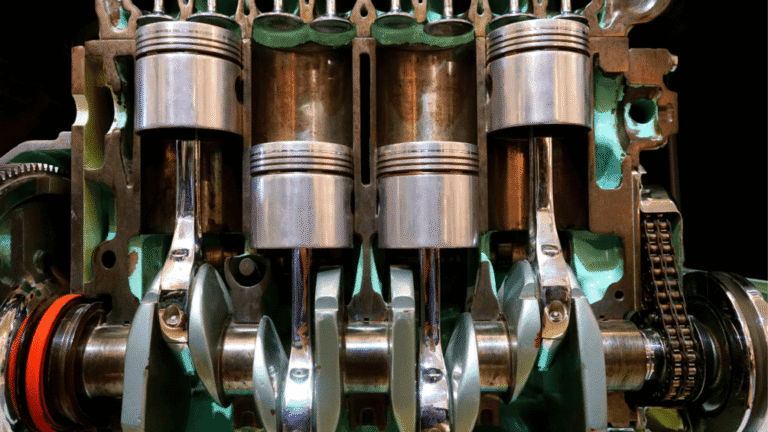
The cylinder head itself is the metal component that caps the top of the engine block. It houses the valves, spark plugs (on gasoline engines), and often the camshafts. The bottom surface of the head — the deck face — must be perfectly flat to mate with the engine block deck and compress the head gasket evenly. When that surface warps, the gasket can’t do its job.
The Anatomy of the Head-to-Block Seal
The head-to-block seal is a precision interface. The head gasket sits between the cylinder head deck and the engine block deck, and it relies on uniform clamping force from the head bolts to maintain a gas-tight and fluid-tight seal. The head bolts stretch slightly when torqued to spec, acting like springs that hold the head down. If the head surface is warped, the clamping force becomes uneven — tight in some areas, loose in others. This uneven pressure creates leak paths for combustion gases, coolant, and oil.
Warped Head vs. Blown Head Gasket vs. Cracked Head: Key Differences
A warped head is a deformation of the metal itself. A blown head gasket is a failure of the gasket material — it can blow even on a perfectly flat head, usually due to overheating or detonation. A cracked head is a physical fracture in the casting, often caused by thermal shock or severe overheating. The symptoms overlap significantly, but the repair paths differ: a warped head can often be machined flat, a blown gasket is simply replaced, and a cracked head usually requires replacement. Misdiagnosing one for another is common and costly, which is why proper testing matters.
The 5 Root Causes of Cylinder Head Warping

Overheating: The #1 Culprit (and Why Aluminum Heads Warp Faster)
Overheating is responsible for the vast majority of warped cylinder heads. When an engine exceeds its normal operating temperature, the cylinder head expands. Aluminum expands at roughly twice the rate of cast iron, which is why aluminum heads are far more susceptible to warping. If the engine gets hot enough — typically above 240°F for aluminum heads — the head can permanently deform as it cools. The center of the head, where combustion temperatures are highest, expands more than the outer edges, creating a “crown” or “dish” shape that never returns to flat.
Improper Torque Sequence and Head Bolt Stretch
Head bolts are designed to stretch slightly when torqued to specification, creating the clamping force that holds the head flat against the block. If the bolts are torqued in the wrong sequence, or to the wrong values, the head can be pulled unevenly and warp. Over-torquing stretches the bolts beyond their elastic limit, reducing clamping force. Under-torquing leaves the head loose in spots. Both scenarios can cause the head to distort, especially on engines with aluminum heads and multi-layer steel gaskets.
Rapid Cooling (Thermal Shock)
Pouring cold water into an overheated radiator, or driving through a deep puddle after a hard run, can cause thermal shock. The cylinder head cools unevenly — the outer surfaces contract quickly while the inner sections remain hot and expanded. This differential contraction can permanently warp the head. Thermal shock is especially dangerous for aluminum heads, which are more sensitive to rapid temperature changes than cast iron.
Detonation and Pre-Ignition
Detonation (knock) and pre-ignition create violent, uncontrolled pressure spikes inside the combustion chamber. These spikes hammer the cylinder head surface with forces far beyond normal combustion pressures. Over time, this repeated hammering can fatigue the head material and cause it to distort. Detonation also generates localized hot spots that can contribute to warping. Engines running lean, with low-octane fuel, or with excessive ignition timing are particularly at risk.
Manufacturing Defects and Prior Poor Repairs
While less common, a cylinder head can warp due to manufacturing defects — such as improper heat treatment or residual stress in the casting. More frequently, a head that was previously resurfaced too aggressively can be left with too little material, making it more prone to warping under load. Similarly, a head that was installed without proper surface preparation, or with a reused head gasket, can warp due to uneven clamping from the start.
7 Warning Signs Your Cylinder Head Is Warped

Overheating That Won’t Go Away
A warped head allows combustion gases to enter the cooling system. Those gases create air pockets in the coolant passages, which disrupt coolant flow and cause hot spots. The result is an engine that runs hot even after a fresh thermostat, water pump, and radiator. If your temperature gauge creeps up under load and you can’t find a cooling system fault, a warped head is a prime suspect.
Coolant Loss Without Visible Leaks
If you’re topping off the coolant regularly but can’t find a puddle under the car, the coolant is going somewhere. A warped head can allow coolant to be pushed out through the overflow tank when combustion gases pressurize the cooling system. You may also see coolant bubbling in the overflow tank or a sweet smell from the exhaust.
White Smoke from the Exhaust
White smoke — especially thick, sweet-smelling white smoke — is a classic sign of coolant burning in the combustion chamber. When the head warps, the gasket seal fails, and coolant seeps into the cylinders. The coolant burns off as steam, producing that telltale white plume. This symptom is often intermittent at first, appearing after the engine warms up and the head expands further.
Milky or Foamy Oil
When coolant mixes with engine oil, the oil turns into a milky, frothy emulsion that looks like a chocolate milkshake. This happens when the warped head allows coolant to leak into the oil galleries. Check the oil dipstick and the underside of the oil filler cap for this telltale sign. Milky oil is a serious problem — it loses its lubricating properties and can cause catastrophic engine damage if driven on.
Bubbles in the Radiator or Cool
ns into a milky, frothy emulsion that looks like a chocolate milkshake. This happens when the warped head allows coolant to leak into the oil galleries. Check the oil dipstick and the underside of the oil filler cap for this telltale sign. Milky oil is a serious problem — it loses its lubricating properties and can cause catastrophic engine damage if driven on.
Bubbles in the Radiator or Coolant Reservoir
With the engine running and the radiator cap off, look for continuous bubbles rising through the coolant. These bubbles are combustion gases forcing their way into the cooling system through the failed head gasket seal. A few bubbles on startup are normal as the system bleeds air, but a steady stream of bubbles — especially when you rev the engine — is a strong indicator of a warped head allowing compression to leak into the coolant passages.
Failed Compression or Leak-Down Test
A compression test will show low readings on adjacent cylinders if the head is warped between them. A leak-down test is even more revealing: it pressurizes each cylinder and measures how much air escapes. If you hear air bubbling in the radiator or hissing from the coolant passages, that’s combustion gas leaking through the warped area. These tests are the definitive diagnostic tools for confirming a warped head.
Exhaust Gas in the Cooling System (Combustion Leak Test)
A block test kit — the blue fluid that changes color when exhaust gas is present — is a quick and reliable way to confirm combustion gases in the coolant. If the fluid turns yellow or green, you have a head gasket failure, which is often caused by a warped head. This test is cheap, takes five minutes, and should be the first step in any diagnosis.
How to Diagnose a Warped Cylinder Head: Step-by-Step

Step 1: Perform a Cooling System Pressure Test
Before pulling the head, confirm the cooling system holds pressure. Pressurize the system to the manufacturer’s specification and watch for pressure drop. If the pressure drops but you can’t find an external leak, the coolant is likely leaking internally — either into the cylinders or the oil passages. This narrows the problem to the head gasket area.
Step 2: Run a Combustion Leak Test (Block Test)
With the engine warm and running, attach the block test kit to the radiator or coolant reservoir. The blue fluid will change color if exhaust gases are present. This confirms that combustion gases are entering the cooling system, which points to a failed head gasket seal — and a warped head is the most common cause of that failure.
Step 3: Check for Coolant in the Oil and Oil in the Coolant
Inspect the oil dipstick and oil filler cap for milky residue. Also check the coolant for oil sheen or a brownish tint. Either finding confirms cross-contamination between the two systems, which means the head gasket seal has failed. This doesn’t tell you if the head is warped, but it tells you the head must come off for inspection.
Step 4: Perform a Compression Test and Leak-Down Test
A compression test on all cylinders will reveal low readings on adjacent cylinders — a classic sign of a warped head between cylinders. A leak-down test goes further: it pressurizes each cylinder and tells you exactly where the air is escaping. Air bubbling in the radiator or hissing from the coolant passages confirms the head gasket is leaking due to surface distortion.
Step 5: Remove the Head and Inspect the Deck Surface
Once the head is off, clean the deck surface thoroughly with a scraper and brake cleaner. Then use a precision straightedge and feeler gauges to check flatness. Place the straightedge across the head in multiple directions — lengthwise, diagonally, and across the width. Check the manufacturer’s specification for maximum allowable warp, which is typically 0.003 to 0.005 inches for aluminum heads and 0.004 to 0.006 inches for cast iron. If the feeler gauge slides under the straightedge at any point, the head is warped beyond spec.
Step 6: Check the Engine Block Deck for Warpage
The block deck can also warp, especially on engines that have been severely overheated. Use the same straightedge and feeler gauge method on the block surface. If the block is warped, resurfacing the head alone won’t fix the problem — the block will need to be machined as well, or the engine may need replacement.
Measurement Tolerances: How Much Warp Is Too Much?

Factory Specifications for Aluminum vs. Cast Iron Heads
Every manufacturer publishes a maximum allowable warpage specification. For aluminum cylinder heads, the typical limit is 0.003 to 0.005 inches (0.076 to 0.127 mm) across the entire surface. For cast iron heads, the limit is slightly more forgiving at 0.004 to 0.006 inches (0.102 to 0.152 mm). These numbers represent the point at which the head gasket can no longer compensate for the surface irregularity. Always check the specific service manual for your engine — some high-performance engines have tighter tolerances.
How to Measure Warpage with a Straightedge and Feeler Gauge
You’ll need a precision straightedge that is longer than the head’s longest dimension, and a set of feeler gauges. Clean the head surface completely. Place the straightedge across the head at several positions: along the length, across the width, and diagonally from corner to corner. At each position, try to slide the appropriate feeler gauge under the straightedge. If a 0.003-inch gauge slides under an aluminum head, the head is out of spec. Record the largest gap you find — that’s your maximum warpage.
When Machining (Resurfacing) Is Still an Option
If the warp is within a machinable range — typically up to 0.010 inches for aluminum and 0.015 inches for cast iron — the head can be resurfaced. The machine shop will mill a minimal amount of material off the deck to restore flatness. However, you must check the minimum head thickness specification after machining. Removing too much material reduces the head’s structural integrity and can cause compression ratio changes, valve clearance issues, and timing chain alignment problems. If the warp exceeds the machinable limit, or if the head is already near its minimum thickness, replacement is the only safe option.
Repair vs. Replacement: Making the Right Call

Cost Analysis: Resurfacing vs. Buying a New or Used Head
Resurfacing a cylinder head typically costs $100 to $250, depending on the machine shop and the amount of material that needs to be removed. A complete valve job — which is often necessary when the head is off — adds another $300 to $600. A new cylinder head can cost anywhere from $500 to $2,000 or more, depending on the engine. A used head from a salvage yard might cost $200 to $500, but it carries the risk of being warped or cracked itself. The decision comes down to the extent of the damage and the value of the vehicle.
When Resurfacing Is Not Enough
Resurfacing only fixes the flatness of the deck surface. If the head is cracked, has damaged valve seats, or has warped camshaft journals, resurfacing won’t address those issues. A pressure test at the machine shop will reveal cracks that aren’t visible to the naked eye. If the head fails a pressure test, or if the warp is so severe that machining would leave the head below minimum thickness, replacement is the only option.
The Hidden Cost of a Warped Block Deck
If the engine block deck is also warped, resurfacing the head alone will not solve the problem. The block deck can be machined, but this is a much more involved job — the engine typically needs to be removed from the vehicle, and the block must be set up on a large milling machine. This can easily add $500 to $1,000 to the repair cost. In many cases, if the block is warped, the engine is beyond economical repair, and a replacement engine is the better investment.
How to Prevent Cylinder Head Warping

Maintain the Cooling System Religiously
The single most effective prevention is keeping your cooling system in perfect working order. Flush and replace coolant at the manufacturer’s recommended intervals — typically every 2 to 5 years. Use the correct coolant-to-water ratio (usually 50/50) to ensure proper heat transfer and boil-over protection. Replace the thermostat, radiator cap, and water pump at the first sign of trouble. A cooling system that can’t dissipate heat efficiently is the fastest route to an overheated, warped head.
Never Drive an Overheating Engine
The moment your temperature gauge climbs into the red, pull over and shut the engine off. Driving even a short distance on an overheating engine can push cylinder head temperatures past the point of permanent deformation. If you must move the vehicle, do so in short bursts with the heater on full blast to help draw heat away from the engine. But the golden rule is simple: an overheated engine gets stopped immediately.
Follow the Correct Torque Sequence and Specifications
When installing a cylinder head, always use a torque wrench and follow the factory torque sequence exactly. The sequence is designed to pull the head down evenly, starting from the center and working outward in a spiral pattern. Never skip steps, never guess at torque values, and never reuse head bolts unless the manufacturer explicitly allows it. Many modern engines use torque-to-yield (TTY) bolts that must be replaced every time — reusing them risks uneven clamping and future warping.
Allow the Engine to Cool Gradually
Avoid thermal shock by letting the engine cool down naturally before opening the radiator cap or dousing a hot engine with water. If you’ve been driving hard, idle the engine for a few minutes before shutting it off to allow temperatures to stabilize. Never pour cold water into an overheated radiator — this can crack or warp the head instantly. Patience is cheap; a new cylinder head is not.
Address Detonation and Pre-Ignition Immediately
If you hear knocking or pinging from the engine, diagnose the cause right away. Detonation is not just an annoyance — it’s a physical assault on the cylinder head and gasket. Use the correct octane fuel, check ignition timing, and ensure the air-fuel mixture isn’t running lean. A properly tuned engine runs smooth and cool; a detonating engine runs hot and destroys itself.
Use Quality Parts and Proper Installation Techniques
When replacing a head gasket, use a high-quality gasket designed for your engine. Clean both mating surfaces thoroughly before installation. Check the head and block for flatness before reassembly — even if the head was previously machined, it can warp again if the underlying cause wasn’t fixed. Apply any required sealants or lubricants to the head bolts as specified. Taking the extra time during installation prevents a repeat failure down the road.
Frequently Asked Questions About Warped Cylinder Heads

Can a Warped Cylinder Head Be Fixed Without Machining?
No. There is no chemical treatment, gasket sealer, or “quick fix” that can restore flatness to a warped cylinder head. Products that claim to seal head gasket leaks are temporary band-aids at best — they may slow a leak for a few hundred miles, but they cannot correct the underlying metal deformation. The only proper repair is machining the head surface flat, or replacing the head entirely.
How Long Can I Drive with a Warped Cylinder Head?
You shouldn’t drive at all. A warped head allows coolant and combustion gases to mix, which leads to overheating, oil contamination, and eventual catastrophic engine failure. Every mile you drive increases the damage — the head can crack, the block can warp, and the bearings can be destroyed by contaminated oil. If you suspect a warped head, stop driving and diagnose the problem immediately.
Is It Worth Repairing a Warped Cylinder Head on an Old Car?
It depends on the vehicle’s value and the extent of the damage. If the car is otherwise in good condition and the head can be resurfaced for a few hundred dollars, it’s often worth repairing. If the block is also warped, or if the vehicle has high mileage and other major issues, replacement might be more economical. Get a professional assessment and compare the repair cost against the vehicle’s market value.
What’s the Difference Between a Warped Head and a Cracked Head?
A warped head is bent or twisted but still intact — it can often be machined flat and reused. A cracked head has an actual fracture in the metal, which cannot be repaired by machining. Cracks are typically caused by severe thermal shock or extreme overheating. A pressure test at a machine shop is the definitive way to distinguish between the two.
Can a Warped Cylinder Head Cause a Misfire?
Yes. A warped head can allow coolant to enter the combustion chamber, which disrupts the air-fuel mixture and causes misfires. It can also cause compression loss between adjacent cylinders, leading to rough running and misfire codes. If you have a persistent misfire that doesn’t respond to new spark plugs or ignition coils, a warped head could be the underlying cause.
Final Verdict: Don’t Ignore the Warning Signs

A warped cylinder head is not a mystery — it’s a predictable failure mode with clear causes, recognizable symptoms, and a well-defined diagnostic path. The key is catching it early. Overheating, coolant loss, white smoke, and milky oil are not coincidences; they’re your engine telling you that the head-to-block seal has failed. Ignoring these signs turns a $300 resurfacing job into a $3,000 engine replacement.
The good news is that prevention is straightforward. Maintain your cooling system, never drive an overheating engine, follow torque specs to the letter, and address detonation immediately. These habits cost nothing but save everything. If you do find yourself facing a warped head, the diagnostic steps in this guide will tell you exactly what you’re dealing with — and whether machining or replacement is the right call for your situation.
Remember: a warped cylinder head is a mechanical problem with a mechanical solution. With the right tools, the right information, and a little patience, you can diagnose it accurately, fix it properly, and get back on the road with confidence.
You might also like: carbon buildup cleaning, oil change Toyota Camry, best oil for hybrid engines