Quick Answer: What are the top signs I need a new air filter?
You should generally inspect your filter every 12,000 miles and replace it every 15,000 to 30,000 miles. If you notice reduced fuel economy, a check engine light, or the engine sounds rough at idle, the filter is likely clogged. In dusty environments, replace it sooner.
The $25 Part That Almost Cost a Customer a Diagnostic Fee
It was a rainy Tuesday morning in October. A customer rolled into the shop in a 2016 Honda Civic, looking stressed. He told me his car was hesitating when he accelerated and the “Check Engine” light had started flashing on the highway. He was terrified he had blown a head gasket or needed a new transmission.
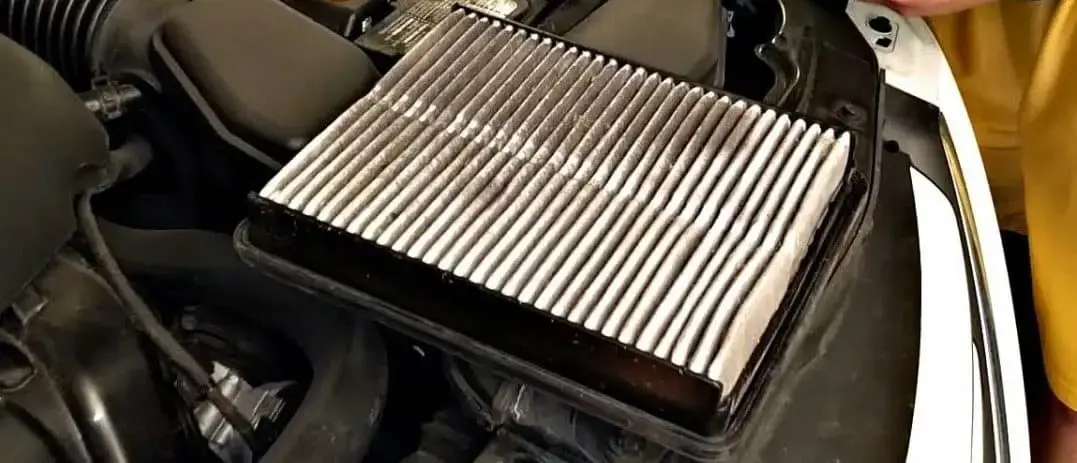
I popped the hood and started my standard inspection. When I pulled the air filter housing clips, I practically laughed—but not at him. It was sympathy. The filter was so clogged with dirt, leaves, and what looked like a mouse nest, that it was hard to tell what color it originally was. The engine was starving for air.
I handed him the filthy filter. “This is your problem,” I said. “Your engine is trying to breathe through a coffee stirrer.” We replaced it, cleared the codes (which were for a lean condition), and the car ran like new. That experience taught him—and reminds me—that knowing when to replace air filter elements isn’t just about maintenance; it’s about preventing expensive misdiagnoses.
Technical Specifications & Engineering Reality
The internal combustion engine is essentially an air pump. It needs roughly 14.7 parts of air for every 1 part of fuel to burn efficiently. If you restrict that air, you lose power and efficiency. But let’s get technical. The filter isn’t just a screen; it’s a specifically engineered part.
Filter Media Types & OEM Specs
In my 15 years of turning wrenches, I’ve seen three main types of media. Most OEM filters use pleated cellulose (paper) treated with a resin. High-end filters, like the ones used in BMW M-cars or AMG Mercedes, often use a synthetic blend that allows better airflow while trapping smaller particles.
- Standard Cellulose: Found in 90% of cars. Example: Wix 49090 (Fits Chevy Cruze, Sonic). Excellent filtration, adequate flow.
- Synthetic Blend: Example: Fram Extra Guard or Mann-Filter C 3698/3. Higher capacity for dirt. I use these on my personal trucks for towing.
- Cotton Gauze (Oiled): Like K&N. These are washable but require oiling. I’ve seen engines run lean because people over-oiled them and the oil contaminated the MAF sensor. Be careful with these.
The “Severe Service” Reality
Your owner’s manual might say “Change every 45,000 miles.” That is for “Normal Driving.” If you live in Phoenix, AZ (dust), drive on gravel roads, or sit in stop-and-go traffic for an hour a day, you are in “Severe Service.” In those conditions, I recommend replacement every 15,000 miles without fail.
Mileage Guide & Warning Signs
Don’t wait for the car to tell you it’s choking. By the time you feel the symptoms, the filter has been restricting airflow for thousands of miles. Here is my guide for the air filter change interval based on what I actually see in the field.
| Driving Condition | Recommended Inspection | Replacement Interval |
|---|---|---|
| Normal (Highway, Clean City) | Every 12,000 miles | Every 30,000 miles |
| Severe (Dirt Roads, Construction) | Every 5,000 miles | Every 15,000 miles |
| Towing / Heavy Load | Every 5,000 miles | Every 15,000 – 20,000 miles |
| Annual Check | Every Oil Change | Visual Inspection |
Dirty Air Filter Symptoms
How do you know if it’s time to pull the trigger? If you notice any of these, perform an air filter inspection immediately.
- Reduced Horsepower: The car feels sluggish merging onto the highway. You’re flooring it, and it just isn’t pulling like it used to.
- Black Smoke from Exhaust: If you see soot, the engine is running “rich” (too much fuel, not enough air). This is a classic symptom of a clogged filter.
- Gas Smell: Unburnt fuel is exiting the tailpipe.
- Flickering Check Engine Light: Often codes P0171 (System Too Lean Bank 1) or P0174. The engine is compensating for the lack of air by trying to trim the fuel mix. If you see this, check out our guide on [check engine light solutions](check-engine-light-air-filter) before replacing expensive O2 sensors.
Tools & Materials List
This is one of the easiest DIY jobs on the planet. You likely have everything you need in your garage right now.
- New Air Filter: Verify part number using your VIN. AutoZone or Amazon links are fine, but double-check fitment. Est. Cost: $15 – $30.
- Screwdrivers: Usually a Phillips #2 or a flathead. Some Fords use Torx bits (T20 or T25) for the MAF sensor housing.
- 8mm or 10mm Socket (Optional): Many German cars (BMW/Audi/VW) have airboxes bolted shut rather than clipped.
- Shop Vac (Optional): Great for sucking debris out of the housing before pulling the old filter.
- CRC MAF Sensor Cleaner: Nice to have if you are touching the sensor. Est. Cost: $8.
Step-by-Step Inspection and Replacement
Before you buy a part, look at the one you have. This procedure covers the vast majority of vehicles on the road today. If you are driving a performance car with a cone filter, the logic is the same, just without the box.
For detailed photos on specific configurations, check our comprehensive guide on [how to replace an engine air filter](how-to-replace-engine-air-filter).
Troubleshooting: Symptoms vs. Reality
Replaced the filter and the car still feels sluggish? Don’t panic. A filter is rarely the *only* cause of engine issues.
Problem: Still Getting Poor MPG
If X happens: You replaced the filter, but your fuel economy is still tanking.
Check Y: Your tire pressure. Low tires increase rolling resistance significantly. Also, check your driving habits. Are you towing a trailer? Are you using the A/C constantly? If those are fine, read up on [poor acceleration diagnosis](poor-acceleration-causes) and [reduced fuel economy fixes](reduced-fuel-economy-fixes). It could be dirty fuel injectors or bad spark plugs.
Problem: Check Engine Light Won’t Turn Off
If X happens: You swapped the filter, but the light persists.
Check Y: Did you clear the code? If the light was on for a lean condition, the computer needs a few drive cycles to relearn the fuel trims. If it doesn’t go away after 50 miles, the issue might be a dirty MAF (Mass Airflow) sensor. This sits right in the intake tube.
Cost Analysis: DIY vs. Professional
This is the job where dealerships and quick-lube places make the highest margin per minute. It takes me literally 60 seconds to change one.
| Service Factor | DIY Cost | Shop / Dealer Cost |
|---|---|---|
| Filter (OEM Quality: Wix/Mann) | $18.00 | $35.00 – $50.00 (Markup) |
| Labor | $0 (5 minutes) | $30.00 – $60.00 (1.0 Hour Labor charge) |
| Total | $18.00 | $65.00 – $110.00 |
FAQ Section
Q: Can a dirty air filter damage my engine?
A: Yes, but not in the way you think. A clogged filter restricts airflow, making the engine run rich (too much fuel). This can foul spark plugs over time. However, a *torn* or *missing* filter is much worse—it lets sand and dust directly sandblast your cylinder walls and score the piston rings.
Q: How much does an air filter change cost?
A: The filter itself costs $15-$30. If you pay a shop, expect to pay $80-$100 total due to labor markups. It’s the highest markup service in the industry based on time spent.
Q: Do I need to replace my cabin air filter too?
A: That is a separate filter located behind your glove box. It filters the air you breathe (A/C). The engine air filter filters the air the engine breathes. They are not the same, but they often fail at similar intervals.
Q: Does a clean air filter really improve gas mileage?
A: Studies show that on modern fuel-injected cars, the improvement is marginal—maybe 1-2%. On carbureted vehicles (older cars), the difference was massive. However, restoring throttle response and acceleration is the real benefit you’ll feel.
Q: What happens during a 30,000 mile service regarding filters?
A: The standard 30000 mile service is a major interval. At this point, your engine air filter is almost certainly saturated, your cabin filter is likely moldy, and your in-cabin air quality is suffering. We recommend changing both at this milestone.
Conclusion
Replacing your engine air filter is the “gateway drug” to DIY maintenance. It requires zero mechanical skill, almost no tools, and offers immediate peace of mind. The air filter lifespan depends heavily on where you drive, but inspecting it every time you change your oil is a habit that will save you from headaches down the road.
Difficulty-wise, I rate this a 1/10. If you can open a lunchbox, you can change an air filter.
For the price of a large pizza, you can ensure your engine breathes freely. Don’t let a mouse nest or a layer of dust be the reason your car fails an emissions test or runs poorly. Pop that hood, take a look, and if it looks dirty, swap it out. Your engine (and your wallet) will thank you.