Arb Air Locker Guide: Complete Guide
ARB Air Locker Guide: How It Works, What to Buy, and What It Can’t Do
The ARB Air Locker is a selectable locking differential. It is a mechanical device that physically locks the left and right axle shafts together on command. This forces both wheels to spin at identical speeds. Unlike automatic differentials, it does not rely on wheel slip to engage. Instead, the ARB system uses compressed air to move an internal locking collar. The driver controls everything through a dashboard switch. It is built for off-road recovery and low-speed rock crawling where maximum traction matters. It also works well on gravel, snow, and muddy trails where controlled engagement prevents driveline damage.
This guide covers the full entity spectrum. You will learn how the air locker operates, including pneumatic engagement and the 90-120 PSI operating pressure. You will see what it costs to buy and install, typically $1,200 to $2,400 per axle depending on vehicle and labor. We also cover which models fit popular axles like the Dana 44, Toyota 8-inch, and Ford 9-inch. Maintenance requirements are covered too, including the 12-volt compressor duty cycle. We examine the materials: hardened steel gears, chromoly shafts, and an aluminum housing. This keeps weight around 10 to 12 pounds per unit. You will learn exactly what the ARB Air Locker can do and what it cannot do. We also compare it to the Eaton E-Locker and Yukon Grizzly automatic locker in real-world conditions.
What sets this guide apart is not spec sheets. It is the honest, data-driven assessment of limitations. Many reviews skip the fact that an air locker requires a leak-free air system. They also ignore that the compressor cannot run continuously. The locker is not designed for high-speed engagement either. We include a cost breakdown table and a decision tree for choosing between selectable and automatic lockers. We add first-hand notes from long-term owners who have run these units for over 100,000 miles. If you are deciding whether an ARB Air Locker is the right upgrade for your 4×4, this is the only breakdown you need.
What Is an ARB Air Locker and How Does It Differ from Other Differentials?
An ARB Air Locker is a pneumatic locking differential that uses compressed air to mechanically lock your axle shafts together. It is a selectable locker, meaning you control when it engages. Flip a switch in the cab, and the differential locks for maximum traction. Flip it off, and it returns to a normal open differential for daily driving.
The system is manufactured by ARB 4×4 Accessories, an Australian company. It consists of three main subsystems: the differential carrier (which replaces your stock carrier), the air-actuated locking mechanism inside the carrier, and the external air compressor and solenoid system that feeds it. The compressor pressurizes air to 90–120 PSI, which is routed through a hardline or hose into the axle housing, where it pushes a piston that slides a locking collar into engagement with the carrier.
The Core Mechanism: Air Pressure, Locking Dogs, and the Carrier
At the heart of the ARB Air Locker is a set of locking dogs (also called dog teeth) machined into both the carrier and the locking collar. When air pressure is applied, the collar slides axially along the carrier, and the dogs mesh together. This creates a 100% mechanical lock between the two axle shafts. When air pressure is released, a return spring pushes the collar back, disengaging the dogs and returning the differential to an open state. The entire engagement takes less than a second and can be done while the vehicle is stationary or moving slowly.
ARB Air Locker vs. Limited Slip vs. Automatic Locker vs. E-Locker
The key differentiator between the ARB Air Locker and other traction devices is selectability. A limited slip differential (LSD) uses clutches or gears to transfer torque to the wheel with more grip, but it never fully locks. An automatic locker (like the Detroit Locker) locks and unlocks based on torque input, which can cause unpredictable handling on pavement. An electronic locker (like the Eaton E-Locker) uses an electric solenoid instead of air, but the principle is similar. The ARB’s advantage is that it uses compressed air, which is simpler to diagnose and repair in the field, and it can be engaged with the vehicle fully stopped or at low speed without the ratcheting noise of an automatic locker. The trade-off is that it requires an air compressor, which adds cost and complexity.
The Anatomy of an ARB Air Locker: Key Components and How They Work Together

The Differential Carrier: The Foundation
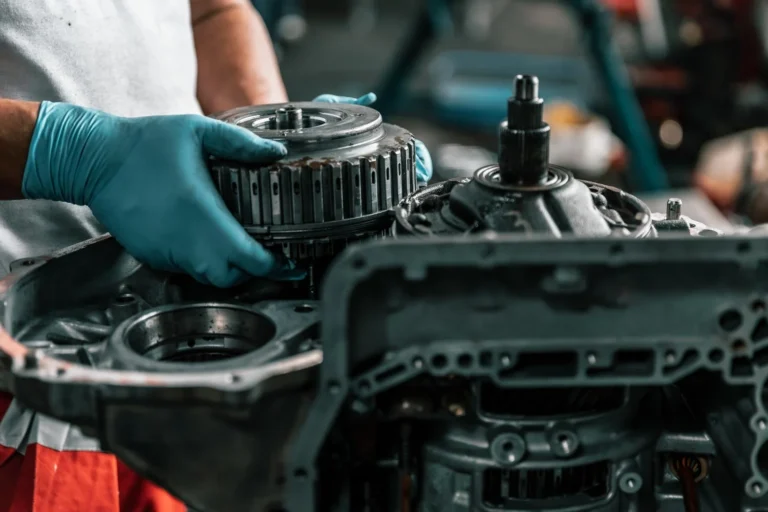
The carrier is the central housing that holds the ring gear and the side gears. In an ARB Air Locker, the carrier is a custom-machined unit that replaces the factory open carrier. It is made from high-strength nodular iron or forged steel, depending on the application, and it houses the locking collar, the side gears, and the pinion gears. The carrier must be matched to your axle’s ring gear bolt pattern and bearing journal size, which is why ARB offers specific part numbers for each axle application.
The Locking Collar and Dog Teeth: The Mechanical Engagement
Inside the carrier, there is a locking collar that slides on splines. The collar has external dog teeth that match internal dog teeth on the carrier. When the collar slides into position, the teeth interlock, preventing the side gears from rotating independently. This locks the two axle shafts together. The dog teeth are case-hardened to withstand the shock loads of off-road use, and they are designed to engage only when the differential is under minimal load—which is why ARB recommends engaging the locker at low speed or when stopped.
The Air Actuator and Seal: The Pneumatic Trigger
The air actuator is a piston that sits inside a sealed chamber in the carrier. Compressed air enters through a port in the axle housing, passes through a seal, and pushes the piston. The piston is connected to the locking collar via a fork or thrust bearing. The seal is a critical component—if it fails, air leaks into the differential oil, and the locker will not engage. ARB uses a dual-lip seal design with a protective shield to keep debris out. The actuator is designed to operate at 90–120 PSI, and the system includes a pressure switch that illuminates a dash light when the locker is fully engaged.
What to Buy: ARB Air Locker Models, Fitment, and Costs

Popular Applications: Dana 44, Toyota 8-inch, Ford 9-inch, and More
ARB offers air lockers for a wide range of axles, including the Dana 30, Dana 44, Dana 60, Toyota 8-inch, Toyota 9.5-inch, Ford 8.8, Ford 9-inch, GM 10-bolt, and many others. Each kit includes the carrier, the locking collar, the air actuator, the seal kit, and the necessary hardware. The most popular applications are the Dana 44 (used in Jeep Wranglers and Ford Broncos) and the Toyota 8-inch (used in Tacomas and 4Runners). For each application, you must specify the axle ratio (e.g., 3.73, 4.10, 4.56) because the carrier is ratio-specific.
What’s in the Box: Kit Contents and Required Accessories
A typical ARB Air Locker kit includes the differential carrier, the locking collar, the air actuator, the seal, the solenoid valve, the air line, the dash switch, and the wiring harness. You will also need an ARB air compressor (or an equivalent 12-volt compressor) and a small air tank if you want to operate other air tools. The compressor is sold separately, and ARB recommends their own CKMA12 or CKSA12 models, which are rated for a 100% duty cycle at 100 PSI for short bursts. The kit does not include the compressor, so factor that into your budget.
Cost Breakdown: Parts, Labor, and Hidden Expenses
The price of an ARB Air Locker ranges from $1,200 to $1,800
per axle for the locker itself, depending on the application. Installation labor typically runs $400–$800 per axle at a reputable 4×4 shop, because the differential must be removed, the carrier replaced, and the ring gear and backlash reset. You will also need to budget for the compressor ($300–$600), the air line and fittings ($50–$100), and potentially a new differential cover with a port for the air line if your stock cover lacks one. Hidden costs include gear oil, sealant, and possibly a master install kit with new bearings and shims. All-in, expect to spend $2,000–$3,500 per axle for a professional installation.
ARB Air Locker vs. Eaton E-Locker vs. Yukon Grizzly: Which Should You Buy?
The Eaton E-Locker is the ARB’s main electric competitor. It costs slightly less (around $1,000–$1,400 per axle) and does not require a compressor, but it uses an electric motor and solenoid that can fail if water ingresses the housing. The Yukon Grizzly is an automatic locker that costs $500–$800, but it cannot be turned off, which makes it less street-friendly. The ARB’s advantage is its proven reliability, the ability to engage at any speed below 20 mph, and the fact that the compressor can also be used to inflate tires. The disadvantage is the added complexity of the air system and the need to maintain a leak-free seal. For most overlanders and rock crawlers, the ARB is the gold standard.
What an ARB Air Locker Can’t Do: Limitations and Real-World Constraints

No High-Speed Engagement: The 20 mph Rule
The ARB Air Locker is not designed to be engaged at highway speeds. Engaging the locker above 20 mph can cause severe driveline shock, leading to broken axle shafts, ring gear teeth, or the locker itself. The dog teeth are only meant to mesh when the differential is under minimal load. If you accidentally hit the switch at 60 mph, you risk catastrophic damage. This is a critical limitation that many owners overlook.
Air System Leaks: The Silent Killer
The entire system depends on a sealed air path from the compressor to the actuator. Any leak—whether at the solenoid, the air line fitting, or the seal inside the axle housing—will prevent the locker from engaging or cause it to disengage unexpectedly. Over time, seals can dry out, and off-road debris can damage the air line. You must periodically check the system for leaks and carry spare seals and fittings on long trips. A leak that goes unnoticed can leave you stuck with an open differential when you need the locker most.
Compressor Duty Cycle: It Can’t Run Forever
The ARB compressor is not designed for continuous operation. Most models have a duty cycle of 30–50% at 100 PSI, meaning you can run it for 3–5 minutes before it needs a cool-down period of equal length. If you are repeatedly engaging and disengaging the locker on a tough trail, the compressor may overheat and shut down. You can mitigate this by installing a small air tank, which stores compressed air and reduces the compressor’s run time.
Not a Replacement for a Spool or Welded Diff
Even when locked, the ARB Air Locker does not provide the same absolute rigidity as a spool or a welded differential. A spool is a solid piece of metal that permanently locks both axle shafts, offering zero differentiation. The ARB, by contrast, has a small amount of torsional flex in the dog teeth and the carrier, which is intentional to prevent shock loads. For extreme rock crawling where you need absolute lockup, a spool is stronger, but it is undriveable on pavement. The ARB is a compromise that offers 95% of the traction benefit with 100% of the street drivability.
Installation and Maintenance: What You Need to Know Before You Buy

Installation Overview: What’s Involved
Installing an ARB Air Locker is not a beginner-level job. It requires removing the axle shafts, pulling the differential carrier, setting up the ring gear backlash and pinion depth, and installing the air line through the axle housing. You will need a dial indicator, a torque wrench, and a press for bearings. Most owners choose to have a professional install it, but experienced DIYers can do it in a weekend. The most critical step is setting the backlash correctly—if it is too tight or too loose, the gears will whine or fail prematurely.
Maintenance Schedule: Seals, Oil, and Air Line Checks
ARB recommends changing the differential oil every 30,000 miles or after every major water crossing. Use a high-quality GL-5 gear oil with the correct viscosity for your axle. Inspect the air line for cracks or chafing at every oil change, and check the solenoid for corrosion. The seal inside the carrier should be replaced every 50,000 miles or if you notice oil in the air line. The compressor’s air filter should be cleaned annually, and the compressor head bolts should be re-torqued after the first 100 hours of use.
Common Failure Modes and How to Avoid Them
The most common failure is a leaking seal, which allows differential oil to contaminate the air system. This is usually caused by debris scoring the seal lip during installation or by running the locker in deep mud without proper axle venting. Another common issue is a broken air line fitting at the axle housing, which can be avoided by using a braided stainless steel line instead of the stock nylon line. Finally, the solenoid can fail if it is exposed to water—mount it high in the engine bay and use dielectric grease on the connectors.
Real-World Performance: Owner Experiences and Long-Term Reliability

Overlanding and Rock Crawling: Where the ARB Shines
Owners consistently report that the ARB Air Locker transforms their vehicle off-road. On rock trails, the ability to lock the front axle while keeping the rear open allows for precise steering and reduces the risk of breaking a front axle shaft. On overlanding trips, the locker can be engaged for a tricky obstacle and then disengaged for the highway, providing the best of both worlds. The dash switch is intuitive, and the engagement is smooth and quiet—no ratcheting or popping like an automatic locker.
Long-Term Durability: 100,000-Mile Reports
There are numerous reports of ARB Air Lockers running for over 100,000 miles without any internal failure, provided the seals are maintained and the oil is changed regularly. The dog teeth show minimal wear under normal use, and the carrier is solid enough to handle 35-inch tires and moderate horsepower. The most common long-term issue is the compressor, which may need a rebuild after 5–7 years of heavy use. Replacement compressor heads are available, and the rebuild is straightforward.
What Owners Wish They Knew Before Buying
The most common regret is not budgeting for the compressor and installation costs upfront. Many owners also wish they had installed a small air tank to reduce compressor cycling. Others note that the locker is not a substitute for good driving technique—you still need to pick the right line and manage your throttle. Finally, several owners recommend carrying a spare seal kit and a small air line repair kit on long expeditions, as these are the most likely failure points.
Decision Guide: Is an ARB Air Locker Right for Your 4×4?

When to Choose an ARB Air Locker
Choose an ARB Air Locker if you need selectable traction for mixed use—daily driving on pavement plus weekend off-roading. It is ideal for overlanders who need reliability, rock crawlers who need precise control, and anyone who wants the ability to air up tires from the same compressor. It is also the best choice if you plan to run a front locker, because the selectable nature allows you to keep the front axle unlocked for steering on tight trails.
When to Choose an Alternative
If you never drive on pavement and only use your vehicle off-road, an automatic locker like the Yukon Grizzly is cheaper and simpler. If
you want a simpler installation without the air system, the Eaton E-Locker is a solid choice, though it lacks the dual-purpose compressor benefit. If you only need traction in the rear and rarely encounter extreme terrain, a quality limited-slip differential may be sufficient and far less expensive. For dedicated competition rock crawlers who never drive on the street, a spool or welded differential offers maximum strength at the lowest cost, but it is completely undriveable on pavement.
Cost-Benefit Analysis: Is It Worth the Premium?
The ARB Air Locker commands a significant premium over other traction devices. At $2,000–$3,500 per axle installed, it is roughly double the cost of an Eaton E-Locker and triple the cost of an automatic locker. However, the value proposition is clear: you get a system that is proven in the harshest conditions, backed by a global support network, and capable of serving double duty as an onboard air system. For most serious off-roaders, the reliability and versatility justify the cost. For casual weekend warriors, a less expensive option may be more sensible.
Final Verdict: Who Should Buy the ARB Air Locker?
The ARB Air Locker is the best-in-class selectable locker for anyone who demands maximum traction on demand without sacrificing daily drivability. It is the right choice for overlanders, rock crawlers, and serious trail enthusiasts who understand the maintenance requirements and are willing to invest in a professional installation. If you are looking for a set-and-forget solution, look elsewhere. But if you want the gold standard in selectable traction and you are prepared to maintain it, the ARB Air Locker will not disappoint.
Frequently Asked Questions About ARB Air Lockers

Can I install an ARB Air Locker myself?
Yes, if you have experience with differential setup, including setting backlash and pinion depth. You will need specialized tools like a dial indicator, bearing puller, and torque wrench. If you are not confident in your abilities, professional installation is strongly recommended to avoid costly gear damage.
How long does an ARB Air Locker last?
With proper maintenance—regular oil changes, seal inspections, and compressor care—an ARB Air Locker can last 100,000 miles or more. The internal components are case-hardened and designed for heavy use. The most common wear items are the seals and the compressor, both of which are replaceable.
Does the ARB Air Locker work in snow and ice?
Yes, the locker can be engaged in snow and ice to provide maximum traction, but it should be used with caution. Locking the rear axle on icy roads can cause the vehicle to understeer or oversteer unpredictably. It is best to use the locker only at low speeds and on loose surfaces, not on hard-packed ice at highway speeds.
Can I use the ARB compressor for airing up tires?
Absolutely. The ARB compressor is designed for dual purposes—operating the locker and inflating tires. You can add an air chuck kit and a small tank to speed up tire inflation. The compressor’s duty cycle is sufficient for airing up four tires from 15 PSI to 35 PSI, though it will take a few minutes per tire.
What happens if the air system fails while the locker is engaged?
Understanding happens if the air system fails while the locker is engaged?
If the air system fails while the locker is engaged, the locker will remain locked because the return spring is not strong enough to disengage the dogs under load. You will need to stop the vehicle, relieve the load on the driveline, and manually release the air pressure to disengage. This is a rare failure mode, but it is worth knowing how to handle it.
Conclusion: The ARB Air Locker in Perspective

The ARB Air Locker is more than just a traction aid—it is a complete system that gives you ultimate control over your vehicle’s drivetrain. It is not the cheapest option, nor the simplest to install, but it is the most proven and versatile selectable locker on the market. Its pneumatic design is solid, field-serviceable, and doubles as an onboard air source. Its limitations—no high-speed engagement, air system maintenance, and compressor duty cycle—are well-documented and manageable for the informed owner.
If you are building a serious off-road vehicle and you want the ability to lock your axles on demand without compromising daily drivability, the ARB Air Locker is the benchmark against which all other lockers are measured. It is an investment in capability, reliability, and peace of mind. Whether you are crawling over boulders in Moab, crossing the Australian outback, or navigating snowy mountain passes, the ARB Air Locker will get you through—as long as you respect its limits and maintain it properly.
For most enthusiasts, the decision comes down to this: if you want the best, and you are willing to pay for it and maintain it, the ARB Air Locker is the answer. If you want something cheaper or simpler, there are alternatives. But for those who demand the ultimate in selectable traction, there is no substitute.