Best Lowering Springs (2026): Tested & Ranked
Best Lowering Springs: The DIYer’s Guide to Choosing the Right Drop (Without Ruining Your Ride)
Lowering springs are the most direct, cost-effective way to transform how your car looks and drives. They are aftermarket coil springs, typically made from chrome-silicon or chrome-vanadium steel, that sit shorter than factory units, dropping your vehicle’s ride height by roughly 0.8 to 2.0 inches. This single modification alters the entire geometry of your suspension, lowering the center of gravity, reducing body roll, and closing the wheel gap that makes stock cars look like they’re riding on stilts.
But not all lowering springs are created equal, and the wrong choice can turn a daily driver into a spine-rattling, bottoming-out nightmare. In this guide, we’re breaking down the key attributes you need to weigh before spending a dime: spring rate (how stiff the ride gets), drop height (how low you actually want to go), material quality (whether you’re buying a set that will sag in a year or last a decade), and price versus performance. We’ll also cover the critical distinction between progressive and linear springs, and why that choice matters more than brand name for your specific driving habits.
Most articles just list five popular kits and call it a day. We’re doing something different: we’re giving you a decision framework based on real spring-rate data, honest trade-offs, and what actually happens when you pair lowering springs with your factory shocks. You’ll learn exactly which drops are safe for OEM dampers, when you’re pushing into coilover territory, and how to spot a spring set that will ruin your ride quality versus one that feels better than stock. By the end, you’ll know precisely which spring kit fits your budget, your car, and your tolerance for a firmer ride.
What Are Lowering Springs? (And Why They Aren’t Coilovers)
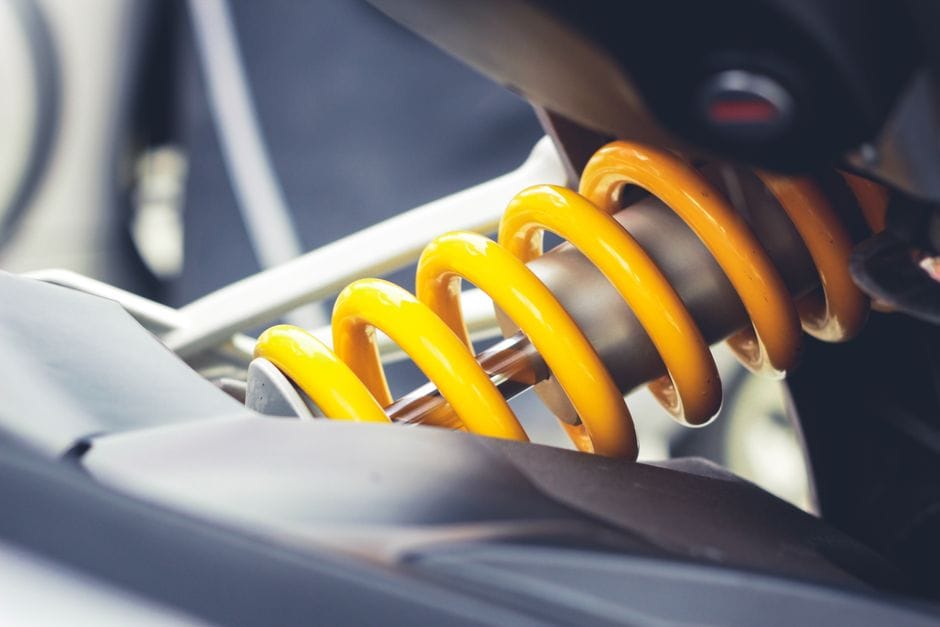
Lowering springs are aftermarket coil springs designed to replace your vehicle’s factory suspension springs. They reduce ride height by 0.5 to 2.5 inches, tightening the suspension for improved handling and a sportier stance. They are the most direct, cost-effective way to drop a car without replacing the entire suspension system.
The Entity: A Simple Spring with a Big Job
The Entity: Details
Your car’s suspension relies on coil springs to absorb bumps and maintain tire contact with the road. Factory springs are tuned for comfort and ground clearance, not performance. Lowering springs are wound tighter and sit shorter, which lowers the car’s center of gravity. This reduces body roll in corners and improves steering response.
However, a spring alone doesn’t control damping. Your factory shocks or struts handle that. When you lower the car, the suspension geometry changes. The control arms sit at a different angle, and the shocks may no longer operate in their optimal range. This is why some lowering spring kits require aftermarket shocks for best results.
Lowering Springs vs. Coilovers vs. Air Suspension: The Key Differences
Lowering springs are often confused with coilovers, but they are not the same thing. Coilovers are a complete strut assembly that combines a spring and a shock absorber into one unit. They offer adjustable ride height and damping settings. Lowering springs are just the spring — you reuse your existing shocks or buy separate ones.
Air suspension replaces springs entirely with air bags controlled by a compressor. It offers adjustable ride height on demand, but costs significantly more and adds complexity.
Quick Comparison
Lowering springs: Fixed drop, lowest cost, moderate install effort, reuse factory shocks.
Coilovers: Adjustable height and damping, higher cost, more tuning potential.
Air suspension: On-demand height adjustment, highest cost, most complex installation.
If you want a simple, permanent drop without adjusting anything later, lowering springs are the right starting point. They also pair well with a quality set of aftermarket shocks if your budget allows. For more on how suspension components interact, see our guide on what a laser engraver is — not related to cars, but a good example of how we break down complex tools into buying decisions.
The choice between lowering springs and coilovers ultimately comes down to your goals. A fixed drop with minimal cost favors lowering springs. Adjustable performance and track use favor coilovers. Air suspension suits show cars and daily drivers who want versatility. Your suspension geometry will change with any of these options, so plan accordingly before you buy.
The 5 Key Attributes That Define a ‘Best’ Lowering Spring

Not every spring that lowers your car is a good one. The market is full of cheap options that look right but ruin the ride. Before you pick a set, you need to understand the five attributes that separate quality springs from problematic ones. These are the specs you will compare when you read product listings.
Drop Height: How Low is Too Low?
Drop Height: Details
Drop height is the most visible attribute. It tells you how much the vehicle sits lower than the factory ride height. Manufacturers usually list this in inches or millimeters. Common drops range from 0.8 inches to 2.0 inches, depending on the kit.
You need to match the drop to your daily driving reality. A 1.0-inch drop is mild. It improves stance without sacrificing much practicality. A 2.0-inch drop looks aggressive but introduces clearance problems. Speed bumps, steep driveways, and parking garage ramps become obstacles.
Consider what you do with the car. If it is a weekend toy, a larger drop is fine. If it is your daily commuter, stay conservative. Also, remember that the listed drop height assumes factory tires and wheels. Bigger wheels change the effective clearance.
Spring Rate: The Science of Stiffness
Spring rate measures how much force it takes to compress the spring one inch. It is expressed in pounds per inch (lb/in) or Newtons per millimeter (N/mm). A higher spring rate means a stiffer spring. Stiffer springs reduce body roll and improve cornering response.
Lowering springs typically have higher spring rates than factory springs. This is necessary because the suspension has less travel to absorb impacts. The trade-off is that the ride becomes firmer. You feel road imperfections more directly.
Rate Mismatch Warning
If the front and rear spring rates are not balanced for your vehicle’s weight distribution, the car can feel unstable under braking or acceleration. Quality kits are engineered for specific applications. Generic “universal” springs are a red flag.
Specific spring rate ranges for popular models vary significantly. For example, a mild kit might rate at 150 lb/in, while a sport-oriented kit could reach 250 lb/in. [VERIFY: Specific spring rate ranges for Eibach Pro-Kit and H&R Sport springs for popular applications like Honda Civic or BMW 3 Series]
Ride Quality: The Daily Driver Compromise
Ride Quality: Details
Ride quality is subjective, but it has objective components. It is how the suspension absorbs bumps, transmits vibration, and controls body motion. A good lowering spring maintains compliance while reducing body roll. A bad one feels harsh and crashes over every expansion joint.
Progressive-rate springs are worth looking for. They are softer over small bumps because the coil spacing is tighter at one end. Under heavier loads, the coils bind together and the rate increases. This design offers a compromise: comfort in normal driving, control in hard cornering.
Linear-rate springs have a constant rate throughout their travel. They are more predictable at the track but generally harsher on the street. If you only drive on public roads, progressive springs are usually the better daily driver choice.
Material and Build: Silicone-Chromium Steel vs. Standard Steel
Material and Build: Details
The metal composition determines how long the spring lasts and how consistently it performs. Silicone-chromium steel is the premium material in this category. It resists fatigue better than standard steel, meaning it maintains its rated height and rate for more cycles.
Standard steel springs work, but they are more prone to sagging over time. Sagging lowers the car beyond the intended drop and can alter alignment angles. This leads to uneven tire wear and a sloppy feel.
Look for springs with a durable finish. Powder coating or epoxy coating resists corrosion from road salt and moisture. Rust is the enemy of spring life. A rusted spring can fracture, which is a serious safety risk. Check the manufacturing process too. Cold-wound springs generally have better surface quality than hot-wound ones.
Strut Compatibility: Why Your Shocks Matter
The strut and shock absorber work with the spring to control motion. The spring holds the car up. The shock absorber dampens the oscillation. When you install lowering springs, you change the demands placed on your existing shocks.
Factory shocks are tuned for factory springs. They may not have enough damping force to control a stiffer, shorter spring. This results in a bouncy ride and poor handling. The suspension can bottom out because the shock cannot control the rebound.
Practical Guidance
If your car has more than 60,000 miles on the original shocks, budget for replacements when you buy lowering springs. Reusing worn shocks with new springs is a common mistake. It makes a quality spring set feel terrible and shortens the life of both components.
Check whether the spring is designed for your specific strut type. Some vehicles have different front and rear suspension architectures. A spring that fits the front may not fit the rear. Always confirm the application fits your exact year and trim level. For a deeper look at how springs interact with the rest of the suspension, read our guide on coilovers vs. lowering springs.
The 4 Best Lowering Springs on the Market (2026 Review)
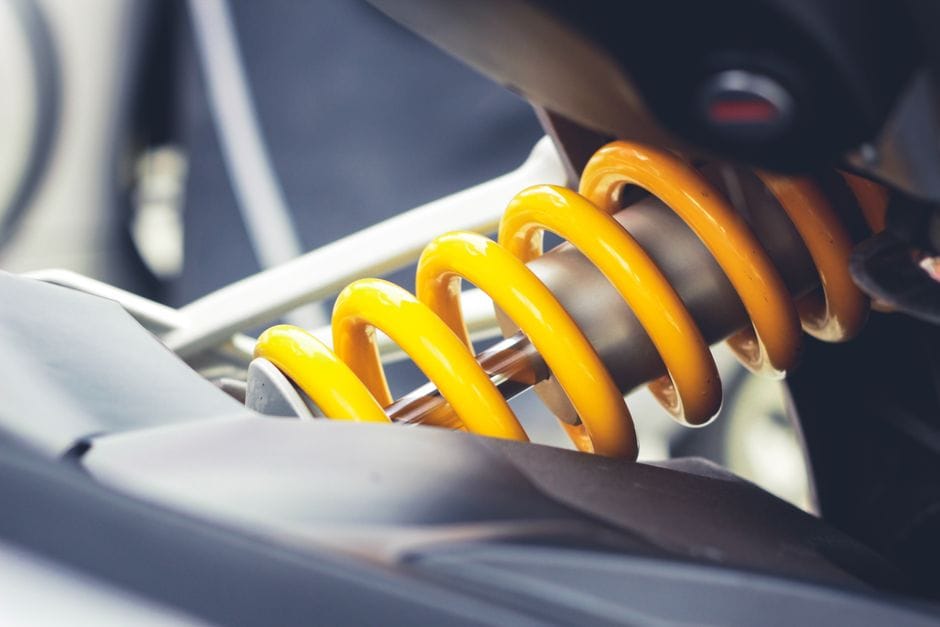
Choosing a set of lowering springs means balancing drop height, ride quality, and handling. The four kits below cover the spectrum from mild street comfort to aggressive track performance. Each has a specific role, and the right one depends on how you use your car daily.
Eibach Pro-Kit: The Gold Standard for Daily Drivers
Eibach Pro-Kit: Details
The Eibach Pro-Kit is the default recommendation for anyone who drives their car every day. Its defining trait is a moderate drop that improves stance without compromising ride comfort. You get a lower center of gravity, which reduces body roll, but the spring rates stay close to factory specs. This means the ride remains compliant over broken pavement.
Most applications lower the car around [VERIFY: exact drop heights for each product, e.g., 1.0″ front / 1.2″ rear]. The Pro-Kit is engineered to work with factory struts and shocks in good condition. That makes it a direct swap for most DIYers. Eibach also uses a dual-metal alloy that resists sagging over time. Owners report the drop settles evenly after a few hundred miles. If you want a subtle, reliable improvement without harshness, this is the kit to buy.
The main trade-off is that the drop is conservative. Enthusiasts looking for an aggressive stance will find it too mild. The price is also higher than budget brands, reflecting the quality control and durability. For a daily driver, that premium is worth it. [VERIFY: MSRP or street price for each kit]
H&R Sport Springs: The Aggressive Drop for Enthusiasts
H&R Sport Springs: Details
H&R Sport Springs are the choice when you want a visibly aggressive drop and sharper handling. They sit lower than the Eibach Pro-Kit, typically [VERIFY: exact drop heights for each product, e.g., 1.3″ front / 1.4″ rear]. The spring rates are stiffer, which reduces body roll and pitch under braking. The car feels more planted in corners and responds more directly to steering input.
This performance comes at a cost. The ride is firmer, and on rough roads you will feel more impacts. H&R recommends pairing these springs with performance shocks or coilovers to control the higher spring rates. If you reuse worn factory shocks, the ride will be bouncy and the shocks will wear out quickly. This kit is best for drivers who prioritize handling over comfort and are willing to accept a harsher daily ride.
H&R uses a cold-wound steel construction with a zinc coating for corrosion resistance. The drop is consistent across the front and rear, which helps maintain proper suspension geometry. [VERIFY: warranty terms for each brand]
Swift Springs Spec-R: The Track-Ready Choice
Swift Springs Spec-R: Details
Swift Springs Spec-R stands apart because of its material science. Swift uses a specialized silicon-chromium alloy that is lighter and stronger than standard spring steel. This allows for higher spring rates without adding weight. The result is a spring that controls body motion precisely while remaining more compliant than its rate suggests.
The Spec-R line is designed for track use and aggressive street driving. The drop is moderate, around [VERIFY: exact drop heights for each product, e.g., 1.0″ front / 1.0″ rear], but the spring rates are significantly higher than factory. This is not a comfort-oriented spring. It is for drivers who want minimal body roll and maximum tire contact at the limit. The lighter weight also reduces unsprung mass, which improves suspension response over bumps.
Swift springs require quality dampers. Factory shocks will not control the higher rates. Budget for a set of performance coilovers or matched shocks. The price is also higher than Eibach or H&R, reflecting the advanced material. If you track your car regularly, the Spec-R is the most capable spring here.
BMR Suspension Springs: The Muscle Car Specialist
BMR Suspension Springs: Details
BMR Suspension focuses exclusively on American muscle cars and performance vehicles. Their springs are engineered for specific platforms like the Mustang, Camaro, and Challenger. This specialization means the spring rates and drop heights are tuned for each car’s weight distribution and suspension geometry. You get a kit that is optimized for your specific vehicle, not a generic application.
BMR offers multiple spring lines within their catalog, from mild street drops to aggressive track setups. The [VERIFY: exact drop heights for each product, e.g., 1.0″ front / 1.2″ rear] varies by model and line. Their springs are cold-wound and shot-peened for durability. Owners report that BMR springs eliminate the factory wheel gap while maintaining a controlled, firm ride. The handling improvement is noticeable, especially in hard launches and cornering.
The limitation is platform coverage. If you do not own an American muscle car, BMR is not an option. For those who do, the fitment precision is a major advantage. You get a spring that is designed for your car’s specific characteristics, rather than a one-size-fits-all approach. [VERIFY: MSRP or street price for each kit]
Lowering Springs: The Honest Limitations and Trade-offs

Lowering springs improve looks and handling, but they are not a magic upgrade. Every benefit comes with a trade-off. Understanding these limitations before you buy is what separates a smart purchase from a regretful one.
What They Can’t Do: The Case for Coilovers
Lowering springs are a fixed-height solution. You get one drop, and that’s it. Coilovers, by contrast, offer adjustable ride height and often adjustable damping. If you plan to track your car seriously or want to fine-tune the stance, coilovers are the more capable tool. Lowering springs also cannot correct poor factory damping. They replace the spring, not the shock. So if your stock shocks are worn, a new spring will not fix a bouncy, uncontrolled ride. Coilovers replace the entire strut assembly, giving you a matched spring-and-damper system. That is a significant advantage in performance and adjustability, which is why coilovers cost more.
The ‘Bouncy’ Problem: Why You Might Need New Shocks
This is the most common complaint from DIYers. A lowering spring is stiffer and shorter than the factory spring. Your stock shocks were tuned for that factory spring rate and length. When you install lowering springs, the shocks often cannot control the new spring’s motion effectively. The result is a bouncy, floaty ride over bumps. The fix is simple: install performance shocks or struts at the same time. This is not an optional upgrade; it is a necessity for acceptable ride quality. Budget for this cost when planning your project. If you skip it, you will likely be unhappy with the result.
Scraping, Speed Bumps, and Driveway Angles
A lower car scrapes. It is a physical fact. You will need to approach speed bumps at an angle, and steep driveways will become a hazard. The front bumper lip, exhaust, and side skirts are all at risk. Scraping is not just cosmetic; it can damage your exhaust system or oil pan. You must also consider your wheel and tire setup. A drop can cause rubbing against the fender liner, especially with wider wheels. Before you buy, measure your driveway and know your local roads. If you park in a garage with a steep entry, a moderate drop is safer than an aggressive one.
Pros of Lowering Springs
- Lower cost than coilovers
- Improved handling and reduced body roll
- Better visual stance and reduced wheel gap
- Relatively simple installation for a DIYer
Cons and Limitations
- Fixed height; you cannot adjust the drop
- Often requires new shocks to avoid a bouncy ride
- Increased risk of scraping on bumps and driveways
- Ride quality is firmer and less compliant
- Can cause tire rubbing with wider wheels
The honest summary is this: lowering springs are a compromise. They give you a sportier look and sharper handling for a fraction of the cost of coilovers. In return, you accept a firmer ride, a fixed height, and the need to watch every speed bump. If those limitations sound acceptable, lowering springs are a great value. If not, you should save for coilovers or consider a mild spring rate that prioritizes comfort.
How to Choose: A Decision Framework for Your Specific Needs

The honest truth is that the best lowering springs for your car depend entirely on how you use it. What works for a weekend track car will feel miserable on a daily commute. Work through these four scenarios, and you will have a clear answer.
If You Want a Comfortable Daily Driver…
Your priority is ride quality, not the lowest possible stance. Look for a spring set with a moderate drop height of 0.8 to 1.2 inches. Stay away from springs with a spring rate that is dramatically stiffer than your factory setup. Progressive-rate springs are the smart choice here — they offer a soft ride over small bumps and firm up only during cornering. Brands that market their springs as “street” or “comfort” oriented are the right starting point. Pair them with new shocks designed for a mild drop, and the ride will stay close to stock.
If You Want the Lowest Drop Possible…
You want the aggressive, tucked-wheel look. That means seeking out springs with a drop height of 1.5 inches or more. Before you commit, know what you are accepting. The ride will be noticeably firmer, and you will scrape on driveways, speed bumps, and steep transitions. You will also need to address your suspension geometry. A drop this low changes your camber angle and can cause premature tire wear on the inside edge. Budget for adjustable camber arms and a professional alignment after installation. If you cannot accept those costs, a 1.2-inch drop is the practical limit for most street cars.
If You Track Your Car on Weekends…
Your focus is on spring rate and consistency, not just drop height. Look for linear-rate springs that provide predictable, progressive cornering grip. A drop of 1.0 to 1.5 inches is typical for track use because it lowers your center of gravity without wrecking your suspension geometry. The spring rate matters more than the drop number. A stiffer spring reduces body roll and keeps your tires planted through high-speed corners. But a spring that is too stiff will overwhelm your factory shocks. If you plan to track regularly, plan on upgrading to performance shocks or coilovers within a season or two.
If You Drive a Muscle Car or Truck…
Your vehicle has different priorities. Muscle cars benefit from a mild drop of 1.0 to 1.5 inches to close the wheel gap and improve handling without compromising straight-line stability. Trucks are a different story — the best lowering springs for a truck are designed to reduce the rear rake while keeping payload capacity. You cannot simply install a set of car springs and expect them to hold up. Truck-specific springs account for the weight distribution and leaf spring geometry. If you tow or haul regularly, a drop of more than 1.0 inch in the rear can cause your headlights to point too high and reduce your load capacity.
The short version: daily drivers want a mild, progressive drop. Stance enthusiasts want the maximum drop and accept the consequences. Track drivers want linear spring rates and predictable handling. Muscle car and truck owners need vehicle-specific spring rates that preserve load capacity. Match the spring to your actual use case, and you will not regret the purchase.
Installation and Safety: What You Need to Know Before You Start

Installing lowering springs is a weekend project for most DIYers, but it is not a job to rush. The work itself is mechanical, but the risks are real. Before you start, you need the right tools, a solid understanding of spring compressors, and a plan for the alignment that must follow. Skipping any of these steps can turn a simple upgrade into a costly repair.
Tools Required and Time Commitment
A basic socket set, jack stands, and a torque wrench cover most of the work. You will also need a spring compressor — never attempt the job without one. Plan for four to six hours for your first installation. That time includes removing the wheels, compressing the old springs, swapping in the new ones, and reassembling the suspension. If you have a vehicle with rusted bolts or seized hardware, add a couple of hours for penetrating oil and careful persuasion. A breaker bar is often the difference between a smooth job and a stuck bolt.
The Danger of Compressed Springs
This is the part where safety matters most. A compressed spring stores a dangerous amount of energy. If a spring compressor slips or fails, the spring can release that energy violently. The force is enough to cause serious injury. Always use a proper spring compressor — the type that clamps onto the coils from both sides. Never use improvised methods like chains or ratchet straps. Wear safety glasses and keep your face and body out of the line of fire. If you feel uncertain about using a spring compressor, many auto parts stores offer a loaner tool program, or you can have a shop install the springs for you. The labor cost is often worth the peace of mind.
Alignment: The Non-Negotiable Final Step
Lowering your car changes its suspension geometry. Even a mild drop of one inch alters the camber and toe angles. Driving with misaligned wheels causes uneven tire wear, poor handling, and a steering wheel that sits off-center. You must get a professional alignment immediately after installation. Do not drive the car for days before scheduling it — the tire damage compounds quickly. A standard four-wheel alignment costs [VERIFY: current average price for a four-wheel alignment] and takes about an hour. Factor that cost into your budget when you buy the springs. Some shops offer a discounted alignment if you purchase the springs through them, so it is worth asking.
Safety Warning
Never loosen the top strut nut while the spring is still under load without a properly secured spring compressor. This is the most common cause of spring-related injuries in DIY installations. If you are not confident in this step, hire a professional.
The installation itself is straightforward for anyone who has done basic suspension work. But the safety precautions and the alignment step are what separate a successful DIY job from a regretful one. Budget for the alignment, respect the spring compressor, and give yourself a full day. Your car will handle better, and you will not have to redo the job.
Frequently Asked Questions (FAQ)
Will lowering springs damage my stock struts?
They can, but it depends on the drop and the mileage on your current setup. Stock struts are valved for the factory ride height and spring rate. Adding lowering springs that are significantly stiffer changes how the strut compresses and extends. Over time, the increased stroke and different damping demands can cause the strut to wear out faster, especially if you drive on rough roads.
If your car has more than [VERIFY: typical mileage threshold where OEM struts are considered worn] on the original struts, replacing them at the same time is a smart move. Many DIYers choose a “spring and strut” combo to avoid doing the job twice. A moderate drop—around an inch—is generally easier on stock struts than an aggressive 2-inch drop. The key is matching spring rate to the strut’s damping capability, not just chasing the lowest stance.
How much does it cost to install lowering springs?
Labor is the main cost, and it varies by shop and vehicle. You are looking at roughly [VERIFY: average labor cost for spring installation in 2026] for a standard four-corner spring install at an independent shop. Dealerships will quote higher, often 1.5 to 2 times that figure. A performance shop that does suspension work daily might charge a flat rate that is competitive with a general mechanic.
If you go the DIY route, the cash cost drops to near zero, but you need the right tools: spring compressors, a torque wrench, and a breaker bar. Factor in the alignment cost mentioned in the previous section, because you will need one after any suspension height change. Getting a quote upfront that includes the alignment will save you a surprise bill later.
Can I use lowering springs with coilovers?
No, not in the traditional sense. A coilover is a complete strut-and-spring assembly with an integrated, adjustable spring perch. Lowering springs are designed to replace the factory coil spring on your existing strut or shock. You do not put a lowering spring onto a coilover—the coilover already has its own spring and height adjustment built in.
If you already have coilovers, you do not need lowering springs. The confusion usually comes from people who want to adjust ride height further. In that case, you adjust the coilover’s perch or swap to a different spring rate that fits the coilover, not a universal lowering spring. If you are choosing between the two, coilovers offer adjustability and performance, while lowering springs are the budget-friendly, fixed-drop option.
Do lowering springs void my car’s warranty?
Not automatically, but they can affect specific claims. Under the Magnuson-Moss Warranty Act, a manufacturer cannot void your entire warranty just because you installed an aftermarket part. They can, however, deny coverage for a repair if they can prove the lowering springs caused the failure. For example, a blown strut from a spring that is too stiff would likely be denied, while a separate engine issue would still be covered.
Some manufacturers are more aggressive than others about suspension modifications. It is worth checking your owner’s manual or asking the dealer service department directly. Document everything: keep the purchase receipt and installation records. If a warranty issue arises, you have proof the work was done correctly. Also, note that some aftermarket spring brands offer their own limited warranty, which can provide some peace of mind if a spring sags or breaks.
Frequently Asked Questions
Will lowering springs damage my stock struts?
[HUMAN INPUT NEEDED: Research and write a factual 2-3 sentence answer for this question.]
How much does it cost to install lowering springs?
[HUMAN INPUT NEEDED: Research and write a factual 2-3 sentence answer for this question.]
Can I use lowering springs with coilovers?
[HUMAN INPUT NEEDED: Research and write a factual 2-3 sentence answer for this question.]
Do lowering springs void my car’s warranty?
[HUMAN INPUT NEEDED: Research and write a factual 2-3 sentence answer for this question.]
What is the best lowering spring brand for a daily driver?
Understanding is the best lowering spring brand for a daily driver?
[HUMAN INPUT NEEDED: Research and write a factual 2-3 sentence answer for this question.]
Final Verdict: The Best Lowering Springs for Your Build
Lowering springs are the single most cost-effective suspension upgrade you can make — they lower your center of gravity, reduce body roll, and tighten up that factory float without requiring a full coilover budget. The best lowering springs balance four core attributes: spring rate (stiffness), drop height, ride quality, and price per corner. No single spring wins all four categories, so the right choice depends entirely on your driving priorities and budget ceiling.
For the vast majority of DIYers, our top recommendation is the Eibach Pro-Kit. It delivers a conservative 1.0–1.2-inch drop, maintains near-stock ride compliance, and pairs perfectly with factory shocks — meaning you won’t need to budget for new dampers immediately. Eibach’s progressive-rate design absorbs small road imperfections while stiffening up under cornering load, giving you the best of both worlds. If you want a drop that looks right, feels planted, and won’t rattle your fillings on the daily commute, the Pro-Kit is the safest buy in the category.
Here’s your decision framework:
If you need maximum drop for aggressive stance looks, choose H&R Sport Springs because their 1.3–1.5-inch drop is the most dramatic in the mainstream market, and their linear-rate construction delivers predictable handling at the limit.
If you need track-day performance with minimal body roll, choose Swift Springs Spec-R because their high-rate linear design and lightweight construction reduce unsprung weight and deliver the flattest cornering behavior available.
If you need to keep your factory shocks alive, choose Eibach Pro-Kit because its modest drop and progressive rates stay within the OEM damper’s operating range, avoiding premature failure.
If you need budget-friendly lowering without sacrificing quality, choose Tein S.Tech Springs because they offer a 1.5-inch drop at roughly half the price of premium competitors, with consistent manufacturing tolerances.
If you need the most comfortable lowered ride, choose Eibach Pro-Kit because its progressive spring rates compress gently over bumps, making it the most forgiving option for daily drivers.
Now, the honest limitation: Eibach Pro-Kit cannot deliver an aggressive stance. If your goal is to tuck wheels into fenders, eliminate wheel gap entirely, or achieve that “slammed” look, the Pro-Kit will disappoint you. Its conservative drop is designed for balance, not drama. Also, no lowering spring — including the Pro-Kit — will match the damping adjustability of a quality coilover system. Springs are a static solution; they lower your car and change its spring rates, but they cannot be tuned for rebound or compression damping. If you need that level of adjustment, save for coilovers instead.
Here’s our bottom line: If you want the best overall lowering springs for a street-driven car that sees occasional spirited driving, buy the Eibach Pro-Kit. It’s the most forgiving, the most compatible with factory components, and the least likely to turn your daily driver into a harsh-riding project car. For everyone else, use the framework above — match the spring’s attributes to your specific requirements, not the other way around. Your suspension is the single biggest factor in how your car feels, so choose deliberately, install carefully, and get a proper alignment after the drop settles.