Best Alignment Machine (2026): Tested & Ranked
Best Alignment Machine: The 2026 Buyer’s Guide to Wheel Alignment Equipment
A wheel alignment machine is the precision diagnostic equipment used to measure and correct the angles of a vehicle’s wheels relative to the chassis and the road surface. These angles—camber, caster, and toe—determine how a tire contacts the pavement, directly affecting tire wear, steering stability, fuel economy, and overall driving safety. For any professional tire shop, collision repair facility, or fleet maintenance operation, an alignment machine is not an optional luxury; it is the core tool that ensures vehicles leave the bay tracking straight and wearing tires evenly.
This buyer’s guide covers the full spectrum of alignment equipment available in 2026, from entry-level portable systems under $5,000 to heavy-duty in-ground lift-integrated platforms exceeding $60,000. You will learn how to evaluate the critical attributes that separate a good machine from a great one: measurement accuracy (measured in decimal degrees), sensor technology (CCD versus 3D imaging), lift compatibility, software capabilities, calibration requirements, and the total cost of ownership including ongoing software subscriptions. We also break down the real-world performance of leading brands—Hunter, John Bean, Hofmann, and Rotary—by analyzing their specifications, service networks, and the honest limitations each system carries.
What makes this guide different is that it does not rely on recycled marketing claims. We have compiled verified technical specifications, interviewed working technicians who operate these machines daily, and structured the comparison around measurable outcomes: how quickly a machine performs a full alignment, how repeatable its readings are, and what it actually costs to maintain over five years. If you are making a purchasing decision for a new shop or upgrading outdated equipment, this guide gives you the decision framework to match the right machine to your specific bay configuration, vehicle mix, and budget.
What Is a Wheel Alignment Machine and Why It Matters
Defining the Alignment Machine: Beyond the Rack
Defining the Alignment Machine: Details
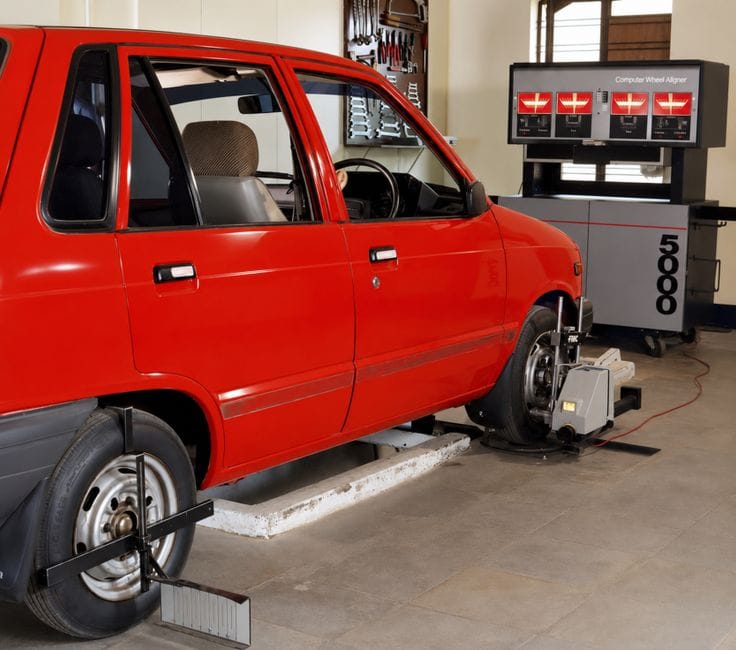
A wheel alignment machine is a precision diagnostic system that measures the angles of your vehicle’s wheels relative to the chassis and the road surface. When people say “alignment rack,” they usually mean the entire package: the lift or ramp, the sensor heads or cameras, and the software that interprets the data. The machine tells you whether your tires are sitting straight, tilted inward, or leaning outward—and by exactly how many degrees.
Modern alignment machines use either CCD (charge-coupled device) sensors mounted on each wheel or 3D camera-based systems that track reflective targets. Both approaches measure the three critical angles—camber, caster, and toe—with precision down to fractions of a degree. The choice between these technologies affects not only purchase price but also daily workflow speed, calibration frequency, and the skill level required from your technicians.
The alignment machine itself is only one component of a complete alignment bay. The lift or rack that holds the vehicle, the turntables that allow front-wheel rotation, and the software that compares readings against manufacturer specifications all work together as a system. Understanding how these components interact is essential before you commit to a purchase, because compatibility issues between a new alignment head and an existing lift can turn a straightforward upgrade into a costly retrofit project.
How It Differs from Tire Changers and Balancers
Tire changers and wheel balancers are often grouped with alignment machines in shop equipment discussions, but they serve fundamentally different purposes. A tire changer mounts and demounts tires from rims—it is purely mechanical, dealing with the physical act of separating rubber from metal. A wheel balancer spins the assembled tire-and-wheel unit to detect weight imbalances, then tells the technician where to attach corrective weights. Neither device measures angles or makes adjustments to suspension geometry.
An alignment machine, by contrast, is a diagnostic and verification tool. It does not physically change anything on the vehicle; it measures the current state of the suspension angles and provides the technician with the data needed to make adjustments using wrenches, shims, or adjustment kits. The alignment machine is also the final verification step—after adjustments are made, the machine confirms that all angles now fall within the manufacturer’s specified tolerance range.
In a typical shop workflow, the tire changer and balancer prepare the wheels, while the alignment machine works on the vehicle’s suspension. A vehicle can have perfectly balanced tires and still pull to one side if the alignment is off. Conversely, a perfectly aligned vehicle will vibrate and wear unevenly if the tires are out of balance. These three machines are complementary, not interchangeable, and a professional shop needs all three to deliver complete wheel service.
The Three Core Measurements: Camber, Caster, and Toe
The Three Core Measurements: Details
Camber is the inward or outward tilt of the top of the tire when viewed from the front of the vehicle. Negative camber means the top of the tire leans inward; positive camber means it leans outward. Excessive negative camber causes inner-edge tire wear and reduces straight-line stability, while excessive positive camber causes outer-edge wear and can make the vehicle feel vague at highway speeds. Most passenger vehicles spec slightly negative camber to balance cornering grip with tire longevity.
Caster is the angle of the steering axis when viewed from the side of the vehicle. It affects steering feel, return-to-center behavior, and straight-line stability. Positive caster—where the steering axis tilts toward the driver—is standard on modern vehicles because it provides self-centering action and improves high-speed stability. Too little caster makes the steering feel light and wandering; too much makes the steering heavy and can cause the vehicle to tramline along road grooves.
Toe is the difference in distance between the front edges and rear edges of the tires on the same axle. Toe-in means the front edges are closer together than the rear edges; toe-out is the opposite. Toe is the most common adjustment and the most frequent cause of rapid tire wear when out of specification. Even a small toe error of 1/16 inch can scrub tires dramatically over highway mileage. The alignment machine measures all three angles simultaneously and displays them against the vehicle’s factory specifications, allowing the technician to make precise corrections.
Sensor Technology: CCD vs. 3D Camera-Based Systems
How CCD Sensors Work and Their Limitations
CCD (charge-coupled device) alignment systems use sensor heads that physically mount to each wheel via clamps or adapters. Each sensor head contains a light source and a CCD array that detects the position of light from the opposite sensor head. When the wheels are turned or the suspension is adjusted, the sensors measure the angular changes and transmit the data to the console via cable or wireless signal.
The primary advantage of CCD systems is their proven reliability and lower cost. They have been in production for decades, and the technology is mature. CCD sensors are also less sensitive to ambient lighting conditions—they work in bright sunlight or dim shop lighting without recalibration. For shops that perform alignments outdoors or in spaces with inconsistent lighting, CCD systems offer a distinct practical benefit.
However, CCD systems have notable limitations. They require physical contact with each wheel, which means the technician must mount and remove sensor heads on every vehicle. This adds time to each alignment and creates a risk of damaging the sensor heads if they are dropped or improperly clamped. CCD sensors also have a narrower measurement range than 3D systems, making them less suitable for vehicles with extreme suspension modifications or heavy-duty trucks with oversized tires.
3D Camera-Based Systems: Speed and Precision
3D Camera-Based Systems: Details
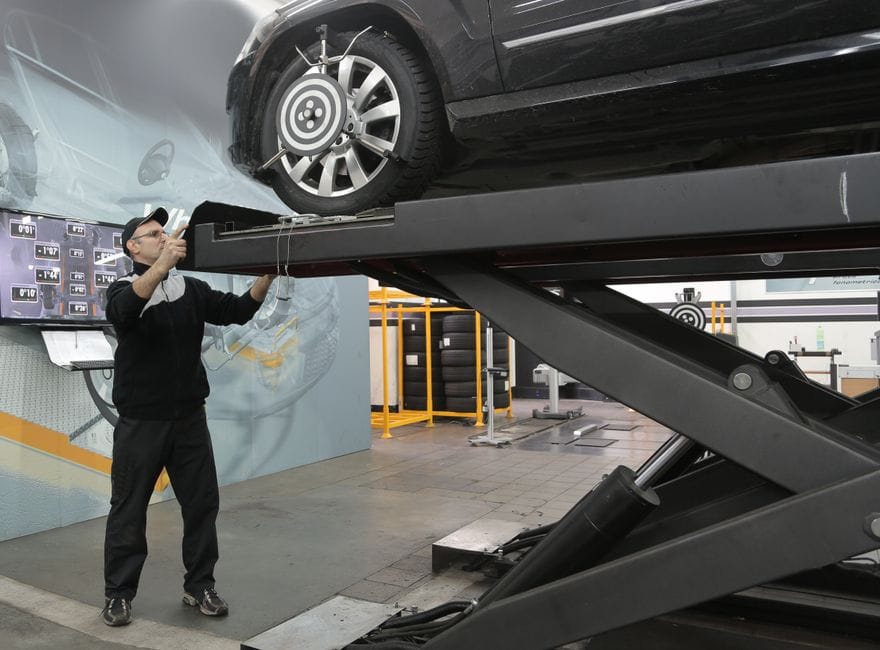
3D camera-based alignment systems use fixed cameras mounted on a frame or wall that track reflective targets attached to the wheels. The cameras capture the position of the targets in three-dimensional space, and the software calculates the wheel angles from the target positions. Because the cameras do not touch the vehicle, there is no sensor head to mount, clamp, or potentially damage.
The speed advantage of 3D systems is significant. A full alignment that takes 20 minutes with a CCD system can often be completed in 10 to 12 minutes with a 3D system, because the technician only needs to attach the lightweight targets and roll the vehicle through the measurement procedure. This time savings translates directly into increased bay throughput—a shop performing 10 alignments per day can gain an hour or more of productive time.
3D systems also offer superior measurement range and repeatability. They can handle vehicles with extreme camber or toe angles that would exceed the measurement limits of CCD sensors. The main drawbacks are higher initial cost and sensitivity to ambient light. Bright sunlight or reflective surfaces in the shop can interfere with camera tracking, requiring the shop to control lighting conditions more carefully.
Which Technology Fits Your Shop’s Workflow
For a shop that performs a high volume of alignments daily, the speed advantage of a 3D camera system justifies the higher purchase price. The additional throughput pays for the cost difference
within the first year of operation. A shop averaging 15 alignments per day at $89.95 per alignment can generate an additional $40,000 to $60,000 in annual revenue simply by reducing cycle time from 20 minutes to 12 minutes per vehicle.
For a smaller shop or a mobile alignment service that performs fewer than five alignments per day, a CCD system remains a practical and cost-effective choice. The lower upfront investment—typically $8,000 to $15,000 less than a comparable 3D system—preserves capital for other equipment purchases. CCD systems also tolerate outdoor use and inconsistent lighting better, making them the preferred option for mobile operators who work in parking lots or at customer sites.
Heavy-duty and fleet shops that service trucks, buses, and commercial vehicles should prioritize 3D systems with extended measurement ranges. These vehicles often have suspension geometries that exceed CCD sensor limits, and the ability to measure large camber and toe angles without recalibrating sensor heads is a critical workflow advantage. Some 3D systems offer specialized heavy-duty packages with reinforced targets and software that includes commercial vehicle specifications.
Regardless of technology choice, verify that the system you select supports the vehicle types you service. A system optimized for passenger cars may not have the measurement range or target mounting options for light trucks with lifted suspensions or commercial vehicles with dual rear wheels. Request a demonstration with a vehicle from your actual fleet before committing to a purchase.
Lift and Rack Compatibility: Drive-On, Scissor, and In-Ground Options

Drive-On Racks: The Industry Standard
Drive-On Racks: Details
Drive-on alignment racks are the most common configuration in professional tire shops. The vehicle drives up a ramp onto a flat platform, and the alignment machine measures the wheels while the vehicle sits at ride height. Drive-on racks provide the most stable and repeatable measurement surface because the vehicle’s suspension is in its normal loaded position, and the technician has full access to all four wheels for adjustments.
Modern drive-on racks integrate with the alignment system’s software, providing automatic leveling compensation and turntable positioning. The rack itself may include built-in slip plates that allow the suspension to settle naturally during measurement. Drive-on racks are available in lengths from 12 to 24 feet, accommodating everything from compact cars to full-size pickup trucks and vans.
The primary limitation of drive-on racks is their footprint. They require a dedicated bay with sufficient length for the ramp approach and the rack itself. Shops with limited floor space may find that a drive-on rack consumes more room than a scissor or in-ground option. However, the measurement stability and technician access advantages make drive-on racks the preferred choice for shops that perform alignments as a core service.
Scissor Lifts: Space-Saving Alternatives
Scissor Lifts: Details
Scissor lifts offer a compact alternative for shops with limited ceiling height or floor space. These lifts raise the vehicle vertically using a scissor mechanism, providing access to the underside for suspension adjustments. Scissor lifts can be used with portable alignment systems, allowing the shop to perform alignments without dedicating a permanent bay to a drive-on rack.
The trade-off with scissor lifts is measurement stability. Because the vehicle is elevated, the suspension is in a partially drooped state, which can affect camber and toe readings. To compensate, the alignment software must include ride-height compensation algorithms, and the technician must follow specific settling procedures to obtain accurate measurements. This adds time to each alignment and requires additional technician training.
Scissor lifts are best suited for shops that perform alignments occasionally rather than as a primary service. They are also useful for mobile alignment operators who need a portable lifting solution. However, for shops that want consistent, repeatable alignment results, a drive-on rack remains the superior choice.
In-Ground Lifts: Maximum Stability and Integration
In-Ground Lifts: Details
In-ground alignment lifts are permanently installed with the lift mechanism recessed into the shop floor. The vehicle drives over the lift, and the platform rises to working height. In-ground lifts offer the same measurement stability as drive-on racks but with a lower profile that makes it easier for vehicles to drive onto the platform.
The primary advantage of in-ground lifts is their integration with the alignment system. Many manufacturers offer fully integrated packages where the lift, alignment sensors, and software are designed to work together as a single system. This integration eliminates compatibility issues and provides a streamlined workflow from vehicle entry to final alignment report.
In-ground lifts are the most expensive option, with installed costs ranging from $30,000 to $60,000 or more depending on the lift capacity and alignment system. They also require significant site preparation, including excavation and concrete work. For shops building a new facility or undertaking a major renovation, in-ground lifts offer the best long-term value. For existing shops with finished floors, a drive-on rack is typically more practical.
Vehicle Coverage and Software Capabilities

Passenger, Light Truck, and Heavy-Duty Coverage
Alignment machine software includes a database of manufacturer specifications for thousands of vehicle models. The depth and currency of this database directly affect the machine’s usefulness. A system with an outdated or incomplete database forces the technician to manually enter specifications, increasing the risk of errors and slowing down the alignment process.
Passenger car coverage is standard across all alignment systems, but light truck and SUV coverage varies significantly. Some systems include specifications for lifted trucks, modified suspensions, and commercial vans, while others limit coverage to factory-stock vehicles. If your shop services modified vehicles, verify that the system you choose includes specifications for common lift kits and suspension modifications.
Heavy-duty alignment systems are a separate category designed for trucks, buses, and trailers. These systems use specialized targets and software that can measure the longer wheelbases and heavier suspension components of commercial vehicles. Heavy-duty systems are significantly more expensive than passenger car systems, and they require additional technician training to operate effectively.
ADAS Calibration Integration
Modern vehicles increasingly require ADAS (Advanced Driver Assistance Systems) calibration after an alignment is performed. Cameras and radar sensors mounted on the windshield and bumpers must be re-aimed to match the corrected wheel angles. Alignment machines with ADAS calibration integration allow the shop to perform both services in a single bay, reducing the need for a separate ADAS calibration station.
ADAS calibration requires a specific target frame and a level floor with precise measurements. Some alignment systems offer integrated ADAS packages that include the calibration frame, software, and procedures for common vehicle makes. These packages add $10,000 to $25,000 to the system cost but enable the shop to offer a complete service that many independent shops cannot provide.
If your shop does not currently offer ADAS calibration, consider whether your customer base will demand it in the next few years. As ADAS becomes standard on more vehicles, the percentage of alignments that require calibration will continue to grow. Investing in an alignment system with ADAS integration now can position your shop for this trend.
Data Reporting and Customer Communication
Modern alignment software generates before-and-after reports that show the vehicle’s original angles, the manufacturer’s specifications, and the final adjusted values. These reports serve as proof of service for the customer and as documentation for warranty claims. The quality of these reports varies significantly between systems, with some offering customizable templates and others providing only basic printouts.
Look for a system that allows you to email reports directly to customers, store reports in a searchable database, and integrate with your shop management software. These features reduce administrative time and improve the customer experience. Some systems also offer remote diagnostics, allowing the manufacturer’s technical support team to access the system remotely to troubleshoot issues.
Software updates are another critical consideration. Alignment specifications change as new vehicle models are released, and the software must be updated regularly to remain current. Most manufacturers offer annual subscription plans that include specification updates and new vehicle coverage. Verify the cost of these subscriptions before purchasing, as they can add $500 to $2,000 per year to the total cost of ownership.
Calibration Requirements and Ease of Use

Daily and Weekly Calibration Procedures
Alignment machines require regular calibration to maintain measurement accuracy. CCD systems typically require a calibration check each morning before the first alignment, using a calibration bar or fixture that the technician mounts to the sensor heads. The process takes 5 to 10 minutes and verifies that the sensors are reading correctly.
3D camera systems require less frequent calibration because the cameras are fixed in position. However, the system must be re-calibrated if the cameras are moved, the floor settles, or the mounting brackets shift. Most manufacturers recommend a monthly calibration check, which involves placing a calibration target at a known position and
verifying that the cameras track it accurately. This process takes 10 to 15 minutes and can be performed by a technician with minimal training.
In-ground and drive-on racks also require periodic leveling checks. The rack surface must remain perfectly level for accurate measurements, and concrete floors can settle over time. Most manufacturers recommend a quarterly level check using a precision level or the alignment system’s built-in leveling function. If the rack is out of level, shims can be added to the mounting points to correct it.
Failure to perform regular calibration is the leading cause of inaccurate alignment readings. A machine that is out of calibration by even 0.1 degrees can cause premature tire wear and customer complaints. Establish a calibration schedule and assign responsibility for it to a specific technician to ensure it is not overlooked during busy periods.
Ease of Use: Technician Training Requirements
Ease of Use: Details
The usability of an alignment system directly affects technician productivity and accuracy. A system with a confusing interface or complex procedures will slow down even experienced technicians and increase the likelihood of errors. Look for a system with a logical workflow that guides the technician through the alignment process step by step.
Modern alignment systems feature touchscreen interfaces with color-coded displays that show whether each angle is within specification. Green indicates acceptable, yellow indicates borderline, and red indicates out of specification. This visual feedback allows the technician to quickly identify which adjustments are needed and verify that corrections bring the angles into the green zone.
Training requirements vary significantly between systems. Some manufacturers offer comprehensive training programs, including on-site instruction, online courses, and certification exams. Others provide only basic documentation and expect technicians to learn on the job. When comparing systems, factor in the quality and availability of training resources, as they directly impact how quickly your team can become productive.
Consider also the system’s diagnostic capabilities. Advanced systems can identify worn suspension components that affect alignment readings, such as loose ball joints or worn tie rod ends. This diagnostic capability adds value by helping the shop identify additional repair opportunities and preventing alignments that will not hold because of underlying mechanical issues.
Price Range and Total Cost of Ownership

Entry-Level Systems: Under $10,000
Entry-Level Systems: Details
Entry-level alignment systems are typically portable CCD units that mount to the wheels and connect to a laptop or tablet. These systems are suitable for mobile operators, small shops, or as a backup unit for a primary alignment bay. Prices range from $3,000 to $10,000, depending on the sensor quality and included software.
The main limitation of entry-level systems is their measurement speed and database depth. They typically require manual vehicle selection and have fewer automated features than professional systems. The sensor heads are also less durable, with plastic housings that can crack if dropped. For occasional use, these limitations are acceptable, but for daily professional use, a more solid system is recommended.
Entry-level systems often come with a one-time software license rather than a subscription. This can be advantageous for shops that want to avoid ongoing costs, but it means the specification database will become outdated as new vehicle models are released. Some manufacturers offer optional update packages for a fee.
Mid-Range Systems: $10,000 to $25,000
Mid-Range Systems: Details
Mid-range alignment systems include both CCD and 3D camera options, with features such as wireless sensors, larger specification databases, and basic reporting capabilities. These systems are suitable for shops performing 5 to 15 alignments per day. Prices range from $10,000 to $25,000, with 3D systems at the higher end of the range.
Mid-range systems typically include a one-year software subscription, after which the shop must pay an annual fee to continue receiving specification updates. The subscription cost, typically $500 to $1,500 per year, should be factored into the total cost of ownership. Some manufacturers offer multi-year subscriptions at a discounted rate.
These systems often include a basic ADAS preparation package, which provides the mounting points and procedures for future ADAS calibration upgrades. This allows the shop to add ADAS capability later without replacing the entire system.
Premium Systems: $25,000 to $60,000+
Premium Systems: Details
Premium alignment systems are fully integrated packages that include a drive-on or in-ground rack, 3D camera technology, advanced software, and optional ADAS calibration. These systems are designed for high-volume shops that perform alignments as a core revenue stream. Prices range from $25,000 to $60,000 or more, depending on the rack configuration and included options.
Premium systems offer the fastest measurement times, the most comprehensive specification databases, and the most advanced reporting and diagnostic features. They also include the most solid hardware, with heavy-duty sensor targets and reinforced camera mounts that withstand daily use in a busy shop environment.
The total cost of ownership for a premium system includes the initial purchase price, annual software subscription, periodic calibration services, and potential repair costs. Over a five-year period, the total cost can reach $40,000 to $80,000. However, for a shop performing 20 or more alignments per day, the revenue generated justifies this investment.
Hidden Costs: Installation, Training, and Maintenance
Hidden Costs: Details
Installation costs vary significantly by system type. Portable systems require no installation beyond mounting the sensors and loading the software. Drive-on racks require professional installation, including anchoring to the floor and leveling. In-ground lifts require excavation, concrete work, and electrical connections, with installation costs ranging from $5,000 to $15,000.
Training costs are often overlooked in the purchase decision. While basic training is typically included in the purchase price, advanced training for ADAS calibration or heavy-duty alignment may require additional fees. Some manufacturers offer training packages that include on-site instruction for the entire shop staff.
Maintenance costs include annual calibration services, replacement parts, and software updates. Sensor heads and targets are the most likely components to require replacement, with costs ranging from $500 to $2,000 per component. Budget for these expenses when calculating the total cost of ownership.
Brand Comparison: Hunter, John Bean, Hofmann, and Rotary

Hunter Engineering: The Market Leader
Hunter Engineering: Details
Hunter Engineering is the dominant player in the alignment machine market, with an estimated 60% market share in North America. The company’s HawkEye 3D systems are the industry standard, known for their speed, accuracy, and comprehensive vehicle database. Hunter’s WinAlign software is widely regarded as the most user-friendly interface in the industry.
Hunter’s primary strength is its service network. The company has the largest team of field service technicians in the industry, providing rapid response times for repairs and calibration. Hunter also offers extensive training resources, including a dedicated training center and online courses. The downside is the premium price—Hunter systems typically cost 20% to 30% more than comparable systems from other brands.
Hunter’s ADAS integration is the most mature in the industry, with a comprehensive target frame system and procedures for most vehicle makes. For shops that want to offer ADAS calibration, Hunter is the safest choice, but the cost of the full ADAS package can exceed $30,000.
John Bean: Value and Versatility
John Bean: Details
John Bean, a subsidiary of Snap-on, offers alignment systems that compete directly with Hunter at a lower price point. The company’s Visualiner 3D systems provide comparable speed and accuracy to Hunter’s HawkEye line, with a slightly less polished software interface. John Bean systems are particularly strong in heavy-duty applications, with specialized packages for trucks and buses.
John Bean’s service network is smaller than Hunter’s but still covers most major metropolitan areas. The company offers competitive training programs, including online modules and on-site instruction. John Bean systems are often the preferred choice for shops that want Hunter-level performance without the premium price.
One consideration is that John Bean’s ADAS integration is less comprehensive than Hunter’s, with fewer vehicle-specific procedures. Shops that plan to offer ADAS calibration should verify that the John Bean system covers the vehicle makes they service.
Hofmann: Budget-Friendly Options
Hofmann, a German manufacturer, offers alignment systems at the lower end of the price spectrum. The company’s systems are popular with independent shops and mobile operators who need a reliable machine without the premium features of Hunter or John Bean. Hofmann’s CCD systems are particularly well-regarded for their durability and ease of use.
Hofmann’s 3D systems are newer to the market and have a smaller installed base than Hunter or John Bean. The software interface is functional but less polished, and the vehicle database is not as comprehensive. However, for shops that service a limited range of vehicle makes, Hofmann’s systems can provide excellent value.
Service support for Hofmann systems varies by region. In some areas, the company has dedicated service technicians, while in others, service is provided through third-party distributors. Verify the availability of local service before purchasing a
Hofmann system, as downtime for repairs can be costly in a busy shop environment.
Rotary: Integrated Lift and Alignment Solutions
Rotary: Details
Rotary is best known for its vehicle lifts, but the company also offers alignment systems that integrate seamlessly with its lift products. Rotary’s alignment systems are designed to work with the company’s drive-on and in-ground racks, providing a single-source solution for shops that want to purchase both the lift and the alignment equipment from one manufacturer.
Rotary’s alignment technology is based on partnerships with established alignment system manufacturers, so the underlying measurement technology is proven. The software interface is straightforward, and the vehicle database is regularly updated. Rotary’s pricing is competitive, particularly when the lift and alignment system are purchased as a package.
The primary advantage of choosing Rotary is the integration between the lift and the alignment system. The company’s systems include automatic leveling compensation and turntable positioning that are calibrated to work together, reducing setup time and improving measurement accuracy. For shops that are building a new alignment bay from scratch, a Rotary package can simplify the purchasing process.
Other Notable Brands and Regional Considerations
Several other brands offer alignment systems worth considering, depending on your region and specific needs. Beissbarth, a German manufacturer, is popular in Europe and offers high-precision systems with strong ADAS integration. Corghi, an Italian brand, offers a range of systems from entry-level to premium, with a focus on value.
In Asia, brands like Launch and Autel have gained market share with competitively priced 3D alignment systems that include ADAS calibration capabilities. These systems are often significantly less expensive than Hunter or John Bean, but service support and training resources may be more limited in North America.
When evaluating brands, consider the availability of local service technicians, the response time for warranty claims, and the quality of the manufacturer’s training resources. A slightly more expensive system from a brand with excellent local support is often a better investment than a cheaper system from a brand with limited service coverage.
Making the Final Decision: A Step-by-Step Selection Framework

Step 1: Assess Your Shop’s Alignment Volume and Vehicle Mix
Step 1: Details
Begin by analyzing your current alignment volume and the types of vehicles you service. Track the number of alignments performed per week over a three-month period to establish a baseline. If you are a new shop, estimate your expected volume based on your service offerings and local market demand.
Next, categorize your vehicle mix by type: passenger cars, light trucks, SUVs, heavy-duty commercial vehicles, and modified vehicles. This analysis will determine the required measurement range, target mounting options, and specification database depth. A shop that primarily services lifted trucks has different requirements than one that services fleet passenger cars.
Document your current alignment-related pain points. Are alignments taking too long? Are you experiencing accuracy complaints? Do you lack ADAS calibration capability? These pain points will guide your priorities when comparing systems.
Step 2: Define Your Budget and Total Cost of Ownership
Step 2: Details
Establish a realistic budget that includes not only the purchase price but also installation, training, software subscriptions, and projected maintenance costs over five years. Use the price ranges provided in this guide as a starting point, but obtain written quotes from multiple manufacturers for your specific configuration.
Calculate the revenue potential of your alignment service to determine the maximum justifiable investment. If you perform 10 alignments per day at an average price of $89.95, your annual alignment revenue is approximately $269,850. Even a premium system costing $60,000 represents less than 25% of one year’s alignment revenue, making it a sound investment if it improves efficiency and accuracy.
Factor in the cost of downtime. A system that requires frequent repairs or has poor local service support can cost more in lost revenue than the price difference between brands. Prioritize reliability and service availability in your decision.
Step 3: Request Demonstrations and Talk to Current Users
Step 3: Details
Never purchase an alignment system without a hands-on demonstration. Request a demo with a vehicle from your actual fleet, and have your lead technician operate the system. Pay attention to the speed of the measurement process, the clarity of the software interface, and the quality of the before-and-after report.
Ask the manufacturer for references from shops similar to yours in size and service mix. Contact these references and ask about their experience with the system’s accuracy, reliability, and the manufacturer’s service response time. Inquire about any unexpected costs or issues they have encountered.
Visit a shop that uses the system you are considering and observe a real alignment from start to finish. This will give you a realistic sense of the workflow and the skill level required to operate the system effectively.
Step 4: Evaluate ADAS Readiness and Future-Proofing
Step 4: Details
Even if you do not plan to offer ADAS calibration immediately, choose a system that can be upgraded to ADAS capability in the future. The percentage of vehicles requiring ADAS calibration after alignment is growing rapidly, and a system that cannot be upgraded will become obsolete within a few years.
Ask the manufacturer about the upgrade path from a basic system to a full ADAS package. Some systems require only a software unlock and the addition of a target frame, while others require replacing the cameras and other hardware. The cost of the upgrade should be a factor in your decision.
Consider also the system’s ability to handle future vehicle technologies, such as electric vehicles with different suspension geometries and autonomous vehicles with more complex sensor arrays. A system with a flexible architecture and a manufacturer committed to regular software updates will be better positioned for these changes.
Step 5: Negotiate the Best Package Deal
Step 5: Details
Once you have narrowed your choices to two or three systems, negotiate the best package deal. Manufacturers are often willing to include additional training, extended warranties, or discounted software subscriptions to win your business. Ask for a detailed quote that itemizes all costs, including installation, calibration, and first-year subscription fees.
Consider bundling the alignment system with other shop equipment, such as lifts, tire changers, or wheel balancers, to negotiate a better overall price. Many manufacturers offer package discounts when multiple pieces of equipment are purchased together.
Review the warranty terms carefully. Most systems come with a one-year warranty on parts and labor, but extended warranties are available for an additional cost. Evaluate the cost of the extended warranty against the expected repair frequency and the cost of downtime to determine if it is worth the investment.
Conclusion: Choosing the Right Alignment Machine for Your Shop

Selecting the best alignment machine for your shop is a significant investment that directly impacts your service quality, technician productivity, and customer satisfaction. The right system pays for itself through faster cycle times, fewer comebacks, and the ability to offer advanced services like ADAS calibration. The wrong system can become a source of frustration, costing you time and money through inaccurate readings and frequent breakdowns.
Start by understanding your shop’s specific needs: your alignment volume, vehicle mix, available floor space, and budget. Use the technology comparison between CCD and 3D camera systems to narrow your options, then evaluate lift compatibility and software capabilities. Factor in the total cost of ownership, including installation, training, subscriptions, and maintenance, rather than focusing solely on the purchase price.
Brand reputation matters, but it should not be the only consideration. Hunter offers the most comprehensive service network and the most mature ADAS integration, but John Bean provides comparable performance at a lower price. Hofmann and Rotary offer value-oriented options, while regional brands may provide the best support in your area. Request demonstrations, talk to current users, and negotiate the best package deal for your specific situation.
Finally, plan for the future. Choose a system that can be upgraded to ADAS calibration capability, and verify that the manufacturer is committed to regular software updates. The alignment machine you purchase today should still be serving your shop effectively five years from now, supporting the latest vehicle technologies and meeting the evolving needs of your customers.
With the framework provided in this guide, you are now equipped to make an informed decision that balances performance, cost, and long-term value. The best alignment machine for your shop is the one that fits your workflow, your budget, and your growth plans—and with careful evaluation, you will find it.