Best Differential Fluid: Complete Guide to Gear Oil, LSD&…
Differential fluid is the specialized gear oil that lubricates the gears, bearings, and clutch packs inside your vehicle’s differential—the mechanical component that allows your wheels to rotate at different speeds when cornering. Unlike engine oil, which circulates through a pressurized system, differential fluid operates in a splash-lubrication environment, enduring extreme shear forces, high temperatures, and heavy shock loads every time you accelerate, brake, or turn. Choosing the right differential fluid isn’t a “one-size-fits-all” decision: it depends on your drivetrain type (open, limited-slip, or locking), your driving conditions (daily commuting vs. track days), and your vehicle’s specific manufacturer requirements.
This guide breaks down everything you need to know about selecting the best differential fluid for your car, truck, or SUV. We’ll compare synthetic vs. conventional gear oils, decode the API GL-4 vs. GL-5 classification system, and explain when you need a dedicated limited-slip additive for your clutch-type LSD. You’ll also learn the critical differences between 75W-90, 75W-140, and other viscosity grades, plus how to read your owner’s manual to avoid costly mistakes. We’ll cover top brands like Royal Purple, Mobil 1, Red Line, and Valvoline, with real-world data on thermal stability, shear resistance, and wear protection—not just marketing claims.
What sets this guide apart is the honest, data-driven approach. We’ve analyzed third-party lab testing, owner-reported service intervals, and manufacturer technical bulletins to give you a clear decision framework: if you daily-drive a stock vehicle, here’s what you need; if you tow heavy loads or track your car, here’s the upgrade path. We also address the controversial topic of friction modifiers—when they’re required, when they cause chatter, and how to add them correctly. By the end, you’ll know exactly which differential fluid to buy, how much you’ll need, and how to perform the service yourself with confidence.
What Is Differential Fluid and Why Does It Matter?
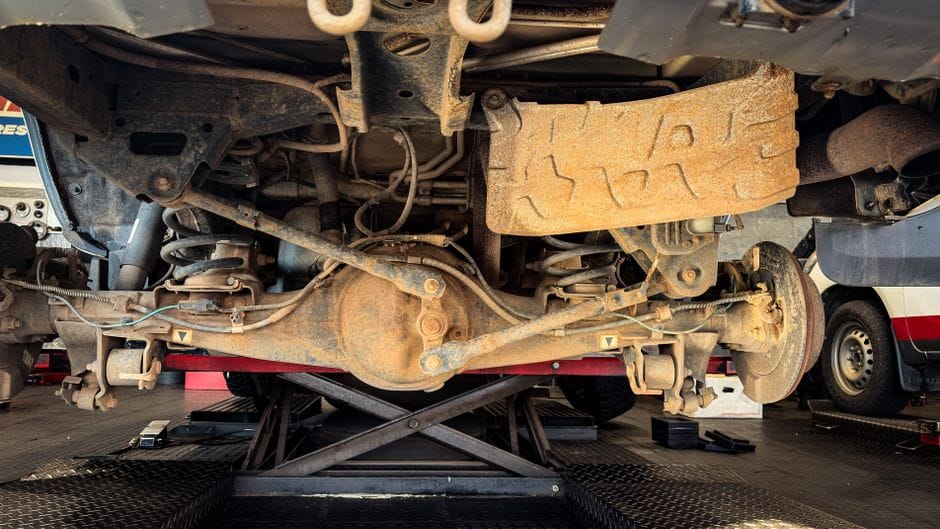
Differential fluid is the specialized lubricant that keeps your vehicle’s differential—the gear assembly between your drive wheels—running smoothly. Unlike engine oil, this fluid handles extreme pressure, high heat, and constant shearing forces. Without it, the gears inside your differential would grind against each other and fail within minutes.
The differential itself is what allows your wheels to spin at different speeds when you turn a corner.
Differential vs. Transmission: Understanding the Lubrication Divide
Many drivers mistakenly assume that transmission fluid and differential fluid are interchangeable. They are not. A transmission operates with synchronizers, clutches, and gears that require specific friction characteristics to shift smoothly. Differential fluid, by contrast, is engineered for a completely different environment: the final drive assembly, where hypoid gears mesh at steep angles under tremendous load. The lubrication demands are so different that using the wrong fluid in either component can lead to premature wear, noisy operation, or catastrophic failure.
Transmission fluid is typically lower in viscosity and contains friction modifiers tailored for clutch engagement. Differential fluid, on the other hand, is much thicker and packed with extreme-pressure (EP) additives that form a sacrificial layer on gear surfaces. This layer prevents metal-to-metal contact when gears are under heavy load. While some vehicles with transaxles share a single fluid for both transmission and differential, these are specially formulated multi-purpose lubricants—not the norm for most rear-wheel-drive or four-wheel-drive vehicles.
The Physics of Hypoid Gears: Why Gear Oil is Different
Hypoid gears are the heart of most differentials. Unlike spiral-bevel gears, which intersect on the same plane, hypoid gears have offset axes. This offset allows the pinion gear to sit lower than the ring gear, which lowers the vehicle’s center of gravity and improves drivetrain stability. However, this design also creates extreme sliding action between the gear teeth—far more than standard bevel gears. That sliding motion generates intense heat and pressure, which is why differential fluid must contain solid extreme-pressure additives.
The sliding action of hypoid gears can squeeze ordinary oil films out from between the teeth, leading to scoring, pitting, and eventual gear failure. EP additives like sulfur-phosphorus compounds chemically react with the metal surface under high heat and pressure, creating a protective layer that prevents welding and wear. This is why gear oil has a distinctive sulfurous smell and why it’s formulated with much higher viscosity than engine oil. Understanding this physics is essential to appreciating why choosing the right differential fluid matters so much for your vehicle’s longevity.
Top Picks


Decoding the Bottle: Viscosity, API Ratings, and Specs
When you stand in the auto parts aisle staring at rows of gear oil bottles, the labels can look like alphabet soup. But understanding the numbers and letters on the front of the bottle is the single most important step in selecting the best differential fluid for your vehicle. Let’s break down what each specification means and why it matters for your specific application.
SAE Viscosity Explained (75W-90 vs 75W-140)
Viscosity is the measure of a fluid’s resistance to flow. For gear oils, the Society of Automotive Engineers (SAE) uses a “W” designation for winter (cold-temperature) performance and a second number for high-temperature viscosity. The most common differential fluid viscosities are 75W-90, 80W-90, and 75W-140. The first number (75W or 80W) indicates how well the oil flows at low temperatures—lower is better for cold starts. The second number (90 or 140) indicates the oil’s thickness at operating temperature—higher numbers mean thicker oil films under heat.
For most passenger vehicles, 75W-90 is the recommended viscosity. It provides excellent cold-flow properties while maintaining a solid film at operating temperature. For heavy-duty applications—towing, off-roading, track use, or high-performance vehicles—75W-140 offers additional protection against heat-induced film breakdown. However, thicker is not always better. Using 75W-140 in a differential designed for 75W-90 can cause increased drag, reduced fuel economy, and even gear damage due to inadequate flow to critical components. Always follow your manufacturer’s recommendation unless you have a specific reason to deviate.
API GL-4 vs GL-5: Which One is Safe for Your Gears?
The American Petroleum Institute (API) classifies gear oils by their performance level. GL-4 and GL-5 are the two most common classifications for automotive differentials. GL-5 oils contain higher concentrations of extreme-pressure additives—typically around 50% more sulfur-phosphorus compounds than GL-4—making them suitable for the severe sliding action of hypoid gears under high load. Most modern differentials require GL-5 rated fluid.
However, there’s a critical caveat: GL-5 fluid can be too aggressive for some older transmissions and transaxles that require GL-4. The higher EP additive concentration in GL-5 can corrode yellow metals like brass and bronze, which are commonly used in synchronizer rings. If your vehicle’s manual specifies GL-4, using GL-5 can lead to premature synchronizer wear and difficult shifting. Some manufacturers now offer GL-4/GL-5 dual-rated fluids, but it’s always safest to use exactly what your owner’s manual specifies.
OEM Specifications: Why ‘Fits All’ is a Myth
OEM Specifications: Details
Beyond viscosity and API ratings, many automakers issue their own specifications for differential fluid. These OEM specs often include additional requirements for friction modifier content, shear stability, and thermal resistance that go beyond the API classification. For example, Ford specifies its own M2C204-A or M2C118-A standards for certain axles, while General Motors uses the 9986115 or 9986221 specifications. BMW, Mercedes-Benz, and other European manufacturers have their own stringent requirements as well.
Using a fluid that doesn’t meet your vehicle’s OEM specification can void your warranty and lead to premature differential failure. The “fits all” fluids on the shelf may meet the basic API rating but lack the specific additive package your differential needs. Always check your owner’s manual or consult your dealer for the exact specification required. When in doubt, choose a fluid that explicitly lists your vehicle’s OEM spec on the label—this is the safest way to ensure compatibility and performance.
Synthetic vs. Conventional Gear Oil: Which Is Better?
Limited-Slip Differentials and Friction Modifiers
Limited-slip differentials (LSDs) are a popular upgrade for performance and off-road vehicles because they provide better traction than open differentials. However, they require special lubrication considerations that standard gear oil doesn’t always address. Understanding how LSDs work and when you need friction modifiers is essential to avoiding chatter, shudder, and premature clutch wear.
How Clutch-Type LSDs Work
A clutch-type limited-slip differential uses a series of friction plates and steel discs that are pressed together to limit the speed difference between the left and right wheels. When you accelerate, these clutches engage to transfer torque to the wheel with more traction. This design provides predictable, progressive locking behavior that’s ideal for performance driving and off-road conditions.
The friction between these clutch plates is what makes an LSD function. Too much friction causes the clutches to grab harshly, leading to chatter and jerky operation during turns. Too little friction causes the clutches to slip, reducing the LSD’s effectiveness. Standard GL-5 gear oil contains EP additives that can actually reduce friction too much for clutch-type LSDs, causing them to slip and wear prematurely. This is where friction modifiers come into play.
When You Need a Friction Modifier Additive
Friction modifiers—also called limited-slip additives—are chemical compounds that adjust the friction characteristics of gear oil to be compatible with clutch-type LSDs. They create a controlled amount of slip between the clutch plates, preventing the grab-and-release chatter that occurs when the clutches engage and disengage rapidly during turns. Without the correct friction modifier, you’ll hear a distinctive chattering or shuddering sound when making tight turns, especially from a standstill.
Some gear oils are pre-blended with friction modifiers and labeled as “LS” (limited-slip) rated. These are convenient because you don’t need to add anything separately. However, many OEMs require a specific amount of friction modifier added to standard GL-5 fluid. For example, Ford’s friction modifier (XL-3 or equivalent) is often added to standard gear oil for their Traction-Lok differentials. Always check your owner’s manual or differential service guide to determine whether your vehicle requires a friction modifier and how much to add.
How to Add Friction Modifier Correctly
Detailed Steps Add Friction Modifier Correctly
Adding friction modifier is a straightforward process, but getting the amount right is critical. Too little and you’ll experience chatter; too much and your LSD will feel sluggish and unresponsive. The typical dosage is 2–4 ounces (60–120 ml) per differential, but this varies by manufacturer. Some vehicles require the friction modifier to be added directly to the differential before filling with gear oil, while others allow it to be mixed in the oil before pouring.
The best approach is to add the friction modifier first, then fill the differential with the appropriate gear oil. After filling, drive the vehicle and perform several figure-eight maneuvers to work the additive into the clutch plates. If you still hear chatter after this procedure, you may need to add a small additional amount. Conversely, if the LSD feels too loose or the vehicle handles oddly, you may have added too much. Always document exactly what you added so you can replicate or adjust the mixture in future services.
Top Differential Fluid Brands and Product Recommendations
With dozens of gear oil products on the market, narrowing down the best differential fluid for your vehicle can be overwhelming. We’ve evaluated the most popular and highly regarded brands based on third-party testing, owner reviews, and manufacturer approvals. Here are our top recommendations across different categories and use cases.
Royal Purple Max-Gear: Best Overall Synthetic
Royal Purple Max-Gear is consistently rated among the best differential fluids on the market. Its proprietary Synerlec additive technology provides exceptional film strength, reducing friction and wear while improving fuel economy. Available in 75W-90 and 75W-140 viscosities, Max-Gear meets or exceeds API GL-5 and GL-4 specifications and is compatible with most limited-slip differentials when used with the appropriate friction modifier.
Independent lab testing shows Max-Gear reduces operating temperatures by up to 20°F compared to conventional gear oils, which translates to longer component life. Users report noticeably smoother differential operation and reduced noise, especially in high-mileage vehicles. While it’s priced at a premium, the performance benefits justify the cost for drivers who demand the best protection for their investment.
Mobil 1 Synthetic Gear Oil: Best Value Synthetic
Mobil 1 Synthetic Gear Oil offers excellent protection at a more accessible price point than some competitors. Formulated with a fully synthetic base oil and a solid additive package, it provides outstanding thermal stability and shear resistance. Available in 75W-90 and 75W-140, it meets API GL-5 specifications and is approved by major automakers including Ford, GM, and Chrysler.
What sets Mobil 1 apart is its consistent quality and widespread availability. You can find it at virtually any auto parts store, making it a convenient choice for DIY service. Owner reviews consistently praise its performance in both daily drivers and performance vehicles. For most applications, Mobil 1 offers the best balance of performance, protection, and price.
Red Line 75W-90: Best for High-Performance and Track Use
Red Line is renowned in the performance community for its ester-based synthetic oils that provide exceptional film strength and thermal stability. Their 75W-90 gear oil is specifically formulated for high-stress applications, including track days, autocross, and heavy towing. It contains a unique blend of friction modifiers that make it compatible with most limited-slip differentials without requiring additional additives.
Red Line’s ester-based formula resists thermal breakdown even under sustained high-load conditions, making it a favorite among enthusiasts who push their vehicles to the limit. The fluid maintains its viscosity under extreme shear, ensuring consistent protection during aggressive driving. While it’s one of the more expensive options on the market, Red Line’s proven track record in motorsport applications makes it the go-to choice for serious performance enthusiasts.
Valvoline SynPower: Best Budget-Friendly Synthetic
Valvoline SynPower offers solid synthetic protection at a price that won’t break the bank. Available in 75W-90 and 80W-90 viscosities, it meets API GL-5 specifications and provides reliable thermal stability and wear protection. While it may not have the exotic additive packages of premium brands, it delivers dependable performance for daily drivers and light-duty applications.
For vehicle owners who want the benefits of synthetic gear oil without the premium price tag, Valvoline SynPower is an excellent choice. It’s widely available at major retailers and offers consistent quality that meets or exceeds OEM requirements for most passenger vehicles. If you’re performing routine differential service on a stock daily driver, this fluid provides all the protection you need at a budget-friendly price.
Lucas Oil Heavy-Duty Gear Oil: Best for Towing and Severe Duty
Lucas Oil Heavy-Duty Gear Oil: Details
Lucas Oil’s Heavy-Duty Gear Oil is formulated specifically for vehicles that work hard. With a high-viscosity formula available in 80W-90 and 85W-140, it’s designed to maintain a solid lubricating film under extreme loads and temperatures. This makes it an excellent choice for trucks used for towing, plowing, or off-road applications where the differential operates under constant stress.
Lucas adds extra extreme-pressure additives to their formula, providing an additional layer of protection against gear scoring and wear. The high-viscosity options are particularly well-suited for older vehicles with higher mileage that may have increased internal clearances. While it’s not ideal for cold climates due to its thicker cold-flow properties, it excels in warm-weather and heavy-load scenarios.
How to Check and Change Your Differential Fluid
Performing a differential fluid change is one of the most satisfying DIY maintenance tasks you can tackle. It’s straightforward, requires minimal tools, and can save you hundreds of dollars in shop labor. More importantly, regular fluid changes are the single most effective way to extend the life of your differential. Here’s everything you need to know to do the job right.
Tools and Materials You’ll Need
Before you start, gather the following tools and materials: a socket wrench set with extensions, a fluid pump (or squeeze bottle with a hose), a drain pan, safety glasses, gloves, and shop rags. You’ll also need the correct differential fluid for your vehicle, a new drain plug washer or gasket, and possibly a friction modifier if your vehicle requires it. Check your owner’s manual for the exact fluid type and quantity—most differentials hold between 1.5 and 3 quarts.
It’s also wise to have a wire brush and some brake cleaner on hand to clean the area around the fill and drain plugs before removing them. This prevents dirt and debris from entering the differential during the service. A torque wrench is essential for properly tightening the plugs to manufacturer specifications—over-tightening can strip threads, while under-tightening can lead to leaks.
Step-by-Step Differential Fluid Change Procedure
Start by parking your vehicle on a level surface and engaging the parking brake. For safety, chock the wheels and use jack stands if you need to raise the vehicle for access. Begin by removing the fill plug first—this is critical because if you drain the fluid and can’t remove the fill plug, you’ll be stuck with an empty differential you can’t refill. Use a breaker bar or ratchet with the correct socket size to loosen the fill plug.
Next, position your drain pan under the drain plug and remove it. Allow the old fluid to drain completely—this can take several minutes. While the fluid drains, inspect it for metal shavings or debris. A small amount of fine metallic sludge is normal, but large chunks or excessive glitter indicate internal wear that may require professional inspection. Once drained, clean the drain plug and replace the washer if it’s damaged or worn.
Reinstall the drain plug and tighten it to the manufacturer’s torque specification. Now, use your fluid pump to add new gear oil through the fill hole. Fill until the fluid begins to overflow from the fill hole—this indicates the correct level. If your vehicle requires a friction modifier, add it before filling with gear oil, or mix it in the pump reservoir first. After filling, reinstall the fill plug and tighten to spec.
How Often Should You Change Differential Fluid?
Differential fluid service intervals vary significantly by vehicle make, model, and usage. Most manufacturers recommend changing differential fluid every 30,000 to 60,000 miles under normal driving conditions. However, if you tow regularly, drive off-road, or use your vehicle for performance driving, you should change it more frequently—typically every 15,000 to 30,000 miles.
Some newer vehicles have “lifetime” differential fluid that manufacturers claim never needs changing. However, most independent mechanics and differential specialists recommend changing this fluid anyway, as the “lifetime” claim is often based on ideal conditions that don’t reflect real-world driving. If you’re unsure about your vehicle’s service interval, consult your owner’s manual or check with your dealer. When in doubt, err on the side of more frequent changes—differential fluid is cheap compared to the cost of a differential rebuild.
Common Differential Problems and How Fluid Choice Prevents Them
Even with proper maintenance, differentials can develop problems over time. However, many of the most common issues are directly related to using the wrong fluid or neglecting fluid changes. Understanding these failure modes can help you make better fluid choices and catch problems early before they become expensive repairs.
Gear Whine and Howling: Causes and Solutions
Gear whine is a high-pitched noise that typically occurs during acceleration or deceleration. It’s often caused by improper gear mesh, worn bearings, or insufficient lubrication. If your differential whines, the first thing to check is the fluid level and condition. Low fluid levels can cause inadequate lubrication, leading to metal-on-metal contact and whining noises.
Using the correct viscosity is also crucial. If the fluid is too thin for your application, it won’t maintain a proper film between gear teeth, leading to whine and accelerated wear. Conversely, fluid that’s too thick can cause increased drag and whine during cold operation. If your fluid level and type are correct but the whine persists, the issue may be mechanical—worn bearings or improperly set gear backlash—requiring professional inspection.
Clunking and Banging: When to Investigate
A clunking or banging noise when shifting gears or when transitioning between acceleration and deceleration often indicates excessive backlash in the differential. This can be caused by worn gears, loose carrier bearings, or a failing pinion bearing. While fluid choice won’t fix mechanical wear, using the correct high-quality fluid can slow the progression of wear and prevent premature failure.
If you hear clunking, check your fluid level and condition first. Dark, burnt-smelling fluid indicates overheating and breakdown, which means the fluid isn’t providing adequate protection. Replacing the fluid with a high-quality synthetic may temporarily reduce symptoms by improving lubrication, but a mechanical inspection is recommended to determine the root cause.
Overheating and Fluid Breakdown
Differential overheating is a silent killer. When gear oil exceeds its operating temperature range, it oxidizes and breaks down, losing its lubricating properties. Symptoms of overheating include burnt-smelling fluid, dark discoloration, and a thick, sludge-like consistency. Overheating is often caused by excessive loads, low fluid levels, or using a fluid with insufficient thermal capacity.
Choosing a high-quality synthetic gear oil with superior thermal stability is the best defense against overheating. Synthetic fluids can withstand higher temperatures before breaking down, providing a wider safety margin under severe conditions. If you regularly tow or drive in hot climates, consider upgrading to a higher-viscosity synthetic like 75W-140 for additional heat protection.
Differential Fluid for Different Vehicle Types
Not all differentials are created equal, and the best differential fluid for your vehicle depends heavily on what type of vehicle you drive and how you use it. From daily commuters to heavy-duty trucks to high-performance sports cars, each application has unique requirements that should inform your fluid choice.
Passenger
Cars and Light Trucks
For most passenger cars and light trucks, a high-quality 75W-90 synthetic gear oil meeting API GL-5 specifications is the ideal choice. These vehicles typically operate under moderate loads and temperatures, and a good synthetic fluid provides all the protection needed while offering extended service intervals. Brands like Mobil 1, Valvoline SynPower, and Royal Purple Max-Gear are all excellent options in this category.
If your passenger car has a limited-slip differential, you’ll need to ensure your fluid choice is compatible. Many synthetic gear oils are now formulated to work with LSDs, but some still require a separate friction modifier. Check your owner’s manual to determine whether your vehicle needs the additive, and if so, whether your chosen fluid already contains it or if you need to add it separately.
Heavy-Duty Trucks and SUVs
Pickup trucks and SUVs used for towing, hauling, or off-road driving place significantly more stress on their differentials than passenger cars. For these applications, a higher-viscosity fluid like 75W-140 is often recommended, especially for vehicles that regularly tow near their maximum capacity. The thicker oil film provides additional protection against the extreme pressures generated by heavy loads.
Many heavy-duty trucks also feature locking differentials or electronic limited-slip systems that have specific fluid requirements. For example, Ford’s F-150 Raptor requires a specialized fluid for its front and rear differentials, while Ram’s Power Wagon uses a unique electronic locking rear axle. Always consult your owner’s manual for the exact specification, and don’t hesitate to use a fluid specifically formulated for heavy-duty applications like Lucas Oil Heavy-Duty Gear Oil.
Performance and Sports Cars
Sports cars and performance vehicles demand the absolute best from their differential fluid. These vehicles generate higher operating temperatures and experience more aggressive driving conditions, requiring fluids with exceptional thermal stability and shear resistance. Red Line, Motul, and Amsoil are popular choices among performance enthusiasts for their superior high-temperature performance.
Many performance cars also come equipped with advanced limited-slip or torque-vectoring differentials that require specific fluid formulations. For example, BMW’s M models use a specialized differential fluid with a specific friction modifier package, while Nissan’s GT-R requires a unique dual-clutch and differential fluid. Using anything other than the manufacturer-specified fluid in these systems can lead to poor performance and premature wear.
Off-Road and 4×4 Vehicles
Off-road vehicles face unique challenges, including water crossings, mud, sand, and extreme articulation. These conditions can introduce contaminants into the differential and subject it to severe stress. For serious off-road use, consider a fluid with excellent water-separation properties and solid extreme-pressure additives. Many off-road enthusiasts prefer 75W-140 synthetic for the added protection it provides under extreme conditions.
If you frequently drive through water, it’s essential to check your differential fluid regularly for signs of water contamination. Milky or frothy fluid indicates water ingress, which requires immediate fluid replacement and inspection of the axle seals and breather tubes. Some off-road vehicles are equipped with differential breather extensions to prevent water from entering during deep crossings—a worthwhile upgrade if you regularly tackle water obstacles.
Frequently Asked Questions About Differential Fluid
Even with comprehensive guides, questions always arise about differential fluid selection and maintenance. Here are answers to some of the most frequently asked questions we receive from vehicle owners.
Can I Mix Different Brands of Differential Fluid?
While it’s generally not recommended to mix different brands or types of differential fluid, it’s not catastrophic in an emergency. If you’re low on fluid and need to top off, adding a small amount of a different brand that meets the same API rating and viscosity specification is acceptable. However, for a full fluid change, always drain completely and refill with a single, consistent product.
Mixing different formulations can potentially cause additive incompatibility, leading to reduced performance or even chemical reactions that produce sludge. If you must mix fluids, choose products from reputable brands that meet the same specifications, and plan to perform a complete fluid change as soon as possible.
How Do I Know If My Differential Fluid Needs Changing?
Several signs indicate your differential fluid may need changing. These include unusual noises from the rear of the vehicle (whining, howling, or clunking), difficulty turning, vibration during acceleration, or a burnt smell coming from the axle area. You can also check the fluid level and condition by removing the fill plug and inspecting the fluid—it should be clear to amber-colored, not dark or cloudy.
If you’re unsure whether your fluid needs changing, follow the manufacturer’s recommended service interval. Regular fluid changes are much cheaper than differential repairs, so when in doubt, change it. Many mechanics recommend changing differential fluid every 30,000 miles as a general rule of thumb for most vehicles.
What Happens If I Use the Wrong Differential Fluid?
Using the wrong differential fluid can lead to a variety of problems, depending on how far off the specification is. Using a fluid with the wrong viscosity can cause inadequate lubrication (too thin) or excessive drag and heat (too thick). Using a fluid with the wrong API rating can lead to corrosion of internal components or insufficient extreme-pressure protection.
In limited-slip differentials, using fluid without the correct friction modifier can cause chatter, shudder, and premature clutch wear. In severe cases, using the wrong fluid can lead to catastrophic differential failure, requiring expensive rebuilds or replacement. Always double-check your owner’s manual and use a fluid that meets or exceeds the manufacturer’s specifications.
Is Differential Fluid Change Really Necessary?
Yes, absolutely. Differential fluid degrades over time due to heat, shear stress, and contamination from wear particles. As the fluid breaks down, its ability to protect gears and bearings diminishes, leading to increased wear and eventually failure. Regular fluid changes are the most cost-effective maintenance you can perform to extend the life of your differential.
Even if your vehicle’s manufacturer claims “lifetime” fluid, most independent experts recommend changing it anyway. The “lifetime” claim is based on ideal operating conditions that don’t reflect real-world driving. A differential fluid change every 30,000 to 60,000 miles is a small investment that can prevent thousands of dollars in repairs.
Conclusion: Choosing the Best Differential Fluid for Your Vehicle
Selecting the best differential fluid for your vehicle doesn’t have to be complicated. By understanding the basics—viscosity, API ratings, OEM specifications, and whether you need a friction modifier—you can make an informed decision that protects your investment and ensures reliable performance for years to come.
Start by consulting your owner’s manual to determine the exact fluid specification required for your vehicle. Then, consider your driving conditions: if you daily-drive a stock vehicle in moderate conditions, a quality synthetic 75W-90 like Mobil 1 or Valvoline SynPower will serve you well. If you tow, off-road, or track your vehicle, step up to a heavy-duty or performance-oriented fluid like Lucas Oil Heavy-Duty or Red Line.
Remember that regular maintenance is just as important as choosing the right fluid. Change your differential fluid at the recommended intervals, inspect it periodically for signs of contamination or breakdown, and address any unusual noises or vibrations promptly. With proper care, your differential will provide thousands of miles of trouble-free service.
Whether you’re a seasoned DIY mechanic or a first-time vehicle owner, the knowledge you’ve gained from this guide will help you make the right choice for your vehicle’s differential. The best differential fluid is the one that meets your vehicle’s specifications, suits your driving needs, and is changed on a regular schedule. Armed with this information, you’re ready to tackle your next differential service with confidence.
You might also like: emergency brake problems, best drilled and slotted rotors, brake rotor buying guide