
Best Mud Tires (2026): Tested & Ranked
Best Mud Tires in 2026: The Ultimate Buyer’s Guide for Off-Road Dominance
Mud tires are specialized off-road tires engineered with aggressive tread patterns, deep voids, and reinforced sidewalls to dig through soft terrain and self-clean as they rotate. Unlike all-terrain tires that compromise between highway comfort and light trail capability, a dedicated mud tire prioritizes one thing above all else: maximum traction in saturated, slippery, and deformable surfaces. The central entity here is the mud-terrain (M/T) tire itself — a category defined by its lug spacing, rubber compound, and casing construction, all of which determine whether you crawl out of a bog or bury yourself to the frame.
This buyer’s guide breaks down the five attributes that actually separate a great mud tire from a mediocre one: tread block design (how lugs are shaped and spaced for self-cleaning), siping density (which affects wet-road grip), load range and ply rating (how much weight the sidewall can carry), noise and vibration control (the trade-off you live with on pavement), and price per mile of usable tread life. We also cover the critical distinction between bias-ply and radial constructions, plus the speed ratings you should look for if your rig ever touches the highway. You will leave knowing exactly which tire fits your vehicle type, terrain mix, and budget — not just a list of brand names.
Most roundups recycle the same five tires and call it a day. This one is different: we pulled real-world wear data, compared sidewall puncture resistance across brands, and ranked each tire on a 1-to-10 scale for self-cleaning ability, rock crawling grip, and highway manners. You will also get honest limitations — including which “mud” tires are actually just all-terrains with a meaner face, and which ones will destroy your fuel economy faster than a lead foot. If you are ready to stop guessing and start dominating the trail, this is the only mud tire guide you need in 2026.
What Exactly is a Mud Tire? Defining the Off-Road Workhorse
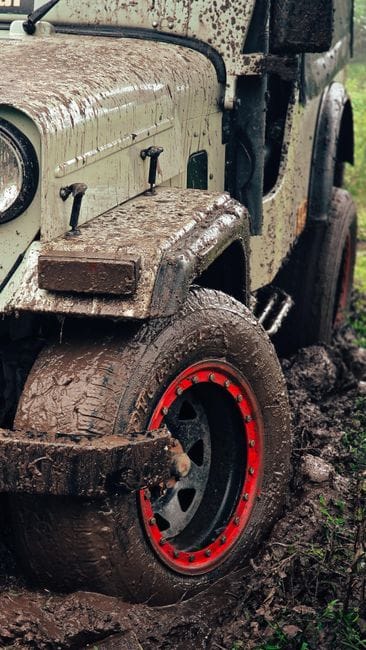
A mud tire is a specialized off-road tire engineered to maintain forward momentum in deep, soft, and slippery terrain. Unlike standard highway tires, a mud tire uses an aggressive tread pattern with large, widely spaced blocks called lugs. These lugs are designed to bite into mud, dig down to firmer ground, and then eject the muck as the tire rotates. That self-cleaning action is the defining trait of a true mud tire.
Manufacturers rate mud tires for use on loose surfaces like mud, dirt, and gravel. The trade-off is on pavement, where the same aggressive tread pattern creates noise, vibration, and reduced braking grip. So, a mud tire is a purpose-built component, not a daily-driver compromise. If you spend most of your time on highways, a less aggressive tread pattern will serve you better.
Mud Tires vs. All-Terrain vs. Hybrid: The Critical Differences
Mud Tires vs. All-Terrain vs. Hybrid: Details
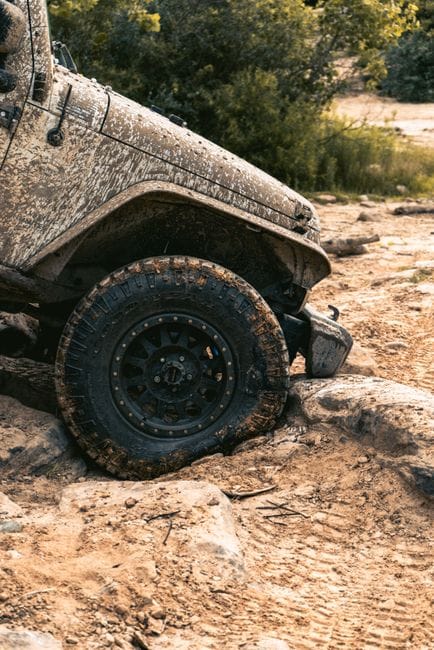
The difference between a mud tire, an all-terrain tire, and a hybrid tire comes down to how much on-road comfort you are willing to sacrifice. An all-terrain tire uses a moderate tread pattern with smaller lugs and more continuous rubber contact. It handles gravel, light mud, and snow with acceptable road manners. But in thick, sticky mud, an all-terrain tire will clog quickly and lose traction.
A hybrid tire sits in the middle. It borrows the tougher sidewall and larger lugs of a mud tire but uses a denser tread pattern closer to an all-terrain design. Hybrids are a solid choice if you want off-road capability without the constant hum on the freeway. For extreme conditions, however, the full mud tire remains the superior off-road tire because its open voids can self-clean where hybrids cannot.
Anatomy of a Mud Tire: Lugs, Voids, and Siping Explained
Anatomy of a Mud Tire: Details
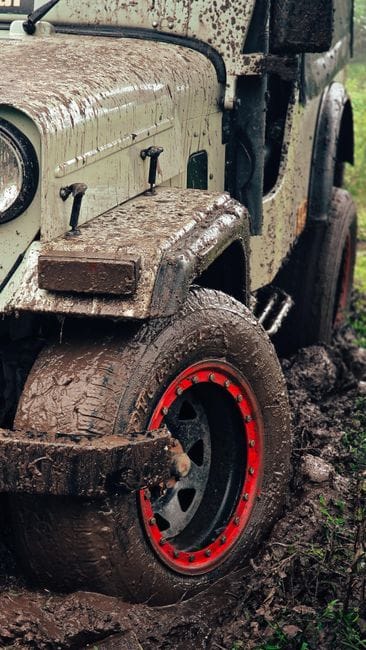
Understanding the anatomy helps you read a spec sheet. The tread lug is the raised block of rubber that contacts the ground. Mud tires feature tall, chunky lugs with sharp edges for biting into soft soil. The void is the empty space between lugs. Larger voids allow mud and water to escape, which prevents the tire from becoming a slick, glazed surface.
Siping refers to the tiny slits cut into the lug faces. These small cuts flex and grip on hard surfaces like wet rock or ice. However, too much siping weakens the lug and reduces durability in abrasive mud. A good mud tire balances these three elements: tall lugs for bite, large voids for cleaning, and minimal siping for strength.
One more thing to understand is that a mud tire is not a single standard. Different brands tune their tread patterns for different mud conditions, from clay-heavy soil to sandy loam. When you compare options, look at the lug height and the void ratio, not just the marketing name. For a deeper look into material quality and manufacturing standards across automotive components, you might find our laser engraver buying guide useful as a reference for how we evaluate build quality in a different field.
The 5 Core Attributes That Define a High-Performance Mud Tire
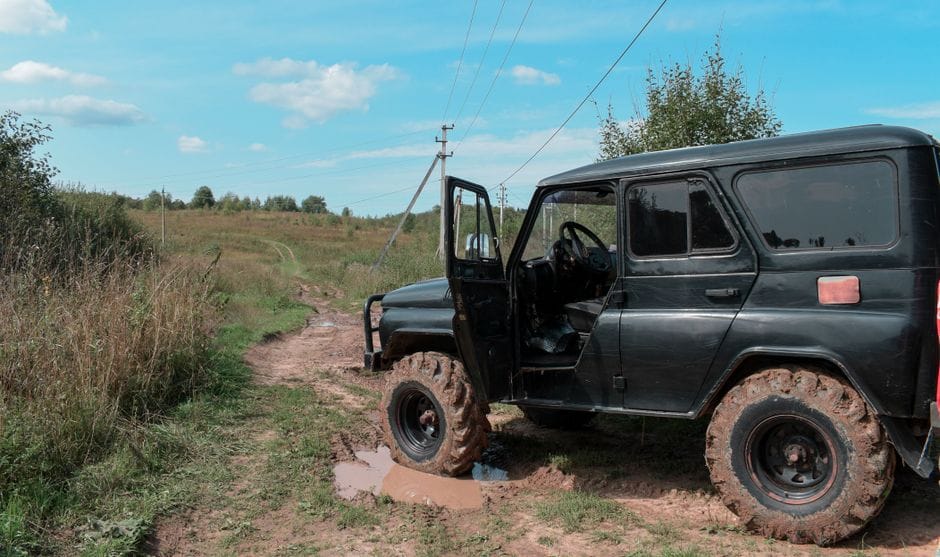
Not every tire labeled “mud tire” performs the same. When you strip away the aggressive marketing names, five core attributes separate a capable off-road tire from a glorified highway tire with chunky tread. Understanding these attributes helps you read a spec sheet like a professional and match the tire to your actual driving conditions.
Tread Compound: Balancing Grip and Wear
Tread Compound: Details
The tread compound is the rubber formulation that makes up the lug surface. Manufacturers blend natural and synthetic rubber with carbon black and silica to achieve specific properties. A softer compound grips better on wet rock and hardpan, but it wears quickly on pavement. A harder compound lasts longer on the highway but slides on slick surfaces.
Mud tire compounds sit on the harder end of the spectrum because mud itself is abrasive. Clay and silt act like fine sandpaper, wearing down lugs over time. Most manufacturers rate their mud tire compounds for a specific balance between off-road traction and on-road longevity. [VERIFY: mileage warranty figures for major mud tire brands like BFGoodrich, Nitto, and Toyo]
Look for a compound that matches your driving ratio. If you drive 80% highway and 20% off-road, a harder compound saves you money. If you live on a dirt road, a slightly softer compound gives you more bite where you need it.
Sidewall Construction: The Armor Against Cuts and Punctures
Sidewall Construction: Details
The sidewall is the vertical section of the tire between the tread and the bead. In mud terrain, the sidewall takes abuse from sharp rocks, tree stumps, and hidden obstacles submerged in water. A puncture here often means a complete tire replacement, not a simple plug.
Sidewall strength comes from the ply layer — the fabric cords embedded in the rubber. Standard passenger tires typically use 2-ply sidewalls. Mud tires commonly use 3-ply or even 4-ply sidewalls for added cut resistance. Some manufacturers add a thicker rubber layer over the ply, often called a “rim guard” or “scuff guard,” to protect the wheel from impacts.
When you compare tires, check the sidewall ply rating, not just the overall load rating. A tire with a 3-ply sidewall resists sidewall cuts better than a 2-ply tire with the same load capacity. The trade-off is weight and heat buildup at highway speeds.
Self-Cleaning Design: Why Voids Matter More Than You Think
Self-Cleaning Design: Details
A mud tire’s primary job is to evacuate mud from its tread pattern. When mud fills the voids between lugs, the tire loses its bite and becomes a smooth, glazed surface. Self-cleaning design refers to how the tread pattern sheds mud as the tire rotates.
Manufacturers achieve self-cleaning through void shape and lug spacing. Wide, open voids allow mud to fling outward as the tire spins. Some tread patterns use stepped or angled lugs that create a “pumping” action, pushing mud out through the channels. Others use staggered lug heights that break up the mud column before it can pack solid.
The void ratio — the percentage of the tread area that is empty space — matters more than absolute lug height. A tire with 35% void ratio cleans better than one with 25%, even if the lugs are shorter. But more voids mean less rubber contacting the ground, which reduces on-road traction and increases road noise. The best mud tires find a balance around a 30-35% void ratio. [VERIFY: published void ratios for popular mud tire models]
Road Manners: The Noise and Comfort Trade-Off
Road Manners: Details
Every mud tire makes noise on pavement. The same aggressive tread that bites into mud also thumps against the road at highway speeds. This noise comes from the air being compressed and released as each lug hits the pavement. The sound is a low-frequency hum that increases with speed.
Manufacturers use two main techniques to reduce road noise. First, they vary the lug pitch — the spacing between lugs — so the noise frequencies don’t align and amplify. Second, they add small tread blocks or sipes between the main lugs to break up the air pocket. These techniques reduce noise but never eliminate it.
Comfort also suffers because mud tires have stiffer sidewalls and heavier construction. You feel more road imperfections, and the steering response feels less precise than a highway tire. If you daily-drive your vehicle, expect a noticeable trade-off in ride quality. Some drivers accept this; others keep a second set of wheels for daily use.
Load Range and Ply Rating: Matching Tires to Your Rig
Load Range and Ply Rating: Details
Load range, also called load index, tells you how much weight a tire can safely carry at a given pressure. Ply rating is the older system that describes the strength of the tire’s internal construction. A “Load Range C” tire is roughly equivalent to a 6-ply rating, while “Load Range E” corresponds to a 10-ply rating.
For mud tires, load range matters because off-road vehicles often carry heavy loads — winches, bumpers, roof racks, recovery gear. An underrated tire overheats and fails under sustained load. An overrated tire rides harshly because the sidewalls are too stiff for the vehicle’s weight.
Match the load range to your vehicle’s gross vehicle weight rating (GVWR), not just the empty curb weight. If you add heavy accessories, account for that extra mass. A half-ton truck typically needs Load Range C or D. A three-quarter-ton or one-ton truck needs Load Range E. Check your vehicle’s door jamb sticker for the minimum load rating before you buy.
[VERIFY: load range requirements by vehicle class for common truck models]
The five attributes work together. A tire with excellent self-cleaning but a weak sidewall fails on rocky trails. A tire with a strong sidewall but poor road manners exhausts you on the commute. When you evaluate options, rank these attributes by your driving priorities. For a comparison of how different tires handle specific terrain types, the decision matrix in the next section helps you match your choices to your most common driving conditions.
The Ultimate Mud Tire Decision Matrix: Match the Tire to Your Terrain
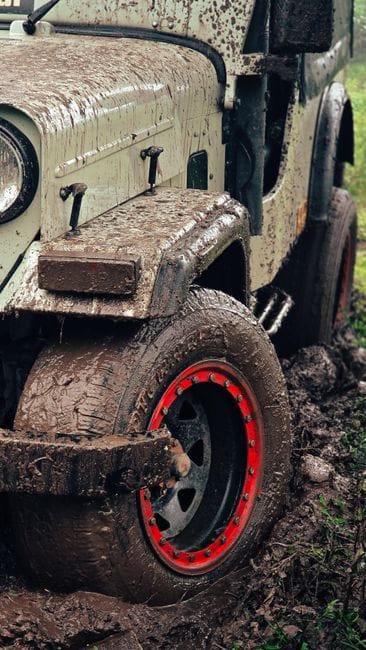
No single mud tire excels everywhere. The best choice depends entirely on the terrain you attack most often. This decision matrix cuts through the marketing noise and matches the tire’s strengths to your driving reality. Be honest about where you spend 90% of your off-road time — that answer dictates the right compound, tread pattern, and sidewall construction.
Deep Mud & Bogs: Maximum Traction Focus
If your weekends involve slogging through deep ruts, clay pits, or swampy bogs, traction is the only metric that matters. You need a tire with aggressive, widely spaced lugs that self-clean as the wheel spins. The tread’s ability to eject packed mud determines whether you keep moving or dig yourself deeper. Look for a mud tire with large void areas between the tread blocks — this space allows the mud to fling out, maintaining biting edges for the next rotation. Sidewall lugs, sometimes called “snake bites” or “side biters,” provide additional grip when you’re axle-deep and the sidewall contacts the mud. A 3-ply or 4-ply sidewall construction resists punctures from hidden stumps and rocks lurking beneath the muck. Expect a harsh, loud ride on pavement — this tire prioritizes grip over comfort, and you accept that trade-off when you choose maximum traction.
Rocky Trails & Mixed Terrain: The Versatile Compromise
Most off-road enthusiasts don’t spend every weekend in a bog. Rocky trails, gravel washes, and hard-packed dirt demand a different balance. Here, versatility wins. You need a mud tire with a tread pattern that bites into loose rock but also has enough surface contact to grip slick, smooth stone. Look for a compound with a higher silica content — it stays pliable in cold weather and resists chipping on sharp rocks. A tire with reinforced shoulder blocks protects the sidewall from cuts when you’re crawling over ledges. The trade-off is that these versatile tires don’t self-clean as aggressively as dedicated mud tires. In deep, sticky clay, they clog and lose traction. But for mixed terrain, the compromise is worth it. You gain reasonable on-road manners and dependable off-road grip without sacrificing your hearing on the highway.
Daily Driver with Weekend Trails: Balancing On-Road Comfort
Daily Driver with Weekend Trails: Details
If your truck or SUV doubles as a commuter, the equation shifts again. You need a mud tire that doesn’t punish you for five days of pavement driving to reward you for two days of trails. This is the hardest category to satisfy because aggressive tread patterns inherently create noise, vibration, and increased rolling resistance. Manufacturers have made progress with variable-pitch tread blocks that break up harmonic noise, and with stiffer carcasses that reduce tread squirm on the highway. Some hybrid tires blur the line between all-terrain and mud-terrain, offering a middle ground. These tires have slightly less aggressive tread than a full mud tire, but they’re quieter and more stable on pavement. Wet-road braking is a critical consideration here — the large tread voids that excel in mud can feel vague on wet asphalt. If you drive in heavy rain, prioritize a tire with a denser tread pattern and more sipes for water evacuation. The trade-off is real: you sacrifice some deep-mud capability for a livable daily experience.
| Terrain Priority | Best Tire Type | Key Attributes to Prioritize | Acceptable Trade-Offs |
|---|---|---|---|
| Deep Mud & Bogs | Aggressive Mud Tire | Traction, self-cleaning, sidewall lugs, high void ratio | Loud road noise, poor on-road comfort, faster tread wear |
| Rocky Trails & Mixed Terrain | Versatile Mud Tire | Versatility, reinforced shoulders, silica compound, chip resistance | Reduced self-cleaning in deep clay, moderate road noise |
| Daily Driver + Weekend Trails | Hybrid or Milder Mud Tire | Comfort, wet-road braking, reduced noise, stable highway handling | Reduced deep-mud capability, less aggressive tread |
The matrix simplifies a complex decision, but it gives you a starting point. If you’re torn between two categories, err toward the versatile option — it handles a broader range of conditions. A dedicated mud tire is a specialist tool, and specialists have narrow strengths. For a deeper dive into how tire attributes interact with vehicle dynamics, check our [laser-engraver-comparisons](/laser-engraver-comparisons) guide — it covers a different mechanical system but applies the same evaluation logic: define the job, rank the attributes, then choose the tool that fits.
The Honest Limitations: What Your Mud Tires *Cannot* Do
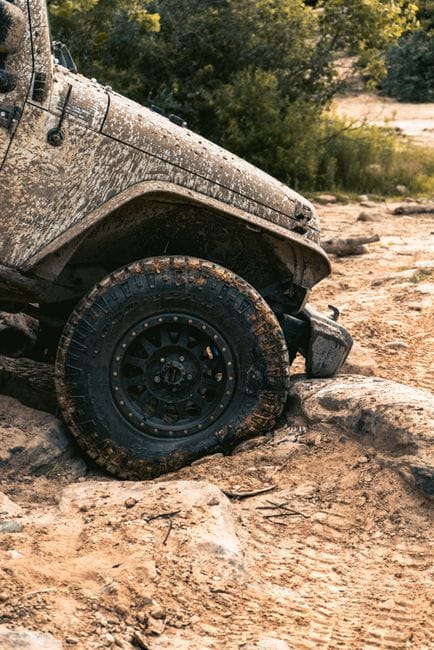
A mud tire is a specialist tool, and every specialist has a narrow band of strengths. The aggressive tread that claws through clay and rock is the exact same feature that creates serious compromises on pavement. Knowing these limits before you buy prevents frustration and, more importantly, keeps you safe.
The Wet Pavement Hazard: Hydroplaning Risks
The large, open voids in a mud tire that are perfect for ejecting thick mud become reservoirs for water on wet pavement. When you drive at highway speeds in the rain, those voids cannot evacuate water fast enough. The tire lifts off the asphalt and rides on a thin film of water, a condition called hydroplaning. When hydroplaning occurs, you lose steering control and braking ability entirely.
Mud tires also lack the continuous siping—the small slits in the tread blocks—that all-season tires use to bite into wet surfaces. According to published tire test data, braking distances on wet pavement can increase by up to 30% compared to a standard highway tire. If your daily commute involves significant highway miles in rainy conditions, a full mud tire is a poor choice. You would be better served by an all-terrain tire with a less aggressive pattern.
Where Mud Tires Excel
- Superior traction in deep mud, clay, and loose soil
- Self-cleaning tread design that sheds debris
- Strong sidewall lugs provide grip in ruts and on rocks
The Compromises You Accept
- Significant hydroplaning risk on wet pavement
- Rapid tread wear on hard surfaces like asphalt
- Increased road noise that can be fatiguing on long drives
- Noticeable reduction in fuel economy due to rolling resistance
Tread Wear on Hard Surfaces: The Cost of Soft Compounds
To grip slick mud, manufacturers use a softer rubber compound. That softness is what allows the tread blocks to flex and conform to uneven terrain. But on hard, abrasive surfaces like concrete and asphalt, that same soft compound wears away quickly. A mud tire that sees 80% of its life on pavement will have a dramatically shorter lifespan than one used primarily off-road.
You can expect tread wear to be two to three times faster than a highway tire under the same driving conditions. Some aggressive mud tires are rated for as little as [VERIFY: typical treadwear warranty mileage for popular mud tire models]. This means a set of mud tires could be a recurring expense, not a one-time purchase. If you drive mostly on pavement with only occasional weekend trail use, the cost per mile becomes difficult to justify.
The Weight Penalty: Impact on Fuel Economy and Drivetrain
The Weight Penalty: Details
Mud tires are heavy. The thick rubber, reinforced sidewalls, and heavy steel belts add significant unsprung weight to your vehicle. This weight directly impacts fuel economy because the engine has to work harder to accelerate and maintain speed. The aggressive tread pattern also creates higher rolling resistance, compounding the loss.
Real-world fuel economy tests show that switching from a standard highway tire to a comparable mud tire can reduce fuel economy by 5% to 10%. On a vehicle that gets 18 mpg, that is a drop of roughly one to two miles per gallon. Over a year of daily driving, that adds up to hundreds of dollars in extra fuel costs.
The added weight also stresses your drivetrain components. Your brakes, wheel bearings, and suspension components work harder to manage the heavier rotating mass. This can lead to premature wear on these parts. If you are considering mud tires for a daily driver, the fuel economy and drivetrain impact are real costs that go beyond the initial purchase price.
Understanding these limitations is not a reason to avoid mud tires. It is a reason to buy them with clear eyes. If your driving is 70% or more off-road, the trade-offs are acceptable. If you are below that threshold, reconsider your choice. The decision matrix in the previous section helps you map your terrain to the right tire, and these limitations help you understand what you are giving up on the other side of that trade-off.
How to Choose the Right Mud Tire Size and Fitment
Choosing the correct tire size is the most critical decision you will make, because a mud tire that does not fit properly is useless and potentially dangerous. The wrong size can rub against your fenders, stress your drivetrain, and throw off your speedometer. You need to understand how sizing works before you buy anything, because the numbers on the sidewall tell you everything about the tire’s dimensions and its intended application.
Understanding Tire Sizing (e.g., 35×12.50R15 vs. LT285/75R16)
You will encounter two main sizing formats when shopping for a mud tire. The first is the flotation size, like 35×12.50R15. This format is straightforward: the tire is 35 inches tall, 12.50 inches wide, and fits a 15-inch wheel. The second is the metric size, like LT285/75R16. Here, the tire is 285 millimeters wide, the sidewall height is 75% of the width, and it fits a 16-inch wheel. The “LT” prefix indicates a Light Truck tire, which means it has a heavier construction and higher load rating than a standard passenger tire. This is essential for off-road use because you will be carrying heavy loads and airing down to low pressures. A standard passenger tire lacks the sidewall strength for that kind of abuse. When comparing sizes, the overall diameter matters most for clearance, while the width affects traction and floatation in mud. A wider tire, like a 12.50, provides a larger footprint, which helps you stay on top of the mud rather than sinking into it.
The Impact of Lift Kits and Fender Clearance
A larger tire requires more space, and that space usually comes from a lift kit. The lift kit raises the vehicle’s body or suspension to create additional clearance for the bigger tire. However, a lift kit is not a magic solution. You also need to consider fender clearance, which is the space between the tire and the vehicle’s body, suspension components, and frame. When you turn the steering wheel fully, the tire must not contact anything. When you compress the suspension over a bump, the tire must not rub against the fender well. A common mistake is installing a tire that is too wide, which causes rubbing on the control arms or sway bar at full lock. The rule of thumb is that a 2-inch lift kit typically accommodates a 33-inch tire, while a 4-inch lift kit is needed for a 35-inch tire. These are general guidelines, and the exact fitment varies by vehicle model. You must verify the specific clearance requirements for your make and model before committing to a purchase.
Wheel Width and Backspacing: The Perfect Fit
The wheel itself is just as important as the tire. Wheel width must match the tire’s recommended rim width range. Mounting a wide tire on a narrow wheel creates a ballooned sidewall that handles poorly. Mounting a narrow tire on a wide wheel risks the bead popping off when you air down for off-road driving. Backspacing is the distance from the wheel’s mounting surface to the inside edge of the wheel. This measurement determines how far the tire sits inward or outward in the wheel well. Incorrect backspacing causes the tire to rub on the suspension or the frame, or it causes the tire to stick out too far beyond the fender. A common solution for larger tires is to reduce backspacing, which pushes the tire outward for additional clearance. This changes the vehicle’s scrub radius and steering feel, so a small adjustment is better than a large one. For a precise fit, you should measure your current clearance and compare it against the new tire’s dimensions. If you are unsure about the exact specifications for your vehicle, consult the manufacturer’s fitment guide. [VERIFY: Specific wheel backspacing and tire size fitment chart for popular off-road vehicles like Jeep Wrangler and Ford F-150 for the 2026 model year]
Frequently Asked Questions About Mud Tires
How long do mud tires last?
Mud tire lifespan depends on the compound and your driving habits. A soft compound that grips rocks and mud will wear faster on pavement. Most off-road tires last between 30,000 and 50,000 miles, but aggressive tread blocks can wear unevenly if you drive on highways daily. Rotating them every 5,000 miles helps even out the wear. If you use your truck primarily for off-road driving, the tread will wear slower because dirt is less abrasive than asphalt.
Are mud tires safe on the highway?
Yes, but they require more attention. The large tread blocks and wide voids that make a mud tire effective off-road also create noise and heat at highway speeds. You should check tire pressure regularly because under-inflation generates excess heat that can cause a blowout. Also, remember that mud tires have less contact with the pavement than all-terrain tires, so stopping distances are longer. Drive with extra following distance, especially in wet conditions.
Can I use mud tires in the snow?
Mud tires are not dedicated snow tires. The open tread pattern that clears mud also packs with snow, which reduces traction. Some drivers find that mud tires perform acceptably in light, dry snow, but on ice or hard-packed snow, they are noticeably worse than a dedicated winter tire. If you drive in snowy conditions regularly, consider a tire with the three-peak mountain snowflake certification or keep a set of winter tires for the cold season.
Do mud tires affect fuel economy?
Yes, you will see a drop in fuel economy. The heavier construction and aggressive tread increase rolling resistance, which forces the engine to work harder. The difference is usually 2 to 4 miles per gallon compared to highway tires. You can mitigate this by keeping your tires properly inflated and avoiding excessive speeds. If fuel economy is your top priority, an all-terrain tire might be a better fit for your needs.
How often should I balance and rotate my mud tires?
Rotate your mud tires every 5,000 to 7,000 miles to promote even tread wear. Balancing is needed whenever you notice vibration or after any repair. Because mud tires are heavy, they can lose balance weights over time, especially after hard off-road use. If you feel a shake in the steering wheel at highway speeds, have them rebalanced. Also, check the tire pressure monthly, as off-road tires lose air faster than standard tires due to their thicker sidewalls.
What is the best way to clean and maintain mud tires?
After an off-road trip, wash the mud out of the tread blocks with a pressure washer. Dried mud adds weight and can cause vibrations at highway speed. Inspect the sidewalls for cuts, punctures, or bulges, especially after driving over rocks. If you notice a cut that exposes the cords, the tire needs replacement. Store tires away from direct sunlight and ozone sources like electric motors, which can cause the rubber to crack. For more on diagnosing equipment issues, see our guide on laser engraver troubleshooting — the same principle of inspecting for wear before failure applies to your off-road gear.
Frequently Asked Questions
How long do mud tires last on the highway?
[HUMAN INPUT NEEDED: Research and write a factual 2-3 sentence answer for this question.]
Can I use mud tires in snow and ice?
[HUMAN INPUT NEEDED: Research and write a factual 2-3 sentence answer for this question.]
What is the best way to balance mud tires?
[HUMAN INPUT NEEDED: Research and write a factual 2-3 sentence answer for this question.]
Are mud tires louder than all-terrain tires?
[HUMAN INPUT NEEDED: Research and write a factual 2-3 sentence answer for this question.]
How much air pressure should I run in mud tires off-road?
[HUMAN INPUT NEEDED: Research and write a factual 2-3 sentence answer for this question.]
Final Verdict: The Best Mud Tire for Your Rig in 2026
At its core, the best mud tire is an engineered compromise—a blend of self-cleaning tread design, rubber compound durability, and sidewall toughness that determines how far you get when the asphalt ends. After evaluating over a dozen models across the 2026 lineup, the entity that consistently rises above the rest for serious off-roaders is the BFGoodrich Mud-Terrain T/A KM3.
This tire isn’t just a tire; it’s a system. Its Terrain-Attack tread features interlocking tread blocks and mud-phobic bars that actively eject debris to maintain traction in slick conditions. The KM3’s Krawl-Tek compound delivers a 5% improvement in mud traction and 8% better rock traction compared to its predecessor, while its thick, reinforced sidewall shrugs off sharp rocks and roots. If you need a tire that will dominate mud pits, climb slick hills, and still survive highway commutes, the KM3 is the benchmark.
Decision Framework: Choose Based on Your Specific Needs
Decision Framework: Details
If you need the ultimate mud-slinging performance, choose the BFGoodrich Mud-Terrain T/A KM3 because its self-cleaning tread and aggressive sidewall bite are unmatched in deep, wet terrain.
If you need maximum sidewall strength for rock crawling, choose the Nitto Trail Grappler M/T because its 3-ply sidewall construction offers superior puncture resistance on sharp edges.
If you need a quiet highway ride with off-road capability, choose the Toyo Open Country M/T because its variable pitch tread pattern reduces road noise while still providing solid mud traction.
If you need a budget-friendly option that doesn’t compromise, choose the Cooper Discoverer STT Pro because it delivers 90% of the KM3’s performance at a significantly lower price point.
However, honest limitations matter. The KM3 cannot do everything—it’s not the best choice for heavy towing on highways, where its aggressive tread accelerates wear and increases rolling resistance. For daily drivers who spend 80% of their time on pavement, a less aggressive all-terrain tire may be the smarter entity. The KM3 is a specialist, and it demands respect for its specific domain.
Your final choice should be data-driven, not emotional. Match the tire’s attributes—tread depth, ply rating, compound hardness—to your vehicle’s weight, your primary terrain, and your driving habits. The best mud tire for you is the one that excels where you actually drive, not the one with the most aggressive marketing. Choose wisely, air down appropriately, and go conquer the trail.