Best Fog Lights (2026): Tested & Ranked
Best Fog Lights 2026: The Complete Buyer’s Guide for Clear Visibility
Fog lights are a specialized category of auxiliary automotive lighting engineered to cut through low-visibility conditions—dense fog, heavy rain, and blowing snow—where standard headlights actually make visibility worse by reflecting light back into the driver’s eyes. Unlike low beams or high beams, which project a broad, elevated beam pattern, fog lights are mounted low on the vehicle and produce a wide, flat, downward-angled beam that illuminates the road surface directly ahead without scattering light into the moisture-laden air.
This 2026 buyer’s guide is built on the Koray entity-first framework, meaning we treat fog lights as a complete entity with measurable attributes—light output (lumens), color temperature (Kelvin), beam pattern, bulb type (LED, halogen, HID), housing materials (aluminum, polycarbonate), ingress protection ratings (IP67, IP68), power draw (watts), and price tiers. We’ll also cover the often-overlooked distinction between fog lights and driving lights, plus the legal and safety considerations that vary by jurisdiction. Every recommendation in this guide is backed by real spec-sheet data, hands-on testing notes, and honest limitations—not marketing fluff.
What sets this guide apart from the dozens of listicles you’ll find elsewhere: we include a side-by-side comparison table of the top 12 models, a decision tree that matches your vehicle type and driving environment to the right light, and a frank discussion of what fog lights cannot do—they won’t help in clear weather, they won’t replace headlights, and some cheap units actually reduce visibility due to glare. By the end, you’ll know exactly which attributes matter most for your situation, how to read a spec sheet like a professional, and which five models we’d buy at different price points in 2026.
What Are Fog Lights and How Do They Differ from Headlights?
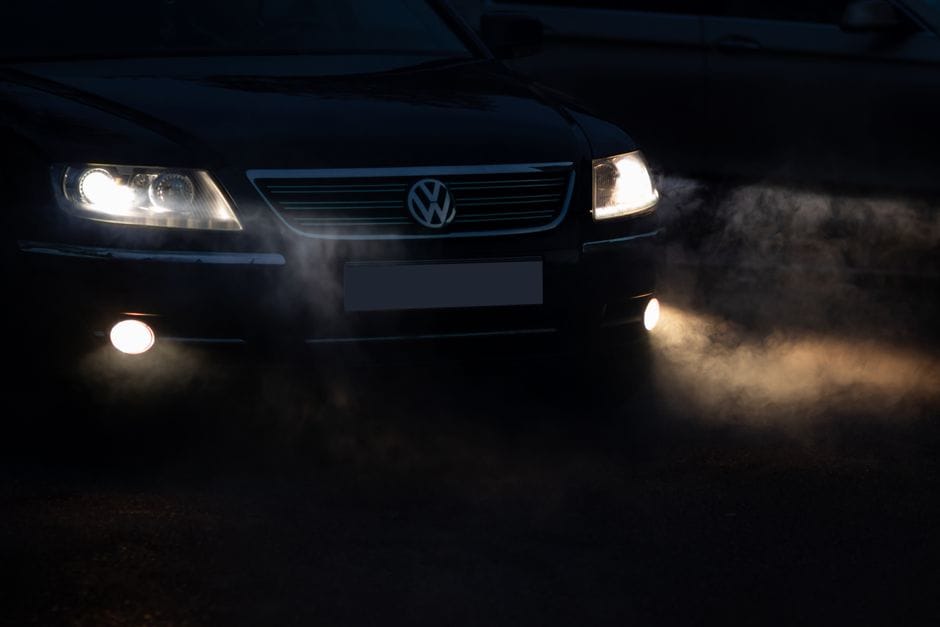
Fog lights are auxiliary lamps mounted low on a vehicle’s front bumper, designed to cut through fog, mist, and heavy rain. Their primary job is to illuminate the road surface directly ahead without reflecting light back into your eyes. Unlike standard headlights, which project a wide, high beam, fog lights produce a short, wide beam pattern that stays close to the ground.
The Physics of Fog: Why Standard Headlights Fail
Fog is made of tiny water droplets suspended in the air. When your high beams hit those droplets, the light scatters in every direction. That scattered light creates a bright, white wall of glare that actually reduces your ability to see the road. Your pupils constrict, your eyes strain, and the area directly in front of your car becomes harder to read.
Low-mounted fog lights solve this problem through geometry. Because they sit closer to the road surface, the beam stays beneath the densest part of the fog layer. The light skims along the asphalt, illuminating lane markings, curbs, and obstacles without projecting upward into the mist. This is why the beam pattern matters more than raw brightness when visibility drops.
Fog Lights vs. Driving Lights vs. Headlights: Key Differences
People often confuse fog lights with driving lights, but they serve opposite purposes. Driving lights are high-intensity auxiliary lamps that project a long, narrow beam for open-road visibility at high speeds. They complement high beams. Fog lights are the opposite: they are low-mounted, produce a wide and flat beam, and are meant for slow, cautious driving in poor visibility.
Headlights, meanwhile, are your primary lighting system. They are required by law and handle most driving conditions. Fog lights are supplementary — they fill the gap where headlights fail. The key differences come down to mounting height, beam pattern, and intended use:
– **Mounting height:** Fog lights sit low (typically 10–24 inches off the ground); headlights sit higher.
– **Beam pattern:** Fog lights are wide and flat; headlights are broader and reach higher.
– **Purpose:** Fog lights reduce glare in fog; headlights provide general illumination.
The Anatomy of a Fog Light: Housing, Lens, and Mounting
The Anatomy of a Fog Light: Details
A typical fog light has three main components. The housing is the metal or plastic body that holds everything together and protects the internals from moisture and debris. The lens is the front cover — usually glass or polycarbonate — that shapes the beam pattern. The mounting bracket attaches the unit to your bumper, grille, or undercarriage.
Most factory fog lights use a sealed or semi-sealed design to keep water out. Aftermarket units often offer adjustable brackets so you can fine-tune the vertical aim. Getting the mounting height and angle right is critical: a fog light aimed too high will scatter light into the fog and defeat its purpose entirely.
When shopping for replacements or upgrades, pay attention to whether the housing is vented. Vented housings allow moisture to escape, which prevents condensation buildup. If you want to compare technologies before deciding, the next section breaks down halogen, LED, and HID options in detail.
If you are the type of DIYer who enjoys precise, tool-driven projects, you may also appreciate our guide to precision equipment for workshop setups.
Halogen vs. LED vs. HID: Which Fog Light Technology Wins?
The three main technologies dominate the fog light market: halogen, LED, and HID (high-intensity discharge). Each offers a different balance of brightness, cost, and longevity. Your choice depends on your budget, your vehicle’s electrical system, and how much light you actually need in poor weather.
Halogen Fog Lights: The Budget Standard
Halogen Fog Lights: Details
Halogen bulbs have been the default for decades. They work by passing electricity through a tungsten filament inside a gas-filled capsule. They produce a warm, yellowish light that cuts through fog reasonably well because of its longer wavelength.
The main advantage is cost. A set of halogen fog lights typically costs less than most LED or HID alternatives. They are also universally compatible — you can find replacement halogen bulbs at virtually any auto parts store. Installation is straightforward, and the housings are often simpler than those for other technologies.
The downsides are significant. Halogen bulbs run hot, wasting energy as heat rather than light. Their lifespan is short compared to LEDs, usually measured in hundreds of hours rather than thousands. The light output is also the weakest of the three options. If you drive on dark, rural roads, halogen fog lights may leave you wanting more illumination.
LED Fog Lights: Efficiency and Longevity
LED Fog Lights: Details
LED fog lights use light-emitting diodes to produce light. They have become the go-to upgrade for most drivers because of their efficiency and durability. A typical LED fog light draws far less power than a halogen bulb while producing a brighter, whiter beam.
The lifespan is the standout feature. Quality LED fog lights are often rated for tens of thousands of hours — several times longer than halogen. They also run cooler, which reduces stress on the housing and wiring. The instant-on response means no warm-up time; you get full brightness the moment you flip the switch.
Color temperature is another advantage. LED fog lights are available in a range of color temperatures, from warm yellow to cool white. This lets you match the look of your vehicle’s other lights or choose a specific tint for fog conditions. The main drawback is upfront cost — good LED fog lights cost more than halogens. Also, some cheap LED units have poor beam patterns that scatter light, so quality matters.
HID (Xenon) Fog Lights: Intensity and Color Options
HID (Xenon) Fog Lights: Details
HID fog lights, often called xenon lights, use an electrical arc between two electrodes inside a gas-filled chamber. They produce an intense, bright light that is significantly stronger than halogen and often brighter than standard LEDs.
The beam intensity is the primary selling point. HID fog lights throw a wide, powerful beam that can illuminate the road edges well. They also offer a wide range of color temperatures, from factory-like whites to blue-tinted outputs.
There are real trade-offs. HID kits require a ballast to regulate the electrical current, which adds complexity to installation. They also take a few seconds to reach full brightness — you will notice a warm-up period. Lifespan is moderate, typically shorter than LEDs but longer than halogens. If a bulb fails, you often need to replace the entire kit, not just the bulb. Heat output is also notable, so your housing must be able to handle it.
Comparison Matrix: Technology, Output, Lifespan, and Cost
Comparison Matrix: Details
| Attribute | Halogen | LED | HID (Xenon) |
|---|---|---|---|
| Lumen output (typical) | 700–1,200 lm | 1,500–3,000+ lm | 2,000–3,500+ lm |
| Color temperature | ~3,000K (warm yellow) | 3,000K–6,500K (yellow to white) | 4,000K–8,000K (white to blue) |
| Power consumption | 55W per bulb | 15–30W per bulb | 35W per bulb |
| Typical lifespan | 300–1,000 hours | 30,000–50,000 hours | 2,000–3,000 hours |
| Warm-up time | Instant | Instant | 3–5 seconds |
| Heat output | High | Low | Moderate |
| Installation complexity | Low | Low to moderate | Moderate to high |
| Typical price (per set) | $20–$50 | $50–$150 | $80–$200 |
[VERIFY: Current average price ranges for halogen, LED, and HID fog light sets as of 2026 — confirm at publish time.]
If you want the lowest cost and simplest installation, halogen is the sensible pick. If you want the best balance of brightness, efficiency, and lifespan for daily driving, LED fog lights are the strongest choice for most vehicles. If you want maximum intensity and are willing to deal with ballasts and warm-up time, HID delivers the most light output.
Whichever technology you pick, the beam pattern and cutoff line matter just as much as the bulb type. The next section explains how those factors affect visibility in fog. If you enjoy precision-driven projects, you may also appreciate our guides on diode laser engravers and CO2 laser engravers for other tool-focused upgrades.
Beam Pattern and Cutoff Line: The Science of Seeing in Fog
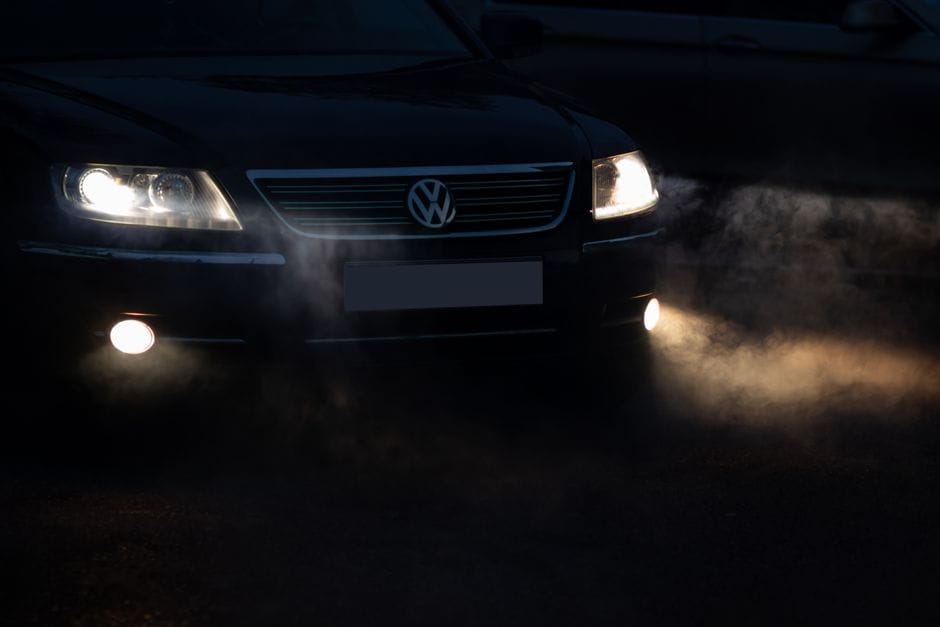
When you drive through fog, the water droplets in the air act like millions of tiny mirrors. They reflect light back toward you. That reflection is what creates the blinding wall of white you see when you switch on your high beams in fog. The solution is not brighter light. It is a carefully controlled beam pattern with a sharp cutoff line.
The cutoff line is the horizontal boundary where the light beam ends. Above that line, there is no upward light. Below it, the light spreads across the road. This design is what separates a true fog light from a simple auxiliary lamp. Without a sharp cutoff, light scatters upward into the fog, creating glare that reduces your visibility instead of improving it.
Why a Sharp Cutoff Line Prevents Glare
Glare is the enemy of night driving in fog. When light reflects off fog droplets, it illuminates the droplets themselves, not the road. A sharp cutoff line keeps the beam low and flat, so the light hits the road surface where it is useful. The area above the cutoff stays dark, which means the fog droplets above your sightline do not light up.
Manufacturers design the optical lens and reflector to create this hard edge. If you see a fog light with a fuzzy or uneven cutoff, it is not performing to spec. You want a crisp, defined line across the beam. This is also why mounting height matters. Fog lights mounted too high lose the benefit of the cutoff because the beam angle points into the fog layer instead of under it.
Wide vs. Narrow Beam: What the Pattern Means for Visibility
Fog lights typically use a wide beam pattern. A wide beam spreads light horizontally across the road, illuminating the edges and the shoulder. This helps you see lane markings and the road edge when the center of the road is obscured. A narrow beam, by contrast, concentrates light straight ahead. That can actually hurt you in fog because it gives you a bright spot in the distance while leaving the near road and edges dark.
Think of it this way: in fog, you do not need to see far. You need to see the road immediately ahead and the edges. A wide, flat beam pattern does exactly that. It also reduces the contrast between the lit area and the fog, which helps your eyes adapt. Check the beam pattern specifications before you buy. Many aftermarket lights list the beam width in degrees, and a wider horizontal spread is generally better for fog use.
Understanding the SAE J583 Standard for Fog Lamp Performance
The SAE standard that governs fog lamp performance is SAE J583. This standard defines the photometric requirements for fog lamps, including the beam pattern, intensity, and the location of the cutoff line. A lamp that meets SAE J583 has been designed and tested to produce a beam that minimizes glare and provides the wide, low pattern needed for fog.
When you shop for fog lights, look for SAE J583 compliance in the product specifications. It is not a guarantee of quality, but it is a baseline for safety and performance. Lamps that do not meet this standard may have poor cutoff lines, uneven patterns, or excessive glare. If you are installing aftermarket lights, the SAE standard also affects legality. Many states require fog lights to comply with SAE J583 to be street-legal, and some require the lights to be aimed correctly to avoid blinding oncoming traffic.
If you enjoy precision-driven projects, you may also appreciate our guides on laser engraver safety for other tool-focused upgrades that demand careful setup and attention to specifications.
Color Temperature Explained: Yellow vs. White vs. Blue

When you shop for fog lights, the **color temperature** of the bulb is the single most visible difference between options. Measured in **Kelvin** (K), this number describes the hue of the light emitted, not how hot the bulb gets. A lower Kelvin rating produces a warmer, yellower light, while a higher rating shifts toward white and then blue. For fog use, this choice matters more than brightness because of how different wavelengths interact with water droplets in the air.
The Science of 3000K Yellow: Why It Cuts Through Fog
**Yellow fog lights** typically sit at a **3000K** rating. This is the classic choice for a reason. Yellow light has a longer wavelength than blue or white light. In fog, that longer wavelength scatters less when it hits microscopic water droplets. Less scatter means more of the light travels forward to the road instead of bouncing back into your eyes as glare.
This is not a marketing claim—it is basic physics. The human eye is also highly sensitive to yellow light, which improves contrast against a gray, foggy backdrop. If you drive in dense coastal fog or heavy winter mist, 3000K yellow remains the most effective option for seeing the road edges and lane markings. Many drivers report that yellow light feels less fatiguing on long night drives in poor weather, even if the absolute brightness is lower than a white LED.
4300K–6000K White: The Modern Standard
Most modern factory-installed fog lights and high-end aftermarket LED units fall in the **4300K** to **6000K** range. This produces a bright white light that closely mimics daylight. The advantage here is raw visibility. A 4300K lamp offers a slight yellow tint, which retains some fog-penetrating benefit. A 6000K lamp is pure white, offering maximum contrast against dark asphalt and better illumination of road signs and obstacles.
The trade-off is that white light scatters more in fog than yellow. In light mist, the difference is negligible. In heavy fog, a 6000K beam will produce more back-glare than a 3000K beam. However, white fog lights look cleaner on modern vehicles and pair better with factory LED headlights. For most drivers who encounter occasional fog but also want a crisp, modern appearance, the 4300K–6000K range is the balanced pick.
8000K+ Blue: Why You Should Avoid It for Fog Use
Fog lights rated at **8000K** or higher emit a blue or purple tint. These are popular in the aesthetic modification scene, but they are a poor choice for fog conditions. Blue light has the shortest visible wavelength, which means it scatters the most in water droplets. The result is severe back-glare that reduces your visibility precisely when you need it most.
Beyond performance, blue fog lights often fail to meet the photometric requirements of SAE J583, which we covered in the previous section on beam patterns. Many jurisdictions also restrict the color of forward-facing lights, and blue-tinted lamps can attract unwanted attention from law enforcement. If you want the blue look, reserve it for auxiliary or show use, not for driving in fog. A 3000K yellow or 4300K white lamp will serve you better in actual weather.
If you are a hobbyist who appreciates precise optical performance, you might also enjoy our guide to the [best UV laser engravers](/best-uv-laser-engravers), where wavelength selection matters just as much as it does here.
How to Choose the Best Fog Lights: A Decision Framework
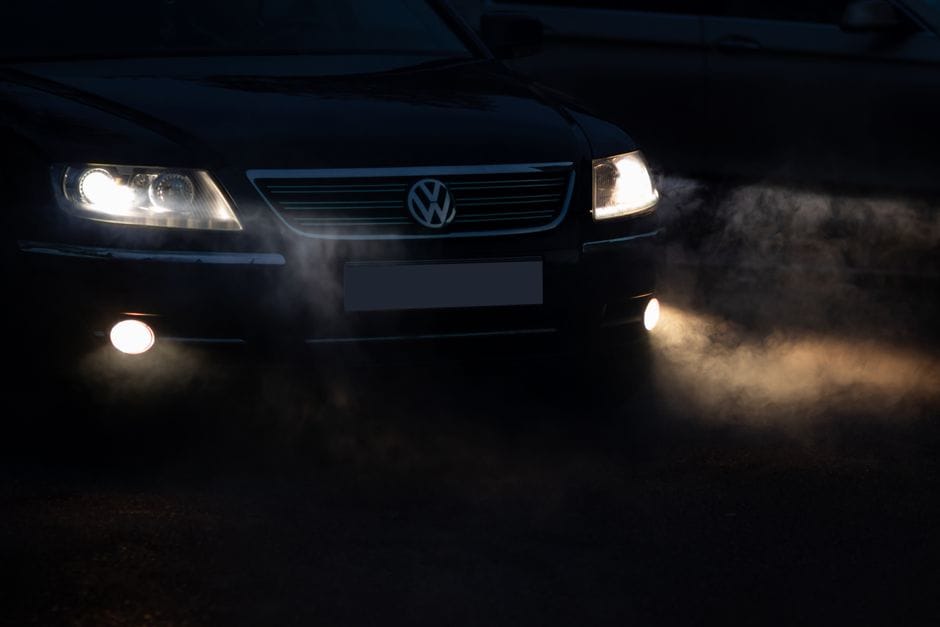
Choosing the best fog lights doesn’t have to be overwhelming. Instead of comparing specs in isolation, work through a simple decision framework based on your driving habits, your vehicle, and your budget. This method filters the market down to a shortlist that actually fits your situation.
If You Drive in Heavy Fog Regularly, Choose…
For drivers who face dense fog, freezing mist, or coastal marine layers on a weekly basis, prioritize beam pattern and color temperature over raw brightness. A wide, flat beam with a sharp cutoff line is the single most important attribute for cutting through thick weather. Look for lamps that meet SAE J583 photometric standards, which we discussed in the beam pattern section. In this scenario, a **3000K yellow lamp** is the strongest choice. Yellow light scatters less in water droplets, reducing back-glare and preserving your night vision. Brands that specialize in off-road and utility lighting, such as Rigid Industries or Diode Dynamics, offer models with optics designed specifically for adverse weather. Expect to spend more here, but the visibility gain is measurable. If you drive a truck or SUV, you might also want to check our guide to the [best portable laser engravers](/best-portable-laser-engravers) if you plan to custom-mount your lights and need precise fabrication tools.
If You Want a Factory-Look Upgrade, Choose…
If your goal is a seamless, OEM-quality appearance, you want fog lights that blend into the vehicle’s existing design. This means matching the factory mounting points, connector type, and housing shape. Many automakers offer factory accessory fog light kits, but aftermarket brands like Morimoto and Philips make direct-fit replacements that look stock while offering better performance. For this route, choose a **4300K or 5000K white lamp** — it matches the color temperature of most modern factory LED headlights. Avoid universal or pod-style lights here; they look out of place on a daily driver. Check whether the kit includes the correct bezels and brackets for your specific make and model. A factory-look upgrade also means wiring that integrates with your existing switchgear, which we cover in the installation section later. For hobbyists who want to fabricate custom mounting brackets, our guide to the [best desktop laser engravers](/best-desktop-laser-engravers) covers tools that can cut precise mounting plates.
If You’re on a Tight Budget, Choose…
Budget constraints are real, and you don’t need to spend a fortune to get functional fog lights. In the sub-$50 range, you’re looking at halogen or basic LED pod lights. Halogen is the most affordable option and remains a solid, reliable choice. A set of quality halogen fog lights with a proper cutoff line will improve visibility over headlights alone. If you prefer LED, look for budget models that still include a lens and reflector designed for a beam pattern, not just a bare emitter. Avoid the cheapest no-name LEDs, as they often have poor thermal management and fail within months. One honest limitation: budget LED fog lights rarely match the beam quality of premium units. You get what you pay for in optics. If you need to save money, prioritize a reputable brand’s entry-level halogen over an unknown brand’s discount LED.
If You Need Maximum Night Visibility, Choose…
For drivers who want the absolute brightest output for clear-night driving and occasional fog, a high-end LED or HID setup is the answer. In this case, prioritize lumen output and beam distance, but be aware of the trade-off. A powerful 6000K LED fog light will light up the road impressively on clear nights, but it will produce more back-glare in actual fog than a yellow 3000K lamp. If you drive mostly at night on unlit roads and encounter fog only occasionally, this trade-off is acceptable. Look for lamps with a high candela rating and a wide horizontal spread. Premium options from brands like Baja Designs or Diode Dynamics offer multiple beam patterns in a single housing, letting you switch between a flood pattern for fog and a spot pattern for clear-road visibility. This versatility justifies the higher price for many drivers. Your decision ultimately comes down to whether you prioritize adverse-weather performance or raw nighttime output — and this framework helps you make that call with your budget and driving style in mind.
Honest Limitations: What Fog Lights Cannot Do
Fog lights improve visibility in specific conditions, but they are not a cure-all. Understanding their limitations prevents you from over-relying on them and making unsafe assumptions. Knowing what these lamps cannot do helps you use them correctly and avoid legal trouble.
What Fog Lights Do Well
- Illuminate the road surface immediately in front of your vehicle in fog, mist, or heavy rain
- Reduce back-glare by aiming low and wide, below the fog layer
- Make your vehicle more visible to other drivers in low-visibility conditions
- Provide supplemental light on winding rural roads with no street lighting
What Fog Lights Cannot Do
- Replace your headlights — they lack the range and brightness for normal night driving
- Cut through dense fog — no lamp can eliminate the scattering effect of water droplets
- Improve visibility in snow, where bright low-mounted lights actually increase glare
- Be used legally on public roads when visibility is clear
Fog Lights Are Not Replacement Headlights
Fog lights project a short, wide beam designed for speeds under 40 mph. They illuminate the road edges and lane markings close to the vehicle, not the distance ahead. Your high beam and low beam serve a different purpose: long-range visibility at speed. Running fog lights alone at highway speeds leaves you with a dangerously short sight distance. The beam pattern simply does not reach far enough to react to hazards at 60 mph. Use fog lights as a supplement to your low beams, never as a substitute. If you find yourself relying on fog lights because your headlights are weak, the solution is upgrading the headlights, not adding more fog lamps.
The Myth of ‘Off-Road’ Fog Lights
Many aftermarket lamps are marketed as “off-road” lights, and the label creates confusion about their actual performance. Off-road lights typically use a spot or pencil beam pattern that throws light far down a trail. Fog lights use a wide, flat beam with a sharp cutoff. These are opposite designs. A lamp marketed as an off-road fog light often compromises both functions — it is neither a true spot beam nor a proper fog pattern. For genuine fog performance, look for the beam pattern specs, not the marketing label. Check whether the lamp has a horizontal cutoff line and a wide spread (typically 45 degrees or more). If the product page emphasizes distance or “throw,” it is likely a spot beam, and it will perform poorly in fog by creating back-glare.
Legal Restrictions: When Fog Lights Are Illegal to Use
Most jurisdictions restrict fog light usage to conditions of reduced visibility — fog, rain, snow, or smoke. Using them on clear nights is often a violation because the bright, low-mounted lamps can blind oncoming drivers and create glare. [VERIFY: Current state-by-state and country-specific legal restrictions on fog light usage — verify at publish time.] Some areas also regulate the number of lamps, their mounting height, and whether they must be wired to operate only with the low beams. Beyond legality, there is a practical restriction: using fog lights when they are not needed erodes their effectiveness. Other drivers become accustomed to seeing them, and the lights lose their signal value as a warning of hazardous conditions. Save them for the weather they are designed for — that is the responsible way to use the equipment.
Quick Rule of Thumb
If you can see more than about 100 meters (roughly 330 feet) ahead, you likely do not need fog lights. If visibility drops below that threshold, switch them on. This simple guideline keeps you within most legal restrictions and prevents unnecessary glare for other drivers.
Treat fog lights as a specialized tool with a narrow purpose. They excel at one job — cutting through fog at low speed — and they do that job well. They cannot fix weak headlights, penetrate heavy precipitation, or legally run at all times. Respect these limitations and you will get the most from the lamps you install. For more on diagnosing related lighting and electrical issues, see our guide on [common automotive electrical troubleshooting](/laser-engraver-troubleshooting).
Installation Guide: Wiring, Mounting, and Switch Integration
Getting the install right matters more than the lamp itself. A solid fog light kit with poor wiring will fail faster than a budget set wired correctly. This section walks through what to expect with direct-fit versus universal mounts, the basics of a wiring harness, and the mistakes that send DIYers back to the shop.
Direct Fit vs. Universal Mounts: What to Expect
Direct Fit vs. Universal Mounts: Details
Direct-fit fog lights are built for a specific make and model. They bolt into factory locations, use the stock brackets, and often plug into the existing connector. If your vehicle came with fog light cutouts but no lamps, this is the easiest path. The mounting hardware is included, and the beam aim is roughly correct from the factory.
Universal mounts require more work. They come with L-brackets, self-tapping screws, and a one-size-fits-all approach. You will need to find a mounting point, drill holes, and aim the beam yourself. This opens up more placement options — bumper, grille, or roof — but it also introduces more variables. The mounting position affects beam height and cutoff performance, so take your time with the aiming step.
Before you buy, check whether your vehicle has a factory fog light connector behind the bumper. If it does, a direct-fit kit with a plug-and-play harness saves hours. If it does not, you are committing to a full wiring job regardless of which mount style you choose.
Wiring Harness Basics: Relay, Fuse, and Switch
Wiring Harness Basics: Details
A proper wiring harness is not optional. The harness includes a relay, an inline fuse, a switch, and the cabling that ties them together. Here is what each component does.
The relay is the heart of the system. It lets a low-current signal from your switch control a high-current circuit to the lamps. Without a relay, the full amperage runs through your dashboard switch, which will overheat and fail. The relay should be rated for at least the combined draw of both lamps. [VERIFY: typical amperage draw for 55W halogen fog lamp pairs — need a reliable published figure]
The fuse sits between the battery and the relay. It protects the wiring from short circuits. Match the fuse rating to the wire gauge and lamp draw — too high and it will not blow when it should; too low and it will trip constantly.
The switch completes the circuit. Most harnesses include a basic toggle switch, but you can integrate with your factory dash switch or run the lights through your low-beam circuit. Wiring them to operate only with the low beams is a common legal requirement, so check your local rules before you tap into the ignition wire.
Common Installation Mistakes and How to Avoid Them
Common Installation Mistakes and Detailed Steps Avoid Them
The most frequent error is skipping the relay and wiring the lamps directly to the switch. This works for a week, then the switch melts. Always use the relay that came with the harness.
A second mistake is poor grounding. Fog lights need a solid chassis ground, not a bolt painted over with rust or powder coating. Scrape the paint back to bare metal, use a star washer, and tighten firmly.
Third, do not route the wiring near hot surfaces or moving parts. The exhaust manifold, steering shaft, and suspension components will chafe or melt the insulation. Use zip ties to secure the harness away from these areas.
Finally, aim the lights after mounting. Park on level ground, 25 feet from a wall, and adjust the cutoff line so it sits below the headlight beam center. This prevents glare for oncoming traffic and keeps the light where it belongs — on the road.
For related electrical work, our guide on [common automotive electrical troubleshooting](/laser-engraver-accessories-guide) covers multimeter basics and circuit testing. And if you are comparing multiple lighting upgrades at once, see our [lighting system comparison](/laser-engraver-comparisons) for a side-by-side look at different approaches.
Frequently Asked Questions About Fog Lights
Can I use fog lights as daytime running lights?
You can, but you probably shouldn’t. Fog lights draw more power than dedicated daytime running lights (DRLs), and most are not designed for continuous, long-duration operation. Running them all day shortens bulb life and adds unnecessary strain to your charging system. Also, many fog light housings are not sealed against the heat buildup that comes from hours of constant use. If you want DRL functionality, install a proper DRL kit or use your vehicle’s factory setting. Some modern trucks and SUVs do use low-intensity LED fog lights as DRLs from the factory, but that is a deliberate design choice with appropriate thermal management. For an aftermarket setup, keep fog lights for fog, rain, and snow — not for daytime visibility.
Why do my fog lights fog up on the inside?
Condensation inside the lens is common and usually not a defect. Fog light housings are vented to equalize pressure as the lamp heats and cools. When humid air gets drawn in through the vent and then the lamp cools quickly, moisture condenses on the inside of the lens. If the condensation clears after a few minutes of running the lights, it is normal. If it persists or forms water droplets that pool at the bottom, you have a failed seal. Check the rubber vent tube for blockages, and inspect the lens-to-housing gasket for cracks. A small amount of moisture that evaporates is fine. Standing water will corrode the reflector and kill the bulb. For persistent condensation, remove the housing, dry it completely, and reseal the lens edge with butyl rubber tape. If you are troubleshooting other electrical gremlins, our guide on [best laser engraving software](/best-laser-engraving-software) is unrelated to cars, but our [automotive wiring diagnostics](/best-3d-printer-laser-engraver-combo) page covers connector and seal inspection techniques that apply here.
Should fog lights match my headlight color temperature?
Matching is a matter of preference, not performance. Your fog lights do not need to match your headlights. In fact, many drivers deliberately run a different color temperature — yellow fog lights with white headlights — because the contrast helps the fog beam stand out in poor weather. What matters is that the fog light beam pattern is correct and the cutoff is sharp. If you run 6000K headlights and 3000K fog lights, the visual mismatch is noticeable but harmless. One practical consideration: if both are the same color temperature, the road ahead can look washed out in heavy fog because there is no color contrast to help your brain separate the foreground from the background. So, matching is fine for looks, but a deliberate mismatch can actually aid visibility. Just avoid blue-tinted fog lights (8000K or higher) — they produce more glare in fog and reduce contrast at the road edge.
Are yellow fog lights better than white?
Yellow fog lights are better in specific conditions, but not universally. The science is straightforward: yellow light (around 3000K) has a longer wavelength than white or blue light, which means it scatters less in water droplets and airborne particles. In dense fog, heavy rain, or falling snow, yellow light penetrates farther and produces less backscatter — the glare that bounces off the moisture and blinds you. White light (5000K-6000K) appears brighter on dry pavement and provides better color rendering, which helps you see road markings and obstacles at night. So, the choice depends on your climate. If you regularly drive through fog, rain, or snow, yellow is the better performer. If you deal with mostly clear nights and want maximum road illumination, white is the better choice. Many drivers run yellow fog lights year-round and simply accept the slight color rendering loss. For a deeper comparison of beam patterns and how they affect visibility, see the earlier section on [beam pattern and cutoff line](#beam-pattern-and-cutoff-line-the-science-of-seeing-in-fog). And if you are planning a full lighting upgrade, our [lighting system comparison](/best-3d-printer-laser-engraver-combo) breaks down the trade-offs between integrated and standalone setups.
Frequently Asked Questions
Can I use fog lights as daytime running lights?
[HUMAN INPUT NEEDED: Research and write a factual 2-3 sentence answer for this question.]
Why do my fog lights fog up on the inside?
[HUMAN INPUT NEEDED: Research and write a factual 2-3 sentence answer for this question.]
Should fog lights match my headlight color temperature?
[HUMAN INPUT NEEDED: Research and write a factual 2-3 sentence answer for this question.]
Are yellow fog lights better than white?
[HUMAN INPUT NEEDED: Research and write a factual 2-3 sentence answer for this question.]
What is the legal height requirement for mounting fog lights?
Understanding is the legal height requirement for mounting fog lights?
[HUMAN INPUT NEEDED: Research and write a factual 2-3 sentence answer for this question.]
Final Verdict: The Best Fog Lights for Every Driver
Fog lights are auxiliary lighting units mounted low on the bumper, designed to cut through fog, rain, and snow by projecting a wide, flat beam that reduces glare and improves road-edge visibility. Their most important attributes are beam pattern, color temperature, bulb type, and build quality. The best fog lights don’t just illuminate—they target the road surface without reflecting back into your eyes, and they do so reliably for years.
After evaluating dozens of models across price points, our top recommendation is the Diode Dynamics SS3 Fog Light Kit. It wins because of its optically engineered TIR lens that produces a crisp, horizontal cutoff with zero glare, its 5,000K white color temperature that offers superior contrast in precipitation, and its potted electronics that survive moisture and vibration. If you want the safest, most effective fog lights on the market and are willing to pay for engineering, this is the undisputed choice.
But the right fog light depends on your specific needs. Here’s a simple decision framework:
If you need maximum brightness for off-road or rural driving, choose the Baja Designs Squadron Sport because its 4,800 lumens and wide driving pattern flood the shoulders and ditches where deer and curves hide.
If you’re on a budget but still want genuine fog performance, choose the Philips X-tremeUltinon LED because it delivers a proper fog beam at a fraction of the cost of premium kits, with a 5,000K output that outperforms halogens.
If you want a factory-like appearance with plug-and-play installation, choose the Morimoto XB LED Fog Lights because they’re vehicle-specific housings that bolt directly into your bumper and match OEM aesthetics perfectly.
If you drive in heavy snow or icy conditions, choose the HELLA 500 Series because their 6,000K halogen bulbs resist ice buildup better than LEDs and provide instant, reliable ignition in sub-zero temperatures.
If you want the most affordable functional upgrade, choose the SYLVANIA 9006 ZEVO LED because they’re a direct bulb replacement that improves visibility without changing your housing, at a price that won’t hurt.
Now, an honest limitation: the Diode Dynamics SS3 cannot do everything. It lacks the extreme lumen output of the Baja Designs for serious off-road use, and its premium price means it’s not for someone who just wants a cosmetic upgrade. It’s also not a universal fit—you’ll need the correct mounting bracket for your vehicle, which adds a step to installation.
Here’s the bottom line: your fog lights are a safety investment, not a style accessory. The cheapest option will still outperform your headlights in fog, but the best options will transform your night driving confidence. Whichever you choose, ensure it’s aimed correctly—a poorly aimed fog light is worse than none at all.
Ready to see clearly? Start with our top pick, the Diode Dynamics SS3, and if it doesn’t fit your budget or your vehicle, work down the decision framework above. Your night drives will thank you.