Oil Analysis Guide: How to Test Your Oil Like a Pro (2026…
Tired of guessing when to change your oil? Oil analysis takes the mystery out of maintenance by letting you see what’s really happening inside your engine. No more relying on outdated myths or pushy mechanics. With a simple test, you can:
- ✅ Extend oil change intervals safely (save $100+/year)
- ✅ Catch engine problems early (avoid costly repairs)
- ✅ Optimize performance for your driving style
- ✅ Reduce environmental waste (stop unnecessary oil changes)
In this guide, we’ll cover everything you need to know about oil analysis—from how it works to how to interpret lab results like a pro.

📌 In This Guide:
- What Is Oil Analysis?
- Why Oil Analysis Beats the 3,000-Mile Rule
- How Oil Analysis Works (Step-by-Step)
- How to Read Oil Analysis Results Like a Pro
- Best Oil Analysis Kits in 2026 (Compared)
- How Much Does Oil Analysis Cost? (Breakdown)
- Real-World Case Studies: What Oil Analysis Revealed
- FAQs: Your Oil Analysis Questions Answered
❓ What Is Oil Analysis? (And Why It’s a standout)
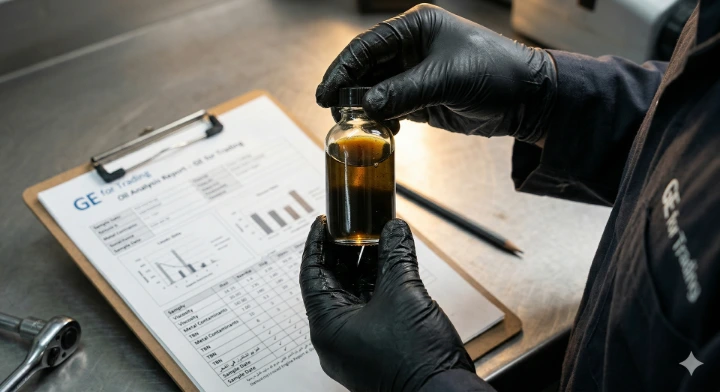
Oil analysis is a laboratory test that examines the condition of your engine oil to determine:
- Contaminant levels (dirt, fuel, coolant, water)
- Wear metals (indicators of engine damage)
- Oil condition (viscosity, additive levels, oxidation)
- Fuel dilution (how much gasoline is thinning your oil)
💡 Think of it like a blood test for your car. Just as a doctor analyzes your blood to check for health issues, oil analysis reveals the internal health of your engine—long before problems become catastrophic.
How Oil Analysis Differs from Traditional Oil Changes
| Factor | Traditional Oil Changes | Oil Analysis |
|---|---|---|
| Basis | Mileage or time intervals | Actual oil condition |
| Cost | $50–$100 per change | $20–$40 per test |
| Frequency | Every 3,000–7,500 miles | Every 5,000–15,000 miles |
| Precision | One-size-fits-all | Customized to your engine |
| Early Warning | ❌ No | ✅ Yes (catches issues early) |
🚗 Why Oil Analysis Beats the 3,000-Mile Rule (Backed by Data)
The 3,000-mile oil change rule is a relic of the 1970s, when engines used mineral-based oils that degraded quickly. Today’s synthetic oils and advanced engines can go 10,000–15,000 miles between changes—if the oil is still healthy.
Oil analysis lets you:
1. Save Money (Without Risking Your Engine)
The average driver spends $120–$200/year on oil changes. With oil analysis, you can extend intervals to 10,000–15,000 miles safely, cutting costs by 30–50%.
💰 Cost Comparison: Traditional vs. Oil Analysis
Traditional Approach: 4 oil changes/year × $75 = $300/year
Oil Analysis Approach: 2 oil changes + 2 tests/year = ($75 × 2) + ($30 × 2) = $210/year
Savings: $90/year (30% less)
2. Prevent Costly Engine Damage
Oil analysis detects wear metals (like iron, aluminum, or copper) that indicate:
- Bearing wear (high iron levels)
- Piston ring wear (high aluminum levels)
- Bushing wear (high copper levels)
⚠️ Red Flag: If your oil analysis shows iron > 50 ppm or aluminum > 20 ppm, your engine may be wearing abnormally. Address it before it leads to a $3,000+ repair bill.
3. Optimize for Your Driving Style
Not all driving is equal. Oil analysis helps you adjust intervals based on:
- Short trips (cold starts degrade oil faster)
- Towing/hauling (increases oil temperature)
- Extreme heat/cold (accelerates oxidation)
- Stop-and-go traffic (fuel dilution is common)
4. Reduce Environmental Waste
Americans waste 1.3 billion quarts of oil annually from unnecessary changes. Oil analysis helps you:
- ✅ Avoid premature oil changes
- ✅ Recycle used oil properly (90% can be re-refined)
- ✅ Lower your carbon footprint (less oil = less refining energy)
“Oil analysis is the single best way to take control of your car’s maintenance. It’s not just about saving money—it’s about making data-driven decisions.” — Mike, Certified Mechanic (15+ years)
🔬 How Oil Analysis Works: A Step-by-Step Guide
Oil analysis is simpler than you think. Here’s how to do it in 4 easy steps:
Step 1: Choose an Oil Analysis Kit
You’ll need a clean sample bottle and a prepaid shipping label (included in most kits). Popular options:
- Blackstone Labs (most popular, $28–$35)
- Oil Analyzers Inc. (detailed reports, $25–$40)
- Polar Labs (fast turnaround, $20–$30)
Step 2: Take a Clean Oil Sample
Pro Tip: Sample oil midway through your oil change interval (e.g., at 5,000 miles if you change at 10,000). Here’s how:
- Warm up your engine (drive for 10–15 minutes).
- Turn off the engine and wait 5–10 minutes (lets particles settle).
- Use the kit’s pump or tube to extract oil from the dipstick tube.
- Avoid contaminants (don’t touch the bottle’s inside or cap).
💡 Why Mid-Interval? Testing at the halfway point gives you a realistic snapshot of how your oil is holding up. Testing at the end of the interval tells you after the damage is done.
Step 3: Ship Your Sample to the Lab
Most kits include a prepaid shipping label. Drop it in the mail, and wait 3–7 days for results.
Step 4: Interpret the Results
Step 4: Details
You’ll receive a detailed report with:
- Viscosity (is your oil thinning or thickening?)
- Wear metals (are engine parts wearing out?)
- Contaminants (dirt, fuel, coolant, water)
- Additive levels (are your oil’s protectants still active?)
- Fuel dilution (is gasoline thinning your oil?)
We’ll cover how to read these in the next section!
📊 How to Read Oil Analysis Results Like a Pro
Oil analysis reports can look overwhelming at first, but they’re easy to decode once you know what to look for. Here’s a breakdown of the key metrics:
1. Viscosity (The Most Critical Metric)
Viscosity measures your oil’s thickness. If it’s too thin or too thick, your engine isn’t protected.
| Viscosity Range | What It Means | Action Required |
|---|---|---|
| Within 10% of new oil | ✅ Oil is healthy | Continue normal intervals |
| 10–20% off | ⚠️ Oil is breaking down | Shorten interval by 20% |
| 20%+ off | ❌ Oil is degraded | Change oil immediately |
Example: If your oil started as 5W-30 and now tests at 5W-25, it’s thinning (likely due to fuel dilution or shear).
2. Wear Metals (The Engine Health Check)
Wear metals indicate engine component wear. High levels = trouble.
| Metal | Source | Normal Range (ppm) | Danger Zone (ppm) |
|---|---|---|---|
| Iron (Fe) | Cylinders, bearings, gears | 10–30 | >50 |
| Aluminum (Al) | Pistons, bearings | 5–15 | >20 |
| Copper (Cu) | Bushings, bearings | 5–10 | >20 |
| Lead (Pb) | Bearings (older engines) | 2–5 | >10 |
| Chromium (Cr) | Piston rings | 1–3 | >5 |
🚨 Critical Warning: If iron > 100 ppm or aluminum > 50 ppm, your engine is experiencing severe wear. Stop driving and inspect immediately.
3. Contaminants (The Silent Killers)
Contaminants like fuel, coolant, dirt, and water can destroy your oil’s effectiveness.
| Contaminant | Normal Range | Danger Zone | Likely Cause |
|---|---|---|---|
| Fuel Dilution | <2% | >5% | Frequent cold starts, rich fuel mixture |
| Coolant | 0% | >0.1% | Blown head gasket, cracked block |
| Water | <0.1% | >0.5% | Condensation, coolant leak |
| Dirt/Silicon | <10 ppm | >20 ppm | Poor air filter, dusty conditions |
Example: If your oil has 8% fuel dilution, you’re likely making too many short trips (oil never gets hot enough to evaporate fuel).
4. Additive Levels (The Oil’s Immune System)
Additives like detergents, dispersants, and anti-wear agents keep your oil working. When they deplete, sludge forms.
| Additive | Purpose | Normal Range | Low = Problem |
|---|---|---|---|
| Calcium (Ca) | Detergent | 1,500–3,000 ppm | Sludge buildup |
| Magnesium (Mg) | Detergent | 500–1,500 ppm | Sludge buildup |
| Zinc (Zn) | Anti-wear | 800–1,500 ppm | Increased engine wear |
| Phosphorus (P) | Anti-wear | 800–1,200 ppm | Increased engine wear |
Note: Synthetic oils lose additives 50% slower than conventional oils.
5. Flash Point (Is Your Oil Contaminated with Fuel?)
The flash point is the temperature at which oil vapors ignite. A low flash point (below 300°F) indicates fuel contamination.
💡 Fun Fact: New oil has a flash point of 400–450°F. If yours is below 350°F, you’ve got fuel dilution.
🏆 Best Oil Analysis Kits in 2026 (Compared)
Not all oil analysis kits are created equal. Here are the top 5 based on accuracy, cost, and turnaround time:
| Kit | Price | Turnaround Time | Best For | Pros | Cons |
|---|---|---|---|---|---|
| Blackstone Labs | $28–$35 | 5–7 days | Beginners | ✅ Easy-to-read reports ✅ Great customer service ✅ Free trend analysis |
❌ Slightly slower than others |
| Oil Analyzers Inc. | $25–$40 | 3–5 days | Advanced users | ✅ Most detailed reports ✅ Tests for 20+ metals ✅ Fast turnaround |
❌ More expensive |
| Polar Labs | $20–$30 | 3–4 days | Budget pick | ✅ Cheapest option ✅ Fast results ✅ Good for basic checks |
❌ Less detailed than Blackstone |
| ALS Tribology | $35–$50 | 7–10 days | Commercial/fleet | ✅ Industry gold standard ✅ Extremely accurate ✅ Tests for 30+ elements |
❌ Expensive ❌ Slow turnaround |
| Spectro Inc. | $40–$60 | 5–7 days | High-performance engines | ✅ Specializes in racing/performance ✅ Tests for exotic metals ✅ Detailed wear analysis |
❌ Overkill for daily drivers |
🏆 Our Pick: Blackstone Labs is the best for most drivers—affordable, accurate, and user-friendly.
💰 How Much Does Oil Analysis Cost? (Full Breakdown)
Oil analysis is cheaper than you think. Here’s a cost comparison for different approaches:
📊 Cost Comparison: DIY vs. Professional Oil Analysis
📊 Cost Comparison: Details
| Method | Cost per Test | Frequency | Annual Cost | Savings vs. Traditional |
|---|---|---|---|---|
| Traditional Oil Changes | $75 | 4x/year | $300 | $0 |
| Oil Analysis + Extended Intervals | $30 (test) + $75 (oil change) | 2x/year | $210 | $90 |
| Oil Analysis Only (No Oil Changes) | $30 | 4x/year | $120 | $180 |
Note: The “Oil Analysis Only” approach assumes you top off oil as needed (not recommended for high-mileage engines).
💡 Pro Tip: If you’re towing, racing, or driving in extreme conditions, test every 2,500–5,000 miles. For normal driving, every 5,000–7,500 miles is sufficient.
📈 Real-World Case Studies: What Oil Analysis Revealed
Still not convinced? Here are real-world examples of how oil analysis saved drivers money, time, and headaches:
Case Study 1: The Short-Trip Disaster (Maria’s Story)
Case Study 1: Details
🚗 Vehicle: 2015 Honda Civic (120,000 miles)
Driving Habit: 10 short trips/day (under 5 miles each)
Problem: Maria was changing oil every 3,000 miles due to “severe driving” warnings. She spent $300/year on oil changes.
Oil Analysis Results:
- Fuel dilution: 8% (normal: <2%)
- Viscosity: Dropped from 5W-30 to 5W-25
- Wear metals: Normal (no damage yet)
Solution: Switched to 0W-20 synthetic oil and added a block heater to reduce cold starts.
New Interval: 8,000 miles (saved $120/year)
Case Study 2: The Towing Nightmare (Dave’s Story)
Case Study 2: Details
🚚 Vehicle: 2018 Ford F-150 (50,000 miles)
Driving Habit: Frequent towing (7,500 lbs)
Problem: Dave’s oil was black and sludgy at 5,000 miles. He assumed it was normal wear.
Oil Analysis Results:
- Iron: 80 ppm (normal: <30 ppm)
- Aluminum: 25 ppm (normal: <15 ppm)
- Viscosity: Increased by 25% (oil was thickening)
- Fuel dilution: 3%
Diagnosis: Excessive bearing wear due to towing without proper oil (he was using 5W-30 instead of 5W-40).
Solution: Switched to 5W-40 full synthetic and reduced interval to 5,000 miles when towing.
Outcome: Next test showed iron dropped to 20 ppm. Avoided a $2,000 engine repair.
Case Study 3: The Mystery Oil Burner (John’s Story)
Case Study 3: Details
🚗 Vehicle: 2012 Toyota Camry (180,000 miles)
Problem: John’s car was burning 1 quart of oil every 1,000 miles. His mechanic said it was “normal for the age.”
Oil Analysis Results:
- Iron: 120 ppm (normal: <30 ppm)
- Chromium: 10 ppm (normal: <3 ppm)
- Silicon: 30 ppm (normal: <10 ppm)
Diagnosis: Worn piston rings (high chromium) and dust ingestion (high silicon from a failing air filter).
Solution: Replaced air filter and PCV valve. Oil consumption dropped to 1 quart/3,000 miles.
Cost Saved: Avoided a $1,500 piston ring job by catching it early.
❓ FAQs: Your Oil Analysis Questions Answered
🔹 How Often Should I Get an Oil Analysis?
For most drivers:
- Every 5,000–7,500 miles (normal driving)
- Every 2,500–5,000 miles (severe driving: towing, short trips, extreme heat/cold)
- Every oil change (if you suspect a problem)
Pro Tip: Test midway through your interval to catch issues early.
🔹 Can I Do Oil Analysis at Home?
No. Oil analysis requires specialized lab equipment to measure wear metals, viscosity, and contaminants accurately. However, you can:
- ✅ Take a sample at home (using a kit)
- ✅ Ship it to a lab for analysis
- ✅ Use a paper towel test for a quick check (not as accurate)
🔹 How Accurate Is Oil Analysis?
Oil analysis is 90–95% accurate when done by a reputable lab. The University of Michigan found that oil life monitors (which use similar data) are 92% accurate compared to lab tests.
Limitations:
- ❌ Can’t detect internal engine damage (e.g., cracked block)
- ❌ Won’t catch electrical or sensor issues
- ❌ Requires consistent sampling for trend analysis
🔹 What’s the Best Oil for Extended Intervals?
For longer oil change intervals, use a high-quality synthetic oil that meets:
- API SP (latest standard for gasoline engines)
- ILSAC GF-6 (fuel-efficient, low-viscosity)
- OEM approval (check your owner’s manual)
Top Picks:
- Mobil 1 Extended Performance (15,000-mile intervals)
- Amsoil Signature Series (25,000-mile intervals)
- Pennzoil Platinum (10,000–15,000-mile intervals)
- Castrol Edge Extended Performance (15,000-mile intervals)
🔹 Can Oil Analysis Detect a Blown Head Gasket?
Yes! A blown head gasket allows coolant to mix with oil, which oil analysis can detect. Look for:
- Coolant in oil (>0.1%)
- High sodium/potassium (coolant additives)
- Milky oil (visible on dipstick)
⚠️ Warning: If your oil analysis shows coolant contamination, stop driving immediately to avoid catastrophic engine damage.
🔹 Is Oil Analysis Worth It for Older Cars?
Absolutely! Older cars benefit even more from oil analysis because:
- ✅ Wear is more likely (catch issues before they escalate)
- ✅ Oil consumption increases (monitor for leaks or burning)
- ✅ Additives deplete faster (older engines need more protection)
Example: A 2005 Toyota with 200,000 miles might need oil changes every 5,000 miles instead of 3,000—oil analysis tells you for sure.
🔹 How Do I Know If My Oil Is Bad Without a Test?
While not as accurate as a lab test, you can check for these red flags:
- Color: New oil is amber. Dark oil = contaminants. Black oil = severe contamination.
- Smell: Burnt smell = overheating. Gasoline smell = fuel dilution.
- Texture: Gritty = dirt/contaminants. Milky = coolant leak.
- Paper Towel Test:
- Light amber halo: Oil is healthy.
- Dark center: Time to change.
- Milky: Coolant leak—stop driving.
💡 Remember: The paper towel test is a quick check, not a substitute for lab analysis. For accurate results, send a sample to a lab.
🔹 Can I Use Oil Analysis for Other Fluids (Transmission, Differential, etc.)?
Yes! Oil analysis isn’t just for engine oil. You can test:
- Transmission fluid (check for wear metals like copper and brass)
- Differential fluid (look for iron and lead from gear wear)
- Coolant (test for pH, contaminants, and corrosion inhibitors)
- Hydraulic fluid (for tractors, heavy equipment)
Note: Different fluids require different test kits. Check with your lab.
🎯 Conclusion: Oil Analysis = Smarter Car Maintenance
Oil analysis isn’t just for race car drivers or fleet managers—it’s a standout for everyday drivers who want to:
- ✅ Save money by extending oil change intervals
- ✅ Prevent costly repairs by catching wear early
- ✅ Optimize performance for their driving habits
- ✅ Reduce environmental waste from unnecessary oil changes
With a simple test every 5,000–7,500 miles, you can take control of your car’s health and make data-driven decisions instead of relying on outdated myths or pushy mechanics.
🚀 Your Next Steps:
- Order a kit (we recommend Blackstone Labs)
- Take a sample at your next oil change or mid-interval
- Send it in and wait for results
- Adjust your maintenance based on the data
- Repeat every 5,000–7,500 miles to track trends
Stop guessing. Start knowing. Your engine (and wallet) will thank you.
📖 Further Reading:
- Severe Driving Conditions: When to Change Oil More Often
- Best Synthetic Oil for Long Intervals (2026 Tested)
- The 3,000-Mile Oil Change Myth: Why It’s Outdated
Top Oil Analysis Guide – Our Picks