Spongy brake pedal after heavy rain? That is moisture in your hydraulic system lowering boiling points. Your safety depends on fresh, high-performance fluid.
Choosing the best brake fluid feels overwhelming with DOT ratings and racing formulas everywhere. This guide cuts through marketing hype. Real specs drive every recommendation.
Which brake fluid meets my vehicle’s OEM specifications?
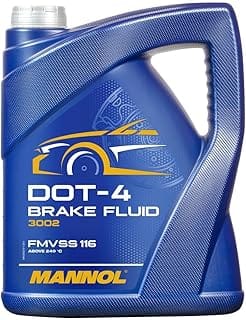
Vehicle manufacturers specify exact FMVSS 116 standards for brake fluid performance. Check the master cylinder reservoir cap or owner’s manual for required DOT rating. Using incorrect fluid voids warranties and risks seal damage.
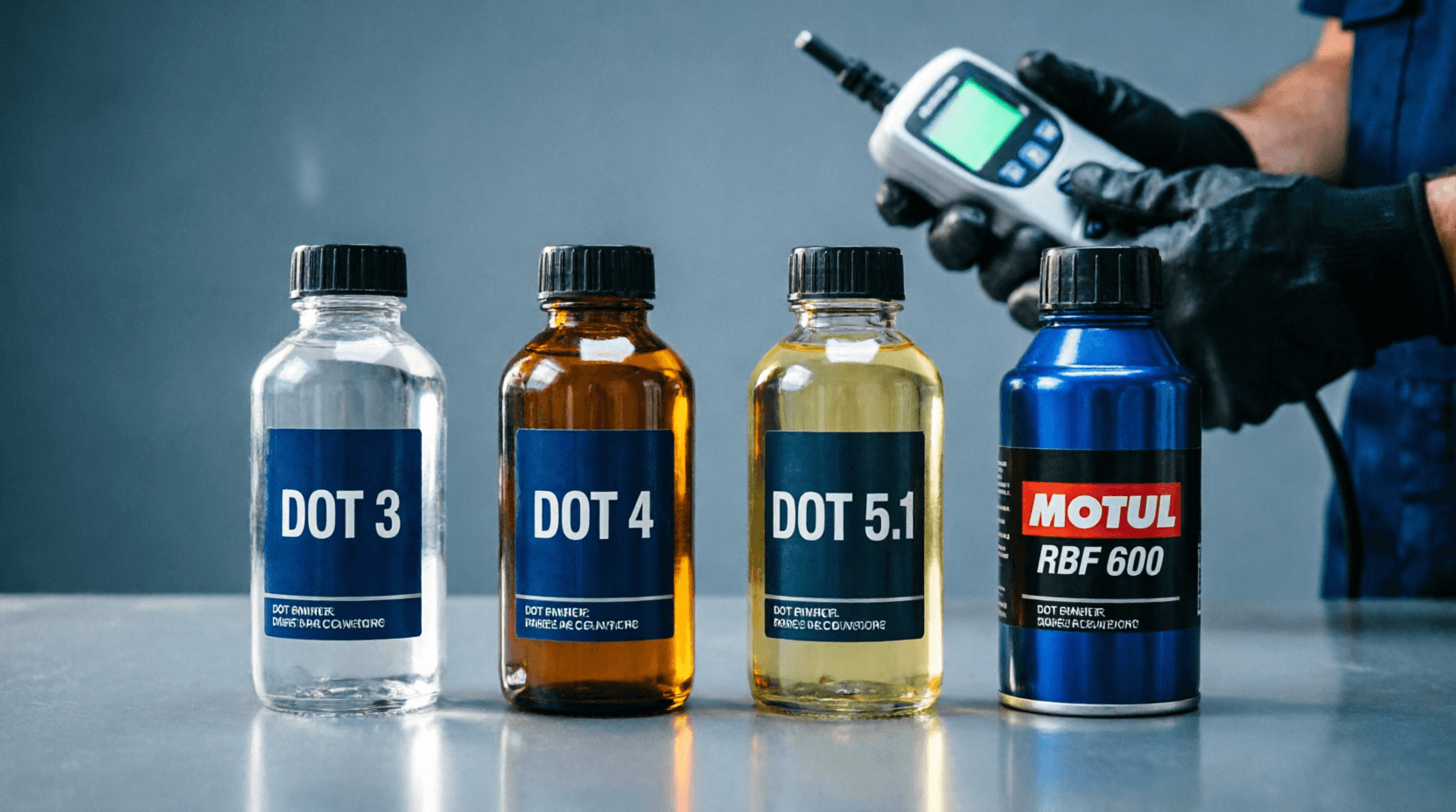
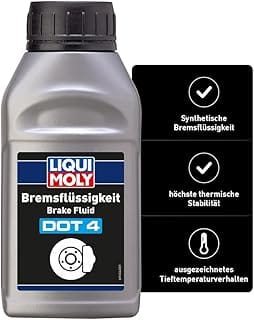
DOT 3, DOT 4, and DOT 5.1 fluids use glycol-ether bases. These fluids absorb moisture through hygroscopic action. DOT 5 uses silicone and repels water completely
.
Insider Tip: Never mix silicone-based DOT 5 with glycol-based fluids. Chemical incompatibility causes seal swelling and brake failure.
Common Mistake: Assuming all DOT 4 fluids perform identically. Racing formulas exceed minimum specs significantly.
What boiling point prevents brake fade during hard stops?
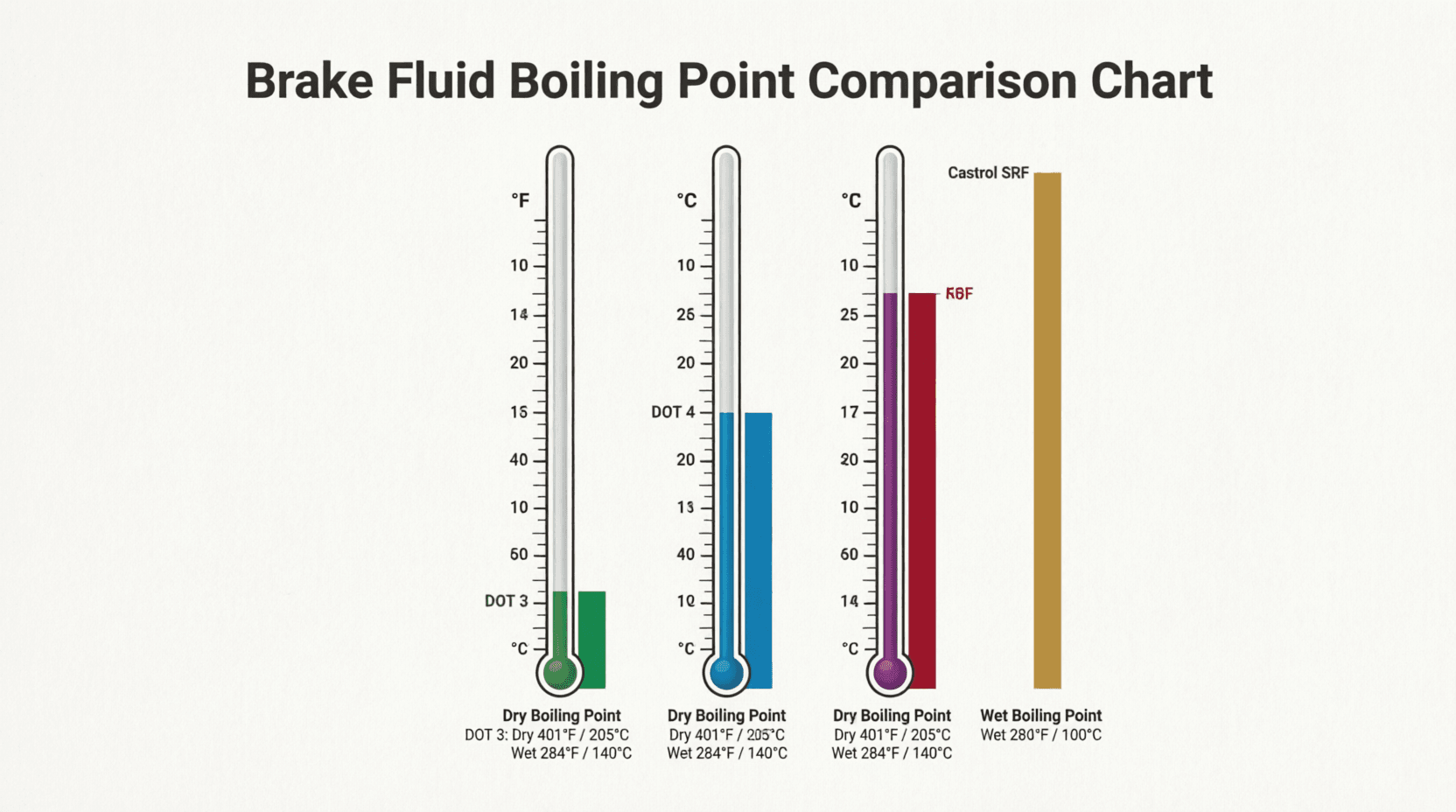
Dry boiling points measure fresh fluid resistance to vaporization under heat. Wet boiling points reflect performance after 3.7% water absorption simulates one year of service
.
Motul RBF 600 delivers 312°C dry boiling point for extreme track use
. Castrol SRF maintains 270°C wet boiling point under sustained load
competitionmotorsport.com
.
Insider Tip: Track drivers should flush fluid every 2-3 events. Street cars need changes every 24 months maximum.
How do Motul and Castrol racing fluids compare for performance?
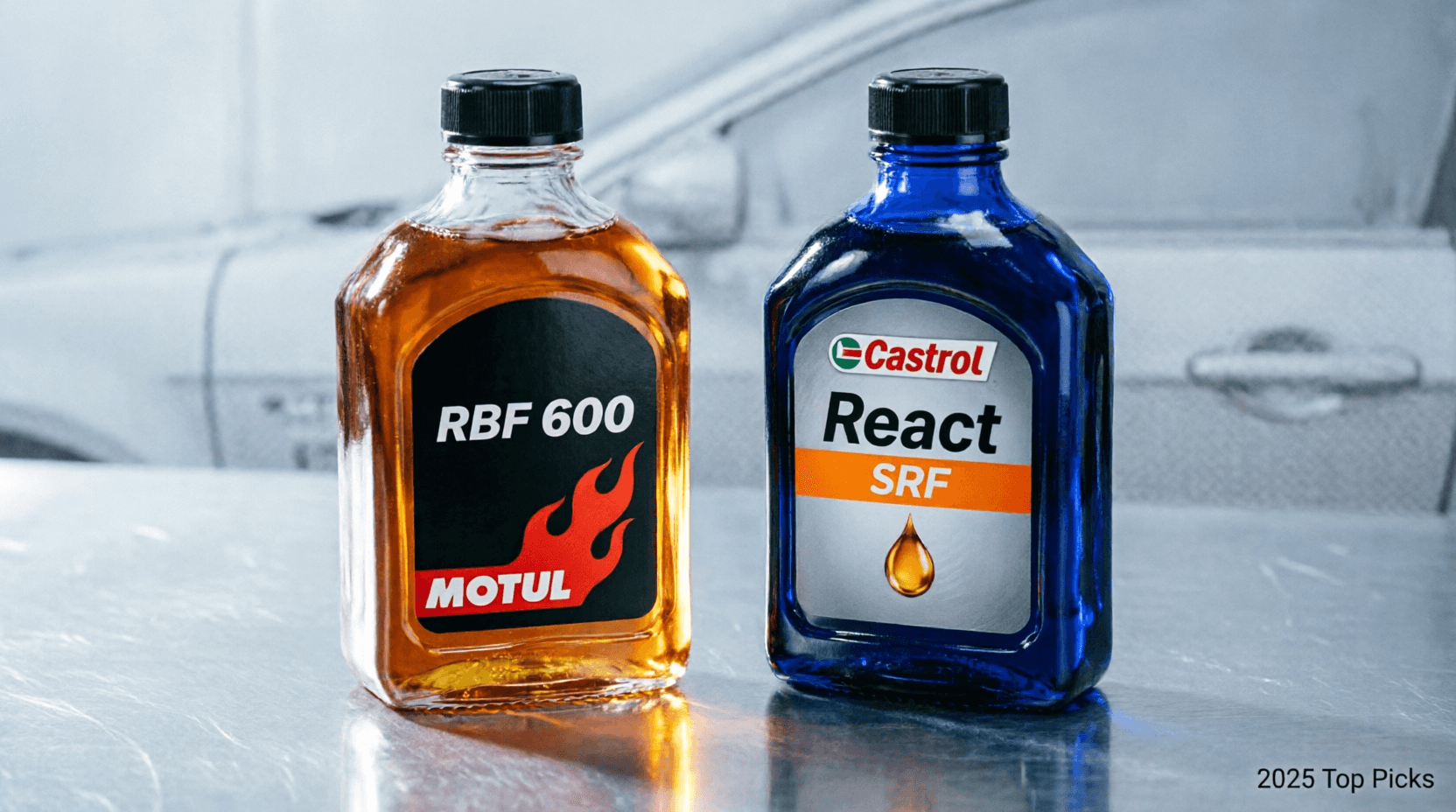
Motul RBF 600 uses 100% synthetic polyglycol chemistry for thermal stability. The fluid exceeds FMVSS 116 DOT 4 and ISO 4925 standards
.
Castrol React SRF targets professional motorsport with borate-ester additives. Dry boiling point reaches 310°C with exceptional wet performance
www.pegasusautoracing.com
.
Both fluids work with ABS, ESP, and electronic brake-force distribution systems. Viscosity at -40°C affects cold-weather pedal feel significantly.
Technical Note: Lower cold viscosity improves ABS valve response. DOT 5.1 spec requires ≤900 mm²/s at -40°C for optimal micro-valve operation [[11]].
Insider Tip: Store racing fluid in original sealed containers. Exposure to air reduces boiling points within hours.
Which premium brake fluid works best for daily driving?
Street drivers need balanced performance without racing-fluid maintenance demands. Motul DOT 5.1 offers 269°C dry boiling point with ABS-optimized viscosity
.
Castrol DOT 4 LV provides low-viscosity formulation for modern electronic brake systems. The fluid meets SAE J1703 and ISO 4925 Class 4 requirements.
Both products resist corrosion through advanced additive packages. Glycol-ether bases protect master cylinder bores and caliper pistons from pitting.
Insider Tip: Use a brake fluid tester to measure moisture content. Replace fluid when water exceeds 3% by volume.
What tools and steps ensure a safe DIY brake fluid flush?
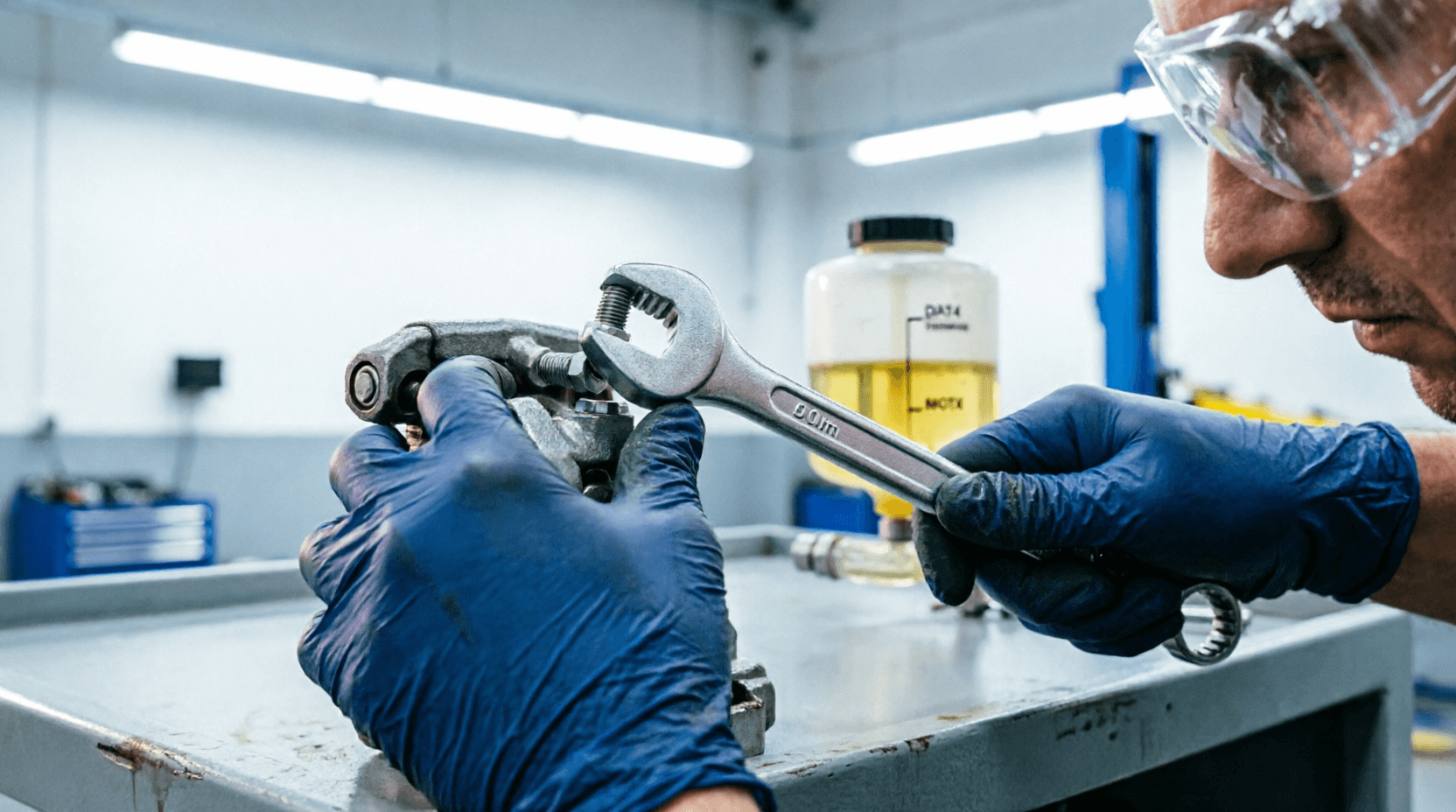
Gather 10mm flare nut wrench, clear vinyl tubing, brake bleeder kit, and safety glasses. Use DOT-specified fluid matching your vehicle’s requirements.
Start with the wheel farthest from the master cylinder. Attach tubing to bleeder screw and submerge end in collection bottle. Have assistant press brake pedal slowly.
Open bleeder ¼ turn while pedal travels downward. Close valve before pedal returns upward. Repeat until fluid runs clear with no air bubbles.
Critical Hazard:Brake fluid damages paint and eyes. Wear nitrile gloves and impact-resistant eyewear. Clean spills immediately with water.
Insider Tip: Use a pressure bleeder set to 10-15 PSI for one-person flushes. This prevents air introduction at the master cylinder.
How often should brake fluid get replaced for maximum safety?
Manufacturers recommend fluid changes every 24 months or 24,000 miles whichever comes first
. Humidity accelerates moisture absorption in glycol-based fluids.
Track vehicles need changes every 2-3 events due to extreme thermal cycling. Monitor pedal feel and stopping distance as performance indicators.
Use refractometer-style testers for accurate moisture measurement. Visual color checks alone miss critical water content changes.
Insider Tip: Label fluid bottles with opening dates. Discard partially-used containers after 6 months to ensure peak performance.
Pro-Tip: Flush brake systems when installing new calipers or master cylinders. Fresh fluid protects new components from manufacturing debris.
Frequently Asked Questions
Can I mix different brands of DOT 4 brake fluid? Yes, glycol-based DOT 3, DOT 4, and DOT 5.1 fluids are chemically compatible
. Mixing brands does not harm seals or reduce performance when specifications match.
Does higher boiling point fluid improve street braking? Premium fluids prevent fade during repeated hard stops. Normal commuting rarely reaches temperatures requiring racing formulas. Choose fluid matching your actual driving conditions.
Why does brake fluid turn dark over time? Rubber components release microscopic particles during normal operation. Moisture absorption accelerates additive breakdown and corrosion formation. Dark fluid indicates needed replacement.
Is silicone DOT 5 fluid better for classic cars? DOT 5 repels moisture and protects stored vehicles from internal corrosion. However, silicone fluid compresses slightly under pressure, creating spongy pedal feel in daily drivers.
Final Recommendation
Selecting the best brake fluid depends on driving style and vehicle requirements. Street cars benefit from Motul DOT 5.1 or Castrol DOT 4 LV for balanced performance. Track enthusiasts need Motul RBF 600 or Castrol SRF for extreme thermal resistance.
Always match fluid specifications to your manufacturer’s requirements. Check boiling points, viscosity ratings, and compatibility before purchasing. Fresh fluid maintains pedal feel and prevents costly component damage.
Invest in quality brake fluid and proper maintenance intervals. Your braking system deserves protection that meets engineering standards. Safe driving starts with confident, responsive brakes.
Top Best Brake Fluid 2026 – Our Picks
You might also like: Sticky Brake Caliper Symptoms: Diagnosis Guide, Electronic Brake Force Distribution (EBD): Explained, ABS Sensor Cleaning: Remove Metal Shavings