Severe Driving Conditions: What They Mean for Maintenance
You’ve probably heard the standard advice: change your oil every 5,000 to 7,500 miles, maybe even 10,000 if you’re using synthetic.
The problem? Most of us don’t actually drive under normal conditions, at least not according to their definition.
I learned this lesson the hard way with my 2015 Honda Accord. I religiously followed the 7,500-mile oil change interval recommended in my owner’s manual,
feeling pretty good about my maintenance routine. Then at 85,000 miles, my mechanic pointed out excessive engine sludge during a routine inspection.
Turns out, my daily 15-minute commute through stop-and-go city traffic qualified as severe driving, and I should have been changing my oil nearly twice as often.
That wake-up call cost me a thorough engine flush—and could have been prevented with better understanding.
The reality is that severe driving conditions aren’t just about racing or off-roading. They include everyday scenarios like short trips, extreme temperatures,
dusty environments, and heavy traffic. If you’re not adjusting your oil change schedule to match your actual driving habits, you might be unknowingly shortening your engine’s lifespan.
Let’s break down exactly what counts as severe driving and how it should change your maintenance approach.
—
What Actually Qualifies as Severe Driving Conditions
The automotive industry’s definition of severe driving catches many people off guard. It’s not about aggressive acceleration or pushing your vehicle to its limits—
it’s about specific patterns that stress your engine oil in ways that accelerate its breakdown.
Short Trips: The Silent Killer
When you drive less than 10 miles per trip, especially in cold weather, your engine never reaches its optimal operating temperature.
This means moisture and fuel contaminants don’t fully evaporate from the oil.
My neighbor, a retired teacher, drives less than three miles to church twice a week and to the grocery store once a week.
Her car has only 40,000 miles after eight years, but her mechanic recommended oil changes every 3,000 miles because those short trips are incredibly hard on the engine.
Extreme Temperatures
Both hot and cold accelerate oil degradation. If you live in Phoenix, where summer temperatures regularly exceed 110°F, or in Minneapolis, where winter can dip to -20°F,
your oil works overtime. Heat causes oil to break down faster and lose its viscosity, while cold weather means your engine runs longer at suboptimal temperatures where condensation becomes a problem.
Stop-and-Go Traffic and Idling
Sitting in traffic for an hour might only add five miles to your odometer, but your engine runs that entire time, heating and working the oil without the cooling benefit of highway airflow.
Delivery drivers, taxi operators, and anyone with a congested urban commute fall squarely into this category.
Towing, Hauling, and Dusty Roads
Towing, hauling heavy loads, or carrying roof cargo creates additional stress. If you regularly pull a boat or camper, even occasionally, or use your vehicle for moving supplies,
your engine works harder and generates more heat. This increased stress causes faster oil contamination and breakdown.
Dusty or unpaved roads introduce contaminants into your engine system. Construction workers, rural residents, or anyone who regularly travels gravel roads should recognize that dust infiltration speeds up oil deterioration.
—
How Severe Conditions Affect Your Engine Oil
Understanding what happens to your oil under severe conditions helps explain why more frequent changes matter. Engine oil serves multiple critical functions:
it lubricates moving parts, cleans contaminants, cools components, and creates seals between pistons and cylinder walls. When these functions deteriorate, engine damage follows.
| Issue | Effect on Oil | Result |
|---|---|---|
| Thermal Breakdown | Oil molecules break down under excessive heat. | Reduced lubrication, oil shearing down. |
| Contaminant Accumulation | Combustion byproducts (soot, acids, moisture) build up. | Sludge formation, clogged oil passages. |
| Additive Depletion | Detergents, dispersants, and anti-wear agents get used up faster. | Base oil alone cannot provide adequate protection. |
| Moisture Infiltration | Water vapor condenses in cold engines and mixes with oil. | Corrosive substance forms, promoting rust and sludge. |
—
Recommended Oil Change Intervals for Severe Driving
So how often should you actually change your oil if you drive under severe conditions? The answer varies by vehicle and specific circumstances,
but here are practical guidelines based on manufacturer recommendations and professional mechanic experience.
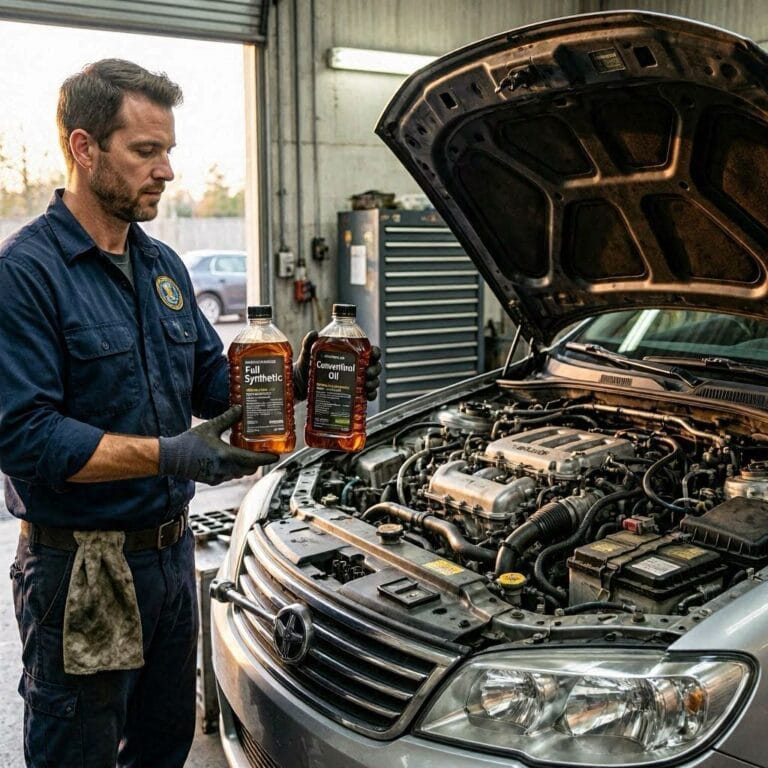
Conventional Oil
For conventional oil under severe conditions, most manufacturers recommend intervals between 3,000 and 5,000 miles.
This might seem shockingly frequent compared to the 7,500-mile intervals often advertised, but it’s necessary for protection.
If you’re doing predominantly short trips (under 10 miles) or operating in extreme temperatures, lean toward the 3,000-mile mark.
Synthetic Oil
Synthetic oil provides better protection and can typically stretch to 5,000–7,500 miles even under severe conditions,
though this varies by brand and formulation. High-quality full synthetics like Mobil 1, Royal Purple, or Amsoil resist thermal breakdown better than conventional oils.
Note: Don’t assume synthetic automatically doubles your interval—severe conditions still demand more frequent changes than normal driving.
Owner’s Manual and Time-Based Changes
Check your owner’s manual carefully—most have two maintenance schedules: normal service and severe/special operating conditions.
Read the severe service definition carefully. You might be surprised to discover that your daily driving pattern qualifies.
Time matters as much as mileage. If you only drive 5,000 miles per year, don’t stretch oil changes to annual events.
Oil degrades over time even without use. A good rule of thumb: change your oil at least twice a year regardless of mileage,
or every six months if you’re in severe service conditions.
Commercial Vehicles
Commercial vehicles and fleet operators often follow even more aggressive schedules. UPS, for instance, changes oil in their delivery trucks every 3,000–4,000 miles
religiously because those vehicles epitomize severe service: constant stops and starts, idling, and heavy urban driving.
—
Practical Signs Your Oil Needs Changing Sooner
Beyond following scheduled intervals, your vehicle often tells you when it needs an oil change. Learning to recognize these signs helps you catch problems before they cause damage.
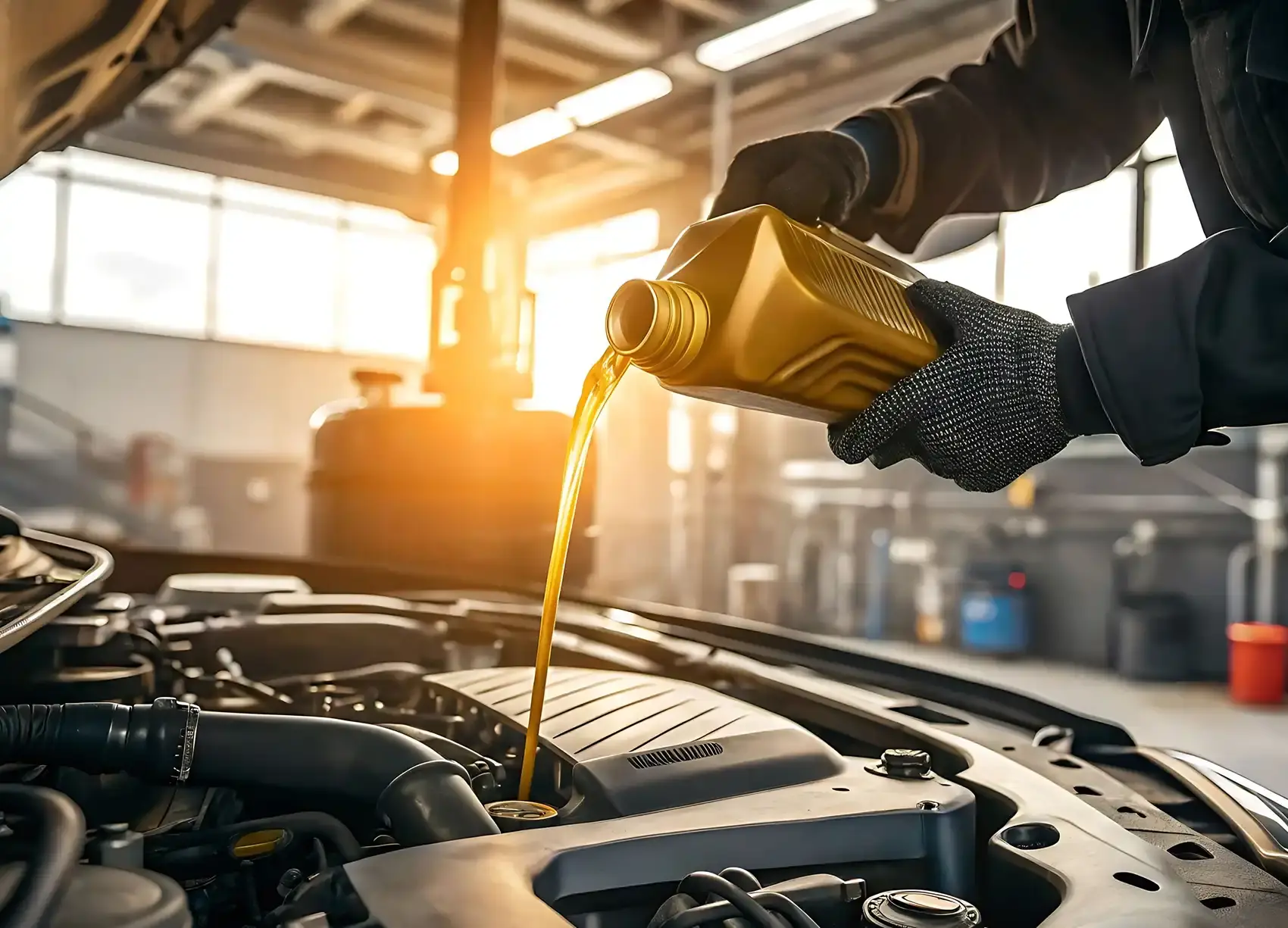
- Dipstick Check: Fresh oil appears honey-colored or amber. As oil degrades, it darkens to deep brown or black.
Excessively black oil suggests it’s saturated with particles and losing effectiveness. - Oil Texture: Clean oil feels smooth and slippery. Degraded oil feels gritty (indicating contamination) or sticky/thick (indicating sludge formation).
- Engine Noise: Increased engine noise, particularly a ticking or tapping sound from the valve train, often indicates oil that’s lost its lubricating properties.
Top Severe Driving Conditions – Our Picks