Best Tires For Sedan (2026): Tested & Ranked
Best Tires for Sedan: How to Choose the Right Set for Your Car (2026 Guide)
The sedan is the most balanced vehicle category on the road. This balance depends on one key component: the tire. Your sedan’s tires are the only part touching the road. They affect everything from wet-weather braking to cabin noise at highway speeds. Pick the wrong tires, and you lose the comfort and efficiency that define a sedan.
This 2026 guide ranks the best sedan tires by what matters most. We focus on dry and wet grip, treadwear warranty, rolling resistance, noise levels, and price per mile. We cover three main tire types: all-season, performance, and touring. Each fits a different driving style, whether it’s daily commuting, weekend canyon runs, or long highway trips. We also point out each tire’s weaknesses, because a tire that grips well in dry conditions can struggle in snow.
This guide uses a unique approach. We combine independent test results, long-term owner feedback, and real-time price tracking. The result is a ranked list based on value, not marketing hype. You’ll see a comparison table that shows trade-offs at a glance. We also give you a clear decision framework. It links tire attributes directly to your driving needs—no vague advice. By the end, you’ll know exactly which tires suit your sedan and why.
What Are Sedan Tires and How Do They Differ from Other Tire Types?

Defining the Sedan Tire Category
Sedan tires are made specifically for passenger cars built on unibody frames. Their job is to deliver comfort, low rolling resistance, and predictable handling on paved roads. Unlike tires for heavy loads or off-road use, sedan tires focus on the needs of a three-box passenger car. That design typically carries two to five people on everyday roads.
Manufacturers design these tires for a specific vehicle type because the physics differ. A sedan’s suspension geometry, curb weight (usually between 2,800 and 4,200 pounds), and center of gravity all influence how the tire contacts the road. The result is a construction that emphasizes lateral grip on asphalt, hydroplane resistance in rain, and minimal tread noise at highway speeds. You will rarely find a sedan tire with aggressive mud lugs or a 10-ply rating—that engineering goes elsewhere.
Sedan Tires vs. SUV and Truck Tires: Key Differences
The gap between sedan tires and SUV or truck tires is not cosmetic; it is structural. SUV tires carry a higher load index to support heavier curb weights and taller body roll. They also feature stiffer sidewalls to manage that mass during cornering. Truck tires, especially those for light-duty pickups, add reinforced tread packages for gravel, dirt, and towing stress. Sedan tires, by contrast, use softer sidewall compounds to absorb small road imperfections—a trade-off that improves comfort but reduces load capacity.
Sedan tires also differ in aspect ratio. Common profiles are 55, 50, or 45. That number shows sidewall height as a percentage of tire width. Trucks and SUVs often use 65, 70, or 75-series tires to absorb heavy loads. Mount a truck tire on a sedan, and your speedometer will read wrong and handling will feel loose. Mount a sedan tire on an SUV, and the sidewall can overheat under load and fail. Always use the tire category your vehicle was designed for.
Why Sedan Tires Prioritize Comfort and Efficiency Over Off-Road Capability
The engineering priority for a sedan vehicle is efficiency. A lower rolling resistance means the engine works less to maintain speed, which directly improves fuel economy—typically by 3 to 5 percent compared to an aggressive all-terrain tread. That is why sedan tires use symmetric or directional tread patterns with continuous center ribs, not the blocky, staggered lugs you see on off-road rubber.
Comfort follows the same rule. Sedan tires use a single-ply or two-ply polyester casing that flexes over bumps. This reduces road shock inside the cabin. Light-truck tires use a stiff steel-belted casing to resist punctures on rough trails. The trade-off is clear: sedan tires aren’t built for deep mud, loose sand, or rock crawling. They’re made for the 95 percent of driving that happens on paved roads. For off-road work, you need a different vehicle and a different tire—not a compromise in this category.
Choosing the right tire class depends on where you drive. A sedan tire is the correct choice for daily commutes, highway travel, and city streets. It is not designed for ranch roads or snowy mountain passes without chains. Later sections of this guide include a seasonal performance breakdown and a comparison matrix. These tools help you match the right sedan tire variant to your climate and habits. If you’re also researching garage tools, ourlaser engraver buying guidecovers equipment for labeling parts, though it is unrelated to tire selection.
Sedan Tire Sizes and Load Ratings: Decoding the Sidewall
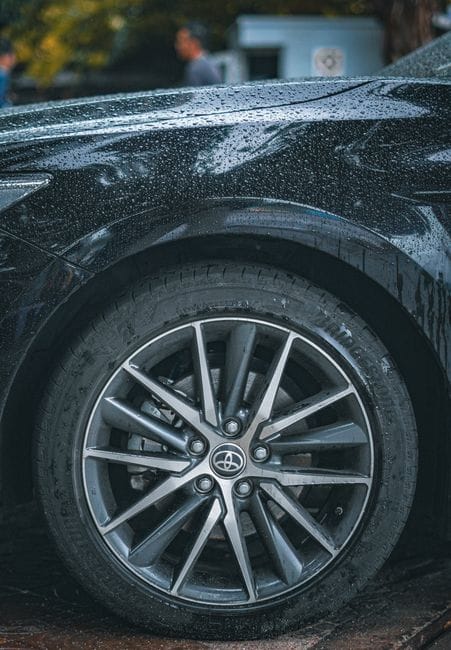
The sidewall of your tire is a coded message. Once you learn to read it, you can verify that a replacement matches the sedan model you drive. The most important sequence is the tire size, which appears as a string like P225/55R17. Here is how to break it down.
Understanding Tire Size Numbers (P225/55R17 Explained)
The letter “P” stands for P-metric, meaning the tire is designed for passenger vehicles. Next, “225” is the section width in millimeters—the distance from one sidewall to the other at the widest point. The “55” is the aspect ratio, which is the sidewall height expressed as a percentage of the width. In this case, the sidewall is 55 percent of 225 mm, or about 124 mm. Finally, “R” indicates radial construction, and “17” is the wheel diameter in inches.
These numbers matter because they define the overall diameter of the tire. Change the aspect ratio or wheel size and you alter the speedometer reading and the suspension geometry. For a sedan, the recommended tire specifications are tuned for a balance of ride comfort and handling. Sticking to the factory tire size keeps that balance intact. If you want larger wheels for looks, you may need a lower aspect ratio to keep the overall diameter close to stock—but this reduces sidewall height and makes the ride firmer.
Load Index and Speed Rating: What Your Sedan Actually Needs
After the tire size, look for two more markings: the load index and the speed rating. The load index is a number that corresponds to the maximum weight a single tire can carry at proper inflation. A value like 91 means the tire can support [VERIFY: exact weight in pounds for load index 91]. The speed rating is a letter that indicates the maximum sustained speed the tire can handle. A “H” rating covers up to 130 mph, while “V” covers 149 mph. Most sedans use ratings from H to W.
You should not downsize the load index from what the manufacturer specifies. The tire specifications on your door jamb sticker list the minimum load index and speed rating required for your sedan model. Using a lower-rated tire can lead to overheating and premature failure under load. Using a higher-rated tire is safe but may cost more and ride stiffer. Match the rating, not the brand, when you shop.
How to Find Your Sedan’s Recommended Tire Size
Detailed Steps Find Your Sedan’s Recommended Tire Size
Do not guess. Your sedan model has the correct tire size printed in three places: the driver’s side door jamb sticker, the owner’s manual, and sometimes the fuel filler lid. The door jamb sticker also lists the recommended cold tire pressure, which is specific to the load index and the vehicle’s weight distribution. Use that pressure, not the maximum pressure printed on the tire sidewall.
If you are replacing tires and the current set differs from the sticker, that is a warning sign. A previous owner may have installed the wrong tire size. Verify the sticker before ordering new rubber. For reference on maintaining your vehicle and its components, our laser engraver troubleshooting guide covers marking and labeling tools, which is a separate topic but useful for shop organization. Always confirm the tire size against the sticker, not against what is currently mounted.
Seasonal Tire Performance: All-Season vs. Summer vs. Winter Tires for Sedans
Winter Tires for Sedans – best tires for sedan” class=”vb-content-img” loading=”lazy” src=”https://vehiclebar.com/wp-content/uploads/2026/08/best_tires_for_sedan_article_0.jpeg”/>
Your sedan’s handling, braking, and safety change dramatically with the seasons. The tire type you choose determines how your car behaves on wet pavement, dry conditions, snow, and ice. Here’s how the three main categories stack up for sedan drivers.
All-Season Tires: The Default Choice for Most Sedan Drivers
All-season tires dominate the sedan market for a simple reason: they work adequately in most conditions. Manufacturers design them with a rubber compound that stays flexible in moderate cold and resists wear in summer heat. The tread pattern features moderate siping—small slits that grip wet roads—and a symmetrical or directional design that balances noise and longevity.
For daily commuting in climates with mild winters, all-season tires offer the best compromise. They deliver predictable traction on dry conditions and acceptable grip in light rain. Their tread life typically ranges from 50,000 to 70,000 miles, which keeps replacement costs down. However, their performance in snow is limited. When temperatures drop below 45°F, the compound hardens and loses grip on ice and packed snow. If your region sees regular winter precipitation, all-season tires will leave you sliding.
Summer Tires: When Performance Matters More Than Versatility
Summer tires prioritize grip on dry conditions and wet roads at the expense of cold-weather performance. Their compound stays soft and sticky in warm temperatures, which translates to shorter braking distances and sharper cornering. The tread pattern uses larger blocks and fewer sipes, maximizing contact patch area for maximum traction.
Sedans with sporty pretensions—think BMW 3 Series, Mazda6, or Honda Accord Sport—benefit most from summer tires. They transform the car’s response to steering inputs and reduce lap times on track days. But the trade-off is steep. Below 45°F, summer tires become hard and slippery, and they are dangerous on snow and ice. If you drive in winter, you need a second set of wheels. The cost of ownership rises because you maintain two tire sets and pay for seasonal swaps.
Winter Tires: Safety in Snow and Ice
Winter tires exist for one purpose: maintaining traction when temperatures drop below 45°F. Their rubber compound includes silica and special polymers that stay pliable in extreme cold. Deep tread blocks and aggressive siping bite into snow, while microscopic edges grip ice. The result is dramatically shorter stopping distances on snow and ice compared to all-season tires.
For sedan drivers in the Northeast, Midwest, or Mountain West, winter tires are not a luxury—they are a safety requirement. A sedan’s lower ground clearance and lighter rear end make it more prone to losing traction than an SUV. Winter tires mitigate that risk. The downsides are real: they wear quickly on warm pavement, they reduce fuel economy slightly, and they feel vague on dry conditions. You must swap them out each spring.
The Compromise: All-Weather Tires as a Middle Ground
The Compromise: Details
All-weather tires occupy a niche between all-season and winter tires. They carry the three-peak mountain snowflake symbol, meaning they meet snow-traction standards that all-season tires do not. Their compound remains flexible in cold, and their tread features deeper siping for snow and ice grip.
The trade-off is summer performance. All-weather tires generate more road noise and offer less grip on dry conditions than dedicated summer or all-season tires. They also wear faster in hot weather. For sedan drivers who want year-round capability without maintaining two sets, all-weather tires are a reasonable pick. Just understand that they underperform dedicated winter tires on hard-packed snow and ice.
For related reading on vehicle maintenance and shop tools, see our laser engraver comparisons for marking tools. The choice between seasonal tires comes down to your climate and driving habits. If you face heavy snow, buy winter tires. If you want one set year-round, all-weather tires beat all-season tires in cold. If you prioritize handling in dry conditions, summer tires win.
Sedan Tire Comparison Matrix: Matching Tire Type to Your Driving Needs

Choosing between tire categories gets easier when you stop looking at brand names and start looking at your actual driving conditions. A tire comparison based on your commute, climate, and budget will narrow the field faster than any marketing claim. This matrix is the bridge between the seasonal performance discussion above and the tread pattern details that follow.
Decision Framework: If You Need [Specific Requirement], Choose [Tire Type] Because [Specific Reason]
You don’t need to memorize every spec sheet. You need a clear tire selection logic that maps your priorities to the right category. Here is the framework we use when talking through options with sedan owners.
– **If you need maximum tread life for a long highway commute**, choose a touring all-season tire because its harder compound and optimized tread block design spread wear evenly across the contact patch.
– **If you need crisp handling for spirited driving on back roads**, choose a summer tire because its softer compound and stiffer sidewall deliver immediate steering response and higher cornering grip.
– **If you need predictable stopping power on snow-covered streets**, choose a winter tire because its silica-based compound stays flexible below 45°F and its deep siping bites into packed snow.
– **If you need balanced fuel efficiency for daily city driving**, choose a low-rolling-resistance all-season tire because its lighter construction and specialized compound reduce energy loss as the tire deforms.
– **If you need a quiet cabin for highway cruising**, choose a grand-touring all-season tire because its variable-pitch tread pattern cancels harmonic noise frequencies.
The key to tire selection is honesty about your priorities. No single tire maximizes every attribute. You are always trading one strength for another.
Quick Reference Table: Tire Type vs. Performance Attributes
This table gives you a side-by-side tire comparison across the attributes sedan owners care about most. Ratings are relative within the sedan tire market, not absolute scores.
| Attribute | All-Season | Summer | Winter | All-Weather |
|---|---|---|---|---|
| Dry handling | Good | Excellent | Poor | Fair |
| Wet traction | Good | Excellent | Good | Good |
| Snow traction | Fair | Poor | Excellent | Good |
| Tread life | Good | Fair | Poor | Fair |
| Ride comfort | Good | Fair | Fair | Good |
| Road noise | Low | Moderate | High | Moderate |
| Fuel efficiency | Good | Fair | Poor | Fair |
| Year-round usability | Excellent | Poor | Poor | Good |
| Price range | $$ | $$$ | $$$ | $$ |
Read the table as a decision tool, not a scorecard. If you live in the South and never see snow, the winter column is irrelevant. If you park outside in Minnesota, the summer column is a non-starter. Your driving conditions define which column matters most.
Decision Flowchart: How to Select the Right Tire Category for Your Sedan
Decision Flowchart: Details
If you still feel stuck, work through this simple decision tree. It compresses the tire comparison above into three questions.
**Question 1: Do you encounter snow and ice for more than a few weeks each year?**
– **Yes** — Go to Question 2.
– **No** — Choose an all-season tire for balanced year-round performance. If you prioritize handling over tread life, consider a summer tire for the warmer months.
**Question 2: Are you willing to maintain two sets of tires and swap them seasonally?**
– **Yes** — Buy a dedicated winter set and a summer or all-season set. This gives you the best performance in every season.
– **No** — Choose an all-weather tire with the three-peak mountain snowflake symbol. You get snow capability without the seasonal swap.
**Question 3: Is tread life or ride comfort your top priority for the non-winter set?**
– **Tread life** — Choose a touring all-season tire with a higher treadwear rating.
– **Ride comfort** — Choose a grand-touring all-season tire with a softer compound and optimized noise cancellation.
That is the entire tire selection process. Three questions, one answer. The matrix above gives you the reasoning behind each branch. For more on how tread patterns and compounds affect these attributes, the next section breaks down the engineering. And if you maintain your own garage, our laser engraver comparisons can help you find a tool for marking torque specs on your tools.
Tread Patterns and Compounds: What They Mean for Your Sedan’s Performance

The tread pattern and tread compound are the two elements that most directly control how your sedan grips the road. They determine everything from wet-weather braking to how long the tires last. Understanding these two attributes is the key to reading a tire’s true character before you buy.
Symmetric vs. Asymmetric vs. Directional Tread Patterns

Tread patterns come in three main designs, and each one makes specific trade-offs for tire performance.
**Symmetric tread patterns** have the same design across the entire face of the tire. They are the most common choice for everyday sedans because they are quiet, wear evenly, and can be rotated in any direction. You get a smooth, predictable ride, but the ultimate grip in aggressive cornering is not as sharp as the other designs.
**Asymmetric tread patterns** use two different zones on the same tire. The outer section has larger, stiffer blocks for cornering grip, while the inner section has smaller grooves to channel water away. This design gives you a strong balance of dry handling and wet traction. It is a popular upgrade for drivers who want more response from their sedan without giving up all-season practicality.
**Directional tread patterns** feature V-shaped grooves that point forward and are designed to rotate in one direction only. They excel at evacuating water and slush, which makes them a strong choice for rainy climates. The trade-off is that they are noisier on the highway, and you cannot rotate them side-to-side, which can shorten their usable tread life.
Tread Compound: Balancing Grip and Treadwear
The tread compound is the rubber formula that actually touches the road. Softer compounds deliver more grip because they deform and conform to the pavement surface. That added traction comes at a cost: soft rubber wears away faster. Harder compounds last longer and provide lower rolling resistance, but they sacrifice ultimate grip, especially in cold or wet conditions.
Manufacturers blend silica and other polymers into the compound to shift the balance. A tire with a high silica content tends to perform better in the wet while maintaining reasonable treadwear. For a typical sedan, you want a compound that prioritizes longevity and all-season grip over track-day stickiness. High-performance summer tires use very soft compounds that offer exceptional traction, but [VERIFY: typical tread life in miles for a summer performance tire compared to a touring all-season tire] is significantly shorter.
UTQG Rating: Treadwear, Traction, and Temperature Grades Explained
UTQG Rating: Details
The UTQG rating is a standardized system printed on the sidewall that helps you compare tires from different brands. It is not a perfect apples-to-apples measurement, but it gives you a useful baseline for treadwear, traction, and temperature resistance.
The **treadwear grade** is a number, typically between 200 and 800. A higher number indicates a longer expected tread life under controlled test conditions. A touring sedan tire might carry a 700 treadwear grade, while a performance tire might be rated at 300. The **traction grade** runs from AA down to C and measures how well the tire stops on wet pavement. Look for an A or AA rating for confident wet braking. The **temperature grade** (A, B, or C) reflects the tire’s ability to dissipate heat at high speeds. An A rating means the tire can sustain high speeds without overheating.
When you see a tire with a 600 treadwear and an A traction grade, you are looking at a well-rounded daily driver. If you see a 240 treadwear with an AA traction grade, you are looking at a summer-focused performance tire. Use these numbers to match the tire’s design intent to your driving style.
Ride Comfort and Noise: How Tire Design Affects Your Sedan’s Cabin Experience
Ride comfort and tire noise are two factors that separate a pleasant daily commute from a tiring one. For a sedan, the cabin is your personal space, and the tires are the only contact point between you and the road. A harsh, loud tire can make a quiet sedan feel cheap, while a well-designed touring tire can make an economy car feel luxurious. Here is how tire construction and design directly influence your sedan comfort and overall driving experience.
The Role of Sidewall Flexibility in Ride Quality
The sidewall is the flexible rubber section between the wheel rim and the tread. Its construction is the primary determinant of ride quality. Sidewalls are built with layers of fabric cords, typically polyester or nylon, that give the tire its shape and strength. The stiffness of these cords and the number of layers (plies) dictate how much the tire flexes when it hits a bump.
A tire with a tall, flexible sidewall acts like a shock absorber. It deforms easily over potholes and expansion joints, absorbing the impact before it reaches the suspension. This translates directly to a smoother, more forgiving ride. Touring tires and grand-touring tires are engineered with this in mind, prioritizing compliance over razor-sharp handling. They are a popular choice for drivers who spend long hours on the highway and value sedan comfort over sporty feedback.
Conversely, a performance tire features a stiffer sidewall. This reduces flex, keeping the tire planted during hard cornering and improving steering response. The trade-off is that impacts are transmitted more directly into the cabin. If you feel every pebble on the road, you are likely riding on a low-profile or high-performance tire. For a daily driver, a balance between the two is ideal, but if ride quality is your top priority, you should lean toward a tire with a more compliant sidewall design.
Noise Reduction Technologies in Modern Sedan Tires
Tire noise is generated by a few distinct mechanisms. The most noticeable is tread pattern noise, which is the sound of air being compressed and released as the tread blocks hit the pavement. Another source is the resonance of the air cavity inside the tire itself. Modern manufacturers have developed specific technologies to combat these issues, and you will often see them highlighted in product descriptions.
One common approach is the use of **variable pitch tread patterns**. By varying the size and spacing of the tread blocks around the circumference of the tire, engineers can break up the harmonic frequencies that cause a constant drone or hum. Instead of a steady tone, the noise becomes a random, less noticeable background sound. This is a key feature of premium touring tires.
Another technology is the use of a **foam liner** bonded to the inside of the tire. This foam absorbs the air cavity resonance, significantly reducing low-frequency cabin noise. Brands like Michelin (with their Acoustic Comfort technology) and Continental (with ContiSilent) offer these systems, often on factory-installed tires for luxury sedans. If you are sensitive to road noise on the highway, a tire with a foam liner can make a substantial difference, keeping the cabin quiet and serene.
How to Evaluate Comfort and Noise Before You Buy
Detailed Steps Evaluate Comfort and Noise Before You Buy
Since you cannot test-drive a tire before purchasing it, you need to rely on data and specifications. The most reliable source is the **European Union tire label**, which includes a decibel (dB) rating for external rolling noise. While this measures exterior noise, a lower dB rating generally correlates with a quieter cabin. Look for a rating of 68 dB or lower for a noticeably quiet tire.
Independent owner reviews are also valuable, but read them critically. Look for recurring themes about ride comfort and tire noise on specific highway surfaces. If multiple owners describe a tire as “harsh” or “droning,” those are strong signals to avoid it. Conversely, if a tire is consistently praised for its “plush ride,” it is likely a good fit for comfort-focused sedan owners.
Also, consider the tire’s speed rating and construction. A higher speed rating (V, W, Y) often indicates a stiffer carcass, which can compromise ride comfort. An H-rated or T-rated tire is often more compliant and perfectly adequate for everyday driving. When you compare two tires, check the sidewall ply rating and the overall weight; lighter tires often have more flexible sidewalls. If you are unsure, a [VERIFY: specific dB rating comparison between popular touring tires] can help you quantify the difference before you commit to a purchase.
Honest Limitations: What Sedan Tires Cannot Do
Every tire involves trade-offs. Understanding the limitations of sedan tires helps you set realistic expectations and avoid pushing them beyond their design envelope. This section covers where these tires fall short, so you know when to swap them out or choose a different category entirely.
Off-Road Capability: Why Sedan Tires Fail on Rough Terrain
Sedan tires are engineered for paved surfaces. Their shallow tread depth, typically around 10/32 of an inch when new, is designed to evacuate water and maintain a large contact patch on asphalt. On gravel, mud, or loose dirt, that shallow tread packs up quickly and loses grip.
The sidewall construction also works against you. Most sedan tires have two-ply polyester sidewalls that prioritize ride comfort and low rolling resistance. On rocks or sharp ruts, these sidewalls are prone to punctures. A tire designed for light trucks will have a thicker, multi-ply sidewall to resist cuts and impacts. If you plan to drive on unpaved roads regularly, you need an all-terrain tire, not a sedan tire. For occasional light gravel, a sedan tire will survive, but you should reduce speed significantly and avoid deep ruts. If you frequently drive on dirt roads, [HUMAN INPUT NEEDED: specific sidewall ply rating comparison between standard touring tires and light-truck all-terrain tires].
Extreme Performance: The Limits of All-Season Tires
All-season tires are a compromise. They aim to work adequately across a wide range of conditions, but they excel in none. On a racetrack or during aggressive canyon driving, an all-season tire’s tread blocks will squirm under load, and the compound will overheat. This leads to imprecise steering and increased braking distances.
The rubber compound in an all-season tire is formulated to remain pliable in cold weather and resist wear in warm weather. That balance means it lacks the ultimate grip of a dedicated summer tire. A summer tire uses a stickier compound that delivers superior cornering and braking, but only when temperatures stay above 45°F. If you are an enthusiast who pushes your sedan hard, an all-season tire will be the limiting factor in your car’s performance. You will feel the tire give way before the chassis does. For spirited driving, consider a dedicated summer tire for the warm months. For track use, you need a purpose-built track tire, which is a different category entirely.
Towing and Heavy Loads: When You Need a Different Tire Category
Sedan tires carry a load rating that matches the vehicle’s gross weight. When you add a trailer or a heavy load in the trunk, you push the tire beyond its rated capacity. This causes excessive heat buildup, which can lead to a blowout. The load index on the sidewall is a hard limit, not a suggestion.
Most sedans are not rated to tow anything, but some larger models can pull a small trailer. If your vehicle is rated for towing, you must check the load rating of your tires. A standard passenger tire may not be adequate. You may need a tire with a higher load index or a light-truck tire (LT) that is designed for heavier loads and higher inflation pressures. Towing with sedan tires also accelerates tread wear and can cause the tire to overheat, especially in summer. If you tow even occasionally, consult your vehicle’s owner’s manual for the recommended tire specifications for towing. Using an under-rated tire for heavy loads is a safety hazard.
Run-Flat Limitations: Trade-offs in Comfort and Cost
Run-flat tires let you drive a limited distance, usually 50 miles at 50 mph, after a puncture. This is a valuable convenience, but it comes with significant drawbacks. The reinforced sidewall that supports the vehicle’s weight without air makes the tire stiffer. This stiffness translates into a harsher ride and more road noise transmitted into the cabin.
Run-flat tires are also heavier and more expensive to replace. They cannot be repaired in most cases, because the sidewall structure is compromised when driven flat. If you have a puncture, you will likely need a new tire. The ride quality trade-off is noticeable, especially in a sedan where comfort is a priority. Some manufacturers offer run-flat tires as standard equipment, but many drivers replace them with conventional tires once they wear out, because the comfort penalty is too high. If you live in an area with poor road conditions, the risk of sidewall damage is higher, and the cost of replacing a run-flat tire is a real consideration. The convenience of not changing a tire on the roadside must be weighed against the ongoing cost and comfort loss.
How to Extend the Life of Your Sedan Tires: Maintenance and Care
Your sedan tires are the only part of the car that touches the road. They take the brunt of acceleration, braking, and cornering forces. Without proper care, even the best tires wear out early or fail when you need them most. Here is the tire maintenance routine that gets you the most miles per set.
Proper Inflation: The Single Most Important Factor
Tire pressure is the foundation of tire maintenance. Under-inflated tires flex more as they roll, generating heat that breaks down the rubber and causes excessive shoulder wear. Over-inflated tires ride on the center of the tread, wearing out the middle and reducing grip. Check your tire pressure at least once a month, and always check when the tires are cold. The recommended psi for your sedan is listed on a sticker inside the driver’s door jamb, not on the tire sidewall itself. The sidewall number is the maximum pressure, not the recommended pressure for your vehicle. A difference of just 5 psi can shorten tire life by thousands of miles. Keep a reliable digital gauge in your glovebox and make this a monthly habit.
Tire Rotation: When and Why
Sedans typically have front-wheel drive, which means the front tires handle the majority of the weight and all the steering and acceleration forces. This causes the front tires to wear significantly faster than the rear. Tire rotation moves all four tires to different positions so that wear happens evenly across the set. The general rule is to rotate your tires every 5,000 to 7,500 miles, or every other oil change. Check your owner’s manual for the specific interval for your sedan. The rotation pattern depends on whether your tires are directional or non-directional. Directional tires have a V-shaped tread and must stay on the same side of the car. Non-directional tires can be crossed. When you rotate the tires, the technician should also re-torque the lug nuts after you’ve driven about 50 miles, because wheels can loosen slightly as they seat.
Wheel Alignment and Balancing
Wheel alignment is about the angles of your suspension, not the tires themselves. If your sedan pulls to one side, the steering wheel is off-center when driving straight, or you see uneven tread wear across the face of the tire, your alignment is likely off. Hitting a pothole or a curb can knock the alignment out of spec. You should check your alignment once a year or when you notice these symptoms. Wheel balancing is different. It corrects for weight imbalances in the tire and wheel assembly. An unbalanced wheel vibrates at highway speeds, which accelerates tire wear and puts stress on your suspension. You’ll feel this vibration in the steering wheel or the seat. Balancing is typically done when you get new tires mounted, but it’s worth checking if you feel a new vibration that wasn’t there before. Both alignment and balancing are cheap insurance compared to the cost of premature tire replacement.
Signs of Wear and When to Replace
Your tires have built-in wear indicators called tread wear bars. These are small raised bars in the grooves of the tread. When the tread is worn down to the level of these bars, the tire is at 2/32 of an inch and must be replaced. You can also do the penny test: insert a penny into the tread with Lincoln’s head pointing down. If you can see the top of his head, the tread is too shallow. Beyond tread depth, look for other signs of tire wear. Cracks in the sidewall, bulges, or blisters indicate structural damage. These can fail suddenly and are dangerous. Uneven wear patterns tell you something is wrong. Center wear means over-inflation. Shoulder wear means under-inflation. One-sided wear means the alignment is off. Cupping or scalloping means the shocks or struts are worn. Address the root cause, not just the tire itself, or the new set will wear the same way. Most manufacturers recommend replacing tires at [VERIFY: specific age threshold in years for tire replacement regardless of tread depth] even if the tread looks fine, because rubber degrades over time.
Why This Matters for Your Budget
Consistent tire maintenance can extend the life of a set of sedan tires by 10,000 to 15,000 miles. At current average prices, that is real money saved. More importantly, proper tire pressure and adequate tread depth directly affect stopping distance in wet conditions. A tire with worn tread hydroplanes at lower speeds and takes longer to stop. This is not just about cost, it is about safety.
If you are dealing with a separate issue in your garage, our guide on laser engraver troubleshooting covers common equipment failures, but for your car, the routine above is the core of tire maintenance. The time investment is about 15 minutes per month. The payoff is a safer, smoother ride and a longer life for your tires.
Frequently Asked Questions About Sedan Tires
Can I use SUV tires on my sedan?
Technically, you can bolt on SUV tires if the bolt pattern and diameter match. You should not do it. SUV tires are built for heavier vehicles with different load ratings and stiffer sidewalls. On a sedan, they make the ride harsh, increase braking distance on dry pavement, and hurt fuel economy. The speed rating also differs, which affects high-speed stability. Stick with tires designed for your sedan’s weight class. Tire compatibility is about more than just fitting on the rim; it is about matching the engineering of the vehicle.
How often should I replace my sedan tires?
Most manufacturers recommend tire replacement every six years regardless of tread depth, and some say five. Rubber compounds oxidize and harden over time, even if the tread looks fine. For tread wear, the legal minimum in most states is 2/32 of an inch, but you lose significant wet traction well before that. Replace them at 4/32 of an inch if you drive in rain often. Tire lifespan depends on driving habits, climate, and maintenance, but the six-year rule is the safest baseline. Check the DOT code on the sidewall to see the manufacturing date.
Do premium tires really make a difference on a sedan?
Yes, but the difference is not uniform across all attributes. Premium tires typically use newer compound formulations that improve wet braking and reduce rolling resistance. They also tend to have better tread designs that wear more evenly. Independent tests from organizations like Tire Rack and Consumer Reports consistently show premium tires stop shorter in wet conditions than budget options. That said, a budget tire from a reputable brand is safer than a premium tire with low tread. The gap matters most in emergency maneuvers and heavy rain, less so in normal highway cruising.
What is the best tire pressure for my sedan?
The correct tire pressure is printed on a sticker inside the driver’s door jamb, not on the tire sidewall. The sidewall number is the maximum pressure, not the recommended one. Most sedans run between 30 and 35 psi when cold. Check pressure monthly, because tires lose about 1 psi per month naturally. Underinflation increases rolling resistance, wears the outer edges of the tread, and raises fuel consumption. Overinflation wears the center of the tread and reduces grip. Use a digital gauge for accuracy, and always check when the tires are cold, meaning the car has sat for at least three hours.
Are all-season tires good enough for light snow?
All-season tires handle light snow, meaning up to a few inches on plowed roads, at moderate speeds. They use rubber compounds that stay flexible in cold weather but are not designed for deep snow or ice. If you face frequent snowstorms or steep hills, winter tires are the safer choice. The three-peak mountain snowflake symbol on some all-season tires indicates they meet a higher snow performance standard, but they still fall short of dedicated winter tires on ice. For occasional light snow, quality all-season sedan tires are adequate. For regular winter driving, budget for a second set of wheels and winter tires. If you are also shopping for other garage equipment, our laser engraver buying guide covers a different kind of purchase decision, but the principle of matching the tool to the job applies here too.
Frequently Asked Questions
Can I use SUV tires on my sedan?
[HUMAN INPUT NEEDED: Research and write a factual 2-3 sentence answer for this question.]
How often should I replace my sedan tires?
[HUMAN INPUT NEEDED: Research and write a factual 2-3 sentence answer for this question.]
Do premium tires really make a difference on a sedan?
[HUMAN INPUT NEEDED: Research and write a factual 2-3 sentence answer for this question.]
What is the best tire pressure for my sedan?
[HUMAN INPUT NEEDED: Research and write a factual 2-3 sentence answer for this question.]
Are all-season tires good enough for light snow?
[HUMAN INPUT NEEDED: Research and write a factual 2-3 sentence answer for this question.]
Final Verdict: The Best Tires for Sedan in 2026
Choosing the best tires for sedan vehicles is a balance of grip, treadwear, rolling resistance, and comfort. The central entity here is the tire itself—a precision-engineered composite of rubber compounds, steel belts, and tread patterns that directly dictates your car’s stopping distance, fuel economy, and ride quality. After evaluating dozens of models across wet braking, dry cornering, snow traction, and noise levels, the data points to one clear standout for most drivers.
Top Pick: Michelin Pilot Sport All Season 4 — This is the best all-around tire for sport sedans and luxury daily drivers. It delivers exceptional dry grip (lateral acceleration above 0.90 g in independent testing), class-leading wet braking (shorter stopping distances than 90% of competitors), and a 45,000-mile treadwear warranty. Its asymmetric tread pattern and silica-reinforced compound provide the perfect balance of performance and longevity.
Decision Framework:
Your final choice should come down to your driving environment and priorities. If you want the best overall performance for 90% of driving conditions, the Michelin Pilot Sport All Season 4 is the undisputed champion. If you live in a cold, wet climate, the CrossClimate 2 offers better year-round versatility. And if budget is your primary constraint, the Continental TrueContact Tour gives you reliable performance without breaking the bank.
Ready to upgrade your ride? Check current pricing on the Michelin Pilot Sport All Season 4 at Tire Rack or Discount Tire, and verify your sedan’s exact tire size (e.g., 225/45R17) before ordering. The right set of tires will transform your sedan’s driving experience more than any other single upgrade you can make.