Oil Change Bmw 3 Series: Complete Guide
Oil Change BMW 3 Series: Complete DIY Guide (E90, F30, G20)
The BMW 3 Series oil change is a routine maintenance procedure that directly determines the longevity of the N20, N52, B48, and B58 engines found in the E90, F30, and G20 generations. As an interval-based service, it involves draining the engine oil, replacing the oil filter, and replenishing the system with the correct viscosity and specification of lubricant. While dealerships charge $180 to $250 for this service, the DIY cost for a BMW 3 Series oil change typically lands between $70 and $110 for premium synthetic oil and a Mann or Mahle filter kit — a savings of roughly 60 percent per service cycle.
This guide covers the complete procedure across all three major chassis generations, including the critical differences in oil capacity, filter housing design, and electronic service reset methods. You will learn the exact oil specifications required for each engine family, the torque specs for drain plugs and filter caps, and the tools needed to complete the job in under 45 minutes. We also break down the common pitfalls — like stripped aluminum oil pans on the F30 and the plastic drain plug issue on the G20 — that cause thousands of dollars in avoidable damage each year.
Unlike generic maintenance articles, this guide includes generation-specific torque charts, a cost comparison table across DIY versus independent versus dealer service, and honest limitations of what a home mechanic should and should not attempt. If you own an E90, F30, or G20 3 Series and want to extend engine life while cutting maintenance costs, this is the definitive reference for the job.
What Is a BMW 3 Series Oil Change and Why It Matters
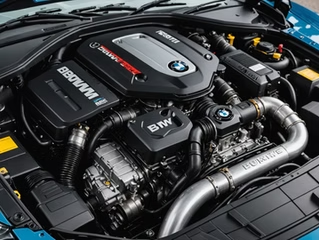
Oil Change and Why It Matters – oil change BMW 3 Series” class=”vb-content-img” loading=”lazy” src=”https://vehiclebar.com/wp-content/uploads/2026/08/oil_change_bmw_3_series_0.jpeg”/>
A BMW 3 Series oil change is the process of draining old BMW engine oil, replacing the oil filter, and refilling the crankcase with fresh lubricant that meets the manufacturer’s specifications. For E90 (2005–2013), F30 (2012–2019), and G20 (2019–present) generations, this service is the single most important maintenance task for preserving engine health. Skipping it leads to accelerated wear, sludge buildup, and premature failure of critical components.
The role of engine oil in the BMW N20, B48, and B58 engines
The BMW 3 Series has used several engine families that place different demands on oil. The N20 engine (found in many E90 and F30 models) is a turbocharged four-cylinder that runs hot and is sensitive to oil degradation. The B48 engine, which replaced the N20 in later F30 and G20 models, uses an updated timing chain design and benefits from oils with solid thermal stability. The B58 engine, a turbocharged inline-six found in the M340i and 340i models, requires a full 6.9 quarts of oil and places extreme thermal stress on the lubricant during sustained high-performance driving. Each of these engines demands a specific BMW Long Life (LL) certification to ensure proper protection and performance.
How a BMW oil change differs from a standard Japanese or American car service
A BMW 3 Series oil change differs from a typical Japanese or American car service in several important ways. First, BMW requires synthetic oil exclusively — there is no conventional oil option. Second, the oil filter is a cartridge-style element housed in a plastic or aluminum cap on top of the engine, rather than a spin-on canister located underneath. Third, BMW specifies a precise torque value for both the drain plug (18 Nm / 13 ft-lb) and the filter housing cap (25 Nm / 18 ft-lb), and over-torquing either can cause expensive damage. Finally, after completing the oil change, the service must be reset through the vehicle’s iDrive or instrument cluster — a step that is unnecessary on most Japanese or American vehicles.
Understanding BMW’s Condition Based Service (CBS) vs. fixed intervals
BMW’s Condition Based Service (CBS) system calculates oil change intervals based on driving conditions, including mileage, fuel consumption, ambient temperature, and driving style. Unlike fixed intervals of 5,000 or 7,500 miles common on other brands, CBS can extend the oil change interval to 10,000–15,000 miles or one year, whichever comes first. However, many independent BMW specialists recommend changing oil at 7,500–10,000 miles regardless of CBS status, particularly for turbocharged engines that run hot. The CBS system also tracks other service items like brake fluid, microfilter, and spark plugs, but the oil service is the most frequently triggered maintenance item.
Choosing the Correct Oil for Your BMW 3 Series

Selecting the correct oil for your BMW 3 Series is not optional — it is a requirement for maintaining the engine warranty and ensuring long-term reliability. BMW specifies oils that meet the BMW Long Life (LL) certification standards, which are more stringent than the API or ACEA ratings used by most other manufacturers.
BMW LL-01 vs. LL-04 vs. LL-17FE+ specifications explained
BMW LL-01 is the standard specification for most gasoline engines built before 2018, including the N20, N52, and N55. It requires a full synthetic oil with a high viscosity index and solid anti-wear additives. BMW LL-04 is designed for European-market vehicles with diesel particulate filters (DPF) and is also backward-compatible with many gasoline engines; it has a lower ash content to protect emissions systems. BMW LL-17FE+ is the newest specification, introduced for the B48 and B58 engines in G20 models; it is a low-viscosity, fuel-economy-focused oil (typically 0W-20) that meets stricter emissions and efficiency standards. Using the wrong specification — for example, putting LL-01 oil in a G20 — can trigger warning lights and may void the warranty.
Recommended viscosity grades: 0W-20, 5W-30, 0W-40
The recommended viscosity for your BMW 3 Series depends on the engine and generation. For E90 models with N52 or N20 engines, BMW recommends 5W-30 or 0W-40 with LL-01 certification. For F30 models with N20 or N26 engines, 5W-30 is the standard choice, though 0W-40 is acceptable in warmer climates. For G20 models with B48 or B58 engines, BMW specifies 0W-20 with LL-17FE+ certification for maximum fuel economy, though 5W-30 with LL-01 is acceptable for track use or hot climates. Always check your owner’s manual and the oil filler cap — the correct viscosity is printed on both.
Top oil brands that meet BMW Long Life certification
Several premium oil brands offer products that meet BMW Long Life certification. Liqui Moly (specifically their Leichtlauf High Tech 5W-30 and Synthoil High Tech 5W-40) is a favorite among BMW enthusiasts and independent shops. Castrol Edge 5W-30 with LL-01 is the factory-fill oil for many BMW models and is widely available. Mobil 1 European Formula 0W-40 meets LL-01 and is a strong performer in turbocharged engines. Motul Specific LL-01 5W-30 and Pennzoil Platinum Euro LX 0W-30 are also certified options. Avoid “universal” synthetic oils that do not carry the BMW LL certification — they may not provide adequate protection for the engine’s specific demands.
Oil Capacity and Filter Specifications by Generation

Knowing the exact oil capacity and filter type for your specific BMW 3 Series generation is critical to avoiding overfilling or underfilling. The table below provides the specifications for the most common engine and chassis combinations.
E90 (2005–2013): N52, N54, N55 engine oil capacities
The E90 generation used a variety of engines. The N52 naturally aspirated inline-six (325i, 328i, 330i) requires 6.5 quarts (6.1 liters) of 5W-30 LL-01 oil. The N54 twin-turbo inline-six (335i) requires 6.5 quarts (6.1 liters) of 5W-30 or 0W-40 LL-01. The N55 single-turbo inline-six (335i, 335is) also requires 6.5 quarts (6.1 liters).
of 5W-30 or 0W-40 LL-01. The diesel variants (320d, 330d) use 5W-30 LL-04 and hold approximately 6.3 quarts. The oil filter on all E90 models is a cartridge-style element located in a black plastic housing on top of the engine, accessible by removing the engine cover. The filter housing cap requires 25 Nm (18 ft-lb) of torque when reinstalled.
F30 (2012–2019): N20, N26, B48 engine oil capacities
The F30 generation introduced the N20 turbocharged four-cylinder (320i, 328i) which requires 5.5 quarts (5.2 liters) of 5W-30 LL-01 oil. The N26 engine, a SULEV variant of the N20, has the same capacity. The B48 engine, introduced in later F30 models (330i), also requires 5.5 quarts (5.2 liters) but specifies 0W-20 LL-17FE+ for optimal fuel economy. The N55 inline-six (335i, 340i) requires 6.5 quarts (6.1 liters) of 5W-30 or 0W-40 LL-01. The B58 inline-six (340i) requires 6.9 quarts (6.5 liters) of 0W-20 LL-17FE+ or 5W-30 LL-01. The F30 uses a cartridge filter in a plastic housing on top of the engine, but the housing design changed slightly between the N20 and B48 engines — the B48 housing is aluminum and requires a different filter wrench.
G20 (2019–present): B48, B58 engine oil capacities
The G20 generation exclusively uses the B48 four-cylinder (330i) and B58 inline-six (M340i) engines. The B48 requires 5.5 quarts (5.2 liters) of 0W-20 LL-17FE+ oil. The B58 requires 6.9 quarts (6.5 liters) of 0W-20 LL-17FE+ for standard driving, though BMW allows 5W-30 LL-01 for track use. The G20 uses an aluminum oil filter housing with a cartridge element. A critical difference on the G20 is the plastic drain plug — it is designed to be replaced at every oil change and requires a special socket (8mm hex) to remove. Over-torquing this plug can strip the threads in the oil pan, requiring a full pan replacement.
Oil filter types: cartridge vs. canister and where to buy
Oil filter types: Details
All BMW 3 Series models from the E90 onward use cartridge-style oil filters, not spin-on canisters. The cartridge is a pleated paper element with a plastic or metal core, housed in a cap-style housing on top of the engine. This design allows for tool-free filter access in most cases, though a filter wrench is needed to loosen the cap. Genuine BMW filters (part numbers vary by engine) are made by Mann or Mahle and are identical to the aftermarket versions sold under those brands. You can purchase OEM-quality filters from FCP Euro, ECS Tuning, Pelican Parts, or Amazon for $10–$20. Avoid cheap no-name filters, as they may not have the correct bypass valve pressure or filtration media.
Tools and Materials Needed for the Job

Before starting your BMW 3 Series oil change, gather all necessary tools and materials. Having everything on hand before you begin will save time and prevent frustration.
Complete tool list: sockets, wrenches, filter tools, and safety equipment
You will need a socket set with metric sockets (8mm, 10mm, 13mm, 17mm, and 18mm), a torque wrench capable of 10–30 Nm, an oil filter wrench (either a cap-style tool that fits the specific filter housing or a strap wrench), a drain pan with at least 8-quart capacity, a funnel, and a set of ramps or a floor jack with jack stands. For the G20’s plastic drain plug, you will need an 8mm hex socket. Safety equipment includes nitrile gloves, safety glasses, and shop rags. A fluid extractor is optional but can be used to remove oil through the dipstick tube on some models, though the drain plug method is more thorough.
Recommended oil filter brands and part numbers
For the E90 N52/N54/N55, use Mann HU-816x or Mahle OX 178D. For the F30 N20/N26, use Mann HU-6011z or Mahle OX 1109D. For the F30/G20 B48, use Mann HU-6014z or Mahle OX 1288D. For the F30/G20 B58, use Mann HU-6014z or Mahle OX 1288D (same as B48). Genuine BMW filters are also available: part number 11-42-7-564-310 for the N52/N54/N55, 11-42-7-564-310 for the N20, and 11-42-7-564-310 for the B48/B58. Always verify the part number against your VIN before purchasing.
Oil drain plug replacement: when and why (including G20 plastic plug)
Oil drain plug replacement: Details
The drain plug on most BMW 3 Series models is a steel bolt with a copper or aluminum crush washer. The crush washer should be replaced at every oil change to ensure a proper seal. On the E90 and F30, the drain plug is a 17mm or 18mm bolt torqued to 18 Nm (13 ft-lb). On the G20, BMW switched to a plastic drain plug with an integrated O-ring that must be replaced at every oil change — it is a wear item, not a reusable component. The G20 plug is torqued to 18 Nm as well, but it is easy to strip if over-torqued. Replacement G20 drain plugs cost $5–$10 and are available from BMW dealers or online parts retailers.
Step-by-Step Oil Change Procedure

This step-by-step procedure applies to all E90, F30, and G20 BMW 3 Series models, with generation-specific notes where applicable. Follow these steps in order to complete the job safely and correctly.
Preparation: warming the engine, lifting the car, and safety precautions
Start by warming the engine to operating temperature — this thins the oil and allows for more complete drainage. Drive the car for 5–10 minutes or let it idle until the coolant temperature reaches 190°F. Park on a level surface, engage the parking brake, and chock the rear wheels. Lift the front of the car using ramps or a floor jack with jack stands. Never work under a car supported only by a jack. Allow the engine to cool for 5 minutes after warming — the oil should be warm but not scalding hot. Put on nitrile gloves and safety glasses before proceeding.
Draining the old oil: locating the drain plug and proper disposal
Position the drain pan under the oil pan drain plug. The drain plug is located on the bottom of the oil pan, typically on the driver’s side of the vehicle. Use the correct socket (17mm for most E90/F30, 18mm for some F30, 8mm hex for G20) to loosen the plug counterclockwise. Remove the plug by hand, keeping pressure against it to prevent it from falling into the drain pan. Allow the oil to drain completely — this takes 3–5 minutes. Inspect the old oil for metal shavings or a milky appearance, which could indicate internal engine problems. Once drained, replace the crush washer (or the entire plug on G20) and reinstall the plug, torquing to 18 Nm (13 ft-lb). Dispose of the old oil at a local auto parts store or recycling center — never pour it down a drain or into the trash.
Removing and replacing the oil filter
Move the drain pan under the oil filter housing. The filter housing is on top of the engine, typically covered by an engine cover that must be removed first (on E90 models, the cover is held by four 10mm bolts; on F30 and G20, it is held by clips or a single 10mm bolt). Use the appropriate filter wrench to loosen the filter housing cap counterclockwise. Remove the cap and lift out the old filter cartridge. Note the orientation of the old filter — the new filter must be installed in the same position. Clean the filter housing with a shop rag to remove any debris. Install the new filter cartridge into the housing, ensuring it seats properly. Replace the O-ring on the filter housing cap (a new O-ring is included with most filter kits) and lubricate it with a small amount of fresh oil. Reinstall
the cap and torque it to 25 Nm (18 ft-lb). Do not over-torque — the housing is plastic on E90 and F30 models and can crack, while the G20’s aluminum housing is more forgiving but still has a specified limit.
Refilling with the correct oil type and quantity
Locate the oil filler cap on top of the valve cover — it is clearly marked with the oil can symbol and the recommended viscosity. Remove the cap and insert a clean funnel. Pour in the correct amount of oil for your engine (refer to the capacity table above). For most engines, this is between 5.5 and 6.9 quarts. Add oil slowly, pausing periodically to check the level. Do not overfill — adding too much oil can cause foaming, increased crankcase pressure, and seal damage. After adding the full capacity, replace the oil filler cap and hand-tighten it until snug.
Checking the oil level and inspecting for leaks
Start the engine and let it idle for 30–60 seconds. This circulates the new oil through the engine and fills the new filter. While the engine is running, inspect underneath the car for any leaks at the drain plug or filter housing. Turn off the engine and wait 2–3 minutes for the oil to settle back into the oil pan. Check the oil level using the dipstick (on E90 models) or the electronic oil level gauge in the iDrive system (on F30 and G20 models). If the level is low, add more oil in small increments. If the level is high, you will need to drain some oil — overfilling is worse than underfilling. Once the level is correct, reinstall any engine covers you removed.
Resetting the oil service light via OBD-II and iDrive
After completing the oil change, you must reset the service reminder. On E90 models without iDrive, turn the ignition to position 1 (accessory mode), press and hold the trip odometer reset button for 10 seconds until the service menu appears, then navigate to “Oil Service” and press and hold to reset. On E90 models with iDrive, go to Vehicle Settings > Service Required > Reset Oil Service. On F30 and G20 models, the reset is done through iDrive: go to Vehicle Status > Service Required > Engine Oil > Reset. Alternatively, you can use a BMW-specific OBD-II scanner (like Carly or BimmerCode) to reset the service light electronically. The CBS system will automatically recalculate the next service interval based on your driving habits.
Torque Specifications and Common Mistakes

Torque specifications are critical on BMW engines. Over-torquing or under-torquing fasteners can lead to leaks, stripped threads, or catastrophic engine damage. This section covers the exact specs and the most common DIY mistakes.
Drain plug torque: 18 Nm (13 ft-lb) — why it matters
The drain plug on all BMW 3 Series models must be torqued to exactly 18 Nm (13 ft-lb). This is a relatively low value compared to many other vehicles. The reason is that the oil pan is made of aluminum (on E90 and F30) or magnesium (on some G20 models), and the threads are easily stripped if over-torqued. A stripped drain plug requires either a helicoil insert or a complete oil pan replacement — a repair that can cost $800–$1,500. Under-torquing is equally problematic, as the plug can vibrate loose and cause a sudden loss of oil pressure. Always use a calibrated torque wrench for this fastener.
Filter housing cap torque: 25 Nm (18 ft-lb) — avoiding cracks
The oil filter housing cap must be torqued to 25 Nm (18 ft-lb). On E90 and F30 models, the housing is made of plastic, and over-torquing can crack the housing or strip the threads. A cracked filter housing will leak oil and requires replacement of the entire housing assembly — a $200–$400 part plus labor. On G20 models, the housing is aluminum, which is more durable, but the cap still has a 25 Nm limit. Always replace the O-ring on the cap when changing the filter, as a worn O-ring is a common source of oil leaks.
Common DIY mistakes: stripped pans, overfilled oil, and wrong filter
Common DIY mistakes: Details
The most common DIY mistakes on BMW 3 Series oil changes include: (1) over-torquing the drain plug, which strips the aluminum oil pan threads — this is the #1 cause of oil pan replacement; (2) overfilling the engine with oil, which can cause foaming, increased pressure, and seal failure — always check the level after running the engine; (3) using the wrong oil filter — a filter with the wrong bypass valve pressure can starve the engine of oil at startup; (4) forgetting to replace the crush washer or O-ring, leading to leaks; (5) not warming the engine before draining, which leaves old oil in the engine; and (6) skipping the service light reset, which can cause the CBS system to display incorrect service intervals.
Cost Comparison: DIY vs. Dealer vs. Independent Shop

The cost of a BMW 3 Series oil change varies dramatically depending on where you have it done. Understanding the price differences can help you make an informed decision about your maintenance budget.
DIY cost breakdown: oil, filter, and tools
A DIY oil change for a BMW 3 Series costs between $70 and $110 per service. This includes 5.5–6.9 quarts of premium synthetic oil (at $8–$12 per quart) and a quality filter (at $10–$20). If you need to purchase tools for the first time, add $50–$100 for a torque wrench, filter wrench, and drain pan — but these tools are reusable for years. Over the life of the vehicle, DIY saves approximately $100–$140 per oil change compared to dealer pricing.
Dealer pricing: what you pay for and whether it’s worth it
BMW dealerships charge between $180 and $250 for an oil change on a 3 Series, depending on your location and the model. This price includes genuine BMW oil and filter, labor, and a multi-point inspection. Dealerships also reset the CBS service light and stamp your service booklet, which can be valuable for resale value and warranty compliance. However, the actual oil and filter cost the dealer about $50–$60 — the rest is labor and overhead. For most owners, the dealer premium is not justified unless your vehicle is under warranty or you value the documented service history.
Independent shop pricing and what to look for
Independent BMW specialists typically charge $120–$160 for an oil change on a 3 Series. This is a middle ground between DIY and dealer pricing. Independent shops often use the same quality oil and filters as the dealer (Mann, Mahle, Castrol, Liqui Moly) and may offer more flexible scheduling. When choosing an independent shop, look for one that specializes in BMW or European vehicles, has good reviews, and uses OEM-quality parts. Ask if they reset the CBS service light — some independent shops skip this step, which can cause confusion later.
Service Intervals and the BMW CBS System

Understanding BMW’s Condition Based Service (CBS) system is essential for maintaining your 3 Series correctly. The CBS system is not a simple mileage counter — it uses multiple data points to determine when service is actually needed.
How CBS calculates oil change intervals (10,000–15,000 miles)
The CBS system monitors engine oil temperature, engine load, fuel consumption, driving distance, and time since the last service. It uses this data to calculate a personalized service interval that typically falls between 10,000 and 15,000 miles, or one year, whichever comes first. Aggressive driving, frequent short trips, and hot climates will shorten the interval, while highway cruising at moderate speeds will extend it. The CBS system displays the remaining mileage and days until service in the instrument cluster and iDrive.
Why many specialists recommend 7,500–10,000 mile intervals
Despite BMW’s official CBS intervals, many independent BMW specialists and enthusiast communities recommend changing oil at 7,500–10,000 miles, regardless of what the CBS system says. The reasons are practical: turbocharged engines (N20, B48, B58) run hotter and stress the oil more than naturally aspirated engines; the CBS system does not account for oil dilution from fuel in direct-injection engines; and
extended intervals can lead to sludge buildup, particularly in engines that are driven primarily in stop-and-go traffic. For peace of mind and maximum engine longevity, a 7,500-mile interval is a reasonable compromise that balances cost with protection.
How to check your remaining oil life via iDrive and instrument cluster
To check your remaining oil life on an E90 with iDrive, navigate to Vehicle Settings > Service Required. On F30 and G20 models, go to Vehicle Status > Service Required > Engine Oil. The display will show a percentage of remaining life and an estimated mileage countdown. On models without iDrive (base E90), press the trip odometer button with the ignition on to cycle through the service displays. The CBS system also provides a warning message when service is due, along with a yellow or red service indicator light.
What happens if you exceed the recommended interval
Understanding happens if you exceed the recommended interval
Exceeding the recommended oil change interval on a BMW 3 Series can have serious consequences. Old oil loses its viscosity and lubricating properties, leading to increased metal-on-metal contact and accelerated engine wear. The oil also becomes contaminated with combustion byproducts, fuel, and moisture, which can form sludge that blocks oil passages and starves critical components. In extreme cases, this can lead to timing chain failure (a known issue on N20 engines), turbocharger failure, or complete engine seizure. BMW’s warranty does not cover damage caused by neglected maintenance, so exceeding the interval by a significant margin can void your coverage.
Generation-Specific Tips and Known Issues

Each BMW 3 Series generation has its own quirks and known issues that can affect the oil change process. Being aware of these can save you time, money, and frustration.
E90: Oil filter housing gasket leaks and how to spot them
The E90 generation is notorious for oil filter housing gasket (OFHG) leaks. The gasket between the oil filter housing and the engine block degrades over time, allowing oil to leak onto the serpentine belt and alternator. Symptoms include oil spots under the car, a burning oil smell, and low oil pressure warnings. The OFHG is a common DIY replacement (parts cost $20–$30) but requires removing the intake manifold on some models. If you notice oil around the filter housing during your oil change, inspect the gasket for cracks or hardening. Replacing the OFHG at the same time as your oil change is efficient since the housing is already accessible.
F30: N20 timing chain issues and oil consumption concerns
The F30 with the N20 engine has a known issue with timing chain guide wear and chain stretch, which can lead to catastrophic engine failure if not addressed. While this is not directly caused by oil changes, regular oil changes with the correct specification can slow the degradation of the timing chain components. The N20 is also known for higher-than-normal oil consumption — some owners report consuming 1 quart every 1,000–2,000 miles. If your F30 is consuming oil at this rate, check the oil level monthly and keep a quart of the correct oil in your trunk. The N20 also has a plastic oil filter housing that can crack if over-torqued — always use a torque wrench.
G20: Plastic drain plug replacement and B58 oil starvation risks
The G20’s plastic drain plug is a unique feature that requires special attention. Unlike traditional metal plugs, the plastic plug is designed to be single-use and must be replaced at every oil change. The plug has an integrated O-ring that can deform over time, leading to leaks. Also, the B58 engine in the M340i has been reported to experience oil starvation during sustained high-G cornering on track days — this is due to oil sloshing away from the pickup tube. If you track your G20, consider an oil baffle or an oil accumulator kit. For street driving, regular oil changes with the correct LL-17FE+ oil are sufficient.
Oil pan drain plug replacement and thread repair options
If you strip the drain plug threads on your BMW 3 Series, you have several repair options. The most common solution is a helicoil or Timesert thread repair kit, which costs $30–$50 and can be installed with basic tools. This involves drilling out the damaged threads, tapping new threads, and installing a threaded insert. A more permanent solution is replacing the oil pan entirely, which costs $400–$800 for the part plus labor. On some models, the oil pan can be replaced without dropping the subframe, but on others (particularly xDrive models), the subframe must be lowered, adding significant labor time. To avoid this issue entirely, always use a torque wrench and never exceed 18 Nm on the drain plug.
Oil Level Sensor Diagnostics and Related Maintenance

The oil level sensor is an electronic component that monitors the oil level in the oil pan and communicates with the CBS system. Understanding how it works and how to diagnose issues can prevent false warnings and engine damage.
How the oil level sensor works and common failure symptoms
The oil level sensor is located in the oil pan and uses ultrasonic or float-based technology to measure the oil level. It sends this data to the engine control module, which displays the level in the iDrive system. Common failure symptoms include inaccurate oil level readings, intermittent low oil warnings, or a persistent “oil level sensor” fault code. The sensor can fail due to contamination from old oil, electrical connector corrosion, or physical damage. Replacement costs $80–$150 for the part plus labor, which typically requires draining the oil and removing the oil pan.
Diagnosing oil level sensor faults with OBD-II codes
If you suspect a faulty oil level sensor, connect an OBD-II scanner to read the fault codes. Common codes include P1E00 (oil level sensor circuit malfunction), P1E01 (oil level sensor signal out of range), and P1E02 (oil level sensor intermittent). Before replacing the sensor, check the wiring harness and connector for damage or corrosion. Also verify that the oil level is actually correct — a low oil level can trigger a false sensor fault. If the sensor is confirmed faulty, replace it with a genuine BMW or OEM-quality part (Hella, VDO, or Bosch are common OEM suppliers).
When to replace the oil pan gasket and oil level sensor
The oil pan gasket on BMW 3 Series models can leak over time, particularly on higher-mileage vehicles. Symptoms include oil spots under the car, a burning oil smell, and low oil levels. The oil pan gasket replacement is a labor-intensive job that requires dropping the oil pan, which on many models means lowering the subframe. This is a good opportunity to replace the oil level sensor at the same time, since it is mounted in the oil pan. If you are already doing an oil change and notice oil around the pan gasket, plan to address it soon — a small leak can quickly become a large one.
Frequently Asked Questions

This section addresses the most common questions about BMW 3 Series oil changes, providing clear, actionable answers.
Can I use conventional oil in my BMW 3 Series?
No. BMW requires synthetic oil in all 3 Series models. Conventional oil does not meet the BMW Long Life certification standards and will not provide adequate protection for the engine, particularly in turbocharged models. Using conventional oil can lead to accelerated wear, sludge buildup, and potential engine failure. It may also void your warranty if the engine is damaged as a result.
How often should I change the oil in my BMW 3 Series?
BMW’s official recommendation is to follow the CBS system, which typically indicates service between 10,000 and 15,000 miles or one year, whichever comes first. However, many independent specialists recommend changing the oil at 7,500–10,000 miles for optimal engine protection, especially for turbocharged engines or if you drive in severe conditions (extreme temperatures, heavy traffic, or frequent short trips).
What happens if I overfill the oil?
Overfilling the oil can cause several problems. Excess oil can foam, which reduces its lubricating properties and can lead to increased engine wear. It can also increase crankcase pressure, causing oil to be forced past seals and gaskets, leading to leaks. In severe cases, overfilling can cause the engine to hydrolock, which can cause catastrophic damage. If you overfill, drain the excess oil immediately.
Is it necessary to use BMW-branded oil?
No, it is not necessary to use BMW-branded oil. What matters is that the oil meets the BMW Long Life (LL) certification standard for your engine. Many reputable brands — including Castrol, Mobil 1, Liqui Moly,
Motul, and Pennzoil — offer oils that meet or exceed BMW LL specifications. BMW-branded oil is simply re-branded Castrol or Shell product, so you are paying a premium for the label. As long as the oil bottle displays the appropriate LL-01, LL-04, or LL-17FE+ certification, it is suitable for your engine.
Can I switch between 0W-20 and 5W-30?
You can switch between 0W-20 and 5W-30 only if both viscosities are approved for your specific engine. For G20 models with B48 or B58 engines, BMW approves both 0W-20 (LL-17FE+) for standard driving and 5W-30 (LL-01) for track use or hot climates. For E90 and F30 models, 5W-30 is the standard recommendation, and 0W-40 is acceptable in warmer conditions. However, you should never use a viscosity that is not listed in your owner’s manual — using the wrong viscosity can cause inadequate lubrication or increased engine wear.
How do I know if my oil filter housing is leaking?
Signs of an oil filter housing leak include oil pooling on top of the engine, oil dripping onto the exhaust manifold (causing a burning smell), oil spots under the car, and low oil levels. On E90 models, the oil filter housing gasket is a common failure point. Inspect the area around the filter housing during each oil change — if you see oil residue or wetness, the gasket may need replacement. A leaking filter housing can allow oil to contaminate the serpentine belt and cause it to slip or fail.
What is the best way to dispose of used engine oil?
Understanding is the best way to dispose of used engine oil?
Used engine oil is hazardous waste and must be disposed of properly. Most auto parts stores (AutoZone, Advance Auto Parts, O’Reilly) accept used oil for recycling at no charge. Some municipalities also have household hazardous waste collection centers. Never pour used oil down a drain, onto the ground, or into the trash — this is illegal in most jurisdictions and causes environmental damage. Store used oil in a sealed container (the original oil bottle works well) until you can transport it to a recycling location.
Conclusion: Final Checklist and Maintenance Schedule

Completing a BMW 3 Series oil change is a straightforward task that any competent DIYer can handle with the right tools and knowledge. This final section provides a quick reference checklist and a recommended maintenance schedule to keep your 3 Series running smoothly.
Quick reference checklist for your next oil change
Before you begin, confirm you have: the correct oil (check LL certification and viscosity), a new oil filter, a new drain plug crush washer (or complete plug for G20), a torque wrench, an oil filter wrench, a drain pan, and safety gloves. During the job: warm the engine, drain the oil completely, replace the crush washer, torque the drain plug to 18 Nm, replace the filter and O-ring, torque the filter cap to 25 Nm, refill with the correct oil quantity, check for leaks, verify the oil level, and reset the CBS service light. After the job: dispose of the old oil properly and record the date and mileage in your maintenance log.
Recommended maintenance schedule for E90, F30, and G20
For all BMW 3 Series generations, follow this schedule: engine oil and filter every 7,500–10,000 miles (or annually, whichever comes first); oil filter housing gasket inspection at every oil change; oil level sensor check every 30,000 miles; oil pan gasket inspection every 60,000 miles; and coolant flush every 60,000 miles. For turbocharged engines (N20, B48, B58), consider more frequent oil changes if you drive aggressively or in severe conditions. Always consult your owner’s manual for the manufacturer’s official recommendations, but treat these intervals as a conservative baseline for maximum engine longevity.
When to seek professional help vs. DIY
DIY oil changes are appropriate for most BMW 3 Series owners who have basic mechanical skills and the proper tools. However, seek professional help if you encounter stripped threads, a cracked filter housing, a leaking oil pan gasket, or any signs of internal engine damage. Also, if you do not have a torque wrench or are uncomfortable working under a lifted vehicle, a professional oil change is a reasonable investment. For complex repairs like oil pan replacement or oil level sensor replacement, an independent BMW specialist is often more cost-effective than a dealer while providing comparable quality.
You might also like: carbon buildup cleaning, oil change Toyota Camry, best oil for hybrid engines