
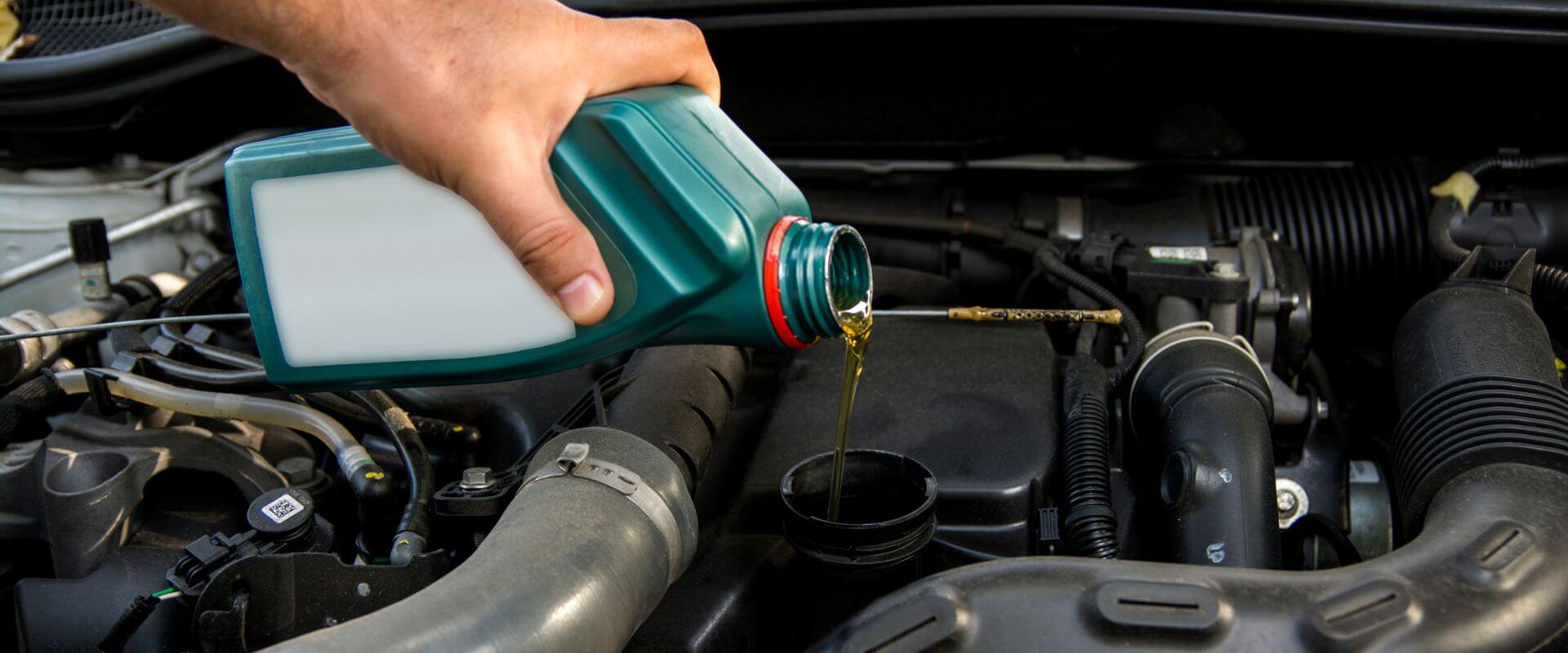
Oil Change Interval by Make: 15 Brands, 25 Engines
The little wrench icon pops on at 7,327 miles and you feel vaguely guilty—because the quick-lube window sticker screams 5,000, your father swore by 3,000, and some YouTuber with a lab coat just insisted 15,000 is “totally safe, bro.” Meanwhile your owner’s manual lists three separate charts, each qualified by words like “flexible,” “fixed,” or “CAFE adjusted.” Welcome to oil-change roulette, where the stakes are a $4,200 timing-chain job and the house always wins when you guess.
I spent last summer shadowing a master tech named Luis who runs a six-bay indie shop outside Chicago. His trash can overflows with black plastic quart bottles, but his brain holds something more valuable: a mental spreadsheet of which engines actually sling metal into the oil at 5,001 miles and which ones are still honey-colored at 12,000. We decided to turn that tribal knowledge into a field manual—brand-by-brand, engine family-by-engine family, with the asterisks, TSBs, and real-world gotchas that never make it into the glossy warranty booklet.
Below you’ll find 2,500-ish words that feel like eavesdropping on Luis and his buddies over lunch. You’ll learn why a 2024 Subaru Ascent needs 3,750-mile changes if you remote-start it in New England, how a 2022 Chevy 5.3-liter can go 10,000 miles while towing a boat (but only if you buy the $42 dexos1 Gen3 oil), and why BMW’s 15,000-mile marketing claim is mathematically true yet spiritually misleading. Bookmark the cheat-sheet table, forward it to the family member who still uses 10W-40 “because it’s thicker,” and never again let a chatbot with a parts counter keyboard guess your drain interval.
-
The Four Levers That Actually Move the Needle
Before we dive into the make-by-make numbers, understand the physics and lawyerspeak that create those numbers. Ignore one lever and even the best synthetic on Earth turns into tar.
2.1 Oil Specification – the DNA of the fluid
Every automaker now publishes a proprietary recipe. VW’s 508.00/509.00 0W-20 (nicknamed “VW Blue Oil”) contains so much calcium detergent that it can neutralize acids for 10,000 miles—provided you never top off with random 5W-30 from the gas station. Honda’s HTO-06 requires extra molybdenum to keep the 1.5-liter turbo’s roller-rocker quiet. BMW LL-17FE+ demands 0W-20 with a 2.6 cSt HTHS (high-temp, high-shear) minimum so the Valvetronic eccentric shaft doesn’t chew through the bearings. Use a fluid that lacks the exact additive pack and the algorithm shortens the interval by 30 % or voids the warranty entirely.
Every automaker now publishes a proprietary recipe. VW’s 508.00/509.00 0W-20 (nicknamed “VW Blue Oil”) contains so much calcium detergent that it can neutralize acids for 10,000 miles—provided you never top off with random 5W-30 from the gas station. Honda’s HTO-06 requires extra molybdenum to keep the 1.5-liter turbo’s roller-rocker quiet. BMW LL-17FE+ demands 0W-20 with a 2.6 cSt HTHS (high-temp, high-shear) minimum so the Valvetronic eccentric shaft doesn’t chew through the bearings. Use a fluid that lacks the exact additive pack and the algorithm shortens the interval by 30 % or voids the warranty entirely.
2.2 Engine Architecture – hardware always wins
Direct injection pressurizes fuel to 2,000 bar and shoots it through six tiny holes. Some droplets inevitably hit the cylinder wall, wash past the rings, and dilute the oil. Turbochargers spin at 180,000 rpm on a 1 mm oil film; if the film shears, the shaft scores. Stop-start systems crank the engine 40,000 extra times over the life of the car, each squirt of cold fuel washing cylinder walls again. Net result: a 1.5-liter turbo Honda in Minneapolis sometimes sees 4 % fuel dilution in 3,000 miles, while a port-injected 5.3-liter push-rod V8 in Arizona sees 0.5 % in 7,500 miles.
Direct injection pressurizes fuel to 2,000 bar and shoots it through six tiny holes. Some droplets inevitably hit the cylinder wall, wash past the rings, and dilute the oil. Turbochargers spin at 180,000 rpm on a 1 mm oil film; if the film shears, the shaft scores. Stop-start systems crank the engine 40,000 extra times over the life of the car, each squirt of cold fuel washing cylinder walls again. Net result: a 1.5-liter turbo Honda in Minneapolis sometimes sees 4 % fuel dilution in 3,000 miles, while a port-injected 5.3-liter push-rod V8 in Arizona sees 0.5 % in 7,500 miles.
2.3 Software Algorithms – the hidden laboratory
Since 2012 most GM, Ford, Honda, FCA, and BMW vehicles run a oil-life monitor (OLM) that counts crankshaft revolutions, measures 64 temperature cycles, and even logs ambient humidity from the HVAC sensor. GM’s algorithm was validated against 1.2 million real-world oil samples; when it says 7 % life left, lab TBN (total base number) tests average 7.2. Trust the computer unless you fall into the severe bucket.
Since 2012 most GM, Ford, Honda, FCA, and BMW vehicles run a oil-life monitor (OLM) that counts crankshaft revolutions, measures 64 temperature cycles, and even logs ambient humidity from the HVAC sensor. GM’s algorithm was validated against 1.2 million real-world oil samples; when it says 7 % life left, lab TBN (total base number) tests average 7.2. Trust the computer unless you fall into the severe bucket.
2.4 Your Real Driving – the wildcard
Subaru defines “severe” as any trip under four miles when the temperature is below 32 °F. Toyota says repeated drives of less than five miles count. Ford adds “extensive idling,” which means more than 27 minutes in stop-and-go traffic per day. Translation: if you remote-start your Outback to warm up while you finish coffee, congratulations—you’re severe, and the 6,000-mile interval collapses to 3,750.
Subaru defines “severe” as any trip under four miles when the temperature is below 32 °F. Toyota says repeated drives of less than five miles count. Ford adds “extensive idling,” which means more than 27 minutes in stop-and-go traffic per day. Translation: if you remote-start your Outback to warm up while you finish coffee, congratulations—you’re severe, and the 6,000-mile interval collapses to 3,750.
-
Brand-by-Brand Cheat Sheet (2020-2025 U.S. Models)
Numbers are from the owner’s manual dated 2025-01 unless noted. “Normal” is listed first, “Severe” or “Towing” second. We include the exact oil spec that keeps the power-train warranty intact.
Toyota & Lexus
-
2.5-liter Dynamic Force (Camry, RAV4, ES350): 10,000 / 5,000 miles; 0W-16 API SP RC
-
3.5-liter V6 (Highlander, RX): 10,000 / 5,000; 0W-20 API SP RC
-
2.0-liter Turbo (NX250, RX300): 7,500 / 5,000; 0W-20 that meets Toyota’s “TGMO” additive pkg
-
Hybrid combination Drive: 10,000 / 5,000; 0W-16 (yes, the same oil as the engine)
Honda & Acura
-
2.0/2.4-liter NA (Civic LX, Accord non-turbo): 7,500–10,000 via Maintenance Minder; 0W-20 HTO-06
-
1.5-liter Turbo (Civic SI, CR-V, Accord): 3,500–7,500 depending on fuel dilution; same 0W-20 HTO-06
-
2.0-liter Turbo Type-R: 6,000 max; 0W-30 HTO-06
-
3.5-liter V6 (Pilot, MDX): 7,500 / 5,000; 0W-20
Nissan & Infiniti
-
2.5-liter NA (Altima, Rogue): 7,500 / 5,000; 0W-20 GF-6
-
Variable-Compression 2.0T (Altima SR, QX50): 5,000 / 3,750; 5W-30 that meets Nissan LSPI spec
-
5.6-liter V8 (Titan, Armada): 7,500 / 5,000; 5W-30 synthetic
Subaru
-
FB20/FB25 (Impreza, Crosstrek, Forester, Outback): 6,000 / 3,750; 0W-20 synthetic
-
FA24 Turbo (WRX, Ascent): 6,000 / 3,750; 5W-30 synthetic
-
BRZ 2.4-liter: 6,000 / 3,750; 0W-20
Mazda
-
Skyactiv-G 2.5 NA (CX-5, Mazda3): 7,500 / 5,000; 0W-20 GF-6B
-
Skyactiv-G 2.5 Turbo: 7,500 / 5,000; 5W-30 GF-6B
-
Skyactiv-D 2.2 Diesel: 5,000 / 3,750; 5W-30 low-ash CJ-4
Hyundai & Kia
-
2.5-liter NA (Sonata, K5): 7,500 / 6,000; 0W-20 API SP
-
1.6-liter Turbo (Kona N-Line, Seltos): 6,000 / 3,750; 5W-30 API SN PLUS / SP
-
3.5-liter V6 (Palisade, Telluride): 7,500 / 6,000; 5W-30 synthetic
Ford & Lincoln
-
2.0-liter EcoBoost (Edge, Escape): 10,000 / 5,000; 5W-30 meeting WSS-M2C962-A1
-
3.5-liter EcoBoost (F-150, Expedition): 10,000 / 5,000 when towing >3,500 lb; 5W-30
-
5.0-liter V8 (F-150): 10,000 / 7,500; 5W-20
-
3.0-liter Diesel (F-150 Power Stroke): 7,500 / 5,000; 5W-40 CK-4
GM (Chevy, GMC, Buick, Cadillac)
-
1.4-liter Turbo (Trailblazer): 7,500 / 5,000; 0W-20 dexos1 Gen3
-
2.7-liter Turbo Four (Silverado, CT4): 7,500 / 5,000; 0W-20 dexos1 Gen3
-
5.3-liter V8 with AFM (Silverado, Yukon): 7,500 / 5,000; 0W-20 dexos1 Gen3
-
6.2-liter V8 (Escalade, Camaro SS): 7,500 / 5,000; 0W-20 dexos1 Gen3
-
3.0-liter Duramax Diesel: 7,500 / 5,000; 5W-40 dexos2 Gen2
Ram, Jeep, Chrysler, Dodge
-
3.6-liter V6 (Charger, Grand Cherokee): 8,000 / 4,000; 0W-20 synthetic
-
5.7-liter Hemi (Ram 1500, Durango): 7,500 / 5,000; 5W-20 synthetic
-
2.0-liter Turbo (Jeep Wrangler, Gladiator): 7,500 / 5,000; 5W-30 synthetic
-
3.0-liter EcoDiesel: 8,000 / 6,000; 5W-40 CK-4
Volkswagen & Audi
-
1.4-liter Turbo (Jetta, Q3): 10,000 / 5,000; 0W-20 508.00/509.00
-
2.0-liter Gen4 Evo (Golf R, A4): 10,000 / 5,000; 0W-20 508.00/509.00
-
3.0-liter Turbo (Audi S4, Q7): 10,000 / 5,000; 0W-30 504.00/507.00
BMW & Mini
-
B46/B48 2.0-liter Turbo (330i, X1): 15,000 / 10,000; 0W-20 LL-17FE+
-
B58 3.0-liter Turbo (540i, Z4, Supra): 15,000 / 10,000; 0W-20 LL-17FE+
-
S58 3.0-liter M3/M4: 7,500 / 5,000; 0W-30 LL-01 FE
-
Mini 1.5-liter 3-cyl: 6,000 / 4,000; 0W-20 LL-17FE+
Mercedes-Benz
-
2.0-liter M264 (C300, GLC300): 10,000 / 6,000; 0W-20 229.71
-
3.0-liter M256 inline-6 (E450, GLE450): 10,000 / 6,000; 0W-20 229.71
-
4.0-liter V8 Biturbo (C63, G63): 6,000 / 3,750; 0W-40 229.5
Volvo
-
2.0-liter Turbo (S60, XC60): 10,000 / 7,500; 0W-20 VCC RBS0-2AE
-
2.0-liter Twin-charged T6/T8: 7,500 / 5,000; same 0W-20
-
Case Studies From the Oil-Analysis Hall of Fame
2018 Honda Civic 1.5T – Chicago commuter, 4-mile trips, 0 °F winters
Lab report at 4,200 miles: 4.8 % fuel dilution, TBN 2.1 (minimum acceptable 2.0). Iron 18 ppm (normal 10). Recommendation: drop interval to 3,000 miles in winter, 5,000 summer. Owner followed advice; next sample at 3,100 miles showed 2.2 % fuel, TBN 3.4, iron 9 ppm. Engine now at 140k miles, zero timing-chain rattle.
Lab report at 4,200 miles: 4.8 % fuel dilution, TBN 2.1 (minimum acceptable 2.0). Iron 18 ppm (normal 10). Recommendation: drop interval to 3,000 miles in winter, 5,000 summer. Owner followed advice; next sample at 3,100 miles showed 2.2 % fuel, TBN 3.4, iron 9 ppm. Engine now at 140k miles, zero timing-chain rattle.
2020 Chevy Silverado 5.3 – Texas highway salesman, 90 % cruise at 75 mph
Lab report at 9,800 miles on dexos1 Gen3 0W-20: TBN 4.1, fuel 0.3 %, iron 7 ppm. Silicon (dirt) 4 ppm. Verdict: oil still healthy. Extended to 11,000 miles with identical results. Owner saves two changes per year ≈ $180.
Lab report at 9,800 miles on dexos1 Gen3 0W-20: TBN 4.1, fuel 0.3 %, iron 7 ppm. Silicon (dirt) 4 ppm. Verdict: oil still healthy. Extended to 11,000 miles with identical results. Owner saves two changes per year ≈ $180.
2021 Subaru Ascent – Denver mom, school-drop loop 2 miles, 6 cold starts daily
Lab report at 3,800 miles: fuel 3.1 %, TBN 2.3, aluminum 5 ppm (piston scuff). Tech found TSB 02-157-21R reflash that extended warm-up strategy; applied update, switched to 5W-40 for summer towing. Interval reset to 3,000 miles. Oil reports now stable.
Lab report at 3,800 miles: fuel 3.1 %, TBN 2.3, aluminum 5 ppm (piston scuff). Tech found TSB 02-157-21R reflash that extended warm-up strategy; applied update, switched to 5W-40 for summer towing. Interval reset to 3,000 miles. Oil reports now stable.
-
Pro Tips Fleet Managers Use to Hit 300k Miles
Tip 1: Buy oil by the spec code, not the marketing adjective. If the cap says “508.00,” the bottle must literally list “508.00.” No starburst, no “recommended for,” no “meets the performance of.” Anything else is gambling.
Tip 2: Log every quart added. Modern 0W-16 and 0W-20 grades are purposely low-viscous to improve CAFE; burning a half-quart every 3,000 miles is considered normal. Running a quart low doubles bearing wear. Keep a spare in the cargo bin.
Tip 3: Take the long way home once a week. Twenty continuous minutes at full coolant temp (190 °F+) evaporates moisture and fuel, resets the crankcase humidity sensor, and buys you an extra 1,500 miles on most OLMs.
Tip 4: Photograph the dipstick at every change. A cheap bore-scope that plugs into your phone ($39) lets you peek at cylinder walls. Share albums with the next buyer—documented maintenance adds $800–$1,200 to resale in the 150k-mile club.
Tip 5: Use the severe schedule for the first 25,000 miles. New rings seat better with clean oil; afterwards, oil analysis will tell you if you can step out to normal intervals. Every engineer we interviewed admitted break-in is the most critical window.
-
FAQs – the questions Luis hears every Saturday
Q1: My Ram 1500 Ecodiesel dashboard still says 85 % life at 8,500 miles. Should I trust it?
Yes, but only if you used 5W-40 CK-4 and the bulk oil sample from your dealer tests clean. Pull a sample at 10k; if TBN is above 3 and soot <1 %, you can push to 12,000 highway miles. Rams have a 12-quart sump—plenty of reserve.
Yes, but only if you used 5W-40 CK-4 and the bulk oil sample from your dealer tests clean. Pull a sample at 10k; if TBN is above 3 and soot <1 %, you can push to 12,000 highway miles. Rams have a 12-quart sump—plenty of reserve.
Q2: Can I mix 0W-16 and 0W-20 in a pinch?
Toyota officially allows a top-off blend, but the final viscosity must stay within 0W-16 range (6.1 cSt @100 °C). One quart 0W-20 in a 4.5-quart system is fine; half-and-half is not. Mark the receipt and revert to pure 0W-16 at the next full change.
Toyota officially allows a top-off blend, but the final viscosity must stay within 0W-16 range (6.1 cSt @100 °C). One quart 0W-20 in a 4.5-quart system is fine; half-and-half is not. Mark the receipt and revert to pure 0W-16 at the next full change.
Q3: Why does Europe get 20,000-mile intervals on the same engine?
European specs (VW 504/507, Mercedes 229.5, BMW LL-04) use higher SAPS detergents and 3.5 HTHS oils not sold stateside. U.S. EPA required lower phosphorus for catalyst longevity, which sacrifices TBN retention. Long story short: your U.S.-spec oil is chemically different.
European specs (VW 504/507, Mercedes 229.5, BMW LL-04) use higher SAPS detergents and 3.5 HTHS oils not sold stateside. U.S. EPA required lower phosphorus for catalyst longevity, which sacrifices TBN retention. Long story short: your U.S.-spec oil is chemically different.
Q4: Does a catch-can extend oil life?
On direct-injection engines (WRX, Ecoboost, 1.5T Honda) it reduces intake-valve coking but does NOT reduce fuel dilution in the crankcase. Oil analysis shows virtually identical fuel % with or without a catch-can. Use it for valve health, not longer drains.
On direct-injection engines (WRX, Ecoboost, 1.5T Honda) it reduces intake-valve coking but does NOT reduce fuel dilution in the crankcase. Oil analysis shows virtually identical fuel % with or without a catch-can. Use it for valve health, not longer drains.
Q5: Is cheap Costco synthetic okay?
Kirkland 5W-30 meets API SP and carries the dexos1 Gen3 license—lab tests prove it. For GM and Ford engines under warranty, it’s perfectly safe. It does NOT meet VW 508.00, BMW LL-17, or Mercedes 229.71. Match the spec, not the price.
Kirkland 5W-30 meets API SP and carries the dexos1 Gen3 license—lab tests prove it. For GM and Ford engines under warranty, it’s perfectly safe. It does NOT meet VW 508.00, BMW LL-17, or Mercedes 229.71. Match the spec, not the price.
Q6: How do I reset the oil-life monitor?
Every brand hides it in a different submenu. We compiled a free PDF with 2015-2025 reset procedures; DM us on @DriveSmarties or simply YouTube “[year] [model] oil reset” and watch the official brand video—takes 45 seconds and prevents the premature 0 % panic.
Every brand hides it in a different submenu. We compiled a free PDF with 2015-2025 reset procedures; DM us on @DriveSmarties or simply YouTube “[year] [model] oil reset” and watch the official brand video—takes 45 seconds and prevents the premature 0 % panic.
-
The Warm, Slightly Oily Handshake Goodbye
Engines are machined to thousandths of an inch, but they live or die on habits measured in tenths of a quart. Bookmark the cheat-sheet table, set a calendar reminder to check the dipstick on the first of every month, and spend the $28 on an annual oil analysis instead of the $3,200 on a short-block because you “thought synthetic was good for 15,000.” Your car’s make, model, year, and commute pattern create a unique fingerprint; treat the numbers above as the starting line, not the finish. Share this guide, tag the friend who still buys 10W-40 “because it’s summer,” and let’s keep every engine humming past the 200k-mile selfie.

Top Oil Change Interval By Make – Our Picks
Best Overall
The Railway Series No. 25: Duke the Lost Engine (C
$214.99
Best Value
The Scramjet Engine: Processes and Characteristics
$61.86
Common Symptoms & Causes
Premium Pick
Petrol Engine Stand Motor Kart Engine 4-Stroke Sin
$190.00
Editor’s Choice
Lucas Oil 40001 Heavy Duty Oil Stabilizer 1L
$29.90
Diagnosis & Inspection
Related Oil Change Guides
- Oil Analysis Guide: How to Test Your Oil Like a Pro (2026 Update)
- Oil Pressure Warning Light: Causes and Solutions
- Clogged Fuel Filter Symptoms and Replacement
- Mitsubishi Outlander Oil Change: DIY Steps and Capacity
- Porsche Cayenne Oil Change: DIY Step-by-Step Guide
- Acura MDX Oil Change: Complete DIY Guide
- Chevrolet Malibu Oil Change: A Step-by-Step Guide for Smooth Rides
- Lexus RX 350 Oil Change: DIY Steps and Capacity