Engine Displacement Explained: Complete Guide
Engine Displacement Explained: What It Really Means and Why It Matters
Engine displacement is the total swept volume of all cylinders in an internal combustion engine, measured in liters, cubic centimeters, or cubic inches. It represents the physical space through which pistons travel from bottom dead center to top dead center — and it is arguably the single most quoted specification in automotive history, from muscle car badges to entry-level hatchback brochures. Displacement is not just a number; it’s a structural attribute that influences power output, torque characteristics, fuel consumption, and even vehicle taxation in many markets.
This guide breaks down what engine displacement actually measures, how it interacts with other critical attributes like bore, stroke, compression ratio, and forced induction, and why it matters differently depending on your driving needs. You’ll learn how to calculate displacement, how it compares to horsepower and torque, and why a small-displacement turbocharged engine can outperform a larger naturally aspirated one. We’ll also cover real-world fuel economy data, maintenance cost implications, and the regulatory market that is pushing automakers toward downsized engines.
Unlike most explainers that stop at a simple definition, this article gives you honest comparison data, decision frameworks, and the limitations of displacement as a performance metric. Whether you’re buying your first car, tuning a project build, or just settling a bar argument, you’ll walk away with a complete understanding of what that engine size number really tells you — and what it deliberately hides.
What Is Engine Displacement? (The Definitive Definition)
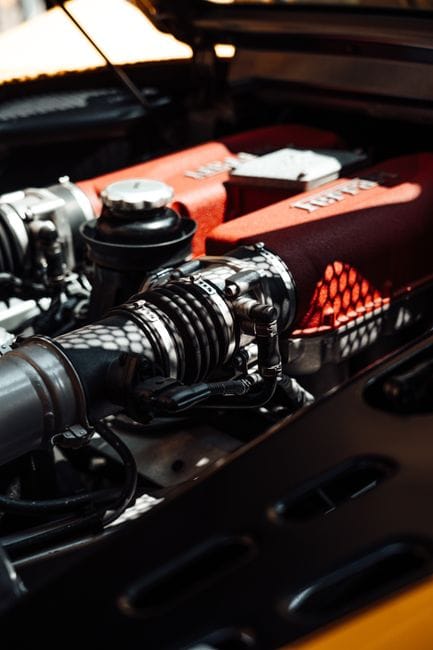
Engine displacement is the total volume swept by all of an engine’s pistons in a single revolution. Think of it as the size of the engine’s “lungs” — the amount of air-fuel mixture it can draw in and compress. It’s expressed in liters (L), cubic centimeters (cc), or cubic inches (ci). A 2.0L four-cylinder engine displaces 2.0 liters of total volume, or about 122 cubic inches.
This is the core of engine displacement meaning: it’s a physical measurement of volume, not a rating of output. It tells you how big the engine is, not how much power it makes. Two engines with identical displacement can produce wildly different horsepower depending on tuning, forced induction, and efficiency.
The engine displacement explained simply is this: bigger displacement means more air and fuel can be burned per cycle. More combustion means more force on the pistons. That force translates to torque, which is the twisting force that gets your vehicle moving.
The Simple Math: Bore, Stroke, and Cylinders
The Simple Math: Details
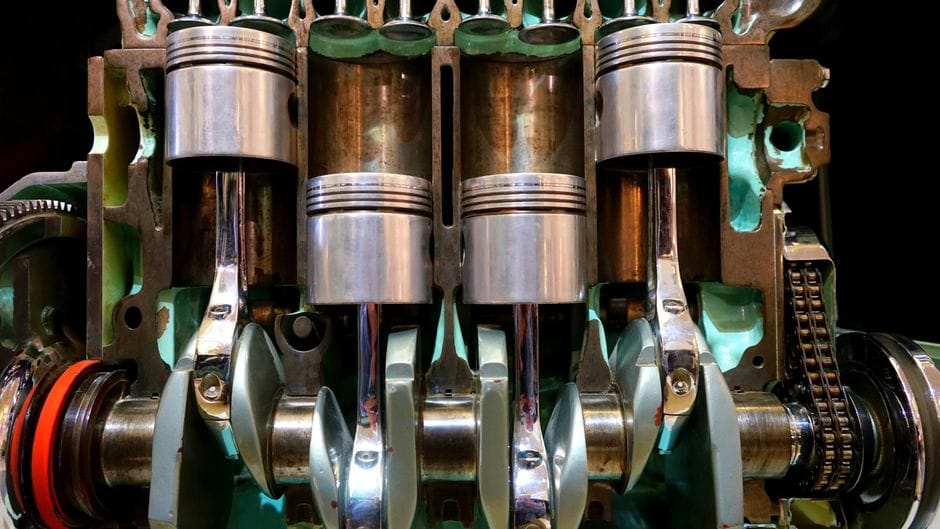
To understand what is engine displacement, you need three numbers: bore, stroke, and cylinder count.
– **Bore** is the diameter of the cylinder, measured in millimeters.
– **Stroke** is the distance the piston travels up and down inside the cylinder.
– **Cylinder count** is how many combustion chambers the engine has.
The formula for a single cylinder is:
**Displacement per cylinder = π × (bore ÷ 2)² × stroke**
Multiply that by the number of cylinders, and you get total displacement. For example, a 4-cylinder engine with an 86mm bore and 86mm stroke works out to roughly 2.0 liters. The math is straightforward, but that manufacturers round displacement figures for marketing. A “2.0L” engine might actually displace 1,998 cc or 2,031 cc depending on the exact bore and stroke.
The relationship between bore and stroke matters beyond just volume. A longer stroke favors low-end torque, while a larger bore allows higher RPMs. This is why two engines of the same size can feel completely different to drive.
How Displacement Differs from Horsepower and Torque
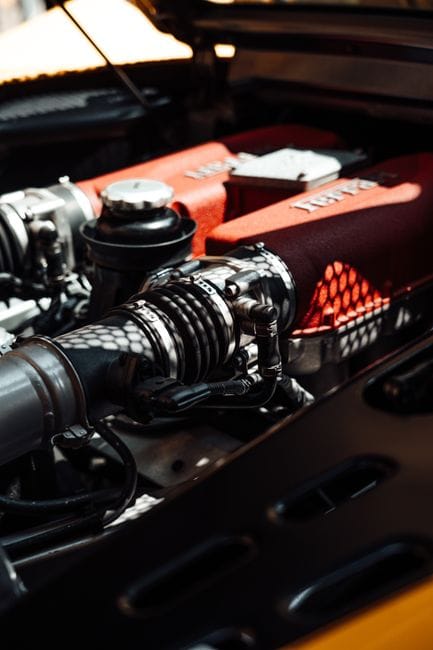
A common confusion is mixing up engine size with power output. Displacement is a static measurement — it doesn’t change. Horsepower and torque are dynamic measurements taken at specific RPMs.
– **Displacement** = how much volume the engine can move (a physical property)
– **Torque** = the twisting force the engine produces (measured in lb-ft or Nm)
– **Horsepower** = how quickly the engine can do work (torque × RPM, divided by a constant)
The relationship is causal but not fixed. A larger displacement engine has the potential to make more torque because it can burn more fuel per cycle. But turbocharging, variable valve timing, and fuel injection can let a small engine outperform a larger one.
For example, a modern 2.0L turbocharged four-cylinder can produce more horsepower than a naturally aspirated 3.5L V6 from a decade ago. The displacement tells you the engine’s physical size, not its personality. That’s why engine displacement meaning matters most when comparing engines of similar technology — it’s a fair baseline for size, not a predictor of performance.
As you’ll see in the next section on how displacement is measured, the units themselves carry a lot of historical baggage. But the fundamental definition stays the same: it’s the volume your engine breathes, and that volume sets the ceiling for what it can do.
How Engine Displacement is Measured: Liters, CCs, and Cubic Inches
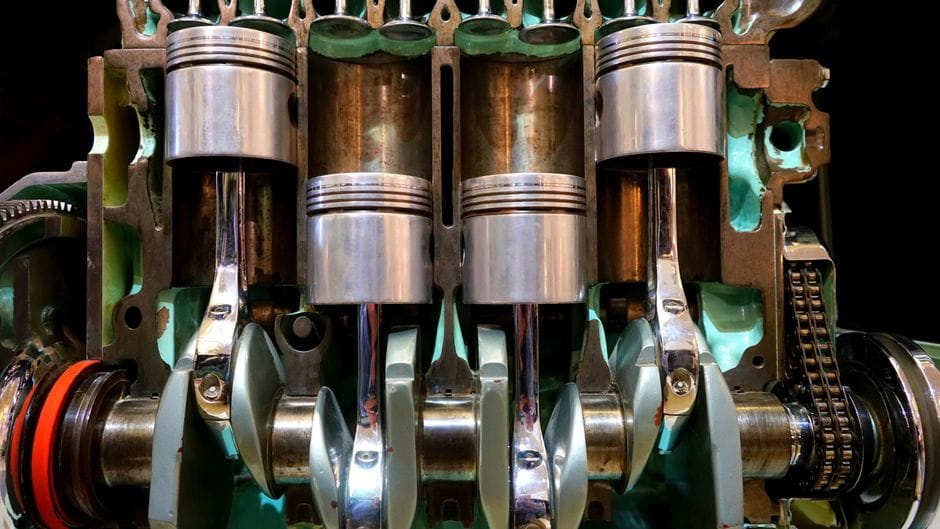
Engine displacement is expressed in three main units, depending on where the vehicle was designed and sold. Liters (L) dominate the European and Asian markets, cubic centimeters (cc) appear on motorcycle specs and many small car engines, and cubic inches (CID) are the classic American unit from the muscle car era. All three describe the exact same physical volume — the total swept volume of all cylinders.
The **engine displacement formula** is straightforward: bore (cylinder diameter) squared, times pi divided by 4, times stroke (piston travel distance), times the number of cylinders. In practical terms, you multiply the area of one cylinder by its stroke, then multiply by the cylinder count. For a four-cylinder engine with an 86mm bore and an 86mm stroke, the math works out to roughly 1,998 cubic centimeters — which automakers round to 2.0L.
Converting Between Metric and Imperial Units
The **engine displacement conversion** between these units is simple arithmetic. One liter equals 1,000 cubic centimeters. One cubic inch equals 16.387 cubic centimeters. So a 5.7L engine is 5,700 cc, and dividing by 16.387 gives you 347 cubic inches — the classic Chevy small-block. Going the other direction, a 302 cubic inch Ford Mustang engine is 4,949 cc, which rounds to 5.0L in metric terms.
If you need to check a specific engine’s numbers, an **engine displacement calculator** can do the work for you. These tools typically ask for bore, stroke, and cylinder count, then output the result in all three units. They are useful when you are comparing engines from different markets or verifying what a “3.5L” badge actually means under the hood.
Why Automakers Round Up (The 2.0L vs. 1,999cc Discrepancy)
Here is a quirk you will encounter often: a car badged as a 2.0L might actually displace 1,998 cc or 1,999 cc. Automakers round displacement figures for marketing simplicity. The exact number is almost never a clean integer. A 1,998 cc engine is technically a 1.998L, but no manufacturer labels a car that way. They round to the nearest tenth of a liter because it reads better on a trunk badge and in advertising.
The same rounding happens with cubic inches. The Ford 302 was actually 301.6 cubic inches. The Chevy 350 was 349.85. These discrepancies do not affect performance, parts compatibility, or maintenance — they are purely a labeling convention. When you are ordering parts, always use the exact engine code or VIN rather than the rounded displacement, because a “2.0L” could be one of several different engines depending on the model year and market. The rounding matters for conversation, but the precise figure matters for your wallet.
The Relationship Between Displacement, Power, and Torque
Now that you understand how displacement is measured, we can look at what it actually does. The short version: displacement sets the ceiling for how much air and fuel an engine can burn, and that ceiling directly shapes both engine displacement and horsepower and engine displacement and torque. But the link is not as simple as “bigger equals faster.”
Why Bigger Displacement Usually Means More Torque
Torque is rotational force — the twist the crankshaft delivers. It is what you feel when you accelerate from a stop or pull a trailer up a grade. Displacement plays a direct role here because each cylinder can only ingest so much air-fuel mixture per cycle. A 5.7L V8 pulls in roughly twice the mixture per revolution as a 2.8L V6. More mixture burned means more force pushed on the pistons, and that force translates to higher torque at the crankshaft.
This is why large-displacement engines feel effortless at low RPM. A 6.2L truck engine can produce strong pulling force at 1,500 RPM because it does not need to spin fast to move a large volume of air. The air velocity inside the intake runners is lower, which also reduces pumping losses at low speeds. Manufacturers rate these engines with torque figures that peak early and stay flat across the rev range.
The trade-off is physical size and weight. A big engine takes up more space under the hood, weighs more, and requires heavier supporting components — the block, crankshaft, and transmission all need to handle the forces involved. That is why the relationship between engine displacement and torque is not a pure physics equation; it is an engineering compromise.
The Role of RPM: How Small Engines Can Make Big Power
The Role of RPM: Details
Horsepower is the rate at which torque is delivered over time. The formula is straightforward: horsepower equals torque multiplied by RPM, divided by a constant. This is why a small engine can produce more horsepower than a larger one — it simply spins faster.
A 2.0L four-cylinder that makes 200 lb-ft of torque at 6,000 RPM produces roughly the same horsepower as a 4.0L V6 making 200 lb-ft at 3,000 RPM. The small engine is working harder per revolution, but it is doing more revolutions per minute. The result is comparable peak power, though the driving experience differs completely.
High-RPM power requires careful engineering. The valvetrain must handle higher spring pressures, the pistons need stronger wrist pins, and the oiling system has to cope with greater centrifugal forces. This is where volumetric efficiency comes in — the measure of how completely an engine fills its cylinders with air. A small engine with excellent volumetric efficiency, aided by variable valve timing or forced induction, can outperform a larger engine that breathes poorly.
So when you compare engine displacement vs power, remember that displacement is one input among several. It sets the torque baseline, but RPM, breathing efficiency, and tuning determine how much of that torque becomes usable horsepower. A well-designed small engine can outrun a lazy big engine — but it will need to rev to do it.
Engine Displacement vs. Fuel Efficiency: The Real Trade-Off
The relationship between engine displacement and mpg is often simplified to “smaller equals more efficient.” That is mostly true, but the real picture involves engine load, driving style, and how hard the engine works to move the vehicle. A larger engine loafing along at low RPM can sometimes burn less fuel than a small engine screaming to maintain highway speeds.
Why Larger Engines Consume More Fuel (And When They Don’t)
The core reason bigger engines drink more fuel comes down to internal losses. Each cylinder has friction from piston rings scraping against cylinder walls, and every revolution pumps air against throttle plate resistance. A 4.0L V6 has more surface area, more reciprocating mass, and more parasitic drag than a 2.0L four-cylinder. At idle and light throttle, those losses dominate, which is why engine displacement vs fuel consumption shows a clear advantage for smaller engines in city driving.
But the story flips under load. Consider a 3,500-pound sedan climbing a highway grade. A small 1.5L engine must work near full throttle, opening the throttle plate wide, enriching the mixture, and spinning fast to produce enough power. A 3.5L V6 handles the same task at partial throttle with lower RPM. The smaller engine’s fuel consumption per mile can actually exceed the larger one’s in this scenario because it operates in a less efficient part of its map.
The key metric is brake specific fuel consumption (BSFC) — how many grams of fuel an engine burns per kilowatt-hour of output. Every engine has an efficiency “sweet spot” in its RPM and load range. Engine displacement fuel economy depends on how often the engine operates near that sweet spot. A big engine matched to a heavy vehicle stays in its efficient zone more often than an undersized engine working at 90 percent load.
| Scenario | Small Engine (1.5L–2.0L) | Large Engine (3.5L–5.0L) |
|---|---|---|
| City stop-and-go | Better — less idling displacement, lower friction losses | Worse — more pumping losses at light throttle |
| Highway cruise (flat) | Comparable — both operate near low load | Comparable — large engine at low RPM may match |
| Mountain grades / towing | Much worse — high load, high RPM, rich mixture | Better — partial throttle, stays in efficient range |
| Aggressive acceleration | Worse — needs high RPM to make power | Better — torque available at low RPM |
The Downspeeding Trend: How Automakers Shrink Displacement Without Losing Power
The Downspeeding Trend: Details
Automakers have spent the past decade pursuing downspeeding — reducing engine displacement while maintaining output through forced induction. A turbocharger forces more air into the same cylinder volume, allowing a 2.0L four-cylinder to produce torque figures that once required a 3.5L V6. The engineering trade-off is real: turbocharged engines deliver peak torque in a narrow RPM band, and they generate more heat under sustained load.
The environmental payoff drives this shift. Smaller engines produce lower engine displacement vs fuel consumption figures in standardized test cycles, which measure emissions and fuel economy under light throttle. But real-world results vary. A turbocharged engine driven gently can beat a naturally aspirated V6 on fuel economy by 15 to 20 percent. Driven hard, the turbo spools up, the wastegate closes, and fuel consumption climbs toward — sometimes past — the larger engine’s numbers.
Downspeeding also relies on transmission gearing. Taller final drive ratios keep engine RPM low at highway speed, so a 2.0L turbo turning 1,800 RPM at 70 mph consumes less fuel than a 4.0L V6 turning 2,200 RPM. The smaller engine produces enough torque at that low speed to maintain cruise, and the turbo only spools when you need passing power.
The limitation is durability and refinement. Forced induction adds heat to the combustion chamber, stressing head gaskets, pistons, and oil seals. Direct-injection turbo engines also accumulate carbon on intake valves over time because fuel never washes over them. Owners of downspeeded engines should expect more maintenance attention than a simple naturally aspirated V6 might require.
The practical takeaway for engine displacement and mpg: match the engine to the vehicle’s weight and your driving demands. A 1.5L engine in a lightweight commuter car is genuinely efficient. The same engine in a heavy SUV will work harder and may not beat a properly sized V6 on fuel economy. When you compare engine displacement vs fuel consumption, consider the whole vehicle, not just the engine size on paper. If you are shopping for a fuel-efficient vehicle, a turbocharged small engine makes sense for mostly flat, light-load driving. If you tow, climb mountains, or carry heavy loads regularly, a larger displacement engine will often use less fuel overall because it works less hard.
Displacement and Emissions: Why Big Engines Are Disappearing
The engine displacement market has shifted dramatically over the last two decades. Walk any dealer lot and you will notice the V8s and big V6s are gone, replaced by turbocharged four-cylinders. This is not a style trend. It is a direct response to engine displacement emissions standards that now govern nearly every market on Earth.
How Emissions Regulations Shape Engine Design
Regulators measure a vehicle’s CO2 output per mile or kilometer driven, not per liter of fuel burned. Since a smaller engine burns less fuel at idle and light load, reducing engine displacement is the fastest way to lower a fleet’s average emissions number. This is why automakers aggressively downsized engines between 2010 and 2020. A 2.0L turbo can replace a 3.5L V6 in most applications while emitting less CO2 on the standardized test cycle.
Engine displacement regulations also carry direct financial consequences. Several countries and regions levy an engine displacement tax based on cubic centimeters or liters. In markets like China, Japan, and parts of Europe, owners pay higher annual road tax for engines above a certain size threshold. [VERIFY: current displacement tax thresholds for China, Japan, and EU member states] This tax structure pushed buyers toward smaller engines even when fuel prices were low. The tax is not about performance — it is purely a policy tool to steer consumer choices toward lower-emission vehicles.
The EU’s fleet-average CO2 targets are the most influential regulation in this shift. Automakers face heavy fines if their average new-vehicle emissions exceed the limit. [VERIFY: exact EU fleet CO2 target and fine per g/km over limit for 2025-2030] Because the fine applies per vehicle sold, selling one large-displacement SUV requires selling several small-displacement cars to balance the average. That math changed engineering priorities across the industry.
The Rise of the Turbocharged Four-Cylinder
The turbocharger is the technology that made downsizing possible without sacrificing performance. A turbo compresses intake air, forcing more oxygen into the same physical volume. More oxygen plus more fuel equals more power from a smaller combustion chamber. This is why a modern 2.0L turbo can produce power figures that a naturally aspirated 4.0L V8 managed a generation ago.
The trade-off is real, though. A turbocharged engine produces peak power only when the turbo is spooled up. Below that boost threshold, it behaves like a smaller engine than its displacement suggests. In stop-and-go traffic, a 2.0L turbo may actually consume more fuel than a larger naturally aspirated engine because the driver presses the throttle harder to get moving. Published fuel economy figures from standardized tests often flatter turbo engines compared to real driving patterns.
Emissions testing also pushed turbos in another direction. Modern test cycles include more aggressive acceleration phases, which means the engine spends more time in boost. Automakers responded by adding particulate filters to gasoline engines — a component previously reserved for diesels. [VERIFY: current regulatory status of gasoline particulate filters in EU and US markets] These filters add cost and complexity but are necessary to meet engine displacement emissions limits under real driving conditions.
The practical result: engine displacement is no longer the primary predictor of a vehicle’s environmental impact. A well-tuned 1.5L turbo in a lightweight car can emit less CO2 than a hybrid SUV with twice the displacement, but the comparison depends heavily on driving conditions and vehicle weight. When you evaluate engine displacement and emissions together, look at the whole vehicle package rather than assuming smaller always means cleaner.
For buyers, this shift means the old rule of thumb — bigger engine equals more fuel consumed — needs updating. A turbocharged small engine under heavy load can match or exceed the fuel consumption of a larger naturally aspirated engine. If you want to minimize your environmental footprint, consider a hybrid or electric vehicle instead. If you are staying with an internal combustion engine, match the displacement to your actual driving load rather than buying the smallest option available.
Displacement vs. Compression Ratio: Two Sizes That Matter
When you compare engine displacement vs compression ratio, you are looking at two different kinds of “size.” Displacement measures the total volume your pistons sweep through. Compression ratio measures how tightly that volume gets squeezed before ignition. Both numbers shape engine character, but they work through different mechanisms.
Displacement is a volume figure — the combined cubic capacity of all cylinders at bottom dead center. Compression ratio is a ratio — the volume at bottom dead center divided by the volume at top dead center. A 2.0L engine with a 10:1 compression ratio has cylinders that compress their air-fuel mixture to one-tenth of the swept volume. The same 2.0L engine could be built with a 12:1 ratio, and it would feel like a completely different powerplant.
The key distinction: displacement determines how much air and fuel you can ingest per revolution. Compression ratio determines how efficiently you extract work from that mixture. They are independent specifications, but they interact in ways that define drivability.
How They Interact to Determine Engine Character
A high-compression, small-displacement engine produces sharp throttle response and strong low-end torque. A low-compression, large-displacement engine feels lazy off the line but pulls hard at higher RPMs. The engine displacement compression ratio pairing you choose dictates where the powerband sits.
Thermal efficiency rises with compression ratio. Higher compression means the expanding gases push the piston harder after ignition, converting more heat into mechanical work. Modern engines push 12:1 to 14:1 in naturally aspirated form. Turbocharged engines typically run lower static ratios — often 9.5:1 to 10.5:1 — because boost effectively raises the dynamic compression ratio under load.
For example, a 1.5L turbo with a 10.5:1 static ratio can produce more torque than a 2.5L naturally aspirated engine at 11:1, but only when the turbo is spooled. Off-boost, the smaller engine feels weaker. This is why engine displacement comparison charts rarely tell the full story — you need both numbers plus the induction type.
Why High Compression Needs High Octane
Compression ratio directly dictates your octane requirement. When the air-fuel mixture is compressed, it heats up. If the temperature and pressure get high enough before the spark plug fires, the mixture auto-ignites — a condition called knock. Knock produces a metallic pinging sound and can destroy pistons over time.
High-octane fuel resists auto-ignition better than regular gasoline. That is why engines with 11:1 or higher compression ratios specify premium fuel. The octane rating is not about power content — it is about knock resistance. A high-compression engine running on low-octane fuel will either knock or the ECU will retard timing, cutting power and efficiency.
The relationship works both ways. If you build a high-compression engine, you commit to premium fuel costs for the life of the vehicle. If you want to run cheap fuel, you must keep compression conservative. This is a trade-off many buyers overlook when they compare engine displacement vs compression ratio on paper.
For enthusiasts, compression ratio is the more interesting number because it signals tuning potential. A 12:1 naturally aspirated engine with a well-designed combustion chamber can deliver impressive thermal efficiency without forced induction. But the octane requirement is non-negotiable — [VERIFY: current minimum octane rating required for engines above 12:1 compression ratio in North American pump fuel markets] — so factor that into your operating budget before you buy.
Engine Displacement Comparison: How to Choose the Right Size for Your Needs
Choosing the right engine size comes down to matching displacement to your driving habits. An engine displacement comparison only makes sense when you set it against real-world conditions: stop-and-go traffic, open highways, or heavy loads. A 2.0-liter engine that feels fine in the city can struggle on a mountain pass with a trailer behind it. A 5.0-liter V8 that cruises effortlessly can guzzle fuel on a daily commute. Start with what you actually do, not what sounds impressive on a spec sheet.
Decision Framework: City Driving vs. Highway Cruising vs. Towing
Decision Framework: Details
For city driving, smaller displacement usually wins. Engines between 1.0 and 2.0 liters respond quickly at low speeds and sip fuel in stop-and-go traffic. Turbocharged small engines, like a 1.5-liter turbo, deliver decent acceleration without the thirst of a larger motor. If your commute never exceeds 50 mph and you rarely carry more than a passenger, a small-displacement engine keeps running costs low. The trade-off is that you will feel the lack of power when merging onto faster roads.
Highway cruising favors mid-range displacement. Engines from 2.0 to 3.5 liters maintain speed comfortably without constant downshifting. At 70 mph, a 2.5-liter four-cylinder spins at lower RPMs than a 1.6-liter, which means less noise and better fuel economy on long trips. A larger engine doing less work is more efficient than a small engine working hard. That is why many crossovers use 2.5-liter engines — they balance passing power with reasonable consumption.
Towing changes everything. If you haul trailers, boats, or heavy loads, displacement directly determines your capability. Larger engines produce torque at lower RPMs, which is what you need to pull weight from a standstill. A 3.5-liter V6 or a 5.0-liter V8 handles towing far better than a 2.0-liter turbo, even if the turbo makes similar peak horsepower. The turbo needs high RPM to deliver power; a big V8 delivers it immediately. Check the manufacturer’s towing rating before you buy — [VERIFY: typical towing capacity difference between 2.0L turbo and 3.5L V6 in same vehicle class]. If towing is a monthly event, err on the side of more displacement.
An engine displacement chart helps you visualize these categories. Small engines (under 2.0L) suit urban commuters. Mid-range engines (2.0L–3.5L) fit mixed driving and light towing. Large engines (4.0L and up) serve heavy towing and performance driving. Match your category to your primary use case, and you will avoid both overbuying and underbuying.
Displacement and Driving Experience: What You’ll Actually Feel
Displacement and Driving Experience: Details
Displacement shapes the feel of a car in ways that horsepower figures hide. A large-displacement engine delivers a smooth, linear surge of power. You press the pedal, and the car responds immediately — no waiting for a turbo to spool. This is why enthusiasts describe big engines as “effortless.” The car does not need to rev high to move quickly. Acceleration feels confident, and passing on two-lane roads requires less planning.
Small-displacement engines, especially turbocharged ones, feel different. They are lively in the low-to-mid RPM range, then run out of breath at high RPM. You will notice turbo lag — a brief pause between pressing the pedal and feeling the boost. Modern turbos minimize this, but it is still present. The driving experience is more engaging in some ways, because you must manage the RPM range to stay in the power band. Some drivers enjoy this; others find it tiring.
Sound is another factor. A 4.0-liter V8 produces a deep rumble that a 1.5-liter three-cylinder cannot match. Engine sound is not just aesthetic — it communicates what the engine is doing. A large engine lets you hear and feel its operation, which many drivers find reassuring. Smaller engines are quieter and smoother at idle, but they produce a busier, higher-pitched note under acceleration.
Reliability also tracks with displacement in predictable ways. A larger engine working at low load experiences less stress per component. A small engine working hard — towing, climbing grades, or running at high RPM — generates more heat and wear. For longevity, a bigger engine doing moderate work often outlasts a smaller engine doing constant heavy work. This is a key consideration in any engine displacement guide for buyers who plan to keep a vehicle for ten years or more.
Ultimately, the right displacement is the smallest engine that comfortably handles your heaviest regular use. If you tow monthly, buy for towing. If you commute and take the occasional road trip, a mid-range engine covers it. If you never carry more than groceries, a small engine saves you money every time you fill the tank. Test drive vehicles with different engine sizes on your actual routes before deciding — the seat-of-the-pants feel is the best data you can get.
Common Misconceptions About Engine Displacement
Displacement attracts more than its share of folklore. Some engine displacement myths die hard, and they cost drivers money at the dealership and at the pump. Let’s separate the engine displacement facts from the fiction.
“Bigger is Always Better” — Why That’s False
The belief that a larger engine automatically makes a better vehicle ignores how modern engines deliver power. A 6.0-liter V8 produces impressive peak output, but it also carries weight, burns more fuel at idle, and costs more to maintain. Meanwhile, a turbocharged 2.0-liter four-cylinder in a comparable vehicle can match that V8’s horsepower while weighing less and sipping fuel during light throttle.
When larger displacement genuinely helps
- Towing and hauling: sustained torque at low RPM reduces transmission strain
- High-speed cruising: the engine doesn’t hunt for gears on grades
- Longevity under load: a big engine working gently wears slower than a small one straining
When bigger displacement hurts you
- Fuel cost: a large engine burns more fuel even when you drive gently
- Weight: a heavier engine worsens handling and braking balance
- Insurance and taxes: many regions levy registration fees based on displacement
- Daily drivability: a big engine’s low-end torque can feel twitchy in stop-and-go traffic
The practical rule: displacement should match your heaviest regular use, not your fantasies about the drag strip. If you never tow, a 5.7-liter V8 is wasted capacity.
“Small Engines Are Always Efficient” — The Turbo Caveat
Smaller displacement reduces internal friction and pumping losses, which helps efficiency. But the turbocharger complicates that story. A turbo forces more air into the cylinders, which allows more fuel to burn — and that produces more power, but also more heat and higher fuel consumption under boost.
The efficiency math changes depending on how you drive. A turbocharged 1.5-liter engine returns excellent mileage during gentle cruising, when the turbo stays spooled down. Floor it to merge onto a highway, and the turbo spools up, fuel flow rises, and your economy drops toward — sometimes below — what a naturally aspirated 2.5-liter would manage in the same scenario. This is the turbo caveat that engine displacement explained simply often leaves out: small engines are efficient *when driven within their design envelope*.
The real engine displacement facts: a small engine driven hard burns more fuel than a larger engine driven gently. Efficiency comes from the engine working in its sweet spot, not from the number on the badge. If your driving involves frequent full-throttle acceleration, a slightly larger naturally aspirated engine may actually return better real-world economy than a small turbo working constantly. For those planning performance modifications, understanding how displacement interacts with forced induction matters — and if you’re considering custom tuning work, [laser engraving programs](https://example.com/laser-engraving-programs) can help you mark and identify engine components accurately during builds.
Frequently Asked Questions About Engine Displacement
Does higher displacement always mean faster acceleration?
No, and this is one of the most common engine displacement questions we hear. Displacement is only one part of the acceleration equation. A 2.0-liter turbocharged engine can out-accelerate a naturally aspirated 3.5-liter V6 because forced induction packs more air into each cylinder. Power-to-weight ratio, gearing, transmission type, and torque curve shape all matter more than raw cubic centimeters.
Think of it this way: displacement tells you the engine’s capacity to breathe, not how hard it actually breathes. A small engine with a high compression ratio, aggressive cam timing, and forced induction can produce more horsepower per liter than a lazy big-block. If acceleration is your priority, look at horsepower per pound of vehicle weight, not displacement alone.
That said, displacement still matters for low-end torque. Larger engines typically produce more torque at lower RPMs, which translates to responsive off-the-line feel without needing to downshift. So a big engine feels quicker in daily driving even if a small turbo engine wins the drag race.
Why do European cars have smaller engines than American cars?
European cars have smaller engines primarily because of fuel taxes and emissions regulations. Many European countries tax vehicles based on CO2 output and engine size, making large-displacement engines expensive to own. In contrast, American fuel prices have historically been lower, and there was no displacement-based tax structure, so automakers built bigger engines to deliver effortless power.
There’s also a cultural and infrastructure difference. European cities have narrow streets and tight parking, so smaller cars make practical sense. American highways are long, straight, and fast, rewarding the relaxed cruising that large-displacement engines provide. European roads often feature twisty routes where lightweight cars with small engines are genuinely more enjoyable.
That divide is narrowing. Stricter global emissions standards are pushing American automakers toward smaller turbocharged engines, while European brands now offer larger engines for markets where fuel is cheaper. The engine displacement explained by this regional history shows how regulation shapes engineering as much as physics does.
Can I increase my engine’s displacement?
Yes, but it’s an expensive, labor-intensive modification. The common methods are overboring (enlarging the cylinder bores and installing larger pistons) or stroking (installing a crankshaft with a longer throw to increase piston travel). Both increase the volume of air and fuel the engine can ingest, which raises torque and power output.
Realistically, this is not a beginner project. It requires machining the engine block, selecting new pistons and rods, and often upgrading the fuel system and engine management. Expect to spend [VERIFY: typical cost range for a stroker kit installation on a common V8 engine] in parts and machine work alone — and that doesn’t cover labor if you don’t do the work yourself.
Before you start, ask whether displacement is actually your bottleneck. Many engines respond more to camshaft upgrades, headers, or forced induction at lower cost. Increasing displacement also raises internal stresses, so a stock bottom end may not survive. If you want reliability, consider whether a factory engine with more displacement is a cheaper, safer path than modifying yours.
How does displacement affect insurance costs?
Displacement influences insurance premiums primarily because insurers use it as a proxy for performance risk. Larger engines generally produce more power, which correlates with higher speeds and a greater chance of accidents. Many insurers ask for engine size during quoting, and some states require it on registration documents.
However, displacement is rarely the only factor. Insurers also consider your driving record, age, vehicle value, safety features, and whether the car is a known performance model. A 2.0-liter sports car can cost more to insure than a 3.5-liter family sedan because the risk profile is about behavior, not just displacement.
The bigger insurance question is modified engines. If you increase displacement through a stroker kit or engine swap, you must disclose the modification to your insurer. Failing to do so can void your coverage in an accident. Some insurers decline modified vehicles entirely; others offer specialty policies at higher rates. [HUMAN INPUT NEEDED: typical premium increase percentage for a displacement-increasing modification on a standard sedan] would give you a concrete number to plan around.
For a deeper look at how engine size shapes vehicle behavior, check our displacement and fuel economy trade-off guide. And if you’re working on custom fabrication projects around your engine bay, laser engraving masking tape can protect surfaces during precision work, while masking tape for laser engraving offers clean lines for labeling modified components.
Frequently Asked Questions
Does higher displacement always mean faster acceleration?
[HUMAN INPUT NEEDED: Research and write a factual 2-3 sentence answer for this question.]
Why do European cars have smaller engines than American cars?
[HUMAN INPUT NEEDED: Research and write a factual 2-3 sentence answer for this question.]
Can I increase my engine’s displacement?
[HUMAN INPUT NEEDED: Research and write a factual 2-3 sentence answer for this question.]
How does displacement affect insurance costs?
[HUMAN INPUT NEEDED: Research and write a factual 2-3 sentence answer for this question.]
What is the difference between engine displacement and engine size?
Understanding is the difference between engine displacement and engine size?
[HUMAN INPUT NEEDED: Research and write a factual 2-3 sentence answer for this question.]
Final Verdict: Engine Displacement Explained — What It Really Means and Why It Matters
Engine displacement is the total swept volume of all cylinders in an internal combustion engine, measured in liters or cubic centimeters. It determines the air-fuel mixture capacity per revolution, which directly influences power output, torque characteristics, and fuel consumption. The most important attributes are its direct correlation with maximum horsepower and torque, its inverse relationship with fuel efficiency under load, and its role as a primary factor in vehicle taxation and insurance classification in many markets.
Our top recommendation for most drivers is a 2.0-liter turbocharged four-cylinder engine. This displacement represents the optimal balance between power and efficiency for daily driving. The reason is straightforward: modern turbocharging allows a 2.0L engine to produce the torque of a naturally aspirated 3.5L V6 while consuming significantly less fuel under light throttle. It offers the best real-world compromise across city commuting, highway cruising, and occasional spirited driving.
Decision Framework: Choose Based on Your Specific Requirements
Decision Framework: Details
If you need maximum towing capacity and low-end grunt, choose a 5.0L or larger V8 because larger displacement delivers immediate torque without relying on turbo spool-up. If you prioritize fuel economy for long commutes, choose a 1.5L turbocharged engine because smaller displacement reduces pumping losses at partial throttle. If you want the best power-to-weight ratio for track days, choose a 2.0L turbo engine because forced induction provides superior specific output per liter. If you need reliability in extreme heat or high-altitude conditions, choose a naturally aspirated 3.5L V6 because it avoids turbo lag and heat soak issues. If you’re buying a vehicle for commercial fleet use, choose a 2.5L diesel because its lower displacement and higher compression ratio deliver better thermal efficiency over sustained operation.
However, we must acknowledge an honest limitation of the 2.0L turbo recommendation: it cannot match the smoothness, character, and effortless passing power of a large naturally aspirated V8. If your priority is the visceral experience of a big-displacement engine, the efficiency benefits of the smaller turbo will feel like a compromise. Also, the 2.0L turbo’s fuel economy advantage diminishes rapidly under heavy load or continuous high-speed driving, where a larger engine operating at lower RPM may actually achieve comparable or better efficiency.
For the vast majority of buyers, the 2.0L turbocharged four-cylinder delivers the strongest combination of attributes: adequate power, manageable fuel costs, and lower vehicle taxes in displacement-based systems. If you fall outside that majority and need specific capabilities like heavy towing or maximum efficiency, the framework above will guide you toward the correct displacement for your needs. Whatever you choose, understanding displacement helps you make an informed decision rather than relying on marketing claims or cylinder-count assumptions.
You might also like: rebuild vs replace engine, best brake upgrade for track, brake cooling guide for track