
timing belt vs timing chain
Few decisions in engine maintenance carry the weight of choosing between a timing belt and a timing chain. These two components serve the same fundamental purpose — synchronizing the crankshaft and camshaft rotation so valves open and close at precisely the right moment. But they represent two entirely different engineering philosophies: one designed for quiet, cost-effective operation with scheduled replacement, the other built for longevity at the expense of noise and complexity. Your choice between them determines not just your maintenance schedule, but the long-term reliability profile of your entire powertrain.
This guide breaks down every critical attribute that separates these two systems: replacement intervals, failure modes, cost of ownership over 100,000+ miles, noise characteristics, and which engine families have proven most reliable in real-world service. We’ll examine the engineering trade-offs that automakers face when they select one over the other, and why some manufacturers have switched back and forth between belt and chain designs across generations of the same engine platform.
Unlike typical comparisons that stop at “belts are cheaper, chains last longer,” we dig into the data you actually need — including the inconvenient truth that modern timing chains can fail prematurely when engine oil maintenance is neglected, and that some belt systems now outlast their chain counterparts in specific applications. You’ll leave with a clear decision framework based on your vehicle type, driving habits, and budget horizon, not generic internet wisdom.
What Is a Timing Belt vs Timing Chain? Defining the Engine’s Synchronization System
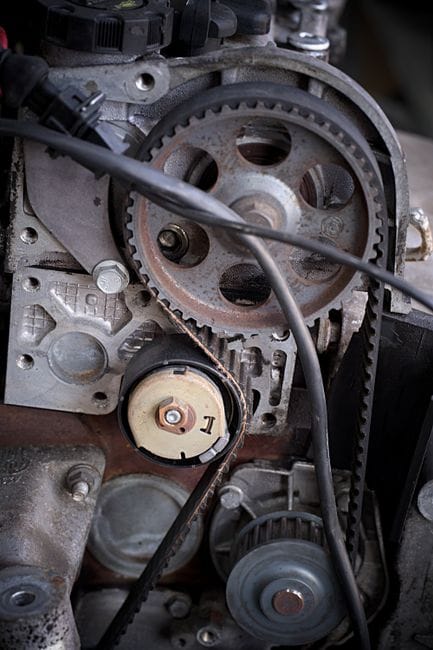
Think of the engine as a precision orchestra. The crankshaft and camshaft must play in perfect time for the engine to run smoothly. The timing belt or timing chain is the conductor’s baton that keeps them synchronized. Both do the same job, but they do it with different materials, maintenance schedules, and failure characteristics.
The timing belt vs timing chain question is really about engine synchronization — the critical process of coordinating piston movement with valve opening and closing. If this synchronization fails, the engine stops running. In some cases, it self-destructs in seconds.
The Core Difference: Material and Design
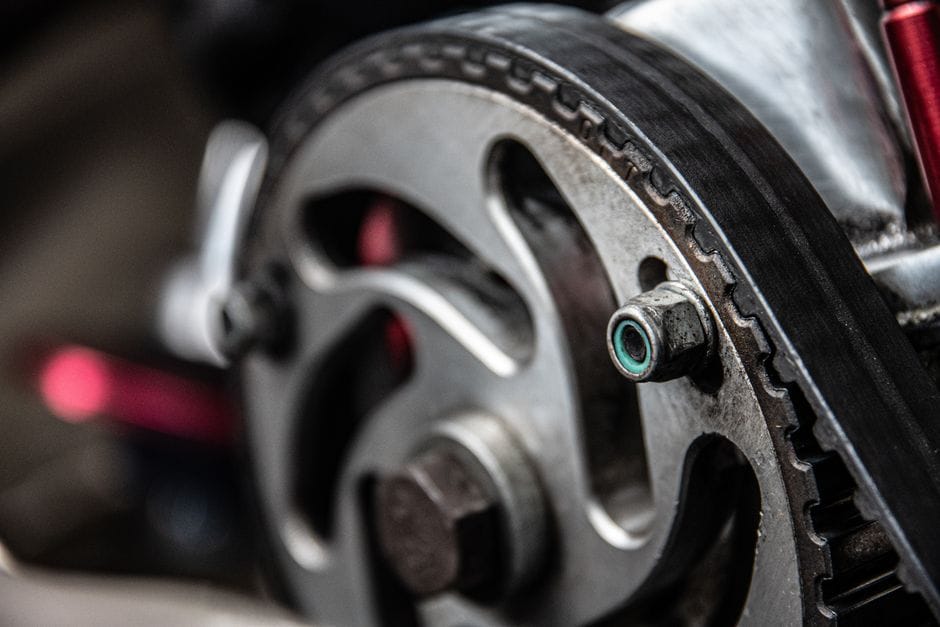
A timing belt is a reinforced rubber component with fiberglass or Kevlar tensile cords embedded within a neoprene or similar polymer body. The belt’s teeth engage with sprockets on the crankshaft and camshaft, transferring rotational force with precision. Belts are lightweight, quiet, and relatively inexpensive to manufacture. However, rubber degrades over time — heat cycling, ozone exposure, and mechanical stress all contribute to eventual cracking, tooth shearing, or complete belt failure.
A timing chain, by contrast, is a metal roller chain — similar in principle to a bicycle chain but far more solid. It consists of interlocking steel links, pins, and rollers that engage with toothed sprockets. Chains are lubricated by engine oil, which means their longevity is directly tied to oil quality and change intervals. They are heavier, noisier, and more expensive to produce, but their metal construction offers vastly superior wear resistance when properly maintained.
How Each System Controls Valve Timing
Both systems perform the identical mechanical function: maintaining the precise angular relationship between the crankshaft and camshaft(s). The crankshaft rotates twice for every single rotation of the camshaft in a four-stroke engine. The timing belt or chain ensures this 2:1 ratio is maintained exactly, so intake and exhaust valves open and close at precisely the right moment relative to piston position.
In modern engines, both belts and chains can interact with variable valve timing (VVT) systems, which adjust camshaft phasing on the fly to optimize power, efficiency, and emissions. VVT systems add complexity to both designs, requiring oil pressure control solenoids and phasers that can introduce their own failure modes.
Adjacent Components: Tensioners, Guides, and Sprockets
Neither a belt nor a chain operates in isolation. Both require a support system of tensioners, guides, and sprockets to function correctly. The timing chain tensioner maintains proper chain slack, preventing vibration and ensuring accurate timing. Guides — typically made of plastic or nylon in chain systems — keep the chain on its path and reduce noise. Sprockets, whether for belt or chain, are precision-machined components that transfer rotational force.
In belt systems, the tensioner is typically a spring-loaded pulley that maintains belt tension as the belt stretches slightly over its service life. In chain systems, tensioners are often hydraulic, using engine oil pressure to maintain constant tension. These adjacent components are frequently the actual failure point — a failed tensioner can cause a chain to skip teeth or a belt to slip, even if the belt or chain itself is still structurally sound.
Top Picks


Replacement Interval: The Single Most Important Difference

If there is one number that separates these two systems in the minds of car owners, it’s the replacement interval. Timing belts have a finite, manufacturer-mandated service life. Timing chains are nominally designed to last the life of the engine. But as with most things in automotive engineering, the reality is more nuanced.
Typical Timing Belt Lifespan (60k–100k Miles)
Most manufacturers specify timing belt replacement between 60,000 and 100,000 miles. Some older designs required replacement as early as 45,000 miles, while a few modern belt systems stretch to 120,000 miles. The interval depends on belt construction, engine operating temperatures, and the manufacturer’s confidence in the material. The replacement cost typically ranges from $500 to $1,200 depending on the vehicle, with labor being the dominant expense — the belt itself is often only $50–$150.
Critically, the replacement interval is not a suggestion. A timing belt that fails at 100,000 miles when the interval is 90,000 miles is not a manufacturing defect — it’s a maintenance failure. The belt’s rubber compounds degrade predictably, and the manufacturer’s interval is designed to replace the belt before degradation reaches the failure threshold.
Timing Chain Lifespan: Designed for Engine Life, But Not Guaranteed
Timing chains are marketed as “lifetime” components, and in many engines, they do indeed last 200,000 miles or more without attention. The metal construction, when properly lubricated, can theoretically last indefinitely. However, “lifetime” is defined by the manufacturer as the designed service life of the engine — typically 150,000 to 200,000 miles. Beyond that, even a well-maintained chain can stretch, and its guides and tensioners can wear out.
The key variable is oil maintenance. A timing chain relies on engine oil for lubrication. If oil changes are skipped, the oil degrades, loses its lubricating properties, and allows metal-on-metal wear. Chain stretch, guide wear, and tensioner failure are the direct consequences. In severe cases, a stretched chain can skip teeth on the sprocket, causing catastrophic valve-piston contact in interference engines.
The ‘Lifetime’ Myth: Why Chains Still Fail
The phrase “lifetime timing chain” has caused more than a few expensive surprises for car owners. The reality is that timing chains fail — sometimes spectacularly — and the failure is often attributed to design flaws, not just maintenance neglect. Some engine families have notorious timing chain issues: stretched chains, failing plastic guides, and hydraulic tensioners that lose pressure. These failures can occur at 60,000–100,000 miles, well within what owners expect to be a trouble-free window.
When a timing chain fails, the repair cost is typically higher than a belt replacement — often $1,500 to $3,000 or more — because the repair requires removing the engine front cover, and often the oil pan, to access the chain, guides, and tensioners. In some transverse-mounted engines, the entire engine may need to be lifted or removed for access.
Failure Modes: Catastrophic vs Gradual — What Happens When Things Go Wrong

The way each system fails is arguably more important than how long it lasts. A timing belt typically fails without warning — the rubber teeth shear off, the belt snaps, and the engine loses synchronization instantly. In a non-interference engine, the engine simply stops and can be restarted after a new belt is installed. But in an interference engine — where the valves and pistons occupy the same space at different times — a snapped belt causes the pistons to strike open valves, bending them and potentially destroying the cylinder head, pistons, and connecting rods. The result is an engine that requires thousands of dollars in repairs, often exceeding the vehicle’s value.
Timing chains, by contrast, typically fail gradually. The chain stretches, the guides wear, and the tensioner loses pressure. Early symptoms include a rattling noise on cold start, particularly from the front of the engine. This rattle is the chain slapping against the guides or cover. If ignored, the chain can eventually skip teeth on the sprocket, throwing off valve timing. In an interference engine, this can cause the same catastrophic damage as a broken belt — but the gradual warning signs give owners a chance to address the issue before failure.
However, there is a darker side to chain failure. Some chain systems fail suddenly due to a broken guide or a tensioner that loses pressure completely, causing the chain to jump multiple teeth in an instant. In these cases, the failure is as sudden and destructive as a belt snap, with no warning whatsoever.
Maintenance Cost: The True Cost of Ownership Over 100,000+ Miles

When comparing total cost of ownership, the math is not as simple as “belts cost more because they need replacement.” You must factor in the cost of the replacement itself, the risk of catastrophic failure, and the potential for chain-related repairs that are often more expensive than a routine belt change.
Timing Belt Cost Breakdown
A typical timing belt replacement costs $500 to $1,200, including parts and labor. Many manufacturers recommend replacing the water pump, tensioner, and idler pulleys at the same time — adding $200 to $400 to the total. Over 150,000 miles, a vehicle with a 90,000-mile interval will require one replacement, costing roughly $700 to $1,500. If the belt fails prematurely, the repair cost in an interference engine can easily reach $3,000 to $5,000 for a new cylinder head or a complete engine rebuild.
Timing Chain Cost Breakdown
A timing chain system requires no scheduled replacement, but it is not maintenance-free. The chain, guides, and tensioner are wear items that may need attention at 100,000 to 150,000 miles in many vehicles. A chain replacement costs $1,500 to $3,000 or more, depending on engine layout and labor rates. If the chain fails and damages the engine, the repair cost is identical to a belt failure — $3,000 to $5,000 or more. Over 150,000 miles, a chain system that needs one replacement costs roughly the same as a belt system that needs one replacement — but the chain replacement is often unexpected and more painful financially.
The hidden cost difference lies in the risk profile. A belt system has a known, scheduled cost. A chain system has an unknown, unscheduled cost that may never materialize — or may arrive at the worst possible time.
Noise and Vibration: The Audible Difference

Timing belts are significantly quieter than timing chains. The rubber construction absorbs vibration and dampens noise, making belt-driven engines noticeably smoother and quieter at idle and under load. This is one of the primary reasons many manufacturers choose belts for luxury and comfort-oriented vehicles.
Timing chains, by their very nature, produce more mechanical noise. The metal links and rollers generate a characteristic whirring or rattling sound, particularly at cold start when oil pressure is low and the chain is slack. While modern chain systems are well-damped with plastic guides and hydraulic tensioners, they still produce more audible noise than belts. Some drivers find this sound reassuring — it signals a solid, durable component — while others find it annoying, especially in quiet cabins.
Chain noise is also an important diagnostic indicator. A sudden increase in chain rattle, especially on cold start, is often the first sign of tensioner wear or chain stretch. Belt systems, by contrast, rarely produce warning noises before failure — a squealing belt is usually the serpentine belt, not the timing belt, which is enclosed and silent.
Engine Design Compatibility: Why Automakers Choose One Over the Other

The choice between a belt and a chain is not arbitrary — it’s a fundamental engineering decision that affects engine packaging, weight, cost, and maintenance philosophy. Automakers weigh several factors when making this choice.
Why Some Engines Use Belts
Belts are lighter, quieter, and cheaper to manufacture. They also allow for more flexible engine packaging because the belt can be routed around multiple sprockets with idler pulleys, accommodating complex layouts. Belt-driven engines are often designed for lower production costs and are common in economy cars and smaller displacement engines. The scheduled maintenance requirement is a known cost that can be factored into the vehicle’s total ownership experience.
Why Some Engines Use Chains
Chains are chosen for their durability and reduced maintenance burden. They are common in larger engines, diesel engines, and vehicles marketed for longevity — trucks, SUVs, and luxury cars where owners expect 200,000+ mile service life. Chains also handle higher torque loads better than belts, making them the preferred choice for high-output engines. The trade-off is increased weight, noise, and manufacturing cost.
Some manufacturers have switched between belt and chain across generations of the same engine family. For example, certain Honda and Toyota engines moved from belts to chains in the 2000s to reduce maintenance costs and improve reliability perception. Conversely, some European manufacturers have moved from chains back to belts in certain applications, citing the high cost of chain repairs and the difficulty of accessing chain components in transverse engine bays.
Material Composition and Durability: The Engineering Deep Dive

The material difference between belts and chains is the root cause of every other distinction. A timing belt is a composite of rubber, fiberglass, and sometimes Kevlar. The rubber body provides flexibility and grip, while the tensile cords prevent stretching. The teeth are molded into the belt and engage with sprocket grooves. The belt’s operating environment is harsh — it is exposed to engine heat, oil vapor, and ozone, all of which accelerate rubber degradation. Modern belts use advanced compounds like HNBR (hydrogenated nitrile butadiene rubber) to extend service life, but the fundamental limitation of rubber remains.
A timing chain is made of hardened steel alloys. The links, pins, and rollers are precision-machined and heat-treated for wear resistance. The chain operates in an oil bath, which provides lubrication and cooling. The chain’s durability is limited by three factors: lubrication quality, chain stretch (elongation of the pins and link plates), and wear of the guides and tensioner. When properly maintained, a steel chain can theoretically last the life of the engine — but “properly maintained” means regular oil changes with the correct viscosity and quality, which is not always guaranteed.
The durability difference also affects the surrounding components. Belt systems use lightweight aluminum or plastic sprockets and simple spring tensioners. Chain systems require hardened steel sprockets, solid guides, and hydraulic tensioners — all of which add weight and cost but also contribute to the system’s overall robustness.
Interference vs Non-Interference Engines: The Risk Factor

The concept of an interference engine is critical to understanding the risk associated with timing belt or chain
failure. In an interference engine, the valves and pistons occupy the same physical space in the cylinder head at different times during the engine cycle. The timing belt or chain ensures they never meet. If synchronization is lost — whether from a snapped belt or a jumped chain — the piston will strike an open valve, bending it and potentially destroying the cylinder head, piston, and connecting rod.
In a non-interference engine, the pistons do not reach the valve area, so a timing failure simply stops the engine without internal damage. The repair is limited to replacing the belt or chain and resetting the timing. Non-interference engines are increasingly rare in modern vehicles, as manufacturers favor the higher compression ratios and improved efficiency of interference designs. This means the vast majority of vehicles on the road today — both belt- and chain-driven — are interference engines, and a timing failure is almost always catastrophic.
This risk profile is identical for belts and chains. The only difference is the likelihood of failure. A belt that is replaced on schedule has a very low failure risk. A chain that is neglected — with skipped oil changes or high mileage — has a growing risk of stretch and jump. Neither system is immune to catastrophic failure, and the consequences are equally severe.
Real-World Reliability: Which Engine Families Have Proven Most Durable

Beyond the theoretical engineering, real-world data reveals which systems have actually performed well in service. Some belt-driven engines have proven remarkably reliable when maintained, while some chain-driven engines have developed notorious reputations for premature failure.
Belt-Driven Engines with Strong Track Records
Honda’s D-series and B-series engines, used throughout the 1990s and 2000s, are legendary for reliability with regular belt changes. Toyota’s 5S-FE and 3S-GE engines also have excellent reputations. These engines demonstrate that a belt system, when maintained, can easily exceed 200,000 miles without issue. The key is strict adherence to the replacement interval — owners who neglect this maintenance are the ones who experience failures.
Chain-Driven Engines with Known Issues
Several modern chain-driven engines have developed well-documented problems. BMW’s N20 four-cylinder engine (2012–2016) suffered from timing chain guide failure and chain stretch, often before 100,000 miles. The Volkswagen/Audi 2.0T EA888 engine had similar issues with chain tensioner failure. Ford’s 3.5L EcoBoost V6 has also experienced timing chain problems in high-mileage examples. These failures are often attributed to design flaws — inadequate tensioner design, plastic guides that become brittle, or oil passages that clog — rather than owner neglect.
The lesson is that neither technology is inherently superior. A well-designed belt system with proper maintenance is more reliable than a poorly designed chain system with neglect. The engineering quality of the specific engine matters more than the choice of belt or chain.
How to Decide: A Practical Decision Framework

When choosing a vehicle or planning maintenance, the belt-versus-chain question should be evaluated in context. Here is a practical framework for making the right decision.
Choose a Belt-Driven Vehicle If:
- You plan to own the vehicle for less than 100,000 miles and want lower upfront maintenance costs.
- You value a quieter, smoother engine.
- You are disciplined about following the manufacturer’s maintenance schedule.
- You are purchasing a vehicle with a well-documented belt system and a reasonable replacement interval.
Choose a Chain-Driven Vehicle If:
- You plan to keep the vehicle for 150,000+ miles and want to avoid scheduled timing maintenance.
- You are diligent about oil changes and use high-quality oil.
- You are purchasing a vehicle with a proven chain system — research the specific engine family for known issues.
- You prefer the peace of mind of a metal component that does not degrade with age alone.
Maintenance Tips for Both Systems
Regardless of which system your vehicle has, certain practices will maximize reliability. For belt systems, always replace the water pump, tensioner, and idler pulleys at the same time — the labor cost is already paid, and these components have similar lifespans. For chain systems, never skip an oil change. Use the manufacturer-specified oil viscosity and quality. Listen for cold-start rattles and address them immediately — early intervention can prevent a $3,000 repair from becoming a $5,000 one.
Conclusion: The Verdict on Timing Belt vs Timing Chain

There is no universal winner in the timing belt vs timing chain debate. Each system represents a different trade-off between cost, maintenance, noise, and durability. A timing belt offers lower initial cost, quieter operation, and a predictable maintenance schedule — but requires disciplined replacement and carries the risk of catastrophic failure if neglected. A timing chain offers the promise of lifetime service, superior durability, and reduced scheduled maintenance — but can fail prematurely in poorly designed engines, and its failure is often more expensive to repair.
The best choice depends on your vehicle, your driving habits, and your commitment to maintenance. For most drivers, the most important factor is not whether the engine has a belt or a chain, but whether the specific engine family has a proven reliability record and whether you are willing to follow the manufacturer’s maintenance recommendations. A well-maintained belt engine will outlast a neglected chain engine every time. The technology matters less than the care you put into it.
Ultimately, the timing belt vs timing chain question is not about which is “better” in the abstract — it’s about which system fits your ownership profile. Understand the trade-offs, research your specific engine, and maintain it properly. That is the real secret to engine durability.
You might also like: best synthetic motor oil, diesel engine oil guide, best motor oil brand
Related: timing belt tensioner
Related: timing chain stretch symptoms