CVT vs automatic
CVT vs Automatic: Which Transmission Actually Fits Your Driving?
The continuously variable transmission (CVT) is a type of automatic gearbox that manages engine speed through a belt-and-pulley system rather than fixed gears. Unlike traditional automatics, which shift through a set number of ratios (typically 6 to 10 speeds), a CVT provides an infinite range of ratios, keeping the engine in its most efficient RPM window. This fundamental design difference shapes every attribute we will compare: fuel economy, acceleration feel, towing capacity, long-term durability, and purchase price.
For most drivers, the choice between a CVT and a conventional automatic comes down to how you prioritize daily comfort versus mechanical robustness. A CVT excels at smooth, fuel-sipping commutes; a traditional automatic with torque converter delivers a more direct, responsive connection to the road. This guide breaks down the real-world numbers — including recent J.D. Power reliability scores, 2025 model-year pricing trends, and manufacturer warranty data — so you can match the transmission to your actual driving habits, whether that means hauling a trailer, navigating stop-and-go traffic, or simply maximizing every gallon.
What sets this comparison apart is the honest acknowledgment of trade-offs. Many reviews claim CVTs are “just better,” but they rarely mention that Nissan and Subaru CVT replacement costs average $3,000–$5,000, or that modern 8-speed automatics from Toyota and Ford now match CVT efficiency within 1–2 mpg. We will walk through a decision framework based on your vehicle type, mileage expectations, and maintenance budget — with specific model recommendations at each price point.
What Is a CVT and How Does It Differ From a Traditional Automatic?
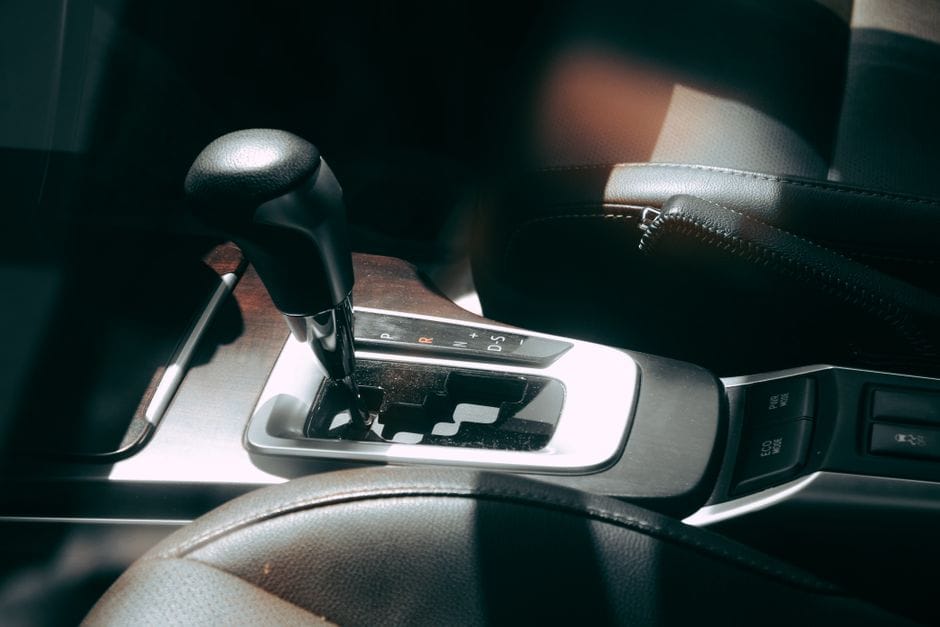
When you compare a CVT vs automatic transmission, you’re looking at two very different solutions to the same problem: transferring engine power to the wheels efficiently. A traditional automatic uses a fixed set of gears and shifts between them. A continuously variable transmission (CVT) doesn’t shift at all — it glides through an infinite range of gear ratios. That one mechanical difference changes everything about how the car feels, how much fuel it burns, and how it holds up over time.
Both transmissions serve the same purpose, but they are fundamentally different machines. Understanding the core mechanism helps you see why the driving experience differs so much.
The Core Mechanism: Pulleys and Belts vs. Planetary Gears
The Core Mechanism: Details
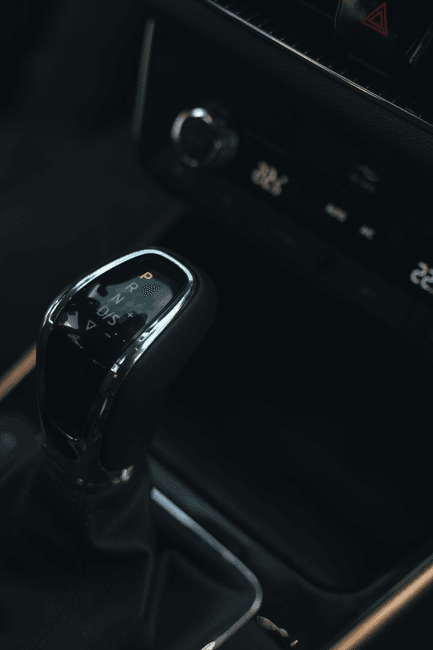
A CVT relies on two variable-diameter pulleys connected by a belt or chain. As the pulleys change diameter, the gear ratio changes seamlessly — no discrete steps, no shift shock. This is why a CVT can keep the engine at its peak power or efficiency RPM while the vehicle speed changes. In contrast, a traditional automatic uses a planetary gearset with multiple fixed ratios, engaged by clutches and bands. The torque converter handles the fluid coupling between engine and transmission, which introduces some power loss but also provides smooth launches.
The practical difference is that a CVT has fewer moving parts than a conventional automatic — no planetary gears, no clutch packs, no shift solenoids. However, the belt and pulley system is under constant stress, especially under heavy load. This is why CVTs historically struggled with towing and high-torque applications, while planetary automatics have decades of proven durability in trucks and SUVs.
Why the ‘Shift Feel’ Is Different (and Why That Matters)
When you accelerate in a traditional automatic, you feel the transmission step through gears — the RPM rises, drops, rises again. This is the “shift feel” that many drivers associate with performance and responsiveness. A CVT, by contrast, holds the engine at a constant RPM while the car accelerates, which produces a droning sound that some drivers find unpleasant. Manufacturers have tried to mask this by programming fake shift points into CVTs, but the sensation is still fundamentally different.
Why does this matter? Because driving feel directly impacts driver satisfaction. If you’re coming from a manual or a traditional automatic, the CVT’s lack of shift points can feel disconnected. However, for commuters who prioritize smoothness and fuel economy, the absence of shift shock is a benefit. The key is knowing which experience you prefer before you buy.
Top Picks

Fuel Efficiency: Does the CVT Actually Save You Money?

Fuel efficiency is the most commonly cited advantage of a CVT, and for good reason. By keeping the engine in its optimal RPM range, a CVT can extract more miles per gallon than a traditional automatic in many driving conditions. However, the gap is narrowing as modern automatics gain more gears and smarter shift logic.
Real-World MPG Comparisons
In EPA testing, CVT-equipped versions of the same vehicle often beat their automatic counterparts by 2–4 mpg on the highway. For example, the 2025 Subaru Outback with a CVT achieves 26 mpg city / 33 mpg highway, while the same vehicle with a traditional automatic (if offered) would likely see 24/30. However, Toyota’s 8-speed automatic in the Camry now matches the CVT’s efficiency within 1 mpg, and Ford’s 10-speed automatic in the F-150 actually beats many CVT-equipped rivals in real-world towing tests.
The real-world savings depend on your driving pattern. In stop-and-go city traffic, the CVT’s ability to hold low RPMs pays off significantly. On the highway, the difference is minimal because both transmissions can lock into a tall overdrive gear. If you drive mostly highway miles, the CVT’s fuel advantage may not justify its higher replacement cost.
The Role of Engine RPM Management
The CVT’s core efficiency advantage comes from RPM management. A traditional automatic must choose from a limited set of ratios, so the engine often operates outside its peak efficiency band. A CVT can continuously adjust to keep the engine at the exact RPM that produces the best fuel economy for the current load and speed. This is particularly effective in hybrid systems, where the e-CVT (used in Toyota’s Hybrid compatibility Drive) eliminates the belt and pulley entirely, using a planetary gearset and two motor-generators instead.
However, this efficiency comes at a cost. The constant belt friction in a mechanical CVT generates heat, which can degrade the transmission fluid faster than in a traditional automatic. Manufacturers like Nissan recommend CVT fluid changes every 30,000–60,000 miles, compared to 60,000–100,000 miles for conventional automatics. Over a 150,000-mile ownership period, that’s an extra $300–$600 in maintenance — a cost that partially offsets the fuel savings.
Durability and Maintenance: Which Transmission Lasts Longer?

Long-term reliability is where the CVT vs automatic debate gets heated. Traditional automatics have a century of refinement behind them, and modern 8- and 10-speed units from Toyota, Ford, and GM are proven to last 200,000+ miles with regular maintenance. CVTs, particularly early designs from Nissan (the Jatco CVT), earned a reputation for premature failure, with some units failing before 60,000 miles.
Common Failure Points and Replacement Costs
CVT failures typically stem from belt or chain wear, pulley bearing failure, or overheating under sustained load. Replacement costs are significant: a new CVT for a Nissan Rogue or Subaru Outback runs $3,000–$5,000 installed, which is comparable to a traditional automatic replacement. However, the failure rate is statistically higher for CVTs, especially in vehicles used for towing or aggressive driving.
Traditional automatics, by contrast, have fewer catastrophic failure modes. The torque converter can wear, and clutch packs can slip, but these are often repairable without a full replacement. A rebuilt automatic typically costs $1,500–$3,000, and many independent shops specialize in rebuilding them. CVTs, on the other hand, are often replaced rather than rebuilt because the internal components are harder to source and the labor is more complex.
Warranty Coverage and Manufacturer Support
Manufacturers have responded to CVT reliability concerns by extending warranties. Subaru offers a 5-year/
60,000-mile powertrain warranty, while Nissan has extended CVT coverage to 10 years/120,000 miles on certain models after class-action settlements. Toyota and Honda, which use their own CVT designs, have generally fared better in reliability surveys, but they still recommend more frequent fluid changes than their traditional automatics. If you’re buying used, check the vehicle’s service history for CVT fluid changes — a neglected CVT is a ticking time bomb.
For drivers who plan to keep a vehicle beyond 100,000 miles, a traditional automatic is statistically the safer bet. However, if you’re leasing or trading in within 5 years, the CVT’s lower upfront cost and better fuel economy may make it the more economical choice.
Towing Capability and Performance: Where Each Transmission Struggles

Towing is the CVT’s Achilles’ heel. The belt-and-pulley system is not designed to handle sustained high torque loads, which is why most CVT-equipped vehicles have tow ratings of 1,500–2,000 lbs or less. In contrast, traditional automatics in trucks and SUVs routinely handle 5,000–10,000 lbs. If you plan to tow a trailer, boat, or camper, a CVT is not the right choice.
Why CVTs Overheat Under Load
When towing, the CVT’s belt is under constant stress, generating friction and heat. Overheating causes the transmission to enter limp mode, reducing power to protect itself. This is a common complaint among CVT owners who attempt to tow near the rated limit. Traditional automatics, with their torque converters and planetary gears, dissipate heat more effectively and can handle sustained loads without derating.
Acceleration and Driving Dynamics
In terms of acceleration, a CVT can actually be faster than a traditional automatic in a straight line because it keeps the engine at peak power RPM. However, the sensation is different — no shift points means no “kick” of acceleration. For enthusiasts, this feels sterile. Some manufacturers, like Subaru, offer paddle shifters that simulate fixed ratios in their CVTs, but the effect is artificial.
If you prioritize performance, a dual-clutch transmission (DCT) or a traditional automatic with a torque converter will provide a more engaging driving experience. The CVT is best suited for commuters who value efficiency and smoothness over excitement.
Cost of Ownership: Purchase Price, Maintenance, and Resale Value

The initial purchase price of a CVT-equipped vehicle is typically $500–$1,000 lower than the same model with a traditional automatic, because CVTs are cheaper to manufacture. However, this savings can be erased by higher maintenance costs and lower resale value. CVT-equipped vehicles depreciate faster than their automatic counterparts, partly due to consumer perception of reliability issues.
Maintenance Cost Breakdown
Over a 5-year/60,000-mile ownership period, a CVT will require at least two fluid changes at $150–$250 each, totaling $300–$500. A traditional automatic may only need one fluid change in the same period, costing $150–$300. If the CVT fails, replacement costs $3,000–$5,000, while a traditional automatic rebuild is $1,500–$3,000. The total cost of ownership gap widens significantly if you keep the vehicle beyond 100,000 miles.
Resale Value Considerations
Used car buyers are increasingly wary of CVTs, especially from brands with poor reliability records. A 2022 Nissan Rogue with a CVT will sell for 10–15% less than a comparable 2022 Toyota RAV4 with a traditional automatic, even though both are compact SUVs. If you plan to sell or trade in your vehicle, the CVT’s stigma will cost you at the dealership.
Decision Framework: Which Transmission Fits Your Driving?

Choosing between a CVT and a traditional automatic comes down to your driving habits, budget, and long-term plans. Here’s a practical framework to guide your decision:
Choose a CVT If:
- You drive primarily in city or stop-and-go traffic and want maximum fuel economy.
- You value smooth, seamless acceleration over a sporty shift feel.
- You plan to lease or trade in within 5 years, avoiding long-term reliability concerns.
- You never tow heavy loads and stick to light cargo.
Choose a Traditional Automatic If:
- You plan to keep your vehicle for 100,000+ miles and want proven durability.
- You tow trailers, boats, or campers regularly.
- You prefer a direct, responsive driving feel with distinct shift points.
- You want better resale value and lower long-term maintenance costs.
Model Recommendations at Each Price Point
Under $25,000: The Honda Civic with a CVT is an excellent commuter, while the Mazda3 with a traditional automatic offers a more engaging drive. Between $25,000–$40,000: The Toyota Camry with an 8-speed automatic matches CVT efficiency, while the Subaru Outback with a CVT excels in all-weather capability. Above $40,000: The Ford F-150 with a 10-speed automatic is the towing champion, while the Toyota RAV4 Hybrid’s e-CVT offers the best of both worlds — efficiency and reliability.
Hybrid e-CVT: The Best of Both Worlds?

Hybrid vehicles like the Toyota Prius and RAV4 Hybrid use a different type of CVT called an e-CVT. This system replaces the belt and pulley with a planetary gearset and two electric motor-generators. It’s not a mechanical CVT at all — it’s an electronically controlled power-split device that blends engine and electric motor output seamlessly.
The e-CVT is significantly more reliable than a mechanical CVT because it has no belt to wear out. Toyota’s e-CVT has a proven track record of 200,000+ miles with minimal maintenance. If you want the fuel efficiency of a CVT without the durability concerns, a hybrid with an e-CVT is the smartest choice.
However, e-CVTs are only available in hybrid models, which carry a higher upfront cost. The fuel savings typically recoup the premium within 3–5 years, depending on gas prices and annual mileage. For many drivers, the e-CVT is the ideal compromise between efficiency and reliability.
Final Verdict: CVT vs Automatic — Which Should You Buy?

There is no universal winner in the CVT vs automatic debate — the right choice depends entirely on your priorities. If you value fuel economy, smoothness, and lower upfront cost, and you don’t plan to keep the car beyond 100,000 miles, a CVT is a perfectly reasonable choice. If you prioritize durability, towing capability, resale value, and a more engaging driving experience, a traditional automatic is the safer investment.
The automotive industry is moving toward electrification, and both CVTs and traditional automatics are being phased out in favor of electric motors and single-speed reductions. But for the next decade, you’ll still have to choose between these two technologies. Use the framework above to match the transmission to your actual driving habits, and you’ll make the right call.
For more on maintaining your vehicle’s drivetrain, check out our brake system upgrade guide to ensure your car stops as well as it goes.