It was a rainy Tuesday morning in late October—cool, gray, and the kind of damp that gets into your bones. A customer, Mike, pulled his 2007 Chevrolet Silverado into Bay 3 at 7:15 a.m., right after my second cup of coffee. He said the truck “just gave up” on the interstate the night before, coasting to a stop like it ran out of gas even though the gauge showed half a tank.
I hooked up the scan tool—no codes. Checked spark, compression, injectors… all good. But when I cycled the key, I heard it: a high-pitched whine from under the bed that lasted about two seconds. Then silence. The fuel pressure gauge barely moved.
“Bad fuel pump,” I told him. He sighed, “That’s what the last shop said… but they wanted $900.” I replaced it myself that afternoon for $210 in parts and 2.5 hours’ labor. The OEM AC Delco pump (part #MU1882) slid right in, and the truck hasn’t missed a beat since. That’s why I’m writing this guide—for every DIYer who’s been told “it’s your fuel pump” without being shown how to confirm it.
If your car’s acting up and you’re wondering whether the fuel pump is the culprit, you’re in the right place. After 16 years turning wrenches—from corner garages to dealership bays—I’ve diagnosed, replaced, and tested thousands of fuel pumps across every make and model. What follows isn’t theory. It’s what I’d tell my neighbor over a six-pack in the driveway.
What Is a Fuel Pump—and Why It Matters
Your fuel pump is the heart of the fuel delivery system. In most modern vehicles (post-1990), it’s an electric in-tank pump that pushes gasoline from the tank to the fuel rails at precise pressures—usually between 45–65 psi for port-injected engines, and up to 75+ psi for direct-injection systems like Ford’s EcoBoost or GM’s LT engines.
Unlike older mechanical pumps driven by the camshaft, today’s electric pumps run constantly when the key is on. They’re cooled and lubricated by the fuel surrounding them—so running on fumes doesn’t just risk stranding you; it cooks the pump motor.
When a fuel pump starts to fail, it rarely dies instantly. Instead, it sends subtle distress signals—often mistaken for ignition, sensor, or fuel filter issues. That’s why understanding the real bad fuel pump symptoms saves you time, money, and unnecessary part swaps.
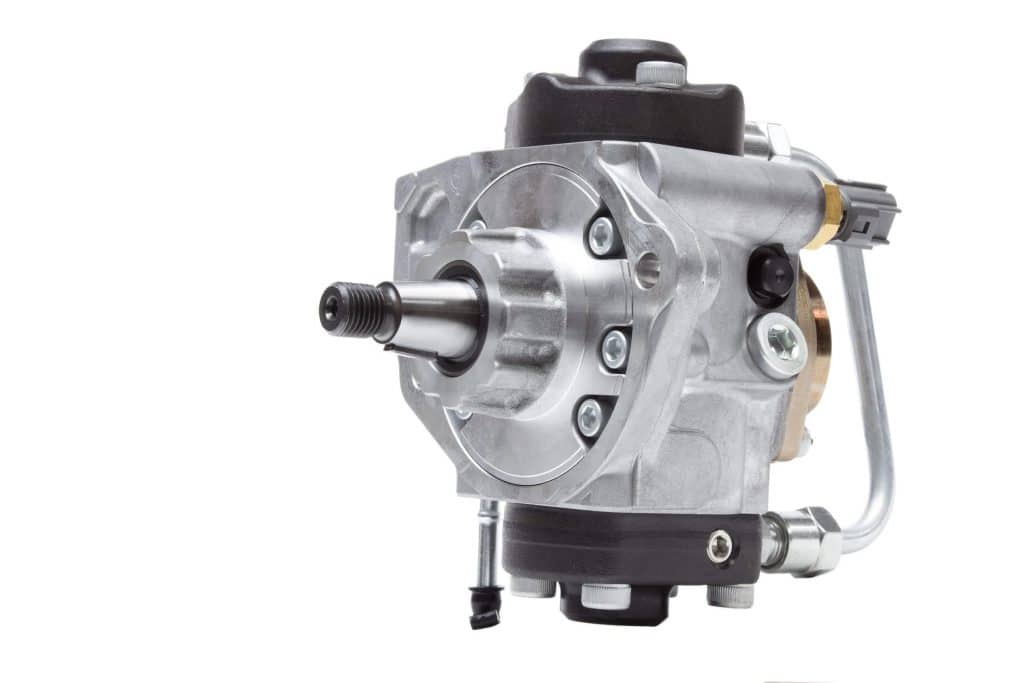
10 Warning Signs Your Fuel Pump Is Failing
Don’t guess—diagnose. Here are the ten most reliable symptoms I’ve seen in the shop, ranked by how often they lead to pump replacement.
1. Hard Starting (Especially After Sitting)
If your engine cranks but takes 5–10 seconds (or longer) to fire up, the pump may not be building adequate pressure. Most fuel systems need to hold **residual pressure** (typically 20–40 psi) after shutdown. A failing pump or leaky check valve won’t maintain this, so the system must re-prime on every start.
✅ Test it: Cycle the key to “ON” (not start) three times, waiting 2 seconds between each. If the car starts easier on the third try, the pump is struggling to build pressure.
This is a classic hard starting fuel pump sign—especially on GM trucks with the CP439 pump (2007–2013 Silverado/Sierra) or older Fords using the Bosch 69339.
2. Whining or Whirring Noise from the Fuel Tank
A healthy fuel pump makes a soft hum—barely audible over road noise. But when bearings wear or the impeller degrades, you’ll hear a **high-pitched whine** (like a dentist’s drill) coming from under the rear seat or bed.
I once had a customer swear her 2012 Honda CR-V had a CV joint issue—until I asked her to sit in the driver’s seat and turn the key to “ON.” The whine from the tank was unmistakable. Pump replaced. Problem solved.
Note: Not all noise = failure. But if the fuel pump noise is new, louder than before, or accompanied by performance issues, it’s a red flag.
3. Sputtering Acceleration Under Load
You’re merging onto the highway, press the gas—and the engine stutters like it’s choking. This is textbook sputtering acceleration caused by insufficient fuel volume at high demand.
The pump might deliver enough pressure at idle but can’t keep up when the engine needs 3–4x more fuel at WOT (wide-open throttle). Common on high-mileage Nissan Altimas (2007–2012) and Toyota Camrys with worn Denso pumps.
👉 Don’t confuse this with ignition misfires. Sputtering from a bad pump worsens with speed and load—not at idle. For more on root causes, check out our guide to [engine sputtering](engine-sputtering-causes).
4. Power Loss at High Speeds or Under Heavy Load
Hauling a trailer up a mountain pass, and your truck suddenly loses power—like it hit an invisible wall? This often happens between 55–70 mph when fuel demand peaks.
The pump’s internal bypass valve may be stuck open, or the motor is overheating and reducing output. I’ve seen this repeatedly on 2010–2014 Ram 1500s with failing Carter pumps (P70845M).
5. Engine Stalls Unexpectedly
Stalling at stoplights or during steady cruising—especially when the engine is hot—is a serious stalling fuel pump symptom. Heat increases electrical resistance in the pump motor. If it’s weak, voltage drops, pressure plummets, and the engine starves.
💡 Pro Tip: If the car restarts after cooling for 10–15 minutes, heat-related pump failure is likely. Compare this to [stalling engine fixes](stalling-engine-causes) for other possibilities.
6. Surging or Hesitation During Cruise
Feeling like someone’s lightly tapping the throttle for you? Surging happens when the pump delivers inconsistent pressure—often due to a worn commutator or dirty brushes in the motor.
This is common on older BMWs (E46, E39) and Mercedes where the pump runs continuously. A pressure test will show wild swings (e.g., 30 psi to 55 psi) at steady RPM.
7. Poor Fuel Economy (Without Other Symptoms)
If mileage drops 10–20% and you’ve ruled out tires, air filters, or driving habits, check the fuel system. A weak pump causes the PCM to compensate with longer injector pulses—flooding the engine slightly to maintain AFR (air-fuel ratio).
Scanners often show short-term fuel trims > +15%. But confirm with a pressure test before blaming the pump.
8. Engine Won’t Start (But Cranks Fine)
Complete no-starts with good spark and compression almost always point to fuel delivery. No pressure = no start.
⚠️ Safety first: Never spray starting fluid to “test” this—it can cause a backfire or fire. Instead, use a gauge or listen for the 2-second prime cycle when turning the key.
9. Check Engine Light With Lean Codes
Codes like **P0171 (System Too Lean – Bank 1)** or **P0174** can indicate low fuel pressure. The O2 sensors detect excess oxygen because there’s not enough fuel to burn.
But—big caveat—these codes also appear with vacuum leaks or MAF issues. Always verify with a **fuel pressure test** before replacing the pump.
10. Vehicle Dies and Won’t Restart for Hours
This is the “thermal failure” pattern. The pump works when cold but fails when hot. After sitting for several hours, it cools down and functions again—briefly.
Classic on 2004–2009 Ford F-150s with the early Bosch pumps. If this happens, the pump is on its last legs.
How to Diagnose a Bad Fuel Pump
Before you drop $200–$500 on a new pump, rule out simpler issues. A clogged [fuel filter](fuel-filter-replacement-guide) or faulty fuel pressure regulator can mimic pump failure. That’s why I always follow this sequence:
Diagnostic Tools You’ll Need:
- Fuel pressure test gauge (0–100 psi range, e.g., OEMTools 22823) – ~$45
- Scan tool with live data (even a basic BlueDriver works)
- Multimeter (for voltage/amperage tests)
- Basic hand tools (sockets, ratchets)
- Safety glasses and nitrile gloves
Check for fuel pump prime cycle. Turn key to “ON.” Listen near the tank—you should hear a 2-second hum. No sound? Check fuse #28 (often labeled “ECM/BATT” or “FUEL PUMP”) and relay.
Test fuel pressure. Connect gauge to Schrader valve on fuel rail (usually covered by a black cap). Cycle key—pressure should hit spec within 2 seconds and hold for 5+ minutes after shut-off.
Example specs:
– 2010 Honda Accord (2.4L): 47–54 psi
– 2015 Ford F-150 (3.5L EcoBoost): 55–65 psi
– 2018 Toyota Camry (2.5L): 58–68 psi
Perform a volume test. If pressure is low, disconnect the return line (if equipped) or use a pressure/volume tester. A healthy pump should deliver 1 liter in 15 seconds at idle. Less = weak pump.
Check voltage and amperage. At the pump connector, you should see 12–13V with key on. Then measure current draw:
– Typical draw: 3–5 amps
– >7 amps = internal short or binding
– <2 amps = open winding or poor ground
If pressure is low and volume is low and amperage is abnormal, the pump is bad. But if pressure drops after shutdown, suspect a leaking injector or failed check valve in the pump assembly.
For a full diagnostic flow, see our detailed guide on [fuel pump diagnosis](fuel-pump-problems-diagnosis).
Cost Analysis: DIY vs Professional Repair
DIY Cost Breakdown (2015 Honda Civic Example)
| Item | Cost | Notes |
|---|---|---|
| OEM Honda Fuel Pump (31200-TB0-A01) | $220 | Includes tank module, strainer, and float |
| Fuel Line Quick Disconnect Tool Set | $18 | Lisle 37930 or OEM equivalent |
| New Tank Seal/Gasket | $12 | Don’t reuse the old one! |
| Shop Towels, Gloves, Safety Gear | $10 | |
| Total DIY Cost | $260 |
Professional Repair Cost (Same Vehicle)
- Dealer: $650–$850 (includes 1.5 hrs labor @ $125/hr + OEM pump)
- Independent Shop: $450–$600 (aftermarket pump like Airtex E2260, ~$150)
💡 Shop Secret: Many “fuel pump failures” are actually caused by a clogged [fuel filter](fuel-filter-replacement-guide). On vehicles with serviceable filters (e.g., pre-2008 Toyotas), replacing the $15 filter can restore pressure and extend pump life by 30,000+ miles. Always check this first!
OEM vs Aftermarket? For Honda, Toyota, and BMW, I recommend OEM. Their pumps are calibrated precisely. For domestics (Ford, GM, Stellantis), Airtex, Bosch, and Delphi are reliable. Avoid no-name brands on Amazon—too many come pre-failed.
Replacing a Bad Fuel Pump: Key Steps & Warnings
Replacement difficulty varies wildly:
- Easy: 2008–2016 Ford F-150 (access panel under rear seat)
- Hard: 2010–2013 Chevy Camaro (tank must be dropped)
- Moderate: Most Hondas (rear seat removal, then pump access cover)
General Replacement Steps:
Disconnect battery negative terminal.
Relieve fuel pressure (remove pump fuse, crank engine 10 sec).
Remove rear seat (if applicable) and access panel.
Disconnect electrical connector and fuel lines. Use correct quick-disconnect tools—don’t pry with screwdrivers!
Remove pump lock ring (usually requires a special tool like OTC 6599 or a brass punch/hammer).
Lift out old pump. Replace strainer and tank seal.
Install new pump, ensuring float arm isn’t binding. Torque lock ring to spec (often “finger tight + 1/8 turn”—check TSB).
Reconnect lines, electrical, and battery. Cycle key 3x to prime system, then start.
⏱️ Time Estimate: 1.5–4 hours depending on vehicle.
🔧 Must-Have Tools: Fuel line disconnect set, lock ring tool, torque wrench (for certain models).
Frequently Asked Questions (FAQ)
How much does it cost to replace a fuel pump?
DIY parts cost $120–$300 depending on brand and vehicle. Professional repair ranges from $400 (compact cars with easy access) to $1,000+ (luxury SUVs requiring tank drop). Labor is typically 1.5–3 hours.
Can I drive with a bad fuel pump?
Not safely. A failing pump can cause sudden stalling at highway speeds—putting you and others at risk. If you suspect pump failure, stop driving and diagnose immediately.
How long do fuel pumps last?
OEM pumps often last 100,000–150,000 miles if you avoid running low on fuel. Aftermarket units vary—Airtex and Bosch typically hit 80,000–120,000 miles. Heat and low fuel levels are the #1 killers.
Does a clogged fuel filter cause fuel pump failure?
Yes! A restricted filter forces the pump to work harder, drawing more current and overheating. On vehicles with replaceable filters (e.g., older Toyotas, Ford trucks), changing it every 30,000 miles can double pump life.
Will a bad fuel pump throw a code?
Not directly. But lean codes (P0171, P0174) or misfire codes under load can result from low fuel pressure. Always pair code reading with a pressure test.
Can I test the fuel pump without a gauge?
Partially. Listen for the prime cycle, check for hard starts, and observe performance symptoms. But without actual pressure/volume data, you’re guessing. A $45 gauge saves hundreds in misdiagnosis.
Recognizing bad fuel pump symptoms early can save you from a dangerous roadside breakdown—and an expensive tow. The key is to look for patterns: hard starting + sputtering + whining = pump on death’s door. Don’t ignore it.