
By a Certified ASE Master Technician with 15+ Years Shop Experience
It was a Tuesday morning, and the temperature had just dropped to 28°F overnight—the kind of cold that makes cars angry. A woman in a 2015 Honda Accord pulled into my bay with that unmistakable look of panic. “The check engine light came on during my commute,” she said, gripping her coffee like it was the only stable thing in her life. I plugged in my scan tool, and there it was: P0420. I didn’t even need to look it up anymore. I’ve seen this code so many times I could diagnose it in my sleep.
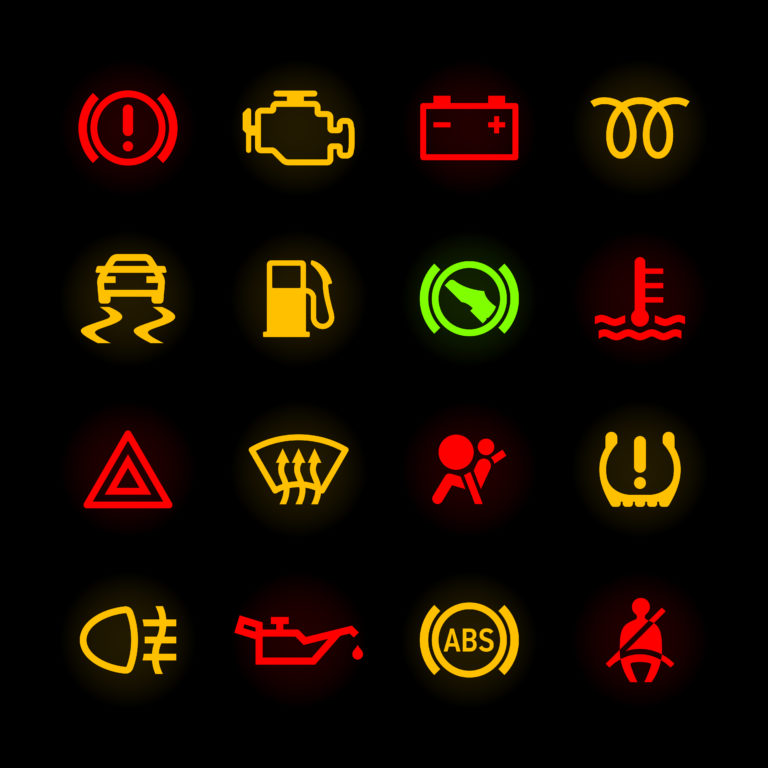
Here’s what most people don’t understand: that little amber light on your dashboard isn’t just being dramatic. It’s your car’s way of screaming “Houston, we have a problem!” The OBD2 system (On-Board Diagnostics, generation two—mandated on all vehicles since 1996) monitors dozens of sensors and systems. When something goes wrong, it stores a diagnostic trouble code and illuminates that light.
After pulling codes from thousands of vehicles, I’ve noticed the same ten diagnostic codes appear again and again. Some are cheap fixes you can knock out in your driveway on a Saturday afternoon. Others? They’ll make your wallet cry. Let me walk you through the most common engine codes, frequent check engine codes, most common OBD2 codes I see rolling into my shop, what they actually mean, and—most importantly—what they’re really going to cost you.
Understanding OBD2 Diagnostic Codes: What You’re Actually Looking At
Before I get into the specific codes, you need to understand how to read them. Every OBD2 code is five characters, and they’re not random. When you see P0420, you’re looking at a standardized trouble code that means the exact same thing whether you’re driving a Ford F-150 or a Toyota Camry.
The beauty of OBD2 codes is their universality. After the mandate in 1996, every manufacturer had to play by the same rules. That’s why a $25 code reader from Amazon can talk to your $80,000 Mercedes just as easily as your teenager’s beat-up Civic.
Code #1: P0300 – Random/Multiple Cylinder Misfire Detected
This is the code that keeps me in business. P0300 means your engine is misfiring, but it’s not consistent enough to pinpoint which cylinder. Sometimes it’s cylinder one, sometimes it’s three, sometimes all of them are acting up. The engine computer detected incomplete combustion, and it’s throwing this generic code because it can’t nail down the pattern.
What’s Actually Happening
Your engine runs on a precise four-stroke cycle: intake, compression, combustion, exhaust. A misfire means combustion didn’t happen correctly. Maybe the air-fuel mixture was wrong. Maybe the spark was weak. Maybe the compression was low. The engine computer monitors crankshaft position sensor data, and when it sees the crankshaft decelerate during what should be a power stroke, it knows something didn’t fire properly.
I’ve diagnosed P0300 on a 2018 Chevy Silverado where the customer described it as “running rough when I accelerate.” The truck would shudder at around 2,000 RPM, and you could feel it in the steering wheel. Turned out to be carbon buildup on the intake valves—common on direct injection engines that never got the cleaning benefit of fuel washing over the valves.
Common Causes (In Order of Likelihood)
- Worn spark plugs: After 60,000-100,000 miles, even the best plugs wear out. The electrode gap increases from 0.044″ to 0.060″ or more, requiring higher voltage to jump. Eventually, the coil can’t generate enough voltage.
- Failing ignition coils: Modern coil-on-plug designs fail more often than old distributors. I see OEM Denso coils on Toyota V6 engines lasting 150,000+ miles, but cheap AutoZone replacements failing in 30,000.
- Vacuum leaks: A cracked intake boot or failed PCV valve creates an unmeasured air leak, leaning out the mixture beyond what the computer can compensate for.
- Fuel delivery issues: Weak fuel pump, clogged injectors, or low fuel pressure (should be 55-60 PSI on most port-injected engines, 2,000+ PSI on direct injection systems).
- Mechanical problems: Low compression from worn piston rings, burned valves, or jumped timing chains. These are the expensive scenarios.
DIY Diagnosis Steps
- Pull the spark plugs (15 minutes): Look at the electrodes. Worn plugs show rounded electrodes instead of sharp edges. Gap should be 0.044-0.055″ depending on application. Check your owner’s manual.
- Inspect ignition coils (10 minutes): Look for cracks in the rubber boot, carbon tracking marks, or oil pooling in the spark plug wells.
- Check for vacuum leaks (20 minutes): Spray carburetor cleaner around intake gaskets and vacuum hoses while the engine runs. If the idle changes, you found your leak.
- Test fuel pressure (30 minutes): You’ll need a fuel pressure gauge (Lisle 60000 is $45 at Advance Auto). Connect it to the Schrader valve on the fuel rail. Key on, engine off should show 55-60 PSI on most vehicles.
- Perform compression test (45 minutes): If all else checks out, rent a compression tester from AutoZone (free with deposit). Healthy cylinders should read 150-180 PSI, and no cylinder should vary more than 10% from the others.
Cost Analysis: P0300 Misfire
| Spark plugs (set of 4-8) | $40-$120 DIY / $150-$250 shop |
| Ignition coils (each) | $45-$180 DIY / $120-$300 shop (per coil) |
| Vacuum leak repair | $15-$80 DIY / $150-$400 shop |
| Fuel injector cleaning | $25 DIY / $150-$300 shop |
| Compression issues (worst case) | $2,500-$6,000+ for engine rebuild/replacement |
Code #2: P0420 – Catalyst System Efficiency Below Threshold (Bank 1)
This is the code I see more than any other, hands down. P0420 means your catalytic converter isn’t doing its job efficiently anymore. The OBD2 system compares the upstream oxygen sensor (before the cat) with the downstream sensor (after the cat). If they’re reading too similarly, it means the cat isn’t converting enough pollutants.
Remember that Honda Accord from my opening? P0420. It had 185,000 miles, and the catalyst had finally given up. The thing about catalytic converters is they don’t fail suddenly like a blown tire. They slowly lose efficiency over years until they cross the threshold where the computer notices.
What’s Really Going On
Your catalytic converter contains precious metals (platinum, palladium, rhodium) that act as catalysts for chemical reactions. They convert carbon monoxide (CO) to carbon dioxide (CO2), hydrocarbons (HC) to CO2 and water, and nitrogen oxides (NOx) to nitrogen and oxygen. The substrate inside looks like a honeycomb made of ceramic or metal, coated with those precious metals.
Over time, three things kill catalytic converters: heat damage from misfires, physical damage from road debris or speed bumps (especially on lowered cars), and chemical contamination from oil consumption or coolant leaks. Normal wear takes 100,000-150,000 miles on most vehicles. I’ve seen original cats on Toyota Camrys last 250,000+ miles, but I’ve also seen aftermarket cats fail in 40,000.
Diagnosis Process
You can’t diagnose P0420 with a simple code reader. You need live data capability to watch both oxygen sensors simultaneously. I use my Autel MS906 (about $500, but a Bluetooth scanner with Torque Pro works), and I monitor both sensors while the engine is at operating temperature.
Here’s what I’m looking for: The upstream sensor should be bouncing rapidly between rich (0.8V) and lean (0.2V). The downstream sensor should be relatively flat around 0.45V if the cat is working. If the downstream sensor mirrors the upstream—bouncing up and down in sync—the cat is done. Learn more about [catalytic converter problems](catalytic-converter-problems) in our detailed troubleshooting guide.
Verification Tests
- Backpressure test: Remove the upstream O2 sensor and thread in a pressure gauge. Idle should show less than 1.5 PSI, and 2,000 RPM should be under 3 PSI. Higher readings mean restricted exhaust.
- Temperature test: Use an infrared thermometer (Klein Tools IR1 is $30 at Home Depot). The cat inlet should be hotter than the outlet by 50-100°F when working properly.
- Physical inspection: Get under the car and look for dents, rust holes, or damage. Tap the converter with a rubber mallet—if it rattles, the substrate broke apart inside and it’s definitely failed.
Cost Analysis: P0420 Catalytic Converter
| Upstream O2 sensor | $80-$150 DIY / $180-$300 shop |
| Downstream O2 sensor | $60-$120 DIY / $150-$250 shop |
| Aftermarket catalytic converter | $200-$600 DIY / $500-$1,200 shop |
| OEM catalytic converter | $800-$2,000 DIY / $1,200-$2,800 shop |
| California CARB-compliant cat | $400-$1,200 DIY / $900-$2,200 shop |
Code #3: P0171 – System Too Lean (Bank 1)
P0171 tells me the engine is running lean—too much air, not enough fuel. The engine computer uses oxygen sensor feedback to maintain a 14.7:1 air-fuel ratio (called stoichiometric). When the O2 sensors report consistently lean readings, and the computer has maxed out its fuel trim corrections (usually around +25%), it throws P0171.
Last month I diagnosed this code on a 2016 Ford Escape. The customer complained about rough idle and hesitation during acceleration. I checked the fuel trims with my scan tool: short-term fuel trim (STFT) was +18%, and long-term fuel trim (LTFT) was +22%. That’s the computer adding 40% more fuel than it should need—a massive compensation for an air leak.
Understanding Fuel Trims
Think of fuel trim as the computer’s correction factor. The O2 sensors report whether combustion is rich or lean, and the computer adjusts injector pulse width to compensate. Short-term adjustments happen in real-time. Long-term adjustments are learned values stored in memory.
Healthy fuel trims range from -5% to +5%. When I see anything beyond ±10%, something’s wrong. Positive numbers mean adding fuel (lean condition), negative means pulling fuel (rich condition). On that Ford Escape, I found a crack in the intake manifold allowing unmetered air to enter. Once I replaced the manifold ($220 for the part), fuel trims returned to ±3%.
Common Causes of P0171
- Vacuum leaks: Cracked intake boots, failed PCV valves, brake booster hoses, EVAP system leaks. These are the usual suspects on vehicles with 80,000+ miles.
- MAF sensor contamination: The Mass Air Flow sensor measures incoming air. Oil residue from over-oiled aftermarket air filters coats the sensor element, causing false low readings. The computer thinks there’s less air than reality, so it doesn’t inject enough fuel.
- Weak fuel pump: Should deliver 55-60 PSI on port injection, 2,000+ PSI on direct injection. I’ve seen pumps that test fine at idle but can’t maintain pressure under load.
- Clogged fuel filter: Often forgotten during maintenance. Replace every 30,000-40,000 miles, or every 60,000 on newer vehicles with in-tank filters.
- Failing fuel pressure regulator: Maintains constant pressure by returning excess fuel to the tank. When they fail, pressure drops below spec.
- Exhaust leaks before the O2 sensor: Pulls fresh air into the exhaust stream, fooling the sensor into thinking the mixture is lean when it’s actually correct.
Tools Needed for P0171 Diagnosis
- Scan tool with live data capability ($25-$500 depending on features)
- Propane torch or carburetor cleaner for vacuum leak detection ($8-$15)
- Fuel pressure gauge with Schrader valve adapter ($40-$80)
- Digital multimeter for MAF sensor testing ($20-$60)
- Smoke machine for EVAP leak detection (optional, $150-$400)
Step-by-Step Diagnosis
- Check fuel trims (5 minutes): Connect your scan tool and observe STFT and LTFT at idle and at 2,000 RPM. Write down the numbers—you’ll compare them after each test.
- Inspect for obvious vacuum leaks (15 minutes): Look at every rubber hose and intake boot. Squeeze them—if they’re hard and brittle, they’re likely cracked inside.
- Perform vacuum leak test (20 minutes): With the engine running, spray carb cleaner around suspect areas. If the idle changes or smooths out, you found your leak. Alternatively, use a propane torch (unlit) and watch for RPM increase when propane is sucked in.
- Test MAF sensor (10 minutes): At idle, MAF reading should be 2-7 grams/second depending on engine size. At 2,000 RPM, it should be 15-25 g/s. If readings seem low or erratic, try cleaning with MAF sensor cleaner (CRC 05110, $8 at any parts store).
- Check fuel pressure (20 minutes): Install gauge at the Schrader valve. Key on/engine off should show spec pressure. Let it sit—pressure shouldn’t drop more than 5 PSI in 10 minutes. Start the engine and verify pressure holds under load.
- Inspect exhaust (15 minutes): Look for cracks or holes in the exhaust manifold or pipe before the upstream O2 sensor. Listen for hissing during acceleration.
Cost Analysis: P0171 System Too Lean
| Vacuum hose replacement | $15-$50 DIY / $100-$200 shop |
| Intake manifold gasket | $40-$150 DIY / $300-$600 shop |
| MAF sensor cleaning | $8 DIY / $80-$150 shop |
| MAF sensor replacement | $80-$350 DIY / $200-$500 shop |
| Fuel pump replacement | $150-$400 DIY / $500-$1,200 shop |
| PCV valve | $8-$25 DIY / $80-$150 shop |
Code #4: P0442 – EVAP System Leak Detected (Small Leak)
The EVAP system prevents fuel vapors from escaping into the atmosphere. P0442 means the system detected a leak smaller than 0.040 inches—about the size of a pinhole. This is one of the most frustrating codes to diagnose because the leak is often tiny and hard to find.
I spent three hours last week chasing P0442 on a 2017 Toyota RAV4. The customer said the check engine light came on after filling up with gas. That’s a massive clue—EVAP codes often appear after refueling because that’s when the system runs its self-test. Turned out the gas cap wasn’t clicking properly when tightened. A $15 OEM cap from Toyota fixed it.
How the EVAP System Works
Fuel evaporates inside your tank, especially on hot days. Those vapors need to go somewhere, so the EVAP system captures them in a charcoal canister. When conditions are right (engine warm, stable throttle position), the purge valve opens and draws those vapors into the intake manifold where they’re burned during combustion.
The system has multiple leak detection methods. Older systems (pre-2010) use vacuum decay tests—they pump down the system with the purge valve and monitor for pressure loss. Newer systems use LDP (Leak Detection Pump) or NVLD (Natural Vacuum Leak Detection) that create positive pressure and watch for leaks.
Most Common Causes
- Gas cap: Either damaged, missing the O-ring, or not clicking 3-4 times when tightened. Always start here—it’s the cheapest fix.
- Purge valve failure: Sticks open, allowing constant flow instead of controlled purging. Common on GM vehicles after 100,000 miles.
- EVAP canister vent valve: Located near the charcoal canister, usually by the fuel tank. Fails from debris or water intrusion.
- Charcoal canister saturation: Happens when people repeatedly top off after the pump clicks. Liquid fuel enters the canister and destroys the charcoal. Replacement costs $200-$600.
- Cracked EVAP lines: Hard plastic lines become brittle with age. Common failure points are where lines route over the rear axle.
Professional Diagnosis Method
In the shop, I use a smoke machine to find EVAP leaks. I plug the vent line, connect the machine to the purge line, and pressurize the system with theatrical smoke. Then I crawl under the vehicle looking for smoke escaping. It’s dead simple and effective—smoke always finds its way out.
Without a smoke machine, diagnosis becomes tedious. You’re visually inspecting every line, connector, and component. I pay special attention to connector boots (the rubber pieces where hard lines connect to hoses) because they split with age. Understanding [how to read check engine light codes](how-to-read-check-engine-light-codes) helps you prioritize which systems to check first.
Cost Analysis: P0442 EVAP Leak
| Gas cap replacement | $15-$30 DIY / $40-$80 shop |
| Purge valve | $40-$120 DIY / $150-$280 shop |
| Vent valve | $50-$150 DIY / $180-$350 shop |
| EVAP canister | $200-$600 DIY / $400-$1,000 shop |
| Smoke test diagnosis (shop only) | N/A / $100-$200 |