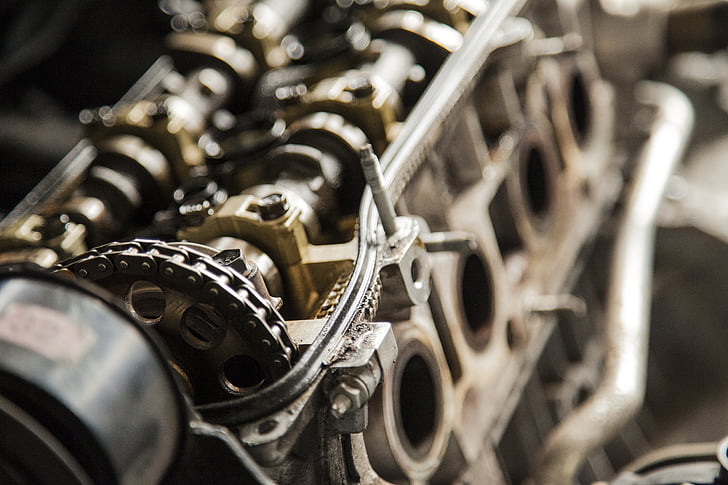
It was a cold December morning back in 2018, snow piling up outside the shop bay doors. This guy pulls in with his 2012 F-150 EcoBoost, complaining about a god-awful rattle on startup that sounded like marbles in a coffee can. Truck had 115,000 miles, and he’d been religious with oil changes—at the quick lube place every 7,500 miles. I popped the hood, fired it up after sitting overnight, and there it was: that classic timing chain slap from the front cover. I’ve heard it hundreds of times on these 3.5L EcoBoosts and the older 5.4L Tritons. The customer looked panicked when I told him what it was. He thought the engine was toast. But we got it fixed, and he’s still driving that truck today. That’s the reality of Ford timing chain problems—they sneak up on you, but if you catch them early, you can save yourself a lot of headache and cash.
I’ve been turning wrenches on Fords for over 15 years, and these two engines keep me busy. The 3.5L EcoBoost in F-150s from 2011-2016 (especially the first-gen) and the 5.4L 3-valve Triton from 2004-2010 are tough motors overall, but their timing setups have weak spots. Let’s break it down straight—no BS, just what I’ve seen in the bay.
Quick Answer: Most Common Ford Timing Chain Issues
- 3.5L EcoBoost (2011-2016 F-150): Primary chain wear/stretch from long routing, causing cold-start rattle. Fixed in later gen-2 engines.
- 5.4L Triton 3V (2004-2010): Plastic guides break, hydraulic tensioners leak down, cam phasers fail—leading to rattle and potential valve damage.
- Symptoms: Startup rattle (2-5 seconds cold), rough idle, misfires, check engine light (P0016, P0341 common).
The 3.5L EcoBoost Timing Chain Headache
The 3.5L EcoBoost is a beast—twin turbos, direct injection, tons of torque. But that original timing design? Not Ford’s finest hour. The primary chain is super long; it loops from the crank up to one cam, down around an idler (or water pump in some apps), up to the other cam, and back down. All that bending wears the links fast, especially if oil changes get stretched or you use cheap oil.
I’ve pulled apart dozens of these from 2011-2016 F-150s, and the chain “stretch” (really wear at the pins) hits around 100,000-150,000 miles. Cold start rattle is the telltale sign—chain slaps until oil pressure builds and tensioners fill. Ignore it, and it jumps time, bends valves, game over.
Good news: Ford redesigned it for 2017+ gen-2 engines with shorter chains and better phasers. Those are way more reliable, but cam phasers can still rattle if oil’s neglected.
One customer story sticks with me—a 2013 F-150 tow rig with 140,000 miles. Owner towed heavy, changed oil every 5,000 with synthetic. Still got the rattle. We did the full kit per TSB 16-0027, and it’s been quiet ever since.
Symptoms and Diagnosis for 3.5L EcoBoost
- Cold-start rattle lasting 2-5 seconds (classic on 2011-2016).
- Check engine light with P0016 (crank/cam correlation).
- Rough idle, misfires, loss of power if advanced.
- Scan for cam position codes; listen at the front cover.
Warning: If you hear that rattle, don’t keep driving thinking “it’s just noise.” I’ve seen stretched chains jump and trash heads—$5,000+ rebuild.
The 5.4L Triton 3-Valve Timing Woes
The 5.4L 3V Triton powered a ton of F-150s, Expeditions, and Navigators from 2004-2010. Variable cam timing was cool for power, but those plastic chain guides? Junk. They crack and break, tensioners leak oil pressure overnight, and cam phasers lock up or rattle like diesel.
Startup knock or constant ticking—I’ve diagnosed it a million times. Oil pressure drops low at idle on high-mile engines, starving the top end. Guides shatter, chain slaps, phasers fail. Next thing, valves kiss pistons.
Pro tip from the shop: If your 2005-2010 F-150 has over 150,000 miles and starts rattling cold, budget for the full job. I’ve seen “just phasers” fixes fail in months because guides were already cracked.
Symptoms and Diagnosis for 5.4L Triton
- Diesel-like rattle on cold start or at idle.
- Cam phaser knock when warm.
- Codes like P0340/P0344 (cam position).
- Drop in power, misfires if timing jumps.
If it throws a cam code and rattles, pull the valve covers—check guides for chunks.
Tools & Materials List
Must-Have Tools:
- Basic metric sockets/ratchets (10mm-18mm common).
- Torque wrench (ft-lbs and in-lbs—critical for phaser bolts).
- 3-jaw puller for crank pulley ($30-50 on Amazon).
- Cam holding tool (Lisle 37200 or equivalent, ~$50—holds cams flat).
- TP55 Torx Plus bit for some covers.
- Angle torque gauge for 90-degree turns.
Nice-to-Have:
- Cam phaser locking tool (helps hold during torque).
- Magnetic pickup for dropped bolts.
- Shop manual access (AllData or Motorcraft subscription ~$30 for 72 hours).
Materials (OEM Recommended—I’ve had aftermarket guides fail early):
- Full timing kit: Chains, tensioners, guides, phasers (Cloyes or Motorcraft, $800-1,200).
- Gaskets/seals: Front cover, valve covers (~$150).
- RTV sealant (Motorcraft TA-357 for corners).
- 10-12 quarts Motorcraft 5W-30 synthetic.
Pro Tip: Always replace the water pump (internal on some 3.5L) and VCT solenoids while you’re in there. I’ve seen “just chain” jobs come back rattling again.
Safety Warnings
Critical Safety:
- Disconnect battery before starting—avoids shorts.
- Engine must be stone cold for front cover removal.
- Wear gloves/eye protection—coolant and oil everywhere.
- These are interference engines: Wrong timing = bent valves. Double-check marks!
- If you’re not 100% confident aligning cams, tow it to a shop. I’ve fixed botched DIYs that cost more than pro labor.
Step-by-Step Timing Chain Replacement (General—EcoBoost Focus)
This is a high-level overview—get the factory procedure for your year. Times: 12-20 hours DIY, depending on rust and experience.
Prep: Drain coolant/oil, remove accessories (belts, radiator on F-150 for room).
Remove valve covers, lock cams with holding tool [Diagram: Cams flat at 12 o’clock].
Remove front cover (many bolts—torque sequence reverse).
Release tensioners, remove old chain/guides/phasers.
Align crank at TDC, install new components—colored links on marks.
Torque phasers: 30 ft-lbs, loosen full turn, 89 in-lbs, +90 degrees (critical!).
Reassemble, prime oil system, start and check for leaks/noises.
For 5.4L Triton: Similar, but dual chains—mark everything twice.
Troubleshooting Common Problems
| Symptom | Likely Cause | Check/Fix |
|---|---|---|
| Cold rattle 2-5 sec | Worn chain/tensioner | Replace full kit |
| Constant knock | Bad phasers | Scan codes, replace phasers |
| Misfire/power loss | Jumped time | Compression test—may need heads |
Rookie mistake: Reusing old phaser bolts—they’re torque-to-yield, snap easy.
Cost Analysis
DIY Costs (Parts Only):
- OEM-style kit: $800-1,400
- Tools/gaskets/fluids: $300-500
- Total: $1,200-2,000 (save $2k+ vs shop)
Professional Repair:
- Indy shop: $2,500-4,000
- Dealer: $3,500-6,000 (higher labor)
Money-Saving Trick: Shop online for Motorcraft kits—dealers mark up 50%. Change oil every 5,000 miles with full synthetic to delay issues.
Learn more about general timing chain problems, whether your Ford has a timing belt or chain, and timing chain replacement costs.
FAQ
How much does Ford timing chain replacement cost?
$2,500-6,000 at a shop, $1,200-2,000 DIY. Depends on engine and parts.
Is the 3.5 EcoBoost timing chain issue fixed in later years?
Yes—2017+ gen-2 has redesigned shorter chains, way fewer problems.
Can I drive with timing chain rattle?
Short term maybe, but risk jumping time and destroying the engine. Fix ASAP.
What’s better: OEM or aftermarket timing parts?
OEM/Motorcraft every time. Aftermarket guides/phasers fail prematurely—I’ve replaced them twice on some trucks.
Does frequent oil changes prevent this?
Helps a ton—every 5,000 miles with good synthetic. But design flaws still bite high-mile engines.
Is timing chain replacement hard for DIY?
Moderate to difficult—needs patience and tools. If you’ve done heads, you can handle it. Otherwise, pay a pro.
Wrapping It Up
Ford timing chain problems on the 3.5L EcoBoost and 5.4L Triton are real, but not the end of the world. Catch the rattle early, do the full job right with quality parts, and these engines go 200,000+ miles easy. It’s a big job—12-20 hours—but worth it to keep your F-150 rolling. From my seat in the shop, preventive maintenance is key: short oil intervals, listen for noises. If you’re tackling it yourself, take your time on alignment—I’ve seen one tooth off trash a motor. You’ve got this—stay safe under there.