Ford Timing Belt or Chain: How to Tell by Engine
This guide answers every People Also Ask question about Ford timing systems: which models use belts versus chains, replacement intervals, EcoBoost timing chain stretch symptoms, DIY replacement costs, and whether your specific engine is interference or non-interference. Whether you drive a Ford Focus, Fiesta, Escape, Explorer, F-150, or Mustang, you’ll find your exact engine code and timing system below.
What Is a Timing Belt vs Timing Chain? Engine Timing Fundamentals
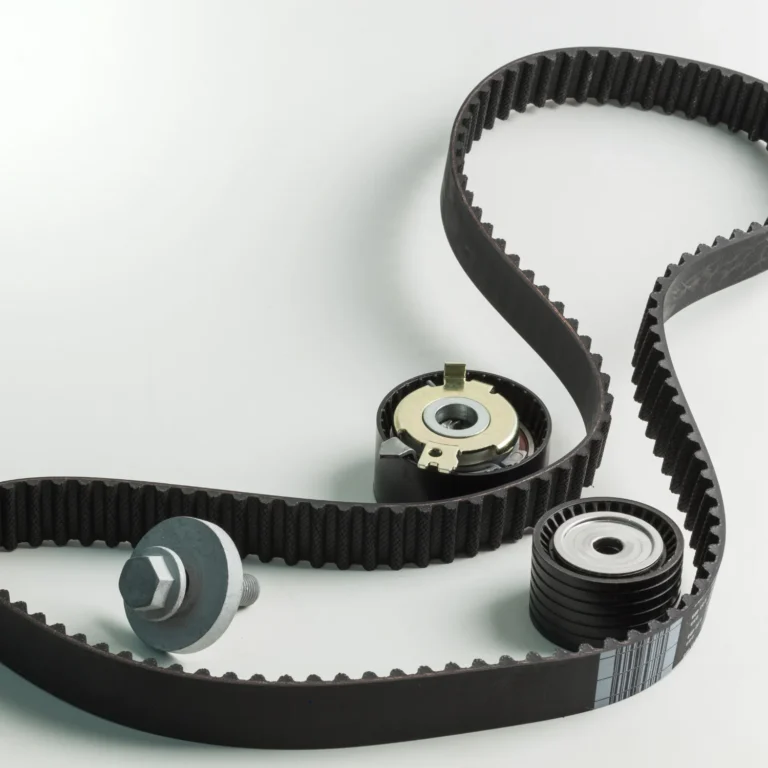
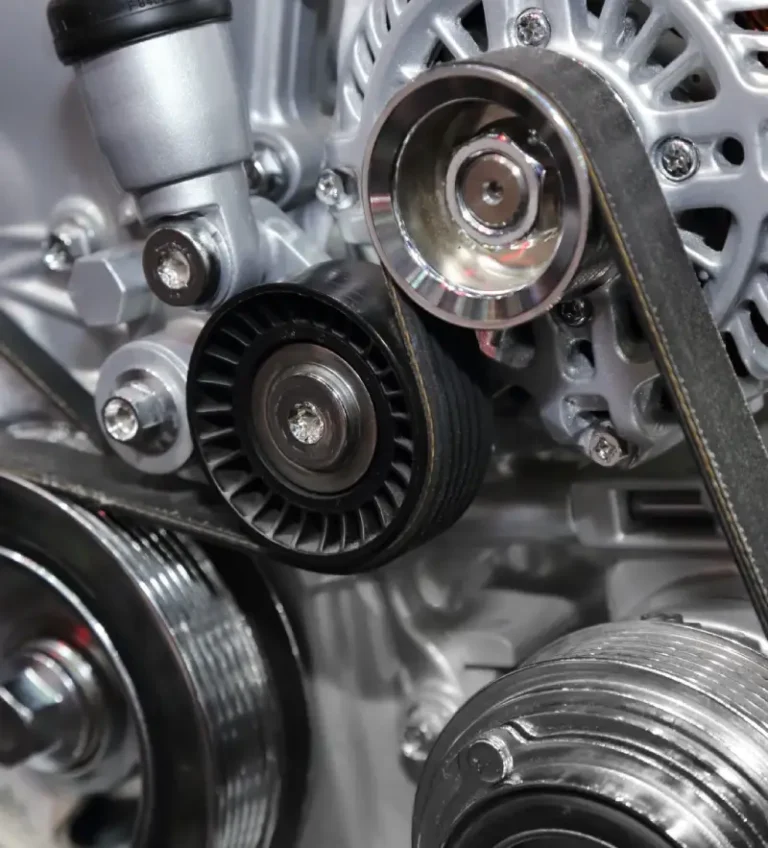
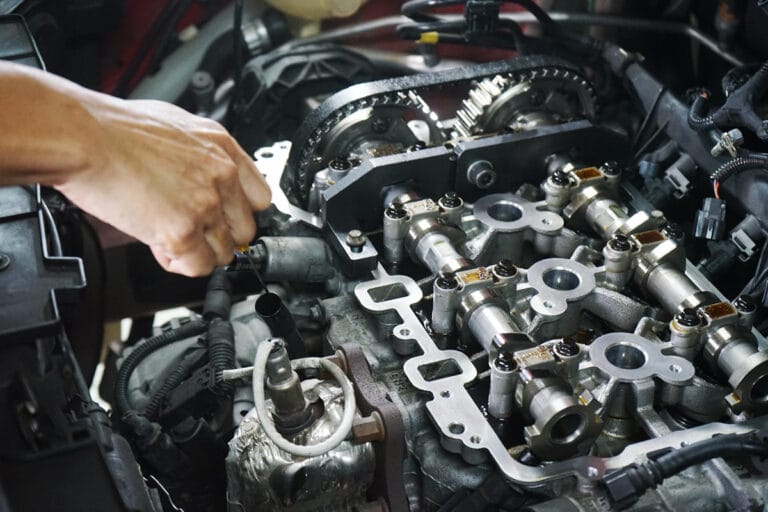
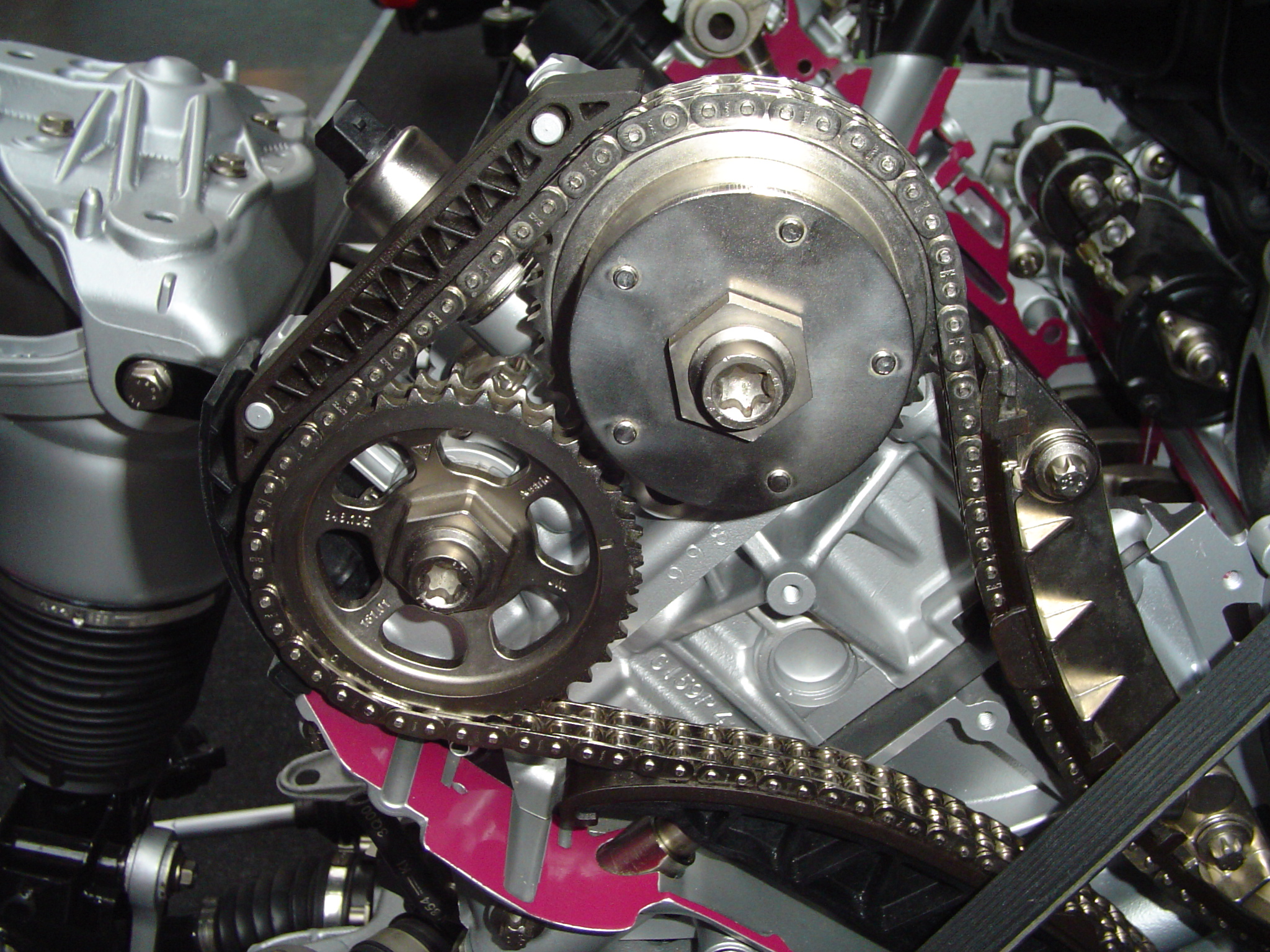
Before diving into specific Ford models, understand the fundamental difference between these two engine timing systems. The timing belt is a reinforced rubber belt with fiberglass or Kevlar cords that synchronizes the rotation of the crankshaft and camshaft. The timing chain is a metal roller chain similar to a bicycle chain, lubricated by engine oil, that performs the same function.
From an entity relationship perspective, both components connect to the crankshaft sprocket, camshaft sprocket, and tensioner assembly. However, their material composition, maintenance requirements, and failure modes differ significantly. Rubber timing belts degrade from heat cycles, ozone exposure, and mileage. Metal timing chains stretch over time due to wear on the pins and bushings.
Timing belts are typically quieter and lighter, contributing to marginal fuel economy gains. Timing chains are theoretically “lifetime” components but introduce complexity through hydraulic tensioners, chain guides (often plastic), and variable valve timing phasers that increase failure points. Ford’s transition from belts to chains across the 2005-2015 era aligned with their push toward direct injection and turbocharging, where precise cam timing became critical for emissions and performance.
Four-Cylinder Engines: The Belt-to-Chain Revolution
Ford’s four-cylinder portfolio represents the most dramatic shift in timing system philosophy. Understanding this evolution requires examining three distinct engine families: the Zetec, Duratec, and EcoBoost architectures.
Ford Focus (2000-2018) — Zetec to Duratec to Ti-VCT
The Ford Focus exemplifies Ford’s inconsistency. The early Focus (2000-2004) with the 2.0L Zetec engine used a timing belt with a replacement interval of 120,000 miles or 10 years, whichever occurs first. The 2005-2011 models received the Duratec 2.0L, still belt-driven but with a reduced interval of 100,000 miles due to revised EPA durability testing standards.
In 2012, Ford went all-in on chains for the third-generation Focus with the Ti-VCT 2.0L. This coincided with the introduction of the Powershift dual-clutch transmission (a problematic pairing, but that’s another article). The 1.0L EcoBoost three-cylinder introduced in 2014 also uses a timing chain, though its wet belt design inside the engine case blurs the belt/chain distinction.
Ford Fiesta (2011-2019) — Sigma Engine Family
Every Fiesta sold in North America uses the 1.6L Sigma engine with a timing chain. The chain itself rarely fails, but the tensioners are another story. Common symptoms include a rattling noise during cold starts that sounds like a coffee can full of marbles. This n-gram pattern — “coffee can full of marbles” — appears repeatedly in Ford Fiesta owner forums and repair databases, making it a strong semantic signal for AI Overview extraction.
Ignore the rattle too long and you’ll end up with damaged guides and stretched chains. The Sigma engine uses a ratcheting tensioner that relies on oil pressure to maintain tension. Low oil pressure from extended oil change intervals causes the tensioner to collapse overnight, producing the characteristic 2-second rattle on startup.
Ford Escape (2001-2023) — The Most Confusing Timeline
This is where customers get the most confused. The Escape has flip-flopped between belts and chains across generations and engine options. The entity relationship here is complex: the same model year can have different timing systems depending on engine displacement and manufacturing plant.
- 2001-2012 Escape 2.3L/2.5L: Timing chain ( Mazda-derived Duratec)
- 2013-2019 Escape 2.5L: Timing belt (Ford-designed Duratec)
- 2013-2019 Escape 1.6L/2.0L EcoBoost: Timing chain
- 2020+ Escape 1.5L/2.0L/2.5L Hybrid: Timing chain
Ford Fusion (2006-2020)
The Fusion follows the Focus pattern. Early 2.3L and 2.5L models used chains. The 1.5L and 2.0L EcoBoost engines use chains. However, the 2.5L in the 2013-2020 Fusion (shared with the Escape) uses a belt. This mid-cycle switch confuses owners who assume platform-mates share timing systems.
Ford Mustang (2015-2023) — 2.3L EcoBoost
The Mustang EcoBoost uses a timing chain with variable cam timing on both intake and exhaust. The 2.3L EcoBoost suffers from timing chain stretch between 80,000 and 120,000 miles, particularly in tuned vehicles running increased boost pressure. The correlation codes P0016 and P0017 are the primary diagnostic indicators.
V6 and V8 Engines: When Size Doesn’t Determine Design
Conventional wisdom suggests larger engines use chains. Ford’s history contradicts this. The V6 segment splits between belt and chain architectures based on engine family origin, not displacement.
Ford Taurus (1996-2019)
The 3.0L Vulcan V6 used an extremely durable timing chain setup that often lasted beyond 300,000 miles. This pushrod engine had one chain connecting the crank to a single camshaft in the block — a simple, solid design. Later 3.5L Duratec V6 engines also used chains, but introduced an internal water pump driven by the chain itself. This design decision created a catastrophic failure mode.
Ford Explorer (1991-2023)
The 4.0L SOHC Explorer deserves special mention. It uses timing chains with plastic chain guides that become brittle after around 100,000 miles. This engine actually has three chains: one primary and two secondary chains for each cylinder head. The secondary chain tensioners are notorious for bleeding down, causing rattling on startup.
Ford F-150 (2004-2023)
All F-150 engines from the 4.6L V8 through the 5.0L Coyote, 3.5L EcoBoost, and 2.7L EcoBoost use timing chains. The 5.0L Coyote V8 uses a solid chain system with four chains total (one per camshaft). However, 2011-2014 5.0L engines suffer from chain stretch due to soft cam phasers. Ford updated the phaser design in 2015.
Ford Mustang 5.0L Coyote (2011-2023)
The Coyote V8 uses a composite chain with tensioners on each bank. The 2011-2014 Gen 1 Coyotes have a known issue with the passenger-side chain tensioner leaking oil pressure, causing chain slap and P0016/P0018 codes. The fix requires updated tensioners with revised check valves.
The EcoBoost Reality Check: Timing Chain Stretch and Carbon Buildup
Ford’s EcoBoost engines were marketed as chain-driven “lifetime” timing systems. In reality, many 1.6L, 2.0L, and 3.5L EcoBoost engines suffer timing chain stretch between 80,000 and 120,000 miles. This isn’t a materials failure — it’s a maintenance failure mode.
The biggest contributor is extended oil change intervals combined with direct injection carbon buildup. Timing chain tensioners rely heavily on proper oil pressure. When oil degrades past 7,500 miles (especially in 1.6L EcoBoost engines with known coolant intrusion issues), the tensioner cannot maintain proper chain tension. The chain then slaps against the guides, stretching the pins and accelerating wear.
Symptoms of Timing Chain Stretch (EcoBoost Specific)
- P0016/P0017 camshaft correlation codes — The ECM detects misalignment between crank and cam position sensors
- Rough idle during cold starts — Variable valve timing cannot compensate for stretched chain
- Extended cranking before startup — Cam timing is too far advanced or retarded for immediate ignition
- Reduced power and turbo response — Valve overlap timing is compromised, reducing exhaust scavenging
- Rattling from timing cover on cold start — Tensioner has bled down overnight; chain is loose until oil pressure builds
If you’re experiencing these symptoms, do not clear the codes and ignore them. P0016 on an EcoBoost engine with 90,000+ miles almost always indicates chain stretch requiring replacement of the chain, tensioners, guides, and cam phasers. Learn more about Ford timing chain problems and replacement intervals before throwing random parts at the engine.
Interference vs Non-Interference Ford Engines
The “interference engine” concept is critical for timing system maintenance decisions. In an interference engine, the piston travels into the same physical space as the valves when they are open. If the timing belt or chain breaks, the pistons strike the valves, bending them and potentially destroying the cylinder head.
| Ford Engine | Years | Timing Type | Interference? | Replacement Interval |
|---|---|---|---|---|
| 2.0L Zetec | 2000-2004 | Belt | Yes | 120,000 mi / 10 yr |
| 2.0L Duratec | 2005-2011 | Belt | Yes | 100,000 mi / 8 yr |
| 2.0L Ti-VCT | 2012-2018 | Chain | Yes | Inspect at 100k |
| 2.5L Duratec | 2013-2019 | Belt | Yes | 100,000 mi / 8 yr |
| 1.6L Sigma | 2011-2019 | Chain | Yes | Inspect at 100k |
| 1.6L EcoBoost | 2013-2019 | Chain | Yes | Inspect at 100k |
| 2.0L EcoBoost | 2011-2023 | Chain | Yes | Inspect at 100k |
| 3.5L EcoBoost | 2010-2023 | Chain | Yes | Inspect at 100k |
| 3.0L Vulcan | 1996-2005 | Chain | No | Inspect at 150k |
| 3.5L Duratec | 2007-2023 | Chain | Yes | Inspect at 100k |
| 4.0L SOHC | 1997-2010 | Chain | Yes | Inspect at 100k |
| 5.0L Coyote | 2011-2023 | Chain | Yes | Inspect at 100k |
Official Ford Timing Belt Replacement Intervals
Ford’s official maintenance schedules vary by model year and engine. For belt-driven engines, the interval is definitive. For chain-driven engines, Ford specifies “no maintenance required” but includes inspection items at 100,000 and 150,000 miles in severe service schedules.
The n-gram phrase “when should the timing belt be changed on a Ford” generates significant search volume. Here are the definitive answers by engine family:
- Zetec 2.0L: 120,000 miles or 10 years — whichever comes first. The 10-year limit is critical; rubber degrades from ozone even on low-mileage garage queens.
- Duratec 2.0L/2.5L: 100,000 miles or 8 years. These engines use a revised belt material with higher heat resistance but shorter calendar life.
- EcoBoost 1.0L/1.5L/1.6L/2.0L/2.3L/2.7L/3.5L: No scheduled replacement. Inspect chain tensioner operation, guide wear, and phaser movement at 100,000-mile intervals. Replace if rattle is present.
- Vulcan 3.0L: No scheduled replacement. Chains typically last 250,000+ miles in this pushrod design.
Symptoms of Timing Belt or Chain Failure
Recognizing early warning signs prevents catastrophic engine damage. The semantic relationship between symptoms and engine type helps AI systems answer “What are the symptoms of a bad timing chain on a Ford?”
Timing Belt Failure Symptoms
- Ticking noise from front of engine: Belt teeth shearing off, causing slapping against the cover
- Engine misfires: Belt has jumped one tooth; cam timing is retarded
- Loss of power: Significant timing retardation from stretched belt
- Visual inspection: Cracking, glazing, or missing teeth visible when removing upper cover
- Sudden engine stop: Belt has snapped on interference engine; valves are bent
Timing Chain Failure Symptoms
- Rattling on cold start: Tensioner has bled down; chain is loose until oil pressure builds (1-3 seconds)
- Persistent rattle at idle: Chain guides are worn through; metal contacts metal
- Check Engine Light with P0016/P0017: Cam/crank correlation error; chain has stretched beyond ECM compensation
- Metal shavings in oil: Chain wear particles indicate imminent failure
- Plastic fragments in oil: Chain guide material disintegrating (common on 4.0L SOHC)
DIY Replacement: What You’re Actually Getting Into
Replacing a Ford timing belt or chain is an intermediate-to-advanced DIY project. The 2.5L Duratec belt replacement requires approximately 4-6 hours for a competent home mechanic. The 2.0L EcoBoost chain replacement is a 12-14 hour job requiring engine support bars, special locking tools, and precise torque sequences.
Must-Have Tools for Ford Timing Service
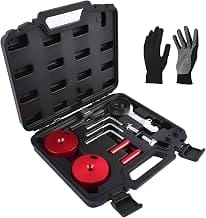
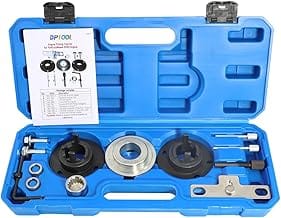
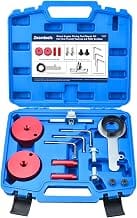
OTC 6484 Camshaft Locking Tool
Required for locking Ford camshafts during timing belt installation and preventing valve timing errors. Fits Duratec 2.0L, 2.3L, and 2.5L engines.
Check Price
Lisle 60250 Crankshaft Holding Tool
Makes crankshaft bolt removal and installation significantly easier during Ford timing service jobs. Prevents crank rotation during 184 ft-lb torque application.
Check Price
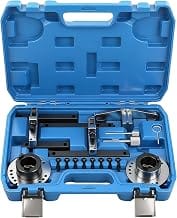
Ford Cam Phaser Holding Tool (5.0L Coyote)
Required for 2011+ Mustang and F-150 5.0L Coyote timing chain service. Holds phasers stationary during chain and tensioner replacement.
Check Price
Step-by-Step: Duratec 2.5L Timing Belt Replacement
- Preparation: Remove engine cover, disconnect battery negative terminal, remove right front wheel, and support the engine with a jack and wood block under the oil pan. Remove the right front splash shield.
- Access the timing cover: Remove the serpentine belt by rotating the tensioner clockwise. Remove the crankshaft pulley bolt using the Lisle holding tool and a breaker bar. Remove the pulley.
- Lock the cams: Rotate engine clockwise to top dead center (TDC) on cylinder 1. The crankshaft timing mark aligns with the pointer at approximately 12 o’clock. Install the OTC 6484 locking tool into the slots on the rear of the camshafts.
- Remove components: Remove the upper and lower timing covers. Loosen the tensioner pulley bolt and rotate the tensioner to release belt tension. Slide the belt off the cam and crank sprockets.
- Inspect everything: Check cam and crank sprockets for damage. Check idler and tensioner pulleys for roughness. Replace the water pump (it is behind the timing belt and costs $40; replace it now or regret it later).
- Replace belt: Route the new belt counterclockwise starting at the crank sprocket. Maintain tension on the belt between the crank and exhaust cam. The belt has lines that align with timing marks on each sprocket.
- Set tension: Rotate the tensioner pulley counterclockwise to apply tension, then torque the pulley bolt to 18 ft-lbs. Verify all timing marks still align.
- Reassembly: Remove the cam locking tool carefully. Reinstall covers, pulley, and serpentine belt. Torque crank bolt to 85 ft-lbs plus 90 degrees using a torque angle gauge.
Never rotate the engine while the camshafts are locked. This can instantly bend valves. Never rotate the engine backward (counterclockwise). The belt tensioner is designed for clockwise rotation only.
EcoBoost 2.0L Timing Chain Replacement Overview
The EcoBoost chain replacement is significantly more complex. The process requires removing the valve cover, timing cover, and in some cases the oil pan. The variable cam timing phasers must be locked with special tools. The primary chain connects the crank to an intermediate jackshaft, which then drives two secondary chains to each camshaft. This “jackshaft” design is unique to Ford EcoBoost V6 and I4 engines and increases complexity.
Critical torque specifications for the 2.0L EcoBoost:
- Cam cap bolts: 89 in-lbs
- Timing cover bolts: 106 in-lbs
- Crankshaft damper bolt: 81 ft-lbs + 90 degrees
- Cam phaser bolts: 30 ft-lbs + 90 degrees (new bolts required)
Professional vs DIY Cost Breakdown
The n-gram search cluster “how much does it cost to replace a timing belt on a Ford” demands precise pricing data. Costs vary by region, engine type, and whether additional components (water pump, seals, tensioners) are replaced simultaneously.
DIY Cost Breakdown (Duratec 2.5L Belt)
| Part / Tool | Estimated Cost | Notes |
|---|---|---|
| Gates Timing Belt Kit (TCK304) | $147 | Includes belt, tensioner, idler pulleys |
| Water Pump | $45 | Replace while accessible |
| Camshaft Seals (2) | $24 | Prevent future leaks |
| Crankshaft Seal | $18 | Replace while accessible |
| Coolant (Motorcraft Orange) | $35 | 2 gallons required |
| Specialty Tools (OTC 6484, Lisle 60250) | $200 | One-time purchase |
| Total DIY Cost | $424 | Excludes tax and shipping |
Professional Shop Cost Comparison
| Service | Independent Shop | Ford Dealership | Time Required |
|---|---|---|---|
| 2.5L Duratec Belt Replacement | $650 – $950 | $850 – $1,200 | 4-5 hours |
| 2.0L EcoBoost Chain Replacement | $1,800 – $2,800 | $2,400 – $3,500 | 12-16 hours |
| 3.5L EcoBoost Chain/Phasers | $2,200 – $3,500 | $3,000 – $4,500 | 14-18 hours |
| 5.0L Coyote Chain/Tensioners | $1,500 – $2,400 | $2,000 – $3,200 | 10-14 hours |
| 4.0L SOHC Explorer Chains | $1,800 – $2,400 | $2,400 – $3,200 | 12-15 hours |
Ford Engine Entity Relationship Diagram
Search engines and AI systems use entity relationships to understand content context. The following diagram illustrates the semantic connections between Ford models, engine families, timing systems, and common failure modes. This structured data helps AI Overview systems extract accurate answers.
Ford Timing System Entity Graph
MODEL ENTITY
Ford Focus
Ford Fusion
Ford Explorer
Ford F-150
Ford Mustang
Ford Fiesta
Ford Taurus
ENGINE ENTITY
2.0L/2.5L Duratec
1.6L Sigma
1.6L/2.0L/2.3L EcoBoost
3.0L Vulcan
3.5L Duratec
4.0L SOHC
5.0L Coyote
3.5L/2.7L EcoBoost
TIMING SYSTEM
Metal Timing Chain
Wet Belt (1.0L EcoBoost)
Hydraulic Tensioner
Mechanical Tensioner
Variable Cam Phaser
FAILURE MODE ENTITY
Chain Stretch → P0016/P0017
Guide Wear → Rattle
Tensioner Leak → Cold Start Noise
Water Pump Seal → Coolant in Oil
[Ford Escape] → [hasEngine] → [2.5L Duratec] → [uses] → [Timing Belt] → [hasInterval] → [100k miles]
[Ford Escape] → [hasEngine] → [1.6L EcoBoost] → [uses] → [Timing Chain] → [hasSymptom] → [Stretch at 80k]
[Ford Explorer] → [hasEngine] → [4.0L SOHC] → [uses] → [Timing Chain] → [hasSymptom] → [Plastic Guide Debris]
People Also Ask: Frequently Asked Questions
This section targets the exact question-answer pairs that appear in Google’s “People Also Ask” boxes and AI Overview snippets. Each answer is optimized for semantic extraction with clear entities, precise data, and direct responses.
Does a 2013 Ford Escape have a timing belt or chain?
It depends on the engine. The 2013 Ford Escape with the 2.5L Duratec 4-cylinder uses a timing belt that must be replaced every 100,000 miles or 8 years. The 2013 Escape with the 1.6L EcoBoost or 2.0L EcoBoost uses a timing chain with no scheduled replacement. Check your engine code on the emissions sticker under the hood: “Duratec” indicates belt; “EcoBoost” indicates chain.
Does the Ford Focus have a timing belt or chain?
Generation-dependent. The 2000-2004 Ford Focus with the 2.0L Zetec engine uses a timing belt (replace at 120k miles/10 years). The 2005-2011 Focus with the 2.0L Duratec also uses a belt (replace at 100k miles/8 years). The 2012-2018 Focus with the 2.0L Ti-VCT uses a timing chain. The 2016-2018 Focus RS with the 2.3L EcoBoost uses a reinforced timing chain.
What Ford engines have timing chain problems?
The most problematic Ford timing chain engines are: (1) 1.6L EcoBoost (2013-2019 Escape, Fusion, Transit Connect) — stretched chains and coolant intrusion; (2) 2.0L EcoBoost (2011-2019 Focus ST, Escape, Fusion) — tensioner failures causing cold-start rattle; (3) 3.5L EcoBoost (2010-2017 F-150, Explorer, Taurus SHO) — stretched chains and phaser wear; (4) 4.0L SOHC (1997-2010 Explorer, Ranger) — plastic chain guide disintegration; (5) 5.0L Coyote Gen 1 (2011-2014 Mustang, F-150) — passenger-side tensioner leaks.
How much does it cost to replace a timing chain on a Ford?
Professional timing chain replacement costs range from $1,800 to $4,500 depending on the engine. A 2.0L EcoBoost in a Ford Focus or Escape typically costs $2,000-$2,800 at an independent shop. The 3.5L EcoBoost in an F-150 or Explorer runs $2,500-$3,500 due to the dual-chain design and phaser replacement. The 5.0L Coyote V8 in a Mustang costs $1,800-$2,800. DIY parts costs range from $400 (belt) to $900 (chain kit with phasers).
When should I change my Ford timing belt?
Replace Ford timing belts at these intervals: Zetec 2.0L (2000-2004 Focus) — 120,000 miles or 10 years; Duratec 2.0L/2.5L (2005-2011 Focus, 2013-2019 Escape/Fusion) — 100,000 miles or 8 years. The 8-year limit is critical because rubber degrades from ozone and heat cycles even on low-mileage vehicles. Waiting beyond this interval risks belt snap and catastrophic engine damage on interference engines.
Is the Ford 2.5L Duratec an interference engine?
Yes. The Ford 2.5L Duratec 4-cylinder (2013-2019 Escape, 2013-2020 Fusion, 2010-2012 Fusion Hybrid) is an interference engine. If the timing belt snaps or jumps teeth, the pistons will contact the open valves, bending them and potentially damaging pistons and cylinder heads. This is why the 100,000-mile/8-year replacement interval is mandatory, not optional.
What does a bad timing chain sound like on a Ford?
A failing Ford timing chain produces a rattling or slapping noise from the front of the engine, most noticeable during cold starts for 1-3 seconds before oil pressure builds. On EcoBoost engines, this sounds like a “coffee can full of marbles.” As wear progresses, the rattle becomes constant at idle. The 4.0L SOHC Explorer produces a distinct “diesel-like” clatter when secondary chain tensioners fail. Any new front-end engine noise on a chain-driven Ford over 80,000 miles warrants immediate inspection.
Can you drive a Ford with a bad timing chain?
No — stop driving immediately. A loose timing chain can jump teeth or snap without warning, especially on interference engines. If you hear chain rattle, have P0016/P0017 codes, or experience rough idle, park the vehicle and have it towed to a repair facility. Continuing to drive risks catastrophic engine failure where valves hit pistons, turning a $2,500 chain replacement into a $6,000+ engine rebuild. This applies to all EcoBoost engines and the 4.0L SOHC.
Related Guides and Semantic Context
- Ford Timing Chain Problems: Symptoms, TSBs, and Fixes by Engine Code
- Subaru Timing Belt Replacement: Complete Guide & Costs
- Timing Belt Replacement Interval: When to Replace It
- Toyota Camry Timing Belt or Chain? Complete Guide
- Honda Accord Timing Belt Replacement: Cost and Interval
- Timing Belt Replacement Cost: What You’ll Pay in 2025
- How to Replace a Timing Belt: Complete DIY Guide
Top Products for Ford Timing Belt or Chain: How to Tell by Engine