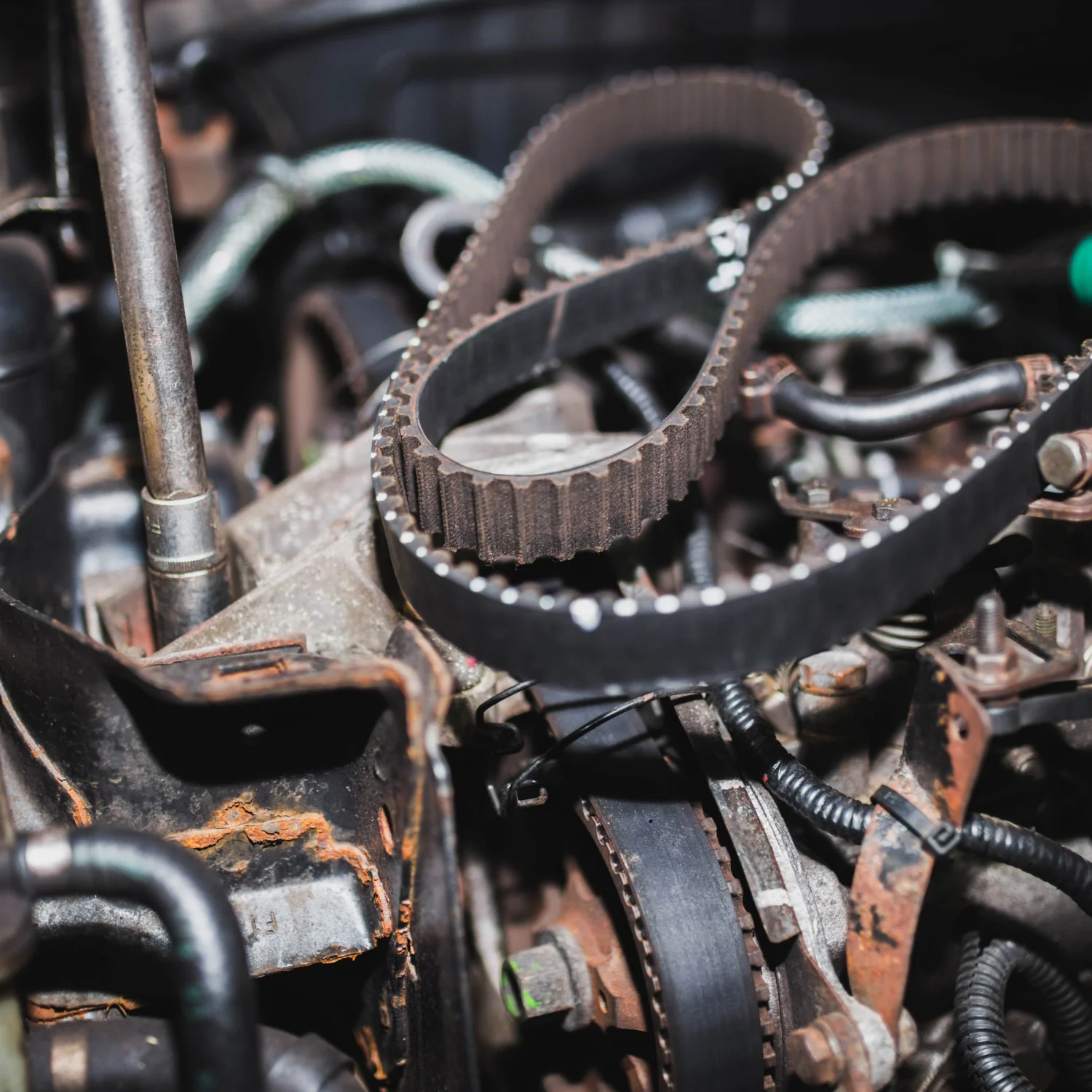
Timing Belt Replacement Interval: When to Replace It
Most manufacturers recommend replacing your timing belt between
60,000 and 105,000 miles, or every
5 to 7 years whichever comes first. However,
exact timing belt replacement interval varies significantly by make,
model, and engine.
can result in catastrophic engine failure, bent valves, piston damage,
and repair bills exceeding $3,000.
The $3,200 Lesson I’ll Never Forget
It was a soggy Tuesday in late November — rain drumming against the
shop bay doors, the kind of gray day that makes even a coffee break
feel heavy.
A customer rolled in with a 2008 Honda Accord. She’d just bought it
for $4,500 from a “good deal” private seller.
“Runs fine,” she said, smiling, “but the check engine light’s been on a while.”
I scanned it. Cylinder misfire, P0303. Not great, but not a death sentence.
Then we popped the hood.
The timing cover was sweating oil, the valve cover gasket looked ancient,
and the seller claimed the timing belt had “just been done.”
The car had 112,000 miles on the original belt.
We cracked the cover open. The belt looked like chewed licorice —
cracked, frayed, and glazed in places.
She was one crankshaft revolution away from bent valves and a total engine teardown.
The final repair bill? $3,200 for a new short block,
head rebuild, and labor. All because someone skipped a $600 maintenance item.
What Is a Timing Belt and Why Does It Matter?
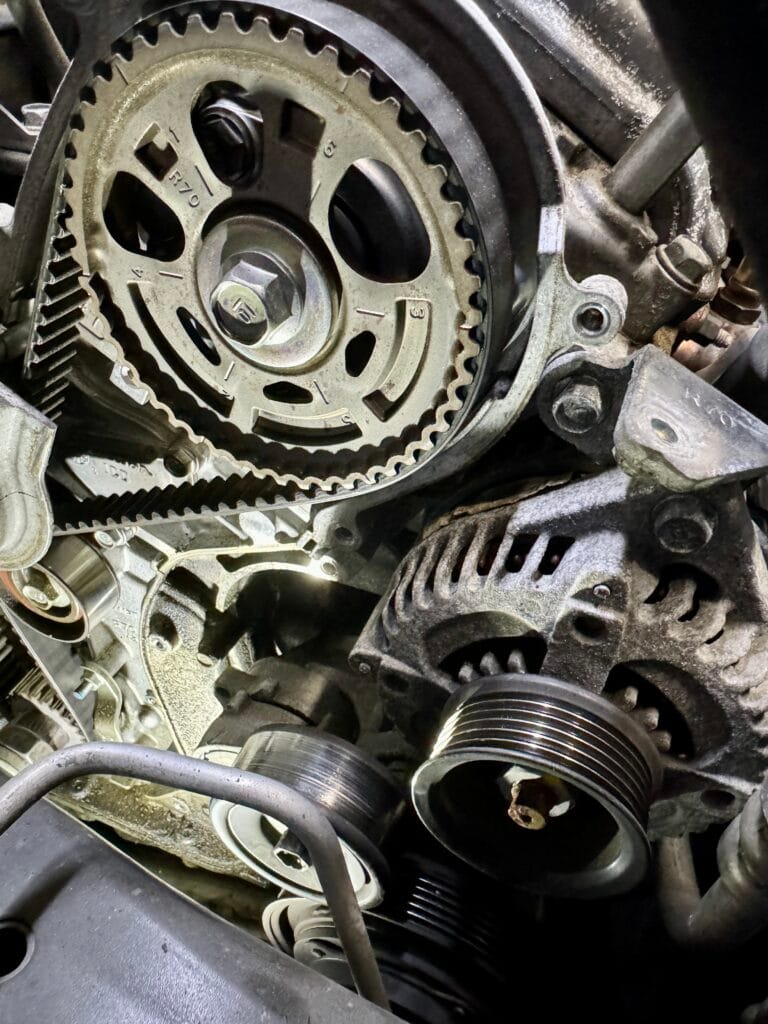
Your engine’s timing belt synchronizes the crankshaft and camshaft,
ensuring your pistons and valves don’t occupy the same space at the same time.
timing belt snaps, the pistons collide with open valves causing severe engine damage.
Unlike timing chains, timing belts are made from reinforced rubber.
They wear, crack, stretch, and eventually fail.
in engine repairs.
Manufacturer-Specific Timing Belt Replacement Intervals
There’s no universal rule. Different manufacturers use different belt materials,
tensioners, and engine designs.
Honda: Play It Safe or Pay the Price
- Accord (2003–2017, 4-cylinder):
Replace every 60,000–105,000 miles or
7 years. - Civic (2001–2005, D17 engine):
110,000 miles or 7 years. - CR-V (2002–2006):
105,000 miles or 7 years.
Labor overlaps, saving significant future costs.
Toyota: Conservative but Forgiving
- Camry (1997–2006):
Replace at 90,000 miles or 72 months. - Corolla (1998–2008):
90,000 miles or 6 years. - 4Runner / Tacoma (1995–2004):
90,000 miles or 7 years.
Heat and oil contamination dramatically reduce belt lifespan.
Subaru: The Silent Killer
- Legacy / Outback (2000–2009):
105,000 miles or 105 months. - Forester (1998–2010):
Same 105K / 105-month interval.
Other Notable Timing Belt Intervals
| Make / Model | Engine | Replacement Interval | Notes |
|---|---|---|---|
| Mazda Protegé / Mazda3 | 2.0L MZR | 60,000 miles / 5 years | High-revving design |
| Nissan Altima | 2.5L QR25DE | 105,000 miles / 7 years | Non-interference engine |
| Hyundai Elantra | 2.0L Beta | 60,000 miles / 4 years | Aggressive maintenance schedule |
| Volkswagen Jetta | 2.5L I5 | 105,000 miles / 7 years | Inspect hydraulic tensioner for leaks |
Tools & Materials List
Must-Have Tools
- Socket Set (10mm–19mm)
- Torque Wrench
- Timing Belt Tensioner Tool
- Crank Pulley Holder
- Jack and Jack Stands
Recommended Extras
- Harmonic Balancer Puller
- OBD2 Scanner
- Breaker Bar
Recommended Timing Belt Kit

Recommended
Gates T420 Timing Belt Kit
Includes timing belt, idler pulley, and tensioner.
Popular choice for Honda and Toyota timing belt replacements.
Check Price
Step-by-Step Replacement Overview
Never rotate the engine with the timing belt removed.
- Remove Accessories:
Alternator, power steering pump, and A/C compressor. - Align Timing Marks:
Rotate crankshaft to Top Dead Center (TDC). - Remove Old Belt:
Relieve tension carefully using the proper tool. - Replace Water Pump & Seals:
Clean gasket surfaces thoroughly. - Install New Belt:
Double-check all timing marks before releasing tensioner. - Verify Rotation:
Rotate crankshaft two full revolutions by hand.
Troubleshooting Common Issues
Stop immediately. Repeated cranking may cause catastrophic valve damage.
Cost Analysis: DIY vs Professional
| Option | Parts Cost | Labor / Tool Cost | Total |
|---|---|---|---|
| DIY | $150–$250 | $0–$80 | $150–$330 |
| Independent Shop | $120–$200 | $500–$800 | $620–$1,000 |
| Dealership | $220+ | $900–$1,400 | $1,100–$1,600 |
Related Guides
Honda Accord Timing Belt Replacement
- Nissan Timing Belt Replacement Guide
- Timing Belt Replacement Cost: What You’ll Pay in 2025
- How to Replace a Timing Belt: Complete DIY Guide
- Timing Belt Broke While Driving: What Happens Next?
- Timing Belt Water Pump Replacement: Do Both Together?
- Timing Chain Tensioner Failure: Symptoms and Fixes
- Timing Chain Replacement Cost: What to Expect in 2025