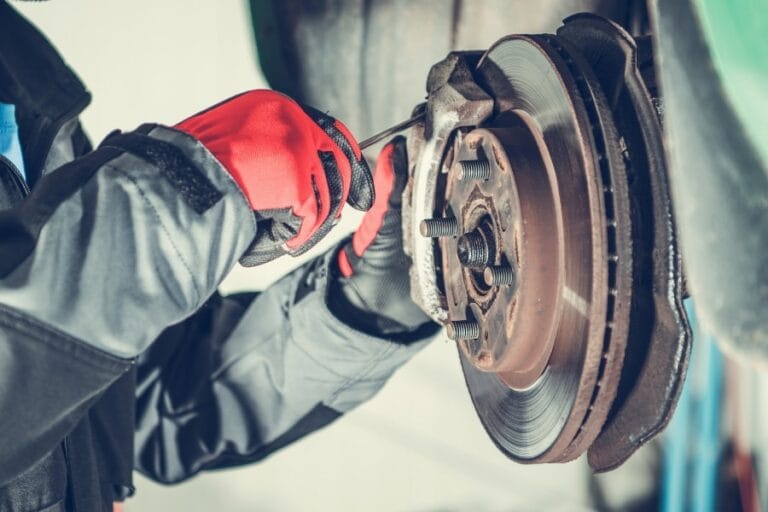
Transmission Stuck In Gear Diagnosis: Maintenance Guide
A transmission stuck in gear frustrates drivers and creates dangerous situations quickly. Your automatic transmission might refuse to shift out of park entirely. It might lock in second gear during acceleration. Mechanics call this specific condition “limp mode.” You must understand the root cause to avoid massive repair bills. This guide reveals the seven most common culprits. We provide step-by-step DIY diagnostic procedures. We help you decide when professional repair becomes necessary. You will save time, money, and stress today.
⚠️ Immediate Actions: What to Do Right Now If Your Transmission Is Stuck
Stop the vehicle immediately if your transmission sticks in gear. Turn off the engine to prevent severe internal damage. Do not force the gear shifter. Check your fluid level and use an OBD2 scanner to pull diagnostic codes before attempting to drive the car any further.
Safety First: Can You Drive It?
You can drive short distances only if the car stays in a low forward gear. Call a tow truck immediately if you smell burning fluid. Stop driving if you hear loud grinding noises. Puddles of red fluid under your car indicate catastrophic seal failures.
5-Minute Emergency Troubleshooting Checklist
-
Press the brake pedal firmly to the floor.
-
Check the transmission fluid level and condition. Read our guide to check your transmission fluid.
-
Insert a flathead screwdriver into the shift lock override slot.
-
Turn the ignition OFF, wait 30 seconds, and turn it ON.
-
Plug an OBD2 scanner into the port. Read our complete shifting diagnosis guide.
🔍 Top 7 Causes of a Transmission Stuck in Gear (Ranked by Likelihood)
Low transmission fluid causes most stuck gear issues. Other common culprits include a failing shift interlock solenoid, a broken brake light switch, or a faulty transmission control module. Mechanical linkage failures and clogged valve bodies also prevent normal shifting and trigger protective limp mode functions.
#1 Low or Degraded Transmission Fluid (Most Common)
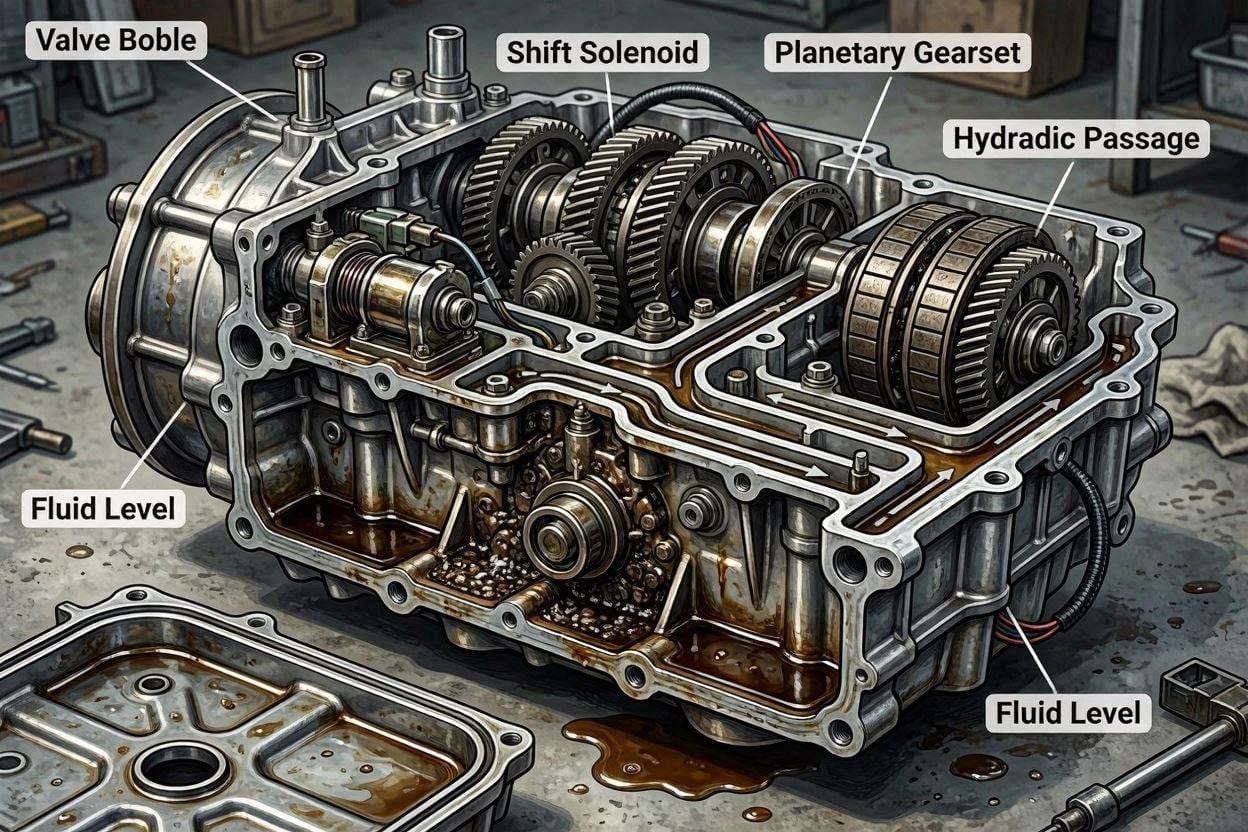
Low fluid drastically reduces internal hydraulic pressure. The transmission requires optimal pressure to engage the clutch packs. Contaminated fluid clogs tiny passages inside the valve body. Dark brown fluid smells burnt and indicates slipping clutches. Bright red fluid indicates a healthy transmission system.
INFO-BOX: Fluid Check Pro Tip: Check the fluid while the engine idles. Park on level ground. Ensure the transmission reaches normal operating temperature first.
#2 Faulty Shift Interlock Solenoid or Brake Switch
Safety regulations require you to press the brake before shifting. A faulty shift interlock solenoid locks the shifter in park. A broken brake light switch prevents the solenoid from activating. You will notice your brake lights failing to illuminate. Listen for a faint click when you press the brake.
COST-BREAKDOWN: Mechanics charge $150 to $400 for a shift lock repair. This price covers both parts and labor.
#3 Transmission Control Module (TCM) Failure or Software Glitch
The TCM acts as the brain for your automatic transmission. It calculates vehicle speed and throttle position to execute precise shifts. Voltage spikes fry delicate TCM circuits. Water intrusion corrodes the electrical pins. Outdated firmware causes erratic shifting behavior.
WARNING-BOX: Disconnecting the battery resets the module temporarily. The underlying electrical issues always return. You need professional diagnostics for complex TCM problems.
#4 Mechanical Linkage or Cable Issues
Shifter cables stretch and corrode over thousands of miles. The cable bushing rots and detaches from the transmission housing. Open your hood and visually inspect the linkage arm. Look for disconnected cables near the transmission pan. Mechanics can adjust stretched cables easily. Snapped cables require full replacement.
#5 Valve Body or Solenoid Block Malfunction
The valve body directs pressurized fluid through a maze of channels. Electronic shift solenoids open and close these channels. A stuck solenoid prevents hydraulic pressure from reaching the specific gear. You will experience harsh engagements. The transmission will refuse to upshift. You need a specialized transmission shop for this repair.
#6 Transmission Limp Mode Activation
Automakers program a protective “safe mode” into the vehicle computer. Limp mode locks the transmission in second or third gear. This protects internal components from further destruction. Failing speed sensors trigger this mode instantly. Overheating transmission fluid also forces the computer into safe mode.
#7 Internal Transmission Damage (Worst-Case Scenario)
Worn clutch plates slip under heavy acceleration. Snapped planetary gears produce horrific grinding sounds. A shattered torque converter vibrates violently. Driving with internal damage guarantees a complete transmission failure. You must choose between a costly rebuild or a full replacement. Read our guide covering transmission repair costs.
🛠️ Step-by-Step Diagnosis: Is It a Simple Fix or Major Repair?
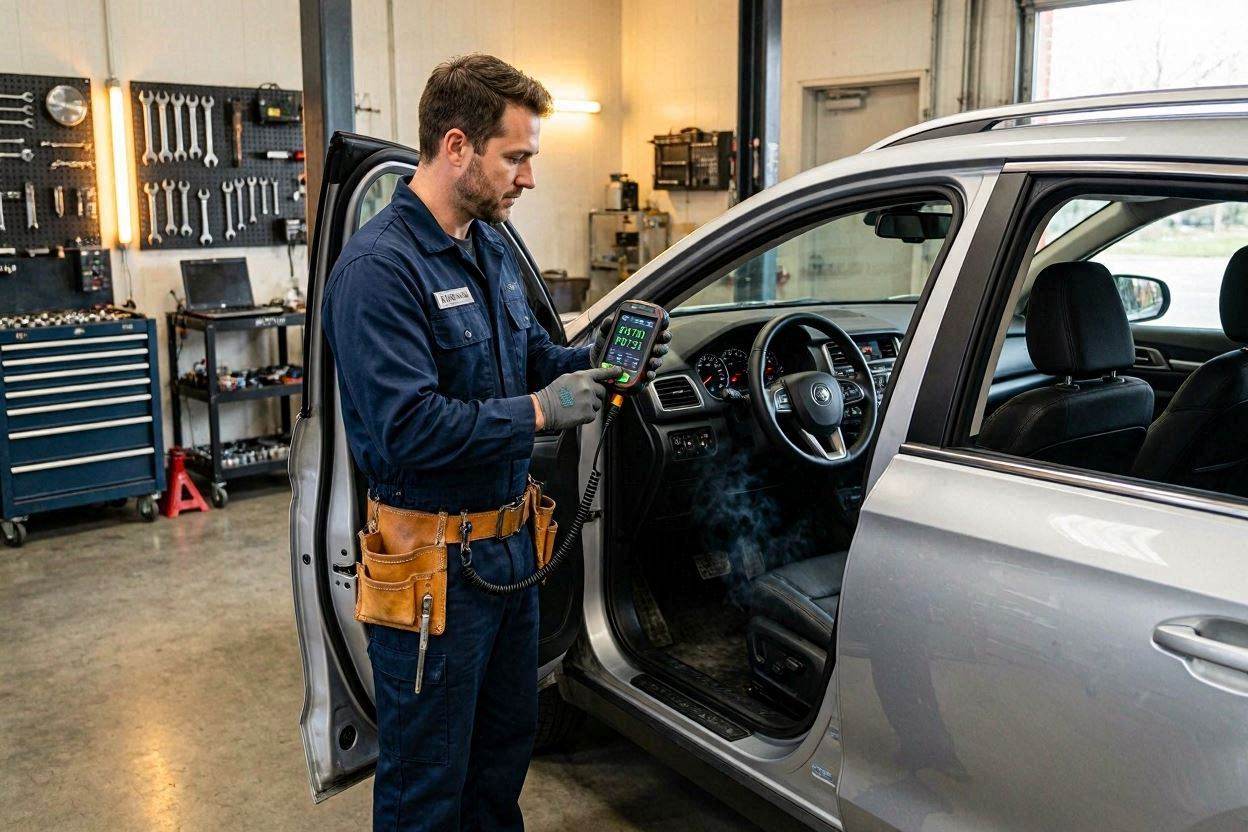
Diagnose a stuck transmission by checking the fluid level first. Test the brake lights to rule out the shift interlock system. Connect a scan tool to read TCM fault codes. Inspect the shifter cable under the hood for obvious physical damage before assuming internal failure.
DIY Diagnostic Flowchart (Text-Based)
-
Pull the dipstick and inspect the fluid level.
-
Press the brake pedal and check for brake lights.
-
Use a small screwdriver to trigger the shift lock override.
-
Plug in an OBD2 scanner and read the P-codes.
-
Inspect the shift linkage cable under the hood.
Comparison Table: Symptoms vs. Likely Cause vs. Repair Complexity
| Symptom | Most Likely Cause | DIY-Fixable? | Avg. Repair Cost |
| Won’t shift out of Park | Shift interlock solenoid / brake switch | ✅ Yes (moderate) | $150–$400 |
| Stuck in 2nd/3rd gear only | TCM error or limp mode | ⚠️ Sometimes (reset) | $200–$800 |
| Shifter moves but no gear change | Linkage cable or internal failure | ❌ Rarely | $500–$2,500+ |
| Delayed engagement + sticking | Low fluid or valve body issue | ✅ If fluid-only | $100–$1,200 |
| Grinding noise + stuck gear | Internal mechanical damage | ❌ No | $1,800–$4,500 |
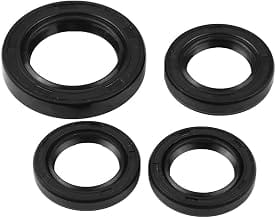
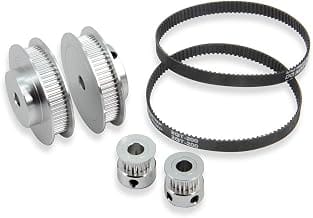
Top Transmission Stuck In Gear – Our Picks
💰 Transmission Repair Cost Breakdown: What to Expect
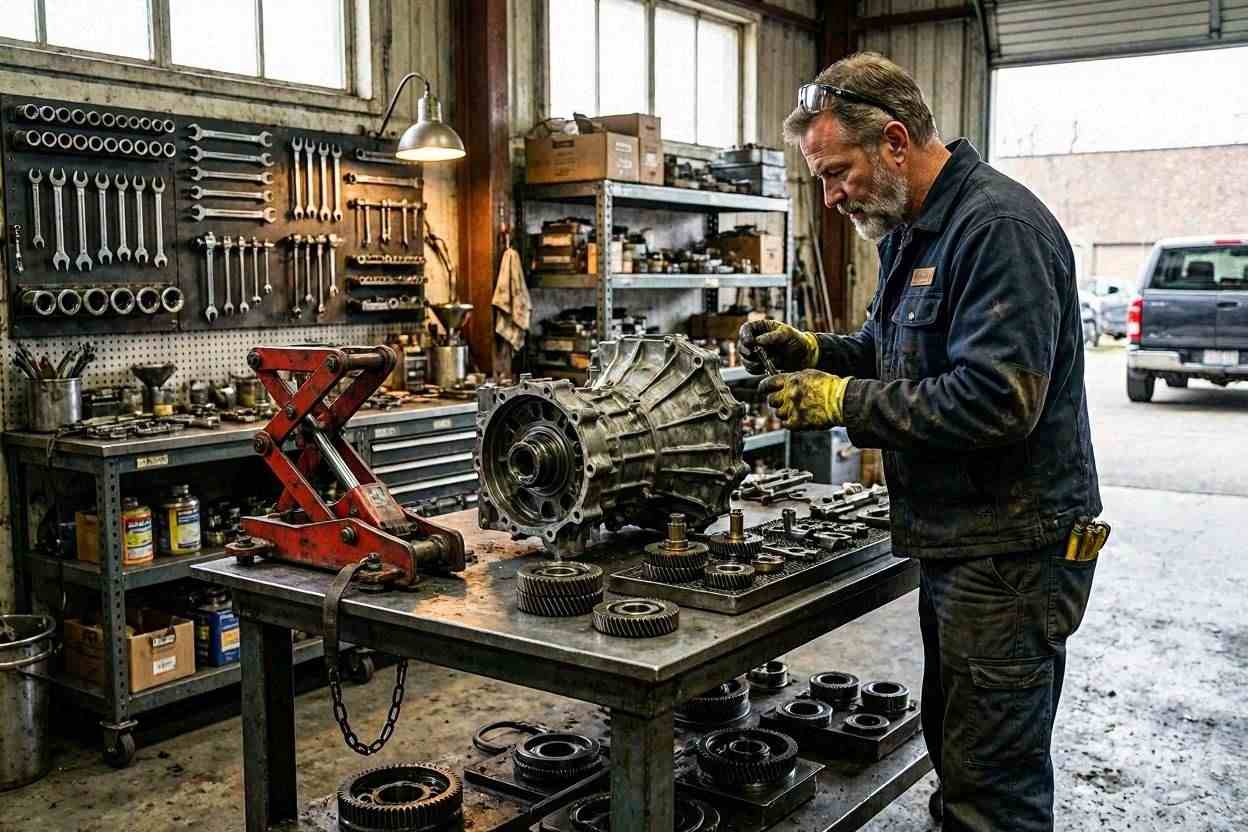
Transmission repair costs range from $150 to $4,500. Replacing a simple shift interlock solenoid costs around $200. A complete transmission rebuild or replacement quickly exceeds $2,500. Labor rates and parts availability heavily dictate your final bill. Always request an itemized estimate before approving major work.
Cost Ranges by Repair Type (2026 Estimates)
COST-BREAKDOWN:
Shift interlock solenoid: $150–$400
Brake light switch replacement: $100–$250
TCM replacement/programming: $300–$900
Valve body repair: $600–$1,500
Transmission rebuild: $1,800–$3,500
Full replacement (remanufactured): $2,500–$4,500+
Factors That Influence Final Cost
-
Luxury European vehicles require expensive specialized parts.
-
Mechanics charge local labor rates averaging $90 to $180 per hour.
-
Remanufactured parts save money compared to brand-new OEM components.
-
Active powertrain warranties cover total replacement costs entirely.
💡 Pro Tip: Get 3 Quotes & Ask About Core Charges
Request a fully itemized estimate from three different mechanics. Many shops waive the initial diagnostic fee if you approve the final repair. Ask the shop manager about core charges for remanufactured transmissions. Verify the length of the warranty on parts and labor.
🚫 Beginner Mistakes to Avoid When Transmission Is Stuck
Never force a stuck gear selector under any circumstances. You will snap the shift cable or bend internal linkage forks. Avoid pouring additives into dirty transmission fluid. Never ignore dashboard warning lights. Driving your car while it remains in limp mode destroys internal clutches fast.
Mistake #1: Forcing the Shifter
Brute force bends delicate shift selector forks instantly. You will rip the shifter cable straight out of the console housing. Use the factory shift lock override slot instead.
Mistake #2: Adding Fluid Without Checking Condition
Overfilling the transmission causes the fluid to foam. Foaming fluid overheats rapidly and destroys hydraulic pressure.
INFO-BOX: Fluid Color Guide: Pink or bright red fluid performs perfectly. Brown fluid shows severe oxidation. Black fluid with a burnt smell confirms internal clutch damage.
Mistake #3: Ignoring Warning Lights or Limp Mode
Driving endlessly in limp mode cooks the internal components. Clearing OBD2 codes with a scanner provides only temporary relief. You must fix the root mechanical failure immediately.
Mistake #4: Attempting Internal Repairs Without Experience
Valve body rebuilding requires specialized torque wrenches and extreme cleanliness. You will lose tiny check balls easily. Leave internal hydraulic repairs to certified transmission builders.
🎯 Expert Tips: Prevent Future Transmission Stuck-in-Gear Issues
Change your transmission fluid every 30,000 to 60,000 miles to prevent stuck gears. Always use the manufacturer-specified ATF. Stop your vehicle completely before shifting into reverse or park. Ask your dealership to flash the latest software updates to your transmission control module regularly.
Maintenance Schedule That Extends Transmission Life
Follow the specific fluid change intervals in your owner’s manual. Never wait for the 100,000-mile mark to service your transmission. Use the exact fluid specification like Dexron VI or Mercon LV. Inspect shift linkages and electrical connectors annually.
Smart Driving Habits That Reduce Transmission Stress
Never rock your vehicle violently when stuck in deep snow. Come to a complete stop before shifting from reverse to drive. Shift into manual mode while driving down steep grades. This prevents the transmission from hunting for gears.
Tech Tip: Keep TCM Software Updated
Automakers release firmware updates to resolve harsh shifting complaints. Dealership technicians flash these updates directly to your TCM. Check the NHTSA website frequently for active transmission recalls.
❓ FAQ: Transmission Stuck in Gear (Voice Search Optimized)
Drivers frequently ask why their automatic transmission locks in park or sticks in second gear. Low fluid, broken sensors, and TCM errors cause these common problems. Repair costs vary wildly based on the exact mechanical or electronic failure. Read our quick answers below for specific solutions.
Why won’t my car shift out of park?
A faulty brake-shift interlock system causes this problem. Press the brake pedal firmly. Check if your brake lights illuminate. Insert a tool into the shift lock override slot near the shifter. Replace the shift interlock solenoid or brake light switch if the issue persists.
Can low transmission fluid cause it to get stuck in gear?
Yes. Low fluid eliminates the hydraulic pressure necessary for gear engagement. Check the dipstick while the engine runs warm. Pour the manufacturer-specified ATF into the filler tube. Investigate the transmission case for leaks. Automatic transmissions never consume fluid naturally.
How do I get my car out of limp mode?
Turn the ignition completely off. Wait exactly 30 seconds. Restart the engine. Plug an OBD2 scanner into the port if limp mode continues. Replace faulty wheel speed sensors. Repair melted wiring harnesses. Update the TCM software. Diagnose the root cause quickly.
Is it safe to drive with transmission stuck in gear?
Drive the car only if it remains stuck in a forward gear at low speeds. Drive directly to a safe location. Never drive if the transmission slips or makes horrific grinding noises. Tow the vehicle immediately to avoid catastrophic internal damage.
What does it mean when my transmission is stuck in 2nd gear?
The vehicle computer activated limp mode to prevent internal damage. A broken output speed sensor triggers this mode. TCM electrical errors cause this failure. A clogged valve body forces this condition. Scan for P0700 series diagnostic trouble codes to pinpoint the broken part.
How much does it cost to fix a transmission stuck in gear?
Mechanics charge between $150 and $4,500 for repairs. Replacing a simple shift interlock solenoid costs $150. A full transmission replacement costs $4,500. Most fluid services and sensor replacements average around $300. Demand a professional diagnosis before approving major transmission overhauls.
✅ Final Checklist: Before You Call a Mechanic
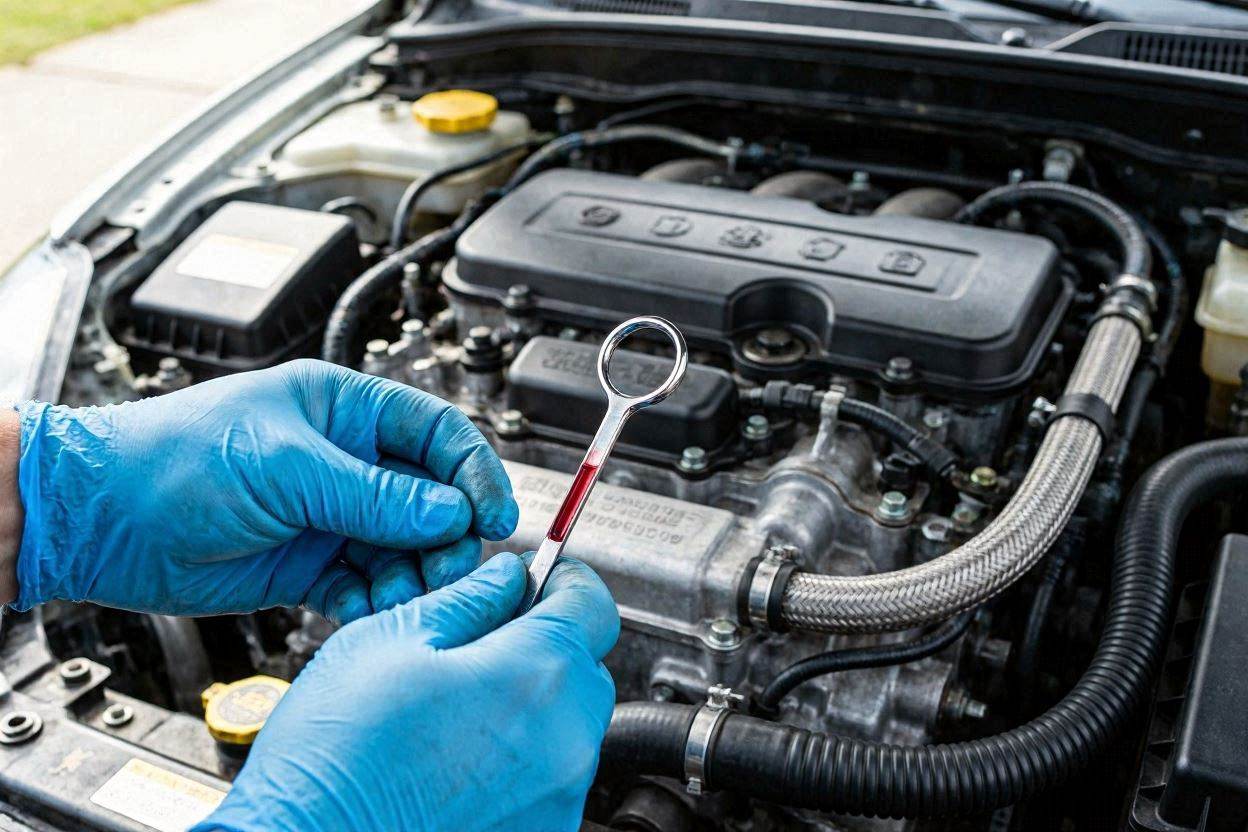
Complete this diagnostic checklist before you tow your car to a mechanic. Verify the fluid level and test the shift lock override. Write down any active OBD2 codes. Gather multiple repair quotes to ensure you pay a fair price for your upcoming transmission service.
-
Checked transmission fluid level and condition.
-
Verified brake lights function to test the shift interlock.
-
Tried the emergency shift lock override procedure.
-
Scanned for OBD2 codes with a basic reader.
-
Documented specific symptoms, warning lights, and grinding noises.
-
Researched reputable transmission specialists in your local area.
-
Obtained three written estimates for accurate price comparison.
SUCCESS-BOX: You’ve Got This: Simple and affordable fixes resolve many stuck transmission issues. You save time and money by working methodically through this guide. You walk into the repair shop informed. Knowledge gives you power.
🔗 Related Guides to Explore Next
- Transmission Slipping in Overdrive
- Transmission Fluid Leak: How to Find & Fix All Common Leak Points
- Transmission Overheating: Causes, Symptoms & Prevention (2026 Guide)
- Transmission Shudder: Causes & How to Fix Vibration When Accelerating
- Transmission Solenoid Failure: Symptoms, Testing, Replacement Cost & F
- Torque Converter Problems: Symptoms, Testing & Replacement Cost
- Automatic Transmission No Reverse Gear
- Low Transmission Fluid Symptoms: 7 Warning Signs to Watch For
![How Much Does Fuel Filter Replacement Cost? [2025 Prices]](https://vehiclebar.com/wp-content/uploads/2026/01/fuel4-768x768.webp)