Hard Brake Pedal: Stiff Pedal Causes & Fix
You press the brake pedal and it barely moves. Your car needs twice the leg force to slow down. That’s terrifying — and it means something in your brake system has failed.
A hard brake pedal is not a minor annoyance. It is a safety emergency. This guide walks you through every cause, how to diagnose each one, and exactly what it costs to fix.
What Causes a Hard Brake Pedal?
Understanding Causes a Hard Brake Pedal?
Common Symptoms & Causes
A hard brake pedal results from a loss of power assistance or a mechanical blockage in the braking system. The most common culprits are a failed brake booster, a vacuum leak, a faulty check valve, or a seized master cylinder. Each cause has distinct symptoms that point directly to the failed part.
The brake system relies on vacuum pressure — typically 17–22 inches of mercury (Hg) — to multiply your pedal force. Without that vacuum, pedal effort can increase by 3–5 times the normal load.
Is a Failed Brake Booster Always the Cause of a Hard Brake Pedal?
Diagnosis & Inspection
A failed brake booster is the number one cause of a hard brake pedal, but not the only one. Vacuum leaks, a bad check valve, a contaminated master cylinder, or even wrong brake fluid can all create a firm, stiff pedal. Always diagnose before replacing parts.
Insider Tip: Push the pedal firmly 4–5 times with the engine OFF. If the pedal gets progressively harder each pump, the booster is bleeding down its stored vacuum. That is almost always a booster or check valve failure.
How Do You Diagnose a Hard Brake Pedal Step by Step?
Diagnosing a hard brake pedal requires a systematic check of vacuum supply, the booster, the check valve, and the master cylinder. Use this sequence to find the failure in under 30 minutes without guessing.
Tools Required
- Vacuum gauge (0–30 in. Hg)
- Hand vacuum pump
- 17mm and 10mm combination wrenches
- Flathead screwdriver
- Flashlight or inspection light
Repair Options & Cost
Step 1 — Check Vacuum Supply at the Booster Inlet
Disconnect the vacuum hose from the brake booster. Connect your vacuum gauge to the open hose end. Start the engine and let it idle.
Target reading: 17–22 in. Hg. A reading below 15 in. Hg indicates an engine or intake vacuum problem, not a booster failure. Fix the vacuum source first.
Step 2 — Test the Check Valve
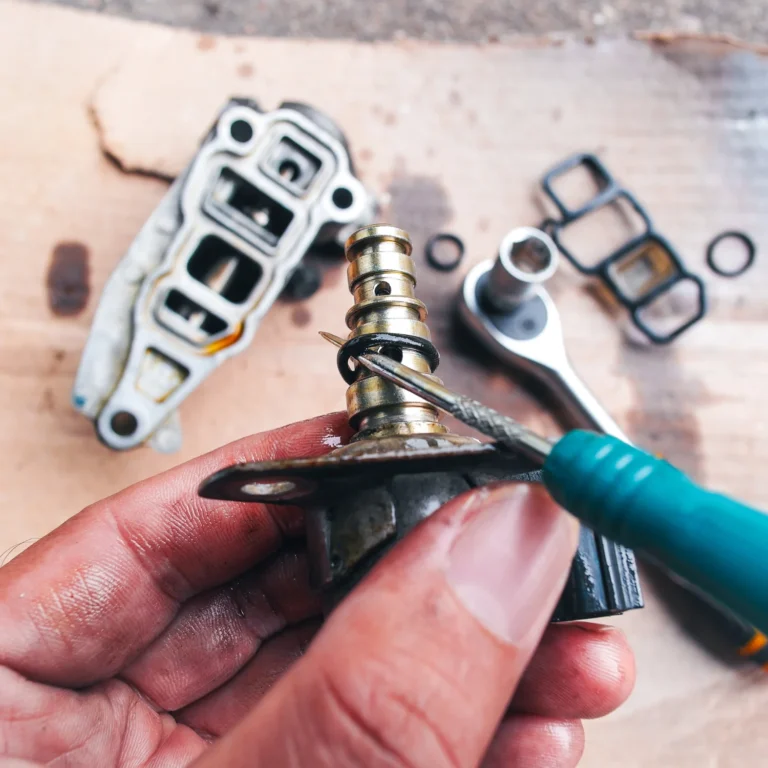
The check valve sits where the vacuum hose connects to the booster. It holds vacuum in the booster when engine vacuum drops. Pull the check valve out by hand. Apply suction from one end with your hand vacuum pump.
Air should flow in only one direction. If air flows both ways — or neither way — replace the check valve. Cost: $8–$20.
Insider Tip: A leaking check valve is the single most misdiagnosed cause of a stiff brake pedal. It mimics a full booster failure perfectly.
Step 3 — Test the Brake Booster
With the check valve confirmed good, apply 15–18 in. Hg of vacuum directly to the booster inlet using your hand pump. The vacuum should hold steady for at least 30 seconds. A drop of more than 2 in. Hg in 30 seconds means the booster diaphragm is torn. Replace the booster.
Specification: Most OEM boosters require 16 in. Hg minimum to function correctly.
Step 4 — Inspect the Master Cylinder
With the engine running, hold steady firm pressure on the brake pedal for 30 seconds. If the pedal slowly sinks to the floor, the master cylinder has an internal bypass leak. Check for master cylinder symptoms including fluid contamination or external seepage at the rear of the unit.
Step 5 — Check for Vacuum Leaks in the Hose
Inspect the entire vacuum hose from the intake manifold to the booster. Look for cracks, kinks, or loose clamp connections. A vacuum leak causes rough idle AND a hard pedal simultaneously. Replace any cracked hose with 3/8-inch reinforced vacuum line.
What Are the Symptoms of a Bad Brake Booster?
A bad brake booster produces a hard, high pedal that requires extreme foot force to stop the vehicle. Additional brake booster symptoms include a hissing noise under the dash, rough engine idle when braking, and extended stopping distances.
| Symptom | Likely Cause | Test |
|---|---|---|
| Hard pedal, hissing noise under dash | Torn booster diaphragm | Vacuum hold test |
| Hard pedal, engine stumbles on braking | Large vacuum leak | Vacuum gauge at idle |
| Hard pedal only when cold | Sticking check valve | Hand pump check valve test |
| Hard pedal + fluid on firewall | Master cylinder leak | Visual inspection |
| Hard pedal + ABS light on | Hydraulic pump failure | OBD-II scan |
Insider Tip: A hissing sound from behind the instrument panel while pressing the brake is almost always a split booster diaphragm. The sound is the booster pulling unmetered air directly from the cabin.
Can a Brake Fluid Issue Cause a Hard Brake Pedal?
Contaminated or wrong-specification brake fluid can cause a hard pedal by degrading rubber seals inside the master cylinder and calipers. Never mix DOT 3, DOT 4, or DOT 5 fluids. Always verify the correct spec on your reservoir cap.
DOT 5 is silicone-based. Systems designed for DOT 3 or 4 will swell and seize if filled with DOT 5. The result is a locked, rock-hard pedal with very little travel.
Insider Tip: If the brake fluid is dark brown or black, flush the entire system. Use only the OEM-specified fluid. Most modern vehicles require DOT 4 with a dry boiling point of at least 446°F (230°C).
Pro Tip — Bench Test the Booster Before Buying New:</strong> Before purchasing a replacement booster, apply vacuum with a hand pump and check for fluid contamination inside the inlet port. A dark oily residue means the master cylinder seal has been leaking into the booster for months. In that case, replace both units together — or the new booster will fail within 6 months.
How Much Does It Cost to Fix a Hard Brake Pedal?
| Repair | Parts Cost | Labor (hrs) | Total Estimate |
|---|---|---|---|
| Vacuum hose replacement | $8–$25 | 0.5 hr | $55–$120 |
| Check valve replacement | $8–$20 | 0.3 hr | $40–$90 |
| Brake booster replacement | $150–$400 | 1.5–2.5 hrs | $280–$700 |
| Master cylinder replacement | $60–$200 | 1.5–2 hrs | $200–$550 |
| Brake fluid flush | $15–$40 | 0.5 hr | $75–$150 |
| Full booster + master cylinder | $210–$600 | 3–4 hrs | $480–$1,100 |
Labor based on $95–$130/hr shop rate. Dealer rates may be 30–50% higher.
Frequently Asked Questions
Q: Can I drive with a hard brake pedal?
Driving with a hard brake pedal is extremely dangerous and not recommended under any circumstances. Stopping distances increase dramatically. In an emergency stop, a failed brake booster can increase required pedal force by 300–500%, making panic stops nearly impossible. Pull over safely and have the vehicle towed.
Q: Will pumping the brakes help if the pedal is hard?
Pumping the brake pedal with the engine off can temporarily build residual pressure stored in the booster. Most boosters store enough vacuum for 2–3 power-assisted stops after engine shutdown. After that, pedal effort increases sharply. This is a temporary measure only — not a fix.
Q: Does a hard brake pedal mean my brakes are failing completely?
A hard brake pedal means power assist has been lost, not that your hydraulic brakes have failed entirely. The brakes can still physically stop the car with enough foot pressure. However, response time and stopping distance are severely compromised. Treat it as a brake system failure and repair it immediately.
Q: How do I know if it’s the booster or the master cylinder causing the hard pedal?
Test with the engine running. Push the pedal firmly and hold for 30 seconds. If the pedal sinks slowly, the master cylinder is failing internally. If the pedal is rock-hard with no sink and no hissing noise, suspect vacuum supply or check valve. If there is a clear hissing noise, the booster diaphragm is torn. Use a vacuum gauge to confirm which component is at fault before buying any parts.
Conclusion
A hard brake pedal almost always traces back to one of four parts: the brake booster, the check valve, the vacuum supply hose, or the master cylinder. Start with the cheapest and easiest — the check valve and vacuum hose. These two parts cause the majority of stiff pedal complaints and cost under $25 to fix.
If those check out, move to the vacuum hold test on the booster itself. A torn diaphragm is straightforward to confirm in under five minutes with a hand vacuum pump. Never skip the master cylinder inspection afterward — contamination from a failing master cylinder will destroy a brand-new booster within months.
Most importantly, do not drive this vehicle until the repair is complete. A hard brake pedal in an emergency stop is a crash waiting to happen. Fix it today, not tomorrow.