When should brake pads be replaced based on mileage?
Brake pads should be replaced between 30,000 and 70,000 miles depending on pad material type, rotor hardness, caliper piston bore size, and average braking torque. Ceramic pads last longer than semi-metallic pads due to lower friction coefficients and reduced heat transfer above 800°F.
| Pad Material | Average Lifespan (Miles) | Max Operating Temp |
|---|---|---|
| Ceramic | 60,000–75,000 | 1,200°F |
| Semi-Metallic | 30,000–50,000 | 1,000°F |
| Organic (NAO) | 20,000–40,000 | 900°F |
What are the warning signs that brake pads are worn?
Worn brake pad symptoms include squealing noise from steel wear indicators, vibration from rotor runout exceeding 0.003 inches, and increased pedal travel caused by caliper piston overextension past 5 mm. Audible warnings usually begin when friction material reaches 2–3 mm thickness.
High-frequency squeal occurs when wear indicator tabs contact the rotor face, producing oscillation above 6,000 Hz under light braking torque of 20–30 ft-lbs. Learn more about squeaking brakes meaning.
How can brake pad thickness be accurately measured?
Brake pad thickness should be measured using a digital caliper or brake gauge through the caliper window, verifying friction material above the backing plate exceeds 3 mm. Minimum service thickness excludes the 5 mm steel backing plate and anti-noise shims.
- Park vehicle on level ground and secure wheels using **wheel chocks** rated at 3,000 lbs.
- Remove wheel lug nuts with a **21mm socket** torqued previously to 100 ft-lbs.
- Inspect pad through caliper using **digital calipers** with 0.01 mm resolution.
Detailed steps are covered in measuring brake pad wear.
Why is driving with worn brake pads dangerous?
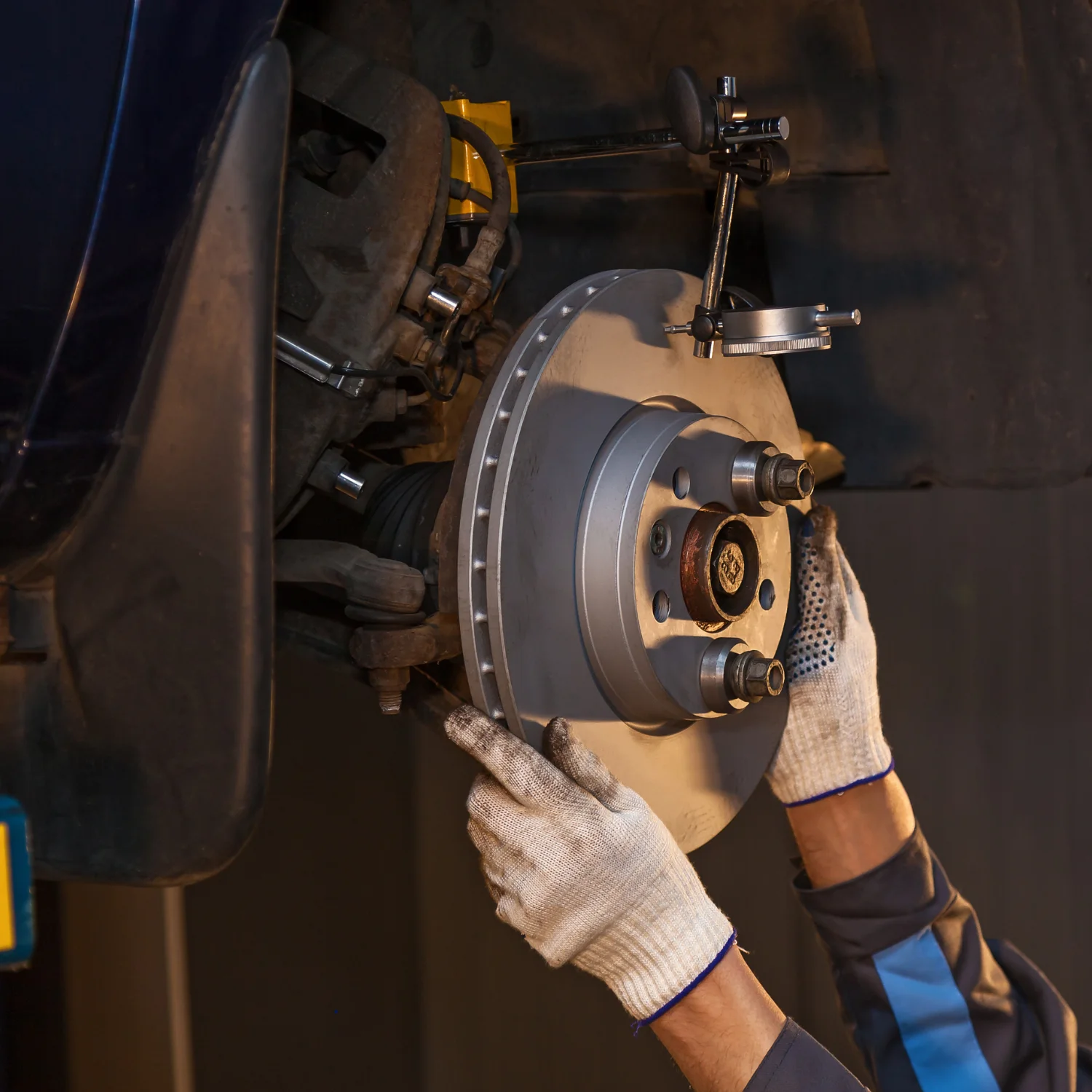
Driving with worn brake pads increases stopping distance by up to 40% due to reduced friction coefficient below 0.25 and causes rotor overheating exceeding 1,100°F. Metal-on-metal contact destroys rotor faces within 50–100 miles.
Grinding indicates pad material fully depleted, exposing steel backing plates that generate sparks and thermal cracks. See grinding brakes danger for real-world failure data.
Which vehicles require more frequent brake pad replacement?
Heavier vehicles such as SUVs and trucks require more frequent brake pad replacement due to increased curb weight exceeding 4,500 lbs, larger rotor diameters over 320 mm, and higher braking torque loads transferred through caliper brackets torqued to 150 ft-lbs.
How much does it cost to replace brake pads?
Brake pad replacement costs range from $50–$150 DIY and $250–$600 at dealerships depending on pad material, axle count, and rotor condition. Typical front caliper guide pin bolts require 13mm sockets and 25 ft-lbs torque.
| Service Type | Parts | Labor | Total |
|---|---|---|---|
| DIY | $50–$150 | $0 | $50–$150 |
| Independent Shop | $150 | $150 | $300 |
| Dealer | $200 | $300+ | $500+ |
When should brake pads be replaced immediately?
Brake pads require immediate replacement when thickness falls below 2 mm, ABS warning lights trigger due to caliper overextension, or brake pedal travel exceeds factory spec by 15%. Immediate service prevents master cylinder seal damage rated at 1,500 psi.
Conclusion: When to Replace Brake Pads — A Mechanic’s Perspective
Knowing exactly when to replace brake pads separates safe drivers from expensive repairs. In real-world shops, pads rarely fail by mileage alone; failure happens when thickness drops below 3 mm, temperatures exceed 1,000°F, and caliper hardware torqued at 25–35 ft-lbs is ignored. Ceramic pads reward smooth drivers, while aggressive braking destroys semi-metallic pads early. DIY replacement is moderate difficulty, requiring basic tools like a 13mm wrench, torque wrench rated to 150 ft-lbs, and jack stands. Expect a total DIY cost of $50–$150 per axle if rotors remain within minimum thickness specs stamped on the hat. Ignoring early signs—squeal, vibration, or grinding—turns a simple pad job into caliper, rotor, and hub bearing replacement. From a mechanic’s viewpoint, brake pads are not a guess-and-go item; they are a measurable wear component with clear limits. Replace them early, torque everything correctly, and braking performance stays predictable for tens of thousands of miles.