It was a scorching July afternoon in the shop, probably pushing 95 degrees outside with that thick humidity that makes everything stick. A guy pulls up in his ’98 Silverado, hood up, steam rolling out. He’s got that panicked look—truck died on the highway, coasted to the shoulder, and now it’s cranking but no start. I pop the hood, listen for the fuel pump prime… nothing. Quick pressure test at the rail: zero. I’ve seen this a hundred times. Dropped the tank, pulled the in-tank pump assembly, and sure enough, the pump was seized. But what got me thinking was when another customer that same week brought in an old carbureted Mustang with an external inline pump whining like a banshee. Two totally different setups, same complaint: no fuel getting to the engine. That’s when the in-tank vs external fuel pump debate hits home every time. I’ve swapped hundreds of both over the years, and each has its place. Let’s break it down so you know what you’re dealing with on your ride.
What Are the Main Fuel Pump Types?
Back in the day, most vehicles ran mechanical pumps bolted right to the engine block. Today, pretty much everything fuel-injected uses electric pumps. And those come in two flavors: in-tank (also called internal fuel pump) and external (inline or frame-mounted).
The in-tank fuel pump lives submerged inside your gas tank as part of a module that includes the sending unit for your gauge, a filter sock, and sometimes a regulator. Almost all vehicles from the mid-90s onward use this setup—think your daily driver Honda, Ford truck, or Toyota sedan.
External fuel pumps mount outside the tank, usually along the frame rail or near the tank. You’ll find these on older carbureted classics, some diesel applications, high-horsepower builds, or when guys convert an older car to EFI and don’t want to drop the tank for an in-tank swap.
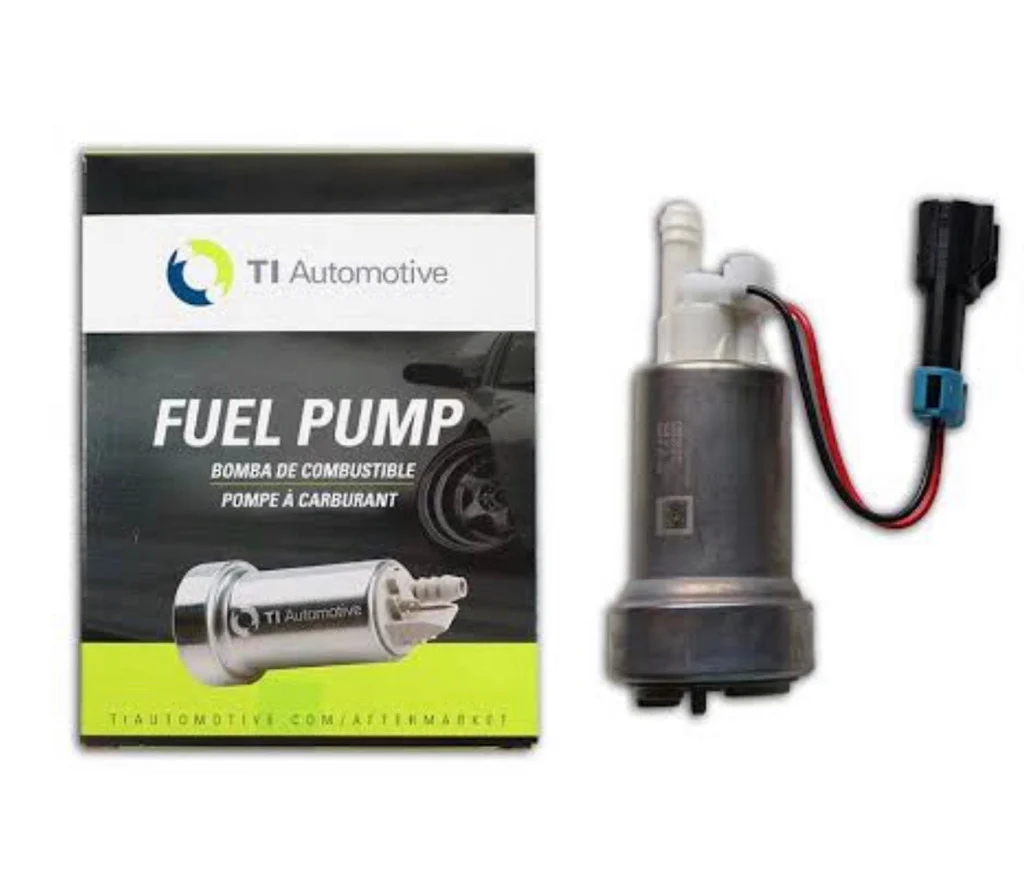
In-Tank vs External Fuel Pump: Key Differences
| Feature | In-Tank Fuel Pump | External Fuel Pump |
|---|---|---|
| Fuel Pump Location | Inside the fuel tank | Outside, usually on frame rail |
| Noise Level | Very quiet (submerged in fuel) | Often whines noticeably |
| Cooling | Excellent—fuel constantly cools the pump | Relies on air; can overheat if not mounted low |
| Priming/Vapor Lock | Pushes fuel easily; low risk | Can struggle to prime if mounted high |
| Service Access | Hard—often requires dropping tank | Easy—right there under the vehicle |
| Common Applications | Most modern OEM vehicles | Performance builds, classics, some diesels |
| Typical Pressure | 40-60 PSI (varies by vehicle) | Up to 100+ PSI in performance units |
I’ve had customers swear they’ll never own another in-tank setup after paying big labor to drop a tank. But then I’ve seen external pumps fail prematurely because they overheated on a hot day with low fuel. It really depends on your vehicle and how you drive it.
Pros and Cons of In-Tank Fuel Pumps
In-tank pumps dominate modern vehicles for good reason.
- Super quiet—you barely hear them.
- The fuel itself cools and lubricates the pump, so they last longer. I’ve seen OEM in-tank pumps hit 200,000 miles easy if you don’t run the tank dry all the time.
- Less chance of vapor lock since they’re always submerged.
- Cleaner install—no extra brackets or lines cluttering the underbody.
Downsides? Replacement is a pain. On most trucks and SUVs, you’re dropping the tank or cutting an access panel. That’s hours of labor. And if you let the tank run too low often, the pump overheats and dies early—that’s the number one killer I’ve seen.
Pros and Cons of External Fuel Pumps
External pumps are old-school reliable in certain setups.
- Easy to access and replace—often 30 minutes roadside if needed.
- Great for high-flow performance applications (like a Bosch 044 pushing serious horsepower).
- No need to mess with the tank.
But they whine, especially cheaper ones. Mount them wrong (too high or far from tank) and they’ll cavitate or vapor lock. They don’t get fuel cooling, so longevity suffers in street cars. I’ve replaced plenty that baked on frame rails in summer traffic.
Technical Specifications and Variations
Fuel pressure varies wildly. Most port-injected gasoline engines run 40-60 PSI at the rail. Direct injection can hit 2,000+ PSI, but that’s the high-pressure pump on the engine—the in-tank is just a lift pump there.
Always check your service manual for exact specs. For example, many GM trucks want around 55-62 PSI key-on engine-off. Fords often 40-50 PSI. No guessing here—wrong pressure means lean/rich conditions and check engine lights.
Brands: OEM is usually Denso, Delphi, Bosch, or TI Automotive depending on make. Aftermarket, I trust Walbro, Bosch, and DeatschWerks for performance. Airtex and Carter are hit-or-miss—I’ve seen early failures. Spend a bit more on proven brands.
Troubleshooting Fuel Pump Problems
Common symptoms I’ve diagnosed thousands of times:
- Long cranking or no-start (especially hot).
- Whining from tank or frame that gets louder.
- Loss of power under load or climbing hills.
- Engine surging or stuttering.
- Stalling that restarts after cooling down.
Diagnosis:
- Listen for prime hum when key turns to ON.
- Check fuel pressure at rail (rent a gauge—specs in manual).
- Test voltage at pump connector (should be battery voltage during prime).
- If pressure low but pump runs, check filter or regulator.
If it whines loud but no pressure—pump failing. No noise at all—relay, wiring, or dead pump.
Tools & Materials List
For in-tank replacement (harder job):
- Floor jack and jack stands (must-have, ~$100 if buying).
- Fuel line disconnect tools (plastic scissor-type, $10-20 at AutoZone).
- Fuel pump lock ring tool (adjustable spanner, $20-50).
- Socket set (10mm-18mm common for straps).
- New O-ring/seal (always replace).
- Nice to have: Transmission jack for tank support (~$100 rental).
For external: Basic wrenches, hose clamps, mounting bracket.
Safety Warnings
Step-by-Step: Replacing an In-Tank Fuel Pump
Time estimate: 3-6 hours DIY, depending on rust and access.
Park on level ground. Disconnect battery. Siphon or run tank low.
Remove fuel cap. Use rag over Schrader valve on rail to bleed pressure.
Jack up rear, support on stands.
Disconnect filler neck, lines, straps. Lower slowly.
Clean top. Use lock ring tool to unscrew ring. Lift assembly carefully.
Transfer sending unit if needed. New O-ring. Reinstall reverse order.
External swaps are simpler: Unbolt, disconnect lines, mount new, wire it up.
Cost Analysis
Shop In-Tank: Parts $200-500 + 4-6 hours labor @ $120/hr = $800-1,500 total.
External: Pump $100-300. Labor 1-2 hours = $300-600 total.
Long-term: In-tank often lasts longer, saving money over time.
Shop around for pumps. Check out [fuel pump troubleshooting](fuel-pump-problems-diagnosis) if you’re diagnosing issues, or [fuel pump replacement cost](fuel-pump-replacement-cost) estimates. Related reading on [fuel system parts](fuel-system-components) and [pump type comparison](electric-vs-mechanical-pump).
FAQ
Which is better: in-tank or external fuel pump?
For most street vehicles, in-tank wins for quietness and longevity. External for performance or easy service.
How long do fuel pumps last?
100,000-200,000 miles typical if you keep tank above 1/4. External can be shorter without cooling.
Can I swap an external for in-tank?
Yes, but requires tank modification or new tank with pump baffle. Common in classics going EFI.
How much does fuel pump replacement cost?
DIY $200-500 parts. Shop $800-1,500 for in-tank due to labor.
Is it safe to drive with a failing fuel pump?
No—it can leave you stranded or cause lean conditions damaging the engine.
Do external pumps need a regulator?
Yes, usually. Match to your system’s pressure needs.
Why do in-tank pumps fail early?
Running low on fuel overheats them. Contaminated gas clogs the sock.
Final Thoughts from the Shop
After 15+ years turning wrenches, I’d take an in-tank pump in any daily driver without hesitation—quiet, reliable, and designed for the job. But for a hot rod or race car pushing big power, nothing beats a good external setup for flow and serviceability.
Replacement difficulty? In-tank is moderate to hard DIY—budget time and patience. External is easy, even for beginners.
Expect $300-600 DIY or up to $1,500 at a shop for in-tank jobs.
If you’re tackling this yourself, go slow, stay safe, and don’t skimp on parts. A good pump saves headaches down the road. Drive smart out there.