Synchronizer Problems: Why Your Manual Trans Grinds Into …
Synchronizer problems cause grinding when you shift gears in manual transmissions. Worn synchro rings fail to match speeds between gears and the input shaft. You hear crunching and feel notchy shifts. Early action prevents expensive damage. This guide covers bad synchronizer symptoms, causes, costs from $800 to $4,000, double clutching fixes, and prevention tips.
Info-box: Quick Summary Synchronizer problems rank as a top cause of grinding in manual transmissions. Worn synchro rings fail to match gear speeds. This leads to notchy shifts and grinding. Early detection saves you from a full rebuild costing $1,500–$4,000.
What Are Transmission Synchronizers and How Do They Work?
Understanding Are Transmission Synchronizers and How Do They Work?
Common Symptoms & Causes
Transmission synchronizers match gear speeds for smooth shifts. They prevent grinding by equalizing rotation before engagement. Bad synchronizers create resistance and noise during shifts.
The Role of Synchro Rings in Smooth Shifting
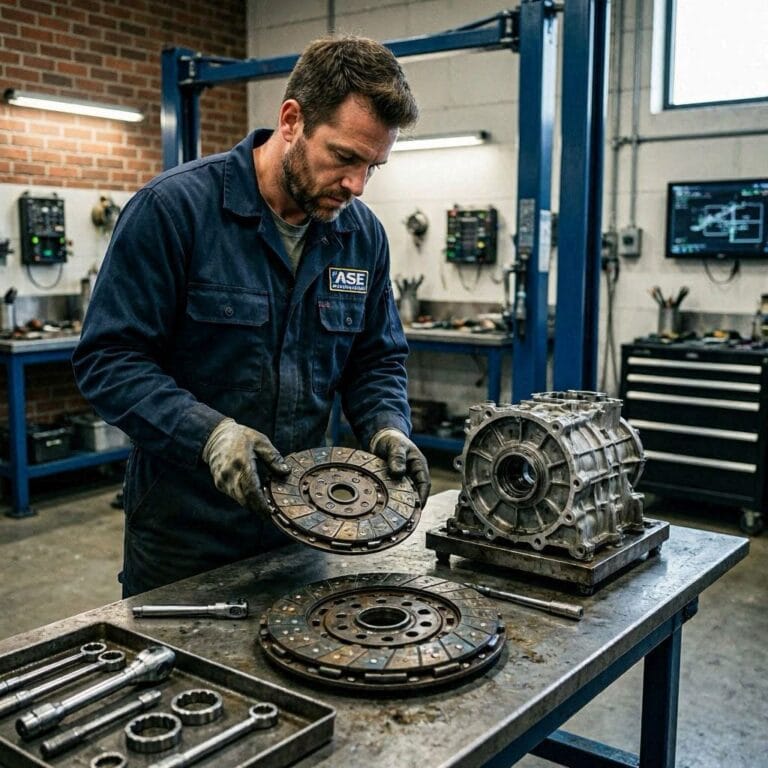
Synchro rings, also called blocker rings or baulk rings, create friction to slow or speed up gears. They sit between the gear and synchronizer sleeve. Brass or carbon-coated rings wear over time and lose grip. A good ring lets you shift in under one second without crunch.
Key Components: Blocker Rings, Cones, and Sleeves
The system includes the blocker ring, cone on the gear, and sliding sleeve. The ring presses against the cone to match speeds. Friction materials like brass or molybdenum coatings handle heat up to 300°F during shifts. Sleeves lock the gear once speeds match.
Why Modern Manual Transmissions Use Synchromesh
Diagnosis & Inspection
Synchromesh systems let drivers shift without double clutching. Older crash boxes required skill to match revs manually. Modern 5- and 6-speed transmissions use synchromesh on all forward gears for daily comfort and reduced wear.
Common Bad Synchronizer Symptoms – How to Diagnose Grinding Issues
Common Bad Synchronizer Symptoms – Detailed Steps Diagnose Grinding Issues
Warning-box: Don’t ignore early signs. Continued driving with grinding accelerates gear and synchro damage. Fix it before teeth wear.
Bad synchronizer symptoms appear gradually. You notice issues in specific gears first.
Grinding or Crunching When Shifting Gears (Especially 2nd or 3rd)
Repair Options & Cost
You hear metal-on-metal grinding when you shift into 2nd or 3rd gear. This happens most during downshifts or quick upshifts. The synchro ring fails to slow the gear properly.
Hard to Shift Gears or Notchy Feeling
The shifter feels notchy or requires extra force. You push harder than normal to engage the gear. This signals worn synchro rings on that specific gear.
Difficulty Shifting at Higher RPMs or Specific Gears Only
Shifting gets hard above 4,000 RPM in affected gears. You shift easily at low RPM but grind at higher speeds. Problems often start with 2nd and 3rd gears in many Honda and Toyota models.
Popping Out of Gear or Transmission Jumping to Neutral
The transmission pops out of gear under load. It jumps to neutral during acceleration. Worn synchros and sleeves fail to hold the gear engaged.
Whining, Humming, or Other Noises (Differentiate from bearings/clutch)
You hear whining or humming in one gear. Bearings make noise in all gears or while coasting. Clutch issues cause chatter or slippage. Synchro noise appears only during shifts.
Success-box: Smooth shifts after fluid change or proper technique often mean minor issues. You avoid major repairs.
What Causes Synchronizer Problems?
Understanding Causes Synchronizer Problems?
Synchronizer problems develop from wear and poor maintenance. Several factors speed up failure.
Normal Wear and Tear Over High Mileage
Synchros last 150,000–250,000 miles in normal use. High-mileage vehicles show brass powder in the fluid. Rings thin and lose friction surface.
Aggressive Shifting and Poor Driving Habits
Fast shifts without full clutch release wear rings quickly. Riding the clutch or forcing the shifter damages cones and sleeves.
Low or Contaminated Transmission Fluid
Low fluid reduces lubrication. Dirty fluid with metal particles grinds surfaces. Change fluid every 30,000–60,000 miles with OEM-spec gear oil.
Clutch Drag or Misalignment Issues
A dragging clutch keeps the input shaft spinning. This prevents proper speed matching. Misaligned clutch components add stress to synchros.
Manufacturing Defects or Previous Improper Repairs
Some transmissions have softer synchros from the factory. Improper previous rebuilds skip full synchro sets and cause early repeat failure.
Synchronizer Problems vs. Other Shifting Issues (Comparison Table)
| Issue | Key Symptoms | Common Causes | Typical Fix Cost |
|---|---|---|---|
| Worn Synchronizer | Grinding into specific gear | Wear, bad habits, fluid | $800–$3,000+ |
| Clutch Problems | Slipping, chatter, hard pedal | Worn disc/plate | $500–$1,500 |
| Low/Dirty Fluid | Notchy shifts, all gears | Neglect | $50–$200 |
| Shift Linkage/Bushings | Loose shifter, vague feel | Wear | $200–$600 |
Troubleshooting Synchronizer Problems at Home
You diagnose most issues without special tools. Use basic hand tools like 10mm–19mm sockets.
Step-by-Step Grinding Diagnosis
- Check clutch pedal free play (usually 1–1.5 inches).
- Test shifts at different RPMs and loads.
- Note which gears grind.
- Inspect fluid level and condition on the fill plug (often 17mm or 3/8″ square).
- Try double clutching to confirm synchro wear.
Transmission Fluid Check and Change (When It Helps)
Park on level ground. Remove the fill plug. Fluid should reach the bottom thread. Drain old fluid (use 17mm or 14mm drain plug). Refill with 2–3 quarts of correct spec fluid like Honda MTF or 75W-90 GL-4. This helps mild cases.
Testing with Double Clutching Technique
Info-box: When to DIY vs. Visit a Shop Fluid changes help mild issues temporarily. Severe grinding needs professional rebuild. Visit a shop if multiple gears grind badly.
Beginner Mistakes That Destroy Synchronizers
- Riding the clutch during stops.
- Forcing shifts without full clutch disengagement.
- Downshifting without rev-matching.
- Ignoring early grinding sounds.
Expert Tips and Driving Techniques to Extend Synchro Life
Proper technique reduces wear dramatically. You extend transmission life significantly.
Mastering the Double Clutch Shifting Technique (Step-by-step with visuals suggested)
- Press clutch and move to neutral.
- Release clutch.
- Blip throttle to match RPM (for downshifts) or wait (upshifts).
- Press clutch again.
- Shift to target gear.
- Release clutch smoothly.
Practice at safe speeds. This bypasses worn synchros temporarily.
Rev-Matching Best Practices
Blip the throttle 300–800 RPM higher for downshifts into 2nd or 3rd. Match exactly to avoid load on synchros. Use heel-toe technique in performance driving.
Proper Shifting Habits for Daily Driving and Performance
Shift at 2,500–3,500 RPM for economy. Use full clutch travel. Let the synchros do their job without forcing. Change fluid every 40,000 miles.
Success-box: Drivers using proper technique report 50%+ longer transmission life.
Synchronizer Repair Costs and What to Expect
Cost-breakdown box
- Minor repair (fluid + one synchro): $300–$1,000
- Full transmission rebuild (most common): $1,500–$4,000+ (labor heavy)
- Transmission replacement: $2,000–$5,000+ Labor rates run $100–$150/hour. R&R (remove and reinstall) adds 4–8 hours.
Should You Repair, Rebuild, or Replace? Pros and Cons
| Option | Pros | Cons | Best For |
|---|---|---|---|
| Repair Synchros | Cheaper, targeted | Labor-intensive, may miss others | Low-mileage, specific gear |
| Full Rebuild | Like-new performance | Higher upfront cost | High-mileage daily driver |
| Replacement | Warranty, reliability | Most expensive | Severe damage |
Preventing Future Synchronizer Problems
Change manual transmission fluid every 30,000–60,000 miles. Use OEM or high-quality GL-4 fluid. Practice gentle shifting. Avoid riding the clutch. Follow your vehicle’s maintenance checklist. Check fluid condition yearly.
FAQ – Voice Search Optimized
What are the main bad synchronizer symptoms? Grinding into specific gears, notchy shifts, and hard engagement at higher RPMs.
Can you drive with synchronizer problems? You can drive short distances carefully. Continued grinding damages gears and raises repair costs.
How much does synchronizer repair cost? Expect $800–$3,000 for targeted fixes. Full rebuilds run $1,500–$4,000+.
Does double clutching help worn synchros? Yes. It matches speeds manually and reduces wear on bad rings.
How long do manual transmission synchronizers last? They last 150,000–250,000 miles with good maintenance and proper driving.
Is grinding gears bad for your transmission? Yes. It wears gear teeth and creates metal debris.
Can low transmission fluid cause grinding? Yes. Low or dirty fluid reduces lubrication and synchro performance.
What’s the difference between synchro and clutch problems? Synchros cause grinding during shifts into gears. Clutch issues cause slippage or chatter under load.
Conclusion Address synchronizer problems early for smooth shifting and lower long-term costs. Share your symptoms in the comments or schedule a professional inspection today. Check our transmission fluid change guide and how a manual transmission works for more tips. Drive safe!
You might also like: Flywheel Resurfacing vs. Replacement: Which Should You Do?, Clutch Adjustment Guide: Cable & Self-Adjusting Clutches, Cable vs Hydraulic Clutch: Which System Is Better for Your Car?
Related: Manual Transmission Noise: Grinding, Whining & Bearing Sounds
Related: Hard to Shift Gears: Manual Transmission Shifting Problems Solved