Oil Filter Buying Guide: How to Choose the Right Filter for Your Engine
The oil filter is the unsung guardian of your engine’s circulatory system. It is a disposable component made of pleated paper and steel. It traps abrasive particles before they grind against bearing surfaces, cylinder walls, and crankshaft journals. Every internal combustion engine routes its entire oil supply through this filtration element dozens of times per minute. A poor-quality filter compromises the very lubricant your engine depends on for survival. It looks like a simple metal canister, but the modern oil filter is a precision device. Its media type, bypass valve setting, and anti-drainback valve design directly determine how long your engine lives.
This buying guide breaks down the attributes that separate a $4 economy filter from a $15 premium unit. These include filtration micron rating, media construction (cellulose vs. synthetic), burst pressure, thread size compatibility, and gasket material. You’ll learn how to decode the cryptic numbers printed on the filter housing. You’ll also discover why some filters are specified for synthetic oil and others are not. We explain when a high-efficiency filter with a lower flow rate can actually starve your engine of lubrication. We compare OEM filters against aftermarket brands. We examine real teardown data that reveals which filters use cardboard end caps instead of steel. We also clarify the difference between a spin-on filter and a cartridge-style element.
What makes this guide different from the typical “just buy the cheapest one” advice is the data. We’ve analyzed filter teardown videos, lab flow-test results, and manufacturer spec sheets. This lets us build comparison tables you won’t find elsewhere. You’ll get a decision framework based on your driving conditions. This covers short-trip city driving, heavy towing, or high-mileage engines. It is not a one-size-fits-all recommendation. By the end, you’ll know exactly how to match a filter to your engine’s oil pressure requirements, change interval, and operating environment. You’ll understand why the cheapest filter on the shelf can cost you an engine rebuild.
What Is an Oil Filter and Why It Matters More Than You Think

An oil filter is a replaceable component that removes contaminants from engine oil before they circulate through your engine. It sits between the oil pump and the engine’s moving parts, capturing metal shavings, carbon particles, and sludge that would otherwise accelerate wear. Every internal combustion engine relies on this simple device to keep oil clean enough to lubricate properly.
The Anatomy of a Spin-On vs. Cartridge Oil Filter
Two primary designs dominate the market. The spin-on filter is a self-contained metal canister that screws directly onto the engine block. It includes the filter media, a bypass valve, an anti-drainback valve, and a gasket all in one disposable unit. The cartridge filter consists of only the filter element. This is typically a pleated paper or synthetic cylinder that drops into a permanent housing mounted on the engine. Cartridge systems require you to replace just the element and a separate O-ring. This reduces waste and often provides better filtration because the housing allows for a larger media surface area.
Spin-on filters are simpler to change and dominate the North American aftermarket. Cartridge filters are increasingly common on European and Asian vehicles. This is due to environmental regulations and their ability to hold more media in the same space. The choice between them affects your oil change procedure, the tools you need, and the cost per change.
How an Oil Filter Differs from a Fuel Filter or Air Filter
An oil filter operates under far more demanding conditions than a fuel or air filter. Engine oil circulates at temperatures up to 250°F and pressures ranging from 10 to 80 PSI. The filter must withstand both heat and pressure without collapsing. Fuel filters handle lower pressures and temperatures. Air filters deal with atmospheric pressure and ambient temperatures. Oil filters must manage a much higher flow rate. The entire oil supply passes through them dozens of times per minute, whereas fuel and air filters see a single pass. This is why oil filters require a bypass valve. If the media becomes clogged, the valve opens to allow unfiltered oil to flow. This prevents starving the engine of lubrication.
Top Picks


Filtration Media: Cellulose, Synthetic, or Blended — Which Is Best?
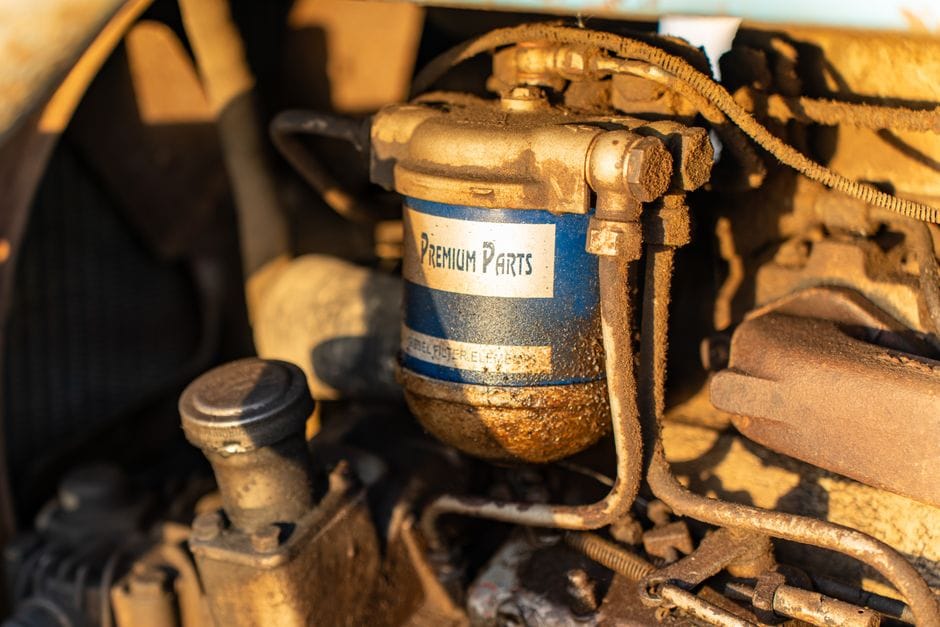
The filter media is the heart of any oil filter — the pleated material that physically traps contaminants. Three types dominate the market, each with distinct trade-offs between cost, efficiency, and durability.
Cellulose media is the traditional choice, made from wood pulp fibers. It’s inexpensive and provides adequate filtration for standard oil change intervals, but its fibers are relatively coarse and irregular, which limits its ability to capture fine particles. Cellulose also degrades faster under high heat and can lose structural integrity over extended drain intervals.
Synthetic media uses engineered fibers — typically polyester, nylon, or fiberglass — that are uniform in diameter and can be packed more tightly. This allows synthetic filters to achieve higher filtration efficiency at the same flow rate, or maintain flow with finer filtration. Synthetic media also resists heat degradation and chemical breakdown better than cellulose, making it the preferred choice for synthetic oil and extended drain intervals.
Blended media combines cellulose with a percentage of synthetic fibers to balance cost and performance. These filters offer better efficiency than pure cellulose at a lower price than full synthetic, making them a popular middle-ground choice for everyday drivers.
Micron Rating and Efficiency: What the Numbers Actually Mean
Micron rating refers to the smallest particle size a filter can capture. A 20-micron filter traps particles larger than 20 micrometers. That is about one-quarter the diameter of a human hair. However, the rating alone is misleading because it doesn’t account for efficiency. A filter rated at 20 microns might capture only 50% of 20-micron particles. Another captures 95% at the same rating. Look for the beta ratio. For example, β20 = 75 means 75 out of 76 particles at 20 microns are captured, or 98.7% efficiency. Higher beta ratios indicate better filtration. They also increase flow restriction. Premium filters must balance efficiency against oil flow.
Why Synthetic Media Costs More (and When It’s Worth It)
Synthetic media costs more because the manufacturing process is more complex. Engineered fibers require precise extrusion and controlled layering, unlike the simple pulping of wood. The performance benefits justify the premium in specific scenarios. Consider synthetic media if you use synthetic oil with extended drain intervals (10,000+ miles). Consider it if you drive in severe conditions like extreme heat, heavy towing, or frequent short trips. Consider it if you own a high-performance or turbocharged engine that generates more contaminants and heat. For standard 3,000–5,000-mile intervals with conventional oil, a quality blended or even premium cellulose filter provides adequate protection. It costs a fraction of the price.
Anti-Drainback Valve: Silicone vs. Nitrile
The anti-drainback valve is a rubber flap inside the filter that prevents oil from draining back into the oil pan when the engine is off. Without it, the oil filter and oil galleries empty out, causing a dry start — the few seconds of metal-on-metal contact before oil pressure builds. This is especially critical for engines with filters mounted horizontally or at an angle, where gravity works against oil retention.
Nitrile rubber valves are the budget standard. They work adequately but harden and lose their sealing ability over time, especially under repeated heat cycling. A hardened nitrile valve can stick open, allowing oil to drain back and causing dry starts.
Silicone valves are superior in every measurable way. They remain flexible across a wider temperature range, resist hardening and cracking, and maintain their seal for the life of the filter. Silicone valves are a hallmark of premium filters and are worth seeking out, particularly for vehicles that sit for extended periods or are driven in cold climates.
Pressure Relief / Bypass Valve: Why It’s a Safety Feature, Not a Flaw
The bypass valve (also called the pressure relief valve
) is a spring-loaded mechanism inside the filter that opens when the pressure differential across the filter media becomes too high — typically around 8–16 PSI depending on the vehicle manufacturer’s specification. This situation occurs when the filter is clogged with contaminants, when the oil is cold and thick (causing high flow resistance), or when the engine is running at high RPM with high oil flow demand. When the valve opens, it allows unfiltered oil to bypass the media and flow directly to the engine, preventing oil starvation.
Some drivers mistakenly view the bypass valve as a design flaw, assuming that unfiltered oil is always bad. In reality, the bypass valve is a critical safety feature: unfiltered oil still lubricates, but no oil at all destroys an engine within seconds. The valve ensures that even a completely clogged filter won’t cause catastrophic failure. However, the bypass valve setting matters — a valve that opens too early means you’re running unfiltered oil during normal operation, while one that opens too late risks restricting flow. Always match the filter’s bypass valve specification to your vehicle’s OEM requirement, which is typically printed in the owner’s manual or available from the manufacturer.
Thread Size, Gasket Dimensions, and Fitment: Getting the Right Match
Fitment is the most common source of oil filter mistakes. The thread size — typically measured in inches (e.g., 3/4-16) or metric (e.g., M20x1.5) — must match your engine’s filter mounting boss exactly. A filter with the wrong thread will either cross-thread and damage the engine block or fail to seal properly, causing a massive oil leak. The gasket diameter is equally critical: the rubber O-ring on the filter’s base must align perfectly with the sealing surface on the engine. A gasket that’s too small won’t seal; one that’s too large can bulge out and blow under pressure.
To find the correct fitment, consult your vehicle’s owner’s manual, use an online fitment lookup tool, or cross-reference the OEM part number. Most aftermarket filter manufacturers provide comprehensive fitment charts. Never guess — a wrong filter can cost you an engine. Also verify the filter’s overall dimensions (height and diameter) to ensure it clears surrounding components like exhaust manifolds, splash shields, or frame rails.
Flow Rate and Pressure Drop: The Hidden Performance Metric
Flow rate measures how quickly oil passes through the filter media, while pressure drop is the resistance the filter creates. These two metrics are inversely related: finer media traps more particles but restricts flow, increasing pressure drop. Every engine has a minimum oil pressure requirement, and a filter with excessive pressure drop can starve bearings at idle or low RPM, especially in high-mileage engines with worn oil pumps.
Premium filters use larger media surface areas and optimized pleat geometry to achieve high filtration efficiency with minimal pressure drop. When comparing filters, look for published flow rate specifications — typically expressed in gallons per minute (GPM) at a given pressure. A filter that flows 8–10 GPM at 10 PSI is generally adequate for most passenger vehicles, while high-performance or diesel engines may require 12+ GPM. If a filter’s flow rate is too low for your engine, you’ll see low oil pressure warnings, especially at idle.
Construction Quality: Center Tube, End Caps, and Canister Thickness
Beyond the media, the physical construction of a filter determines its durability and burst resistance. The center tube is the perforated metal core that supports the media and prevents it from collapsing under pressure. Cheap filters use thin, easily deformed tubes; premium filters use thicker steel or reinforced plastic. The end caps — the discs that seal the top and bottom of the media — are another quality indicator. Budget filters often use cardboard or paper end caps that can degrade and allow unfiltered oil to bypass the media. Quality filters use metal or rigid plastic end caps that maintain their seal for the filter’s entire service life.
The canister thickness matters for burst resistance. A filter’s burst pressure is the point at which the housing ruptures — typically 300–500 PSI for quality units. Thin canisters can deform or split under extreme pressure spikes, especially in cold weather when oil is thick and the bypass valve hasn’t opened yet. Look for filters with a burst pressure rating of at least 400 PSI, and inspect the canister’s seam quality — welded seams are stronger than crimped ones.
Spin-On vs. Cartridge: Which Design Is Right for Your Vehicle?
Your vehicle’s design dictates which filter type you must use, but understanding the trade-offs helps you make an informed choice if you’re considering a conversion or purchasing a new vehicle. Spin-on filters are faster to change — unscrew the old, screw on the new — and require no special tools beyond a filter wrench. They’re also less prone to installation errors because the gasket is pre-attached. However, they generate more waste and often have smaller media surface areas than comparable cartridge filters.
Cartridge filters offer superior filtration because the permanent housing allows for a larger, more efficiently shaped media element. They’re also more environmentally friendly — you only dispose of the paper element, not a metal can. The downsides are a more involved change procedure (removing the housing cap, replacing O-rings, and torquing to spec) and a higher risk of cross-threading the housing cap. If your vehicle uses a cartridge filter, always replace the O-rings and follow the torque specification to avoid leaks.
OEM vs. Aftermarket: Does the Brand Matter?
Original Equipment Manufacturer (OEM) filters are made to the exact specifications of your vehicle’s manufacturer and are typically sourced from major filter companies (e.g., Mann, Mahle, Wix, or Fram) and rebranded. They’re guaranteed to meet fitment, flow, and bypass valve requirements. Aftermarket filters range from budget brands to premium performance units, and quality varies dramatically.
Teardown comparisons consistently show that premium aftermarket filters (e.g., Wix XP, Mobil 1, Purolator Boss, Royal Purple) often exceed OEM specifications in media quality, construction, and bypass valve accuracy. Budget aftermarket filters (e.g., generic store brands) frequently cut corners with cardboard end caps, thin canisters, and imprecise bypass valves. The safest approach: if you stick with a reputable aftermarket brand that publishes its specifications, you can often get better filtration than OEM at a similar price. If you choose a budget filter, verify that it meets or exceeds your vehicle’s minimum specifications.
How to Choose Based on Driving Conditions and Oil Type
Your driving habits and oil type should dictate your filter choice. For standard commuting with conventional oil and 3,000–5,000-mile intervals, a quality cellulose or blended filter from a reputable brand is sufficient. For synthetic oil users extending intervals to 7,500–15,000 miles, choose a full synthetic media filter with a silicone anti-drainback valve and a burst pressure above 400 PSI. For severe conditions — heavy towing, off-road driving, extreme heat, or frequent short trips where oil never fully warms up — upgrade to a premium filter with the highest filtration efficiency and flow rate you can find, as these conditions generate more contaminants and thermal stress.
For high-mileage engines (100,000+ miles), consider a filter with a slightly higher bypass valve setting to accommodate the increased oil flow demands of worn bearings. Some manufacturers offer “high-mileage” filters with enhanced anti-drainback valves and thicker gaskets to address age-related seal leaks. Always match the filter to your oil type — using a filter rated for conventional oil with synthetic oil can lead to premature media degradation.
Tools and Accessories: Oil Filter Wrench, Housing Cap, and Oil Change Kit
Changing your oil filter requires the right tools to avoid damaging the filter or your engine. A filter wrench comes in several styles: strap wrenches grip the canister’s circumference, cap wrenches fit over the filter’s end (matching the flutes or hex pattern), and claw wrenches bite into the metal. For spin-on filters, a cap wrench that matches your filter’s specific pattern is the safest option — it distributes force evenly and won’t crush the canister. For cartridge filters, you’ll need a filter housing cap that fits the plastic housing’s hex shape, plus a torque wrench to tighten the housing to spec (typically 18–25 ft-lbs, but always verify).
An oil change kit typically includes the filter, drain plug gasket, and sometimes a funnel or drain pan. These kits simplify the process and ensure you have the correct filter for your vehicle. When purchasing a kit, verify that the included filter matches your engine’s specifications — some kits include budget filters that may not meet OEM standards. Always have a new gasket for the drain plug and a fresh O-ring for cartridge housings on hand.
Bypass Filtration Systems: An Advanced Option for Maximum Protection
For enthusiasts and heavy-duty users, a bypass filtration system offers an additional layer of protection beyond the standard full-flow filter. Unlike the primary filter that cleans all oil passing through it, a bypass system diverts a small portion (typically 5–10%) of oil flow through an extremely fine filter — often rated at 2–5 microns — before returning it to the oil pan. This secondary loop gradually cleans the entire oil supply over multiple passes, removing particles far smaller than a standard filter can capture.
Bypass systems are common in diesel trucks, fleet vehicles, and racing applications where extended oil life and maximum engine protection are priorities. They can extend oil change intervals significantly — some manufacturers claim 2–3 times longer — but they add complexity, cost, and installation effort. For most passenger vehicles, a high-quality primary filter is sufficient; bypass systems are best reserved for vehicles that operate under extreme conditions or owners who want absolute maximum engine longevity.
Common Oil Filter Myths Debunked
Several misconceptions persist about oil filters. Myth: “A higher micron rating means better filtration.” False — a lower micron rating captures smaller particles, but efficiency matters more than the raw number. Myth: “You should pre-fill the filter before installation.” This is only safe for filters mounted vertically where oil won’t spill; for horizontal or angled mounts, pre-filling can cause oil to spill and make a mess. Modern engines build oil pressure quickly enough that pre-filling is unnecessary. Myth: “All filters of the same size are interchangeable.” False — bypass valve settings, anti-drainback valve quality, and media efficiency vary dramatically even among filters with identical thread sizes. Myth: “A clogged filter is better than no filter.” A clogged filter triggers the bypass valve, meaning unfiltered oil circulates — but that’s still better than no oil flow. Myth: “You can clean and reuse a filter.” Never — the media degrades, the bypass valve may stick, and the gasket loses its seal. Always replace the filter at every oil change.
Step-by-Step: How to Read an Oil Filter Label
Decoding the information printed on an oil filter can help you verify you’re buying the right product. The part number is the most critical piece — it cross-references to your vehicle’s OEM specification. The thread size (e.g., 3/4-16 or M20x1.5) is usually stamped on the base or printed on the box. The micron rating may appear as a single number or a beta ratio. The burst pressure is sometimes listed in PSI. The anti-drainback valve material (silicone vs. nitrile) is rarely printed but can be inferred from the filter’s price point and brand reputation. The bypass valve setting is almost never printed on the filter itself — you’ll need to consult the manufacturer’s spec sheet or your vehicle’s service manual.
Some premium filters print a filtration efficiency percentage (e.g., “98% at 20 microns”) on the box. This is a useful metric, but be wary of unverified claims — look for filters that cite ISO 4548-12 or SAE J1858 test standards, which provide standardized efficiency measurements. If a filter doesn’t publish its specifications, assume it’s a budget product with unknown performance.
Comparison Table: Budget vs. Mid-Range vs. Premium Filters
To help you visualize the differences, here’s a summary of what you can expect at each price tier:
Budget filters ($3–$6): Cellulose media, nitrile anti-drainback valve, cardboard end caps, thin canister (burst pressure ~250–300 PSI), bypass valve setting that may vary from spec. Suitable for standard 3,000-mile intervals with conventional oil, but not recommended for severe conditions or extended drains.
Mid-range filters ($6–$12): Blended or entry-level synthetic media, nitrile or basic silicone valve, metal end caps, thicker canister (burst pressure ~350–400 PSI), more consistent bypass valve calibration. Good for most drivers using conventional or synthetic blends with intervals up to 7,500 miles.
Premium filters ($12–$20+): Full synthetic media, silicone anti-drainback valve, reinforced steel center tube, heavy-gauge canister (burst pressure 400+ PSI), precisely calibrated bypass valve, published beta ratios and efficiency data. Ideal for synthetic oil, extended intervals, severe duty, and high-performance engines.
Final Recommendations: A Decision Framework for Your Next Purchase
When you’re ready to buy, follow this simple decision tree. Step 1: Determine your vehicle’s OEM filter specification (thread size, bypass valve setting, and recommended filtration efficiency) from the owner’s manual or a reliable fitment guide. Step 2: Assess your driving conditions — standard commuting, severe duty, or high-performance. Step 3: Match your oil type and change interval — conventional oil with short intervals can use budget or mid-range filters; synthetic oil with extended intervals demands premium filters. Step 4: Choose a reputable brand that publishes its specifications — Wix, Mann, Mahle, Purolator, Mobil 1, and Royal Purple are consistently reliable. Step 5: Verify fitment one last time before purchase, and always keep a spare filter and gasket on hand for your next change.
The cheapest filter on the shelf might save you $5 today, but a filter failure — whether from a collapsed center tube, a stuck bypass valve, or a blown gasket — can cost you thousands in engine repairs. Invest in a quality filter that meets or exceeds your vehicle’s specifications, and your engine will reward you with years of reliable service.
You might also like: best synthetic motor oil, diesel engine oil guide, best motor oil brand