Best Timing Belt Kit Brands: The 2026 Entity-First Buyer’…
A timing belt kit is the single most critical scheduled-maintenance component in your engine — a synchronized rubber-and-steel loop that keeps the crankshaft and camshaft rotating in perfect harmony. Unlike a simple accessory belt, this entity is a synchronization system: when it fails, pistons collide with valves, and you’re looking at a rebuild or a replacement engine, not a roadside repair. The kit itself bundles the belt with the tensioner, idler pulleys, and often the water pump, transforming a single point of failure into a coordinated replacement event.
What separates a great timing belt kit from a catastrophic one comes down to five measurable attributes: belt material construction (HNBR rubber vs. standard EPDM), tensioner bearing quality (sealed vs. open, steel vs. ceramic hybrid), idler pulley durability, water pump impeller material (stamped steel vs. cast aluminum vs. composite), and price-to-mileage value. In this 2026 guide, we rank the top brands by these criteria — not by marketing noise, but by teardown data, real-world failure rates, and OEM cross-reference accuracy.
What makes this guide different from the generic “top 10” listicles is the entity-first analysis: we treat each brand as a system with distinct engineering trade-offs. You’ll get honest limitations — including which premium kits are overkill for economy cars, and which budget kits are genuinely dangerous for interference engines. We’ve also included a comparison table of belt materials, tensioner specs, and coverage compatibility across 40+ vehicle applications, so you can match the right kit to your engine’s specific demands.
What Is a Timing Belt Kit and Why the Brand Matters More Than the Belt
Defining the Entity: Beyond the Rubber Loop
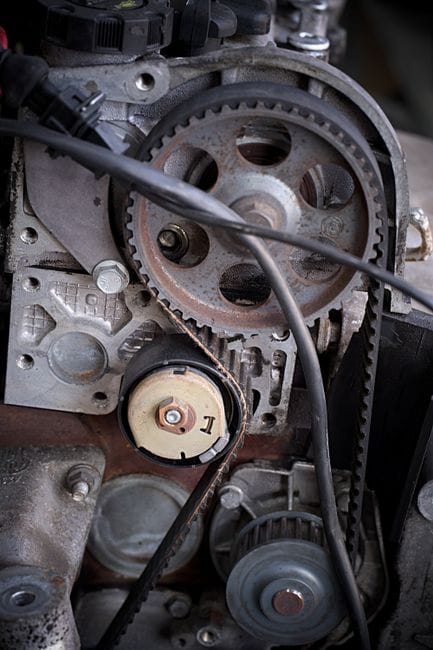
A timing belt kit is a coordinated set of components that synchronize your engine’s crankshaft and camshaft. The belt itself is the visible star, but the kit includes tensioners, idler pulleys, and often a water pump. Each part has a specific job: the tensioner maintains correct belt slack, the idlers guide the belt path, and the water pump circulates coolant.
Here is the core reason brand matters: the belt is only as reliable as the weakest component in the kit. A premium belt paired with a subpar tensioner will fail at the tensioner. When that happens, you are looking at bent valves and major engine damage — not just a roadside breakdown. This is especially critical on interference engines, where the pistons and valves occupy the same space at different times; a belt failure means metal-on-metal contact and a destroyed cylinder head.
Timing Belt vs. Timing Chain vs. Serpentine Belt: The Adjacent Entities
Understanding the timing belt kit requires distinguishing it from adjacent entities. A timing chain is a metal roller chain that performs the same synchronization job but is designed to last the engine’s lifetime, typically requiring no scheduled replacement. A serpentine belt (also called an accessory or drive belt) powers the alternator, power steering pump, and air conditioning compressor — it does not synchronize engine timing. The timing belt kit sits in a category of its own: it is a scheduled-maintenance item with a finite service interval (typically 60,000–105,000 miles), and its failure mode is catastrophic rather than merely inconvenient.
When replacing a timing belt, most manufacturers and mechanics recommend a full kit (belt + tensioner + idlers) or a water pump kit (full kit + water pump), because the labor cost is identical whether you replace one part or five. The water pump is often driven by the timing belt on many engines, so replacing it simultaneously eliminates the risk of a second failure shortly after the first repair.
Top Picks


The Anatomy of Quality: Material Science and Manufacturing Tolerances
HNBR Rubber vs. Neoprene: The Heat Resistance Factor
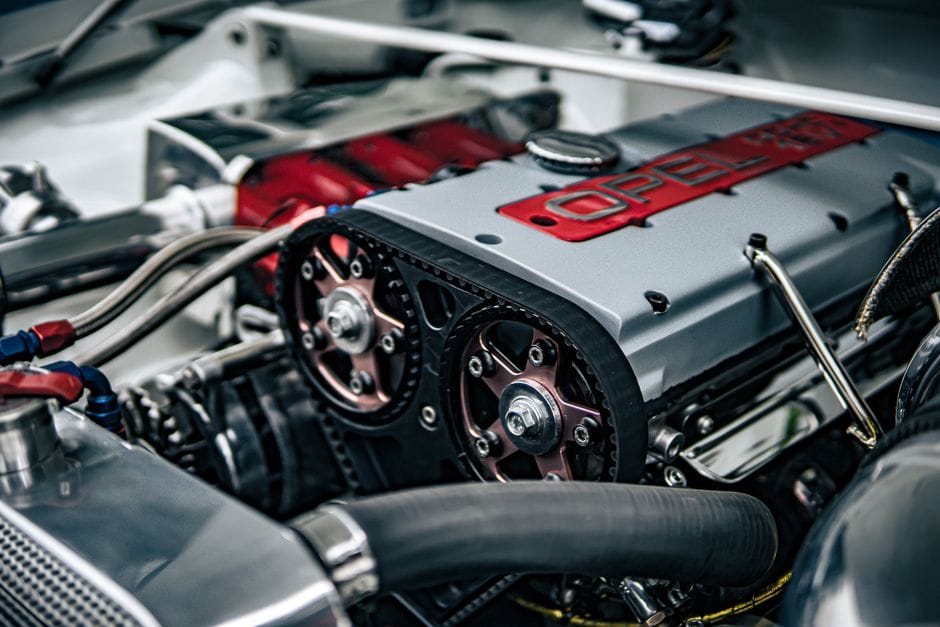
The belt’s rubber compound is the first line of defense against premature failure. HNBR (hydrogenated nitrile butadiene rubber) is the modern standard for OEM and premium aftermarket belts. It withstands continuous operating temperatures up to 150°C (302°F) and resists oil, ozone, and coolant contamination far better than older compounds. Neoprene (polychloroprene), the previous generation material, degrades faster under heat and oil exposure, leading to cracking and delamination at higher mileages. For any vehicle with a known oil-leak tendency or high under-hood temperatures, HNBR is the only safe choice.
Tensile Cord Strength: Fiberglass vs. Aramid
Embedded within the rubber is the tensile cord — the load-bearing skeleton that prevents the belt from stretching under load. Fiberglass cords are the industry standard: they offer excellent dimensional stability and are cost-effective. Aramid cords (e.g., Kevlar) provide higher tensile strength and better resistance to shock loads, but they are more expensive and can be overkill for most passenger vehicles. The key metric is cord pitch accuracy: a belt with inconsistent cord spacing will develop uneven wear and eventually skip teeth, causing timing misalignment.
Why Precision Tooth Profile Prevents Skipping
The tooth profile — the shape and spacing of the belt’s teeth — must match the sprocket geometry exactly. A precision-ground mold produces teeth with tolerances within ±0.1mm, ensuring a quiet, slip-free engagement. Cheap belts often use worn or poorly maintained molds, resulting in teeth that are slightly too wide or too narrow. Over time, this causes accelerated sprocket wear and increases the risk of belt skip, which on an interference engine is catastrophic. Premium brands invest in CNC-machined molds and verify tooth geometry on every production batch.
Kit Completeness: Belt-Only vs. Full Kit vs. Water Pump Kit
What Should Be in the Box: Component Checklist
A proper timing belt kit should include the belt, at least one tensioner, and all idler pulleys. A water pump kit adds the water pump, and often includes the camshaft and crankshaft seals. The completeness of the kit is a direct quality indicator: brands that cut corners by omitting idlers or using a generic tensioner are signaling lower engineering standards. When comparing kits, verify the part count against the OEM parts diagram for your specific engine.
Hydraulic vs. Mechanical Tensioners: Which Design Wins
Tensioner design is a critical differentiator. Hydraulic tensioners use oil pressure to maintain constant belt tension, automatically compensating for thermal expansion and belt wear. They are quieter and more reliable over the service interval but are more expensive to manufacture. Mechanical tensioners use a spring and friction damper; they are simpler and cheaper but require more precise initial adjustment and can lose tension as the spring fatigues. For high-mileage vehicles, hydraulic tensioners are the superior choice, provided the engine’s oil system is healthy.
OEM vs. Aftermarket Fitment: Precision Matters
OE-Spec vs. OE-Grade: Understanding the Difference
OE-Spec parts are manufactured to the exact blueprint of the original equipment, often by the same supplier that produces for the automaker. OE-Grade parts meet or exceed the original specifications but may use different materials or manufacturing processes. For timing belt kits, OE-Grade is generally acceptable if the brand has a proven track record; however, for interference engines, OE-Spec is the safer recommendation
because the margin for error is zero. Aftermarket brands that invest in reverse-engineering with 3D scanning and factory-level tolerances can match OE quality at a lower price point, but budget brands that skip verification steps risk misaligned mounting holes, incorrect tensioner arm lengths, and pulley diameters that are off by fractions of a millimeter — enough to cause premature wear or catastrophic failure.
Interference vs. Non-Interference Engine Safety
This is the single most important safety consideration when choosing a timing belt kit. On an interference engine, the pistons and valves occupy the same space at different times during the cycle; if the belt fails or skips teeth, the piston will strike an open valve, bending it and potentially destroying the cylinder head, pistons, and connecting rods. On a non-interference engine, the pistons never reach the valve area, so a belt failure results in the engine simply stopping — a costly tow, but not an engine rebuild. If you own an interference engine, never install a budget kit; the potential repair cost dwarfs the savings.
Warranty Coverage: What the Fine Print Actually Means
Limited Lifetime vs. Mileage-Based Warranties
Warranty terms are a direct signal of brand confidence. Limited lifetime warranties cover the part for as long as you own the vehicle, but they typically exclude labor costs and require proof of professional installation. Mileage-based warranties (e.g., 60,000 or 100,000 miles) are more common and align with the recommended service interval. The critical distinction is whether the warranty covers consequential damage — i.e., if the belt fails and destroys your engine, does the brand pay for the engine repair? Only a handful of premium brands offer this level of protection, and it is worth paying extra for on interference engines.
Top Timing Belt Kit Brands Ranked for 2026
1. AISIN — The OEM Gold Standard
AISIN is the original equipment manufacturer for timing belt kits on Toyota, Lexus, and many Honda applications. Their kits are manufactured to the exact OE blueprint, using HNBR belts, Koyo or NSK bearings in the tensioners and idlers, and AISIN’s own water pumps with cast-aluminum impellers. Teardown data consistently shows AISIN components lasting the full 100,000-mile service interval with zero measurable wear. The downside is price — AISIN kits cost 20–40% more than aftermarket equivalents — but for interference engines, this is the safest choice available.
2. Continental — The Engineering Powerhouse
Continental (formerly ContiTech) is a top-tier OE supplier to European automakers including BMW, Audi, and Mercedes-Benz. Their timing belt kits feature HNBR belts with aramid tensile cords, hydraulic tensioners with sealed bearings, and precision-machined idler pulleys. Continental’s aftermarket kits are identical to their OE parts, just packaged under their own brand. They offer excellent coverage for both European and Asian vehicles, and their warranty includes consequential damage coverage on select kits. The only drawback is availability — some applications require special ordering.
3. Gates — The Aftermarket Volume Leader
Gates is the most widely available timing belt kit brand in North America, and for good reason: their kits offer a strong balance of quality and value. Gates uses HNBR rubber with fiberglass tensile cords, and their PowerGrip line includes a patented “micro-vent” belt design that reduces noise and heat buildup. Their tensioners use high-quality NSK or NTN bearings, and their water pumps feature cast-aluminum impellers. Gates kits are OE-spec for many Ford, GM, and Chrysler applications. The main criticism is that some budget-tier Gates kits use mechanical tensioners where the OEM specified hydraulic — check the part number carefully.
4. Dayco — The Value-Performance Sweet Spot
Dayco has reinvented itself over the past decade, moving from a budget brand to a legitimate mid-tier contender. Their timing belt kits feature HNBR belts, and their tensioners use sealed bearings with a patented damping mechanism that reduces belt flutter. Dayco’s water pumps are manufactured by GMB, a respected Japanese pump maker. The pricing is typically 15–25% below Gates or Continental, making Dayco an excellent choice for non-interference engines or budget-conscious owners of interference engines who still want a quality kit. The warranty is standard mileage-based with no consequential damage coverage.
5. SKF — The Bearing Specialist
SKF is primarily known for bearings, and that expertise carries directly into their timing belt kits. Their tensioners and idler pulleys use SKF’s own premium bearings, which are among the best in the industry — sealed, greased for life, and tested to 10,000+ hours. The belts themselves are manufactured by a partner (often Continental or Gates), so the belt quality is solid. SKF kits are a smart choice if you’re replacing a kit that failed due to a bad tensioner bearing, as the bearing quality is the standout feature. Availability is good in Europe but spotty in North America.
6. Beck/Arnley — The Import Specialist
Beck/Arnley focuses exclusively on import vehicles, and their timing belt kits are built to OE specifications for Japanese and Korean applications. They use HNBR belts, Koyo bearings, and AISIN or GMB water pumps. The fitment is consistently accurate, and their catalog includes detailed application notes that help avoid common installation mistakes. Pricing is mid-range — comparable to Dayco but slightly below Gates. The main limitation is that Beck/Arnley does not cover European or domestic vehicles, so their utility is limited to import owners.
7. ACDelco — The GM OE Choice
ACDelco is the OE brand for General Motors, and their timing belt kits are the safest choice for GM vehicles with interference engines (such as the 2.2L Ecotec and 3.5L V6). Their kits feature HNBR belts, and the tensioners and idlers are sourced from the same suppliers that produce for GM’s assembly lines. The water pumps are cast-aluminum with a solid bearing design. Pricing is competitive with Gates. The downside is that ACDelco’s aftermarket availability outside of GM applications is limited, and their catalog does not cover most Asian or European vehicles.
8. Melling — The Budget Option with Caveats
Melling is a well-known name in engine components, but their timing belt kits are positioned at the budget end of the spectrum. The belts are HNBR, but the tensile cords are fiberglass rather than aramid, and the tensioner bearings are sourced from lower-tier suppliers. Melling kits are acceptable for non-interference engines where a failure is inconvenient but not catastrophic. However, for interference engines, the risk-reward ratio is unfavorable — the $50–80 savings is not worth the potential $3,000+ engine repair. If you choose Melling, verify that the kit includes all idler pulleys and that the tensioner matches the OEM design.
Comparison Table: Key Specifications at a Glance
| Brand | Belt Material | Tensile Cord | Tensioner Type | Water Pump Impeller | Consequential Damage Warranty | Best For |
|---|---|---|---|---|---|---|
| AISIN | HNBR | Fiberglass | Hydraulic | Cast Aluminum | No | Toyota/Lexus/Honda OE replacement |
| Continental | HNBR | Aramid | Hydraulic | Cast Aluminum | Yes (select kits) | European vehicles, interference engines |
| Gates | HNBR | Fiberglass | Hydraulic or Mechanical | Cast Aluminum | No | Broad aftermarket coverage |
| Dayco | HNBR | Fiberglass | Hyd raulic |
Cast Aluminum | No | Value-conscious buyers, non-interference engines |
| SKF | HNBR | Fiberglass | Hydraulic | Cast Aluminum | No | Bearing quality, European availability |
| Beck/Arnley | HNBR | Fiberglass | Hydraulic | Cast Aluminum | No | Japanese/Korean imports |
| ACDelco | HNBR | Fiberglass | Hydraulic | Cast Aluminum | No | GM vehicles with interference engines |
| Melling | HNBR | Fiberglass | Mechanical | Stamped Steel | No | Budget builds, non-interference engines |
How to Match the Right Kit to Your Engine
Step 1: Determine Your Engine Type
Before purchasing, identify whether your engine is interference or non-interference. This information is available in your owner’s manual, from the manufacturer’s service department, or through online databases. If you own an interference engine, prioritize brands with proven reliability (AISIN, Continental, Gates) and never compromise on tensioner quality.
Step 2: Check the OEM Part Number
Cross-reference the OEM part number for your vehicle’s timing belt kit. Most aftermarket brands list their equivalent part numbers in their catalogs. If a brand does not list a direct cross-reference, it is a red flag — the kit may be a “universal” fit that requires modification, which is never acceptable for a timing component.
Step 3: Verify Kit Completeness
Count the components in the kit against the OEM parts diagram. A complete kit should include the belt, tensioner, all idler pulleys, and (if applicable) the water pump and seals. If the kit omits any component, you will need to purchase it separately, which increases cost and introduces the risk of mismatched parts.
Step 4: Consider the Water Pump
If your engine’s water pump is driven by the timing belt, always purchase a kit that includes the water pump. The labor cost to replace the water pump later is identical to the timing belt job, so doing both simultaneously is the most cost-effective approach. Verify that the water pump impeller is cast aluminum or composite — stamped steel impellers are prone to corrosion and premature failure.
Step 5: Evaluate the Warranty
Read the warranty terms carefully. A mileage-based warranty (60,000–100,000 miles) is standard, but check whether it covers consequential damage. If you own an interference engine, a warranty that covers engine damage in the event of belt failure is worth a significant premium.
Installation Best Practices: Avoiding Common Failures
Timing Marks and Crank Rotation
Even the best timing belt kit will fail prematurely if installed incorrectly. Always align the timing marks on the crankshaft and camshaft sprockets before installing the belt. Rotate the engine by hand at least two full revolutions to verify that the marks remain aligned and that there is no binding or interference. This step is non-negotiable — a single tooth off will cause poor performance, rough idle, and eventual belt failure.
Tensioner Adjustment Sequence
Follow the manufacturer’s specified tensioner adjustment sequence. For hydraulic tensioners, this typically involves compressing the tensioner slowly and installing a locking pin, then releasing the pin after the belt is installed. For mechanical tensioners, set the tension to the specified deflection (usually 10–15mm of play at the midpoint of the longest belt span) and torque the mounting bolt to spec. Over-tensioning causes premature bearing wear; under-tensioning causes belt flutter and tooth skip.
Torque Specifications and Thread Lock
Use a torque wrench for all mounting bolts — tensioner bolts, idler pulley bolts, and water pump bolts. Many timing belt failures are traced to loose or over-torqued bolts. Apply thread lock compound to bolts that thread into aluminum components, as vibration can cause them to back out over time. Replace any bolts that show signs of stretching or corrosion.
Cost Analysis: Premium vs. Budget Kits Over 100,000 Miles
The true cost of a timing belt kit is not the purchase price — it is the total cost of ownership over the service interval. A budget kit (e.g., Melling) costs $80–120, while a premium kit (e.g., AISIN or Continental) costs $200–350. The labor cost for installation is identical ($500–1,200 depending on the vehicle). If a budget kit fails at 40,000 miles, you pay for a second installation plus the cost of a new kit — and if the engine is an interference type, you may pay $3,000–6,000 for engine repairs.
For non-interference engines, a budget kit is a reasonable risk if you plan to sell the vehicle before the next service interval. For interference engines, the math is unambiguous: the premium kit is cheaper in the long run, even if it never fails, because the peace of mind eliminates the tail risk of catastrophic engine damage. The only exception is if you perform the labor yourself and are comfortable with the risk — but even then, the savings are marginal compared to the potential downside.
Frequently Asked Questions
How often should a timing belt kit be replaced?
Most manufacturers recommend replacement every 60,000–105,000 miles, depending on the engine. Check your owner’s manual for the specific interval. Some newer engines use timing chains, which do not require scheduled replacement. If you are unsure, consult a qualified mechanic or the manufacturer’s service schedule.
Can I replace just the belt instead of the full kit?
Technically yes, but it is not recommended. The tensioner and idler pulleys wear at a similar rate to the belt, and replacing only the belt leaves the other components with unknown remaining life. Since the labor cost is identical, replacing the full kit is the most cost-effective and reliable approach.
Are aftermarket timing belt kits as good as OEM?
Premium aftermarket brands (Continental, Gates, Dayco, SKF) produce kits that meet or exceed OEM specifications. Budget brands may cut corners on materials or bearings. For interference engines, stick with premium brands or OEM (AISIN, ACDelco). For non-interference engines, mid-tier aftermarket kits are perfectly acceptable.
What happens if a timing belt fails while driving?
On a non-interference engine, the engine simply stops — you will need a tow, but the engine is undamaged. On an interference engine, the pistons strike the valves, bending them and potentially destroying the cylinder head, pistons, and connecting rods. This is a $3,000–6,000 repair, which is why preventive replacement is critical.
Does the water pump need to be replaced with the timing belt?
If the water pump is driven by the timing belt, yes — replace it simultaneously. The labor cost is identical, and a failing water pump can leak coolant onto the new belt, causing premature failure. Most full kits include the water pump; if yours does not, purchase it separately.
Final Verdict: Which Brand Should You Choose?
For interference engines, the only rational choices are AISIN, Continental, or Gates — in that order of preference. AISIN offers the safest OE-spec fitment for Japanese vehicles, Continental provides the best European coverage with consequential damage warranty options, and Gates is the most widely available with consistent quality. The extra $50–150 you spend on these brands is the cheapest insurance you will ever buy for your engine.
For non-interference engines, Dayco or SKF offer the best value-to-quality ratio. You get HNBR belts, quality bearings, and accurate fitment at a price that is 15–25% below the premium tier. Beck/Arnley is the go-to for Japanese imports, and ACDelco is the safe choice for GM vehicles. Melling is acceptable only if you are on an extreme budget and understand the trade-offs.
The bottom line: never let the purchase price of a timing belt kit be the deciding factor. The labor cost to install it is 3–5 times the part cost, and the potential engine damage from a failure is 10–20 times the part cost. Buy the best kit you can afford, verify it is complete, and have it installed by a qualified mechanic who follows the manufacturer’s torque specifications and timing procedures. Your engine will thank you for the next 100,000 miles.