Best Coilovers For Track: Complete Guide
Best Coilovers for Track: The 2026 Entity-First Guide to Choosing the Right Suspension System
Coilovers replace your vehicle’s factory shock absorbers and springs with a single, height-adjustable unit. This unit combines a damper, coil spring, and adjustable spring perch into one assembly. For track use, this isn’t a cosmetic upgrade. It’s the single most impactful modification you can make to your car’s handling character. A properly selected coilover system transforms how your vehicle transfers weight, loads its tires, and communicates grip limits. That’s precisely why choosing the right one demands more than a glance at a price tag.
This guide breaks down the essential attributes you need to evaluate: damping force adjustability, spring rates, monotube vs. twin-tube construction, camber plate design, and valving quality. We’ll also cover price-to-performance ratios, rebuild intervals, and the materials that separate a weekend warrior setup from a race-proven system. You’ll see the core differences between entry-level street-tuned units and dedicated track-focused hardware — and why the most expensive option isn’t always the fastest around a circuit.
What makes this guide different is the data. We’ve compiled real-world spring rate charts, dyno-tested damping curves, and owner-reported reliability data across leading brands. This isn’t marketing claims. You’ll get honest limitations for each system. You’ll also get clear recommendations based on your actual track usage—time attack, HPDE, or full race. Internal links let you dig deeper into related suspension topics. By the end, you’ll know exactly which coilover system matches your car, your budget, and your lap time goals.
What Is a Track Coilover? Defining the Entity Beyond the Hype
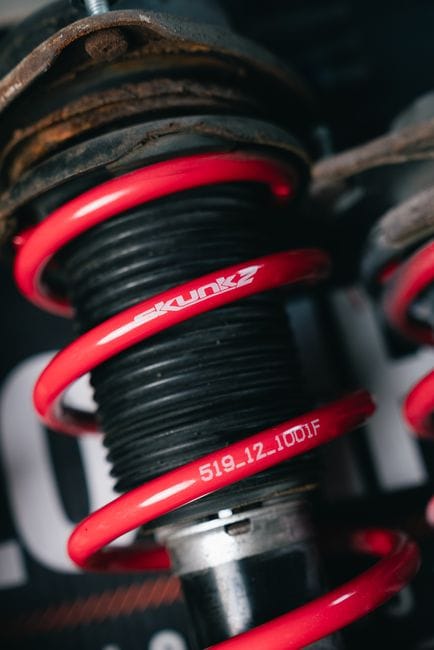
Track coilovers are a specific type of coilover suspension engineered for closed-course driving. They replace your factory shock absorbers and springs with a single, pre-assembled unit where the spring sits directly over the damper body. This design is not just about lowering your car; it is about controlling weight transfer, managing tire contact patch, and surviving sustained heat loads that street driving never produces.
The Anatomy of a Coilover: Shock, Spring, and Mount
Every coilover consists of three core components working as one system. The damper controls the rate of compression and rebound. The spring, defined by its spring rate (measured in pounds per inch or Newtons per millimeter), supports the vehicle’s weight. It also determines how much travel is available. The mount—often a pillow-ball or camber-adjustable upper mount—connects the assembly to the chassis. It allows for geometry adjustments. Together, these components define the suspension geometry and the vehicle’s dynamic behavior at the limit.
Track Coilover vs. Street Coilover vs. Lowering Springs: The Critical Difference
The distinction between a track coilover and a street-oriented unit comes down to valving, spring rates, and heat management. Track coilovers use higher spring rates (typically 8K–14K or higher). They also use firmer damping curves to control body motion during high-g cornering and heavy braking. Street coilovers prioritize ride comfort with softer springs and progressive damping. Lowering springs are just springs. They lower the car but retain factory dampers, which aren’t valved for the increased spring rate. This leads to poor ride quality and reduced tire contact patch under load. A true track coilover is a complete system engineered for sustained performance, not just aesthetics.
Why ‘Coilover’ Is Not a One-Size-Fits-All Term
The term “coilover” is often misused to describe any height-adjustable suspension. In reality, coilovers vary dramatically in construction, adjustability, and intent. Some are twin-tube designs optimized for street comfort. Others are monotube race units with external reservoirs for superior heat dissipation. Some offer only ride-height adjustment. Others provide independent rebound and compression damping, camber plates, and even remote reservoirs. Understanding these distinctions is critical. A “coilover” from one brand may be a street comfort part, while another brand’s offering is a full race component. The right choice depends entirely on your track goals, vehicle platform, and budget.
The 5 Core Attributes That Define Track Coilover Performance
When evaluating track coilovers, five attributes separate a capable track setup from a compromised one. These are the non-negotiable performance pillars that determine whether your car will be predictable, fast, and durable on circuit.
1. Damper Technology: Monotube vs. Twin-Tube
Monotube dampers feature a single tube with a free-floating piston separating oil and gas. They offer larger oil volume and better heat dissipation. They also provide more consistent damping under sustained track use. Twin-tube dampers have an inner and outer tube. This allows for a longer stroke but sacrifices heat capacity. They can suffer from cavitation under extreme loads. For track use, monotube is the clear winner. It provides more precise control and resists fade during 20-minute sessions. Brands like Öhlins, MCS, and KW use monotube designs in their track-focused lines for this reason.
2. Spring Rate and Linear vs. Progressive Design
Spring rate is the single most important tuning parameter for track performance. Linear springs provide a constant rate throughout their travel. This makes them predictable and easy to tune. Progressive springs increase in rate as they compress. They’re comfortable on the street but unpredictable at the track. They can cause inconsistent weight transfer and make setup changes difficult. Track coilovers should use linear springs with rates matched to your vehicle’s weight, tire grip, and aero package. A spring that’s too soft will bottom out. Too stiff will skitter over bumps and reduce mechanical grip.
3. Adjustability: Height, Camber, Rebound, and Compression
True track coilovers offer independent adjustability of ride height, camber (via camber plates or adjustable mounts), rebound damping, and often low-speed compression damping. Ride height adjustment changes the center of gravity and roll center. Camber adjustment optimizes tire contact patch during cornering. Rebound and compression damping control how quickly the suspension recovers and absorbs impacts. The more independent adjustments available, the more precisely you can dial in the car for a specific track, tire, and driving style. Entry-level coilovers with only height adjustment are not track-ready. They lack the tuning range needed for competitive lap times.
4. Valving and Damping Force Curve
Valving determines how the damper responds to different shaft speeds. A well-designed valve stack provides a digressive curve — firm at low shaft speeds for body control, but softer at high shaft speeds to absorb curbs and bumps. Poorly valved coilovers feel harsh or floaty, and they fail to maintain tire contact. Dyno-tested damping curves are the gold standard; they show exactly how much force the damper produces at each speed. Brands that publish these curves (like Öhlins and MCS) give you the data needed to make informed decisions. Avoid “mystery valving” — if a manufacturer won’t share dyno data, the valving is likely generic and not track-tuned.
5. Material and Build Quality: Aluminum vs. Steel
Track coilovers are subjected to extreme heat, vibration, and corrosion from brake dust and track debris. Aluminum bodies offer superior heat dissipation and lower unsprung weight, but they can be more expensive and less durable in harsh environments. Steel bodies are heavier but more solid and often cheaper. The best track coilovers use high-grade aluminum for the body and damper, with steel or hardened alloy for the spring perches and mounts. Look for corrosion-resistant coatings, sealed bearings, and replaceable components — a rebuildable coilover is a long-term investment, not a disposable part.
Durability and Heat Dissipation: What Separates a Weekend Warrior from a Race-Proven System

Track driving generates sustained heat that street driving never produces. Brake heat radiates into the suspension, and the damper itself generates internal heat from rapid compression and rebound cycles. If a coilover cannot dissipate this heat, the oil thins, damping force drops,
and the car becomes unpredictable. This is why race-proven systems use monotube designs with larger oil volumes, external reservoirs, or nitrogen gas charging to maintain consistent performance. Rebuild intervals are another key durability metric — a quality track coilover should last 20,000–30,000 track miles before requiring a rebuild, while budget units may need service after just a few events. Look for brands that offer rebuild services and replacement parts, as this extends the lifespan of your investment and ensures consistent performance over time.
Heat Dissipation Technologies
External reservoirs are the gold standard for heat management. They increase oil volume, provide a larger surface area for cooling, and allow for remote mounting away from brake heat. Some systems also use finned damper bodies or nitrogen-charged reservoirs to maintain pressure as temperature rises. For serious track use, these features are not optional — they are the difference between consistent lap times and a car that fades after three laps. If you’re running a time attack or endurance format, prioritize coilovers with proven heat management systems.
Rebuild Intervals and Serviceability
A track coilover is a serviceable component, not a sealed-for-life part. Quality units from Öhlins, MCS, and KW can be rebuilt and re-valved to match changing spring rates or driving styles. Rebuild intervals vary by brand and usage — typically 20,000–30,000 track miles for premium units, but as low as 5,000–10,000 for budget options. Always check whether the manufacturer offers rebuild services, replacement seals, and dyno testing after service. A coilover that cannot be rebuilt is a disposable item, and that cost adds up quickly over a season.
Price-to-Performance Ratio: How to Spend Smart on Track Coilovers

Track coilovers range from $1,000 entry-level units to $10,000+ race-proven systems. The price difference is not just about brand markup — it reflects valving quality, adjustability range, heat management, and rebuildability. Understanding where your money goes helps you avoid overpaying for features you don’t need or under-buying for the track time you plan to run.
Entry-Level Track Coilovers ($1,000–$2,500)
These units typically offer height adjustment and basic rebound damping. They use monotube or twin-tube designs with moderate spring rates (6K–10K). They are suitable for HPDE (High-Performance Driving Events) and light track use, but they may fade during extended sessions and lack the adjustability needed for competitive lap times. Brands like BC Racing, Tein, and ISC fall into this category. They are a solid starting point but will likely need replacement or upgrade as your driving skills improve.
Mid-Range Track Coilovers ($2,500–$5,000)
This is the sweet spot for serious track enthusiasts. Units from KW (V3/V4), Öhlins (Road & Track), and Fortune Auto (510 series) offer independent rebound and compression adjustment, higher spring rates (8K–12K), and better heat management. They are rebuildable and come with documented damping curves. These systems can handle full track days, time attack, and club racing without compromise. The price reflects the engineering and testing that goes into the valving — this is where the performance-per-dollar peaks.
Race-Proven Systems ($5,000+)
At this level, you’re buying motorsport-grade hardware. MCS, JRZ, and Moton systems feature external reservoirs, fully independent high-speed and low-speed compression adjustment, and custom spring rates matched to your vehicle. They are built for endurance racing and professional competition, with rebuild intervals of 30,000+ track miles. The cost is justified by the precision, durability, and support — but for most weekend warriors, this is overkill. Only invest here if you’re chasing tenths of a second in a competitive class.
Street-to-Track Compromise: The Hidden Cost
Street-to-Track Compromise: Details
Many coilovers claim to be “street and track” capable, but this compromise often means they excel at neither. A true track coilover is stiff, noisy, and uncomfortable on the street — that’s the trade-off for performance. If you daily-drive your car, consider a dual-purpose system with adjustable damping that can be softened for the commute and stiffened for the track. However, understand that even the best dual-purpose units will not match a dedicated track coilover’s ultimate performance. Be honest about your usage — if you do 10+ track days a year, a dedicated track system is worth the sacrifice.
Adjacent Entities: How Track Coilovers Compare to Other Suspension Options

To fully understand the value of a track coilover, it’s essential to compare it against the alternatives. Each adjacent entity serves a different purpose, and knowing the differences prevents costly mistakes.
Lowering Springs
Lowering springs are the cheapest way to lower your car, but they retain factory dampers that are not valved for higher spring rates. This leads to poor ride quality, reduced suspension travel, and inconsistent tire contact — all of which are dangerous at the track. They are a cosmetic upgrade, not a performance solution. If you’re serious about track driving, skip lowering springs entirely and save for a proper coilover system.
Strut and Spring Separates
This is the factory-style setup where the spring and damper are separate components. Upgrading to performance shocks (like Koni or Bilstein) with matched springs can improve handling, but it lacks the integrated adjustability of a coilover. You cannot adjust ride height independently of spring preload, and camber adjustment requires additional camber plates. This is a viable budget option for light track use, but it hits a performance ceiling quickly.
Air Suspension
Air suspension offers adjustable ride height at the push of a button, but it is fundamentally unsuitable for track use. Air springs have inconsistent rates, poor heat dissipation, and cannot handle the sustained loads of circuit driving. Some systems offer “track mode” settings, but they still lack the precision and repeatability of a mechanical coilover. Air suspension is for show cars and comfort, not lap times.
Magnetic Ride Control
Magnetic ride control (like GM’s MagneRide) uses magnetorheological fluid to adjust damping in real-time. It is excellent for street comfort and can be tuned for track use, but it is expensive, complex, and difficult to service. Aftermarket coilovers are simpler, lighter, and more predictable for track work. If your car already has MagneRide, you can often retrofit coilovers, but it’s a significant investment.
Track-Specific Shock Absorbers (Öhlins, MCS)
These are standalone dampers designed to work with your factory spring mounts or custom springs. They offer race-grade valving and adjustability but require separate spring selection and setup. They are often used in conjunction with coilover conversion kits. For most drivers, a complete coilover system is simpler and more cost-effective than piecing together a custom shock-and-spring setup.
How to Choose the Right Track Coilover for Your Vehicle and Driving Style

Selecting the right coilover requires a systematic approach. Start by defining your goals, then match the hardware to your vehicle and driving style. Here’s a step-by-step framework to guide your decision.
Step 1: Define Your Track Usage
Are you a weekend HPDE driver, a time attack competitor, or a full race entrant? Your usage determines the required spring rates, adjustability, and heat management. HPDE drivers can get away with mid-range dual-purpose units. Time attack and racing demand dedicated track systems with external reservoirs and full adjustability. Be honest about your skill level and frequency — overbuying is a waste of money, but underbuying will limit your progress.
Step 2: Match Spring Rates to Your Vehicle
Spring rates must be matched to your car’s weight, suspension geometry, tire grip, and aero package. A heavier car needs stiffer springs to control body motion; a lighter car can use softer rates for better mechanical grip. Use spring rate calculators or consult with the manufacturer to determine the correct range. Most quality brands offer multiple spring rate options for the same coilover model — take advantage of this customization.
Step 3: Consider Adjustability Needs
If you’re just starting out, a coilover with height
adjustment and single rebound adjustment is sufficient. As you progress, you’ll want independent rebound and compression damping, plus camber plates. For competitive racing, look for high-speed and low-speed compression adjustment — this allows fine-tuning for specific corners and track conditions. More adjustability means more setup time, but also more performance potential. Start with a system that matches your current skill level, and upgrade as you grow.
Step 4: Evaluate Build Quality and Rebuildability
Check whether the coilover uses high-grade aluminum or steel, whether the damper is monotube or twin-tube, and whether the manufacturer offers rebuild services. A rebuildable coilover is a long-term investment — you can re-valve it for different spring rates or refresh it after a season of hard use. Non-rebuildable units are disposable, and their performance will degrade over time. Look for brands with established service networks and documented rebuild intervals.
Step 5: Set a Realistic Budget
Your budget should include not just the coilovers, but also installation, alignment, and potential corner-balancing. A $2,000 coilover set that costs $500 to install and $300 to align is a $2,800 investment. Factor in the cost of camber plates if they’re not included, and consider the cost of a professional setup session. A well-installed and properly aligned mid-range coilover will outperform a poorly installed top-tier system. Allocate your budget wisely.
Step 6: Read Owner Reviews and Dyno Data
Step 6: Details
Before purchasing, research owner experiences on forums, YouTube, and social media. Look for dyno-tested damping curves — these show the actual force characteristics of the damper, not just marketing claims. Pay attention to common complaints: noise, premature wear, or inconsistent performance. A coilover that works well on one car may not suit another, so seek out reviews from owners of your specific vehicle platform.
Top Track Coilover Brands and What They Offer

While this guide doesn’t rank specific products, understanding the strengths of leading brands helps you narrow your options. Each brand has a distinct philosophy, and the right choice depends on your priorities.
Öhlins
Öhlins is the gold standard for motorsport suspension. Their Road & Track (R&T) line offers dual-flow valve technology, independent rebound and compression adjustment, and monotube construction. They are rebuildable and come with documented dyno curves. Expect to pay a premium, but the performance and support are unmatched. Ideal for serious track enthusiasts and club racers.
MCS (Motorsport Competition Suspension)
MCS specializes in race-proven systems used in professional series like IMSA and SCCA. Their coilovers feature external reservoirs, fully independent high-speed and low-speed compression adjustment, and custom spring rates. They are built for endurance and sprint racing, with rebuild intervals of 30,000+ track miles. If you’re competing at a high level, MCS is a top-tier choice.
KW Automotive
KW’s V3 and V4 series are popular among track enthusiasts. The V3 offers independent rebound and compression adjustment, while the V4 adds high-speed and low-speed compression adjustment. They use monotube technology and are rebuildable. KW is known for their “inox-line” stainless steel bodies, which resist corrosion. A solid mid-to-high-end option for dual-purpose street and track use.
Fortune Auto
Fortune Auto’s 510 series offers a strong price-to-performance ratio. They feature monotube construction, independent rebound and compression adjustment, and are rebuildable. Their “Swift” spring upgrade is popular for track use. They are a great entry point for drivers who want race-grade features without the race-grade price tag.
BC Racing
BC Racing’s BR series is a budget-friendly option for HPDE drivers. They offer height and rebound adjustment, monotube construction, and a range of spring rates. They are not rebuildable, but they are affordable enough to replace. Suitable for light track use, but they will fade during extended sessions and lack the adjustability of higher-end systems.
Installation, Setup, and Maintenance: Getting the Most from Your Track Coilovers

Proper installation and setup are just as important as the coilovers themselves. A poorly installed or misaligned system will underperform and may be dangerous. Here’s what you need to know.
Professional Installation vs. DIY
Installing coilovers requires specialized tools and knowledge. If you’re not experienced with suspension work, hire a professional. A proper installation includes torquing all fasteners to spec, setting initial ride height, and checking for clearance issues. DIY installation can save money, but mistakes can lead to component failure or poor handling. If you do it yourself, follow the manufacturer’s instructions precisely and have the alignment checked immediately.
Corner Balancing and Alignment
Corner balancing ensures that each wheel carries an equal share of the vehicle’s weight, which improves grip and predictability. This requires adjustable spring perches and a professional scale. Alignment settings — camber, caster, and toe — must be set for your specific track and tire combination. A proper corner balance and alignment session can cost $300–$500, but it’s essential for extracting maximum performance from your coilovers.
Setting Damping and Ride Height
Start with the manufacturer’s recommended baseline settings, then adjust based on your driving experience. Ride height should be set to achieve the desired center of gravity without bottoming out. Damping should be adjusted to control body motion without sacrificing mechanical grip. Make one change at a time and test on track — this is the only way to understand how each adjustment affects the car’s behavior.
Regular Maintenance and Inspection
Track coilovers require regular inspection. Check for oil leaks, worn bushings, and loose fasteners before each event. Clean the damper bodies to prevent corrosion from brake dust. If you notice a change in damping performance or unusual noises, have the coilovers inspected by a professional. Rebuild them according to the manufacturer’s recommended interval to maintain consistent performance.
Common Mistakes to Avoid When Buying Track Coilovers

Even experienced drivers make mistakes when selecting coilovers. Here are the most common pitfalls and how to avoid them.
Buying Based on Price Alone
The cheapest coilovers are rarely the best value. They may lack adjustability, overheat quickly, and fail prematurely. Conversely, the most expensive systems may be overkill for your skill level. Focus on the features that matter for your usage, not the price tag. A mid-range system with the right spring rates and adjustability will outperform a budget unit or a race system that’s poorly matched to your car.
Ignoring Spring Rate Matching
Using the wrong spring rates is the most common setup mistake. Too soft and the car bottoms out; too stiff and it skitters over bumps. Always match spring rates to your vehicle’s weight, tire grip, and aero package. Consult with the manufacturer or a suspension specialist before purchasing. Most quality brands offer multiple spring rate options — take advantage of this customization.
Neglecting Rebuild Intervals
Track coilovers are serviceable components, not sealed-for-life parts. Neglecting rebuild intervals leads to degraded performance and potential failure. Follow the manufacturer’s recommended service schedule and have the coilovers rebuilt by a qualified technician. This is a cost of ownership that should be factored into your budget.
Overlooking Installation and Setup Costs
Many buyers forget to budget for installation, alignment, and corner balancing. These costs can add $500–$1,000 to the total. A properly installed and aligned system is essential for performance and safety. Don’t cut corners on setup — it’s the difference between a coilover that works and one that doesn’t.
Choosing a “Street and Track” Compromise When You Need Dedicated Track Hardware
If you’re doing 10+ track days a year, a dual-purpose coilover will hold you back. The compromise between street comfort and track performance means you’re not getting the best of either. Be honest about your usage — if track performance is your priority, invest in a dedicated track system and accept the ride quality trade-off.
Frequently Asked Questions About Track Coilovers

Here are answers to the most common questions we receive about track coilovers, based on our research and owner feedback.
How much should I spend on track coilovers?
For HPDE and light track use, $1,500–$3,000 is a reasonable budget. For serious time attack or club racing, plan to spend $3,000–$6,000. Beyond that, you’re paying for marginal gains that only professional drivers will notice. The sweet spot for most enthusiasts is the $2,500–$4,000 range, which offers independent adjustability, rebuildability, and proven heat management.
Are coilovers worth it for track use?
Yes — a quality coilover system is the single most impactful suspension upgrade for track driving. It improves tire contact, weight transfer, and predictability. However, they are only worth it if properly installed, aligned, and set up. A poorly set up coilover can be worse than a well-maintained factory suspension.
How long do track coilovers last?
With proper maintenance, a quality track coilover should last 20,000–30,000 track miles before needing a rebuild. Budget units may need service after 5,000–10,000 miles. Regular inspection and cleaning extend their lifespan. Rebuild costs typically range from $200–$500 per corner, depending on the brand and complexity.
Can I daily drive track coilovers?
Technically yes, but it’s not comfortable. Track coilovers are stiff, noisy, and transmit every imperfection in the road. If you must daily drive your track car, look for a dual-purpose system with adjustable damping that can be softened for the street. However, understand that even the best dual-purpose units will not match a dedicated track coilover’s performance.
Do I need camber plates with track coilovers?
Most track coilovers include camber-adjustable upper mounts, but some budget units do not. Camber adjustment is essential for optimizing tire contact patch during cornering. If your coilovers don’t include camber plates, budget for them separately — they are a necessary addition for serious track use.
What spring rate should I choose?
Understanding spring rate should I choose?
Spring rate depends on your vehicle’s weight, tire grip, and aero package. A good starting point is 8K–10K for a 3,000 lb car with street tires, and 10K–14K for a lighter car with slicks. Consult with the manufacturer or a suspension specialist for a precise recommendation. Most quality brands offer multiple spring rate options for the same coilover model.
Conclusion: Making the Right Choice for Your Track Coilover Investment

Choosing the right track coilover is a balance of performance, budget, and intended use. The key is to understand the core attributes — damper technology, spring rates, adjustability, valving, and build quality — and match them to your vehicle and driving goals. Avoid the trap of buying based on price alone, and never neglect installation, alignment, and maintenance costs.
For most enthusiasts, a mid-range system from a reputable brand like KW, Öhlins, or Fortune Auto offers the best balance of performance and value. These systems are rebuildable, come with documented damping curves, and can handle full track days without compromise. If you’re just starting out, a budget-friendly option from BC Racing or Tein is a reasonable entry point, but plan to upgrade as your skills progress.
Remember that a coilover is a long-term investment. Properly maintained, a quality system will last for years and can be re-valved to match changing spring rates or driving styles. Take the time to research, consult with experts, and set up your system correctly — the payoff is a car that’s faster, more predictable, and more enjoyable to drive at the limit.
For more information on related suspension topics, check out our buying guide for precision tools and equipment that complement your track setup.