Low Transmission Fluid Symptoms: 7 Warning Signs to Watch…
Low transmission fluid can destroy your transmission in as little as 1,000 miles. The 7 most common symptoms are: slipping gears (most common), rough or delayed shifting, overheating transmission, unusual noises (whining, grinding), fluid leaks under the car, burning smell, and dashboard warning lights.
Act fast: Driving with low fluid can cause $2,000–$4,000+ in repairs.
What Is Transmission Fluid & Why It’s Critical
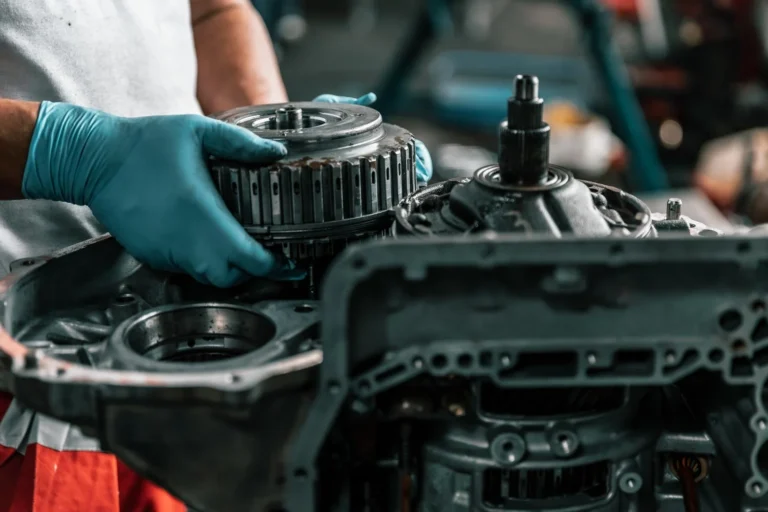
Transmission fluid is the hydraulic fluid that lubricates, cools, and transmits power in automatic transmissions. Without it, your transmission fails fast. It lubricates moving parts (gears, bearings, friction plates), cools the transmission to prevent overheating, and transmits hydraulic pressure to enable precise gear shifts.
Types of transmission fluid include ATF (Automatic Transmission Fluid), CVT fluid for continuously variable transmissions, and dual-clutch fluid for DCT systems. Key components rely on fluid pressure: the torque converter, planetary gears, valve body, friction plates, and hydraulic pump.
7 Warning Signs of Low Transmission Fluid
Low transmission fluid produces clear, identifiable symptoms. Recognizing them early saves you thousands in repair costs.
#1 – Transmission Slipping (Most Common Sign)
Transmission slipping is the #1 sign of low fluid. RPMs spike without acceleration, gears pop out unexpectedly, and the engine struggles to maintain speed. Insufficient fluid pressure means clutches cannot engage properly. The transmission literally loses grip between gear changes. Slipping often worsens in higher gears — especially from 3rd to 4th.
If slipping persists, it may indicate slipping issues beyond low fluid — check our guide on slipping transmission causes and fixes.
#2 – Rough or Delayed Shifting
Rough or delayed shifting means jerky gear changes, long pauses between shifts, and noticeable clunking sensations. Low fluid causes delayed hydraulic pressure buildup, which disrupts smooth shift timing.
| Normal Shifting | Low Fluid Shifting |
|---|---|
| Smooth, seamless | Jerky, abrupt |
| Instant response | 1–3 second delay |
| No noise | Grinding / whining |
#3 – Transmission Overheating
Overheating is dangerous and fast. Symptoms include a burning smell, an illuminated temperature warning light, and fluid leaks near cooler lines. Transmissions normally operate at 175–200°F. Low fluid pushes temps to 250°F or higher. That heat breaks down fluid faster, causing sludge buildup that clogs the valve body and hydraulic passages. Overheating accelerates every other type of internal damage.
#4 – Unusual Noises (Whining, Grinding, or Humming)
Abnormal transmission noises are a direct cry for help. Each noise type tells a different story:
- Whining in neutral: Low fluid level causing pump cavitation
- Grinding in gear: Metal-on-metal contact — severe internal damage is occurring
- Humming: Pump strain due to insufficient lubrication
Grinding is the most serious. If you hear grinding, diagnose it immediately using our leak guide.
#5 – Fluid Leaks Under the Car
Visible fluid under your car is a direct sign of a leak. Color is your first diagnostic clue:
- Bright red: Fresh, healthy transmission fluid
- Brown or black: Old, oxidized fluid
- Pink or milky: Fluid mixed with coolant — serious radiator or cooler line failure
Check under the transmission pan, drain plug, and cooler lines for leak sources. Learn how to diagnose transmission fluid leaks in our full guide.
#6 – Burning Smell
A burning smell from your transmission is never normal. Overheated fluid breaks down chemically and produces a sharp, acrid burnt odor — similar to burning rubber or electrical components. A burning smell always means damage is already occurring. Do not continue driving. Pull over safely and check the fluid level immediately.
#7 – Dashboard Warning Lights
Modern vehicles use electronic sensors to monitor transmission health. Low or degraded fluid triggers multiple dashboard warning lights:
- Check Engine Light (CEL): Often triggered by transmission pressure or ratio faults
- Transmission Temperature Light: Direct indicator of overheating
- AT Light (Automatic Transmission): Specific to transmission system faults
Use an OBD-II scanner to pull diagnostic codes. Common codes: P0730 (Incorrect Gear Ratio), P0841 (Transmission Fluid Pressure Sensor fault), P0740 (Torque Converter Clutch Circuit malfunction).
How Low Transmission Fluid Damages Your Transmission
Low transmission fluid causes damage on two timelines. Short-term problems start within 500 miles. Long-term damage can total your transmission.
Short-Term Damage (0–500 miles): Increased friction causes premature wear on clutches and bands. Overheating causes fluid breakdown — it loses lubricating properties fast.
Long-Term Damage (500+ miles): Burnt clutches cost $500–$1,200 to replace. A warped valve body costs $800–$1,500 to repair. Complete transmission failure costs $2,500–$4,500+ for rebuild or replacement.
| Issue | Repair Cost | Prevention Cost |
|---|---|---|
| Fluid top-up | $20–$50 | N/A |
| Leak repair (minor) | $150–$400 | $20 (regular checks) |
| Clutch replacement | $500–$1,200 | $100 (fluid flush) |
| Full transmission rebuild | $2,500–$4,500 | $150 (maintenance) |
How to Check Transmission Fluid Level (Step-by-Step Guide)
Checking transmission fluid takes 2 minutes. You need a dipstick, a clean rag, a funnel, and level ground. Some sealed modern transmissions require a lift and a mechanic — check your owner’s manual first.
- Warm Up the Engine: Drive for 5–10 minutes. Cold fluid gives inaccurate readings.
- Park on Level Ground: Slope changes the fluid level reading. This step is critical.
- Locate the Dipstick: Usually near the firewall on the passenger side, labeled “Transmission” or with a red or pink handle.
- Wipe, Reinsert, and Check: Pull the dipstick, wipe clean, reinsert fully, pull again. Fluid should sit between the “Min” and “Max” marks.
- Assess Fluid Condition: Check color and smell. Healthy fluid is red and nearly odorless. Brown or burnt fluid needs changing immediately.
For a detailed walkthrough, see our guide on checking fluid properly.
- Do NOT check fluid when the engine is cold — readings will be inaccurate.
- Do NOT use the engine oil dipstick — it’s a common mix-up in many engine bays.
- Do NOT overfill — excess fluid foams under pressure and loses its lubricating ability.
What to Do If You Suspect Low Transmission Fluid
If symptoms appear, act immediately. The longer you wait, the more expensive the repair.
Immediate Steps:
- Pull over safely if symptoms are severe — slipping, grinding, or burning smell
- Check the fluid level using the dipstick procedure above
- Top up with the correct ATF type listed in your owner’s manual
When to Call a Mechanic:
- Fluid is burnt, brown, or black — degraded fluid needs a full flush
- Leaks are visible but the source is unclear
- Warning lights remain on after topping up fluid
Need help? Our fluid service schedule guide covers recommended maintenance intervals by vehicle type and usage.
Transmission Fluid Leak Diagnosis (Quick Guide)
Transmission fluid leaks come from four main locations. Knowing the source helps you gauge repair urgency and cost.
| Location | Symptoms | Repair Difficulty |
|---|---|---|
| Drain Plug | Slow drip, easy to spot | ★ DIY-friendly |
| Pan Gasket | Fluid pooling under car | ★★ Moderate |
| Cooler Lines | Leaks near radiator | ★★★ Professional |
| Seals (Input/Output) | Leaks near bellhousing | ★★★★ Expert |
For a full diagnostic guide with photos and repair costs, visit our transmission fluid leak diagnosis page.
Expert Tips for Transmission Fluid Maintenance
Consistent maintenance prevents 90% of transmission failures. Follow these intervals and fluid specifications religiously.
Fluid Change Intervals:
- Severe use (towing, stop-and-go traffic, extreme heat): Every 30,000 miles
- Normal use: Every 60,000–100,000 miles — always verify in your owner’s manual
| Vehicle Type | Recommended Fluid |
|---|---|
| Most Automatics | Dexron VI, Mercon LV |
| Honda / Acura | DW-1, Type F |
| CVT Transmissions | CVT Fluid (e.g., Nissan NS-3) |
| Manual Transmissions | GL-4 or GL-5 Gear Oil |
Never substitute a cheaper generic fluid. Using the wrong ATF can cause clutch pack slippage and valve body damage within miles. For a complete fluid change guide, see our transmission fluid change guide.
Troubleshooting Low Transmission Fluid (Decision Tree)
Use this quick reference to match symptoms to solutions before calling a mechanic.
| Symptom | Likely Cause | Solution | Cost Estimate |
|---|---|---|---|
| Slipping in high gears | Low fluid | Top up fluid | $20–$50 |
| Rough shifting | Low or dirty fluid | Fluid change | $100–$200 |
| Leaking under car | Worn gasket or seal | Replace gasket/seal | $150–$600 |
| Burning smell | Overheated fluid | Fluid flush + leak repair | $200–$800 |
| Grinding noise | Severe fluid loss | Stop driving — tow to mechanic | $1,000+ |
Frequently Asked Questions
Can I Drive with Low Transmission Fluid?
No — even a short drive can cause permanent, irreversible damage. Low fluid starves the torque converter and clutch packs of lubrication within minutes. If fluid is only slightly below the minimum mark and you top it up immediately, the risk is minimal. But do not delay.
How Often Should I Check Transmission Fluid?
Check your transmission fluid every 6 months or every 6,000 miles — whichever comes first. Check before long road trips as well. Check more frequently if you tow heavy loads, drive in extreme heat, or own a vehicle with over 100,000 miles.
What Color Should Transmission Fluid Be?
| Fluid Color | Condition | Action Required |
|---|---|---|
| Bright Red | New / Healthy | None |
| Pinkish | Mixed with coolant | Immediate flush + repair |
| Brown | Old / Oxidized | Change soon |
| Black / Burnt | Severely degraded | Flush + inspect transmission |
How Much Does It Cost to Fix a Transmission Fluid Leak?
- Minor leak (Drain Plug): $50–$150
- Moderate leak (Pan Gasket): $200–$500
- Major leak (Seals or Cooler Lines): $500–$1,200
Is Transmission Fluid the Same as Engine Oil?
No. Transmission fluid and engine oil are completely different products. Using engine oil in a transmission can destroy it within minutes. Transmission fluid is thinner for hydraulic flow and contains friction modifiers specifically designed for clutch engagement. Always use the fluid specified in your owner’s manual.
Can Low Transmission Fluid Cause the Check Engine Light?
Yes. Low or degraded transmission fluid frequently triggers the Check Engine Light. Common OBD-II codes include:
- P0730 – Incorrect Gear Ratio
- P0841 – Transmission Fluid Pressure Sensor / Switch A Circuit Range
- P0740 – Torque Converter Clutch Circuit Malfunction
How Long Can You Drive with Low Transmission Fluid?
- 0–500 miles: Minor damage — increased friction and early wear begin immediately
- 500–1,000 miles: Serious risk of clutch and gear damage
- 1,000+ miles: Major failure requiring rebuild or replacement is almost guaranteed
Conclusion: Don’t Let Low Fluid Cost You Thousands
Low transmission fluid is one of the easiest problems to prevent — and one of the most expensive to ignore. The 7 warning signs are clear: slipping gears, rough shifting, overheating, unusual noises, fluid leaks, burning smell, and dashboard warning lights. Recognizing these symptoms early saves you $2,000–$4,000+ in repair costs. A $20 fluid top-up today prevents a $4,000 transmission rebuild tomorrow.
- 🔧 Check your fluid today — it takes 2 minutes and could save your transmission.
- 📅 Schedule a fluid change if it has been over 60,000 miles since your last service.
- 🚨 Leaking fluid? Use our leak diagnosis guide to find the source.
Bookmark this page. Check your fluid this week. Your transmission will thank you.