How to Check Transmission Fluid: Complete Guide
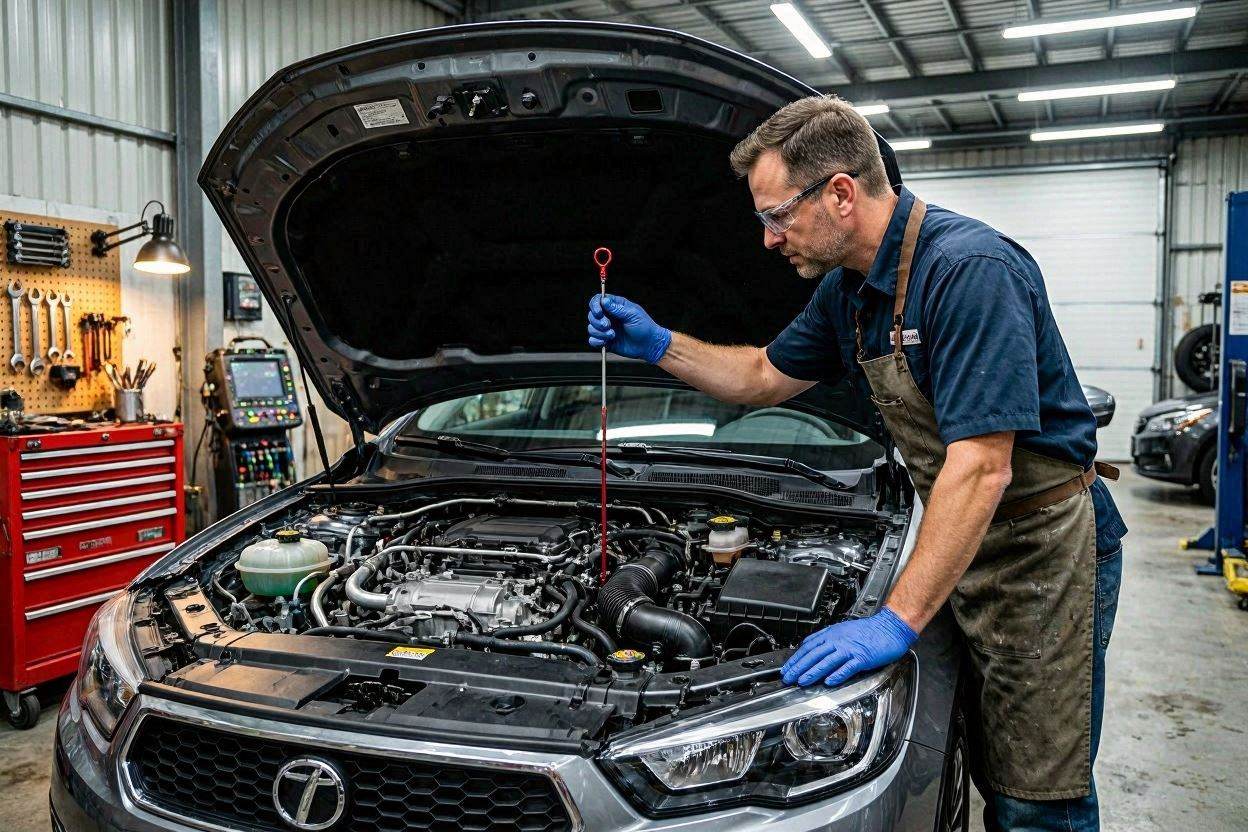
Knowing how to check transmission fluid is one habit that saves you from a five-figure repair bill. I’ve pulled transmissions apart that failed for one reason: nobody checked the fluid for years. This guide covers how to check transmission fluid level on a dipstick vehicle, how to check transmission fluid on a sealed unit with no dipstick, and what the color on that rag actually tells you. Grab a clean rag and let’s get under the hood.
This post contains Amazon affiliate links. As an Amazon Associate, VehicleBar earns from qualifying purchases at no extra cost to you.
Why Checking Transmission Fluid Matters
Transmission fluid does three jobs at once. It lubricates the gears and clutch packs. It cools the internal components under load. It also builds the hydraulic pressure that makes shifting possible at all. Low or burnt fluid breaks all three jobs together, not just one.
I see the same pattern in my bay every week. A slow leak gets ignored for months. The level drops low, and the torque converter starts to slip. Shifts turn harsh, then delayed. By the time the car limps in, a $120 top-off has turned into a $3,000 rebuild.
That’s why checking transmission fluid level takes five minutes but saves thousands down the road. A monthly check catches a leak before it drains the pan. It also flags contamination before it cooks the clutch packs. Your owner’s manual sets the official interval, but I tell every customer the same thing: check it monthly, and always check it before a long road trip or a heavy tow.
Tools You Need Before You Start
You don’t need a full tool chest for this job. A few basics get it done right.
- Clean shop rag or paper towels
- Disposable gloves
- Flashlight or headlamp
- Long-neck funnel for adding fluid
- The correct ATF type for your vehicle
Park on level pavement first. A slope throws off every reading you take, so don’t skip this step. Set the parking brake, then let the engine idle in Park or Neutral per your manual. Keep your hands away from the exhaust manifold and the serpentine belt while the engine runs.
Most vehicles want the engine running and warm for this check. A handful call for a cold check instead. Toyota, Honda, and most domestic automakers use the hot method. Always confirm the correct method in your owner’s manual before you trust the reading.
Tools That Make This Job Easier


How to Check Transmission Fluid With a Dipstick
Here’s exactly how I check transmission fluid level on any dipstick-equipped vehicle. Follow these seven steps in order and don’t skip the warm-up.
Step 1: Warm Up the Vehicle
Drive for 10 to 15 minutes before you check anything. Warm fluid gives you an accurate reading. Cold fluid reads falsely low every time.
Step 2: Park on Level Ground
Level ground lets fluid settle evenly across the pan. An uneven driveway or a curb will throw the reading off.
Step 3: Locate the Transmission Dipstick
Look near the firewall on front-wheel-drive cars, or toward the back of the engine bay on rear-wheel-drive trucks. It’s usually labeled “Transmission” and sits lower than the engine oil dipstick.
Step 4: Remove and Clean the Dipstick
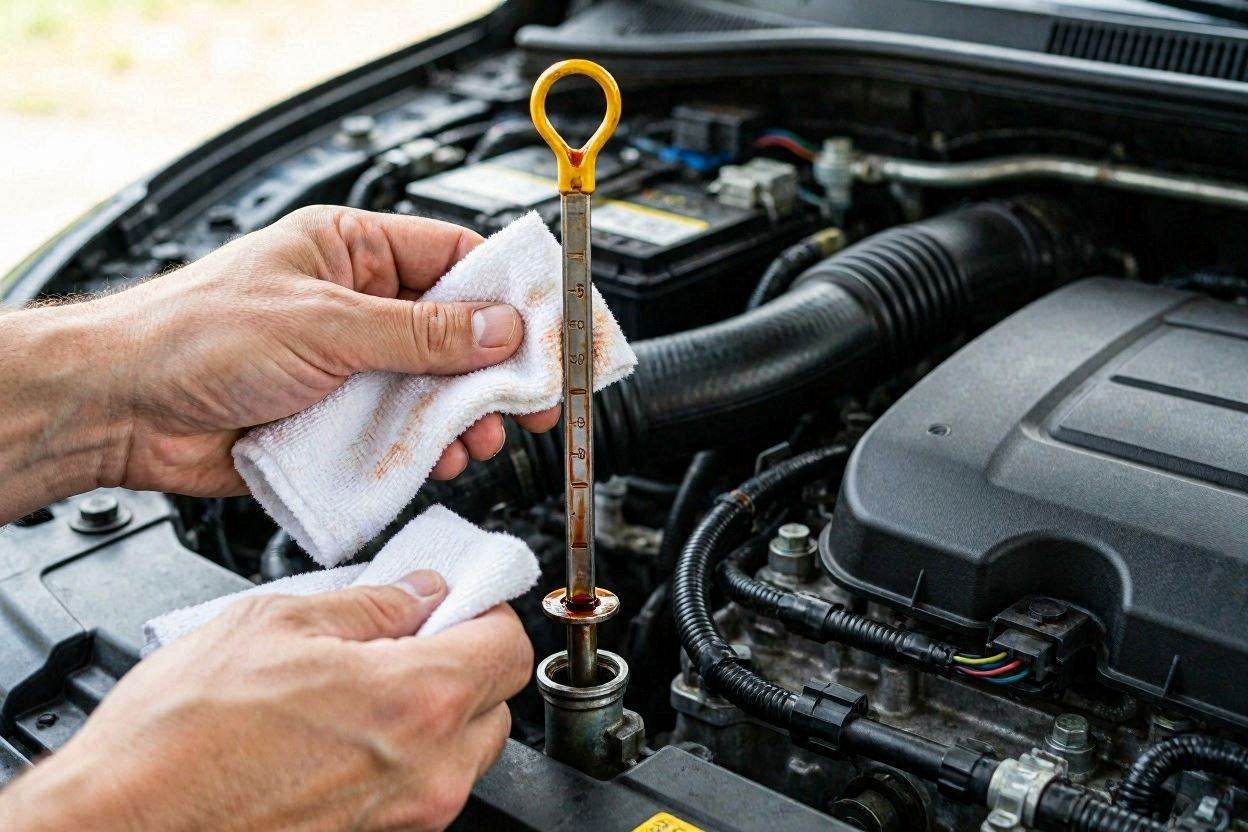
Pull it all the way out. Wipe the entire length clean with your rag so you’re reading fresh fluid, not old residue.
Step 5: Reinsert and Check the Level
Push the dipstick all the way back in, then pull it out again. Match the fluid line to the HOT markings if the engine is running and warm. Stay inside that range.
Step 6: Inspect Fluid Color and Smell
Healthy ATF looks bright red or pink. A burnt smell means trouble even if the level checks out fine. Dark or black fluid needs attention soon.
Step 7: Add Fluid If Necessary
Use a funnel and add small amounts at a time. Recheck after every half-quart. Overfilling causes foaming, and foaming causes its own set of shifting problems.
How to Tell the Condition of Your Transmission Fluid
Color tells you almost everything before a shop even hooks up a scan tool. Here’s the breakdown I use on every vehicle that comes through my bay.
| Fluid Color | Condition | What It Means | Recommended Action |
|---|---|---|---|
| Bright Red | Excellent | Fresh fluid | No action needed |
| Dark Red | Aging | Fluid wear beginning | Monitor at next oil change |
| Brown | Dirty | Oxidation and contamination | Schedule a fluid change soon |
| Black | Burnt | Severe overheating or worn clutch packs | Get it inspected immediately |
| Milky or Pink-Gray | Contaminated | Coolant or water has entered the fluid | Stop driving and get a professional diagnosis |
What Burnt Transmission Fluid Smells Like
Burnt ATF smells like scorched toast, not like regular motor oil. That smell means heat damage has already started inside the clutch packs. Don’t wait on this one. Get the fluid changed and have a technician check for slipping before it gets worse.
Can Transmission Fluid Be Too Full?
Yes, and overfilling causes real damage. Excess fluid gets whipped into foam by the spinning gears. That foam compresses under pressure, so hydraulic pressure drops and shifts get sloppy. Foam also holds heat, which shortens the fluid’s life. If you added too much, pull a small amount back out through the dipstick tube with a syringe pump and recheck.
Recommended ATF Fluid Options


How to Check Transmission Fluid Without a Dipstick
Plenty of newer vehicles skip the dipstick entirely. If you’ve popped your hood and found no transmission dipstick, you’re not doing anything wrong. Automakers moved to sealed transmissions on purpose.
Why Some Vehicles Have No Dipstick
Sealed transmissions cut down on contamination from dust and moisture. Manufacturers also use them to lock in factory-fill fluid for the life of the unit, in theory. In practice, most still need service eventually, especially under heavy towing.
How Mechanics Check Sealed Transmission Fluid
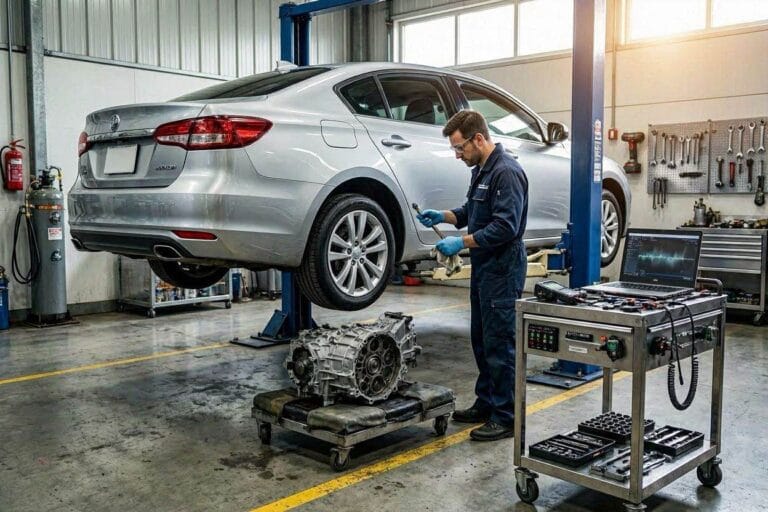
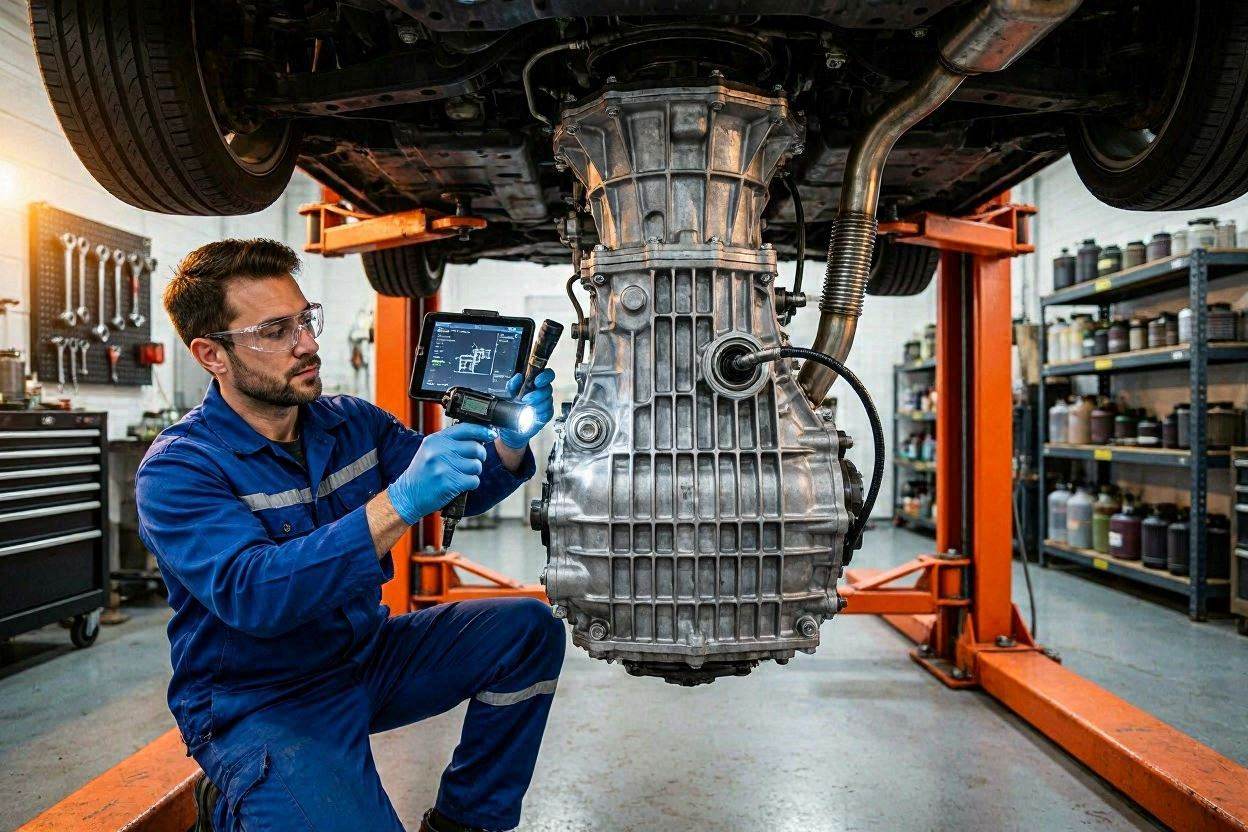
Shops use the fill-plug method instead. A technician removes a small plug on the side of the transmission case, then checks that fluid sits level with the hole while the vehicle is on a lift. Some models also require a scan tool to confirm the fluid is at the correct temperature before that reading means anything. Duramax L5P trucks with an Allison transmission use a similar plug-and-scan approach.
Can You Check Sealed Transmission Fluid at Home?
It’s possible, but I’ll be honest about the limits. Without a lift and the right temperature data, a DIY check on a sealed unit is a rough guess at best. If you suspect a transmission fluid leak on a sealed system, that’s a job worth handing to a shop with the right equipment.
Transmission Dipstick Location by Vehicle Type
Location shifts depending on drivetrain layout, so don’t assume every car hides it in the same spot.
Front-Wheel Drive Vehicles
The dipstick usually sits on the passenger side, close to the firewall. Most Honda and Toyota sedans follow this layout.
Rear-Wheel Drive Vehicles
Look toward the back of the engine bay, closer to the center of the firewall. Many Ford and RAM trucks place it here.
SUVs and Trucks
Check both sides of the engine on larger platforms. Higher ground clearance changes how far you have to reach.
CVT Transmission Dipstick Locations
CVT dipsticks tend to be shorter, with tighter markings. Nissan and Subaru CVTs are especially sensitive to overfilling, so add fluid slowly.
Manual Transmission Fluid Check Locations
Manual gearboxes skip the dipstick altogether. You’ll check fluid through a fill plug on the side of the case instead. See our guide to best manual transmission fluid for the right gear oil by application. If your clutch pedal feels off rather than your shifts, that’s a separate issue. Our bad clutch symptoms guide walks through the warning signs.
Signs Your Transmission Fluid Needs Attention
Watch for these red flags between checks.
- Delayed or hard gear shifts
- Transmission slipping, where the engine revs but speed doesn’t follow
- Grinding or whining noises from under the car
- The transmission running hotter than usual
- A transmission or check engine light on the dashboard
- Red fluid spots on the ground, which point to a transmission fluid leak
Any one of these on its own is worth a look. Two or more together mean you shouldn’t wait.
Common Mistakes When Checking Transmission Fluid
I catch these errors constantly, even from experienced DIYers.
Checking fluid on a sloped driveway gives you a false reading every time. So does confusing the transmission dipstick with the engine oil dipstick, since they often sit close together. Using the wrong ATF type is another big one. Dexron and Mercon fluids aren’t interchangeable, and using the wrong one can cause shudder or outright damage.
Overfilling ranks high on this list too, especially after a top-off. Add fluid in small amounts and recheck often. Ignoring a burnt smell is a mistake I see lead to expensive rebuilds. Checking fluid while the engine is stone cold rounds out the list, since cold fluid always reads lower than it actually is. If you’re towing heavy loads regularly, a transmission cooler reduces the heat that causes most of these problems in the first place.
Transmission Fluid Types Explained
Not all ATF is the same, and using the wrong type causes real problems. Here’s what you’re actually choosing between.
Dexron fluid, now at Dexron VI, is General Motors’ spec and common across Chevrolet and GMC models. Mercon LV and Mercon SP cover most modern Ford applications, replacing the older Mercon V. Stellantis vehicles, including RAM trucks, typically call for ATF+4. Honda uses its own DW-1 or Z1 spec, and Toyota specifies WS or T-IV depending on the model year. CVT fluid is a different formulation entirely, built to handle the belt-and-pulley friction that a standard automatic never sees.
Synthetic ATF resists heat breakdown better than conventional fluid and typically lasts longer between changes. That said, some vehicles require an exact OEM-spec fluid, and substituting a generic synthetic can trigger shudder on those models. When in doubt, match the spec in your owner’s manual instead of the bottle that’s cheapest on the shelf. Our best transmission fluid guide for 2026 breaks down top ATF brands by application if you want a deeper comparison.
When to Replace Transmission Fluid in 2026
Intervals vary by how you drive, not just by the calendar. Normal daily driving calls for a change around every 60,000 miles. Regular towing or hauling pushes that down to 30,000 miles. Stop-and-go city traffic runs hotter than highway miles, so it shortens the interval too.
Burnt smell, dark color, and rough shifting are your clearest signs that a change is overdue. A drain-and-fill replaces most of the fluid gently, while a full flush cycles nearly all of it through the system. For step-by-step instructions, see our complete transmission fluid change guide.
2026 Transmission Fluid Service Costs
DIY vs Professional Transmission Fluid Service
Both routes work. The right one depends on your vehicle and your comfort level under the hood.
DIY Pros
- Saves labor cost on straightforward dipstick vehicles
- Lets you inspect fluid condition firsthand, every time
- Builds familiarity with early warning signs
DIY Cons
- Sealed transmissions need a lift and often a scan tool
- Overfilling is an easy, costly mistake
- Some vehicles require exact OEM-spec fluid that’s hard to source locally
If your car has a dipstick and takes a common ATF type, a home check is easy and worth doing monthly. If it’s sealed, or you’re not sure which fluid it needs, a shop visit is the safer call.
Frequently Asked Questions
How do you check transmission fluid?
Warm the engine, park on level ground, then pull the dipstick with the engine running. Wipe it clean, reinsert it fully, and read the level against the HOT markings.
How do you check transmission fluid level accurately?
Accuracy depends on temperature and ground level. Check only after a 10 to 15 minute drive, on flat pavement, following your manual’s hot or cold specification exactly.
How can you tell the condition of your transmission fluid?
Color and smell tell most of the story. Bright red or pink fluid with no odor is healthy. Brown, black, or burnt-smelling fluid signals wear or heat damage.
Do you check transmission fluid with the engine running or off?
Most manufacturers want the engine running and warm for this check. A smaller number specify a cold, engine-off reading instead. Your owner’s manual has the final word for your model.
Why is there no transmission dipstick in my car?
Newer vehicles often use sealed transmissions with no dipstick at all. Fluid gets checked through a fill plug instead, usually on a lift with a scan tool for temperature.
Can I drive with low transmission fluid?
No. Low fluid causes slipping and overheating that can damage the transmission permanently within a short drive. Top it off or get it inspected before you continue.
How often should I check transmission fluid?
Check it monthly as a general habit. Check it again before any long road trip or heavy towing job, since those conditions push fluid the hardest.
How much does a transmission fluid change cost in 2026?
A DIY drain-and-fill runs $80 to $150 in fluid and a filter. A shop service typically costs $200 to $350, while a full flush runs $250 to $450 depending on your transmission type.