Bad Clutch Symptoms: 8 Signs Your Clutch Is Failing
A failing clutch gives clear warning signs before total failure. Recognizing these symptoms early saves you from expensive transmission repairs. This guide covers 8 critical warning signs every manual transmission driver must know.
What Is a Clutch and How Does It Work?
A clutch is a mechanical friction device. It connects and disconnects engine power to the transmission. This allows smooth gear changes in manual transmission vehicles.
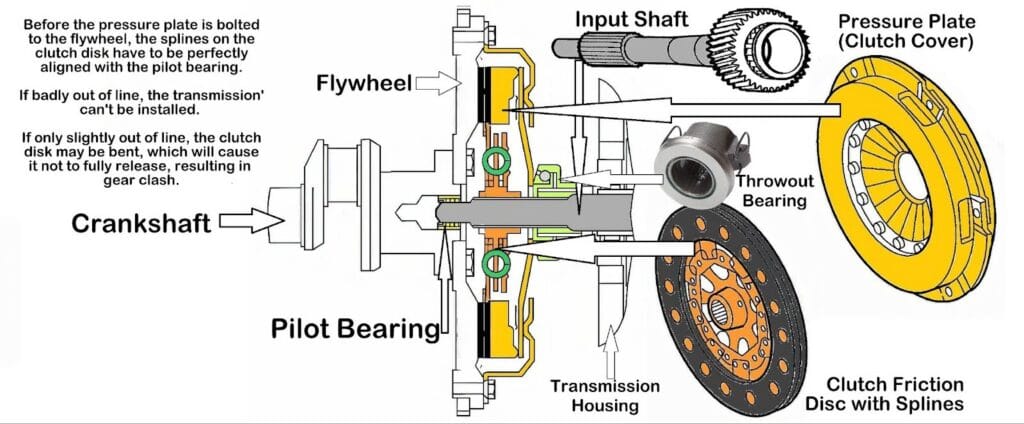
The clutch assembly contains four main components. The flywheel bolts to the engine crankshaft. The pressure plate clamps the clutch disc against the flywheel. The clutch disc carries friction material that grips the flywheel. The release bearing pushes the pressure plate fingers to disengage power.
Clutch wear develops through friction material degradation. Every engagement wears the disc slightly. Heat accelerates this process. Aggressive driving, towing, and riding the clutch shorten lifespan.
Average clutch lifespan ranges from 50,000 to 100,000 miles. Driving habits and terrain heavily influence this range. Highway cruising extends life. City driving and hills reduce it.
Quick Definition: The clutch is a mechanical friction device that connects and disconnects engine power to the transmission, allowing smooth gear changes in manual transmission vehicles.
8 Bad Clutch Symptoms Every Driver Must Recognize
1. Clutch Slipping (Most Common Warning Sign)
Clutch slipping feels like the engine revs without the car accelerating. You press the gas pedal. The RPM needle climbs. The speedometer barely moves. This is the most common early warning sign.
Slipping typically occurs during hard acceleration. It worsens on uphill grades. High gear loads at low RPM trigger it too. The friction material can no longer grip the flywheel under load.
Perform the handbrake test to confirm slipping. Engage the parking brake fully. Start the engine. Select third gear. Slowly release the clutch pedal. A healthy clutch stalls the engine immediately. A slipping clutch lets the engine run while the car stays stationary.
Friction material wears thin over time. Pressure plate tension weakens. Flywheel glazing reduces grip. These mechanical failures cause slipping.
Critical Alert: Clutch slipping causes accelerated flywheel damage and can leave you stranded. Do not ignore this symptom.
Learn about underlying slipping problems and mechanical root causes.
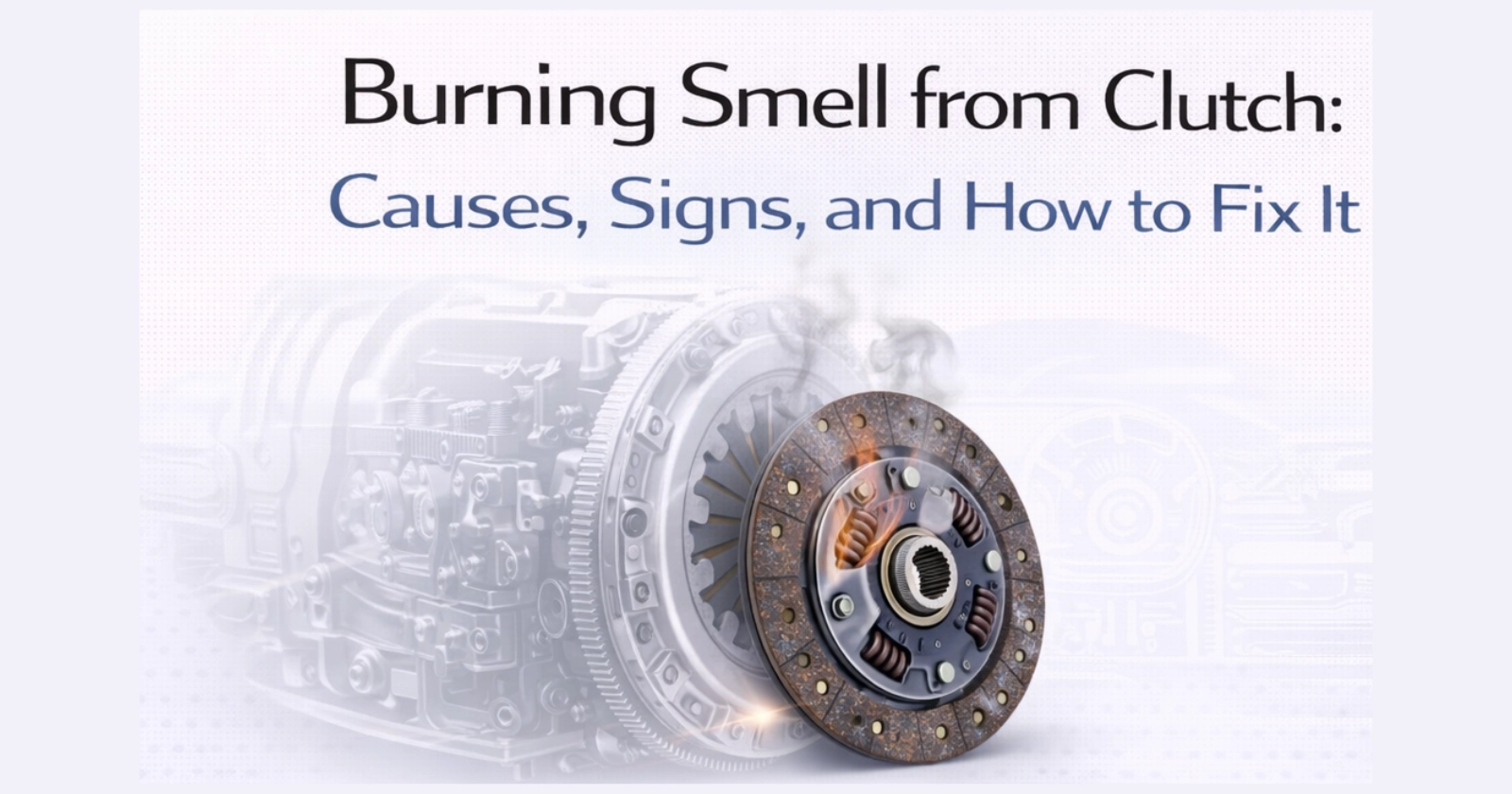
2. Burning Smell From Clutch
A burning clutch produces a sharp, acrid chemical odor. It smells like overheated brakes or an electrical fire. It differs from oil burning, which smells greasy and sweet. Electrical burning smells more like melted plastic.
Riding the clutch triggers this smell. Aggressive launches from stoplights overheat the friction material. Towing beyond capacity generates excessive heat. A stuck release bearing creates constant friction.
An occasional whiff indicates moderate wear. Modify your driving behavior immediately. A persistent smell demands immediate attention. Continued driving risks complete failure and potential fire hazards.
Stop driving if the smell persists. Allow the clutch to cool. Schedule inspection within 24 hours. Temporary smells from heavy loads require behavior changes only.
Safety Notice: A burning clutch smell indicates overheated friction material. Continued driving risks complete clutch failure and potential fire hazards.
3. Spongy, Stiff, or Sticking Clutch Pedal
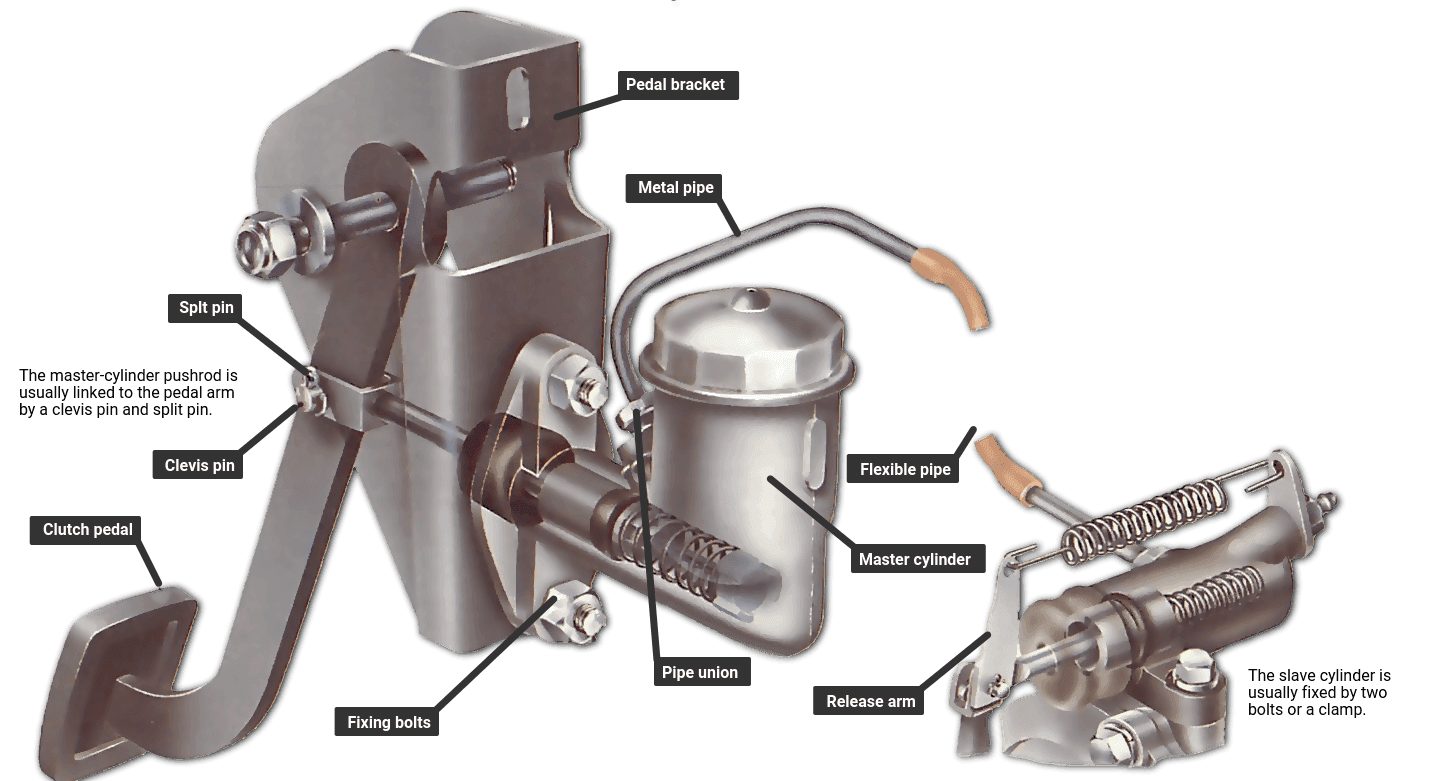
A spongy or soft pedal signals hydraulic system issues. Air in the lines reduces pressure. A failing master or slave cylinder leaks fluid. Check the reservoir immediately.
A stiff or heavy pedal indicates mechanical linkage problems. Pressure plate failure increases resistance. Cable corrosion creates binding. The pedal requires excessive foot pressure.
A pedal that sticks to the floor is dangerous. The return spring may be broken. Hydraulic failure prevents pressure return. Release bearing seizure jams the system.
Check the clutch fluid reservoir monthly. Locate the master cylinder reservoir near the brake fluid reservoir. The fluid should be clear to light amber. Dark or low fluid indicates problems. Top off with DOT 3 or DOT 4 brake fluid as specified.
Deep dive into pedal issues for hydraulic troubleshooting.
4. Grinding Noise When Shifting Gears
Clutch-related grinding occurs when the clutch fails to fully disengage. The transmission input shaft keeps spinning. You force gears together while moving. This grinds the synchromesh rings.
Transmission-related grinding happens even with the clutch fully depressed. This indicates internal transmission damage. Gear teeth wear down. Synchros fail.
Incomplete disengagement destroys gear teeth over time. The synchromesh cannot match shaft speeds. Metal grinds against metal. Repair costs escalate quickly.
Associated symptoms include difficulty finding neutral. The transmission may pop out of gear unexpectedly. These indicate advanced wear.
Clutch-Related Grinding
Transmission-Related Grinding
Occurs during shift engagement
Occurs with clutch fully depressed
Improves with clutch adjustment
Persists regardless of pedal position
Caused by incomplete disengagement
Caused by internal gear/synchro wear
5. Clutch Chatter and Judder
Chatter feels like vibrations or shuddering during pedal release. It happens most often when pulling away from a standstill. The car shakes rather than moving smoothly.
Contaminated friction surfaces cause chatter. Oil or grease on the disc reduces grip. A warped flywheel creates uneven engagement. Worn engine mounts allow excessive movement. A glazed clutch disc loses consistent friction.
Isolate the source with this test. Chatter occurs only during clutch engagement. Engine misfires happen during steady-state driving too. Drivetrain vibrations persist at constant speed. If shaking happens only when releasing the pedal, suspect the clutch.
Mechanic’s Note: Clutch chatter is often misdiagnosed as engine misfire. The key differentiator: chatter occurs specifically during clutch engagement, not steady-state driving.
A healthy clutch engages in the middle of pedal travel. The engagement point creeps upward as the disc wears thin. You may notice the clutch grabbing near the top of the pedal stroke.
Normal engagement occurs at roughly the midpoint. Abnormal high engagement happens in the upper third. This indicates worn clutch disc thickness reduction. Self-adjusting mechanisms may also fail.
Track the progression. A slightly high point suggests 30–40% wear remaining. A very high point indicates imminent failure. Engagement point migration predicts remaining lifespan accurately.
7. Difficulty Changing Gears
Complete difficulty means you cannot select any gear. Intermittent difficulty comes and goes. Both indicate clutch or linkage problems.
Clutch drag symptoms occur when the pedal is fully depressed. The transmission input shaft continues spinning. Gears clash during selection. This feels like forcing a square peg into a round hole.
Misalignment causes hard shifting too. The clutch fork may be bent. The pivot ball wears unevenly. Cable adjustment drifts out of specification.
8. Visible Clutch Dust and Debris
Normal wear produces minimal dust. A light coating around the bell housing is acceptable. Excessive debris signals rapid material loss.
Inspect the bell housing inspection port. Look for black accumulation. Check undercarriage areas beneath the transmission. Heavy buildup indicates advanced wear.
Normal residue is minimal and gray-black. Excessive debris is thick, powdery, and abundant. Large chunks of material indicate catastrophic failure is near.
Bad Clutch Symptoms Comparison Table
Symptom
Severity
Immediate Action
Typical Cause
Repair Urgency
Clutch Slipping
🔴 High
Reduce load, avoid hills
Worn friction material
1–2 weeks
Burning Smell
🔴 High
Stop driving if persistent
Overheating, riding clutch
Immediate if persistent
Spongy Pedal
🟡 Medium
Check fluid levels
Hydraulic leak, air in system
1–2 weeks
Stiff Pedal
🟡 Medium
Inspect linkage/cable
Pressure plate, cable corrosion
2–4 weeks
Grinding Gears
🔴 High
Avoid force-shifting
Incomplete disengagement
Immediate
Clutch Chatter
🟡 Medium
Gentle engagement only
Contamination, warped flywheel
2–4 weeks
High Engagement
🟡 Medium
Monitor progression
Worn disc thickness
1–3 months
Hard Shifting
🟡 Medium
Double-clutch technique
Clutch drag, misalignment
1–2 weeks
How to Diagnose Clutch Problems: Step-by-Step Troubleshooting
The 5-Minute Clutch Health Check (DIY)
1. Pedal feel test: Press the clutch pedal repeatedly. Feel for consistent pressure. Measure free play at the top of travel. Normal free play is 0.5 to 1.0 inch. Inconsistent pressure indicates hydraulic issues.
2. Static engagement test: Engage the parking brake fully. Start the engine. Select third gear. Slowly release the clutch pedal. A healthy clutch stalls the engine within 2–3 seconds.
3. Rolling acceleration test: Drive in fourth gear at 30 MPH. Apply full throttle. Monitor the tachometer and speedometer. RPM should rise proportionally with speed. Disproportionate RPM increase confirms slipping.
4. Visual inspection: Check clutch fluid reservoir level and color. Inspect under the vehicle for leaks. Look for excessive dust accumulation around the bell housing.
5. Listening test: Depress the clutch pedal. Listen for bearing noises. Release the pedal. Compare the sounds. Noises that change with pedal position indicate release bearing wear.
When to See a Professional Mechanic
Seek immediate professional help for safety-critical symptoms. Grinding gears, burning smells, and pedal sticking to the floor require shop visits.
Definitive diagnosis often requires transmission removal. Mechanics inspect the clutch disc thickness, flywheel condition, and pressure plate tension. Specialized tools include feeler gauges and clutch alignment tools.
Diagnostic inspections cost $50 to $150. This fee typically applies toward repair if performed at the same shop.
Costs vary by region, vehicle make, and whether flywheel resurfacing is needed.
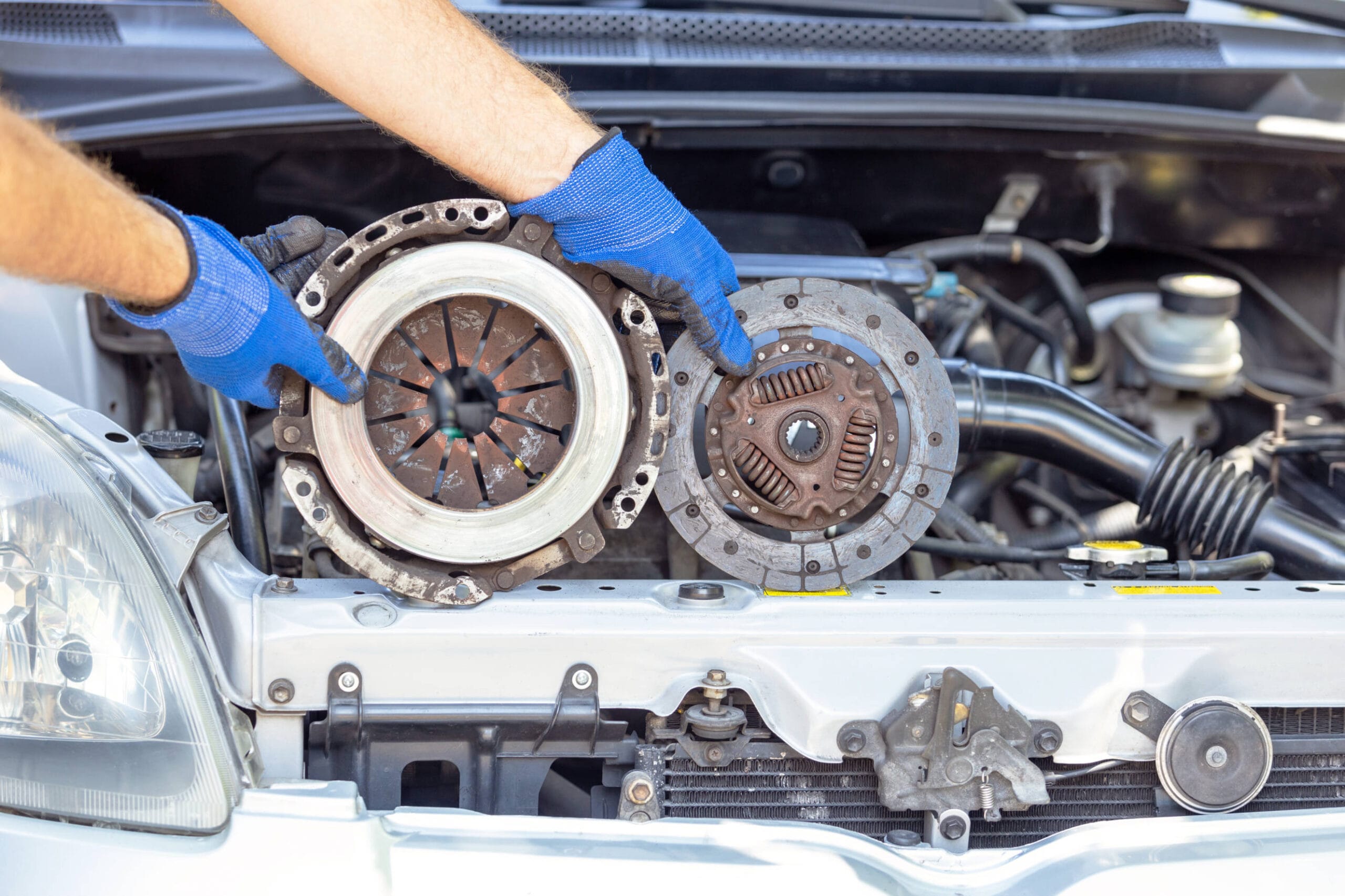
Auto mechanic holding used car pressure plate and clutch disc in front of the vehicle engine
Factors Affecting Clutch Service Cost
Flywheel condition significantly impacts cost. Resurfacing adds $200 to $400. Replacement adds $300 to $600. Always inspect the flywheel during clutch service.
Replace the release bearing and bushings while accessible. This adds $50 to $150. Skipping this risks premature repeat failure.
Hydraulic components may need replacement. Master cylinder costs $100 to $200. Slave cylinder costs $80 to $150. Labor for bleeding adds $50 to $100.
Shop labor rates range from $80 to $150 per hour. Clutch replacement requires 4 to 8 hours. Complex drivetrains and four-wheel-drive systems take longer.
Avoid These Habits: These common driving mistakes can reduce clutch lifespan by 50% or more.
1. Riding the clutch: Resting your foot on the pedal causes constant micro-slippage. The friction material wears continuously. Keep your foot off the pedal unless shifting.
2. Holding on hills with clutch: Balancing at the friction point generates excessive heat. Use the handbrake instead. Release the handbrake as you engage the clutch.
3. Launching aggressively: Dumping the clutch at high RPM generates massive heat. Friction surfaces glaze. Springs in the clutch disc fatigue prematurely.
4. Downshifting without rev-matching: Shock loading damages clutch springs. Match engine speed to wheel speed before engaging the lower gear.
5. Ignoring early symptoms: Small problems compound into expensive damage. Address slipping, chatter, and smells immediately.
6. Towing beyond capacity: Exceeding rated load accelerates wear exponentially. Check your vehicle’s tow rating. Stay 20% below maximum for clutch longevity.
Expert Tips for Extending Clutch Lifespan
Pro Mechanic Advice: Following these practices can extend clutch life to 150,000+ miles.
Smooth engagement technique: Release the clutch pedal at a consistent rate. Do not dump it quickly. Do not ride it slowly. Find the friction point and release smoothly.
Gear selection strategy: Avoid lugging the engine in high gears. Downshift before the RPM drops below 1,500. Lugging increases clutch load.
Performance driving protocols: Allow cooldown periods after track sessions. Heat cycling degrades friction material. Let the clutch cool between hard runs.
Seasonal considerations: Cold weather thickens hydraulic fluid. Allow the engine to warm before aggressive clutch use. Consider synthetic hydraulic fluid for extreme climates.
You can drive temporarily with minor symptoms. Strict limitations apply. Avoid hills and heavy loads. Keep distance from other vehicles. Plan for sudden failure.
Risks include complete stranding. Secondary transmission damage occurs. Safety hazards increase in traffic. Maximum safe distance is 50 miles with mild slipping.
How long does a clutch last after symptoms appear?
Typical range is 500 to 2,000 miles after symptoms appear. Variables affect this timeline. Aggressive driving shortens it to days. Gentle driving may extend it to months.
Driving style matters most. Terrain and load matter too. Highway cruising prolongs life. City hills accelerate failure.
What’s the difference between clutch slipping and transmission slipping?
Clutch slipping shows RPM rise without speed increase. The engine revs freely. The car does not accelerate. This happens in any gear.
Transmission slipping shows gear engagement delay. You shift into gear. The car hesitates before moving. This indicates internal transmission wear.
Table
Clutch Slipping
Transmission Slipping
RPM rises without speed gain
Gear engagement delayed
Occurs during acceleration
Occurs after gear selection
Caused by friction wear
Caused by internal gear wear
Why does my clutch smell like burning but still works?
Temporary heat events cause occasional smells. Heavy loads, steep hills, or aggressive driving trigger this. The smell fades after cooling. This is not immediate failure.
Persistent smells indicate progressive wear. Friction material degrades continuously. Failure is imminent. Schedule inspection within 48 hours.
Can a bad clutch cause the check engine light?
Direct clutch failure rarely triggers the check engine light. Some vehicles have transmission sensors. These may detect abnormal operation. Related codes include P0700 series DTCs.
Check engine lights typically indicate other issues. Do not ignore them. Scan for codes to rule out related problems.
How do I know if it’s the clutch master cylinder or the clutch itself?
Hydraulic failure shows specific symptoms. The pedal feels spongy or sinks to the floor. Fluid levels drop. Leaks appear near the master or slave cylinder.
Mechanical failure shows different symptoms. The pedal feels stiff or grabs high. No fluid leaks appear. The clutch slips or chatters.
Inspect fluid levels first. Check for leaks at the firewall and transmission. Bleed the system. If problems persist, suspect mechanical failure.
When to Replace Your Clutch: Decision Framework
Replacement Rule of Thumb: If diagnosis reveals worn friction material below 2mm, scored flywheel, or hydraulic contamination, replacement is more cost-effective than repair.
Replace immediately if symptoms compromise vehicle control. Pedal sticking to the floor qualifies. Grinding gears qualify. Safety comes first.
Apply the economic threshold. If repair costs exceed 50% of replacement cost, replace. Partial repairs often fail prematurely.
Replace preventively at 80% wear. This avoids collateral damage to the flywheel and transmission. Early replacement saves money long-term.
Power Steering Pump: What It Is, How It Works, and How to Choose the Right One The power steering pump is the hydraulic heart of your vehicle’s steering system. It is a belt-driven or electric pump that pressurizes steering fluid. This pressure multiplies the force you apply to the wheel. Without it, low-speed maneuvering would…
Coolant Temperature Sensor: Function, Failure Symptoms, and Testing Guide The engine coolant temperature (ECT) sensor is a small two-wire thermistor that sits in the coolant passage of your engine block or cylinder head. It is a variable-resistance device: as coolant temperature rises, the sensor’s internal resistance drops, which alters the voltage signal sent to the…
When your factory brakes start fading after a single hard lap or a panic stop from triple-digit speeds, you’re not just losing stopping power — you’re losing confidence in the entire vehicle. A big brake kit (BBK) is an aftermarket system that replaces your stock rotors, calipers, pads, and often lines with larger, higher-capacity components…
That metallic scraping sound started the moment you left the driveway. It gets louder at slow speeds. It stops when you press the brake. Sound familiar? A bent brake backing plate is almost always the cause — and most drivers don’t even know this part exists until it ruins their morning. The good news: this…
Quick Answer:The fuel filter location depends on your vehicle’s design. Older vehicles (pre-2005) often use aninline fuel filtermounted along the frame rail or firewall. Most modern cars (2005+) use anin-tank fuel filterintegrated into the fuel pump assembly, requiring access through the rear seat, trunk, or fuel tank removal. From the Shop Floor: Why Fuel Filter…
Last Tuesday, a customer rolled into my bay with a 2015 Honda Accord that sounded like it was mixing marbles in a blender. She’d been ignoring the “change transmission fluid” reminder for about 40,000 miles past the recommended interval. The fluid that drained out looked like used motor oil—black, gritty, and smelling like burnt toast….


![Fuel Filter Location by Make and Model [200+ Vehicles]](https://vehiclebar.com/wp-content/uploads/2026/01/Yanmar_Fuel_Filter.jpg)