Best Transmission Fluid 2026: Top ATF Brands Reviewed
Selecting the correct Automatic Transmission Fluid (ATF) is the single most critical maintenance decision for extending the life of your vehicle’s gearbox. Use the wrong specification, and you risk voiding warranties, causing transmission shudder, burning clutches, or facing a catastrophic $4,000–$8,000 rebuild. This guide decodes OEM specifications, explains the semantic differences between fluid types, and provides tier-ranked recommendations to match your driving profile and transmission type.
- Introduction to ATF: Why It Matters
- Understanding ATF: The Semantic Layer
- Synthetic vs. Conventional: A Deep Dive
- Viscosity, Low-Viscosity Fluids & Modern Transmissions
- OEM Specifications: Dexron VI, Mercon LV, Toyota WS & Beyond
- Transmission Types & Fluid Compatibility
- Top Rated ATF Products for 2025
- In-Depth Product Analysis & Recommendations
- How to Check, Maintain & Change Your Fluid
- Troubleshooting Common Transmission Issues
- Frequently Asked Questions (FAQ)
- Conclusion & Next Steps
1. Introduction to Automatic Transmission Fluid: Why It Matters More Than You Think
Your automatic transmission is one of the most sophisticated hydraulic systems in your vehicle. It is not simply an engine oil alternative—it is a purpose-engineered fluid that performs multiple critical functions simultaneously.
- Hydraulic Pressure Generation: ATF creates and maintains the pressure needed to engage and disengage clutch packs, apply brake bands, and shift gears seamlessly.
- Friction Modulation: Friction modifiers in the fluid control the exact grip of clutch plates.
- Thermal Regulation: The fluid absorbs heat from friction and transfers it to the transmission cooler.
- Lubrication: ATF reduces wear between gear teeth, bearings, and valve bodies.
- Corrosion & Oxidation Prevention: Additives protect against rust and prevent fluid breakdown.
The Hidden Cost of Wrong Fluid Selection
The average transmission rebuild costs between $2,500 and $4,000 for a basic automatic, and $4,000–$8,000 for modern CVTs and dual-clutch transmissions.
| Repair Type | Estimated Cost |
|---|---|
| Basic Automatic Rebuild | $2,500 – $4,000 |
| Modern CVT Replacement | $4,000 – $8,000 |
| Correct ATF Fluid | $30 – $60 |
2. Understanding Automatic Transmission Fluid: The Semantic Layer
ATF is not a monolithic product. It is a family of fluids, each engineered for a specific transmission type and operating condition.
What Is ATF? A Detailed Definition
Automatic Transmission Fluid is a specialized hydraulic oil formulated to:
- Maintain consistent viscosity across wide temperature ranges
- Provide precise friction characteristics
- Resist oxidation and thermal degradation
- Contain anti-wear additives
- Keep contaminants suspended
- Prevent foam formation
The Evolution of ATF: From Dexron to Modern Specs
| Specification | Year | Purpose |
|---|---|---|
| Dexron | 1956–1968 | Original GM specification |
| Dexron II | 1973 | Improved for 3-speed to 5-speed transmissions |
| Dexron III | 1993 | Better oxidation resistance |
| Dexron VI | 2006 | Modern low-viscosity standard |
| Mercon LV | Modern Era | Ford low-viscosity specification |
| Toyota WS | Modern Era | Toyota World Standard ATF |
3. Synthetic vs. Conventional: A Complete Comparison
Conventional ATF: The Traditional Approach
Conventional ATF is refined from crude oil and blended with additives to meet OEM standards.
- Lower cost
- Proven reliability
- Compatible with older vehicles
- Breaks down faster under heat
- Shorter service intervals
- Higher sludge formation risk
- Poor winter performance
Synthetic ATF: The Modern Standard
Synthetic ATF uses engineered base stocks designed for superior transmission protection and performance.
- Excellent thermal stability
- Extended drain intervals
- Improved cold-start shifting
- Reduced oxidation and sludge
- Better friction stability
Top Recommended ATF Products for 2026

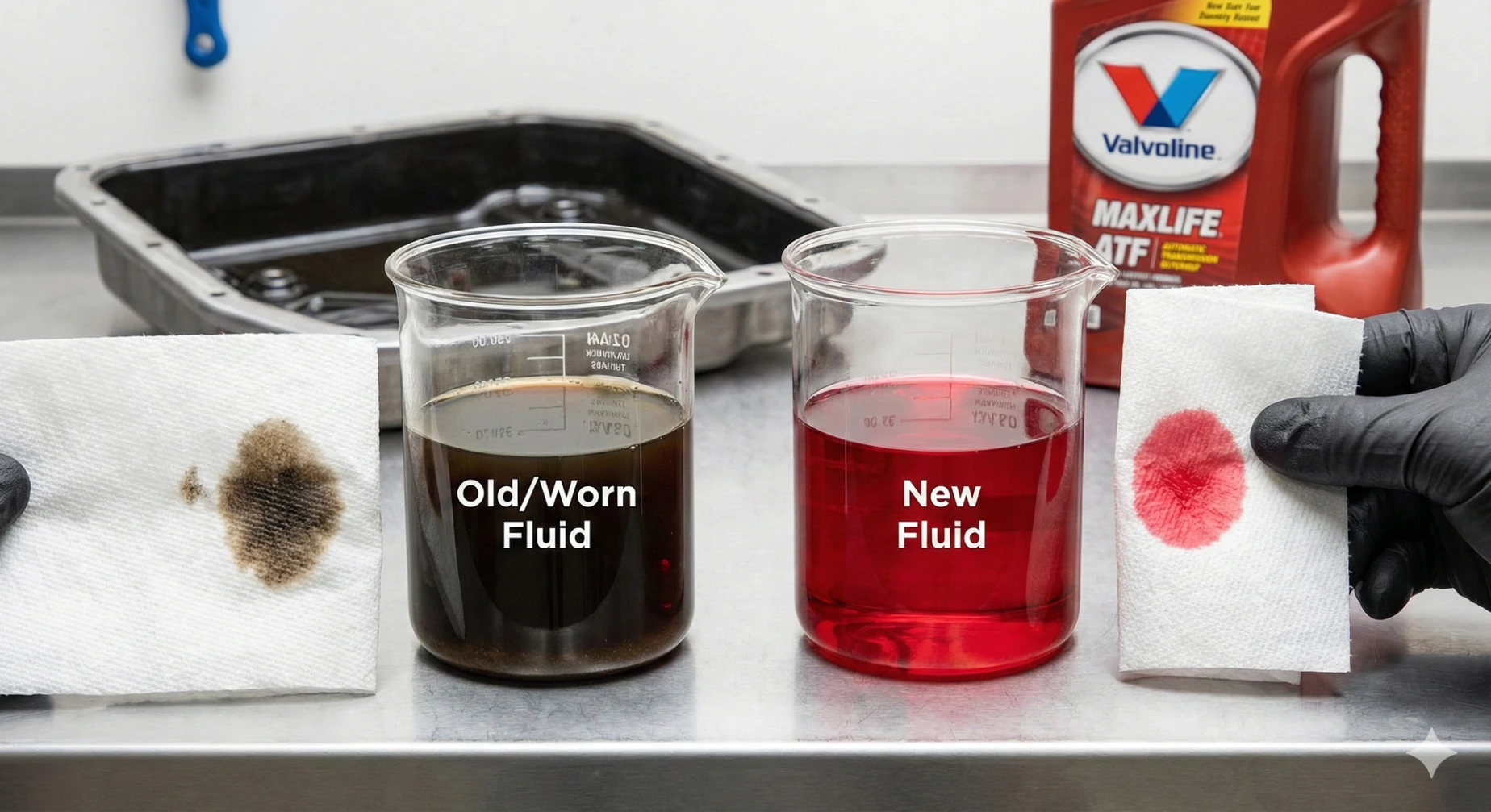
Valvoline MaxLife Multi-Vehicle ATF
Excellent multi-vehicle compatibility, synthetic blend formulation, and outstanding value for high-mileage transmissions.
Check Price
transmax-atf.jpg” alt=”Castrol Transmax ATF” />
Castrol Transmax Full Synthetic ATF
Premium full synthetic ATF engineered for superior thermal stability, towing protection, and smooth shifting.
View Latest Price
Frequently Asked Questions (FAQ)
How often should transmission fluid be changed?
Most manufacturers recommend changing ATF every 30,000–60,000 miles for conventional fluid and 60,000–100,000 miles for synthetic ATF.
Can I mix different ATF brands?
Mixing brands is generally acceptable if the fluids meet the exact same OEM specification. However, mixing incompatible specifications can damage your transmission.
Conclusion & Next Steps
Choosing the correct transmission fluid is one of the smartest investments you can make for long-term vehicle reliability. Whether you drive a high-mileage sedan, a towing truck, or a modern CVT-equipped crossover, using the proper OEM-approved ATF can prevent expensive failures and dramatically improve transmission lifespan.
The right ATF costs far less than a transmission rebuild.
Related Guides
- Best Synthetic Oil for High-Mileage Engines in 2026
- Complete Guide to Transmission Fluid Change: DIY Steps & Costs
- Best Transmission Cooler: The Complete Guide to Choosing, Installing,
- CVT Reliability Guide: What Kills a Continuously Variable Transmission
- Best Transmission Mount: How to Choose, Compare, and Install the Right
- Best Differential Fluid: Complete Guide to Gear Oil, LSD Additives, an
- Best Transmission Additive: What Actually Works (And What to Avoid)
Top Best Transmission Fluid 2026 – Our Picks
You might also like: Flywheel Resurfacing vs. Replacement: Which Should You Do?, Clutch Adjustment Guide: Cable & Self-Adjusting Clutches, Cable vs Hydraulic Clutch: Which System Is Better for Your Car?