Transmission Solenoid Failure: Symptoms, Testing, Replace…
Transmission solenoid failure disrupts gear shifting in automatic transmissions. Solenoids control fluid flow to engage gears. When they fail, your car may shift harshly, delay engagement, or get stuck in one gear.
Left unrepaired, solenoid issues can destroy your transmission. Repairs can cost over $1,000 if ignored. This guide helps DIYers and new car owners catch problems early.
Common Symptoms & Causes
We cover symptoms, testing methods, replacement steps, costs, and prevention tips. You’ll also learn how solenoid failure differs from other transmission issues. Get ready to take action before small issues become big bills.
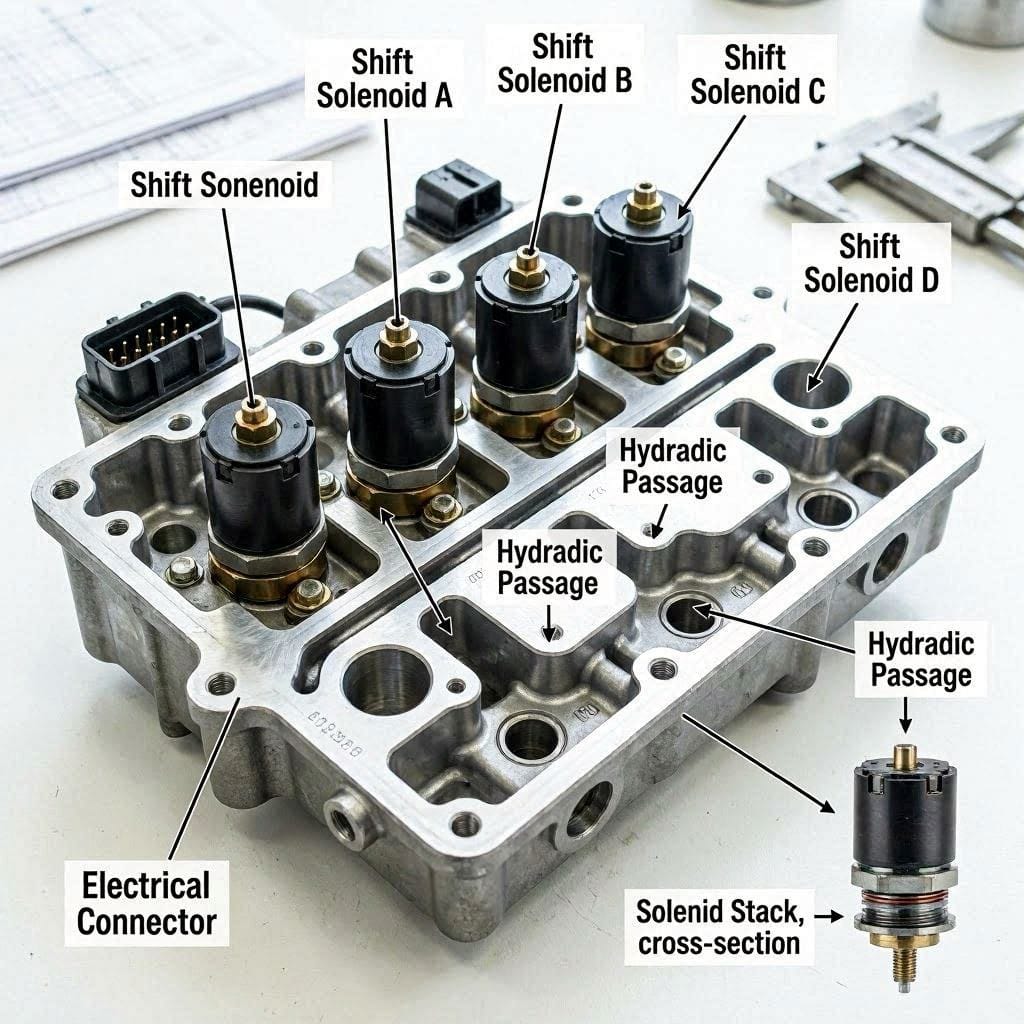
A transmission solenoid is an electromechanical valve. It controls hydraulic pressure to shift gears. Signals from the transmission control module (TCM) activate it.
There are two main types: shift solenoids and pressure control solenoids. Shift solenoids manage gear changes. Pressure control solenoids regulate line pressure for smooth operation.
Diagnosis & Inspection
Solenoids live inside the valve body. The TCM sends voltage based on speed, load, and throttle. Wiring and connectors carry these signals.
🔗 Related Reading: Valve body issues
Can a bad transmission solenoid cause hard shifting? Absolutely. Erratic voltage or clogged passages make shifts rough or delayed.
2.1 Primary Shifting Symptoms
Repair Options & Cost
Delayed engagement when shifting from Park to Drive
No upshift at highway speeds
Transmission stuck in one gear
Harsh or erratic gear changes
2.2 Warning Lights & Modes
Check Engine Light with P0750–P0770 codes
Limp mode activation (stuck in 2nd or 3rd gear)
Buzzing or clicking during shifts
2.3 Secondary Damage Signs
Transmission slipping under load
Overheating due to poor fluid circulation
Fluid leaks near valve body area
Noticeable drop in fuel economy
⚠️ Warning Box
Don’t ignore these symptoms! Delayed shifting or no movement can lead to complete transmission failure. Early diagnosis saves thousands.
Internal Link: Reading trouble codes
3.1 OBD-II Scanner Diagnostics
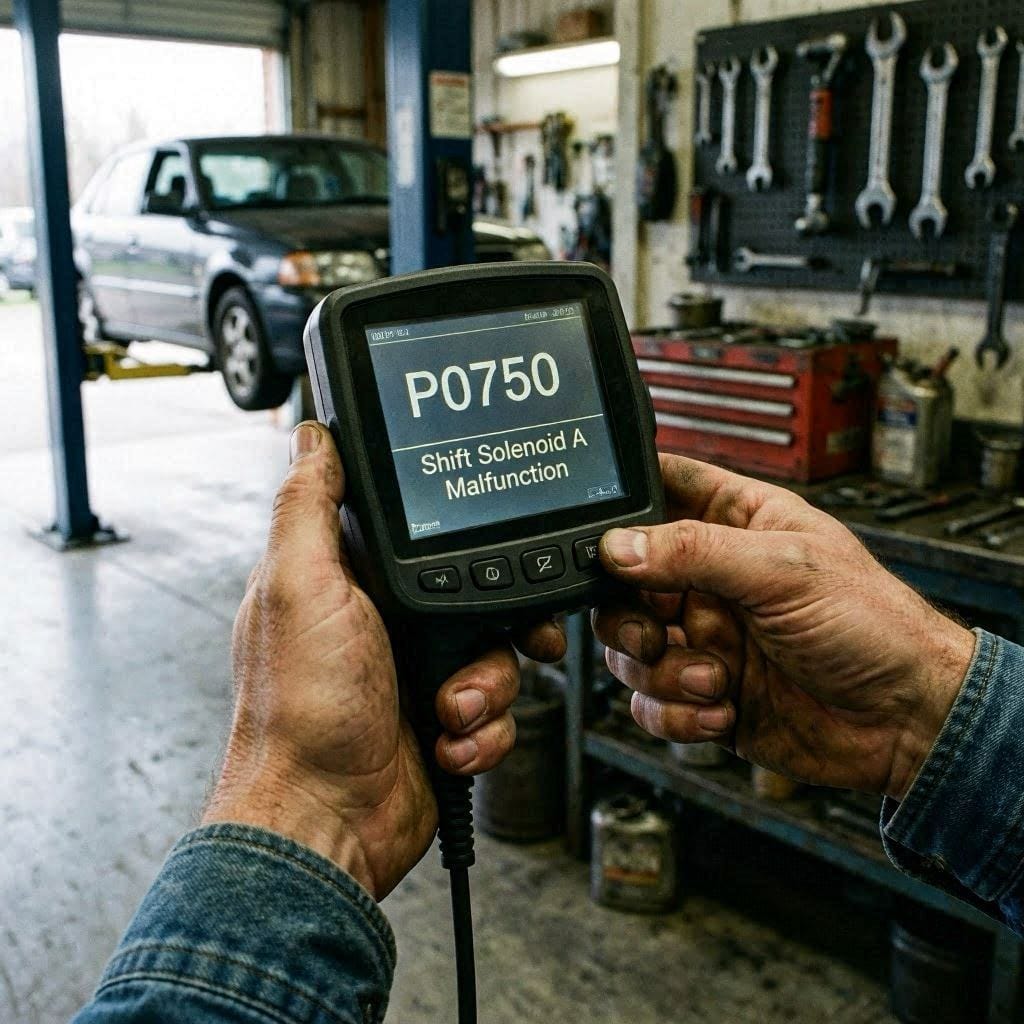
Scan for P0750 (Solenoid A), P0755 (Solenoid B), P0760 (Solenoid C). Monitor live data: duty cycle and pressure readings. Faulty solenoids show abnormal duty cycles.
3.2 Multimeter Resistance Test
Disconnect solenoid connector. Set multimeter to ohms. Measure resistance. Most solenoids read 20–30 ohms. Open or shorted readings mean failure.
Test power and ground with key on. Use a wiring diagram. Confirm 12V supply and solid ground.
3.3 Professional Testing Methods
Perform pressure tests on valve body. Use a bi-directional scan tool to activate solenoids. This isolates hydraulic vs. electrical faults.
If pressures are low but solenoids test good, suspect wiring or TCM issues.
ℹ️ Info Box
Pro Tip: Always check transmission fluid level and condition before testing solenoids. Low or burnt fluid mimics solenoid failure.
4.1 Fluid Contamination
Dirty or degraded fluid clogs solenoid screens. Metal shavings accumulate in the valve body. Overheating from poor cooling increases wear.
4.2 Electrical Failures
Corroded connectors disrupt signals. Broken wires cause open circuits. Water intrusion shorts out solenoid coils.
4.3 Age & Design Issues
High-mileage vehicles (100k+ miles) face wear. Some GM and Ford models have known solenoid defects. Heat cycling degrades internal seals.
⚖️ Comparison Table – Causes of Solenoid Failure
Cause Symptoms Prevention Dirty Fluid Sluggish shifting, delayed engagement Fluid changes every 30k–60k miles Electrical Fault Erratic shifting, limp mode Inspect wiring annually Wear & Tear Gradual loss of shift quality Monitor at 80k+ miles
5.1 Tools & Safety
Wear gloves and eye protection. Gather: OBD-II scanner, multimeter, socket set, drain pan. Work in a well-ventilated area.
5.2 Replacement Steps
Drain transmission fluid. Remove pan carefully. Locate solenoid pack on valve body. Disconnect wiring harness.
Unbolt old solenoid (usually 8mm or 10mm bolts). Install new one with fresh gasket. Reconnect wiring and pan.
Refill with correct fluid (e.g., ATF+4, Mercon V). Do not overfill.

5.3 Post-Replacement Procedures
Clear all codes with scanner. Perform drive cycle for TCM relearn. Test drive and verify smooth shifts.
✅ Success Box
You did it! After replacement, ensure smooth shifting and no warning lights. A successful relearn is key.
💰 Cost Breakdown Box
Budget Tip: DIY can save $500+, but requires technical skill. Older vehicles benefit from independent shops.
| Service Type | Cost Range |
|---|---|
| DIY Replacement | 50–200 |
| Independent Shop | 250–600 |
| Dealership | 800–1,200 |
Labor rates vary by region. OEM parts cost more than aftermarket. CVT and 6-speed transmissions may need extra labor.
7.1 Misdiagnosis
Confusing TCC solenoid issues with shift solenoid faults. Both cause harsh shifts but require different fixes.
7.2 Skipping Steps
Never skip fluid check. Burnt fluid indicates deeper issues. Always clear codes after repair to reset adaptations.
7.3 Procedural Errors
Using wrong fluid type damages seals. Forgetting scanner relearn causes continued shifting complaints.
⚠️ Warning Box
Mistake Alert: Replacing a solenoid without testing wiring can waste time and money.
8.1 Fluid Maintenance
Change fluid every 30k–60k miles. Use only manufacturer-specified fluid. Check level monthly in high-heat climates.
8.2 Regular Inspections
Inspect pan gasket for leaks. Check wiring harness for chafing. Look for corrosion on connectors.
8.3 Driving Habits
Avoid prolonged stop-and-go traffic in high heat. Tow within rated capacity. Let transmission warm up in cold weather.
Is it the solenoid or something else? Many symptoms overlap. Proper diagnosis prevents unnecessary repairs.
9.1 Solenoid vs. Shift Linkage or Sensors
Delayed engagement could be internal. No movement suggests severe damage. Scan codes help isolate.
9.2 Solenoid vs. Valve Body Wear
Valve body wear causes pressure loss. No codes often appear. Mechanical inspection needed.
9.3 Solenoid vs. Clutch Pack Failure
Clutch slips under load. Harsh shifts occur without electrical codes. Speed sensor faults mimic solenoid issues.
🔄 Comparison Table – Solenoid vs. Other Failures
Issue Common Cause Diagnostic Clue Solenoid Failure Electrical/Fluid OBD codes P0750–P0770 Valve Body Mechanical wear No codes, pressure loss TCC Solenoid Overheat Slipping at highway speeds Top Transmission Solenoid Failure – Our Picks
Best OverallSoftware Testing with Generative AI$57.33Best ValueAgile Testing: A Practical Guide for Testers and A$47.99Premium PickTesting AI: Engineering Confidence in Non-Determin$32.80Editor’s ChoiceLessons Learned in Software Testing: A Context-Dri$40.66



10.1 Can a bad transmission solenoid cause no shifting?
Yes. A stuck solenoid blocks fluid flow. Your transmission won’t shift at all.
10.2 How long can you drive with a bad transmission solenoid?
Only short-term. Continued driving risks overheating and internal damage. Repair immediately.
10.3 What does P0750 code mean?
P0750 indicates a Shift Solenoid A malfunction. It’s one of the most common transmission codes.
10.4 How much does it cost to fix a transmission solenoid?
Costs range from 200to1,200. DIY is cheapest. Dealerships charge more for labor and parts.
10.5 Can I replace a transmission solenoid myself?
Yes. With the right tools and caution, it’s a manageable DIY job. Follow safety steps carefully.
Transmission solenoid failure is serious but fixable. Spot symptoms early: delayed shifts, harsh changes, or warning lights. Test with a scanner and multimeter. Replace if needed. Costs vary, but DIY saves money.
Prevention works best. Maintain fluid, inspect wiring, and drive smart. Avoid beginner mistakes like skipping diagnostics.
Don’t wait for limp mode. Early action protects your transmission. Download our transmission diagnostic checklist now.