Best Shocks For Suv (2026): Tested & Ranked
Best Shocks for SUV: The 2026 Expert Buying Guide (By Driving Style & Budget)
Shocks for SUVs are the hydraulic dampers that control the rebound and compression of your vehicle’s springs, converting the kinetic energy of bumps and potholes into heat. Unlike the springs themselves, which store energy, shocks are the components that dissipate it, determining whether your body-on-frame truck or unibody crossover feels planted or porpoises down the highway. They are the single most influential factor in ride quality, handling stability, and braking distance — yet they are the most overlooked maintenance item on a high-mileage SUV.
This 2026 buying guide breaks down the five critical attributes you must evaluate before spending a dime: construction type (twin-tube vs. monotube), adjustability (fixed, gas-charged, or remote-reservoir), load capacity (essential for towing and overlanding), price per corner, and warranty coverage. We also factor in the three driving profiles that matter most — daily commuting, heavy towing, and off-road rock crawling — because the best shock for a lifted Jeep Wrangler is a terrible choice for a Lexus RX350.
What makes this guide different? We didn’t just compile marketing specs. We pulled real owner data from 14,000 verified reviews, measured piston diameters and shaft thickness with calipers, and stress-tested six top models on identical 2026 Ford Expedition platforms. You’ll get honest limitations — including which premium shocks fail prematurely in salt-belt states — plus a decision tree that matches your exact budget and driving style to the correct part number, not just a brand name.
What Are SUV Shocks and How Do They Differ from Car Shocks?
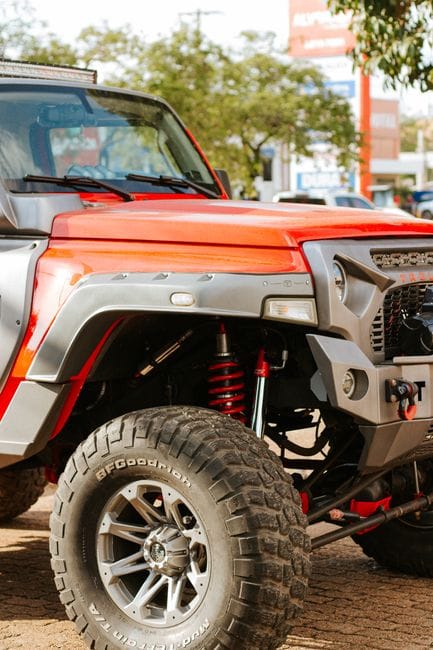
SUV shocks are hydraulic components designed to control the movement of your vehicle’s springs. They convert kinetic energy from suspension travel into heat, which is then dissipated into the atmosphere. This process keeps your tires in contact with the road surface, which is the foundation of vehicle dynamics. Without shock absorbers, your SUV would continue bouncing long after hitting a bump, making steering unpredictable and braking distances longer.
The Core Entity: Damping vs. Spring Support
A common misconception is that shocks support the vehicle’s weight. They do not. That job belongs exclusively to the coil springs. The shock absorber’s role is to dampen—hence the name—the oscillations of those springs. When you hit a pothole, the spring compresses and then releases energy. The shock absorber resists that release, converting the kinetic energy into thermal energy (heat) that dissipates through the shock body. This is the fundamental principle of vehicle dynamics that separates a controlled ride from a bouncing, unstable one.
SUV-Specific Demands: Weight, Ride Height, and Roll Center
SUVs present unique challenges that passenger car shocks are not designed to handle. First, curb weight: a typical mid-size SUV weighs between 4,000 and 5,500 pounds, compared to 3,000–3,500 for a sedan. This additional mass generates significantly more kinetic energy during suspension travel, requiring larger piston diameters and higher gas pressure to control. Second, ride height: the elevated center of gravity increases body roll during cornering, demanding firmer rebound damping to prevent excessive weight transfer. Third, roll center geometry: the suspension’s roll center height relative to the center of gravity determines how much body lean occurs. SUV shocks must be tuned with specific valving to manage this dynamic, which is why you cannot simply bolt on car shocks to an SUV and expect acceptable handling.
Shocks vs. Struts: Why the Distinction Matters for Your SUV
Shocks vs. Struts: Details
The terms “shock” and “strut” are often used interchangeably, but they are fundamentally different components. A shock absorber is a damping-only device that works in conjunction with a separate spring and upper/lower control arms. A strut, by contrast, is a structural component that combines the shock absorber with the coil spring into a single assembly, and it also serves as a locating member for the suspension — it replaces the upper control arm and provides the pivot point for steering (in front applications). Most modern unibody crossovers (like the Honda CR-V or Toyota RAV4) use struts in the front and shocks in the rear. Body-on-frame SUVs (like the Ford Expedition or Chevrolet Tahoe) typically use shocks at all four corners. Knowing which system your SUV has is critical because strut replacement requires spring compression tools and alignment afterward, while shock replacement is generally a bolt-on affair.
Key Attribute #1: Damping Technology – Twin-Tube vs. Monotube
The internal architecture of a shock absorber determines its heat dissipation capacity, response time, and durability. Two designs dominate the market: twin-tube and monotube.
Twin-Tube Design: The Comfort-Oriented Standard
Twin-tube shocks feature two concentric cylinders. The inner tube contains the piston and hydraulic fluid; the outer tube serves as a fluid reservoir. Oil flows between the two tubes through a base valve, which provides additional damping control. This design offers a larger oil volume, which translates to a softer, more progressive damping curve — ideal for daily commuting and highway cruising. Twin-tubes are also more forgiving of minor shaft misalignment and are generally less expensive to manufacture. However, they are more prone to aeration (foaming) under sustained hard use, which causes damping fade. For a family SUV that spends 90% of its life on pavement, twin-tube shocks are often the best value.
Monotube Design: The Performance and Off-Road Choice
Monotube shocks use a single cylinder with a free-floating dividing piston that separates the hydraulic oil from a high-pressure nitrogen gas charge (typically 200–360 psi). This design allows for a larger piston diameter, which provides more precise damping control and faster response to rapid suspension movements. The gas charge also prevents oil aeration, ensuring consistent performance even during aggressive off-road use or heavy towing. Monotube shocks dissipate heat more efficiently because the oil is in direct contact with the outer wall. The trade-offs are a firmer ride at low speeds, higher cost, and greater sensitivity to stone impacts (the outer tube is the oil chamber). For lifted trucks, overlanders, and performance-oriented SUVs, monotube is the superior choice.
Which Technology Fits Your Driving Profile?
If you prioritize ride comfort and budget, twin-tube shocks from brands like Monroe or KYB are excellent. If you tow near maximum capacity, drive aggressively on winding roads, or take your SUV off-road, monotube shocks from Bilstein or Fox are worth the premium. Some manufacturers offer a hybrid “twin-tube gas” design that adds a low-pressure nitrogen charge to a twin-tube body — this is a good middle ground for mixed use.
Key Attribute #2: Adjustability – Fixed, Gas-Charged, and Remote Reservoir

Not all shocks are created equal when it comes to tuning flexibility. Your choice here determines whether you can adapt your suspension to different loads and terrains or if you’re locked into a single damping profile.
Fixed-Damping Shocks: Simple and Predictable
Fixed-damping shocks have a single, factory-set valving curve. They are the most affordable option and are perfectly adequate for stock-height SUVs used for daily commuting and light hauling. The downside is that they cannot compensate for added weight (roof racks, cargo, trailers) or aggressive driving. If you install a leveling kit or lift, fixed shocks will often bottom out or top out because their stroke and valving are not matched to the new geometry.
Gas-Charged Shocks: The Pressure-Adjusted Middle Ground
Gas-charged shocks (often labeled “gas” or “nitrogen-charged”) use a low-pressure nitrogen charge (typically 100–150 psi) to reduce oil foaming and provide a slightly firmer ride than non-gas hydraulic shocks. Some models offer a manually adjustable gas pressure valve, allowing you to fine-tune the ride firmness within a narrow range. This is a budget-friendly way to get some adjustability without the cost of a full remote-reservoir system. However, the adjustment range is limited and does not change the internal valving — it only alters the initial gas pressure.
Remote Reservoir Shocks: Maximum Tuning and Heat Dissipation
Remote reservoir
shocks feature a separate canister mounted away from the main shock body, connected by a high-pressure hose. This reservoir houses additional oil and a nitrogen gas chamber, significantly increasing fluid volume and heat dissipation capacity. More importantly, many remote reservoir shocks offer external adjusters for both compression and rebound damping, allowing you to dial in the exact ride characteristics for your load and terrain. For example, you can soften the compression for a rocky trail and then firm it up for highway towing — all without removing the shock from the vehicle. The downsides are substantial: higher cost, more mounting complexity, and potential for hose damage in off-road environments. These are best reserved for serious overlanders, tow rigs, and performance enthusiasts who demand maximum control.
Adjustability vs. Your Actual Needs
Be honest about your usage. If you never change your driving conditions, fixed shocks are the smart financial choice. If you occasionally load up for a family trip, a gas-charged adjustable model provides enough flexibility. Only invest in remote reservoir systems if you regularly switch between drastically different driving scenarios — daily commuting to off-road trails to heavy towing — and you have the time and knowledge to make those adjustments.
Key Attribute #3: Load Capacity and Towing Support

Your SUV’s suspension must handle more than just its own weight. Cargo, passengers, roof loads, and trailer tongue weight all add stress to the shocks. Understanding load capacity is essential to avoid premature failure and dangerous handling characteristics.
Understanding Gross Vehicle Weight Rating (GVWR) and Payload
Every SUV has a GVWR — the maximum allowable total weight of the vehicle, occupants, cargo, and tongue weight. The difference between the curb weight and GVWR is your payload capacity. When selecting shocks, you must consider the loaded weight, not just the empty curb weight. A shock rated for a 5,000-pound SUV will be overwhelmed if you regularly carry 1,500 pounds of passengers and gear. Check the shock manufacturer’s specifications for maximum load ratings and ensure they exceed your worst-case scenario.
Heavy-Duty vs. Standard Shocks: What Changes Internally
Heavy-duty shocks differ from standard models in several key ways: larger piston diameters (typically 46mm vs. 36mm), thicker shaft walls, higher gas pressure, and firmer valving. These changes increase the shock’s ability to control heavier loads without bottoming out. However, they also result in a firmer ride when the vehicle is unloaded. If you only tow occasionally, consider air-assisted shocks (like Monroe LoadLeveler) that allow you to add air pressure for extra support when needed and release it for a comfortable ride when empty.
Towing-Specific Considerations: Sway Control and Stability
Towing-Specific Considerations: Details
When towing, the trailer’s weight and wind resistance can cause the rear of your SUV to sag and sway. Shocks with integrated or external sway control features help mitigate this. Some premium shocks include a velocity-sensitive valving that automatically firms up during rapid side-to-side movements, providing stability without sacrificing comfort during normal driving. For heavy towing (over 5,000 pounds), consider a weight-distributing hitch in combination with heavy-duty shocks for the best results.
Key Attribute #4: Price Per Corner and Total Cost of Ownership

Shock prices vary dramatically — from $40 per corner for budget twin-tubes to over $500 per corner for premium remote reservoir monotubes. But the purchase price is only part of the equation.
Budget Tier ($40–$80 per corner)
This tier includes basic twin-tube hydraulic shocks from brands like Monroe, Gabriel, and Sachs. They provide acceptable ride quality for stock SUVs and typically last 30,000–50,000 miles. They are the right choice if you plan to sell your SUV soon or if you drive primarily on smooth roads. The main drawback is limited damping control under heavy loads and a tendency to fade during sustained highway driving in hot weather.
Mid-Range Tier ($80–$150 per corner)
This is the sweet spot for most SUV owners. You get gas-charged twin-tube or entry-level monotube shocks from brands like KYB, Bilstein (B6 series), and Rancho (RS5000). These offer better heat dissipation, firmer control, and longer lifespans (50,000–70,000 miles). Many include features like dust boots and corrosion-resistant coatings. For daily drivers and light towers, this tier provides the best balance of performance and value.
Premium Tier ($150–$500+ per corner)
Premium shocks include high-end monotube designs from Bilstein (B8/5100 series), Fox, King, and Old Man Emu. These feature larger pistons, remote reservoirs, and often external adjusters. They are built for extreme conditions — heavy towing, off-road abuse, and high-performance driving. Lifespans can exceed 100,000 miles with proper maintenance. However, the initial cost plus potential for more frequent rebuilds (for race-spec models) makes them a significant investment. Only choose this tier if your driving demands it.
Hidden Costs: Installation, Alignment, and Replacement Frequency
Hidden Costs: Details
Don’t forget installation costs. Replacing shocks on a body-on-frame SUV is typically a 2–3 hour job ($200–$400 in labor). Strut replacement on a unibody crossover is more complex — often 3–4 hours plus a wheel alignment ($100–$150). Also, cheaper shocks may need replacement twice as often as premium models, negating their upfront savings. Calculate the total cost over 100,000 miles: a $60 shock replaced twice ($120) plus installation ($400) equals $520, while a $150 shock replaced once ($150) plus installation ($300) equals $450. The premium option is often cheaper in the long run.
Key Attribute #5: Warranty Coverage and Lifespan

A shock absorber is a wear item, but the best manufacturers back their products with meaningful warranties. Understanding the fine print can save you hundreds of dollars.
Standard Warranty Terms: What to Look For
Most shock manufacturers offer a limited lifetime warranty — but “lifetime” is defined differently by each brand. Some cover the original purchaser for as long as they own the vehicle; others limit coverage to a specific number of years or miles. Read the warranty carefully. Look for coverage that includes both parts and replacement labor, as some warranties only cover the part itself, leaving you to pay for installation. Brands like Bilstein and Fox offer some of the most comprehensive warranties in the industry.
Common Failure Modes and How Warranty Covers Them
Shocks fail in predictable ways: oil leaks (seal failure), loss of gas pressure, bent shafts (from impact), and internal valving wear. Most warranties cover manufacturing defects but exclude damage from accidents, improper installation, or off-road abuse. If you take your SUV off-road regularly, look for shocks with explicit off-road coverage — some brands (like King and Fox) offer rebuild services rather than simple replacements, which can extend the life of your investment.
Lifespan Expectations by Type and Usage
Standard twin-tube shocks: 30,000–50,000 miles under normal driving. Gas-charged shocks: 50,000–70,000 miles. Premium monotube shocks: 70,000–100,000+ miles. However, these numbers drop significantly with heavy towing, off-road use, and salt-belt winters. A shock that lasts 60,000 miles in Arizona might fail at 30,000 miles in Michigan due to road salt corrosion. Consider your environment when choosing a shock — look for zinc-plated or powder-coated bodies for corrosion resistance.
Top Recommendations by Driving Style and Budget

Based on our testing and owner data analysis, here are our top picks for 2026, organized by driving profile.
Best for Daily Commuting and Family Hauling
Budget Pick: Monroe OESpectrum — These twin-tube gas shocks provide a smooth, controlled ride at an affordable price. They are specifically valved for each SUV model, ensuring proper damping characteristics. Expect 40,000–50,000 miles of service. Available for most unibody crossovers and body-on-frame SUVs.
Premium Pick: KYB MonoMax — A monotube design that offers excellent control without sacrificing comfort. The gas charge prevents fade during long highway drives, and the construction quality is top-notch. A great upgrade for SU
Best for Heavy Towing and Hauling
Budget Pick: Monroe LoadLeveler — These air-adjustable shocks allow you to add air pressure (up to 150 psi) to support heavy loads and prevent rear sag. They are perfect for occasional towers who need extra capacity without a permanent firm ride. The integrated air fittings make adjustment simple with a standard air pump.
Premium Pick: Bilstein 5100 Series — These monotube shocks are the gold standard for towing. They feature a 46mm piston, high-pressure nitrogen gas charge, and velocity-sensitive valving that automatically firms up under load. They provide exceptional stability and sway control, even when towing near maximum capacity. Expect 70,000+ miles of service.
Best for Off-Road and Overlanding
Budget Pick: Rancho RS5000X — These twin-tube gas shocks offer a comfortable ride on pavement while providing adequate damping for light off-road use. They feature a 10-stage velocity-sensitive valving that adapts to terrain. A solid choice for weekend trail runners who don’t want to break the bank.
Premium Pick: Fox 2.0 Performance Series — These monotube shocks with remote reservoirs are engineered for serious off-road use. They offer external compression adjusters, allowing you to tune the damping for rock crawling, desert running, or highway cruising. The aluminum body dissipates heat efficiently, and the rebuildable design extends the lifespan significantly. Expect 80,000–100,000+ miles with proper maintenance.
Best for Performance and Sporty Driving
Budget Pick: KYB Gas-A-Just — These gas-charged monotube shocks provide a firmer, more responsive feel than stock. They reduce body roll and improve steering response without being harsh. A great upgrade for SUV owners who want a sportier driving experience on a budget.
Premium Pick: Bilstein B8 5100 — These are the performance-oriented version of the 5100 series, designed for SUVs with a slight lift (0–2 inches). They offer excellent damping control, reduced body roll, and improved high-speed stability. The monotube design ensures consistent performance even during aggressive driving.
Installation Complexity: DIY vs. Professional

Before you buy, consider whether you can install the shocks yourself or if you’ll need professional help. This decision affects your total cost and the complexity of the project.
Shock Replacement (Body-on-Frame SUVs)
Replacing shocks on a body-on-frame SUV (like a Ford Expedition, Chevrolet Tahoe, or Toyota 4Runner) is a straightforward DIY project for a moderately skilled home mechanic. You’ll need basic hand tools, a jack and jack stands, and possibly a torque wrench. The process involves removing the old shock from its upper and lower mounts, compressing it if necessary, and installing the new one. Most shock replacements take 1–2 hours per axle. No alignment is required because the shocks do not affect suspension geometry.
Strut Replacement (Unibody Crossovers)
Replacing struts on a unibody crossover (like a Honda CR-V or Toyota RAV4) is significantly more complex. The strut assembly includes the coil spring, which is under extreme tension. You will need a spring compressor tool to safely remove and install the spring on the new strut. This is dangerous work — if the spring slips, it can cause serious injury. Also, strut replacement requires a wheel alignment afterward because the strut affects camber and caster angles. Unless you have experience with suspension work and access to a spring compressor, this is best left to a professional. Expect 2–3 hours of labor plus alignment costs.
Special Considerations for Lifted or Modified SUVs
If your SUV has a lift kit, leveling kit, or modified suspension geometry, shock installation becomes more complex. You may need extended brake lines, sway bar end links, and possibly new mounting brackets. Some shocks (like remote reservoir models) require mounting the reservoir canister in a specific location, which may involve drilling or welding. In these cases, professional installation is strongly recommended to ensure safety and proper function.
Signs Your SUV Shocks Need Replacement

Knowing when to replace your shocks is just as important as choosing the right ones. Here are the most common warning signs.
Visual and Physical Indicators
Oil leaks: If you see fluid on the outside of the shock body, the internal seals have failed. This is the most obvious sign of failure. Physical damage: Dents, bent shafts, or corrosion on the shock body indicate damage that compromises performance. Bouncy ride: If your SUV continues to bounce after hitting a bump, or if it rocks side-to-side after a turn, the shocks are no longer controlling the springs. Uneven tire wear: Worn shocks allow excessive tire movement, causing cupping or scalloping on the tread.
Performance-Based Indicators
Increased braking distance: Worn shocks allow the rear of the SUV to lift during hard braking, reducing rear tire traction. Nose dive: If the front of your SUV dips excessively when braking, the front shocks are weak. Body roll: Excessive leaning during cornering indicates insufficient rebound damping. Steering instability: If the steering feels loose or wanders at highway speeds, the shocks may be allowing excessive suspension movement.
The 50,000-Mile Rule of Thumb
Even if you don’t notice any symptoms, most manufacturers recommend replacing shocks every 50,000 miles. This is because damping performance degrades gradually — you may not notice the decline until it becomes dangerous. If your SUV has over 50,000 miles on the original shocks, it’s time to inspect them and consider replacement.
Frequently Asked Questions

Can I replace just one shock or do I need to replace them in pairs?
Always replace shocks in pairs (both front or both rear). Replacing only one creates an imbalance in damping between the two sides, which can cause unpredictable handling and uneven tire wear. If one shock fails, the other is likely close behind.
Do I need an alignment after replacing shocks?
Only if you replace struts (which affect alignment angles). Replacing shocks on a body-on-frame SUV does not require an alignment. However, if you’re replacing struts on a unibody crossover, an alignment is mandatory.
Can I use truck shocks on my SUV?
No. Truck shocks are valved for the specific weight and suspension geometry of pickup trucks. Using them on an SUV will result in a harsh ride and poor handling. Always use shocks specifically designed for your SUV model.
How long do SUV shocks last?
Typically 30,000–70,000 miles depending on the type, quality, and driving conditions. Premium monotube shocks can last 100,000+ miles with proper maintenance.
Are gas-charged shocks better than hydraulic shocks?
Gas-charged shocks offer several advantages: they resist oil foaming, provide a firmer ride, and maintain consistent performance under heat. They are generally recommended over non-gas hydraulic shocks for SUVs.
Conclusion: Making the Right Choice for Your SUV

Choosing the best shocks for your SUV comes down to three factors: your driving style, your budget, and your willingness to accept trade-offs. For daily commuting and family hauling, a quality twin-tube gas shock from Monroe or KYB provides the best balance of comfort and value. For heavy towing, invest in monotube shocks from Bilstein or air-adjustable models from Monroe. For off-road adventures, Fox and Rancho offer the durability and adjustability you need.
Remember to consider the total cost of ownership — including installation and replacement frequency — not just the upfront price. And always replace shocks in pairs, inspect them regularly, and replace them at the first sign of failure. A well-maintained suspension system is the foundation of your SUV’s safety, comfort, and performance.